
My living room had nice furniture and decent lighting but it still felt like a waiting room. Took me embarrassingly long to figure out it was missing texture. Every surface was smooth, every color was flat, and nothing invited you to actually sit down. Switching to neutral small home offices forced me to focus on the little spatial tricks that actually free up room and make a work nook feel intentional, not cramped.
These ideas lean minimalist-meets-warm, and most fixes are under $150 with a few smart splurges around $250. They work for tiny spare rooms, bedroom corners, or any apartment where you need a proper workspace without the clutter.
Space-Saving Folding Desk For Narrow Walls
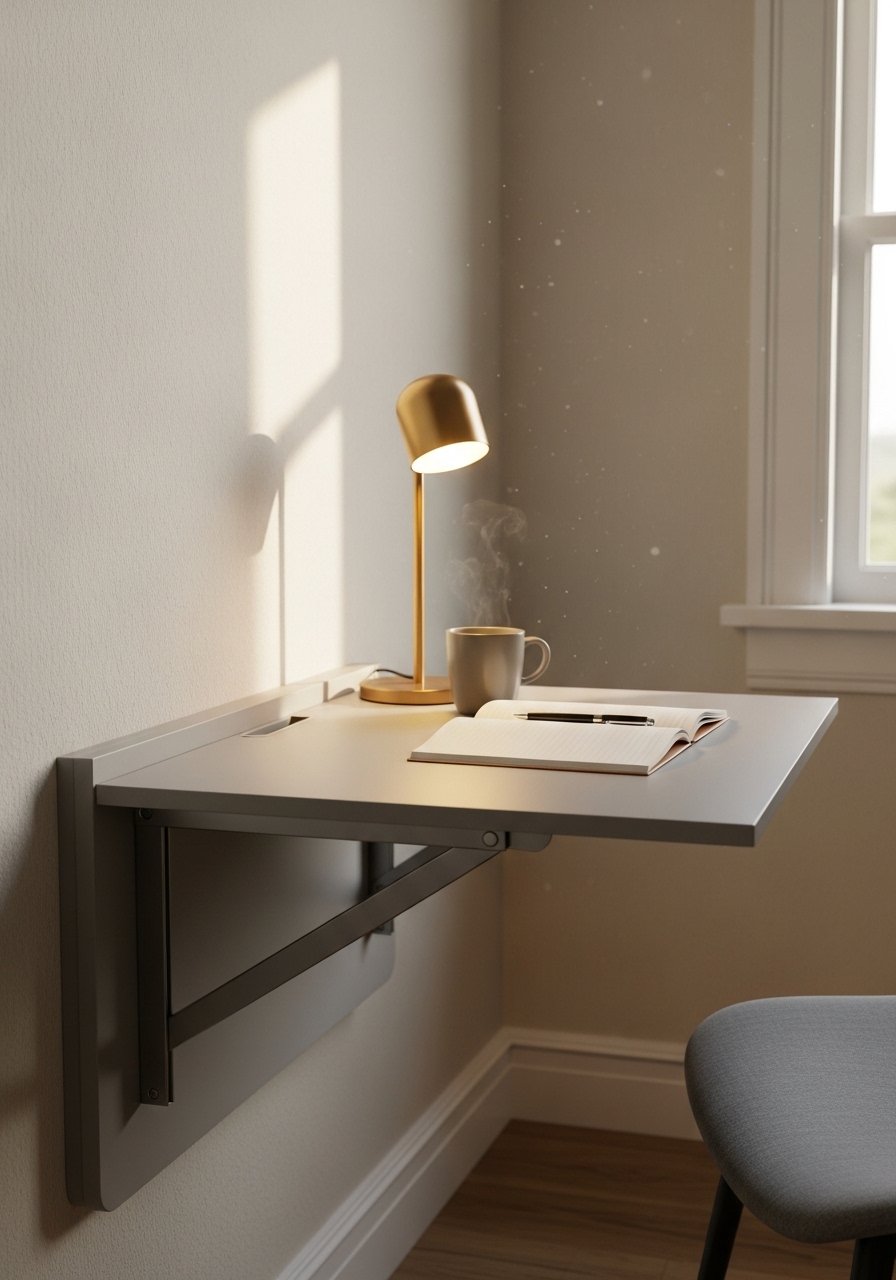
I installed a slim wall-mounted fold-down desk and it felt like someone cleared the air in the room. Pick a depth of 18 to 20 inches so you can type without hitting your knees. What makes this work is the instant reclaiming of floor space when the desk folds up, which is why it suits studio apartments and guest rooms. Budget is about $60 to $180 depending on finish. I used a sturdy fold-down wall desk and paired it with a slim folding chair. Common mistake is mounting it too low. Aim for 29 inches from floor to underside for average desk height. If you need hidden storage, add a narrow shelf above that doubles as a paper catch when the desk is closed. Pair this with the shelving idea below for a tidy vertical setup.
Built-In Look With Floating Shelves And Neutral Baskets
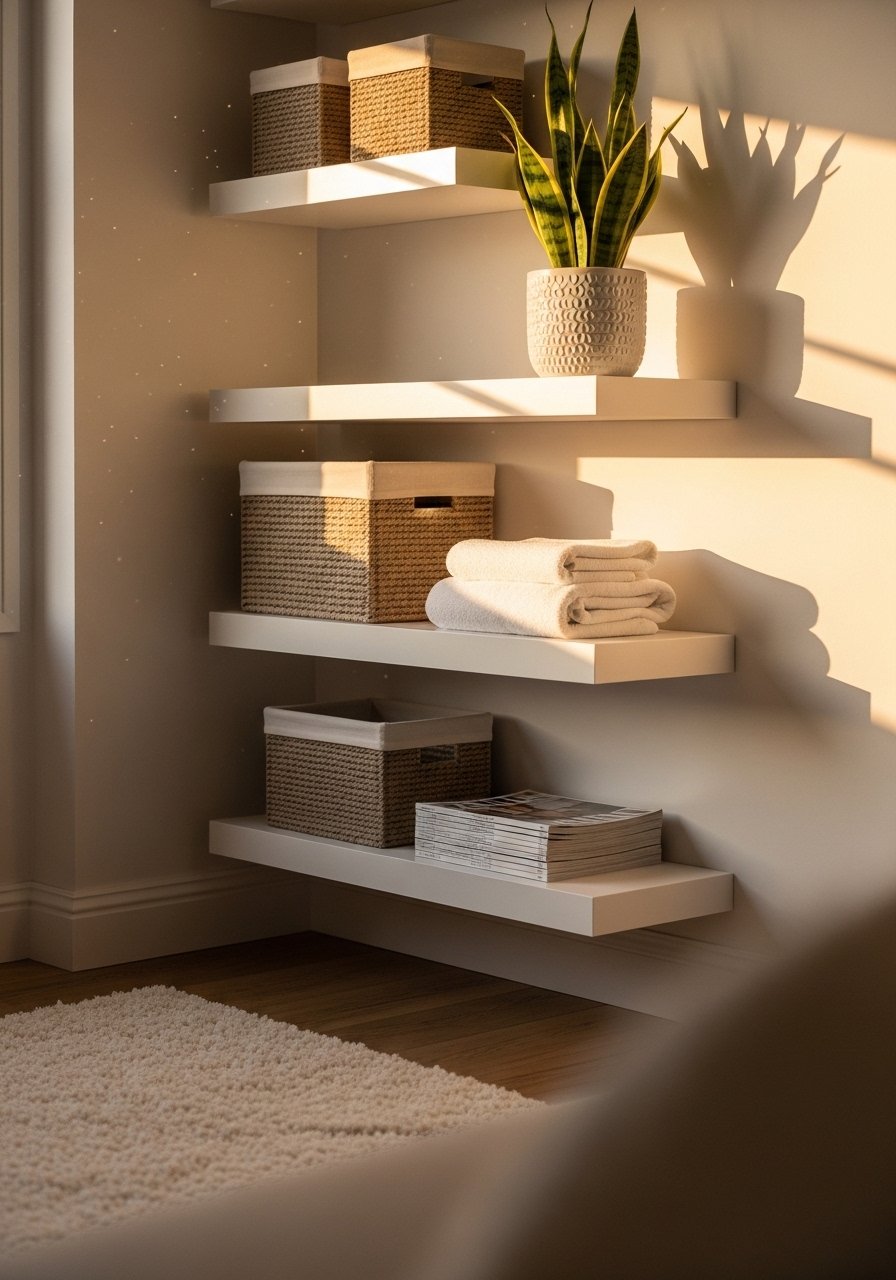
Floating shelves give you the built-in look without carpentry. I recommend 10 to 12 inches deep shelves for office use, spaced about 12 inches apart for books and binders. The feeling it creates is curated vertical storage that takes visual weight off a small desk. Budget runs $30 to $120 per shelf wall depending on material. My go-to is white oak floating shelves and a set of woven storage baskets underneath to hide chargers. A common mistake is overloading shelves. Keep the 80/20 rule in mind, with 80 percent practical items and 20 percent styling. Most pros grab competitor shades when they need a specific finish, so if your paint or stain is hard to match, ask for a formula file at the store and test a sample board in your light.
Slim Desk With Under-Seat Storage For Small Corners
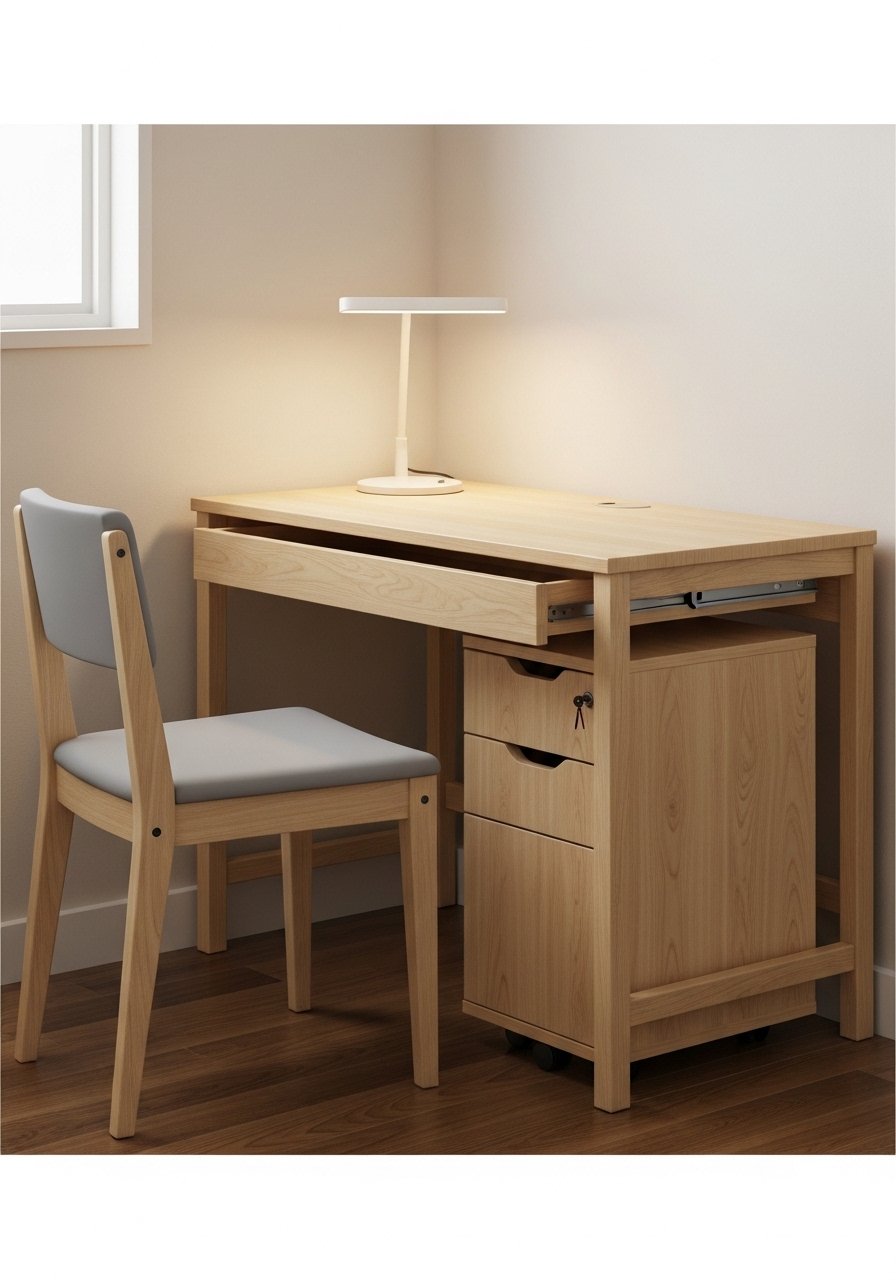
When I swapped a bulky desk for a slim 36-inch model with a mobile drawer under the chair, the walkway opened up instantly. A desk width of 32 to 36 inches is snug but practical for laptops and a notepad. Budget is $70 to $200 depending on wood and hardware. I linked a compact desk that fits against a baseboard without crowding the room, a slim writing desk, and added a rolling under-desk drawer so nothing piles on the surface. People often forget knee clearance. Leave 10 to 12 inches behind the drawer so the chair can roll in comfortably. This setup pairs nicely with the floating shelves idea for paperwork control.
Curtain-Closed Home Office For Multi-Use Rooms
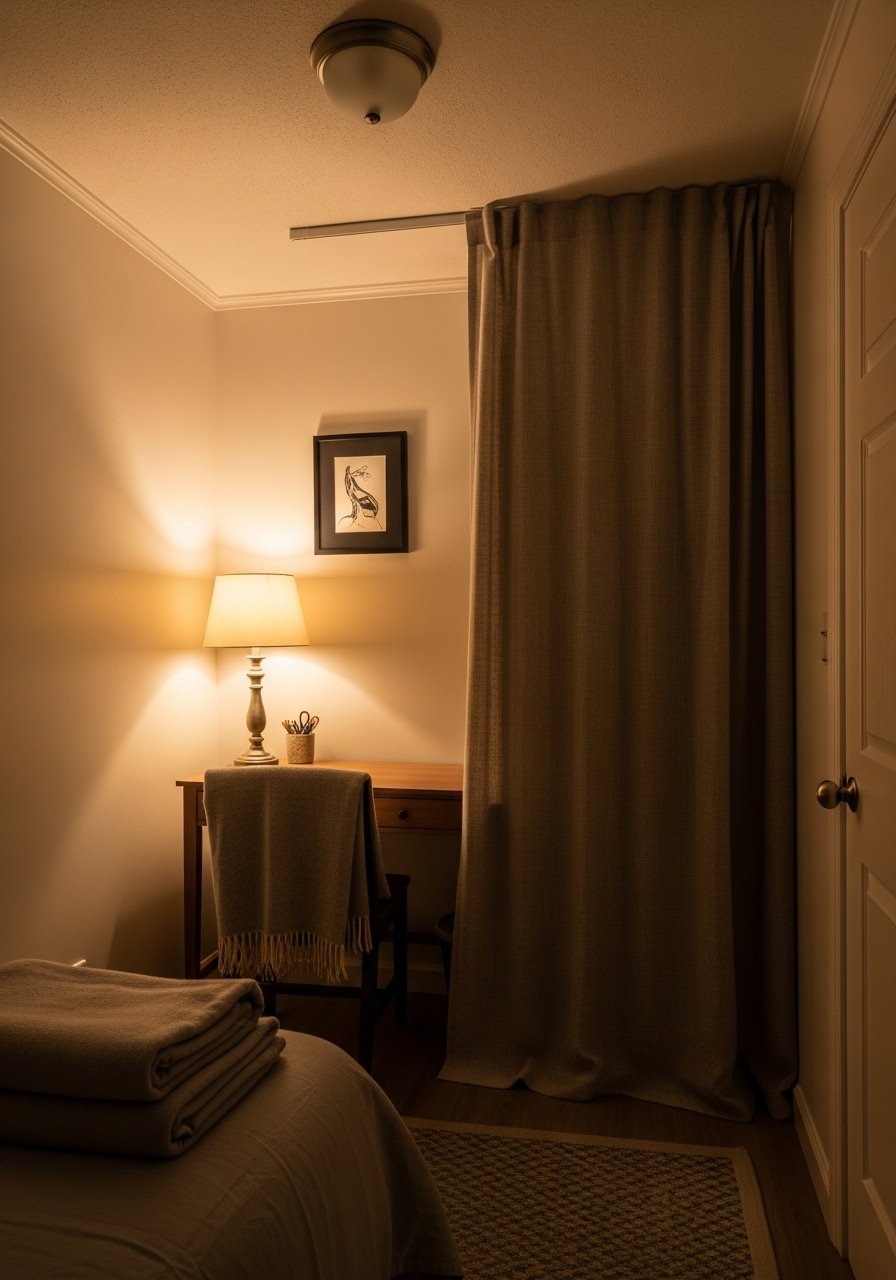
I turned a spare corner into a hidden office by hanging floor-to-ceiling linen curtains on a ceiling track. Curtains allow the room to do double duty without permanent construction. For a 9-foot ceiling hang 96-inch panels that skim or puddle slightly. You can spend as little as $40 for panels or up to $150 for thicker acoustic curtains. I used 96-inch linen curtain panels in natural tones and a compact desk inside. People hang curtains at the window frame. That is why rooms look shorter. Mount high and wide so the nook feels like a built-in closet when closed. If you need sound dampening, pick heavier fabric or add a second layer.
Narrow Console Desk With Pegboard Organization
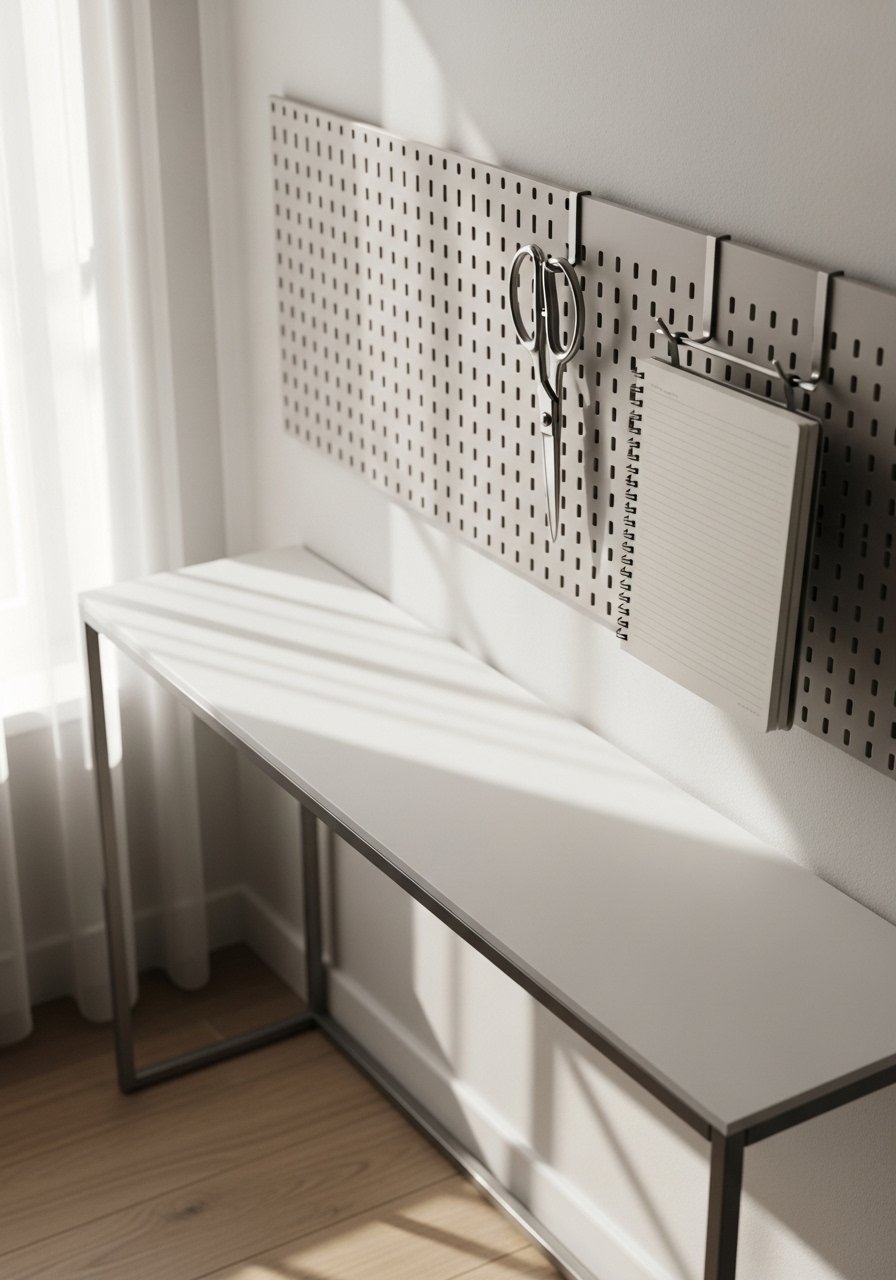
A narrow console desk is everything if you need a work surface that does not dominate a hallway or living area. Pick a depth of 12 to 16 inches. Add a pegboard above for vertical organization so small items do not creep onto the desktop. I attached a simple wood pegboard and used magnet cups for pens. Budget is $40 to $120 for desk plus pegboard supplies. I like a slim console desk and a neutral pegboard system to keep things visible but off the surface. A common mistake is uneven peg placement. Lay out your tool pattern on paper first so hooks are useful, not decorative. This idea is great next to the floating shelves for a layered storage wall.
Murphy Style Fold-Down Desk With Hidden Charging
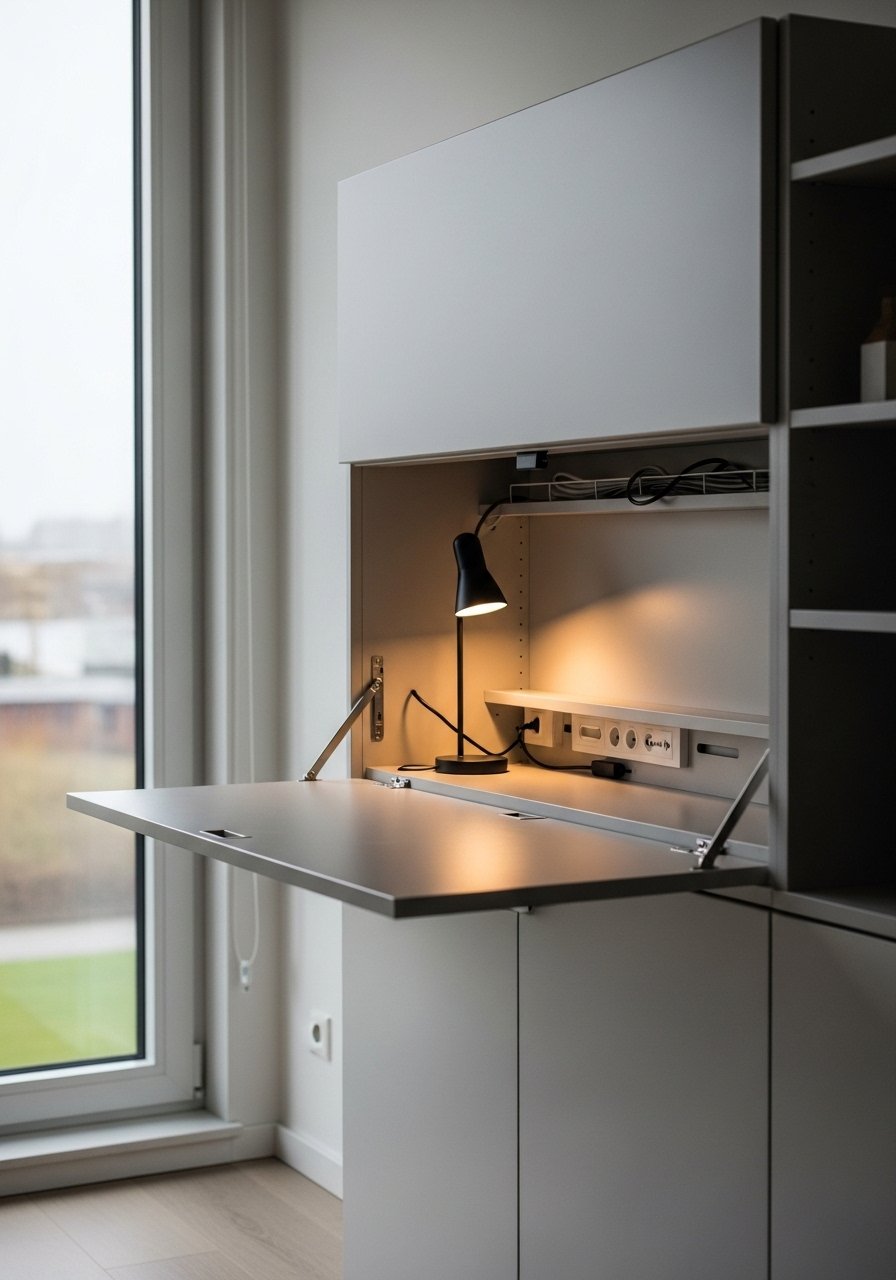
I built a shallow cabinet that folds down into a desk and hides charging cords behind an outlet cutout. The cabinet door becomes the desktop, so depth of 16 to 20 inches is ideal for laptops. Budget is higher here, $150 to $350 if buying a ready-made unit. I recommend a fold-down wall cabinet desk that comes with pre-cut cable channels. One mistake is forgetting ventilation. If you plan to leave a laptop inside, add small vent holes so heat escapes. Scanner matches are standard now for big jobs, but for a one-off project like this, a physical test board will tell you more about finish and sheen than a scan.
Vertical Ladder Shelf With Baskets For Paperwork
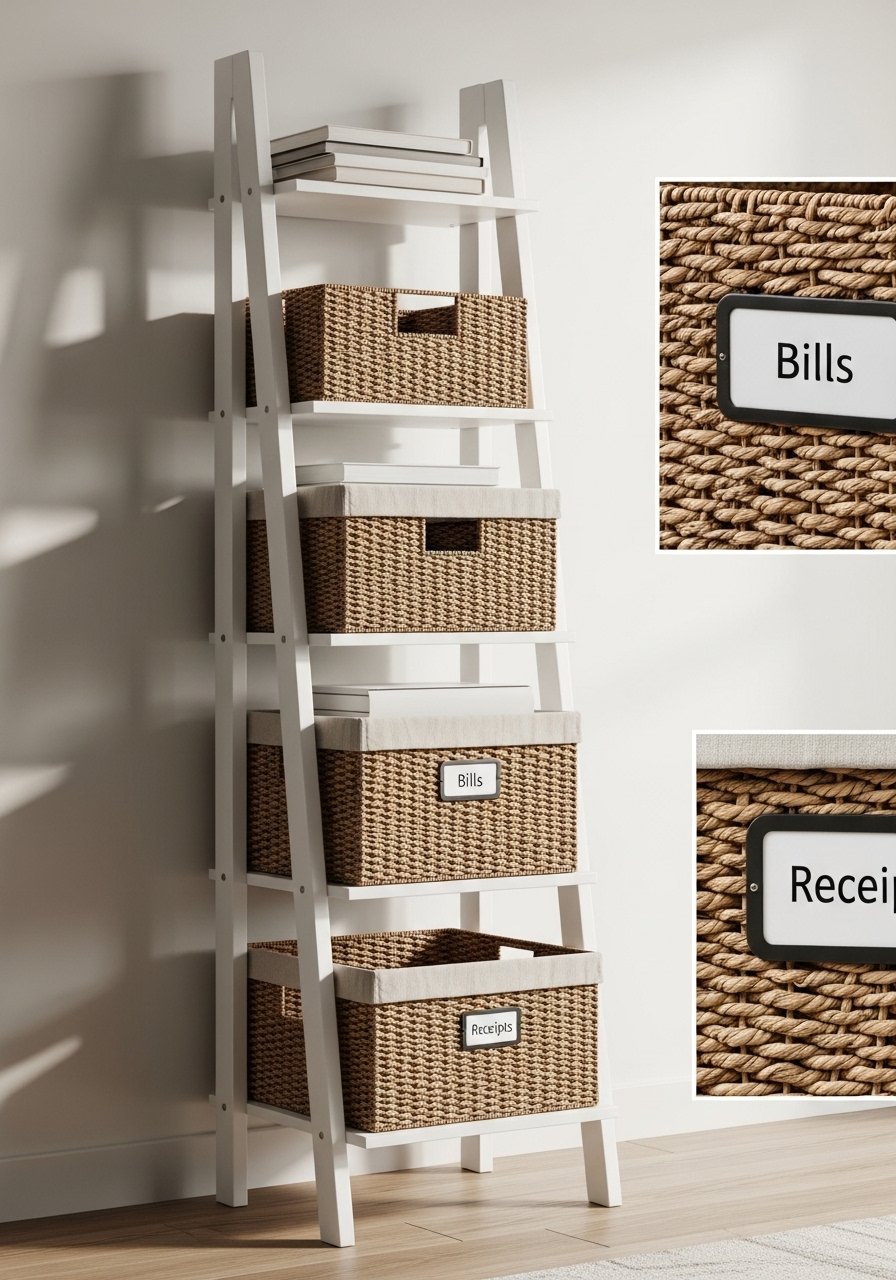
Ladder shelves take vertical space instead of floor footprint. I use baskets on the bottom two shelves for paper and a mix of decorative boxes above. Keep the shelf about 12 to 14 inches deep so it does not stick into walkways. Budget is $60 to $180. My pick was a white ladder shelf with three woven baskets. A common mistake is stacking heavier items on the top shelf. Reserve the lower shelves for weight and the eye-level space for things you actually use. Half the time a match flops if you skip the room light check, so when you pick basket and shelf colors test in your office light before you buy.
Neutral Mini Gallery Wall To Add Interest Without Clutter
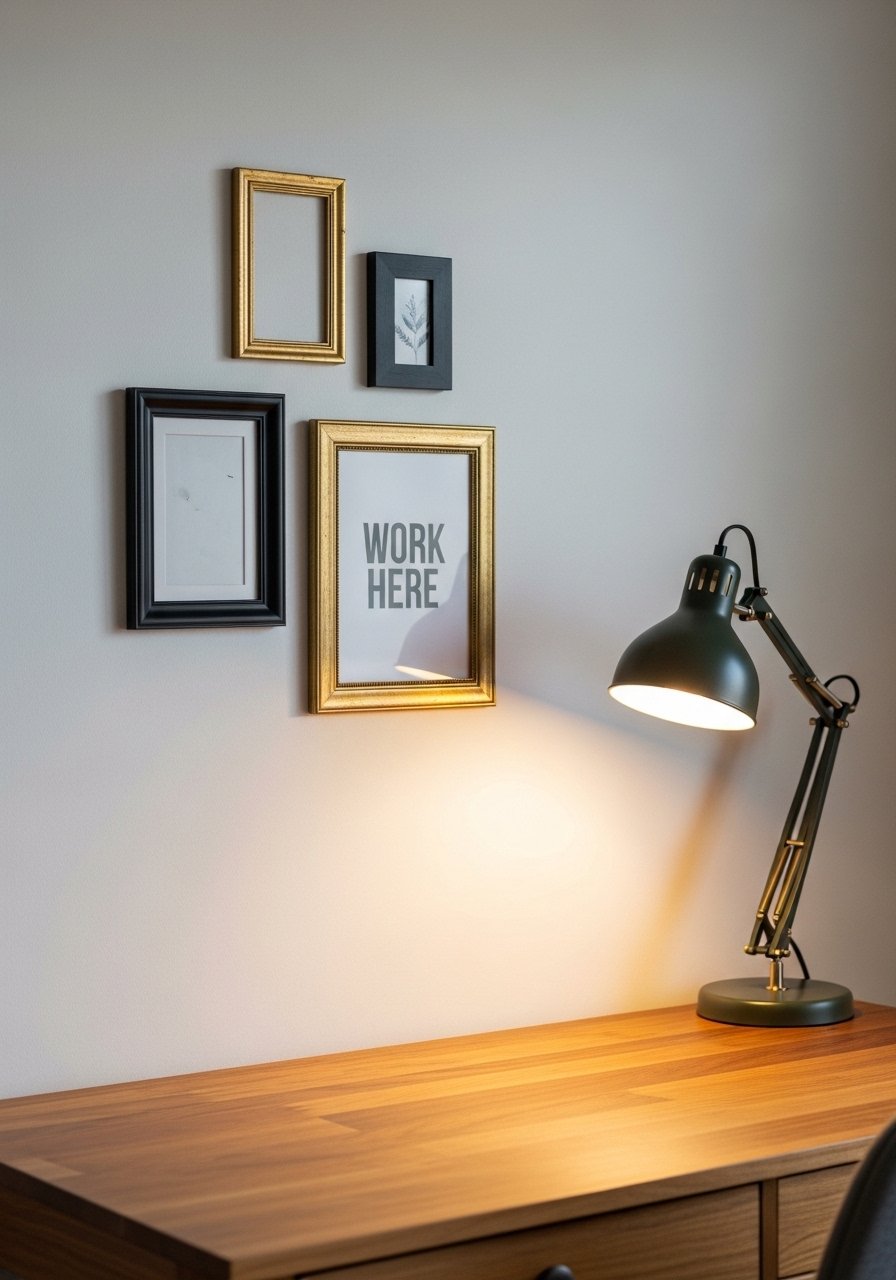
A mini gallery wall gives a focal point without adding furniture. I keep frames in the same neutral family and mix textures like matte paper, linen mats, and thin brass frames. Use three frames in a vertical or L-shaped cluster for a tight wall. Budget is $25 to $120 depending on frames and art. I use mixed metal frames set and swap print sizes seasonally. The mistake is scattering too many small pieces which reads messy. Keep the cluster within a 24 by 36 inch footprint so the display feels intentional. This ties well with the curtain or floating-shelf ideas when you want the wall to read as edited, not overloaded.
Your Decor Shopping List
Textiles
- Honestly the best $45 I have spent. Chunky knit throw in cream 50×60 inches, cotton blend for texture
- 22-inch linen pillow covers set of 2 in natural, down-filled inserts sold separately
Wall Decor
- Found these while searching for simple frames. Mixed metal picture frames set includes brass and black, fits 8×10 and 11×14 prints
- Neutral art prints, set of 3, printed on matte paper, swap seasonally
Storage
- Woven storage baskets, set of 3 12×12 inches, great for paperwork and cords
- Under-desk rolling drawer compact 12×15 inch, metal frame
Furniture
- Slim fold-down wall desk in light finish, about 18 to 20 inches deep
- 96-inch linen curtain panels neutral, good for hiding a nook
Budget Finds
- Similar at Target or HomeGoods for baskets and pillows if you prefer to shop in person
Shopping Tips
White oak beats dark wood in 2026. Design feeds have shifted. White oak floating shelves look current and wear well.
Grab these slim writing desks for under $120. A 36-inch width fits most laptops and gives you a tidy staging area.
Curtains should puddle or kiss the floor, never hang halfway up. 96-inch linen curtain panels work for standard 9-foot ceilings and make a small nook feel taller.
Lead with one big piece, not five small ones. Instead of five tiny succulents try a faux fiddle leaf fig 6-foot for scale and impact.
Frequently Asked Questions
Q: What desk depth is best for a tiny office?
A: For most small home offices pick 18 to 20 inches if you only need a laptop. If you also use a notepad or a monitor go up to 24 inches. Leave at least 29 inches from floor to underside for comfortable seating.
Q: Can I mix fabrics and neutrals without it looking dull?
A: Yes. Mix matte linen, a slightly shiny leather or faux leather, and a knit throw to add interest. Stick to three textures and repeat them across the room for cohesion.
Q: How do I keep papers from taking over a small desk?
A: Use vertical storage like pegboards or floating shelves and store current papers in a labeled basket under the ladder shelf. One rolling drawer under the chair makes a surprisingly big difference.
Q: Should I buy real plants or faux for a low-maintenance office?
A: Both work. Real snake plants handle neglect. If light is limited, a real-looking faux fiddle leaf fig 6-foot adds height without care.
Q: How do I pick the right curtain length for hiding a workspace?
A: Measure from ceiling to floor and choose panels that either kiss the floor or puddle slightly. For 9-foot ceilings 96-inch panels are the sweet spot.
Q: I hate paint color options. How do I avoid a match that flops at home?
A: Half the time a match flops if you skip the room light check. Paint sample boards and look at them under your office lights at morning and evening to be sure the shade behaves in your space.