
I kept waking in rooms that looked nice but felt cold and empty. I couldn’t relax there, so sleep was slow to come.
If your bedroom feels off — too bright, cluttered, or not inviting — small shifts in placement, texture, and light make a big difference. I’ll show how I make a room calm and cozy for sleep.
How to Decorate a Cozy Bedroom for Better Sleep
You’ll learn how to layer textiles, set soothing light, and arrange furniture so the space feels balanced and sleep-ready. It’s the organic-modern approach I use when a bedroom needs to feel lived-in and intentionally quiet — achievable without a full remodel.
What You’ll Need
- Linen duvet cover in sage green, queen (~$70–110)
- Chunky knit throw in oatmeal, 50×60 (~$40–65)
- Blackout curtains in warm beige, 84-inch (~$25–60)
- Wool flatweave rug, 5’x8′, natural (~$120–220)
- Ceramic bedside lamp with warm LED bulb (~$40–80)
- Memory foam pillow with breathable cover, standard (~$35–80)
- Ultrasonic aromatherapy diffuser, white oak finish (~$25–50)
- Wooden floating shelf, natural oak, 24-inch (~$20–45)
Step 1: Position the bed so you arrive into calm (not chaos)
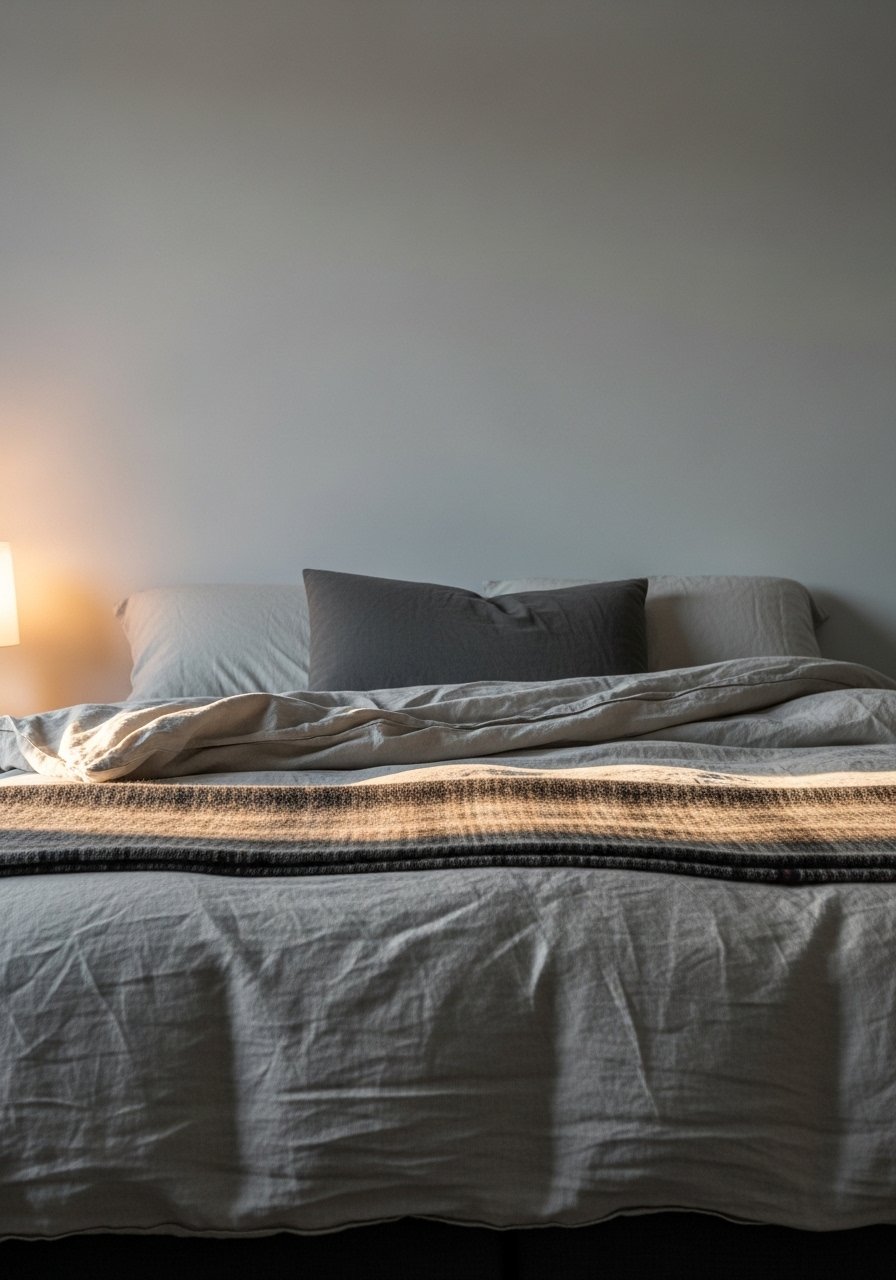
I always start with where the bed sits. Facing the door or centered on the main wall creates a subconscious sense of order. When I move the bed even a few inches to balance the windows, the whole room feels calmer.
Insight: people miss sightlines — the first view when you enter should be tidy. Mistake to avoid: blocking windows with large furniture. That makes the room feel cramped and cuts natural light.
Step 2: Layer light for softness, not drama
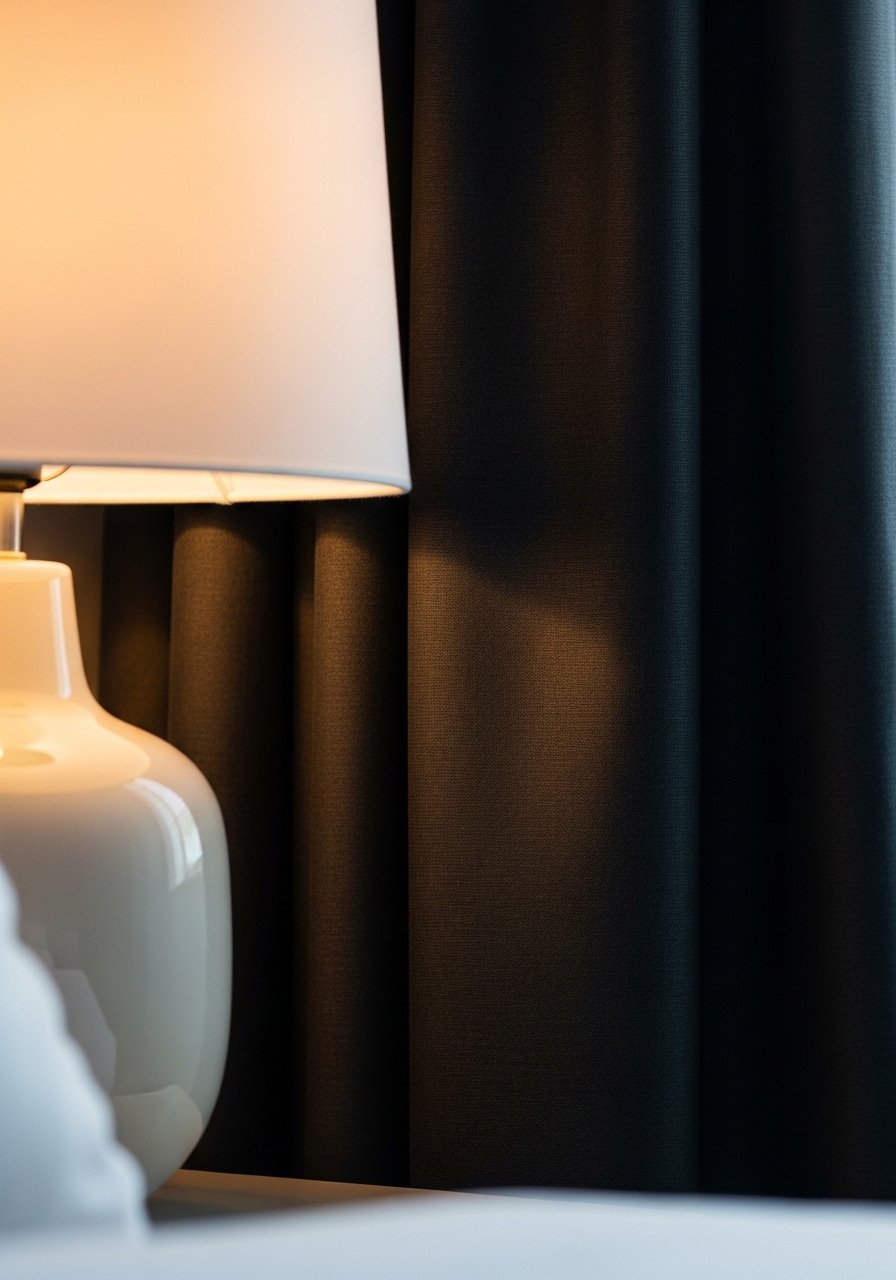
I aim for three light layers: dimmable overhead, warm bedside lamps, and blackout curtains for real darkness. A ceramic bedside lamp gives a soft pool of light for reading and signals to my brain that the room is restful.
Insight: I keep bulbs under 2700K and avoid bright whites. Mistake to avoid: relying on a single overhead fixture. That one harsh light flattens the space and makes it feel clinical instead of cozy.
Step 3: Build textiles with purpose — not just for looks

I layer bedding for weight and texture: a breathable linen duvet, a memory-foam pillow, and a chunky knit throw at the end. Each layer adds visual warmth and physical comfort. I stick to a simple palette so texture does the work.
Insight: people pile on patterns and lose cohesion. I keep colors calm and mix only a couple of textures. Mistake to avoid: too many pillows that become a barricade. Keep enough for comfort, not decoration only.
Step 4: Edit surfaces so the eye can rest
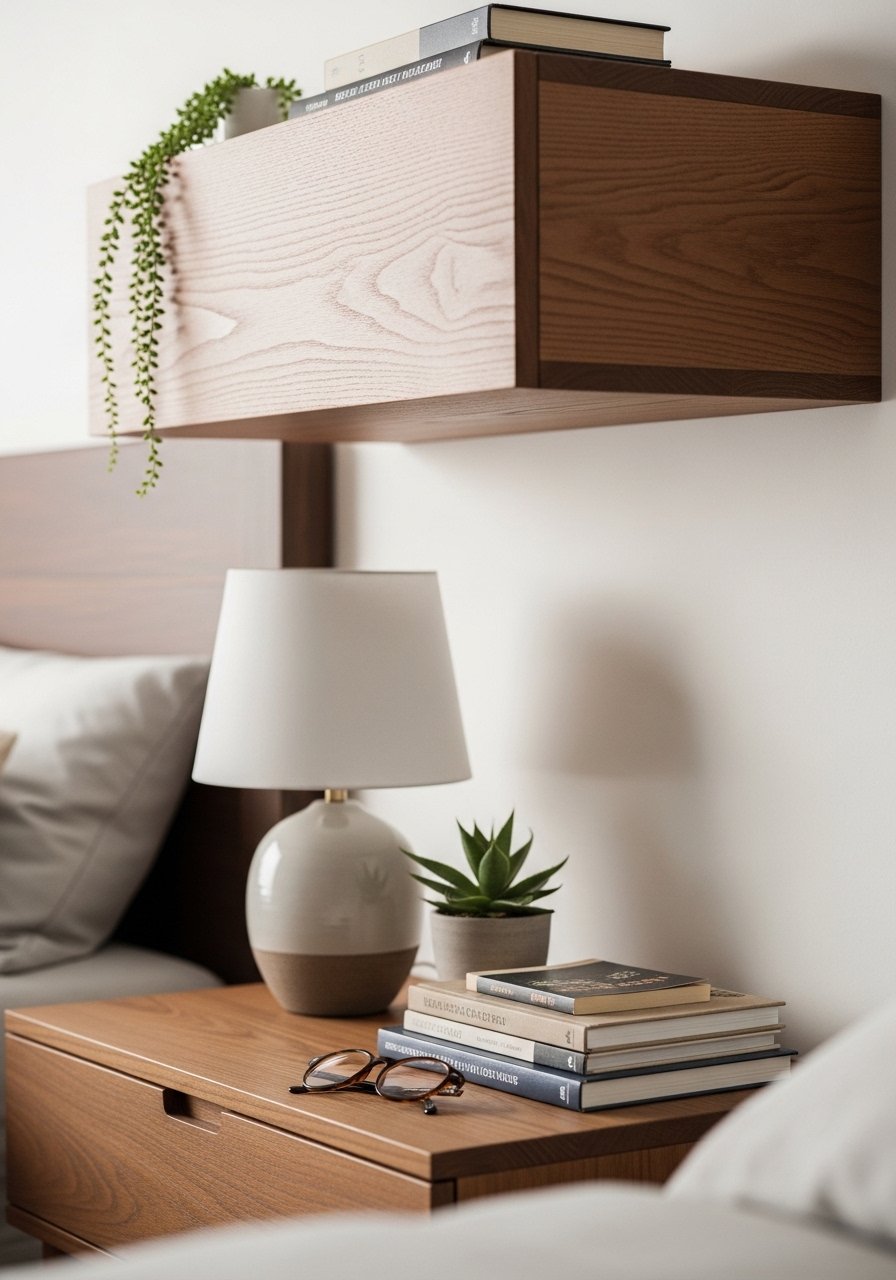
I clear surfaces down to a few purposeful items: lamp, a book, and a small tray for essentials. I use a floating shelf for a bedside plant or framed photo to keep the nightstand from becoming cluttered.
Insight: people underestimate negative space — empty areas are calming. Mistake to avoid: treating every surface as storage. Visible clutter competes with relaxation.
Step 5: Introduce quiet scent and sound subtly

I use a gentle scent routine: an ultrasonic diffuser with a calming blend (lavender or cedar). For sound, a small speaker with a low-volume white-noise or nature playlist helps me fall asleep without scrolling.
Insight: scent and sound should be consistent cues. Mistake to avoid: strong, energizing scents at night or a TV on in the room. Those are sleep disruptors more than décor.
Step 6: Anchor the floor and step back to tweak balance
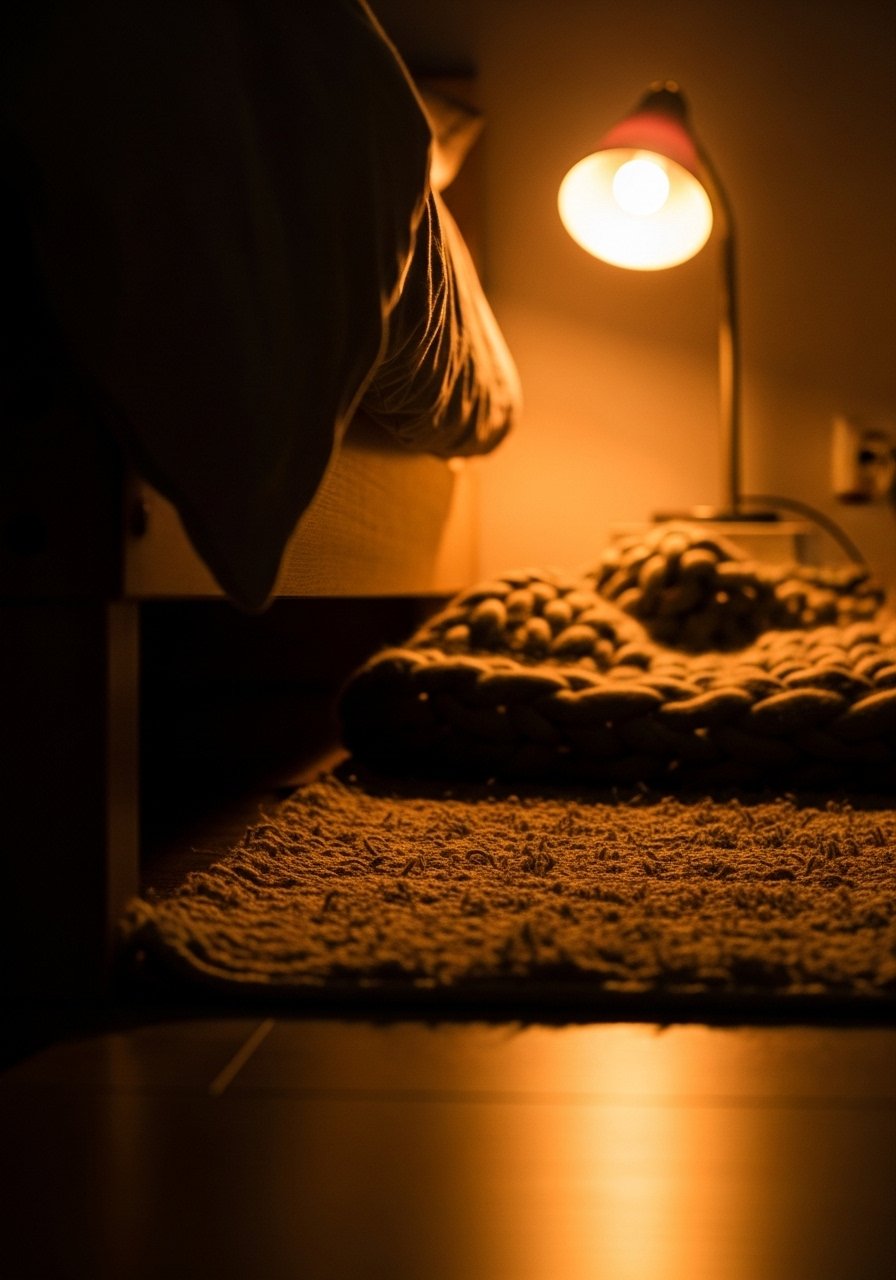
I always add a rug that extends beyond the bed edges so every step lands on softness. Then I step back, sit on the bed, and look for imbalance — a heavy lamp on one side, a too-empty wall on the other — and make small edits.
Insight: symmetry isn’t required; balance is. I mix one larger object with two smaller ones to feel intentional. Mistake to avoid: treating the room as finished without living in it for a few nights to test comfort.
Common mistakes I see and how I fix them
Most rooms fail because they’re either too cluttered or too sparse. I fix clutter by choosing three surface items per area and putting the rest away. For sparsity, I add one texture (a rug or throw) and a lamp.
Quick checklist I use:
- One soft layer (rug or throw)
- One warm light source near the bed
- One personal object that calms me
If something still feels off, I remove one item rather than add another.
How to adapt this for small rooms and tight budgets
In small bedrooms I prioritize scale and a few high-impact pieces. A linen duvet and blackout curtain go a long way. Use one quality pillow and an affordable throw to add texture.
Budget tips:
- Choose a neutral duvet and switch small accessories seasonally.
- Buy a smaller rug or layer runners instead of a big rug.
- Use wall-mounted shelves instead of a bulky dresser.
Small changes often yield the biggest improvement in how the room feels.
Mixing this look with what you already own
I never start from scratch. I pair what I have with one consistent thread — color, material, or texture. If your bed frame is dark, choose warm linens and a light rug to balance it.
Simple pairing ideas:
- Dark furniture + soft, natural textiles
- Patterned quilt + solid linen throw
- Vintage lamp + modern diffuser
I keep the edits minimal so the room feels like it belongs to you, not like a showroom.
Final Thoughts
Start with one corner — the bed and a bedside lamp — and live with it for a week. Small, intentional edits beat wholesale changes. A chunky throw or a linen duvet can be an easy, budget-friendly first step toward better sleep.