
I used to walk into guest rooms that felt cold and unfinished—the bed made, but nothing that made guests relax. That stuck with me. Now I fix one thing at a time so a spare room feels intentional and restful.
You can do this in a weekend without replacing everything.
How to Decorate a Guest Bedroom That Feels Like a Hotel
This is the method I use every time a room feels unfinished. You’ll learn how to make the bed the focal point, layer soft light, and add a few practical touches so guests feel cared for. The result will be calm, comfortable, and quietly hotel-like without feeling staged.
What You'll Need
- Linen duvet cover in sage green, queen (~$70–110)
- Down-alternative pillows, 2-pack, hotel-firm (~$30–70)
- Mattress topper, gel memory foam, queen (~$50–120)
- Ceramic bedside table lamp, warm white, set of 2 (~$40–90)
- Blackout curtains, linen look, 52×84, pair (~$25–60)
- Textured throw blanket, bouclé, 50×60 (~$40–65)
- Plush area rug, 5×8, neutral wool look (~$80–200)
- Luggage rack / folding valet, wood and canvas (~$30–70)
Step 1: Make the bed the calm center of the room
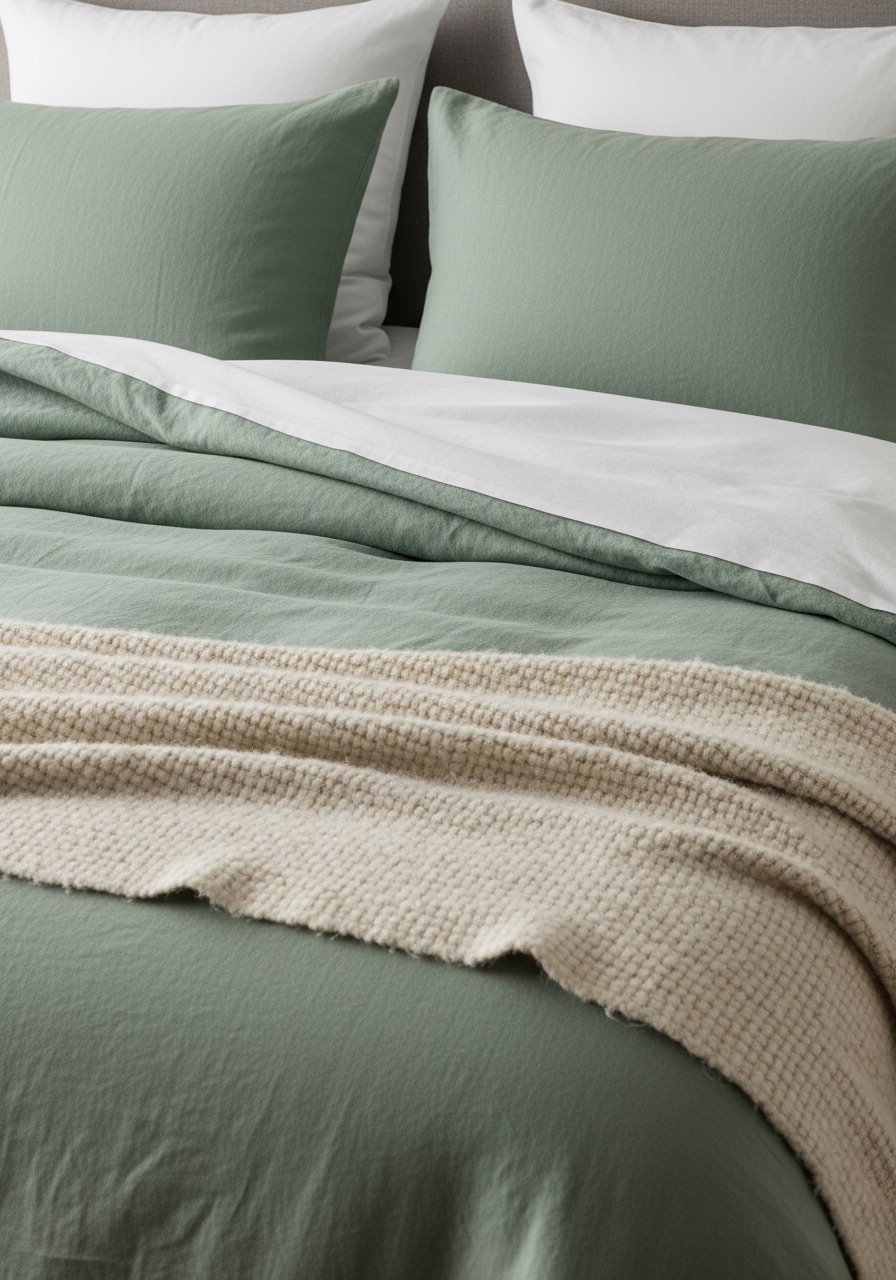
I start with the bed because it’s what guests notice first. I put on a neutral linen duvet and two same-size pillows for symmetry. Then I add a lighter blanket at the foot for contrast. Visually, the room goes from “spare” to intentional when the bed looks soft and lived-in.
One thing most people miss: pillow scale matters—use two matching sleeping pillows, not a mix of sizes. Small mistake to avoid: over-layering with too many decorative cushions that make the bed look cluttered.
Step 2: Layer the light so evenings feel gentle
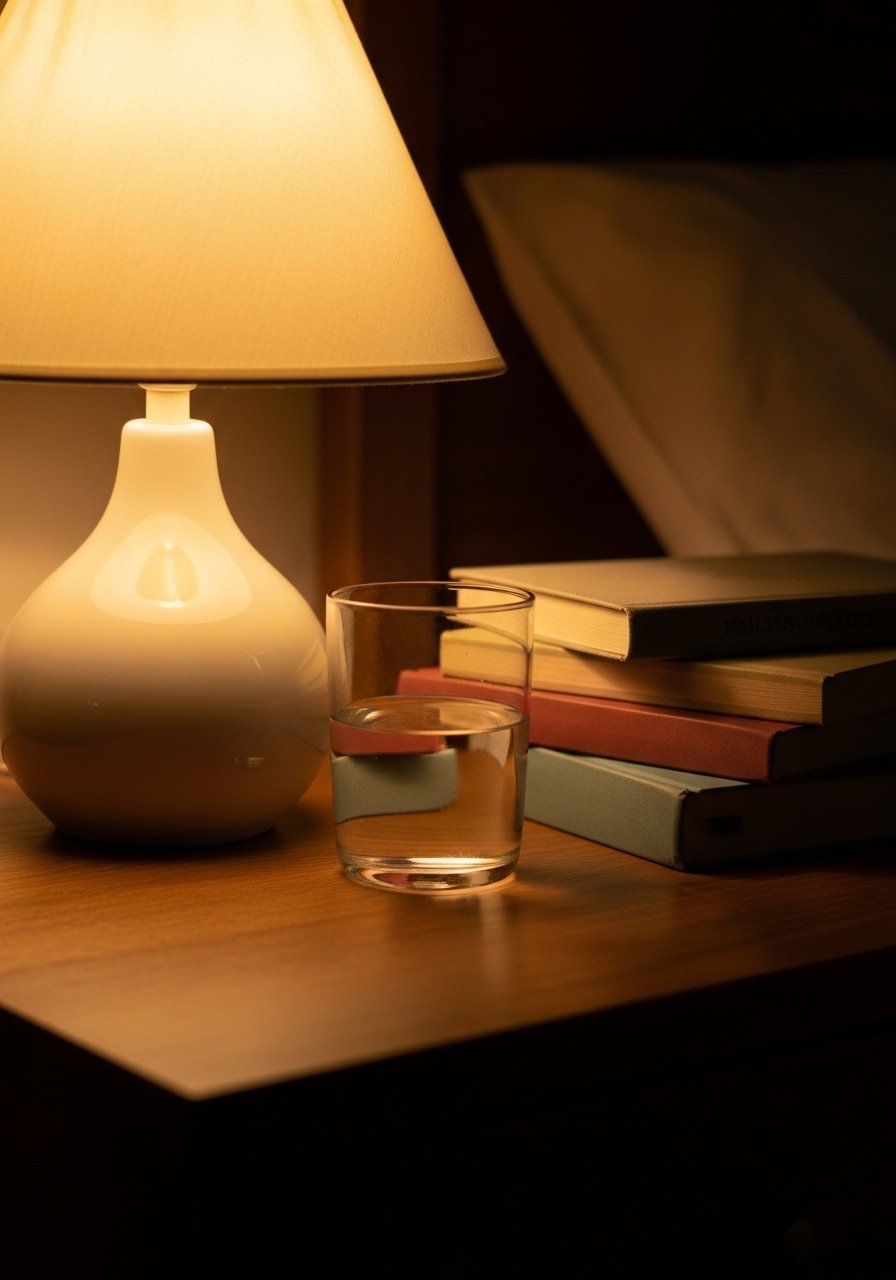
I replace harsh overhead light with lamps on both sides of the bed. I aim for warm bulbs and shades that soften the glow. Lighting changes the mood more than paint or textiles—sudden, direct light makes rooms clinical, while layered light is relaxing.
People often underestimate lamp scale; a low lamp on a tall headboard looks off. Don’t set lamps too bright—guests should be able to read without feeling like they’re under a spotlight.
Step 3: Arrange furniture for easy flow and comfort
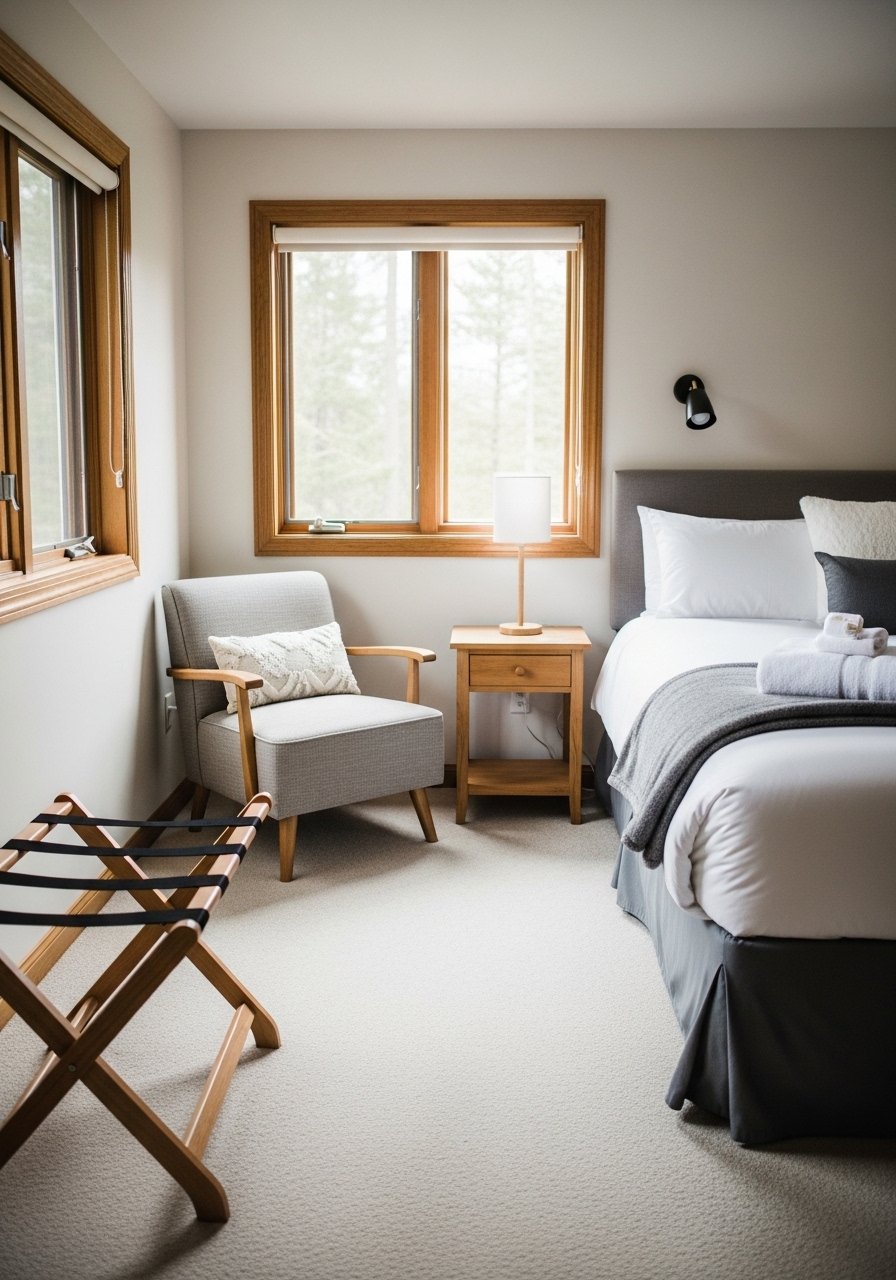
I think about movement: clear the path from door to bed and leave space on both sides. I add a folding luggage rack instead of a chair so guests have a place for a suitcase. This keeps surfaces free and the room feeling uncluttered.
An insight I use: negative space feels intentional—leave a little empty floor near the bed. A common mistake is to cram a bulky chair or extra table that blocks the route and makes the room feel smaller.
Step 4: Add texture to keep the room warm, not just neutral
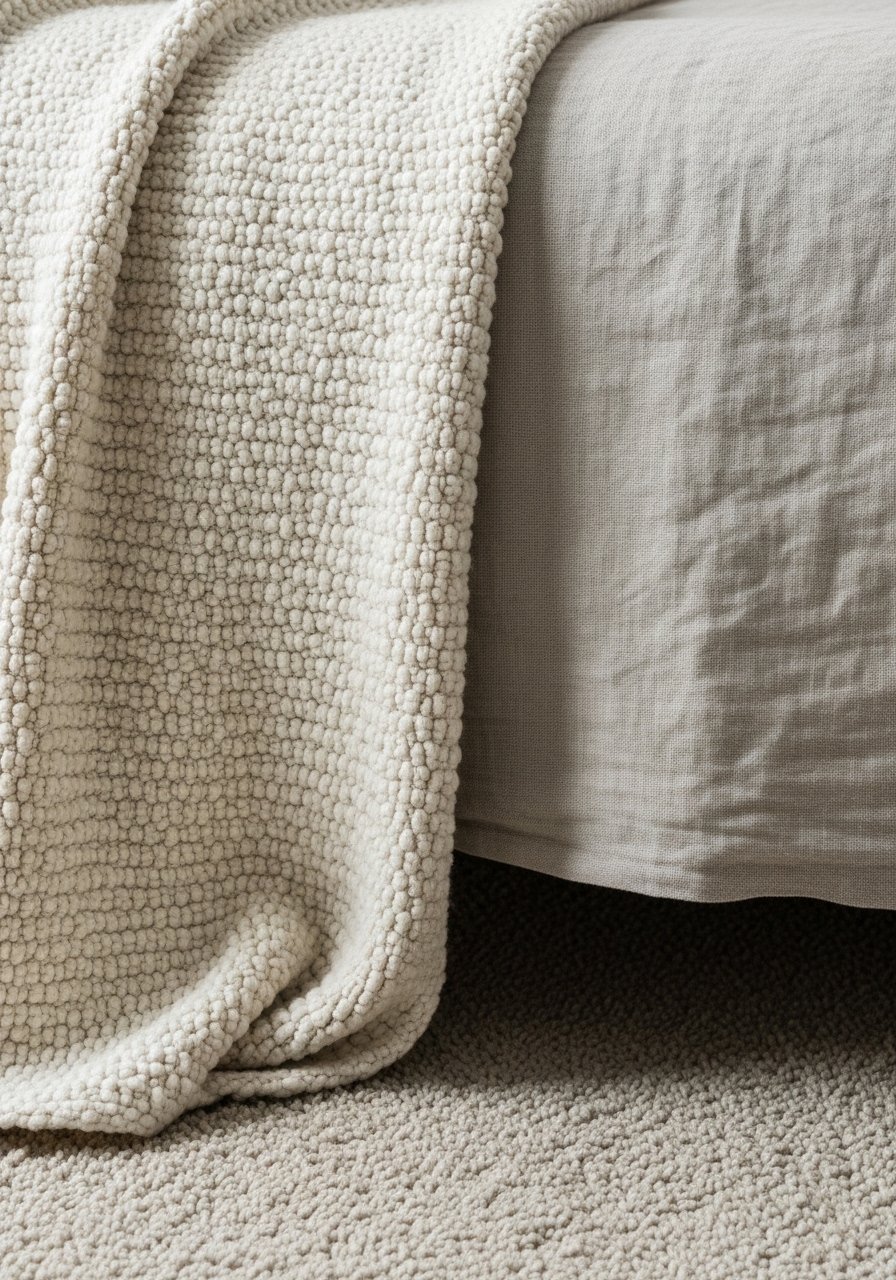
I bring in a rug and a textured throw to soften the sound and sight of the room. A neutral 5×8 rug anchors the bed and adds warmth underfoot. The bouclé throw gives a tactile detail guests can touch—little comforts matter.
Most people either do too little texture or too many patterns. My tip: mix three textures maximum (linen, plush rug, bouclé) for a calm, layered look. Avoid clashing patterns that compete with the bed.
Step 5: Include small practical touches that guests will actually use
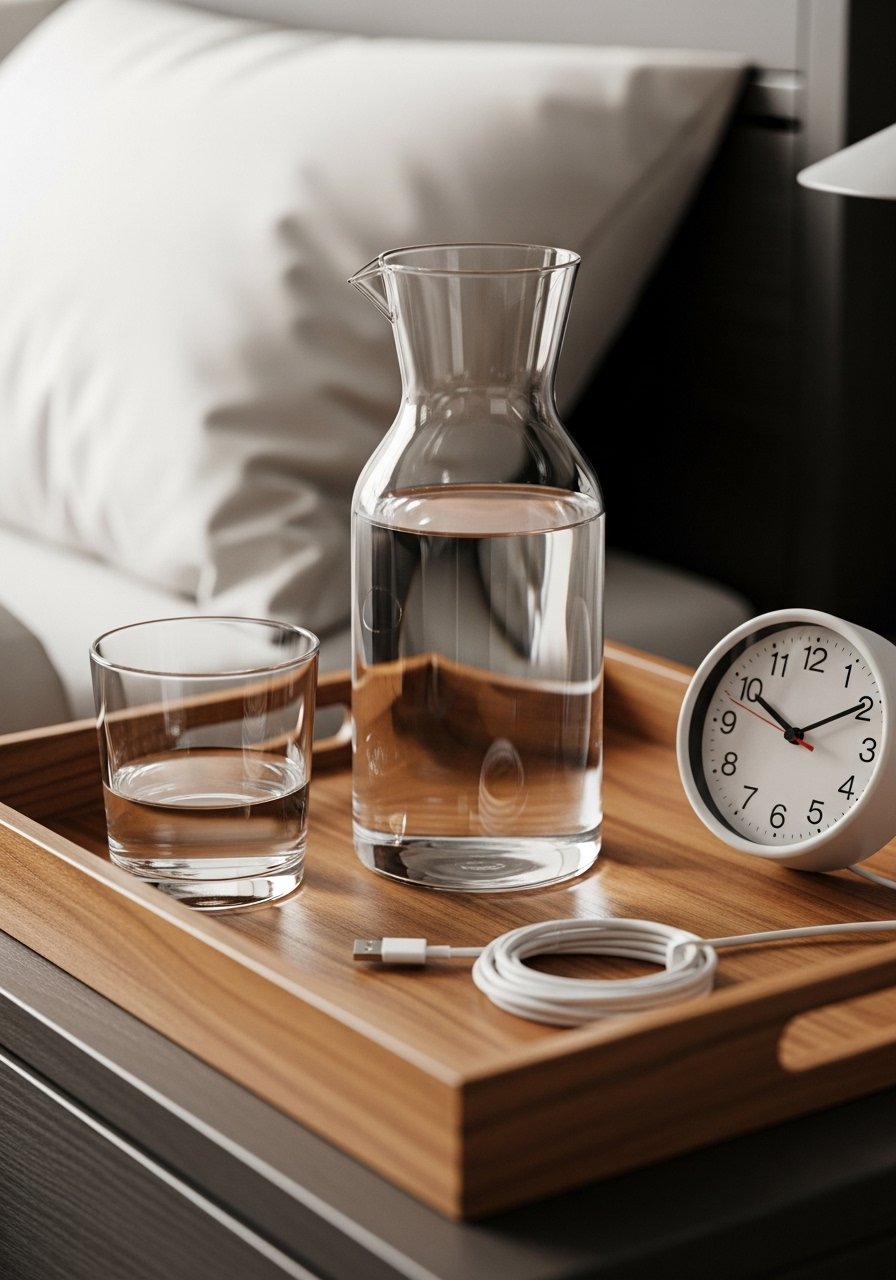
I add simple, useful items: a water carafe, an extra set of hotel-firm pillows, and clear access to outlets. Blackout curtains go up to help them sleep and a mattress topper evens the feel of an older mattress. These are the things guests comment on later.
One insight: practical comforts read as thoughtfulness. Don’t hide chargers or leave surfaces cluttered with decor. Avoid assuming guests want heavy decor over useful items.
Step 6: Edit the styling so it feels curated, not staged
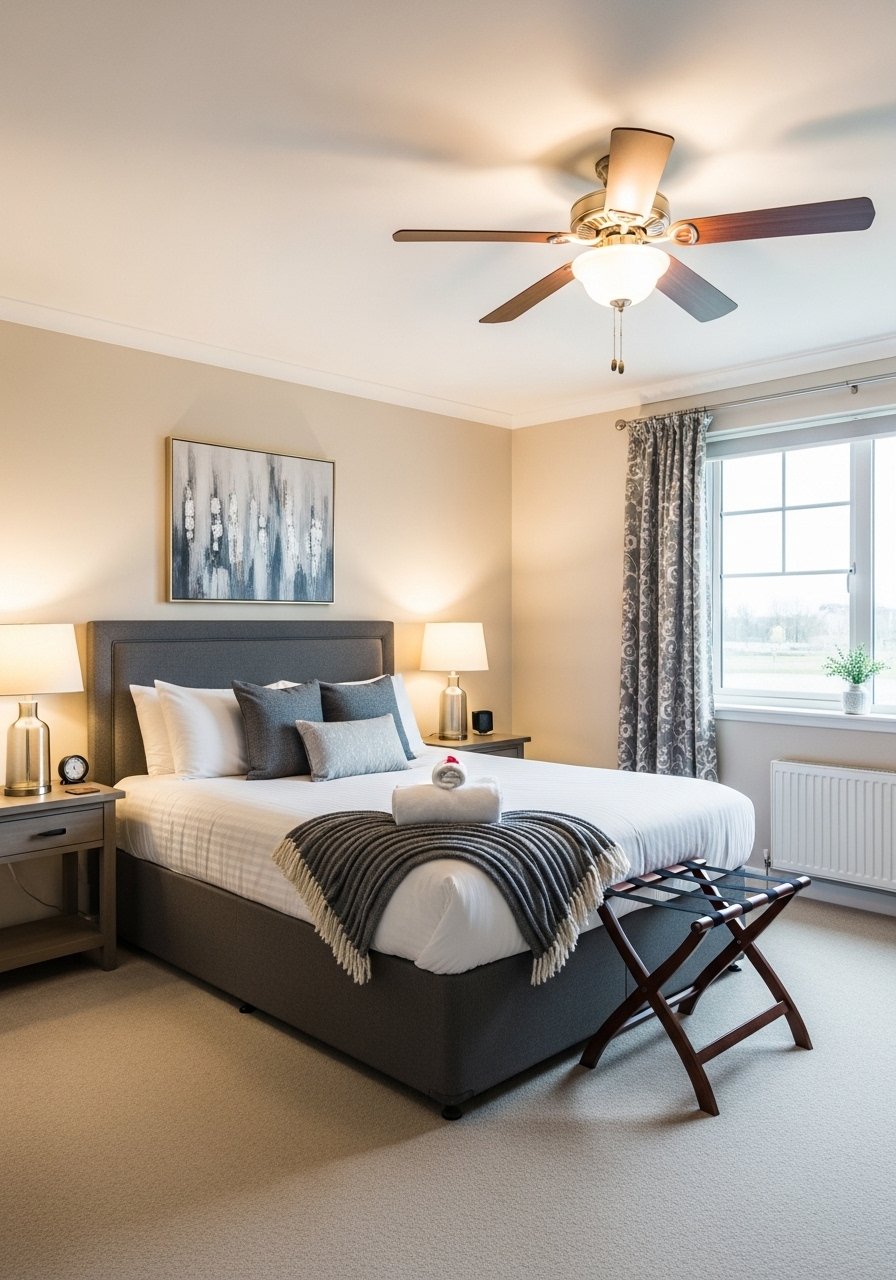
I stand at the doorway and remove anything that steals attention from the bed. I keep one piece of art, one vase, and one book on the bedside. The room should feel lived-in and easy to use, not like a showroom.
One insight: less is more for guest rooms—pick a few well-placed items. A common mistake is over-accessorizing; guests should be able to set down a suitcase or hang a coat without moving things.
Common mistakes that make guest rooms feel cold or temporary
I see the same issues often: mismatched bedding, one harsh light, or too many decorative accessories. Those things make a room feel temporary instead of welcoming. Fix the bed, soften the light, and clear surfaces first.
Quick checklist:
- Match pillow sizes and keep bedding consistent.
- Use warm bulbs and lamps on both sides of the bed.
- Provide a place for luggage and a clear surface for essentials.
Make this look work in a small room or on a budget
I’ve done this in tiny rooms by focusing on the essentials. A neutral linen duvet, one good lamp, and a bouclé throw go a long way. You don’t need everything at once—start with the bed and one lamp.
Budget tips:
- Choose a good duvet cover and add budget-friendly pillows.
- Use a simple folding luggage rack instead of a bulky bench.
- A single 5×8 rug anchors the space without covering the floor.
How to blend this hotel feel with the rest of your home
I like rooms that feel part of the house, not a copy of a hotel. Use a color or texture already in nearby rooms—sage linen or a neutral rug keeps the look cohesive. This makes guests feel at home while the room still reads as restful.
Blend ideas:
- Pull one accent color from the hall or bathroom.
- Keep art and frames consistent in finish.
- Use similar lamp styles throughout the house for continuity.
Final Thoughts
Start with the bed and one lamp. Make small edits until the room feels calm and useful. You can add a bouclé throw or a linen duvet as an easy, low-commitment upgrade that changes the whole feel. Take a step back, edit, and your guest room will feel like a quiet, comfortable stay.