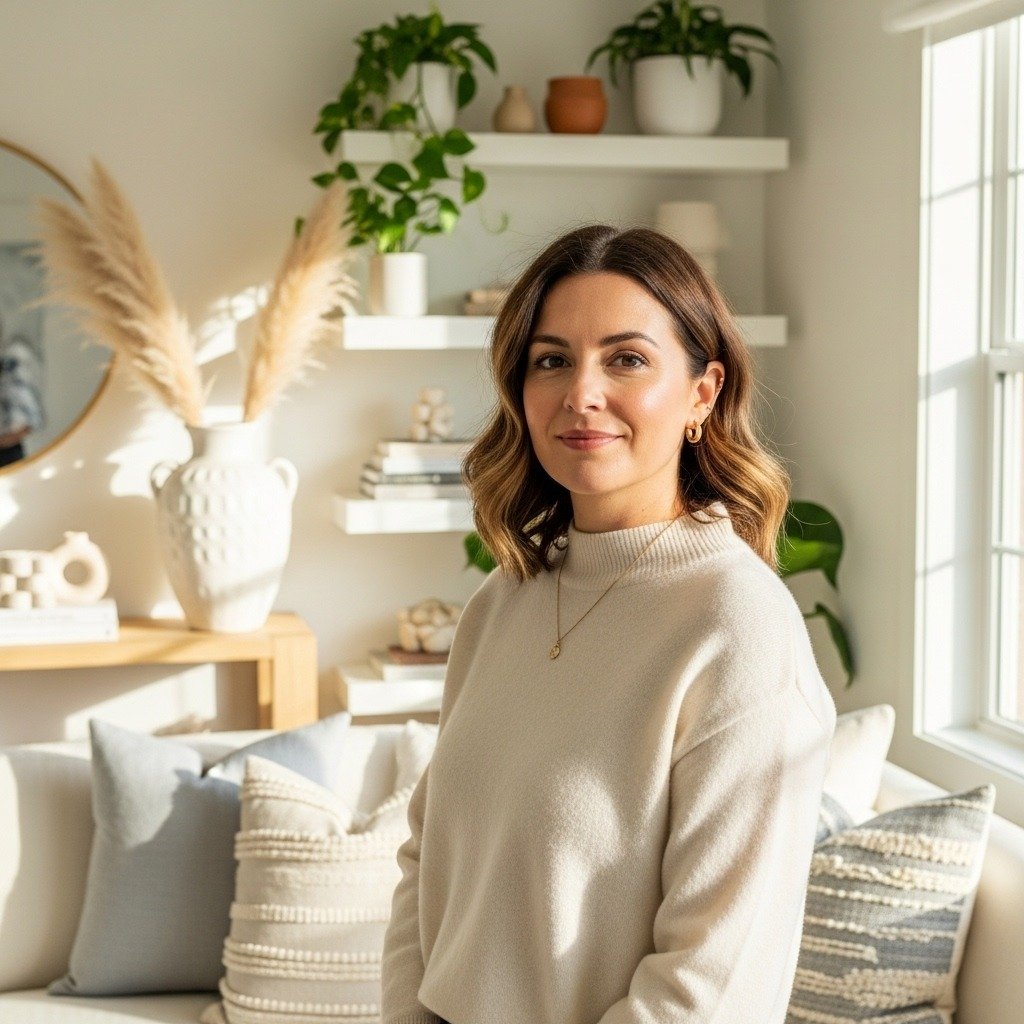
I used to walk into my small living room and feel boxed in. Too much furniture, not enough flow. The walls looked bare, but adding more made the space claustrophobic.
I learned to edit, to use vertical space, and to pick pieces that do double duty. It made the room feel intentional and comfortably roomy.
How to Decorate a Room With Limited Space Smartly
This is the method I use every time a room feels unfinished. You'll learn to edit, anchor, and layer so the space breathes and stays useful. The result is a calm, balanced room that reads larger and feels lived-in—think organic modern touches and cozy textures without clutter.
What You'll Need
- Chunky knit throw in oatmeal, 50×60 (~$40–65)
- Tall leaning full-length mirror, 60×20 in black (~$120–250)
- Floating wall shelf set, white pine, 3-pack (~$40–90)
- Narrow console table, 36" slim entryway table, walnut (~$80–200)
- Multifunctional storage ottoman, linen, 18" round (~$60–150)
- Slim arc floor lamp, matte black, 62" height (~$70–150)
- Natural jute area rug, 4×6 low pile (~$60–120)
- Bouclé accent chair, ivory, single seat (~$150–350)
Step 1: Edit the room until the main function is obvious
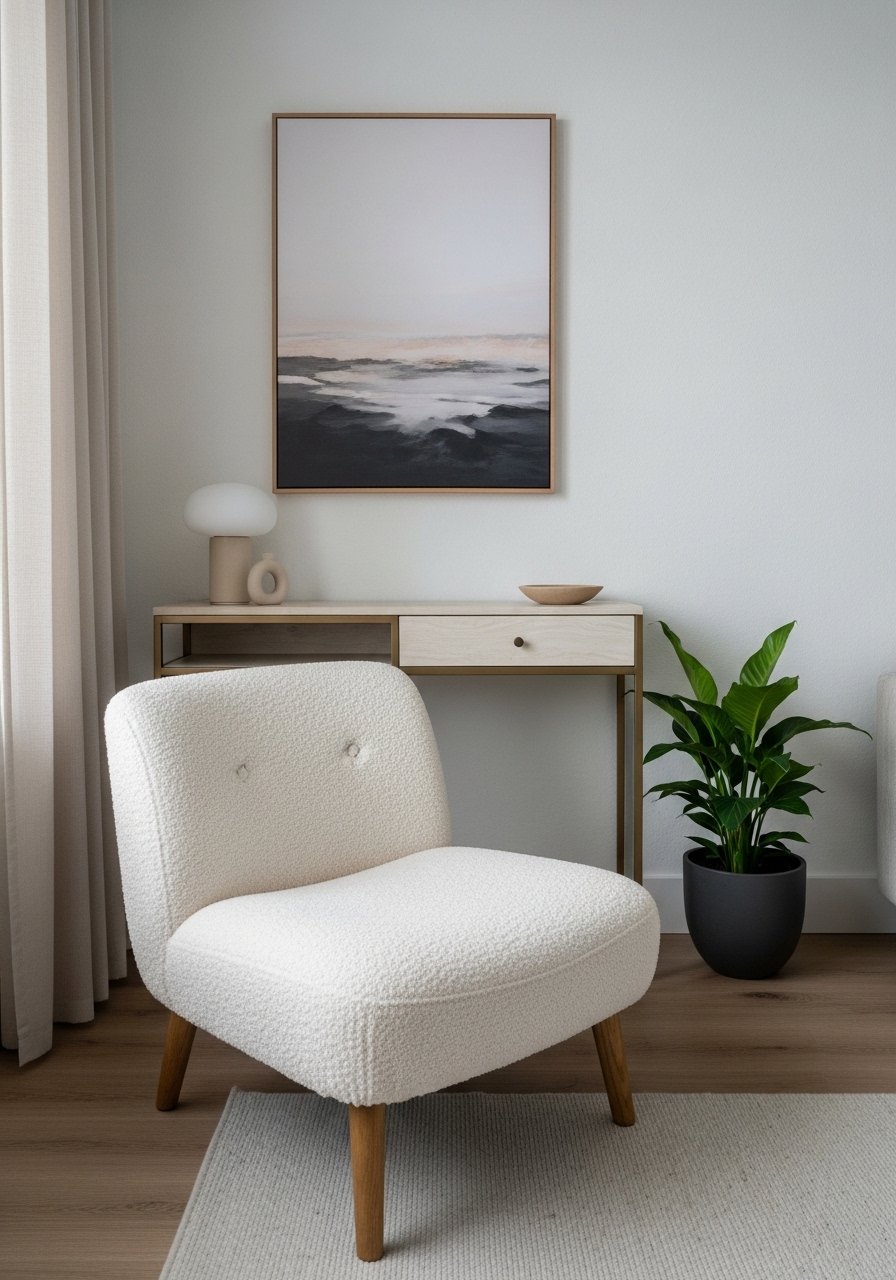
I start by removing anything that doesn't serve the room's main function. If it's a living area, I keep a seat, table, and one surface for lamps or books. It’s amazing how much more spacious a room feels when I accept negative space.
People often miss that empty corners are intentional breathing room. The mistake is filling every inch "just because." Resist that urge and keep the view clear from the doorway.
Step 2: Choose one anchor and get the scale right
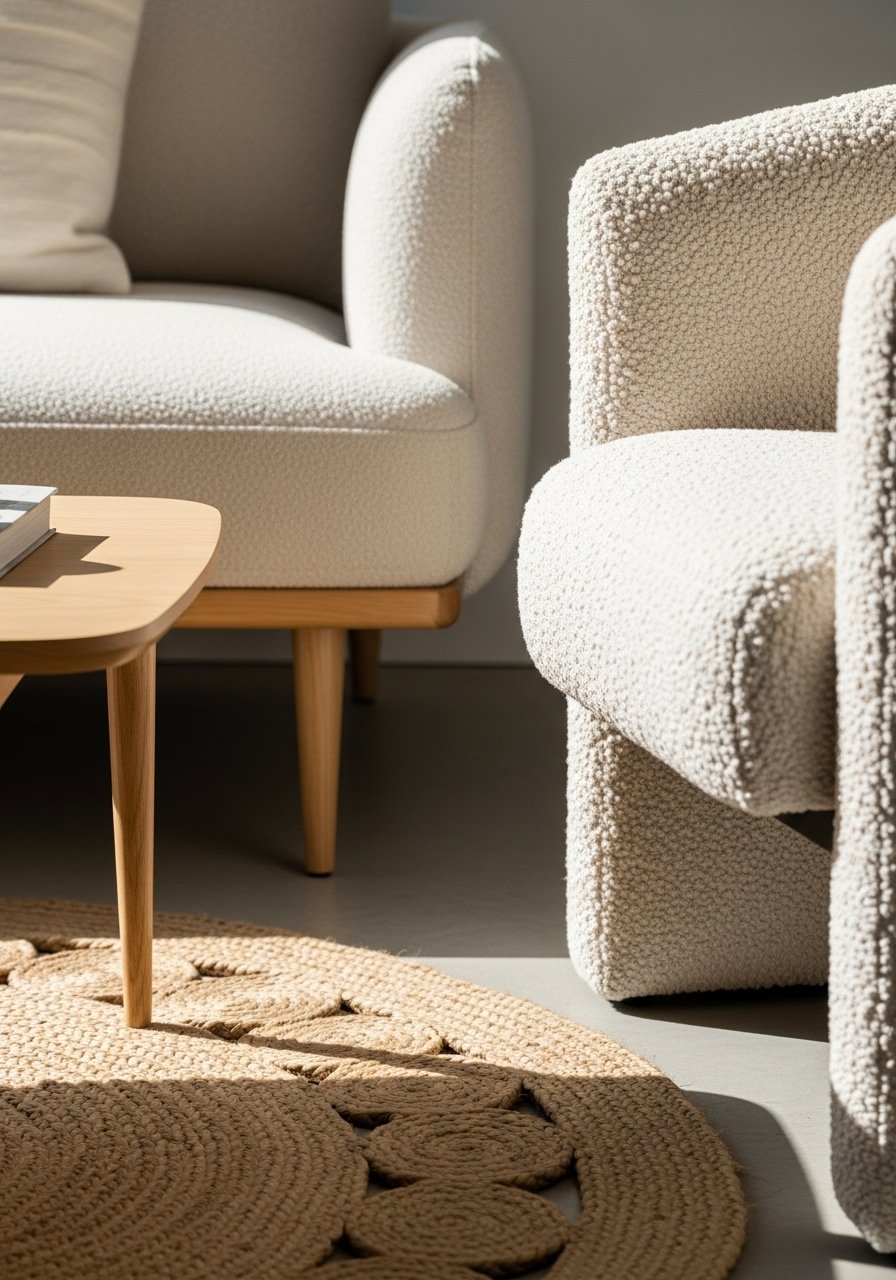
I pick one anchor—usually a rug or sofa—and size everything to it. In small rooms I go slightly larger on the rug than I think I need. It visually expands the floor plane and keeps furniture from floating awkwardly.
A common miss is using tiny rugs that chop up the space. Avoid that; a 4×6 or slightly bigger makes things read as intentional. Don't cram a large sofa if there's no breathing room around it.
Step 3: Build up, not out—use verticals for balance
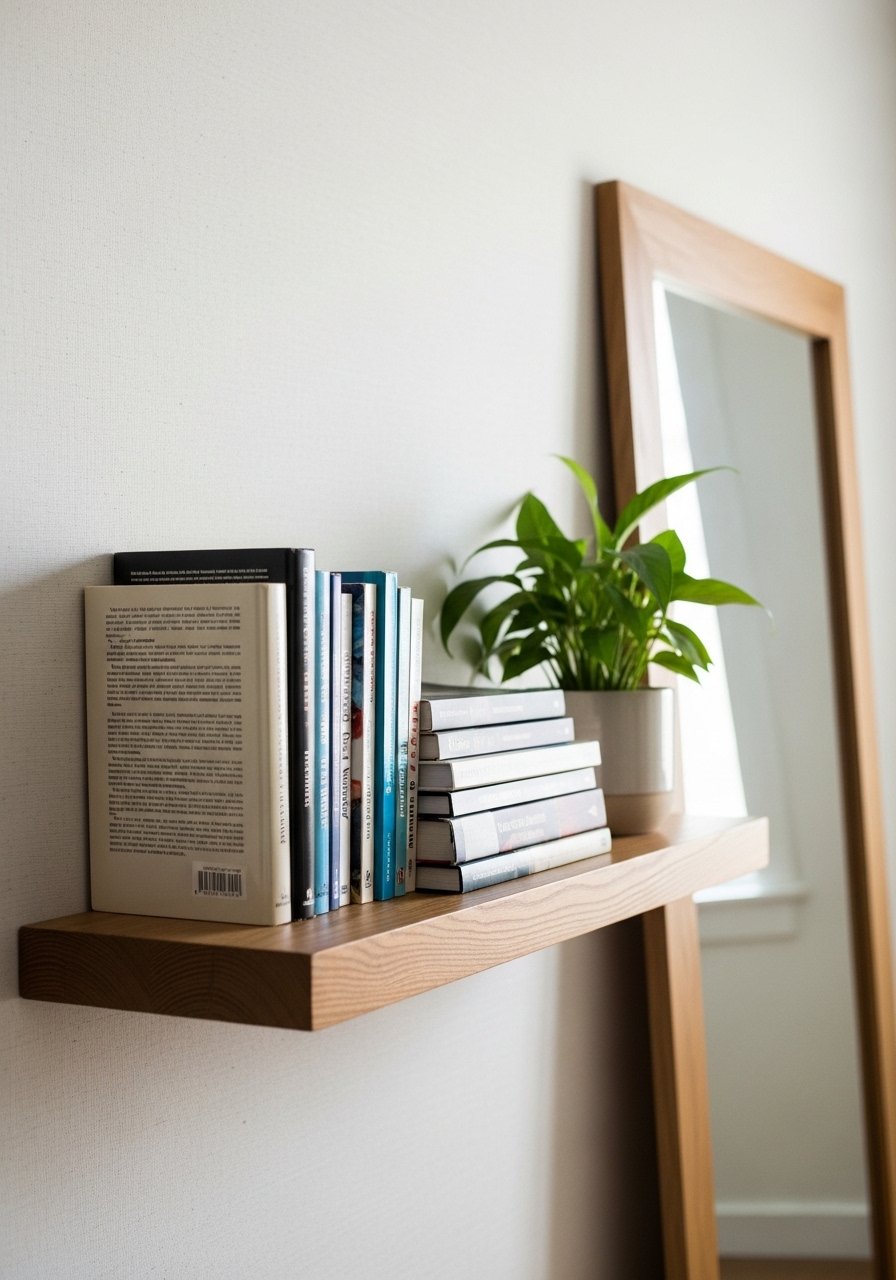
I work vertically next. A tall leaning mirror or narrow bookcase draws the eye up and makes ceilings feel higher. Floating shelves carry storage and display without the bulk of a cabinet.
People forget eye-level pauses—leave some wall space between shelves and ceiling. The easy mistake is overcrowding shelves; I keep one tidy shelf per wall and rotate objects to avoid visual noise.
Step 4: Layer light and reflective surfaces for depth
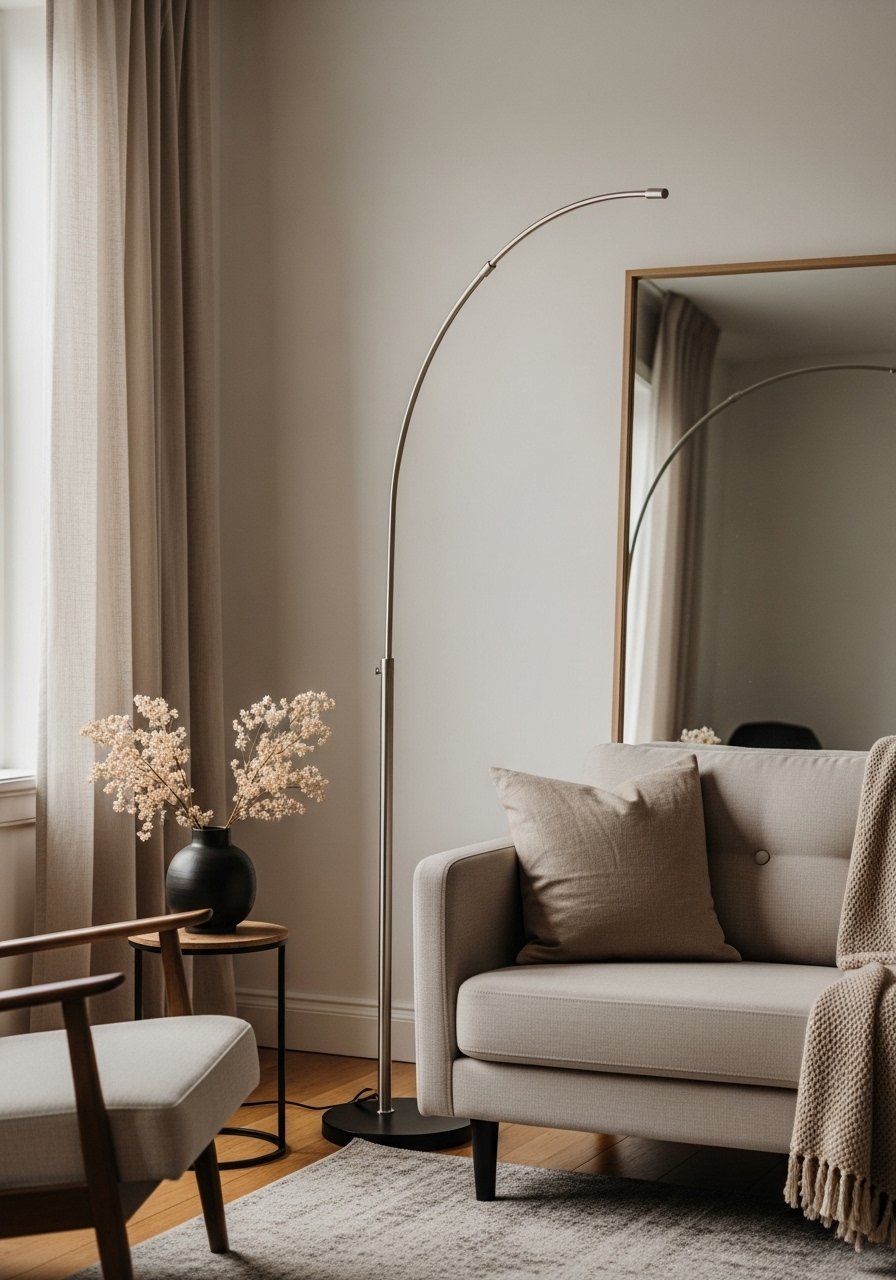
I add layers of light: a slim floor lamp, a table lamp, and natural light. A mirror opposite a window doubles daylight and makes distant corners recede. Lighting gives depth without adding furniture.
Most folks rely on a single overhead light and miss the glow at eye level. Avoid placing the lamp where it casts hard shadows; aim for soft pools of light that invite you into the space.
Step 5: Pick pieces that pull double duty and add texture
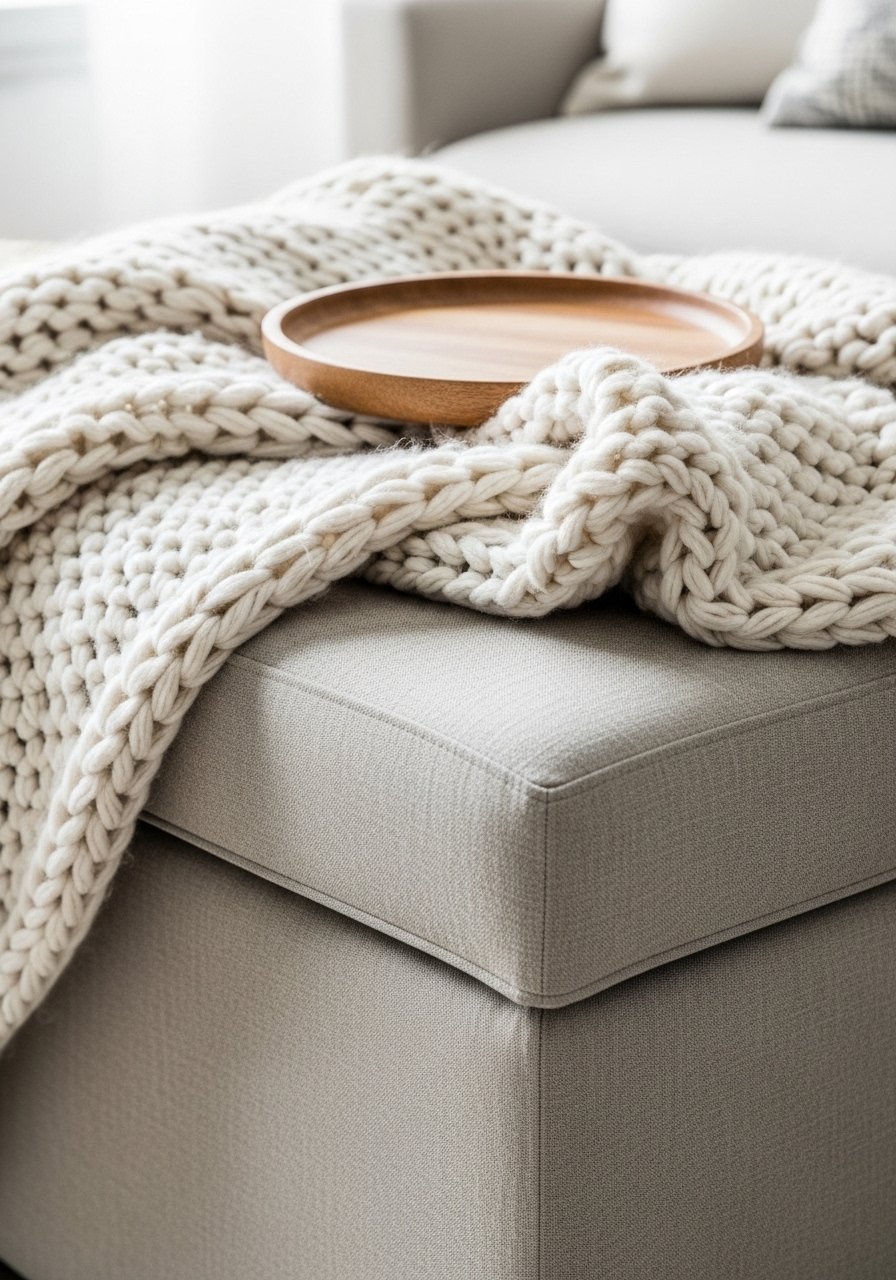
I finish with multifunctional pieces: a storage ottoman for blankets, a slim console that can be a desk or media stand. Then I add texture—a jute rug, a chunky throw—to keep the palette calm but tactile.
People often think more pattern equals interest. I use one textured item and one pattern at most. The small mistake is choosing visually heavy colors for every piece; I stick to a light, warm palette so each object breathes.
Common mistakes in small-space decorating
I see the same missteps again and again. Here’s what to avoid:
- Buying everything to match. It flattens the room. I mix wood, metal, and soft textiles.
- Forgetting circulation. Leave a clear path to doors and windows.
- Thinking small means cheap-looking. Scale and proportion matter more than price.
A quick rule: if you can’t move around the furniture comfortably, edit again.
Adapting this method by room and budget
I use the same approach for a studio, bedroom, or tiny dining nook. On a budget I prioritize:
- One good anchor (rug or mirror)
- One multifunctional piece (ottoman or console)
- Thoughtful lighting
If I have a little more to spend, I add a signature texture like a bouclé chair or a quality jute rug. Small rooms reward one good investment and a lot of editing.
Mixing trends with what you already own
I like to borrow current touches—japandi simplicity, organic modern textures—without a full overhaul. I’ll add:
- A bouclé chair or textured throw for trend-forward texture
- A slim black mirror for a modern, graphic edge
- Warm woods to keep things cozy
I match one trending piece with the rest of my existing furniture so the room feels current but not curated.
Final Thoughts
Start with one corner, not the whole room. I often begin with a mirror or a small rug and build from there. Small changes—editing, one good anchor, and layered light—add up fast.
If you want one low-commitment pick, I usually recommend a leaning mirror. It changes proportion, adds light, and costs under doing a full redesign.