I stared at my open plan for months, annoyed that the kitchen, dining, and living areas felt like separate islands. One weekend I introduced a few visual anchors and everything clicked. These 21 changes used smart furniture placement, texture, and lighting—most under $150—to get cohesive flow without remodeling. I pulled ideas from showrooms at Target and West Elm, plus a few thrifted finds that made the space feel planned, not staged.
These ideas aim for modern cottage and relaxed minimalist vibes on a moderate budget. Many pieces are budget-friendly ($20–$150) with a few splurges around $200. They work in living/dining combos, studio apartments, and family rooms. I’m leaning into warm wood tones and organic textures this year, which makes spaces feel grounded and open at the same time.
What You'll Need to Get This Look
Textiles & Soft Goods:
- Chunky knit throw blanket in cream (~$35-55)
- Linen blend curtains, 84-inch (~$30-50 per panel)
- Velvet pillow covers, set of 4 (~$40-50)
Wall Decor & Art:
- Set of 3 floating shelves, white oak (~$45-70)
- Large round mirror, 36-inch (~$80-120)
Lighting:
- Rattan pendant light shade (~$30-60)
- LED Edison bulbs, warm white (~$15-20)
Plants & Greenery:
- Artificial fiddle leaf fig tree, 6ft (~$60-90)
Budget-Friendly Finds:
- Peel and stick wallpaper panels, neutral (~$20-35)
Extras:
- 8×10 jute area rug (~$120-200)
Similar at Target/HomeGoods for many of these pieces if you prefer to shop in person.
Zoned Seating with a Low-Profile Sofa for Living/Dining Flow
Style/Vibe: Modern Cottage / Minimalist
Budget: $$ (under $150)
Best For: Living room in open plan
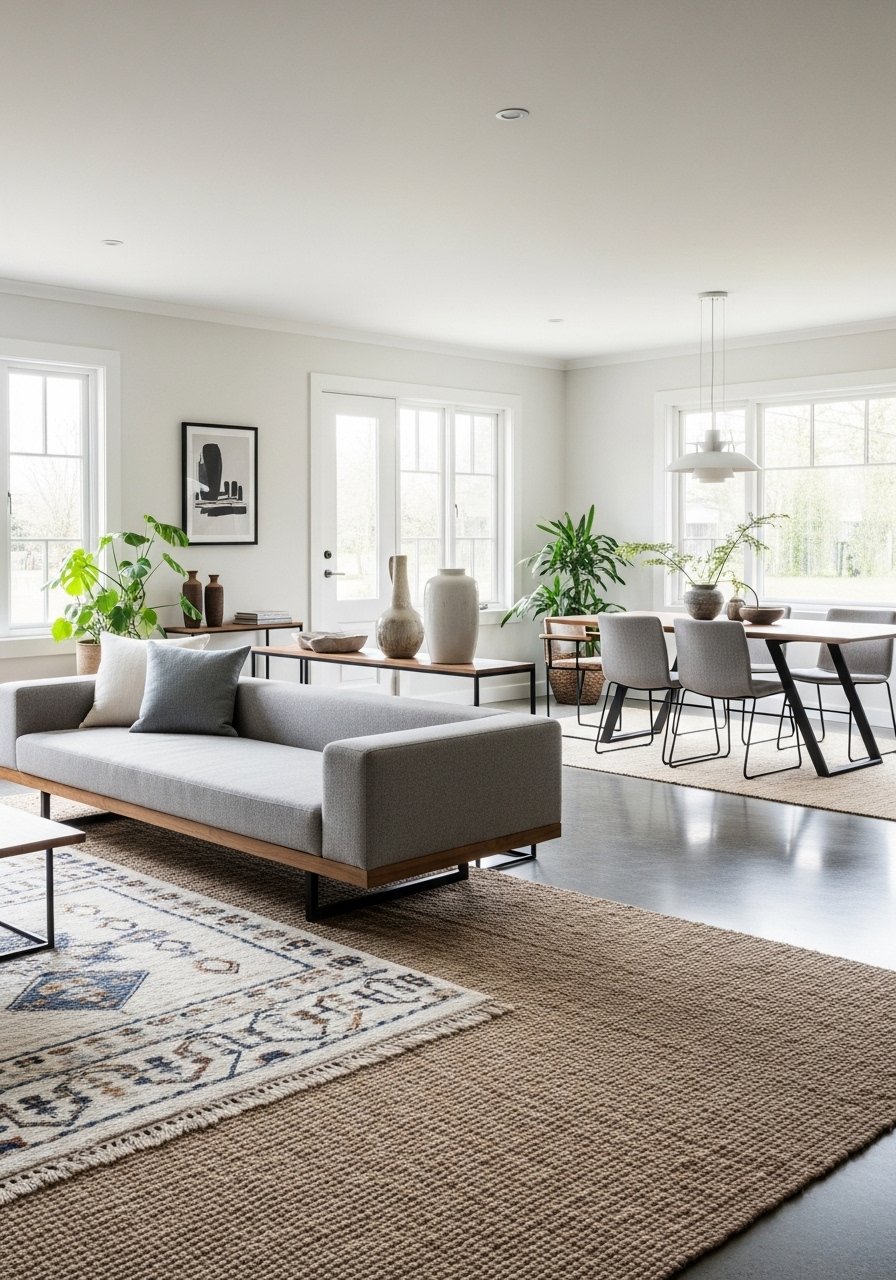
I pushed a low-profile sofa to float between the living and dining areas so sightlines stay open. A slim console behind it acts as a visual separator and provides surface space. I paired it with this cream chunky knit throw and a slim console table 48-inch. The result feels intentional, not boxed-in. Mistake to avoid: don’t use a tall, bulky sofa—it will cut the room in half and break the traffic flow.
Layered Rugs to Define Zones in an Open Living Room
Style/Vibe: Boho / Eclectic
Budget: $$ (under $200)
Best For: Living/dining combos
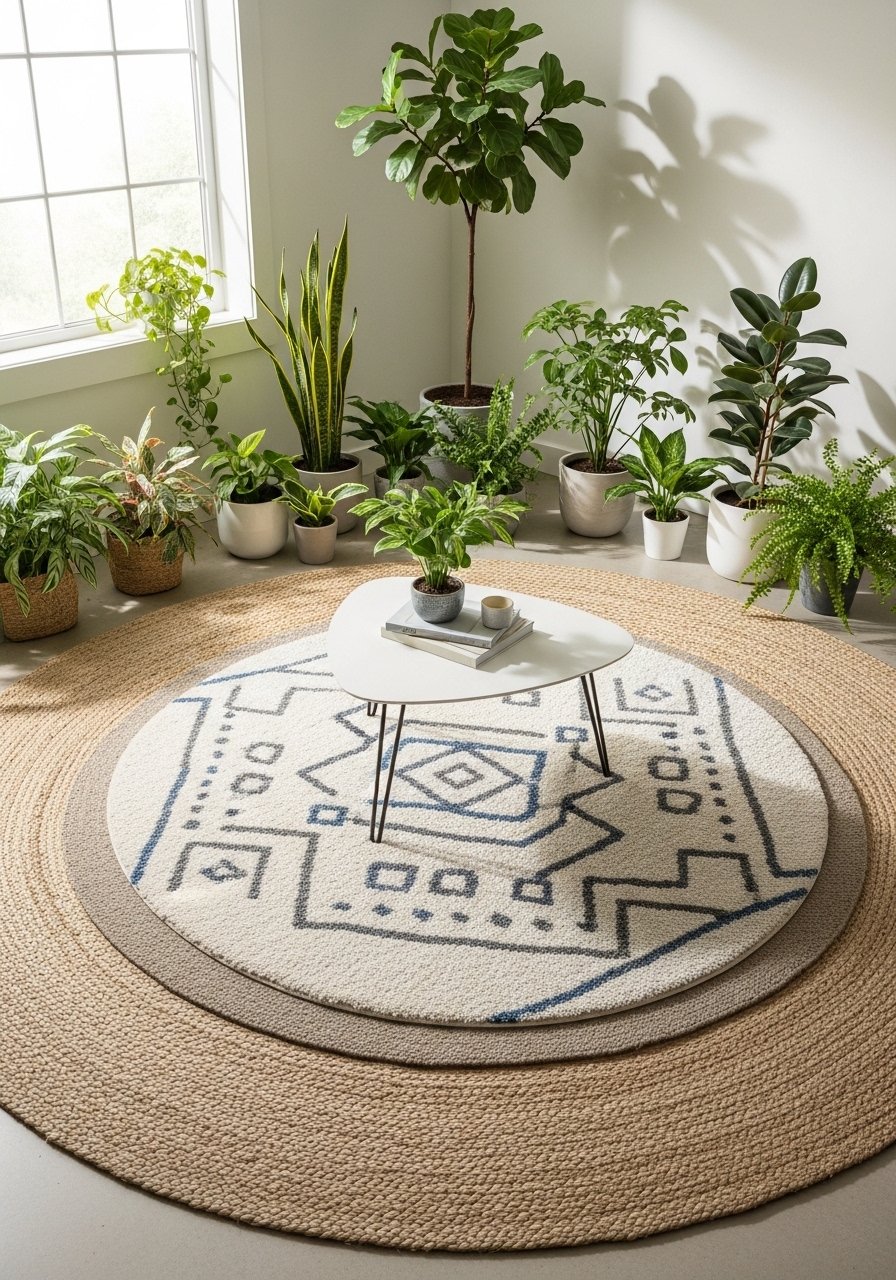
Layering rugs creates instant zones without walls. I used an 8×10 jute area rug under a smaller patterned wool rug so the seating area reads as its own place. Keep the front legs of the sofa on the top rug for cohesion. One common mistake: choosing rugs that are too small—if it’s tiny, it looks like a mat, not an anchor. Use odd-number styling for furniture groupings to feel balanced.
Oversized Round Mirror to Open a Narrow Entryway
Style/Vibe: Scandinavian / Transitional
Budget: $$ (under $150)
Best For: Entryway / Hall opening to living area
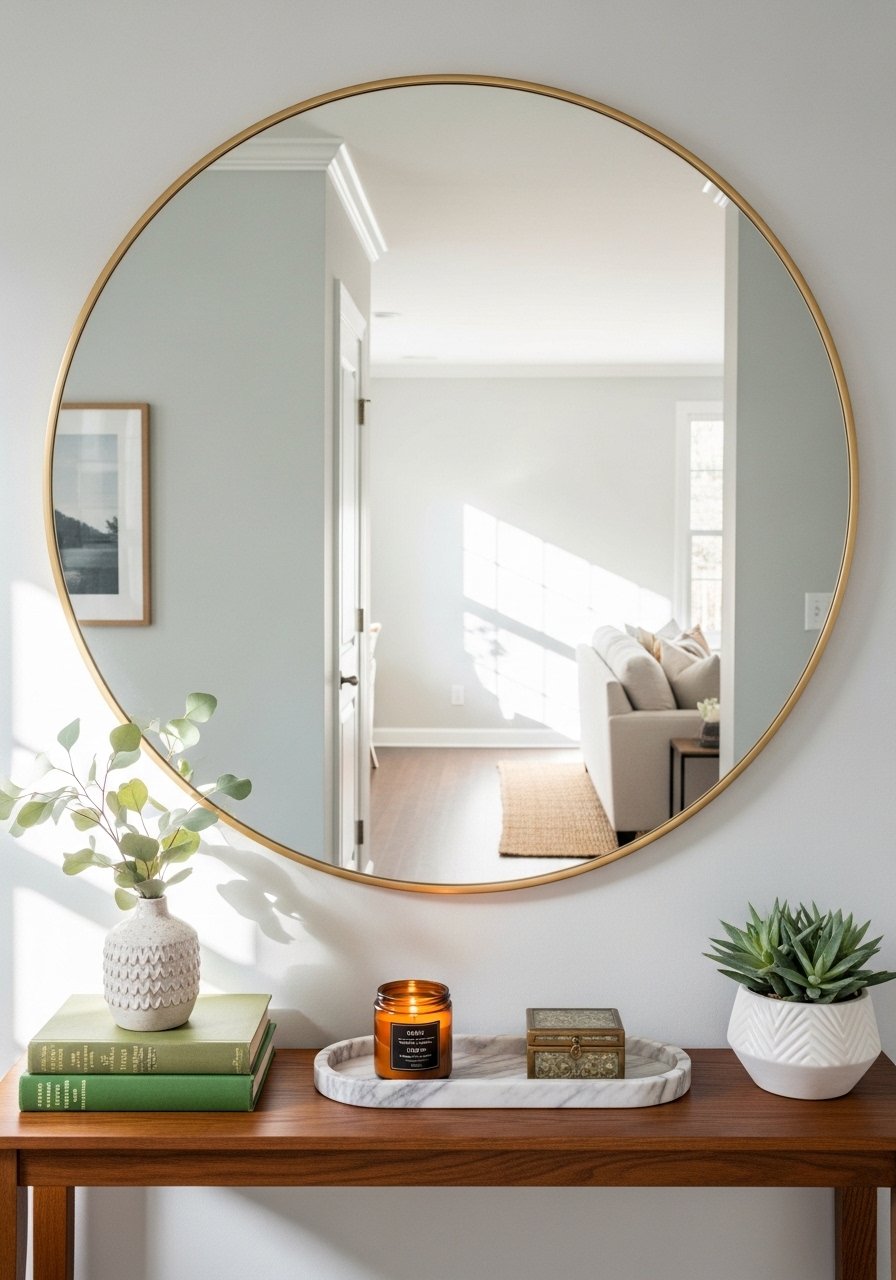
I hung this 36-inch round mirror opposite the room’s windows to bounce light and visually expand the entry into the living area. It balances the wall opposite the sofa and makes sightlines feel continuous. Avoid hanging it too high—mirrors need to reflect people, not just the ceiling. Mirrors are an easy way to play with negative space and keep an open concept from feeling empty.
Consistent Color Palette with One Bold Accent for Flow
Style/Vibe: Modern / Minimalist
Budget: $ (under $100)
Best For: Entire open floor plan
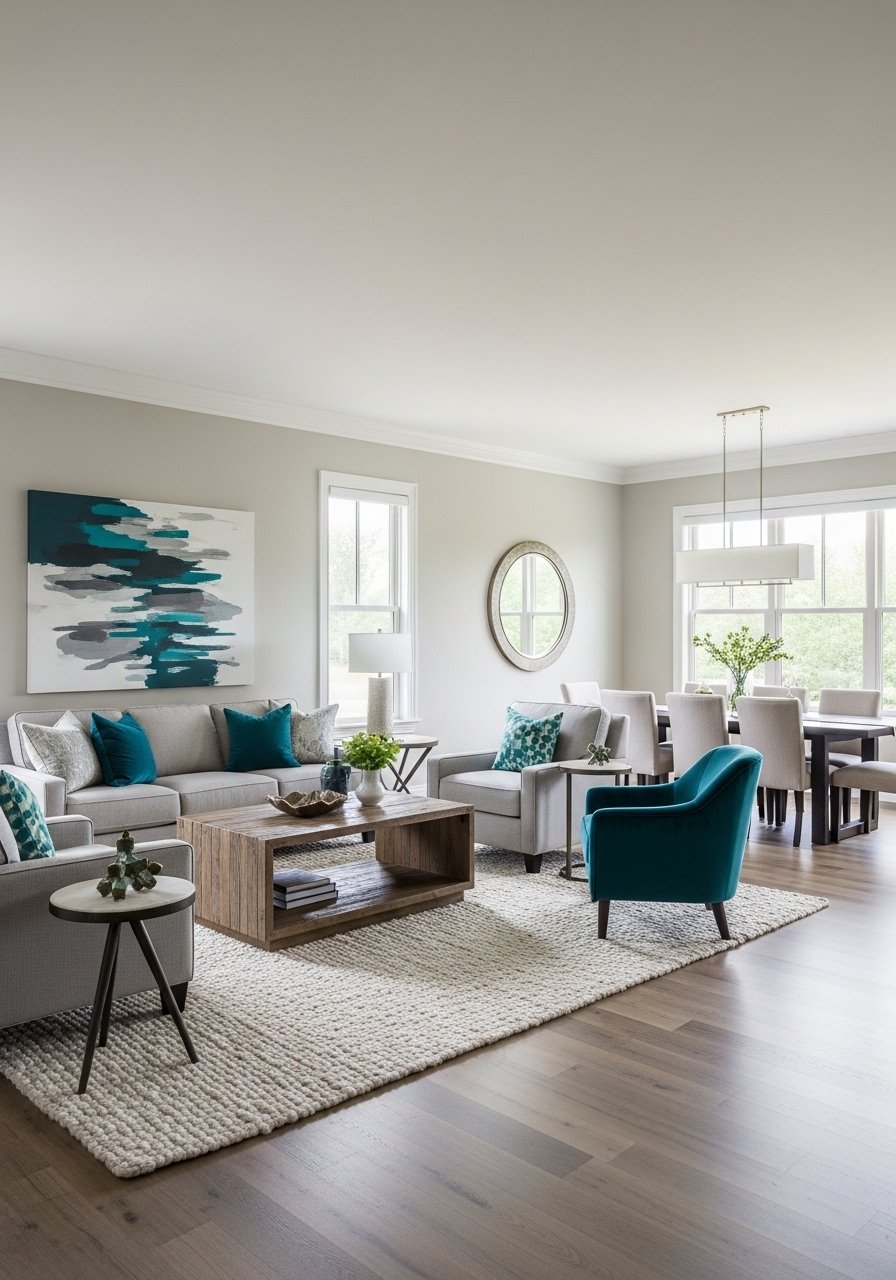
I stuck to warm neutrals—linen, warm white, oak—and added a single teal accent chair to tie both zones. Repeating one accent color across pillows, a vase, and a small lamp makes the eye move smoothly. I bought linen curtain panels and velvet pillow covers to echo textures. Mistake to avoid: too many competing colors—limit accents to one or two tones to maintain coherent flow.
Open Shelving with Curated Greenery for Kitchen/Living Unity
Style/Vibe: Modern Farmhouse / Boho
Budget: $ (under $100)
Best For: Kitchen wall open to living area
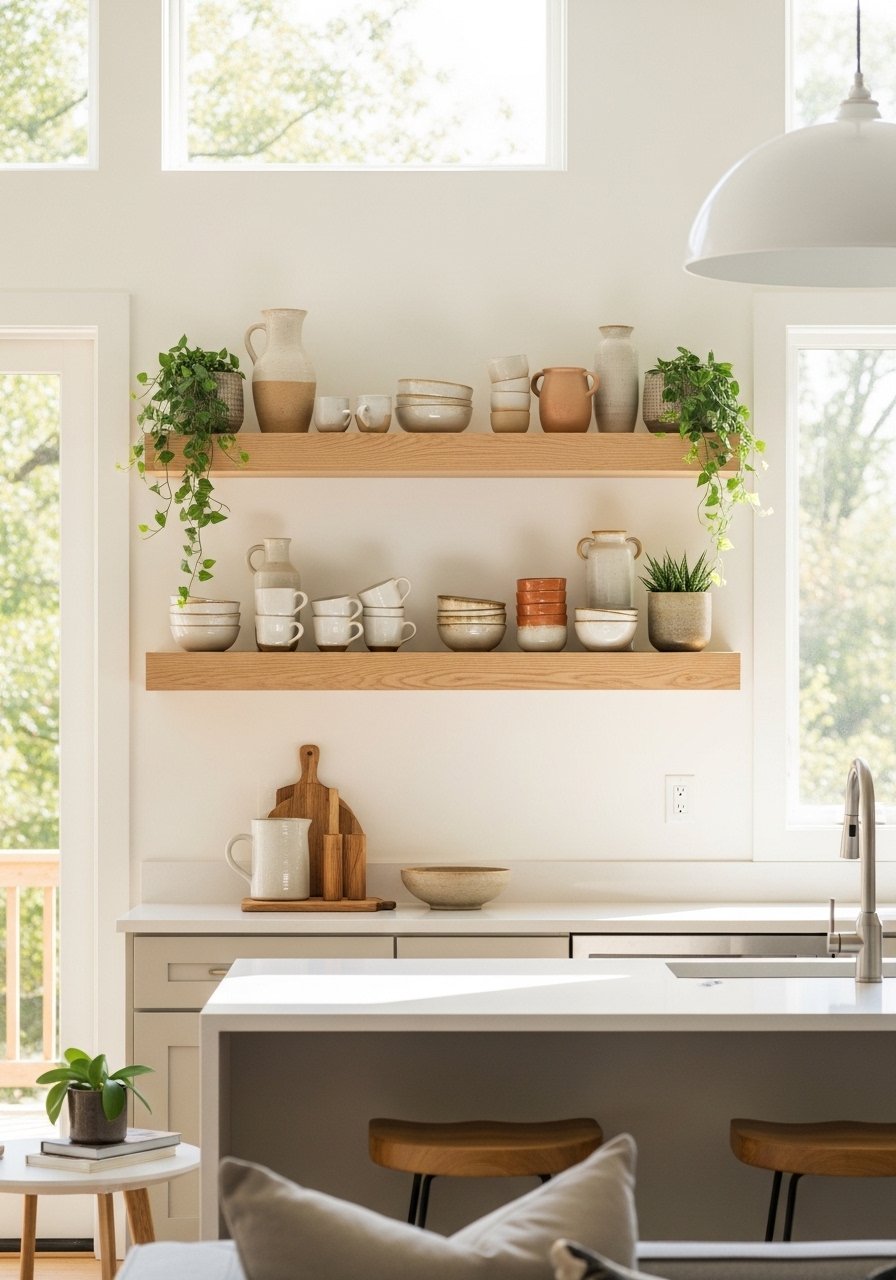
Floating shelves bridge kitchen and living spaces visually. I installed white oak floating shelves and styled them with ceramic bowls and small plants so the palette reads the same from both zones. Keep styling light—use odd numbers and vary heights. A common mistake is cluttering shelves with mismatched items; stick to neutral ceramics, greenery, and one framed photo to keep the look cohesive and airy.
Layered Lighting Plan with Pendants and Floor Lamps
Style/Vibe: Industrial / Transitional
Budget: $$ (under $150)
Best For: Living/dining/kitchen
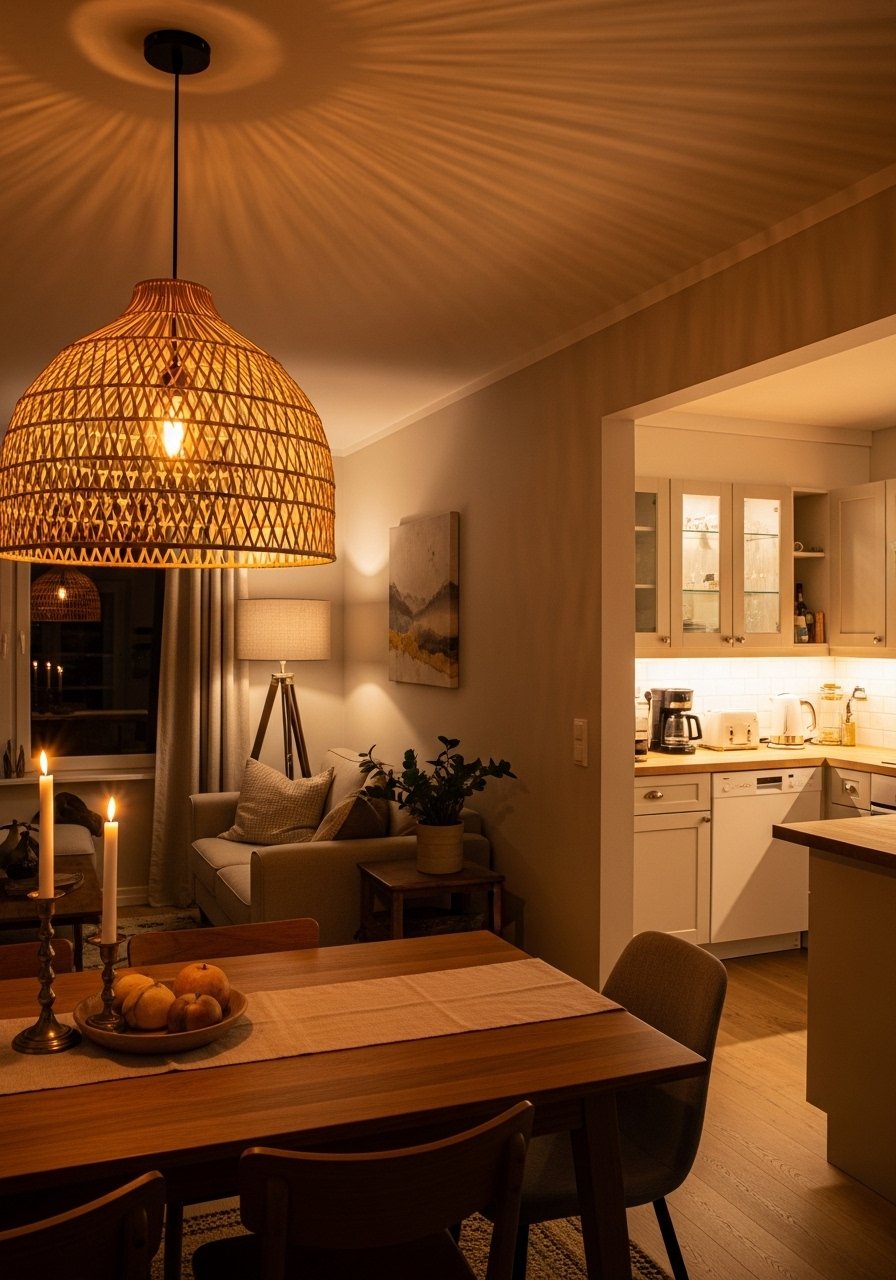
Layered lighting defines zones after dark. I hung a rattan pendant over the dining table, added a floor lamp near the sofa, and used warm LED Edison bulbs. This creates pockets of light and keeps the open plan feeling intentional. A mistake I made once was using only overhead lighting—flat and harsh. Mix heights and temperatures to encourage movement and cozier corners.
A Narrow Console to Create a Passage Without Blocking Sightlines
Style/Vibe: Mid-Century / Minimalist
Budget: $ (under $150)
Best For: Behind sofa or entryway
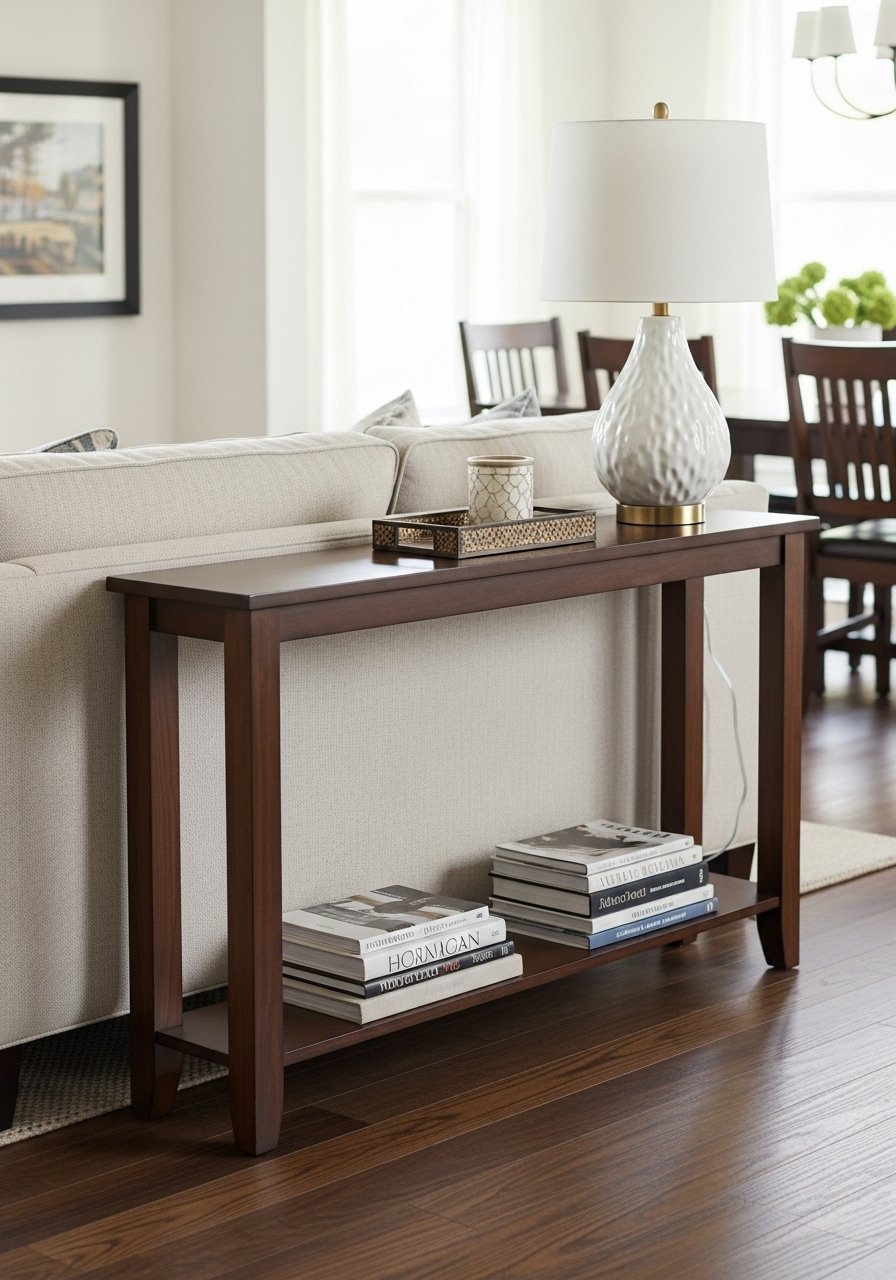
I swapped a bulky credenza for a slim 48-inch console table behind my sofa to keep a clear pathway while offering surface space. It reads as a divider without closing off the room. Styling with a lamp and a stack of books ties the zones. Mistake to avoid: choosing a console too tall—keep it at or below sofa-back height for seamless flow and balanced visual weight.
Open-Backed Shelving Unit to Zone Without a Wall
Style/Vibe: Industrial / Urban Loft
Budget: $$ (under $200)
Best For: Living/dining divider
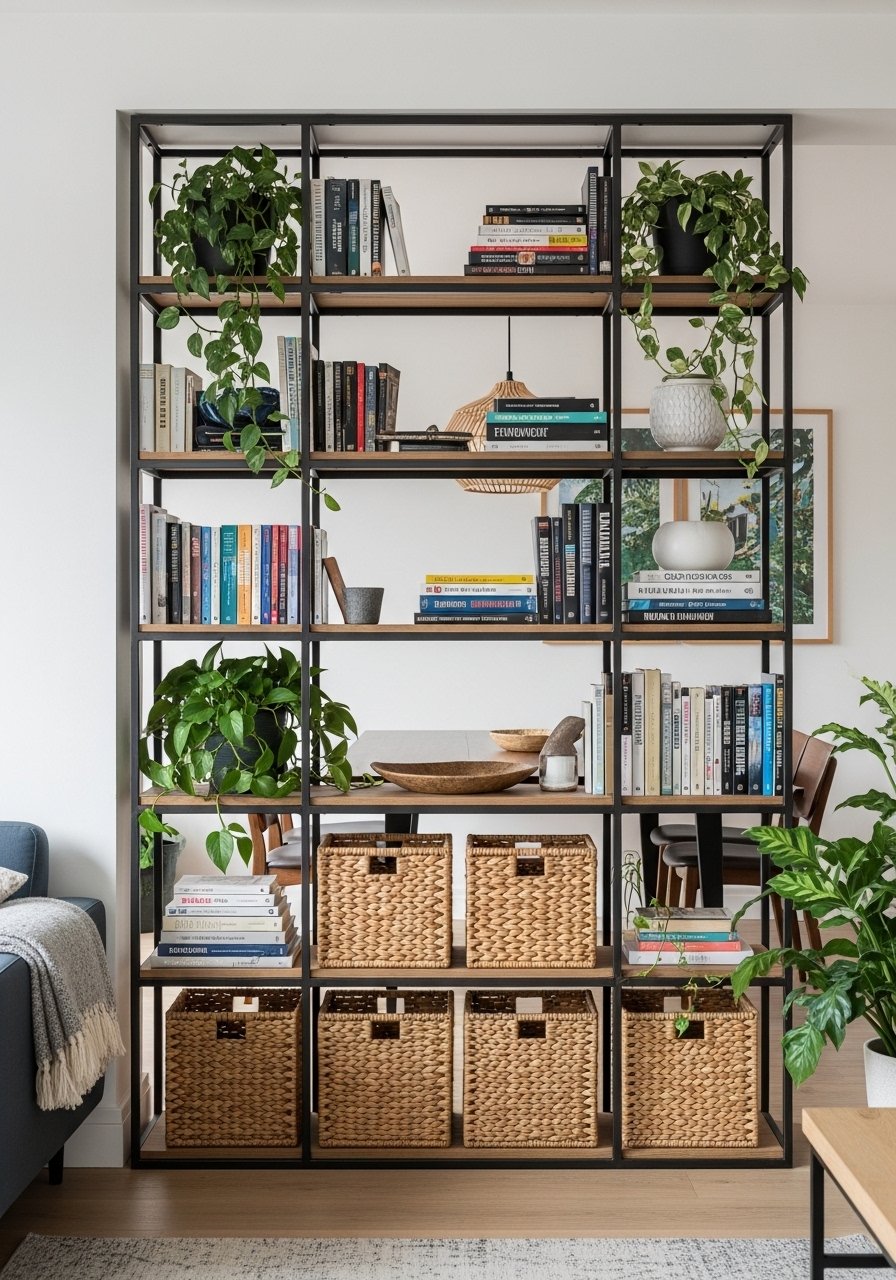
An open-backed shelving unit provides storage while preserving sightlines. I used a metal and oak open shelf bookcase to define the living area but still let light and conversation flow. Style with baskets on lower shelves and art or plants at eye level. The trap is overfilling it—leave negative space so it reads airy and intentional rather than cluttered.
Aligned Furniture Legs to Guide Traffic Flow
Style/Vibe: Scandinavian / Minimalist
Budget: $ (under $100)
Best For: Small open layouts
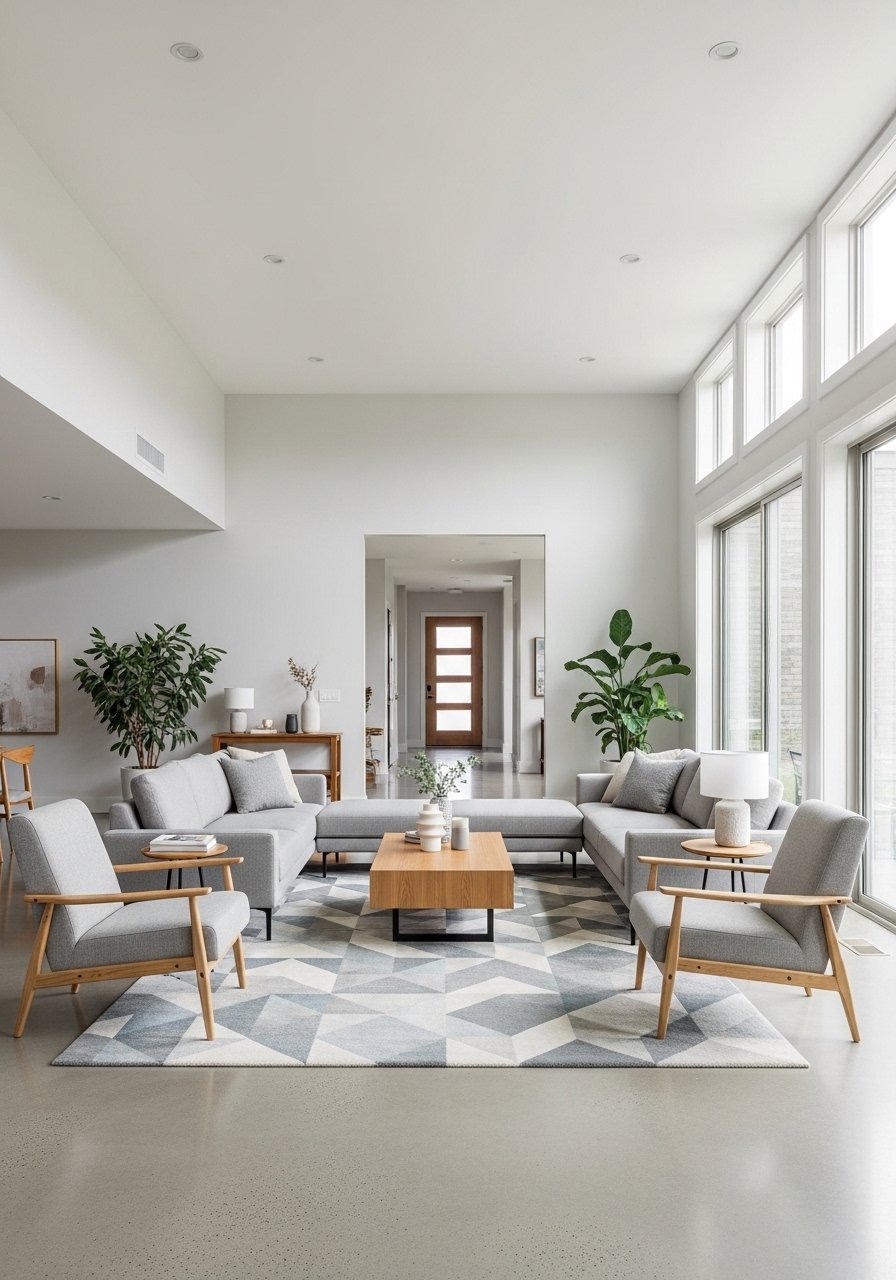
I swear by exposed-leg furniture to create visual pathways. Keeping sofa and chairs with visible legs and aligning them toward the main walkway helps people move without bumping into furniture. I paired a slim mid-century coffee table so the scale stays light. Common mistake: using bulky, skirted pieces that block movement and sightlines—choose lower profiles and lighter finishes for better flow.
Repeat Materials Across Zones for a Cohesive Look
Style/Vibe: Transitional / Modern Farmhouse
Budget: $$ (under $150)
Best For: Whole open plan
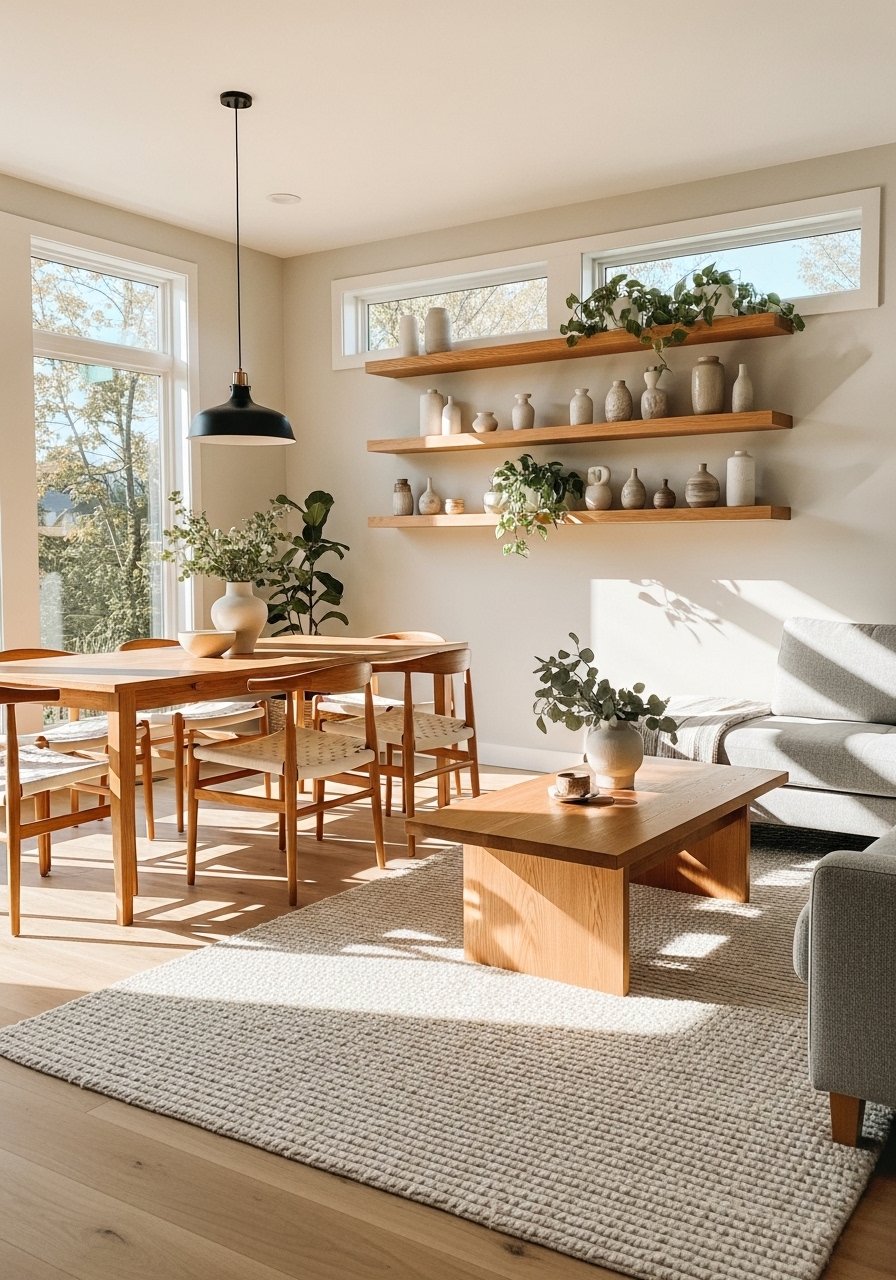
Repeating materials, like white oak and woven rattan, keeps an open concept from feeling disjointed. I used white oak floating shelves and a matching coffee table so the eye travels uninterrupted. This consistency—along with a repeated accent color—makes the plan read like one cohesive room. Mistake to avoid: mixing too many finishes; pick two main materials and sprinkle in one complementary metal.
Built-In Bench at the Dining Edge for Seamless Transition
Style/Vibe: Cottage / Casual
Budget: $$$ ($100-300)
Best For: Dining nook in open plan
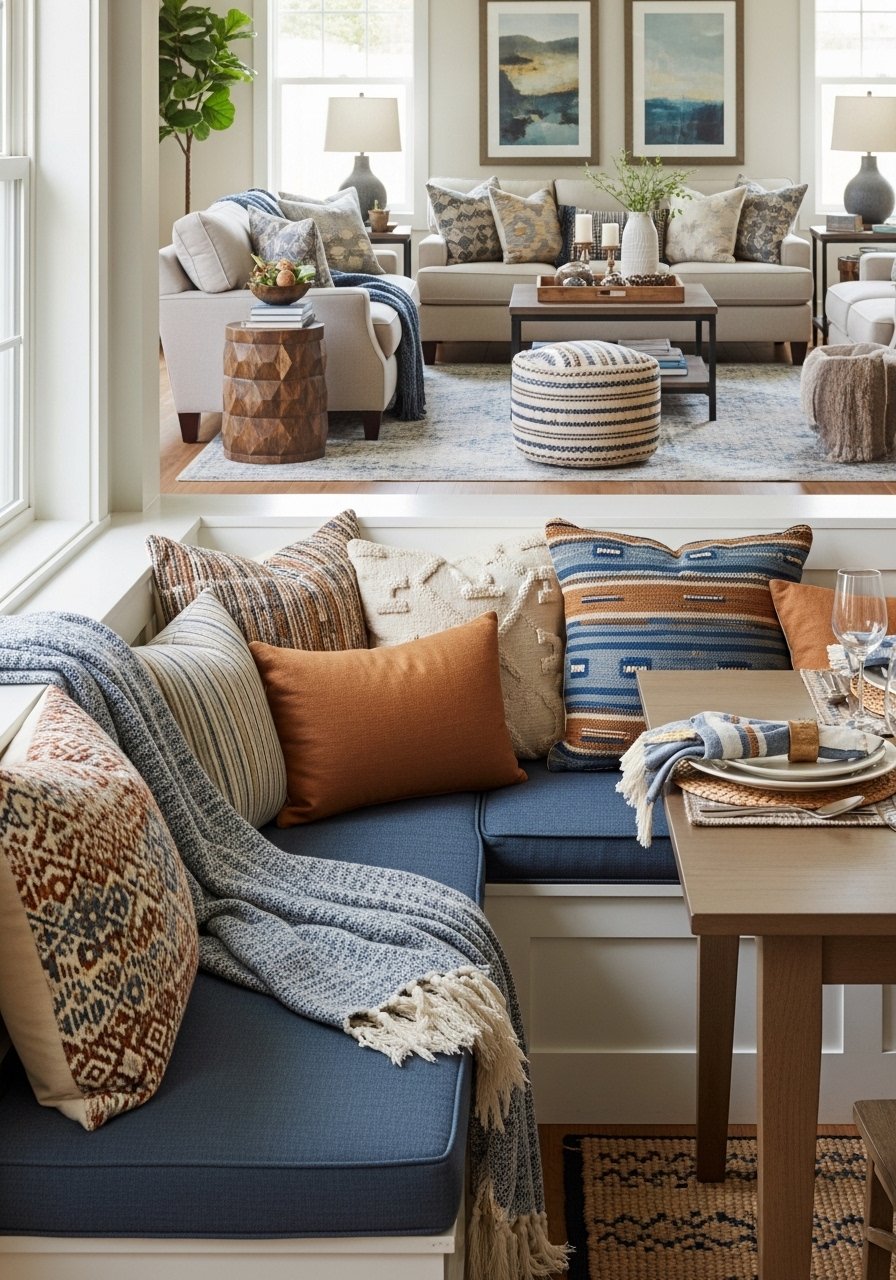
I installed a simple built-in bench at the dining edge to visually anchor that zone while keeping it open to the living area. Cushions with velvet pillow covers tie the bench to the sofa fabrics. The bench doubles as extra seating that doesn’t add visual bulk. Don’t make the bench too deep; it should remain comfortable for dining while preserving walkway space between zones.
Keep Sightlines Open with Low-Profile Media Consoles
Style/Vibe: Modern / Scandinavian
Budget: $$ (under $200)
Best For: Living area facing dining/kitchen
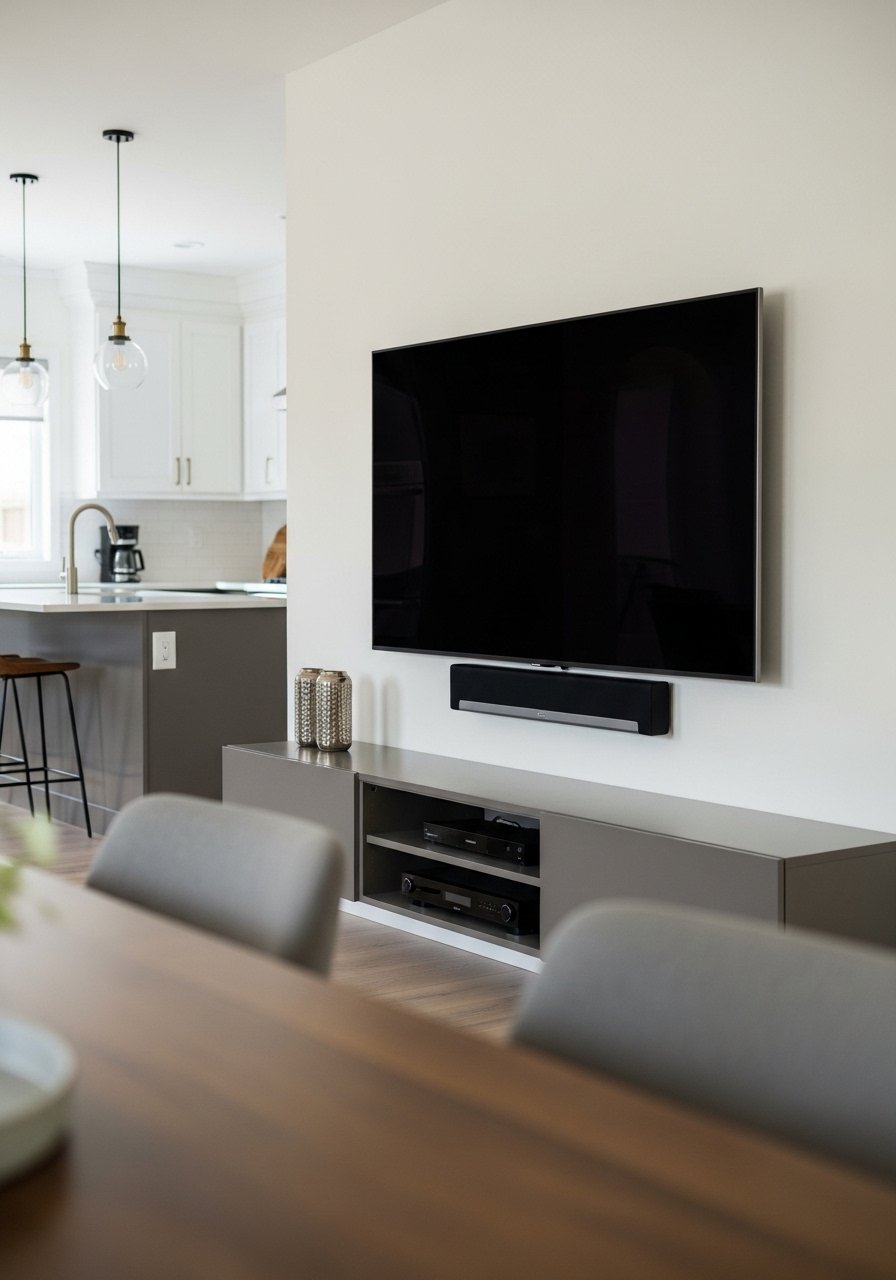
I chose a low-profile media console so the TV wall doesn’t dominate the open plan. A slim floating media console keeps visual weight down and provides storage without blocking the view from the kitchen. Styling with a few decorative objects repeats the living palette into the adjacent zone. Mistake: placing a tall, dark cabinet—this cuts off the room and blocks the flow of light and conversation.
Strategic Ceiling Lighting to Separate Zones Subtly
Style/Vibe: Modern / Industrial
Budget: $$ (under $150)
Best For: Open kitchen/dining/living
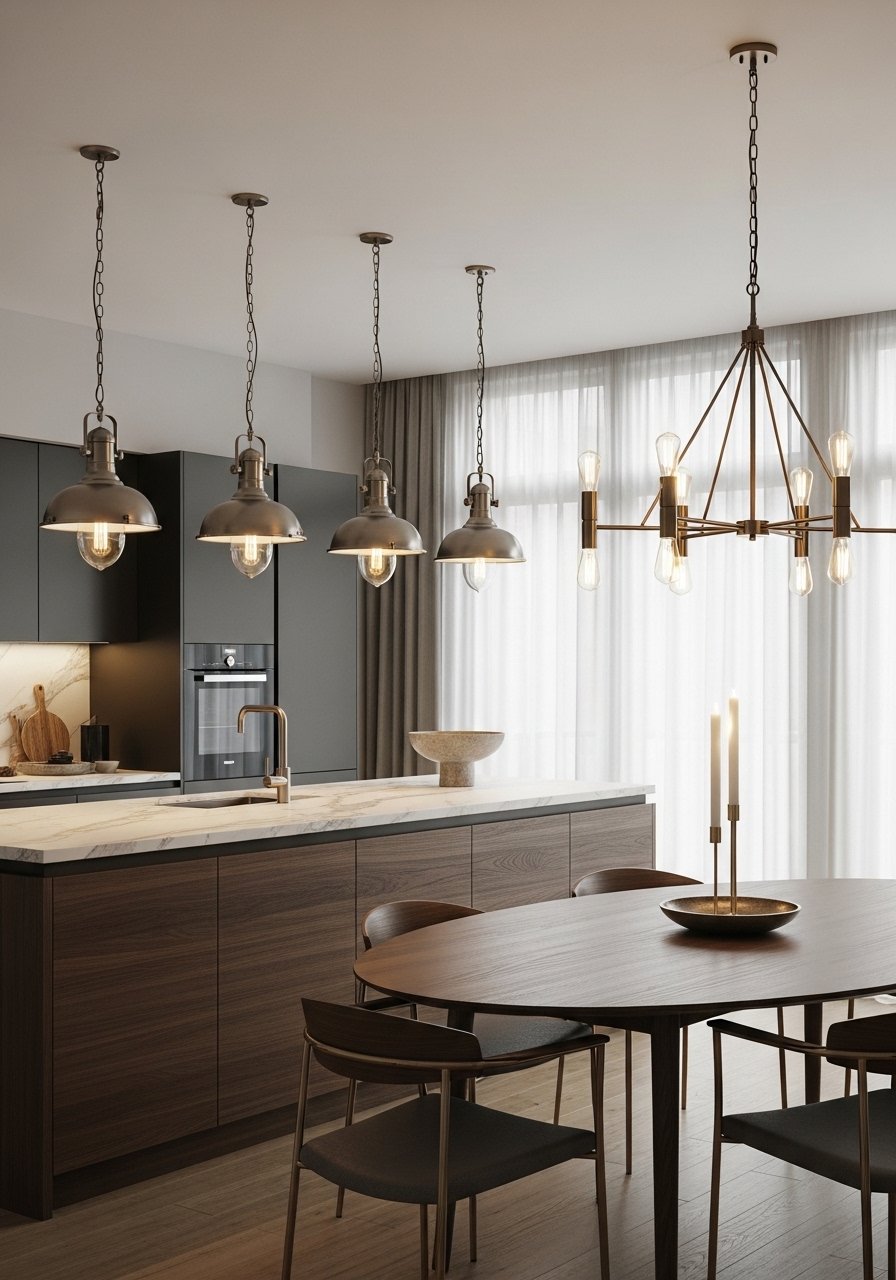
Different ceiling fixtures instantly signal separate areas. I used a rattan pendant over the dining table and recessed or track lighting in the kitchen. Matching finishes—like warm brass—keeps it cohesive. I swapped bulbs to warm white so the whole space feels unified. The main misstep is clashing styles; choose fixtures that are different but related by material or color to maintain flow.
Neutral Wallpaper Accent to Gently Define a Wall
Style/Vibe: Transitional / Elegant Casual
Budget: $ (under $100)
Best For: Feature wall visible from multiple zones
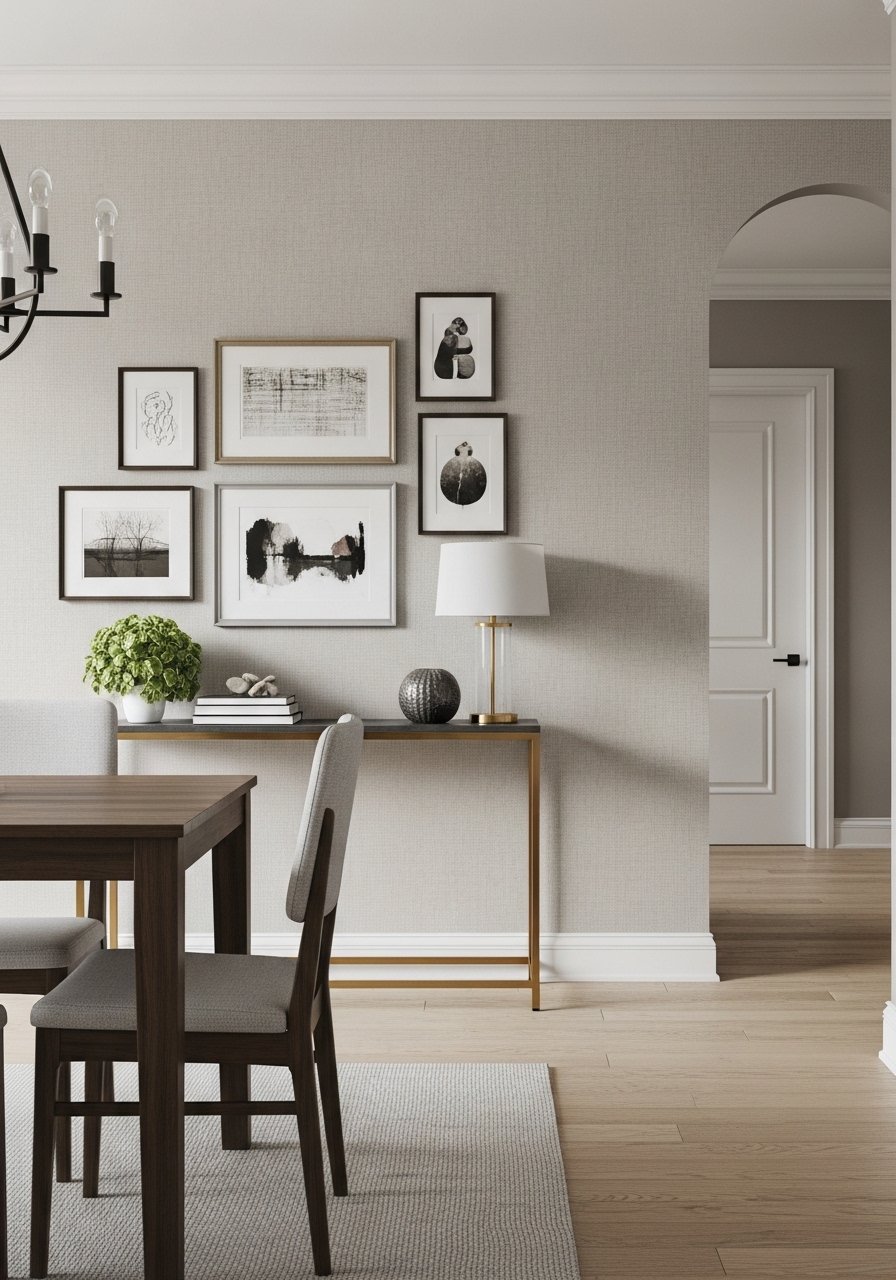
A neutral peel-and-stick wallpaper creates a soft backdrop that’s visible from several zones without screaming for attention. I used peel stick wallpaper panels in a linen texture behind my console to add warmth and depth. It reads as a designed backdrop rather than a divider. Don’t pick high-contrast patterns that fight with furnishings—stick to subtle texture to keep the open plan feeling calm.
Curated Coffee Table Styling to Connect Seating to Dining
Style/Vibe: Eclectic / Cozy
Budget: $ (under $150)
Best For: Living area in sight of dining
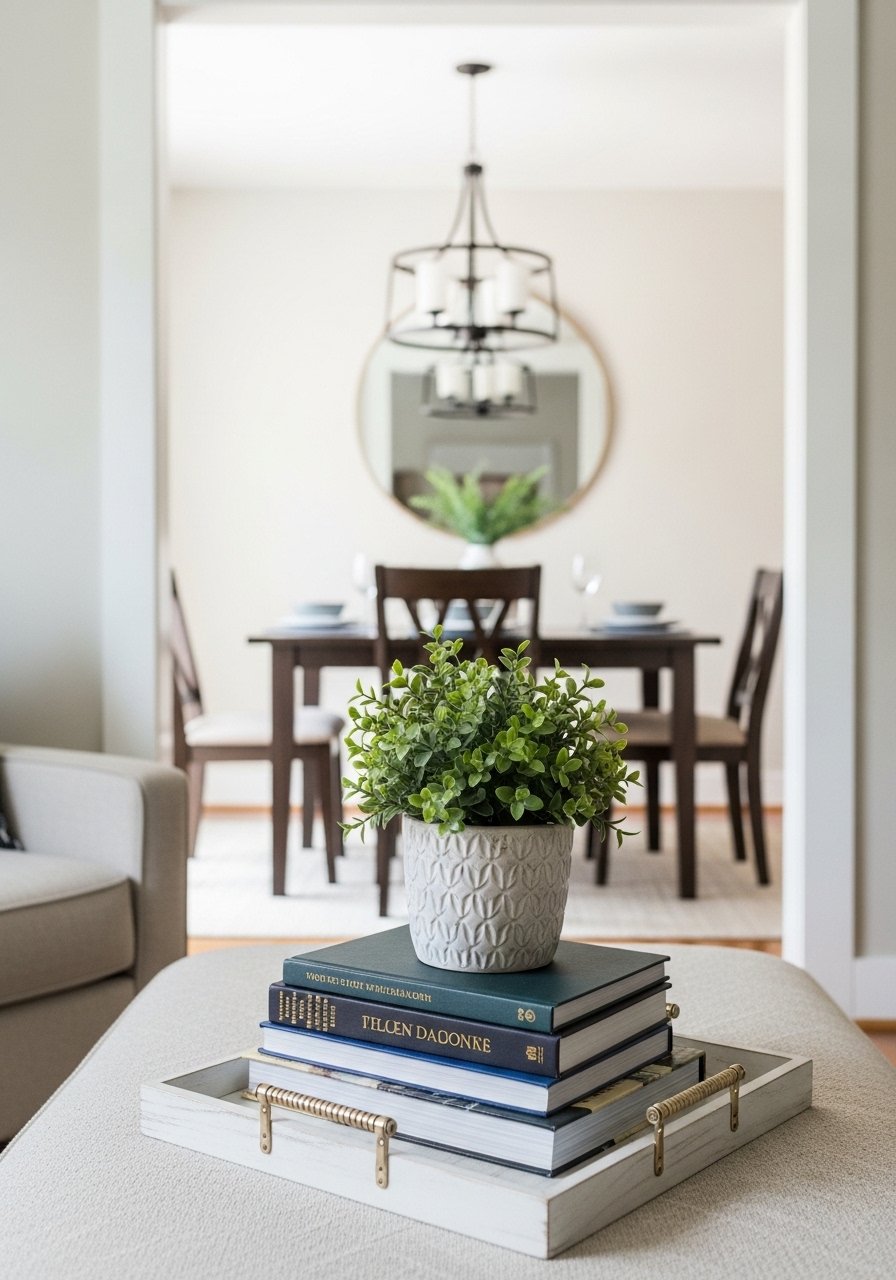
Thoughtful coffee table styling ties the seating area to the dining table. I group items in odd numbers—stacked books, a small plant, and a tray—to create a focal point that reads from across the room. I use a round mid-century coffee table so edges don’t interrupt traffic. Avoid over-styling; leave room to place drinks without knocking over the scene.
Keep Pathways Clear with Multi-Use Storage Ottomans
Style/Vibe: Casual / Functional
Budget: $$ (under $150)
Best For: Family rooms in open plans
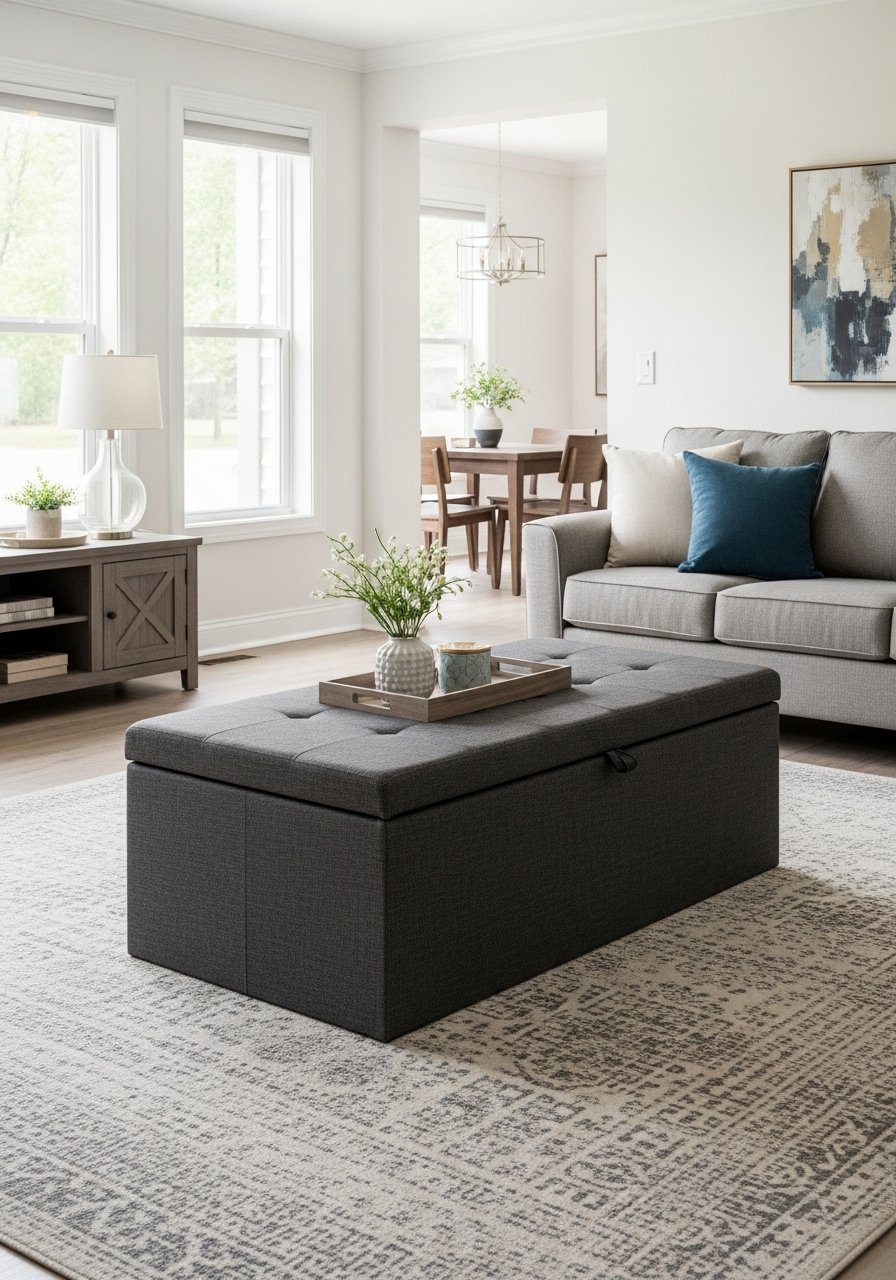
Storage ottomans are lifesavers in open family rooms. I use a storage ottoman 42-inch for extra seating, hidden blankets, and as a soft coffee table. It keeps clutter out of sight so the plan reads clean and open. The mistake is choosing an ottoman that’s too tall or bulky—pick low, wide pieces that align with your seating heights to maintain flow and comfort.
Accent Chair as Visual Connector Between Zones
Style/Vibe: Modern Farmhouse / Transitional
Budget: $$ (under $200)
Best For: Between living and entry or dining
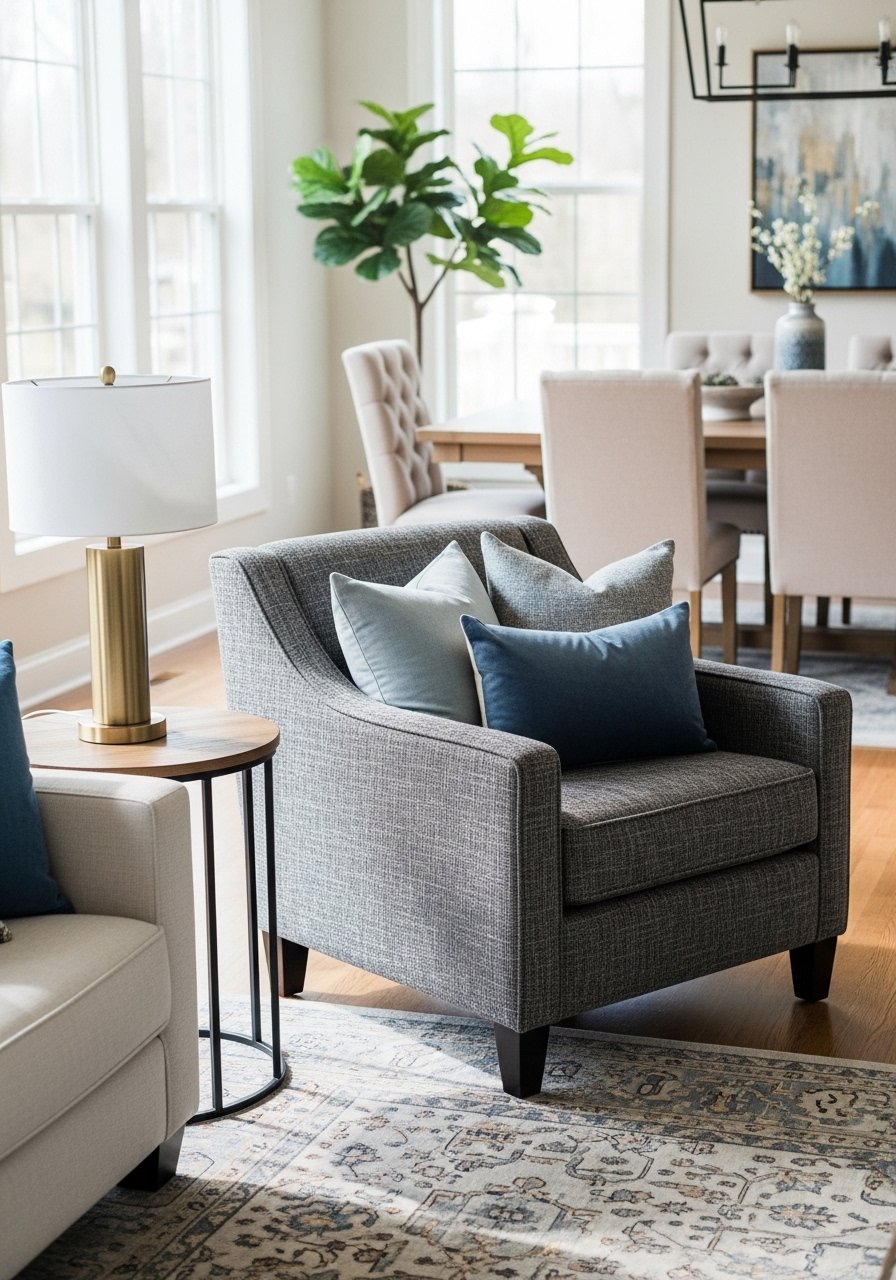
I placed an accent chair at the transition point, angled to face both the living and dining areas. It reads as both seating and a directional cue. I chose an accent chair in teal velvet to pick up the room’s accent color. Don’t pick a chair that’s visually heavy; lean toward open legs and a smaller footprint so it connects rather than blocks the sightline.
Built-In Nooks or Alcoves to Carve Function Without Walls
Style/Vibe: Cottage / Personalized
Budget: $$$ ($100-300)
Best For: Small alcove near open plan
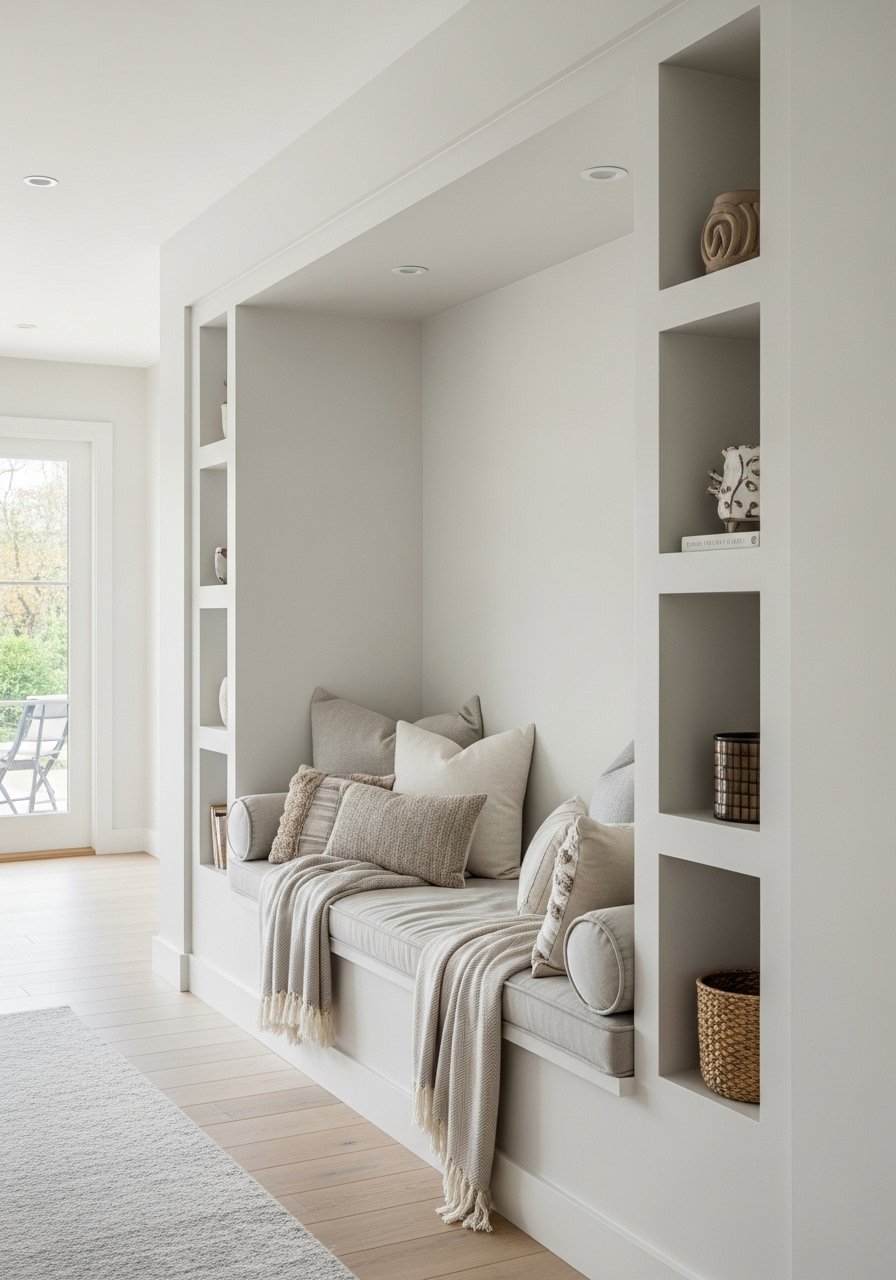
If you have an alcove, turn it into a built-in bench or reading nook to add function without a wall. My nook uses linen cushions and 22-inch euro pillow inserts so the fabric palette matches the sofa. It creates a cozy moment that’s still part of the open plan. Avoid making it too matchy—vary textures so it reads like a layered, intentional spot.
Keep Furniture Scaled to Sightlines—Avoid Oversized Pieces
Style/Vibe: Minimalist / Scandinavian
Budget: $ (under $150)
Best For: Any open floor plan
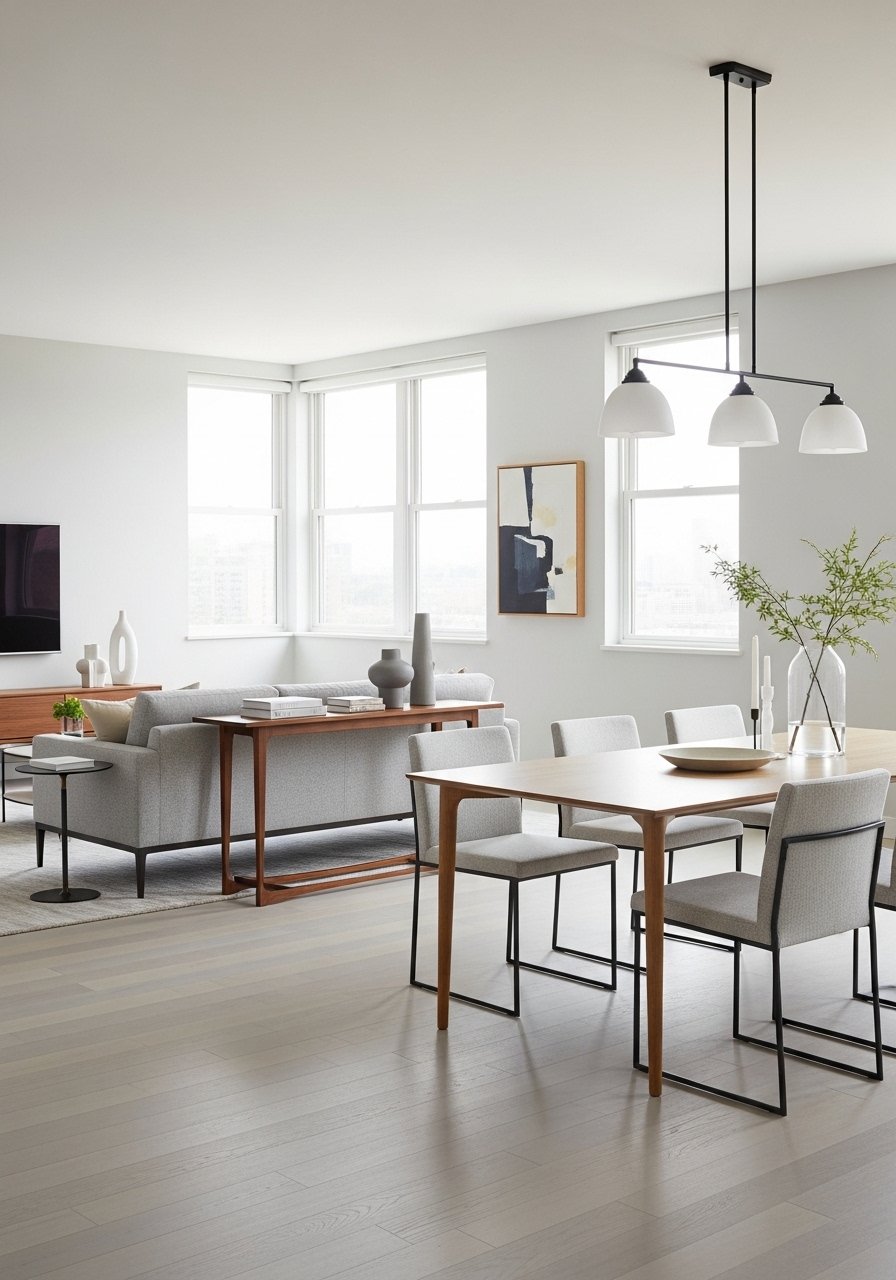
One of my biggest lessons: scale matters more than style. Oversized sofas or giant armchairs break flow. Choose mid-scale pieces like a two-seater sofa 72-inch and slim dining chairs to keep lines open. This simple switch prevents sightline blockage and helps traffic flow naturally. The common mistake is buying the biggest item that fits; instead, aim for proportional balance.
Use a Bar Cart to Link Dining and Living for Entertaining
Style/Vibe: Transitional / Entertaining Focused
Budget: $ (under $150)
Best For: Dining-adjacent space in an open plan
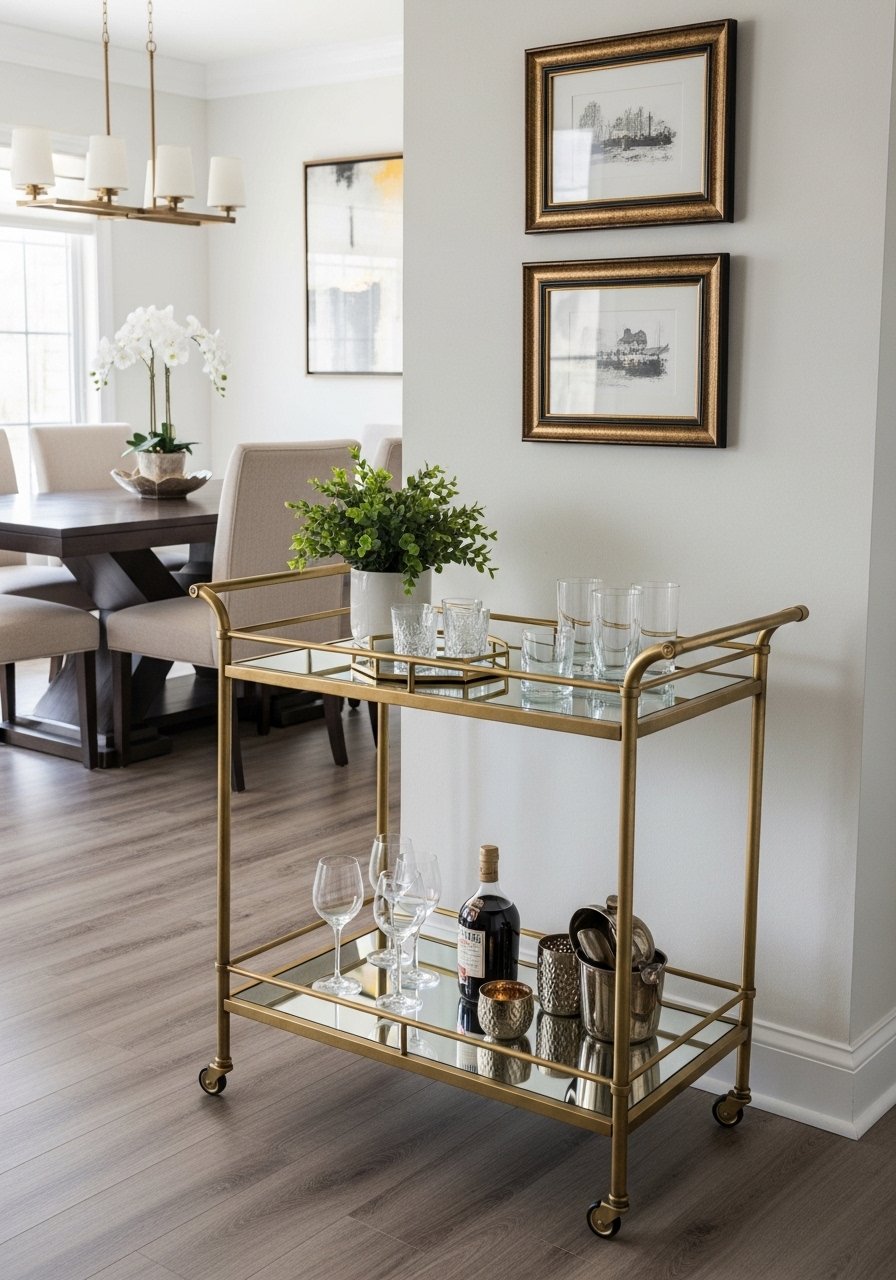
A bar cart is a mobile bridge between zones when entertaining. I added a brass glass bar cart that moves easily and echoes warm metal finishes in light fixtures. It creates a service station without building a permanent island, and it visually links dining and living areas. Don’t clutter it; keep one shelf for drinks and the other for a small tray and plant to keep the look intentional.
Minimal Window Treatments to Frame, Not Block, the View
Style/Vibe: Coastal / Scandinavian
Budget: $ (under $100)
Best For: Open rooms with lots of windows
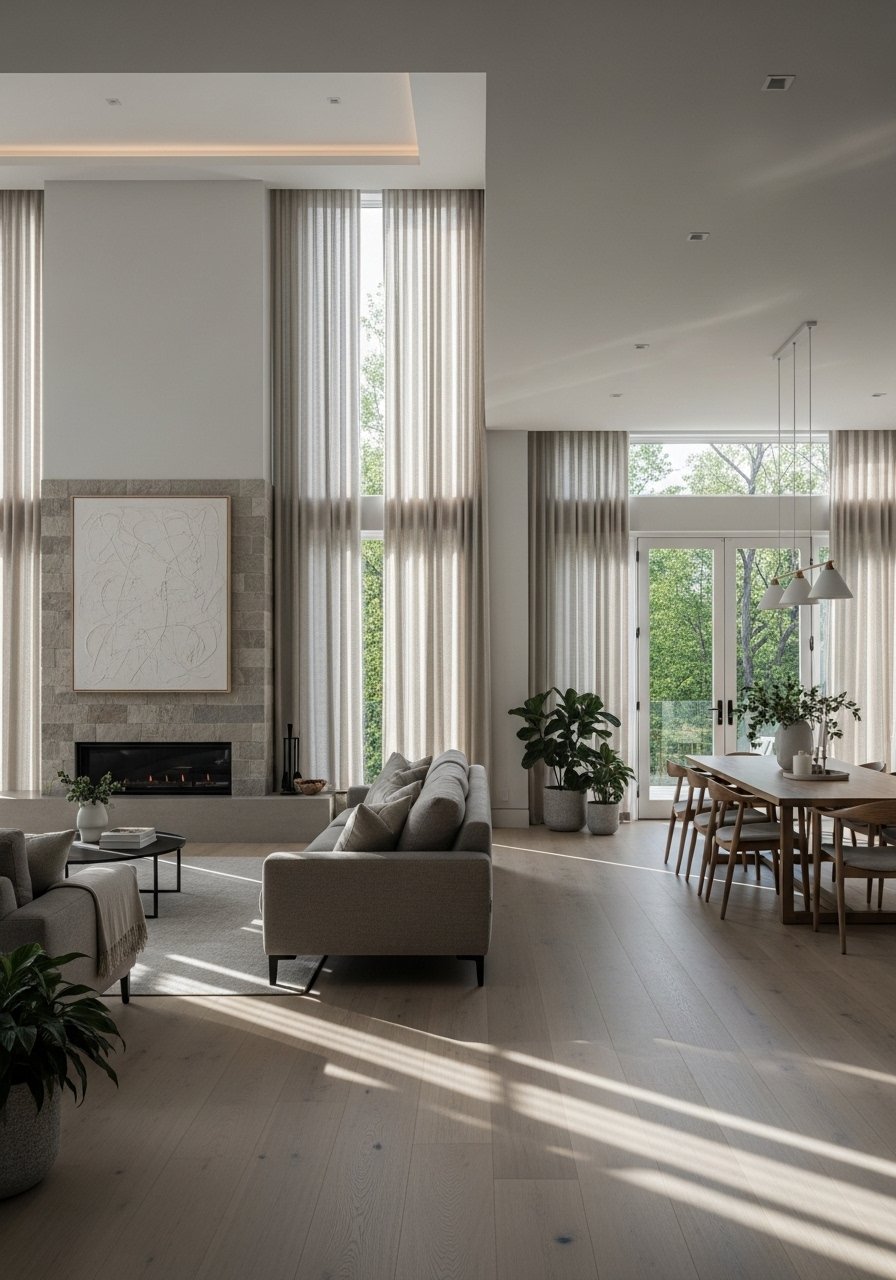
I hang linen panels close to the ceiling and let them either kiss or puddle the floor to create height without closing off windows. Linen blend curtains 84-inch keep light soft and tie rooms together. Mistake to avoid: curtains that stop mid-window—this chops the view. Long, airy panels maintain flow and help emphasize vertical sightlines across the open plan.
Smart Storage Near Entry to Prevent Visual Clutter
Style/Vibe: Functional / Cottage
Budget: $$ (under $150)
Best For: Entry opening into open concept
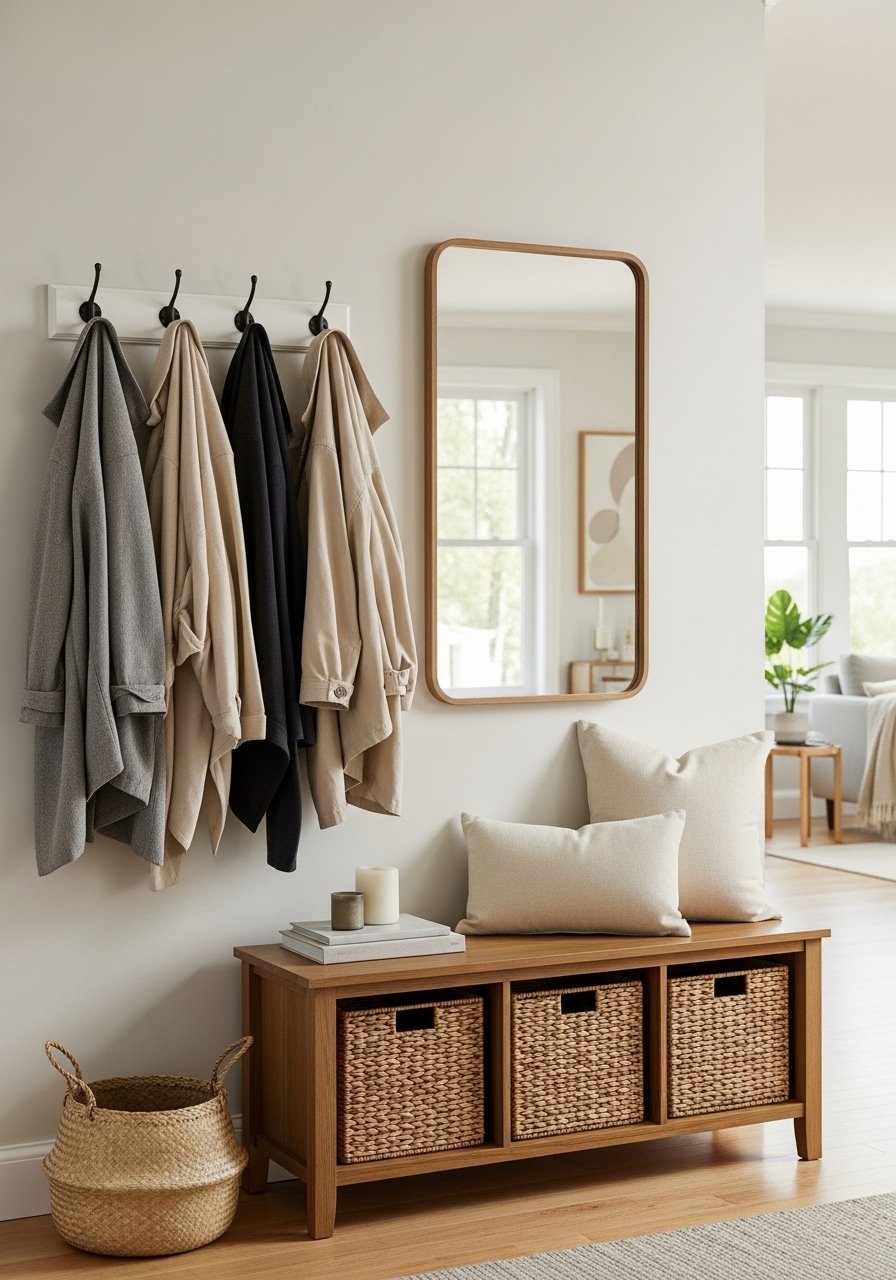
An entry that dumps into an open plan can ruin the whole look if cluttered. I added a slim entryway bench 36-inch with baskets underneath so shoes and bags disappear. A mirror above bounces light into the living area. The key is concealed storage so everyday mess doesn’t show up across the room. Don’t skimp on basket sizes—small baskets mean overflow and visual chaos.
Use Vertical Art to Draw the Eye Up and Link Spaces
Style/Vibe: Modern / Transitional
Budget: $ (under $150)
Best For: Tall walls visible from multiple zones
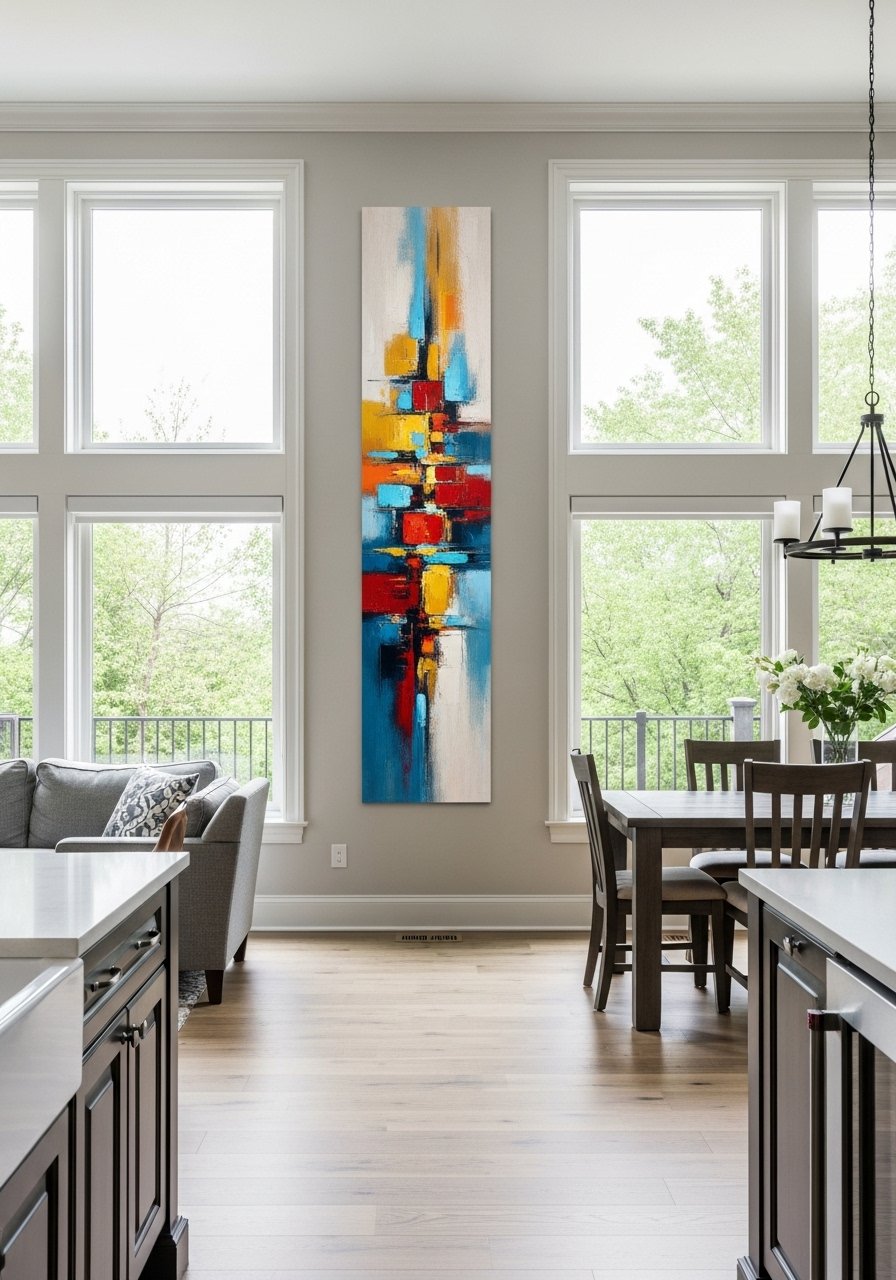
Tall, vertical art makes ceilings feel higher and links zones by providing a shared focal point. I selected a framed piece that repeats the accent color and hung it so the top aligns with window heads. I paired it with white picture mats 11×14 to keep the frame neutral. Mistake: hanging art too low—it should sit at eye level relative to furniture to guide the gaze smoothly across the plan.
Shopping Tips for These Looks
Buy throws and pillows seasonally: I swap textures every few months. This cream chunky knit throw is under $50 and instantly softens a room.
Invest in one large plant, not five small ones: A single 6-foot artificial fiddle leaf fig creates more impact than multiple tiny succulents.
White oak beats dark wood in 2026: I see it everywhere—white oak floating shelves feel current and versatile.
Pick low-profile seating for flow: Look for sofas around 30–34 inches high; 72-inch two-seater sofa works well in many layouts.
Thrift frames, buy new mats: Vintage frames from thrift stores pair great with fresh white mats for a curated look.
Curtain length matters: Choose panels that either kiss or puddle the floor—96-inch linen curtains suit taller ceilings.
Frequently Asked Questions
Q: How do I define zones without walls in an open plan?
A: Use layered rugs, lighting, and furniture placement to create anchors. Start with an 8×10 jute rug for the main seating area and add a pendant over the dining table to read as separate but connected spaces.
Q: What's a quick fix when the open plan feels disjointed?
A: Repeat materials and an accent color across zones. Swap in velvet pillow covers that match a dining chair cushion or a vase to tie things together instantly.
Q: How do I keep traffic flow clear in a small open layout?
A: Opt for low-profile furniture and exposed legs so sightlines and pathways remain visible. A slim console table 48-inch behind a sofa creates flow without blocking movement.
Q: Can I use faux plants in an open concept?
A: Absolutely. High-quality faux options like a realistic artificial fiddle leaf fig give height and texture without maintenance and keep the plan feeling green and alive.
Q: What rug size should I choose for an open living area?
A: Go big—at least 8×10 or larger so front furniture legs sit on the rug. I used an 8×10 jute rug and it made the seating feel anchored and intentional.
Q: How do I avoid an open space feeling too empty or too cluttered?
A: Aim for balance: one or two strong anchors (rug, sofa, pendant), a few layered textures, and concealed storage like a storage ottoman 42-inch. That keeps the space lived-in but tidy.