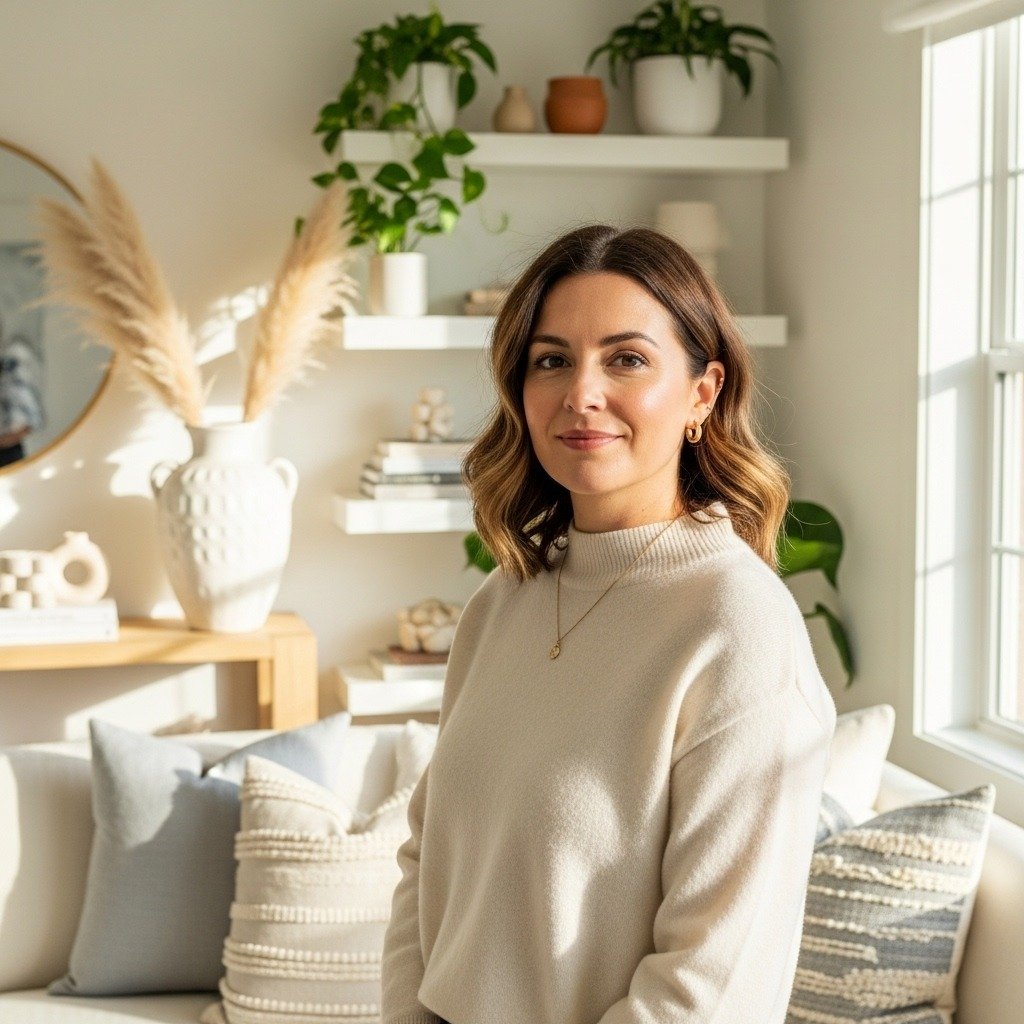
I stared at my tiny studio for months before I realized the problem: everything was in one visual pile. Zoning saved me. These 22 ideas are what I used to carve out a living room, bedroom, workspace, and dining spot without walls. Most tweaks are under $150; a few splurges like a convertible sofa or round mirror push $300. Expect modern, warm, slightly boho touches that feel intentional and calm.
Quick context: This guide leans modern-boho and Scandinavian with warm wood and organic textures. Budgets range from thrifted finds to $300 splurges. These ideas work for studio apartments, micro-lofts, or any open-plan space that needs clear zones and better flow. I’m focusing on 2026 trends I’ve been seeing everywhere: warm wood tones, mixed metals, and tactile textiles that make small spaces feel layered and lived-in.
What You'll Need to Get This Look
Textiles & Soft Goods:
- Chunky knit throw blanket in cream (~$35-55)
- Linen blend curtains, 84-inch (~$30-50 per panel)
- Velvet pillow covers, set of 4 (~$40-50)
Wall Decor & Art:
- Set of 3 floating shelves, white oak (~$45-70)
- Large round mirror, 36-inch (~$80-120)
Lighting:
- Rattan pendant light shade (~$30-60)
- LED Edison bulbs, warm white (~$15-20)
Plants & Storage:
- Artificial fiddle leaf fig tree, 6ft (~$60-90)
- Storage ottoman with lift top, 38-inch (~$80-150)
Budget-Friendly Finishes:
- Peel and stick wallpaper panels, neutral (~$20-35)
- Room divider open shelving in rattan (~$90-180)
- Similar versions available at Target or HomeGoods for quick swaps
Layered Textiles for a Cozy Reading Nook
Style/Vibe: Cozy Boho / Scandinavian
Budget: $$ (under $100)
Best For: Living room corner / Bedroom nook
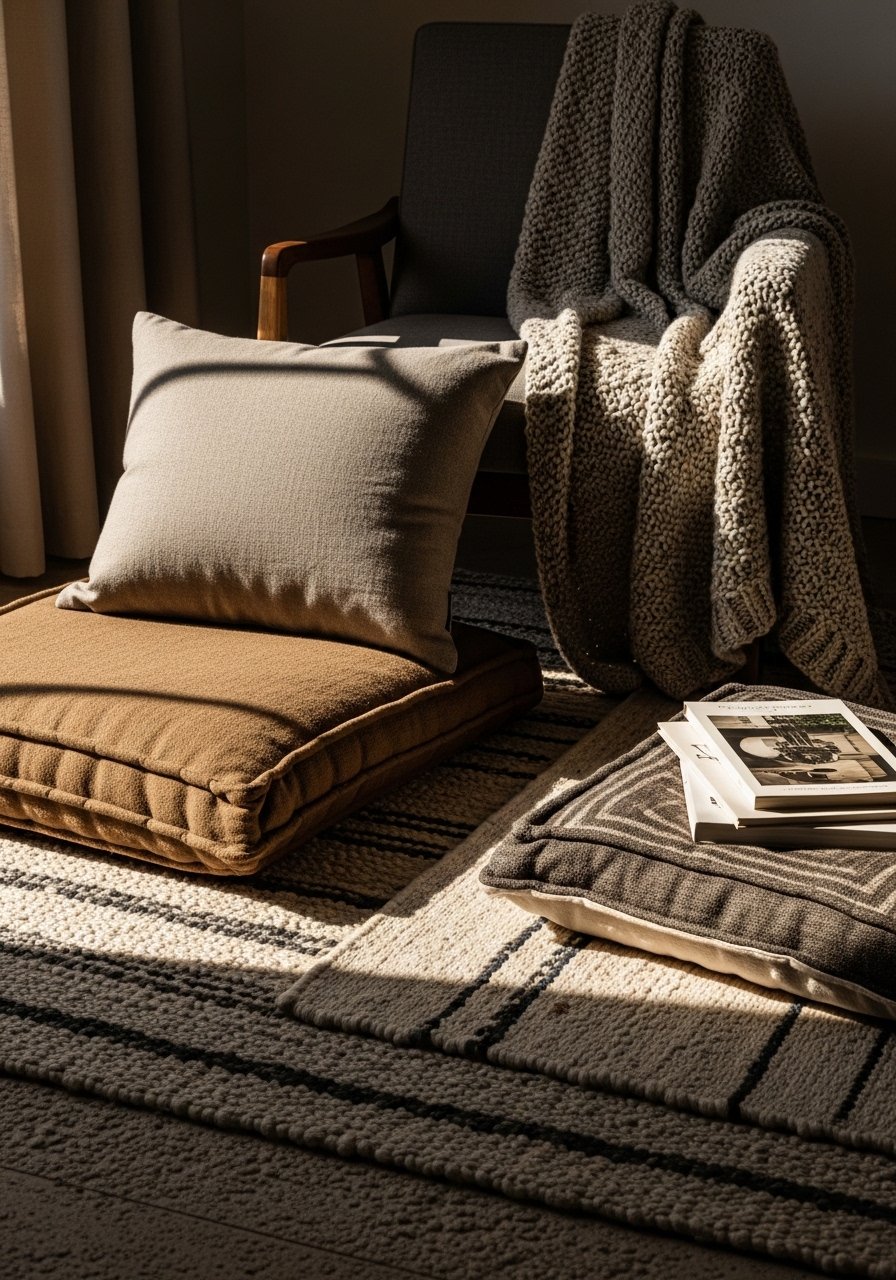
I carved a reading nook with a 4×6 rug layered over a larger neutral jute rug. Mixing textures—linen curtain, wool throw, velvet pillow—makes the corner feel curated. I use this cream chunky knit throw and 22-inch euro pillows for back support. Keep colors cohesive: three neutrals plus one accent. Mistake to avoid: too many patterns at once. Stick to one bold print and repeat accent hues to keep the nook calm and intentional.
Floating Shelves to Define a Workspace Zone
Style/Vibe: Minimalist / Modern
Budget: $$ (under $100)
Best For: Home office / Work corner
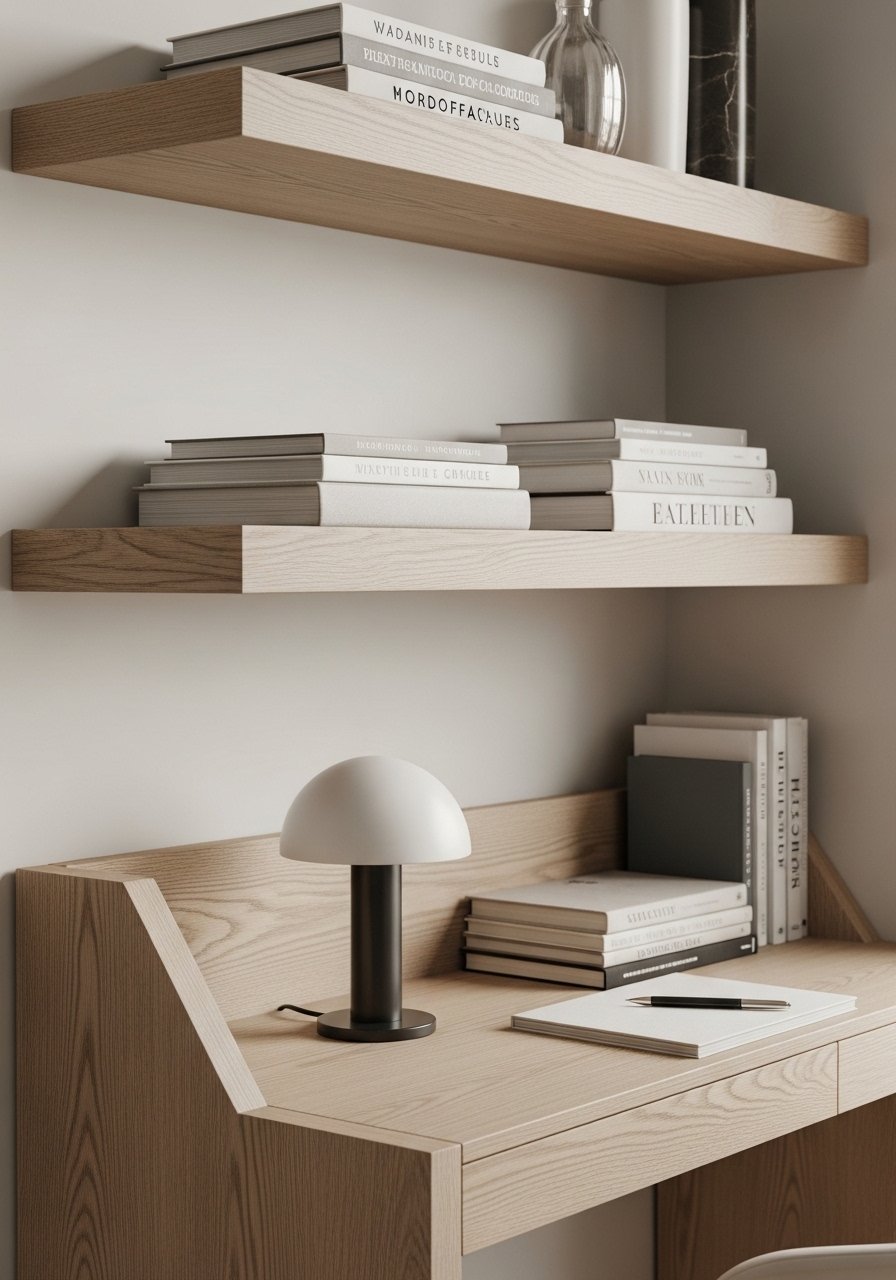
I used a trio of white oak floating shelves to anchor my desk area. Shelves create a vertical boundary without closing off the studio. Style them with odd-numbered groupings: two books, one plant, one frame. Keep the desk surface clear so the shelves read as the main zone marker. Common mistake: overstuffing shelves. Leave breathing room; negative space makes the workspace intentional and tidy rather than chaotic.
Area Rug Layering to Split Living and Sleeping
Style/Vibe: Modern Farmhouse / Transitional
Budget: $$ (under $150)
Best For: Living/sleeping separation
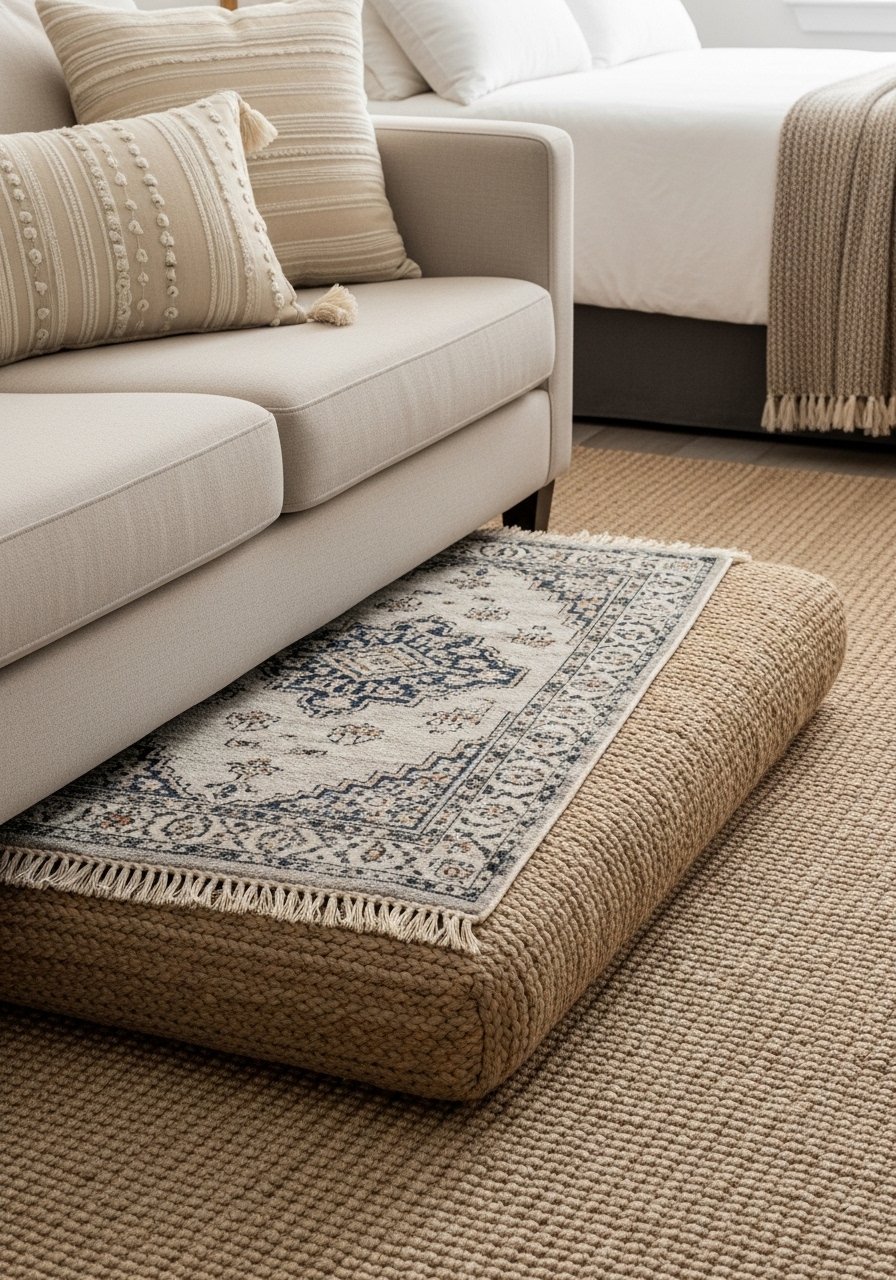
I anchored the sofa on a softer 5×7 rug over an 8×10 jute base to define the living zone while the bed sits on the jute. Rug layering is great when you can’t build walls. I recommend an 8×10 jute rug for the whole footprint and a smaller patterned rug for the seating area like this 8×10 jute area rug. Don’t choose rugs that clash in scale; stick to different textures rather than competing patterns.
Open Shelving Divider for Visual Separation
Style/Vibe: Boho / Scandinavian
Budget: $$$ ($100-300)
Best For: Room divider between bed and living
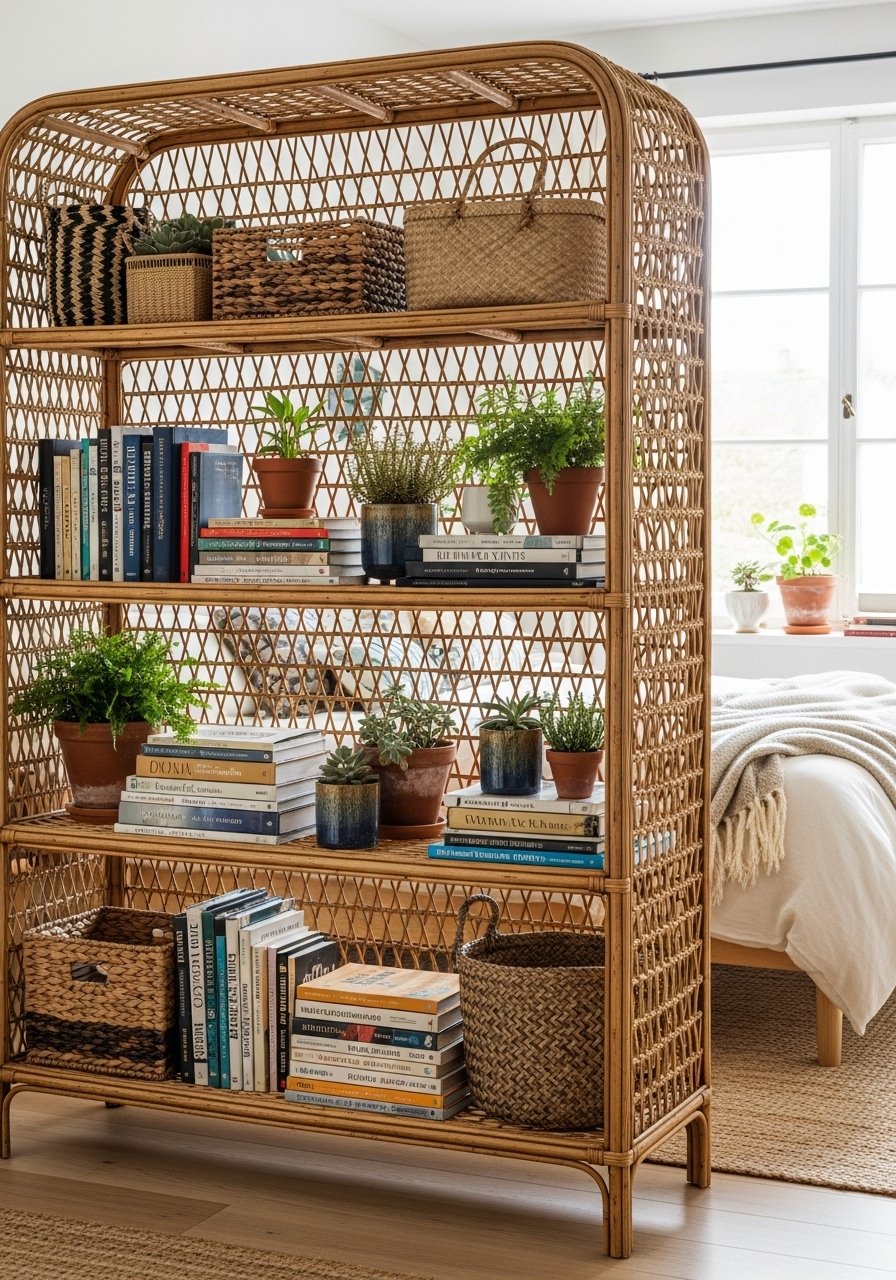
An open shelving unit creates a half-wall without blocking light. I placed a room divider like this rattan open shelving between my bed and sofa. Style with baskets and art so both sides look finished. Tip: balance height—shelving should be lower than the ceiling but tall enough to suggest privacy. Mistake to avoid: only using it for storage. Treat both faces as display and keep one side softer for the bedroom look.
Low-Profile Sofa to Keep Sightlines Open
Style/Vibe: Mid-Century Modern / Minimalist
Budget: $$$ ($200-500)
Best For: Living area in studio
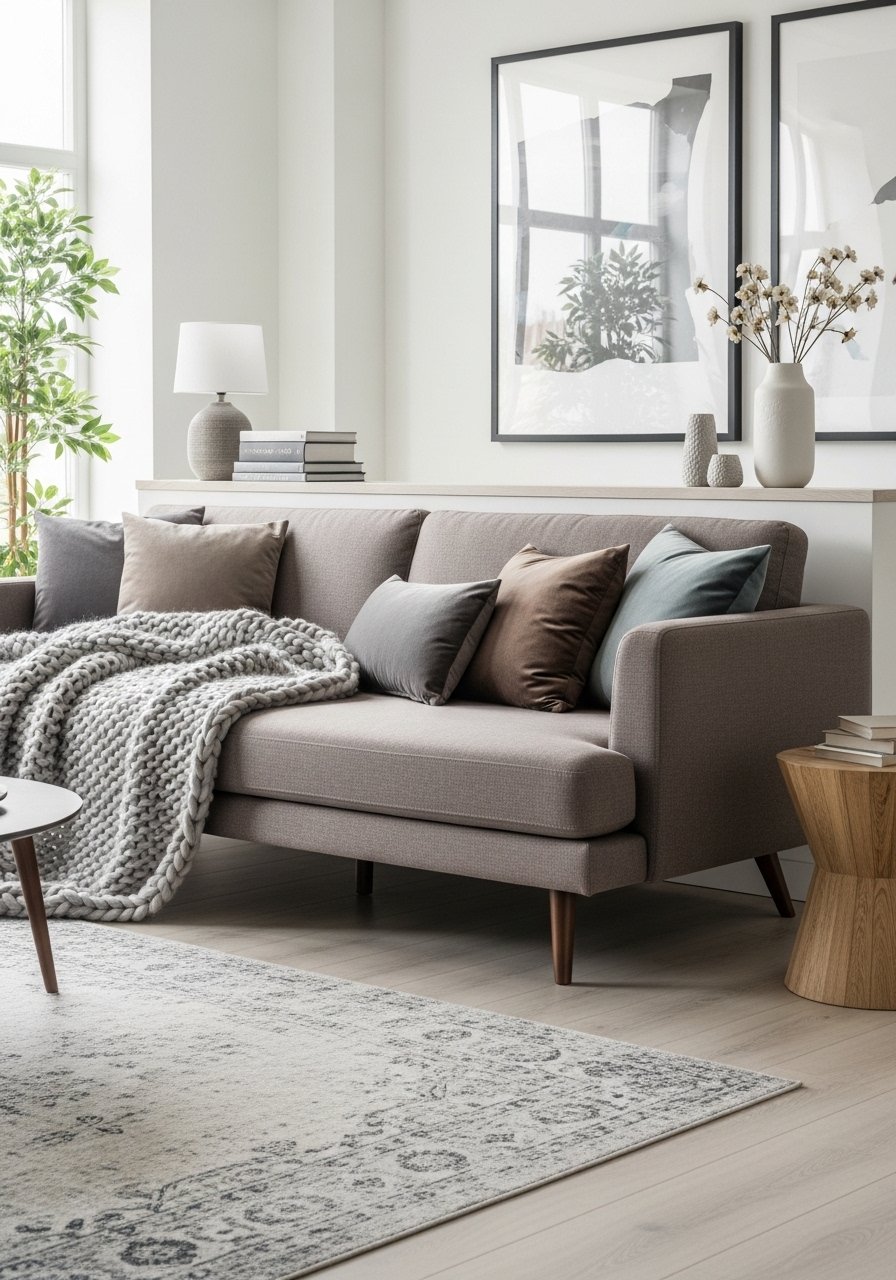
I swapped my bulky sofa for a low-profile one to maintain sightlines and make the room feel larger. A sofa with 12–16-inch exposed leg height helps the eye travel. I pair it with this cream chunky knit throw and a couple of velvet pillow covers. Mistake: choosing a sofa that’s too deep. In a studio, 80–85-inch length and shallower depth work better. Keep upholstery in a warm neutral to coordinate with the rest of the zones.
Console Table Behind Sofa to Create a Hallway Feel
Style/Vibe: Transitional / Coastal
Budget: $$ (under $150)
Best For: Entry and living separation
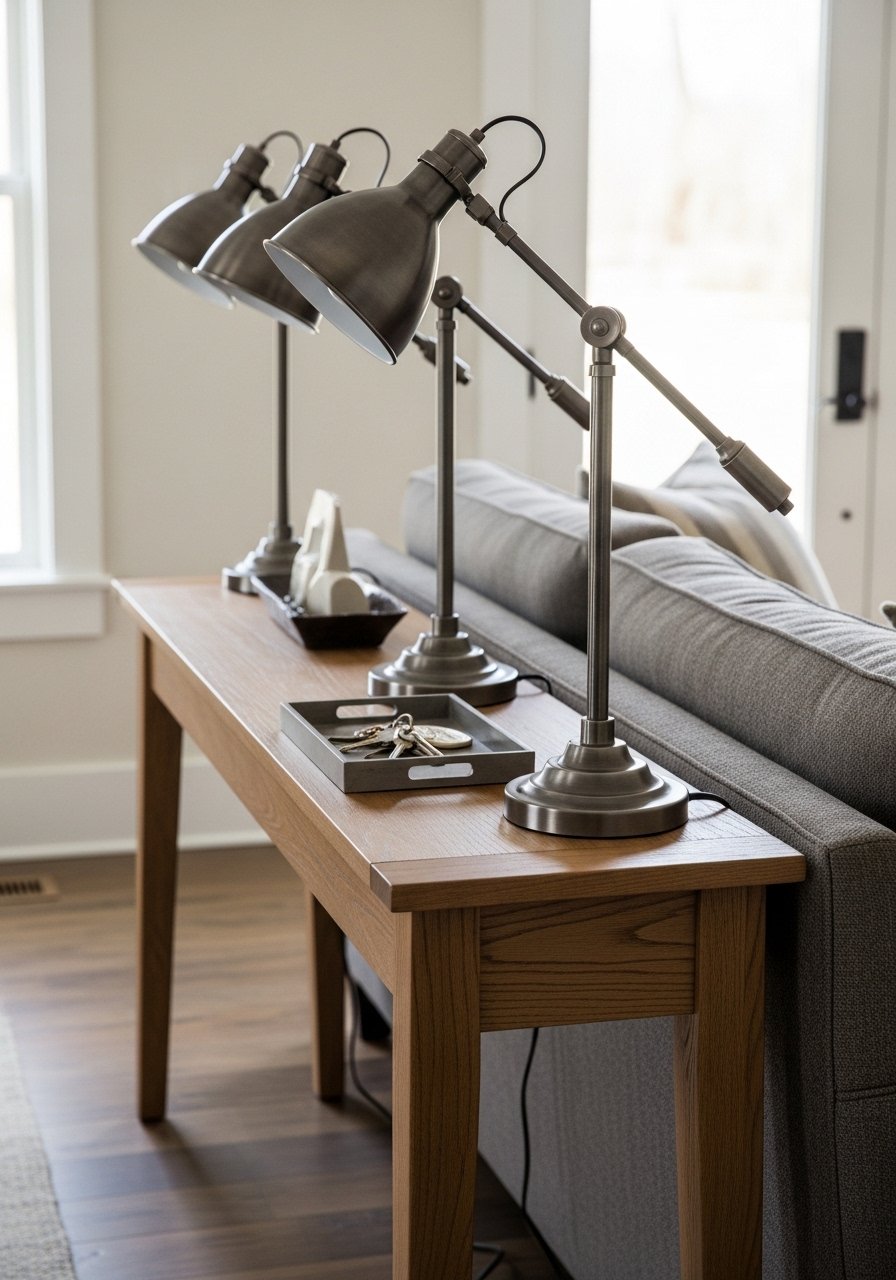
A slim console behind the sofa defines a passage between entry and living without blocking light. I use a narrow 12–14-inch deep console with a table lamp and a catchall tray for keys. This white oak floating shelf used as a slim console does double duty. Keep it uncluttered—too much decor makes the walk-through feel cramped. For a modern touch, pair with mixed metal lamps to reflect 2026’s love of pairing warm brass and cool nickel.
Half-Height Headboard With Storage to Mark the Bedroom
Style/Vibe: Modern / Cozy
Budget: $$$ ($100-300)
Best For: Sleep zone definition
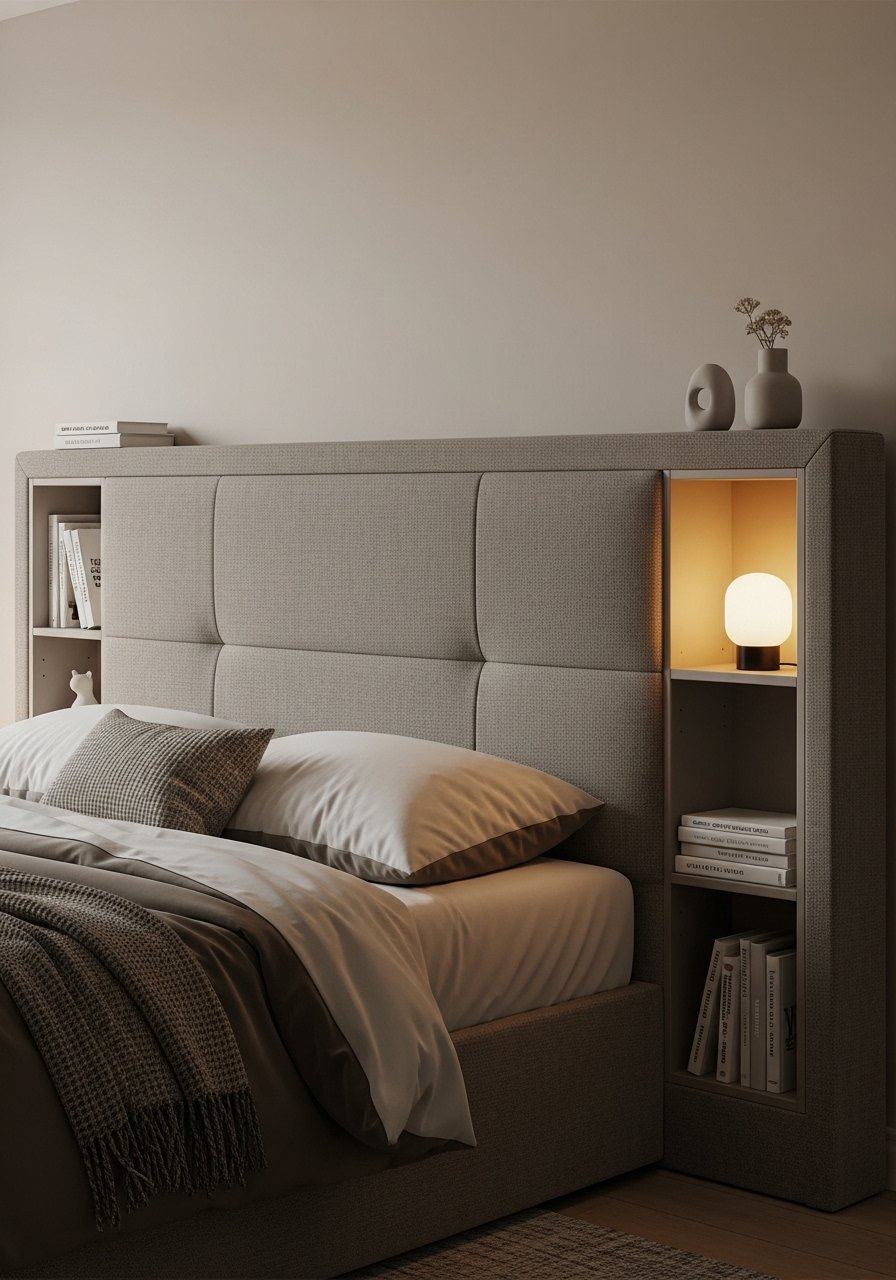
I installed a half-height headboard with shelves to create a clear bedroom zone while keeping the studio open. It reads like a bed wall without closing off the room. I like built-in cubbies for books and a small lamp—this storage ottoman with lift top works well at the foot. Mistake: making the headboard too tall, which creates a visual wall. Aim for 36–48 inches high so the space feels separated but airy.
Folding Screen for Flexible Privacy
Style/Vibe: Boho / Eclectic
Budget: $ (under $100)
Best For: Temporary bedroom privacy
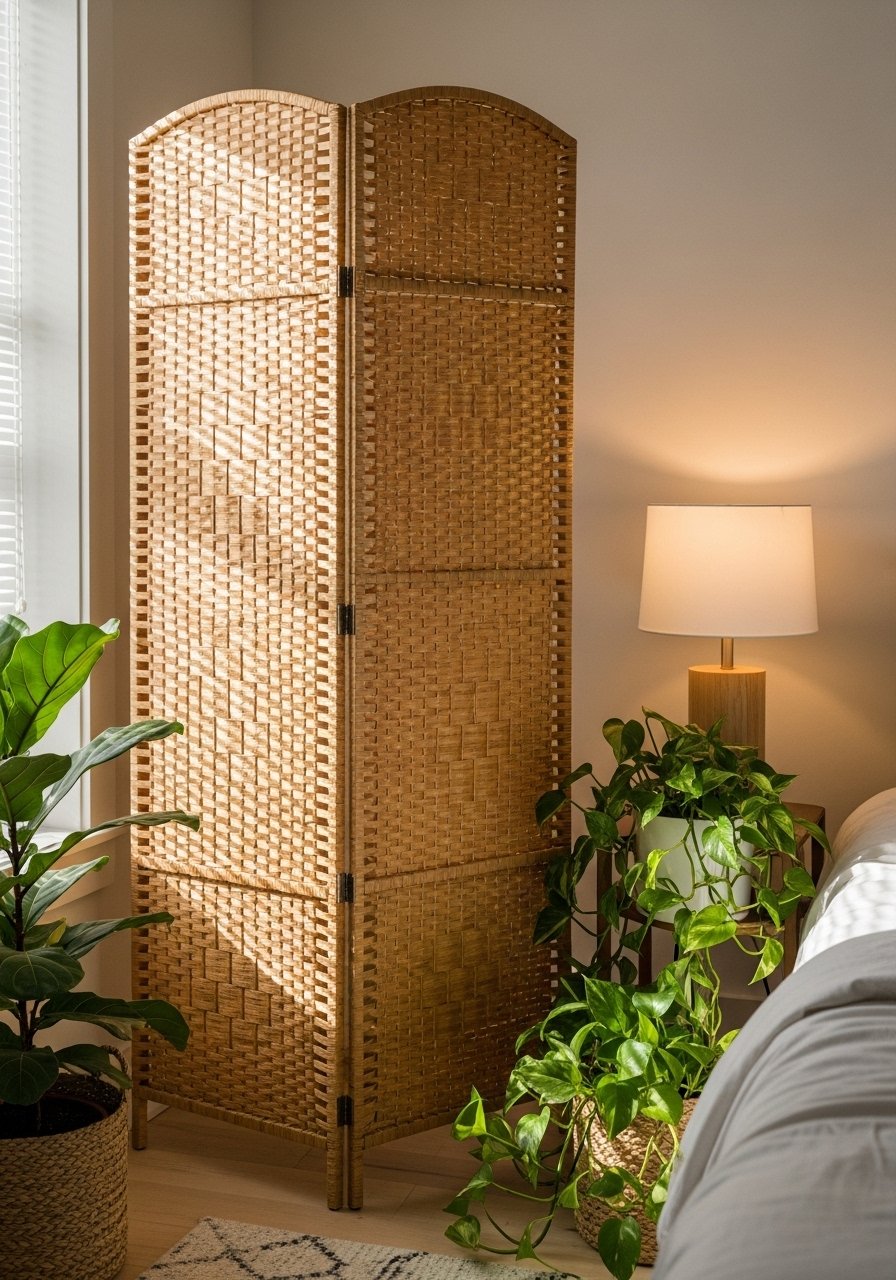
A folding screen is the easiest temporary divider I’ve used. I picked a woven screen that folds flat and tucks behind the couch when not needed. It creates privacy for changing or sleeping and doubles as a backdrop for bedside lamps. I pair it with an artificial fiddle leaf fig tree for height. Avoid screens that are too flimsy; they should feel sturdy so they don’t tip when leaned on or styled with hanging plants.
Multi-Functional Dining Cart for Dining and Storage
Style/Vibe: Industrial / Modern Farmhouse
Budget: $$ (under $150)
Best For: Dining nook / Bar area
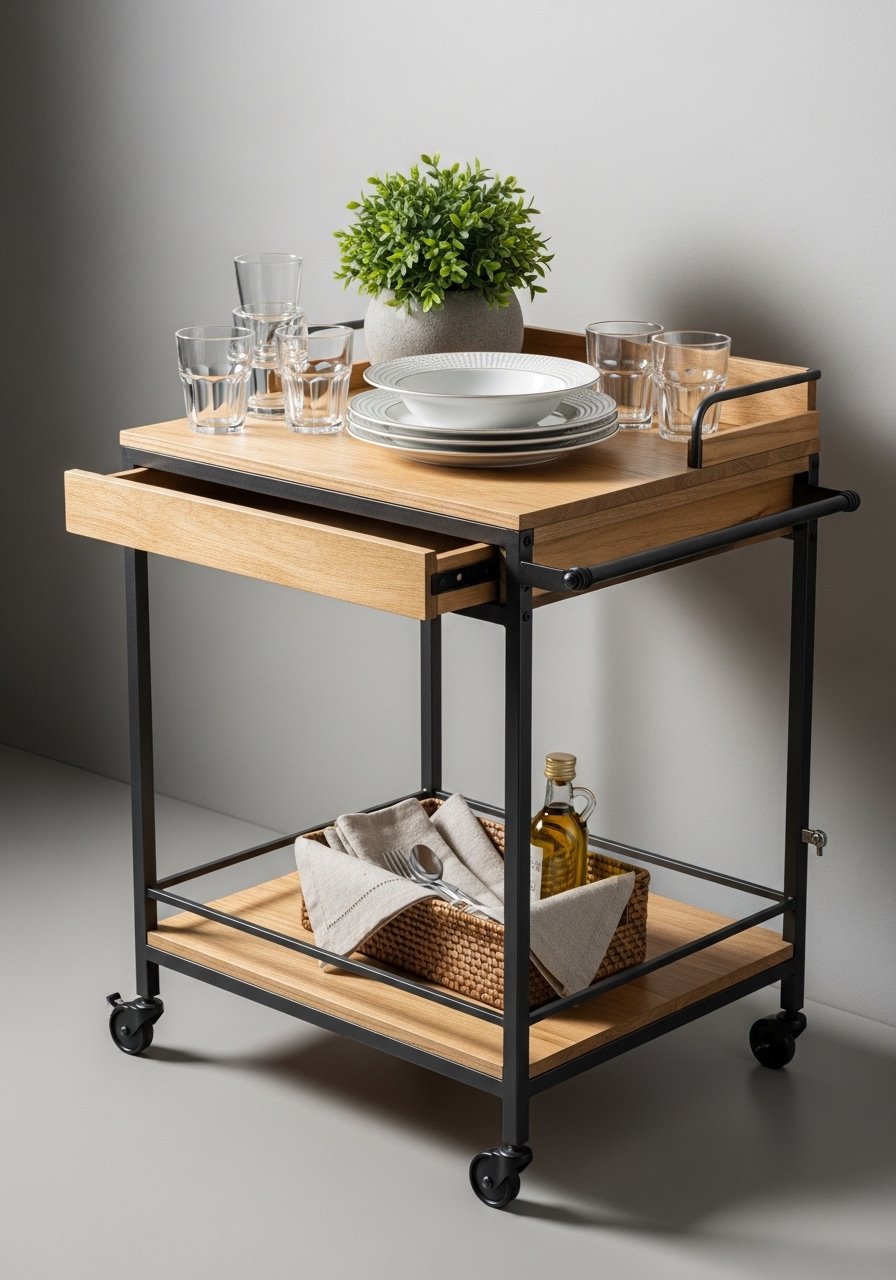
I swapped a bulky table for a rolling dining cart that stores dishes and pulls out for meals. It acts as an island, buffet, and bar. Look for a cart with a wood top and metal frame for contrast. I store extra linens in the lower shelf and keep two stools tucked nearby. Mistake: choosing a cart without lockable wheels; it should stay put during meals. A cart is a small investment that gives flexibility and storage in one moveable piece.
Statement Mirror to Open Tight Corners
Style/Vibe: Scandinavian / Modern
Budget: $$$ ($80-200)
Best For: Entry / Dark corners
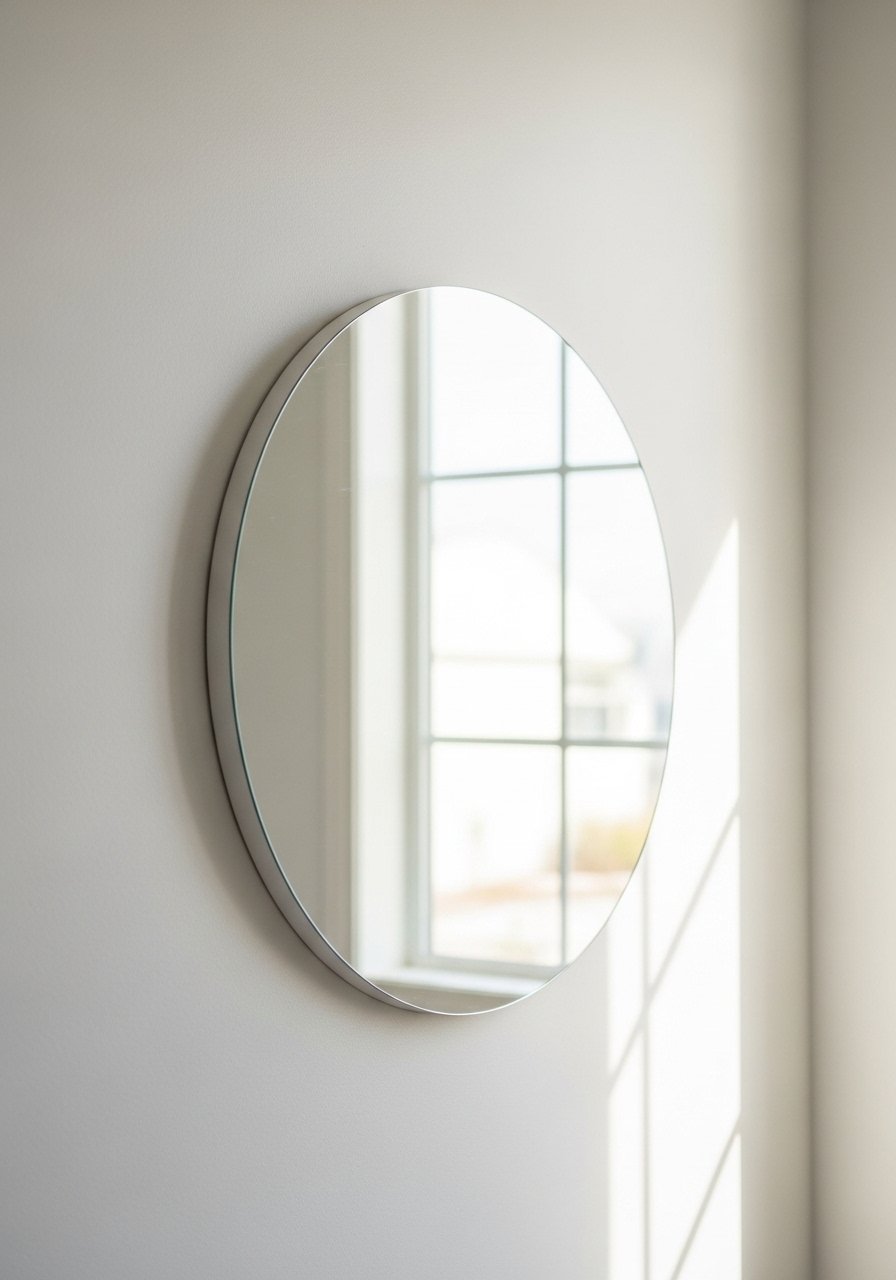
A round mirror brightens and visually expands a tiny studio. I hung a 36-inch round mirror above a narrow console to double the perceived space. Mirrors work best opposite windows to bounce light; I’ve noticed they especially help rooms with limited natural light feel open. Mistake: placing a small mirror on a large blank wall—it reads lost. Match mirror size to furniture scale so it anchors a zone rather than fading into it.
Vertical Gallery Wall to Define the Entry
Style/Vibe: Eclectic / Vintage
Budget: $ (under $80)
Best For: Entryway / Hallway
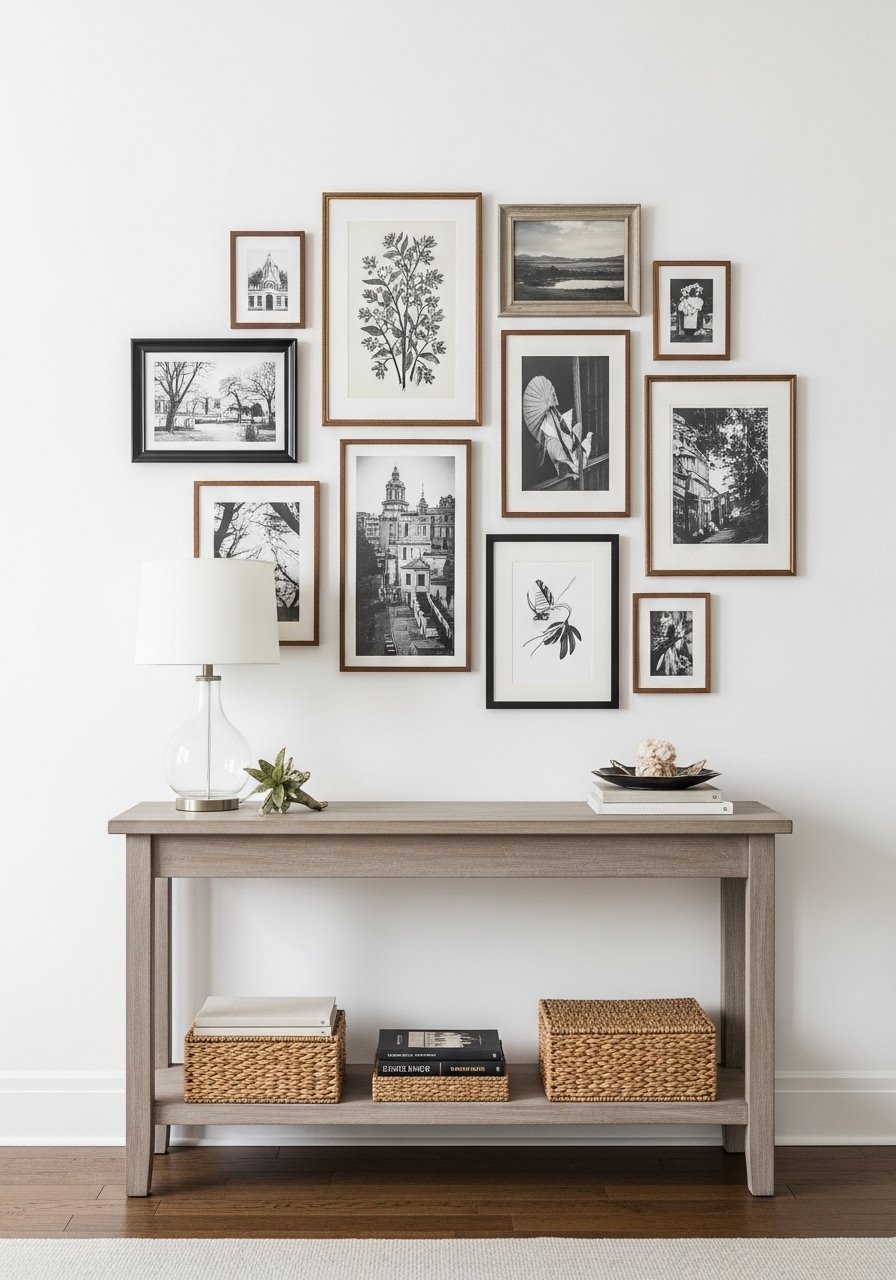
I made a vertical gallery wall to lead from the door into the main space. Tight, stacked frames draw the eye up and create a mini-hallway. I mix thrifted frames with new white mats for balance—white picture mats 11×14 are my go-to. Keep spacing even and stick to two frame colors to avoid visual clutter. Don’t scatter frames randomly; aligning one edge creates cohesion and helps the wall function as a deliberate zone marker.
Ceiling Light Cluster Over Dining or Desk
Style/Vibe: Modern / Industrial
Budget: $$ (under $150)
Best For: Over a dining spot or workspace
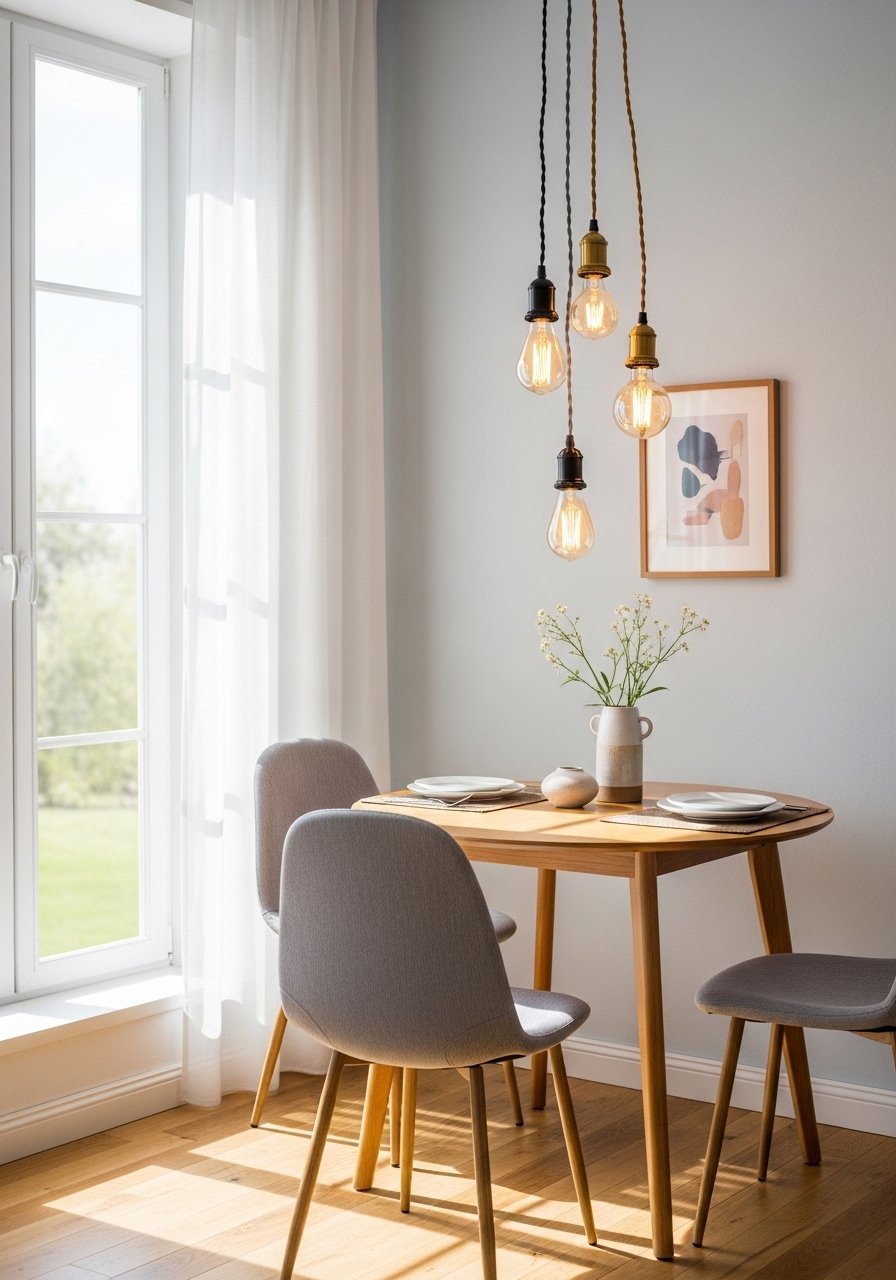
I defined a dining zone with a cluster of pendant lights hung low over the table. Warm LED Edison bulbs and mixed metal finishes read 2026-modern and help create a distinct mood. I used a rattan shade on one pendant for texture; LED Edison bulbs warm white give that cozy glow. Mistake: hanging pendants too high—they should be 28–34 inches above the table. The lighting instantly says “this is the dining spot” even in an open studio.
Built-In Window Seat to Create a Separate Reading/Dining Spot
Style/Vibe: Cottage / Scandinavian
Budget: $$$ ($200-400)
Best For: Alcoves / Nooks
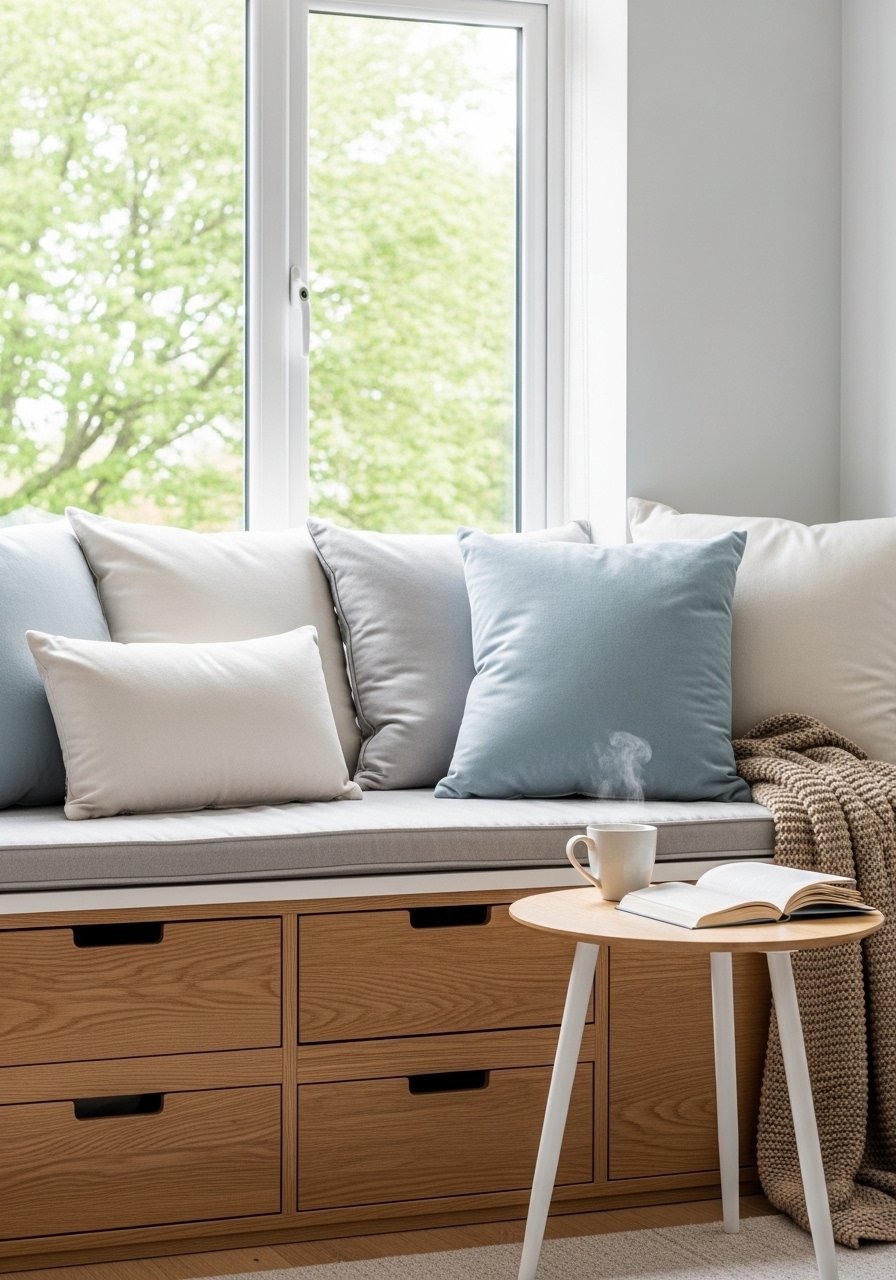
If your studio has a nook, I built a window seat with storage to create a tiny dining or reading zone. Cushions in linen and a slender table make it multifunctional. A deep seat cushion (20–22 inches) and back pillows keep it comfortable. I store extra linens underneath in baskets. Mistake: leaving the seat shallow—aim for depth so you can sit and lean comfortably. This small project makes the window nook feel like its own restful room within the studio.
Loft Bed to Maximize Floor Space
Style/Vibe: Industrial / Minimalist
Budget: $$$ ($300-800)
Best For: Small studio with high ceilings
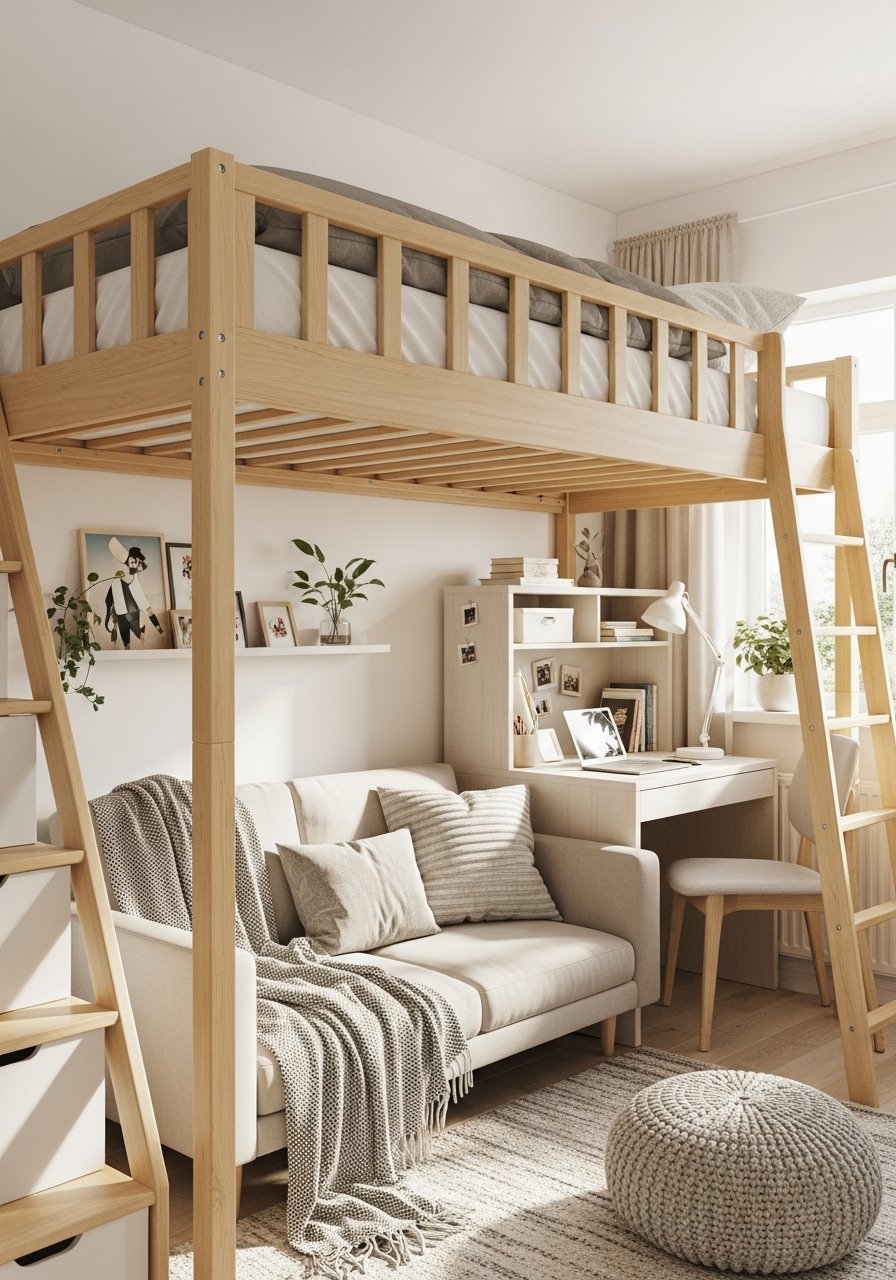
In a taller studio, a loft bed is a game of space-saving logic. I raised the bed to create a living area underneath—sofa by day, guest bed by night. Under-bed height of 5.5–6 feet is ideal for comfortable seating and a desk. Mistake: not planning access—use a sturdy ladder or stairs with built-in drawers. If a full loft is too pricey, a high platform bed with under-storage gets a similar effect. Lofting makes the floor plan feel intentionally zoned.
Cottage-Style Daybed for Living/Guest Flexibility
Style/Vibe: Cottage / Transitional
Budget: $$ (under $200)
Best For: Seating that converts to sleeping
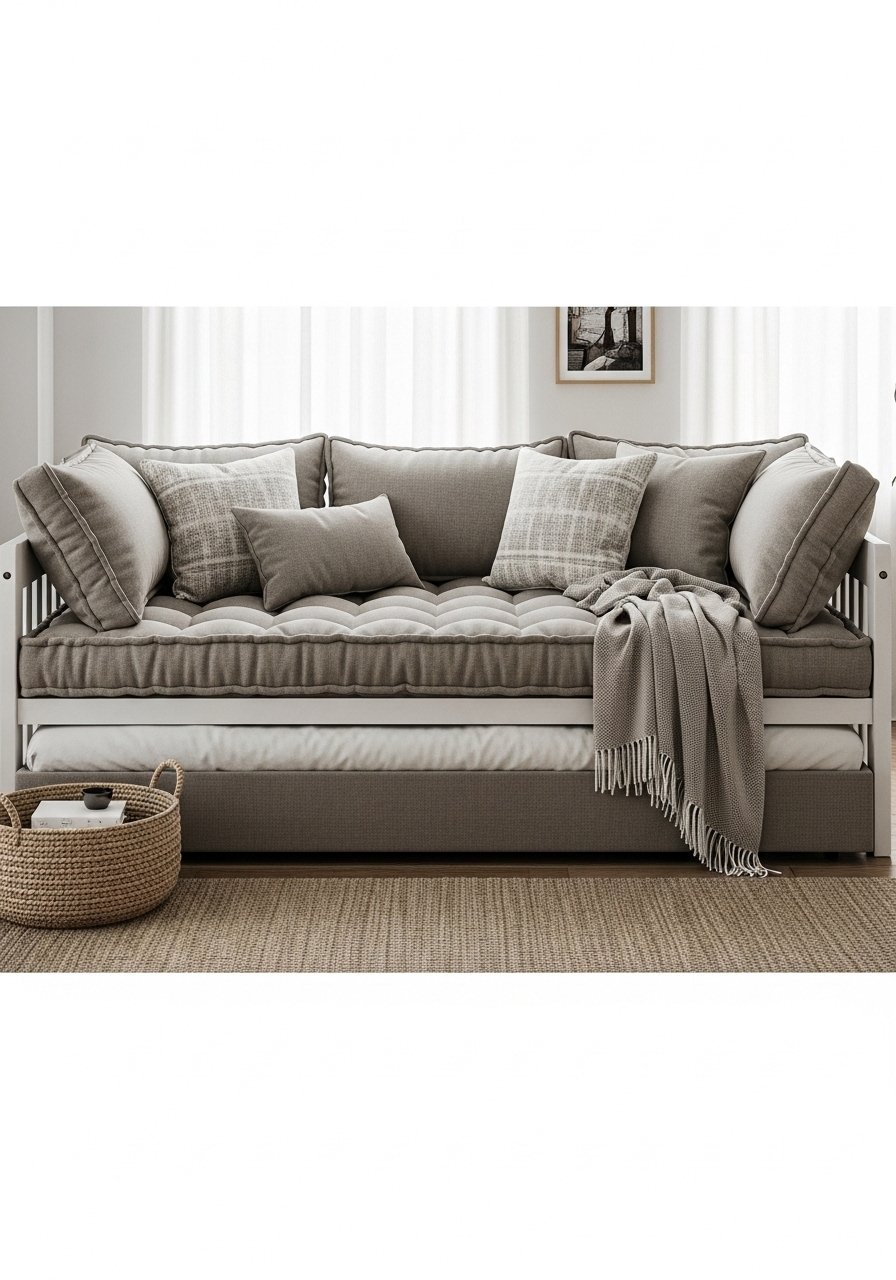
A daybed gives you seating by day and a bed by night. I chose a single daybed with a pull-out trundle for guests, then styled it with layered pillows and velvet pillow covers set of 4. It visually belongs in the living area but functions as needed. Mistake: skipping a supportive mattress—look for memory foam or a 6–8 inch mattress topper for comfort. Daybeds are a tidy, versatile way to define zones without permanent changes.
Neutral Peel-and-Stick Accent Wall Behind Bed
Style/Vibe: Modern Farmhouse / Minimalist
Budget: $ (under $100)
Best For: Bedroom backdrop in rentals
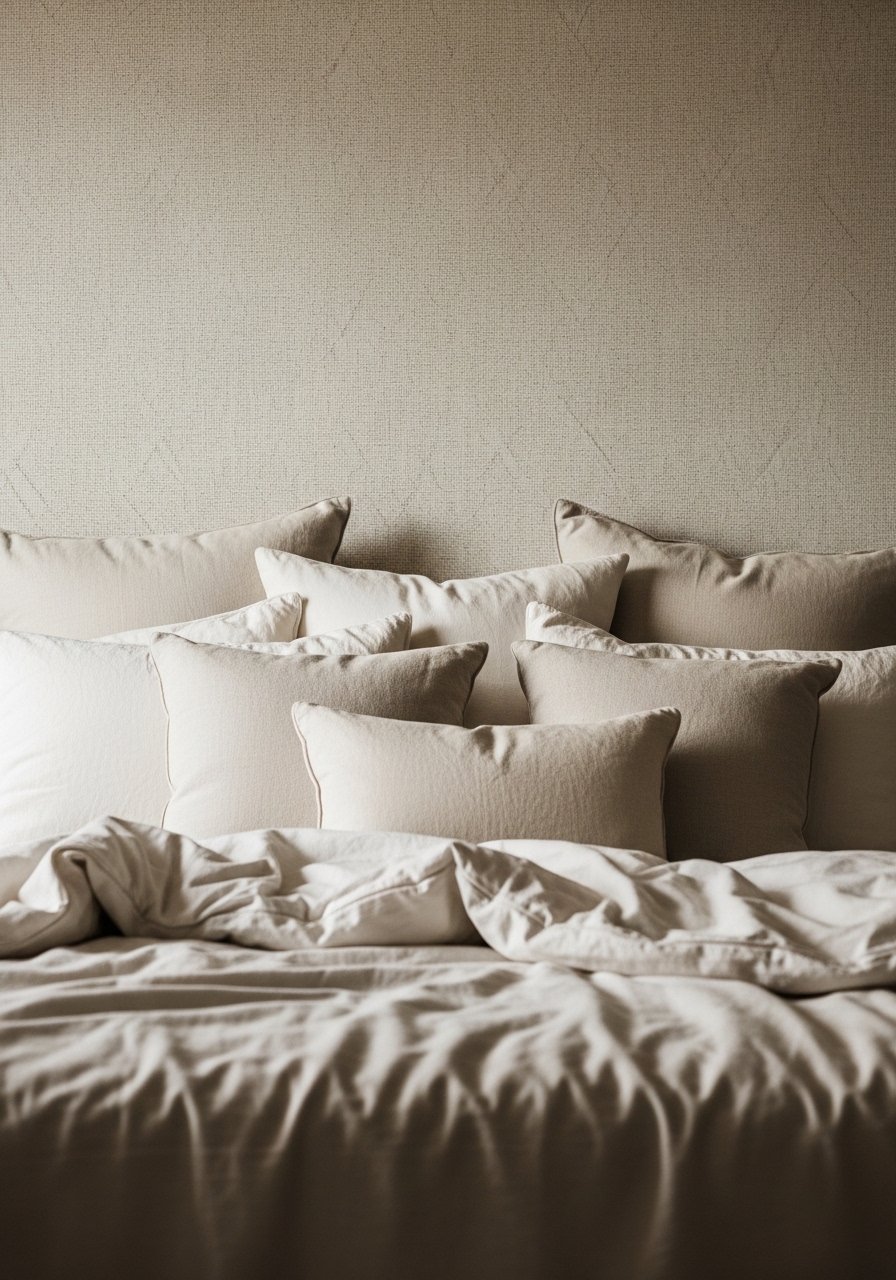
Peel-and-stick wallpaper is my favorite rental-friendly trick for creating a bedroom backdrop. I used neutral textured panels behind the bed to make that area feel like its own room. Peel stick wallpaper panels neutral come in linen and grasscloth looks without the commitment. Mistake: using a busy pattern in a small space—select a subtle texture to add depth without shrinking the room. This instantly separates the sleep zone visually and feels like a small design splurge.
Slim Storage Wardrobe to Define Dressing Area
Style/Vibe: Scandinavian / Modern
Budget: $$ (under $200)
Best For: Clothing storage and dressing zone
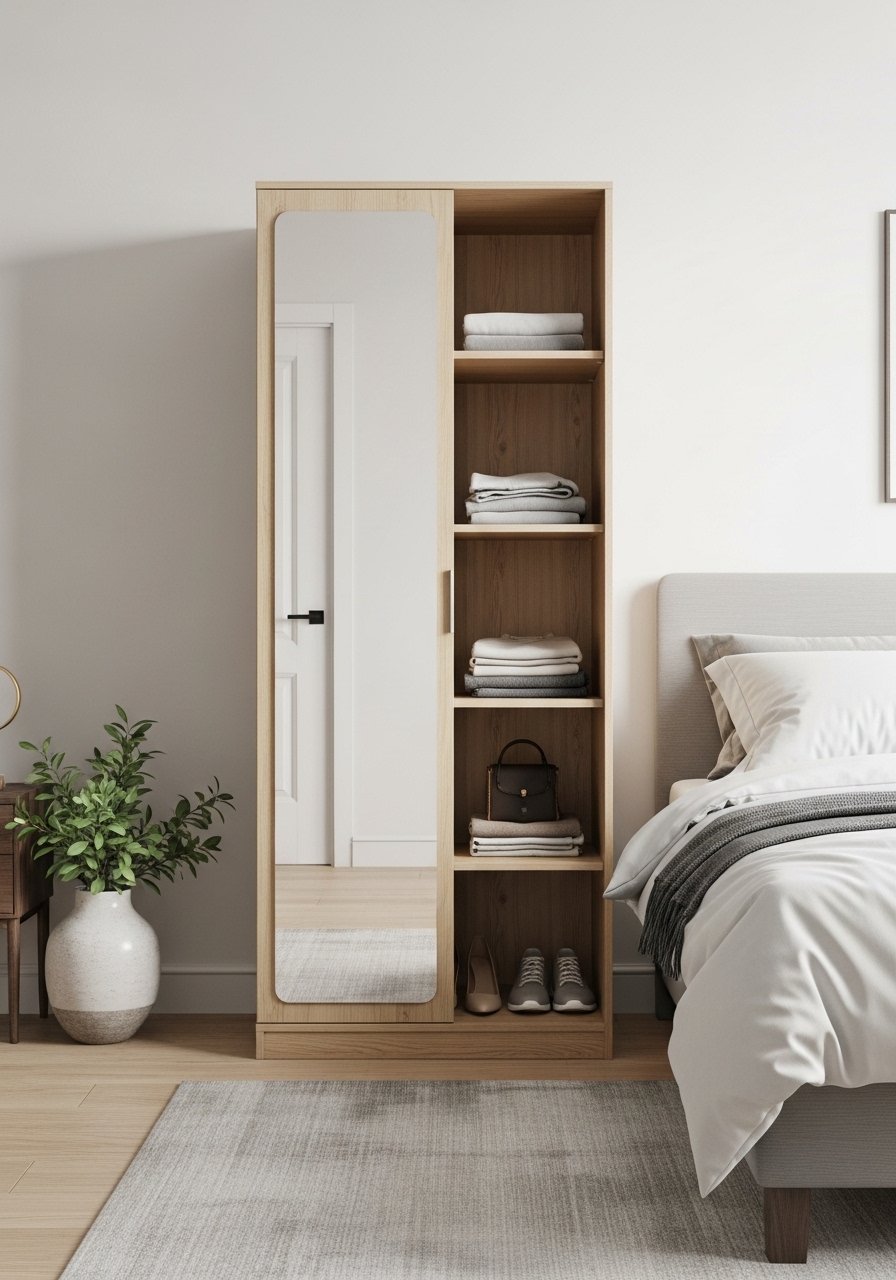
A slim wardrobe or armoire creates a clear dressing zone when closets are tiny. I picked a 24–30 inch deep wardrobe with hanging space and shelves to double as a bedside surface. Add a full-length mirror on the door to help the zone read finished. This storage ottoman with lift top also provides folded storage nearby. Mistake: choosing one that’s too ornate; in a studio, simpler lines help the piece blend and define without dominating.
Color-Blocked Zones Using Paint or Curtains
Style/Vibe: Modern / Minimalist
Budget: $ (under $100)
Best For: Visual separation without furniture
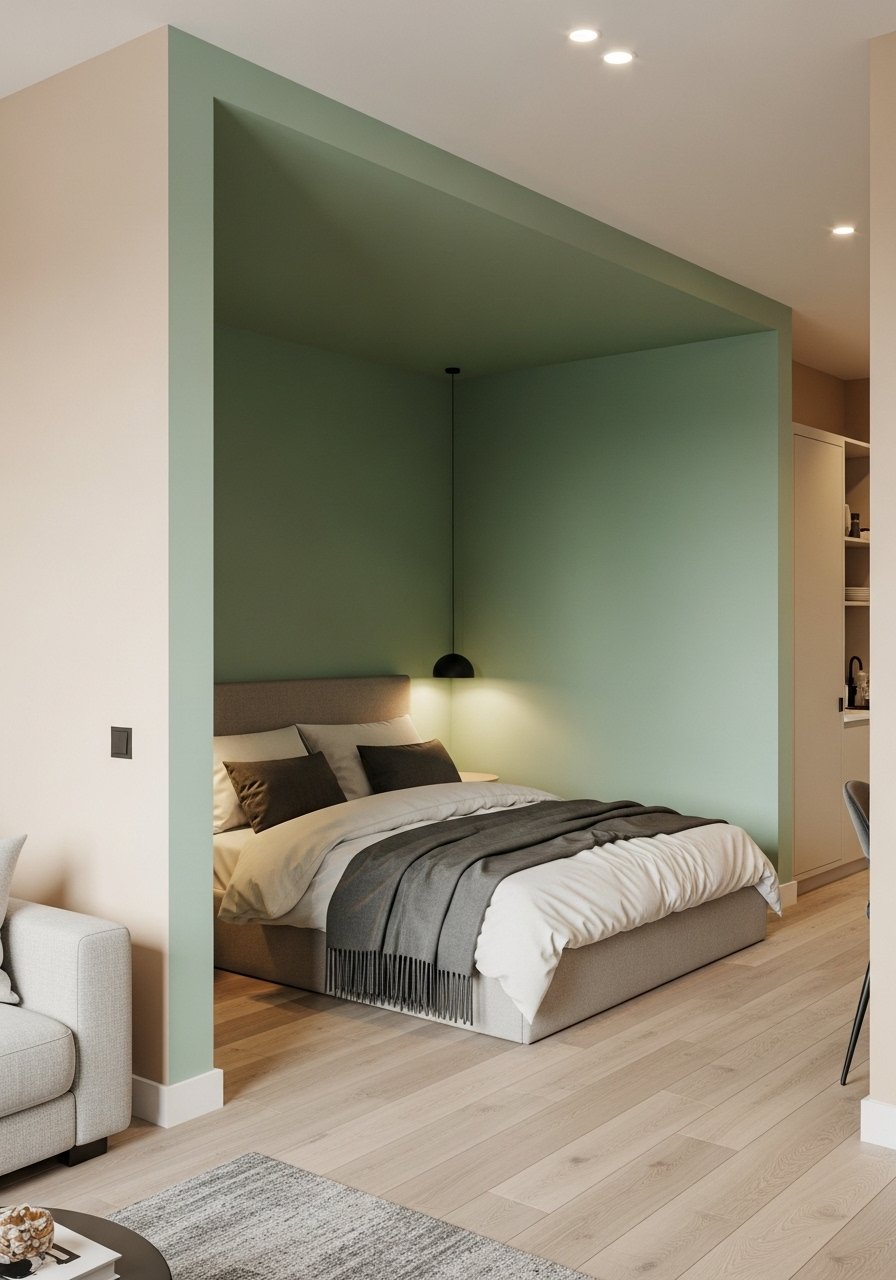
I used muted color blocking to separate my sleeping area from the living room—shelf-height paint on the bed wall and linen curtains to mark the rest. You can also hang floor-to-ceiling curtains to “close” a zone when needed. Linen blend curtains 84-inch in a contrasting tone work beautifully. Mistake: too bright a color in a small studio; stick to warm neutrals or soft greens for an airy feel. Color-blocking reads deliberate and refined.
Built-In-Look Headboard With Shelving and Lighting
Style/Vibe: Modern / Cozy
Budget: $$$ ($150-350)
Best For: Nightstand replacement and sleep zone
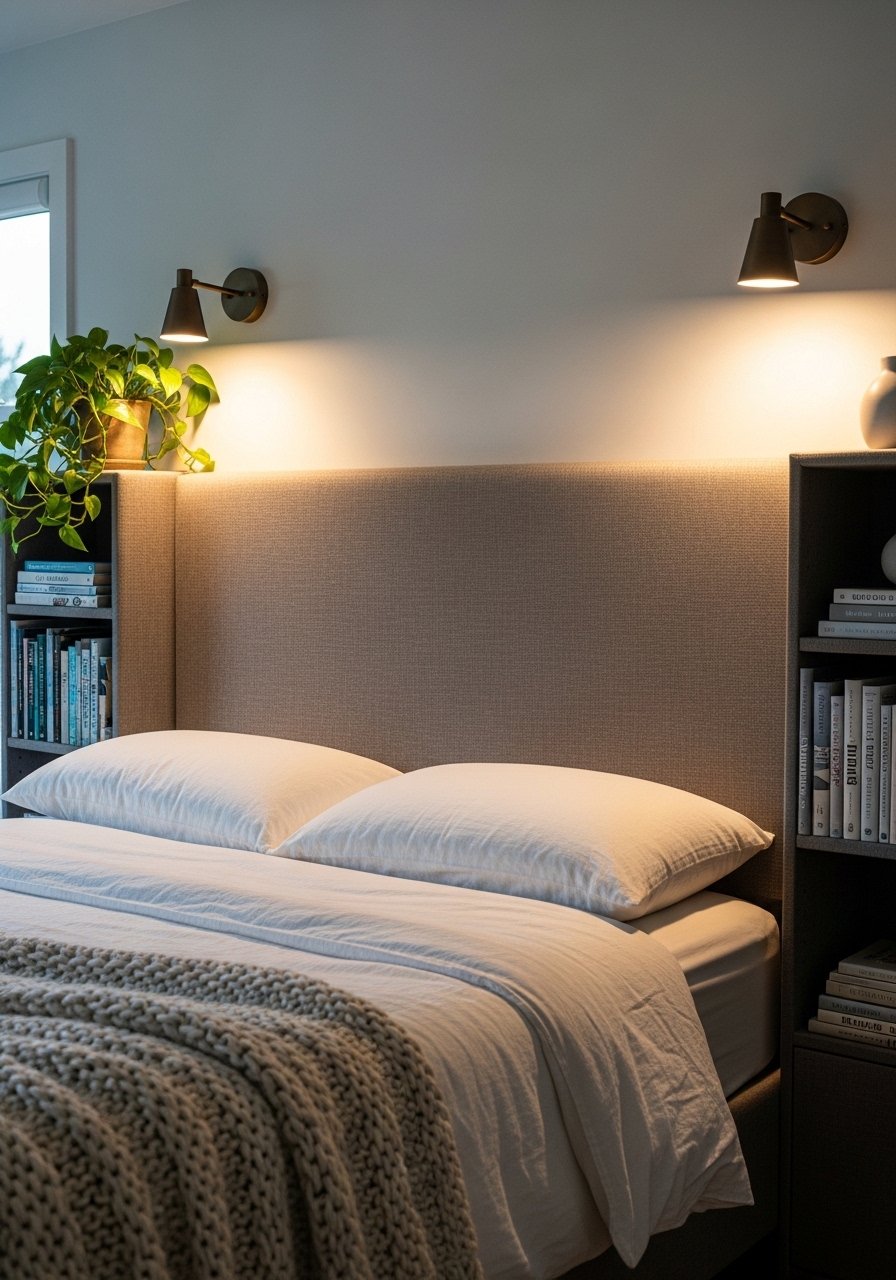
I built a headboard that looks custom by adding modular shelving and a plug-in sconce. This anchored the bed as its own zone and replaced the need for nightstands. Use LED bulbs and mixed metals to reflect current trends. I pair it with LED Edison bulbs warm white and small baskets for bedside items. Mistake: under-lighting—make sure task lighting is bright enough for reading but dimmable for mood. The result feels like a separate bedroom wall.
Flexible Folding Desk That Stows Away
Style/Vibe: Minimalist / Modern
Budget: $ (under $120)
Best For: Work-from-home setups in compact studios
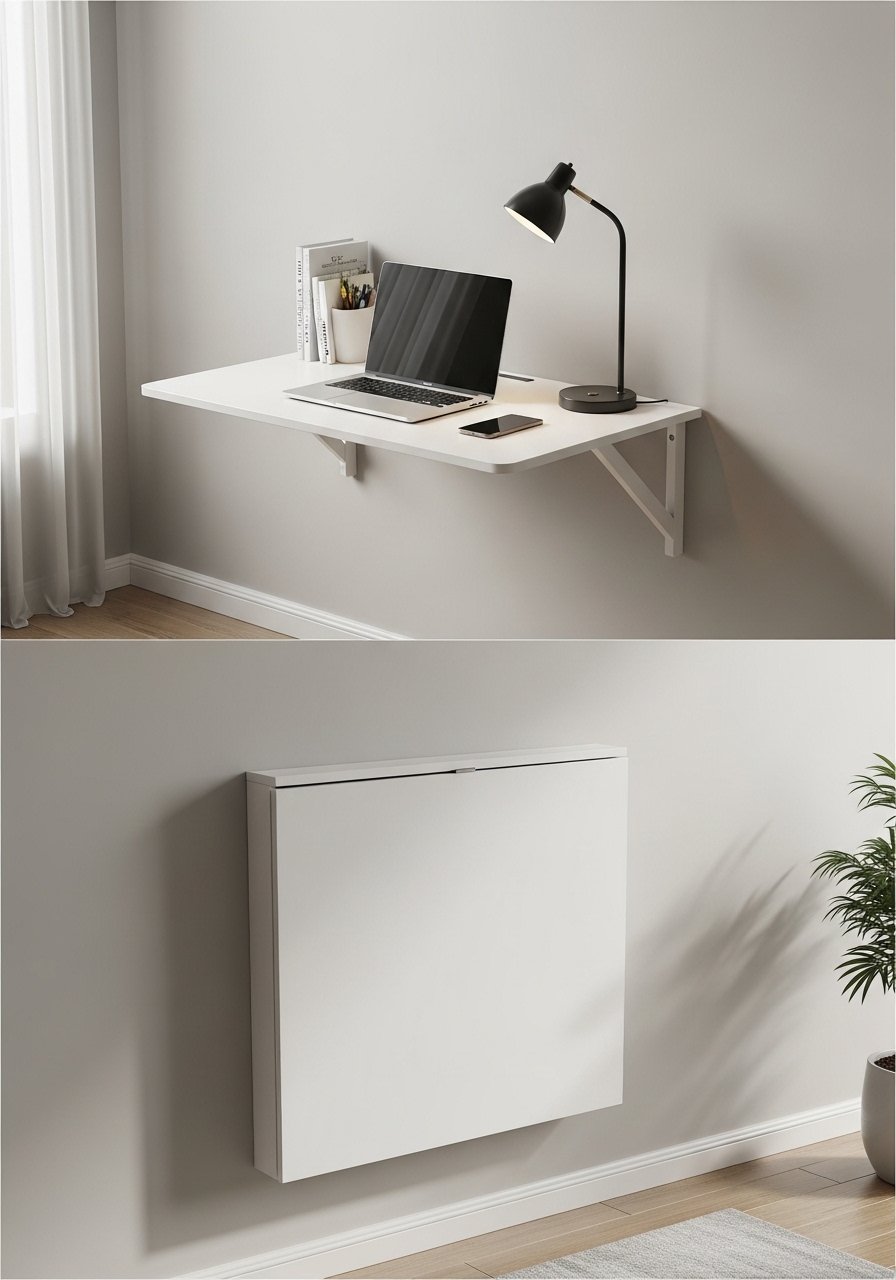
A wall-mounted folding desk freed up floor space in my studio. Folded up, the wall looks like art; folded down, it’s a full workspace. I pair it with compact storage and a slim task lamp. Keep the surface about 20–24 inches deep for laptop use. This floating shelf can double as a desk if you’re DIY-inclined. Mistake: choosing a desk too small for your work essentials—measure first so the folded surface actually supports what you need.
Accent Ceiling Treatment to Define a Zone
Style/Vibe: Modern / Eclectic
Budget: $$ (under $150)
Best For: Over dining or sleeping areas
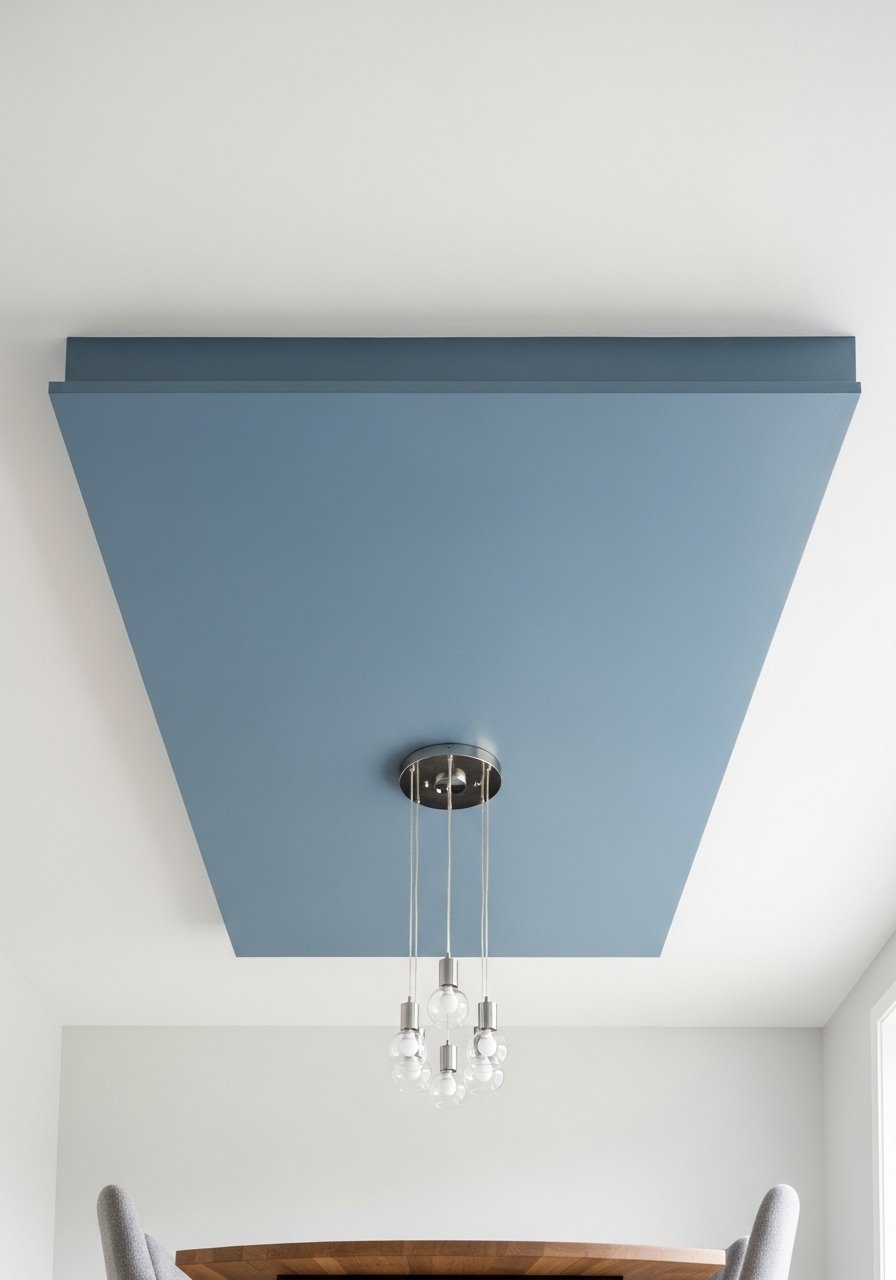
I painted a soft accent on the ceiling over my dining spot to visually anchor it. Ceiling treatments are often overlooked but they define a zone without taking floor space. Try a warm wood stain panel or muted blue paint to keep it subtle. Mistake: painting the entire ceiling in a dark tone; limit the accent to the zone to avoid making the studio feel lower. This trick feels fresh and is one competitors often miss for small spaces.
Storage Bench at the Foot of the Bed to Separate Zones
Style/Vibe: Transitional / Coastal
Budget: $$ (under $150)
Best For: Bedroom/living boundary and extra storage
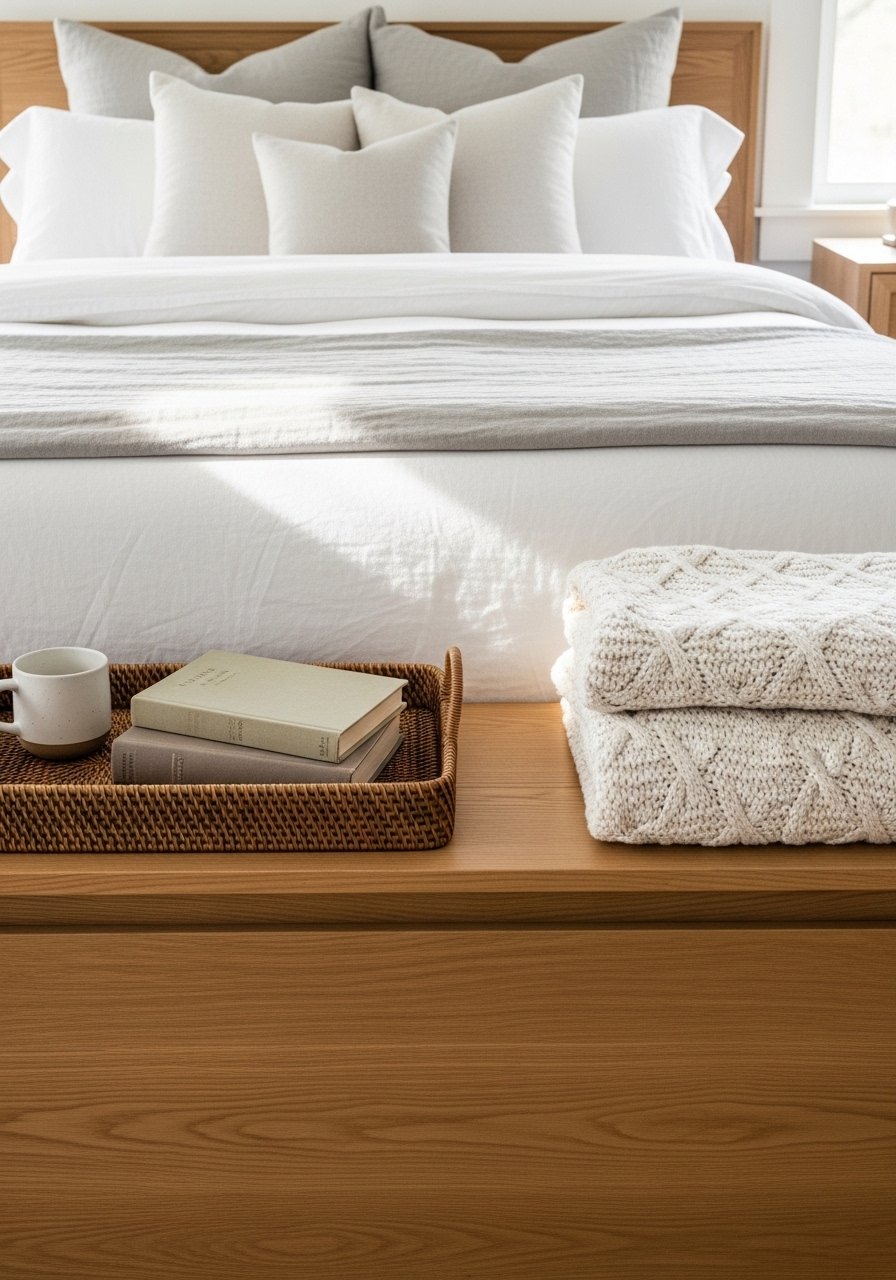
I placed a storage bench at the foot of the bed to mark the sleep zone and hold extra blankets. A bench with a lift-top provides hidden storage and acts as a visual barrier without blocking sightlines. I use a neutral fabric bench about 48 inches wide. This storage ottoman lift top works well for smaller beds. Mistake: choosing one too short—bench length should be at least two-thirds of bed width to read like a real boundary.
Use Plants to Sketch Out Zones and Add Height
Style/Vibe: Boho / Modern
Budget: $ (under $100)
Best For: Natural separation and warmth
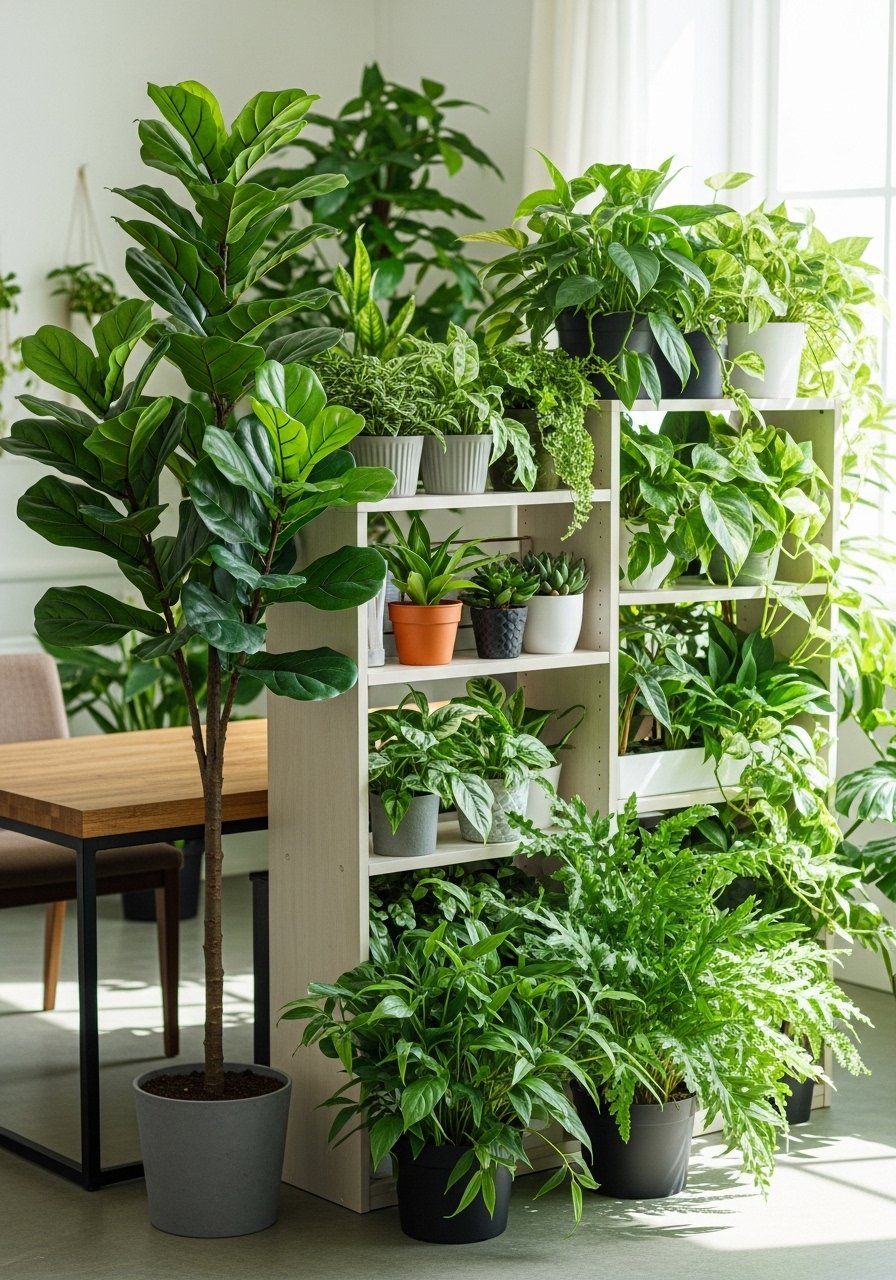
Plants are my go-to zone markers. A tall artificial fiddle leaf fig tree 6ft flanks the sofa and marks the living area, while smaller succulents cluster on shelves for the workspace. I’ve noticed more people choosing realistic faux plants for low upkeep; they still give the height and texture you need. Mistake: scattering tiny plants everywhere—group them to form a visual mass that reads like an intentional divider.
Neutral Cohesive Palette to Tie Separate Zones Together
Style/Vibe: Scandinavian / Modern
Budget: $ (varies)
Best For: Whole-studio cohesion
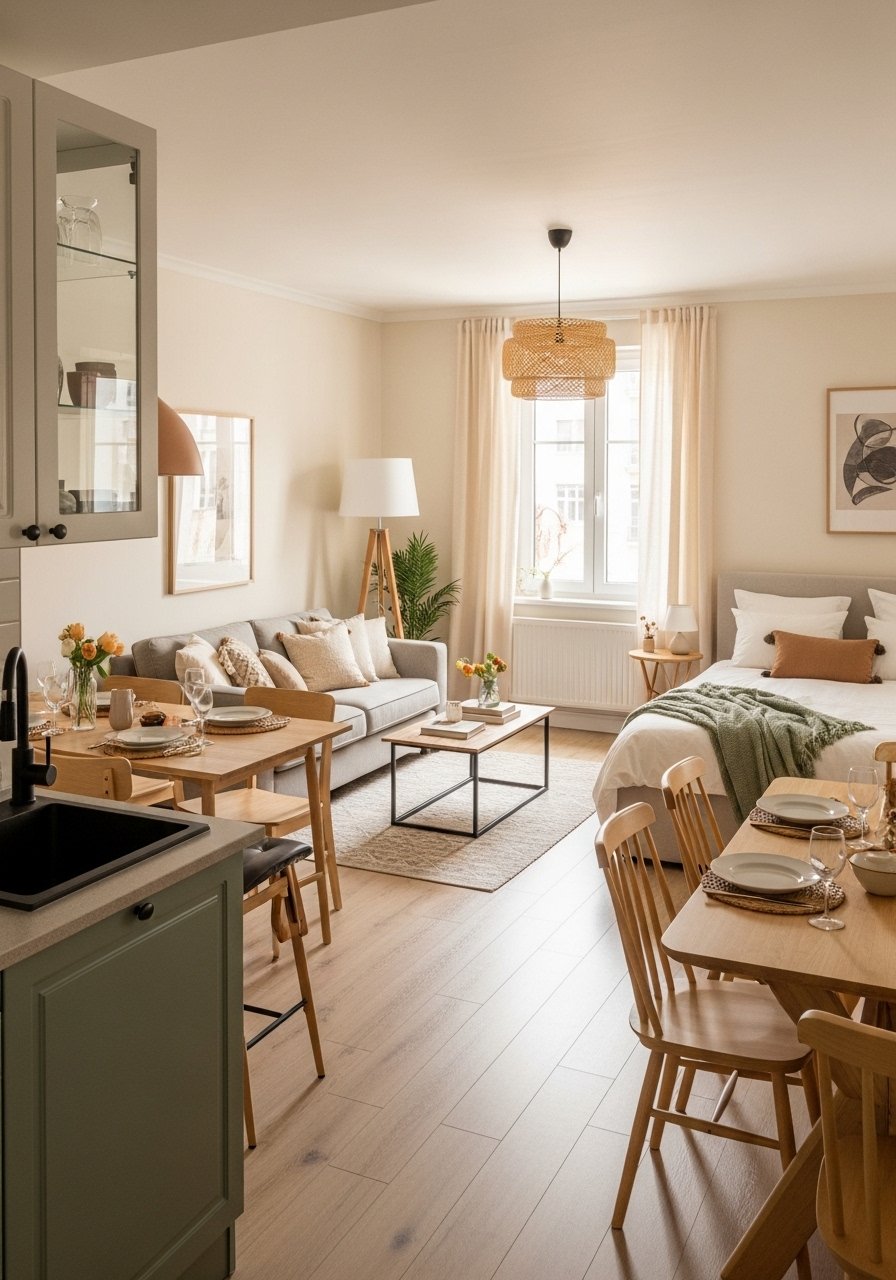
Using one cohesive palette across zones keeps a studio from feeling fragmented. I stuck to warm neutrals—cream, warm oak, sage accents—and repeated textiles to connect spaces. Throw a single accent color across pillows, a rug, and art for continuity. Mistake: introducing too many competing colors. Aim for three main tones and one pop. I’ve noticed cohesive palettes make even the tiniest studios feel intentional and restful rather than cluttered.
Shopping Tips for These Looks
Buy throws and pillows seasonally: I swap texture every few months. This cream chunky knit throw refreshes the sofa instantly.
Invest in one large plant, not five small ones: A single 6-foot fiddle leaf fig has more visual impact than many tiny succulents.
Choose white oak or warm wood finishes: They’re trending in 2026 and feel timeless; white oak floating shelves look high-end.
Pick furniture with legs to keep sightlines open: Low-profile sofas or legged beds make rooms feel bigger—look for pieces under 85 inches wide.
Thrift frames, buy mats new: Pair thrifted frames with white picture mats 11×14 for a polished gallery wall.
Use peel-and-stick for renters: Peel stick wallpaper panels neutral add texture without commitment.
Frequently Asked Questions
Q: How can I make my studio feel larger without removing furniture?
A: Use a large mirror, consistent neutrals, and furniture on legs to open sightlines. A 36-inch round mirror reflects light and immediately enlarges the feel.
Q: What's the best quick way to define a bedroom zone in a studio?
A: Try a half-height headboard with shelves or a folding screen. A storage bench at the foot of the bed also marks the space—storage ottoman lift top doubles as storage.
Q: Are faux plants acceptable in small spaces?
A: Yes. High-quality faux plants look realistic and require zero upkeep. I use a realistic artificial fiddle leaf fig for height without the maintenance.
Q: How many rugs should I use to zone a studio?
A: Two layered rugs usually do the trick: a larger neutral base (like an 8×10 jute) and a smaller textured rug for the seating area. This 8×10 jute area rug is a neutral workhorse.
Q: What's the smartest furniture investment for a studio?
A: A convertible sofa or low-profile sofa with storage. It serves seating, sleeping, and storage functions. Look for pieces with solid frames and removable covers for easy cleaning.
Q: How do I balance mixed metals without it feeling chaotic?
A: Start with one dominant metal (warm brass or matte black) and add accents of a second metal. Mixed metal picture frames make mixing feel intentional and curated.