
My sofa looked clean but cold for weeks. Blank arms and a too-smooth cushion made the room feel unfinished. I kept piling on pillows and it only made the seating look crowded.
I eventually learned that throws are not filler. They set the room's mood. I can make a space feel warm, layered, and calm in under an hour with the right throws and a few simple moves.
I've noticed people treat every throw the same. My method sorts throws by purpose and placement. It works with quiet luxury or organic modern looks and fits any budget.
What You'll Need
- Chunky knit throw in oatmeal, 50×60 ($40 to $65). I keep one on the arm of the sofa for touchable texture
- Linen throw in muted sage, 50×70, lightweight for layering ($35 to $60). Worth the weight: the linen relaxes a modern couch
- Textured cotton throw, navy stripe, 48×72 ($25 to $45). Good for draping over a chair back
- Woven seagrass basket, medium ($30 to $55). Keeps folded throws tidy and adds natural color
- Small blanket ladder, 5-rung, natural wood ($45 to $80). I use it as a vertical display when floor space is tight
- Weighted throw, 50×60, charcoal ($60 to $120). Use on chilly evenings or draped at the sofa base
- Set of 2 neutral throw pillows, 18×18 ($25 to $45). Coordinate with throws for one cohesive look
Step 1: Sort and choose by purpose, not color
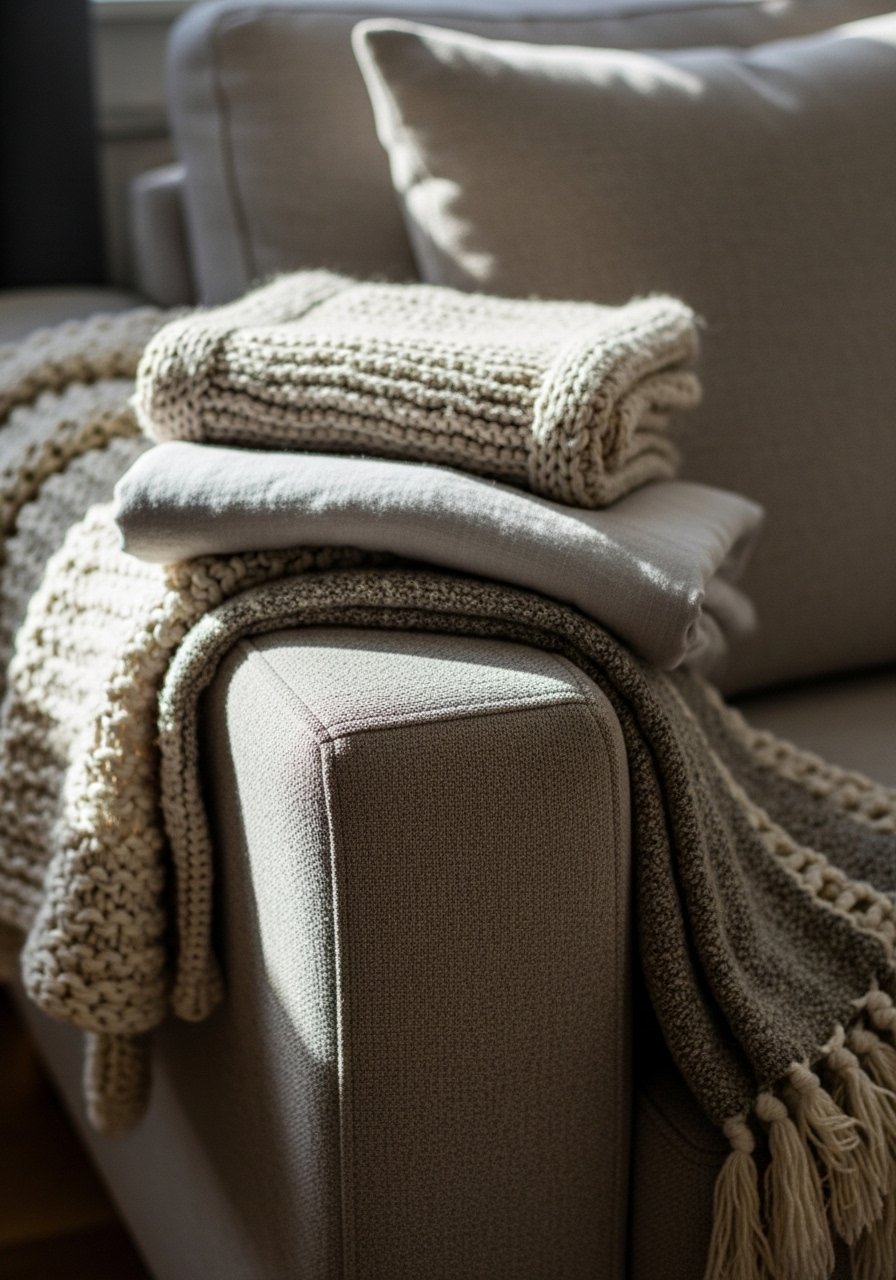
Pull every throw out and group them. I sort into everyday, decorative, and seasonal piles. Everyday throws are the ones I touch. Decorative throws are lighter and set color or pattern. Seasonal throws add warmth or coolness as needed.
The room changes when each throw has a job. Too many decorative throws looks staged. Too many everyday throws looks lazy. One insight people miss is scale. I aim for one large throw per seating zone and one smaller accent. Avoid folding everything the same way. It flattens the room.
Step 2: Anchor one corner with a basket or ladder
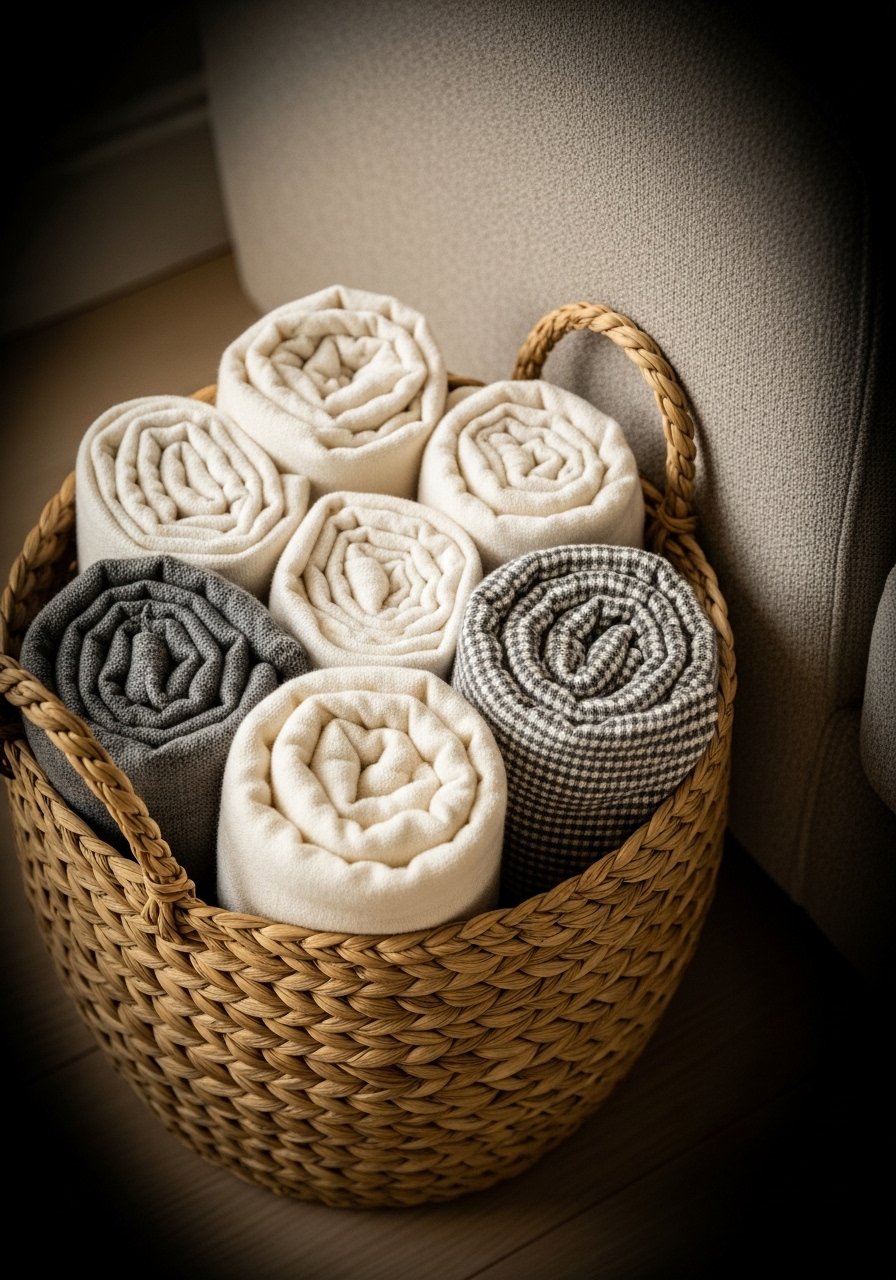
Most start by throwing blankets on the sofa. I start on the floor. Placing a basket or ladder near the sofa creates a deliberate home for extra throws. It reads tidy and intentional.
Visually, a basket anchors the corner and adds organic texture. The rule I use is a 2:1 proportion. The basket opening should be about half the height of the sofa arm. A mistake is stuffing the basket. Leave room so throws peek out. I like the seagrass basket for warmth and a ladder when the wall needs vertical interest.
Step 3: Drape for gesture, not coverage
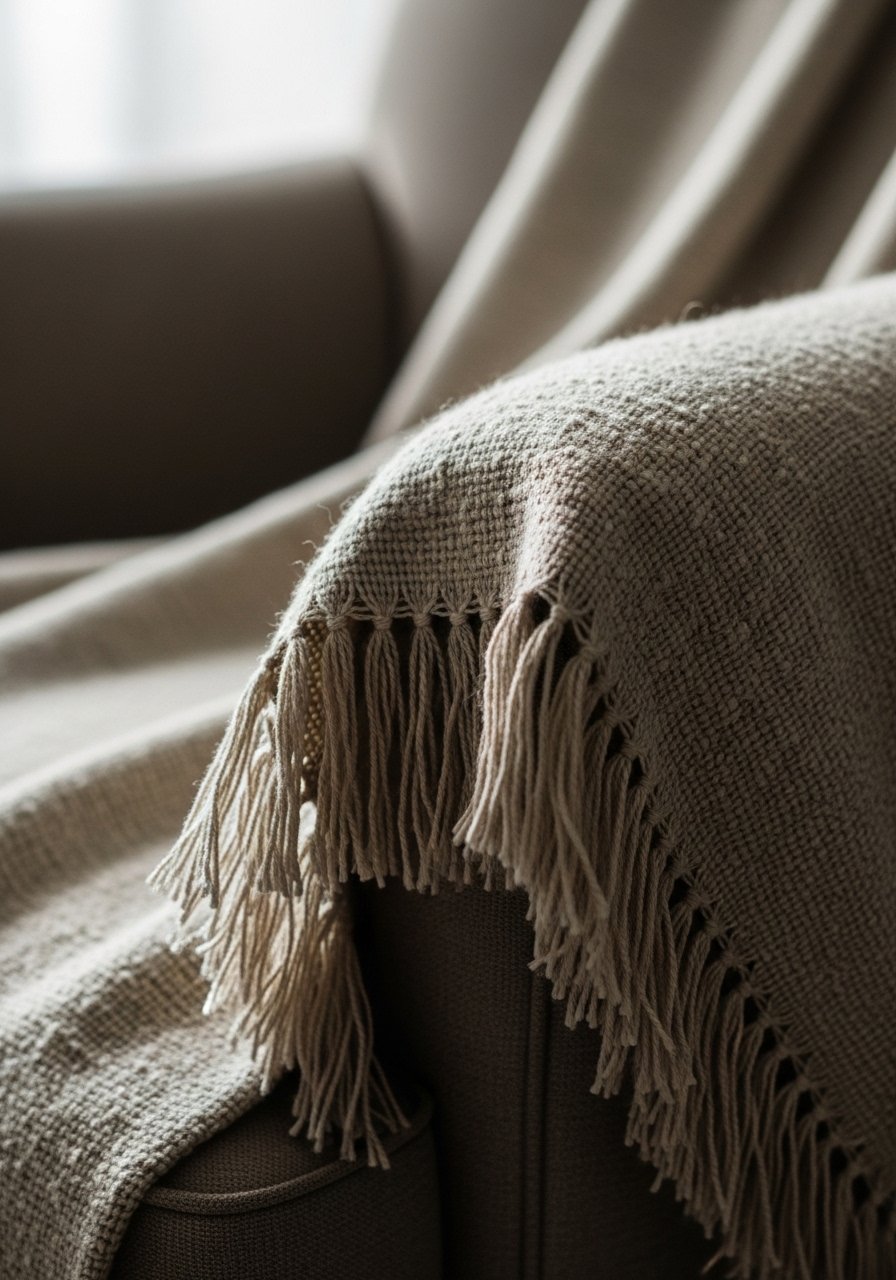
I fold a throw into thirds lengthwise then let it drape over a sofa arm or chair back so one third shows. The gesture looks relaxed and usable. It also prevents covering the entire seat which hides furniture lines.
When done wrong, throws swallow the furniture and make the room look cluttered. Done right, a thrown corner creates movement and invites sitting. People often forget edge length. I leave 12 to 18 inches hanging from the arm for a natural fall. Avoid symmetrical draping on every seat. A single imperfect fold reads better.
Step 4: Layer for depth, pick one dominant texture
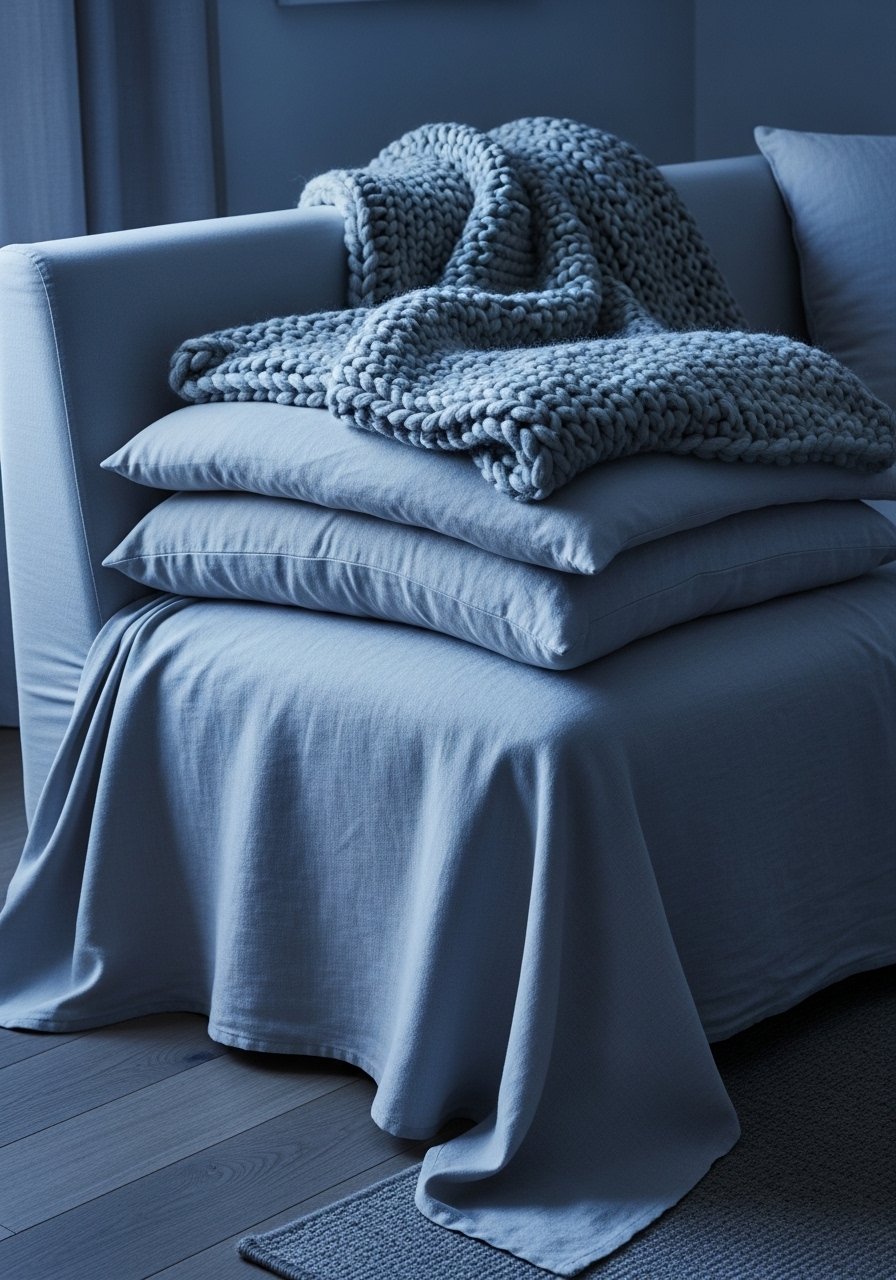
This is when the room starts to feel layered and intentional. I place a lightweight linen throw closest to the cushion, then a chunky knit over the arm or folded on the back. The linen gives a smooth base. The chunky knit gives touchable volume.
One detail that matters is scale. Use a large base throw roughly 60 percent the width of the seat. Top with a smaller, chunkier piece about 40 percent. A common mistake is mixing too many textures at once. Pick one dominant texture and support it with subtle contrast. I often keep color choices within two tones to avoid visual noise.
Step 5: Make the throws live with pillows and movement
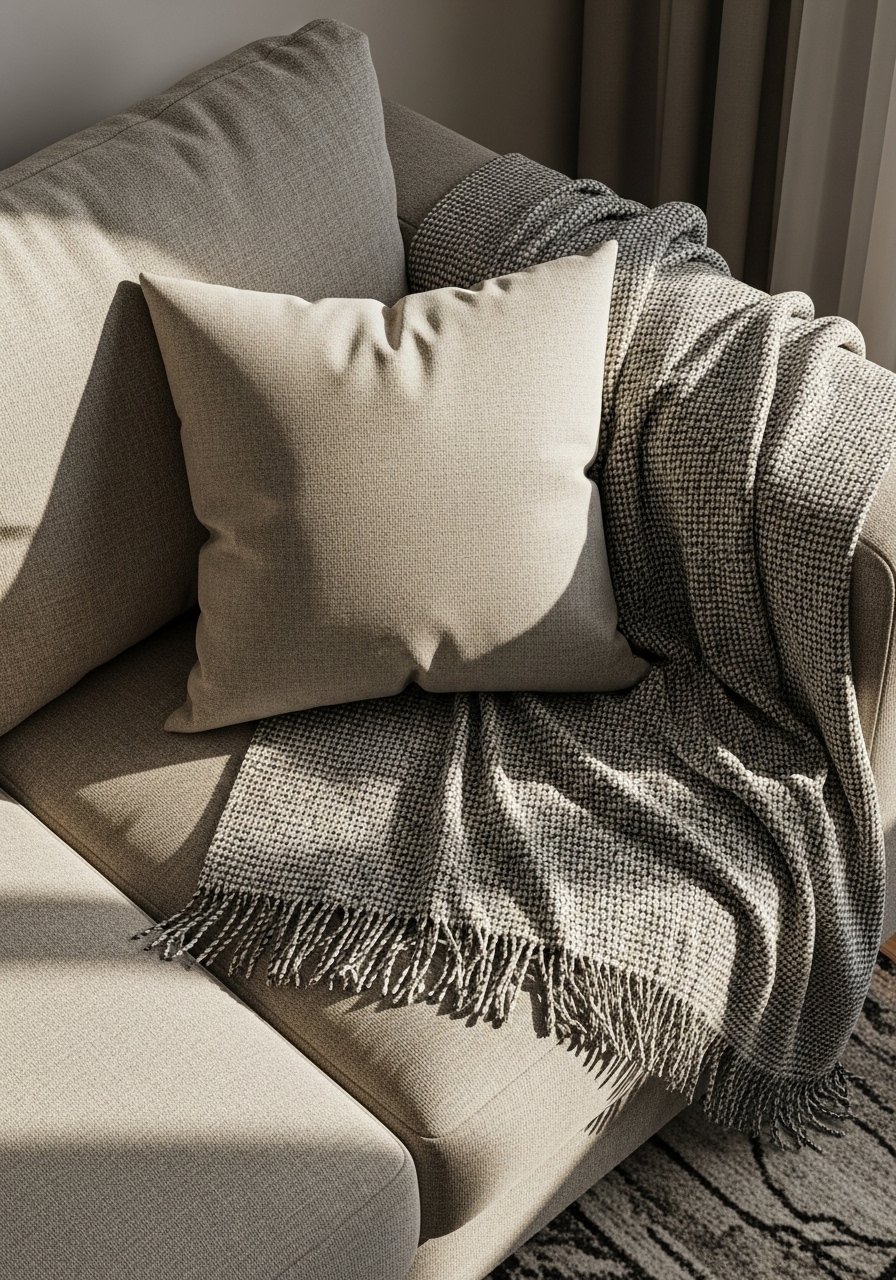
I tuck a corner of a throw behind a pillow or fold it under the pillow corner. It looks like someone just got up, not staged. Throws should create paths and movement across seating, not block them.
Visually, the room reads intentional when pillows and throws belong to each other. A missed insight is weight balance. Heavy throws near light pillows can pull the eye too low. I balance with a larger pillow behind a smaller one and a midweight throw in front. The temptation is to match everything. I avoid matchy sets and let texture and scale connect the pieces.
Why Your Room Still Feels Unfinished After Adding Throws
I used to think more throws meant more comfort. That led to a messy, indecisive look. Now I aim for clarity. One throw per seat, one folded stack, and one display piece usually does it.
Common causes of the unfinished feeling:
- Too many patterns fighting for attention
- Throws all folded identically, which flattens texture
- Lack of vertical interest, no ladder or basket result
Fixes I use are trimming the palette to two colors, varying folds, and adding a basket. The room then reads complete, not crowded.
Making This Work in a Small Room
Everywhere I look this year I see small rooms solved with fewer, smarter throws. In tight spaces I scale down sizes and increase vertical storage.
Practical changes I make:
- Choose 48×60 throws for narrow sofas
- Use a slim ladder against a wall instead of a floor basket
- Keep one neutral base throw and add a single patterned accent
Small rooms need breathing space. I avoid large folded stacks on visible seating. Instead I hide extras in ottomans or under console benches. That keeps the comfort without losing the sense of space.
Seasonal Swaps Without Starting Over
I switched to a seasonal rotation three years ago and it changed how often I actually use my throws. Summer becomes lighter linen and cotton. Winter moves toward chunky knits and weighted throws.
How I swap easily:
- Store off-season throws in breathable cotton bags
- Keep one transitional throw out through spring and fall
- Rotate one accent color each season to freshen the room
A small seasonal anchor, like a weighted charcoal throw for winter evenings, lets the room feel current without a full overhaul.
One Throw, One Pillow, Done
Pick a comfortable throw and a coordinating pillow to start. I often begin with a chunky knit and a neutral linen pillow. Place the throw on the arm, pillow slightly askew, and live with it for a day.
That small move tells me if the texture and color work. If it feels right, I stop. If not, I swap the accent throw or pillow and try again.