
My office felt like the place I left things. Papers piled on one corner. A random lamp on the other. Every time I sat down I worried I had to tidy before I could work.
It took a few small, focused moves to stop that feeling. The room now looks calm when I walk in. I want you to get that same calm without overthinking.
I've noticed many people try to style a room by buying things first. Do the opposite. Start with placement and a single anchor piece, and you can finish faster than you think.
What You'll Need
- A simple oak desk ($120 to $350). Pick a width that fills one-third to half of the wall.
- Adjustable task lamp with warm LED ($35 to $80). Direct light for work, warm color temperature.
- Ergonomic office chair, mid-back ($120 to $300). Comfortable with a simple silhouette.
- Jute area rug, 8×10 ($90 to $160). Neutral texture that grounds the desk.
- Linen curtains, 52×84 ($40 to $90). Softens light and edges.
- Set of 3 ceramic vases, matte white ($25 to $40). Use for a small cluster on shelving.
- Brass picture ledge, 24-inch ($18 to $30). Lets you layer art without commitment.
- Woven storage baskets, set of 2 ($35 to $70). Hide cords and papers and keep surfaces clean
Step 1: Pick the Desk Spot and Commit
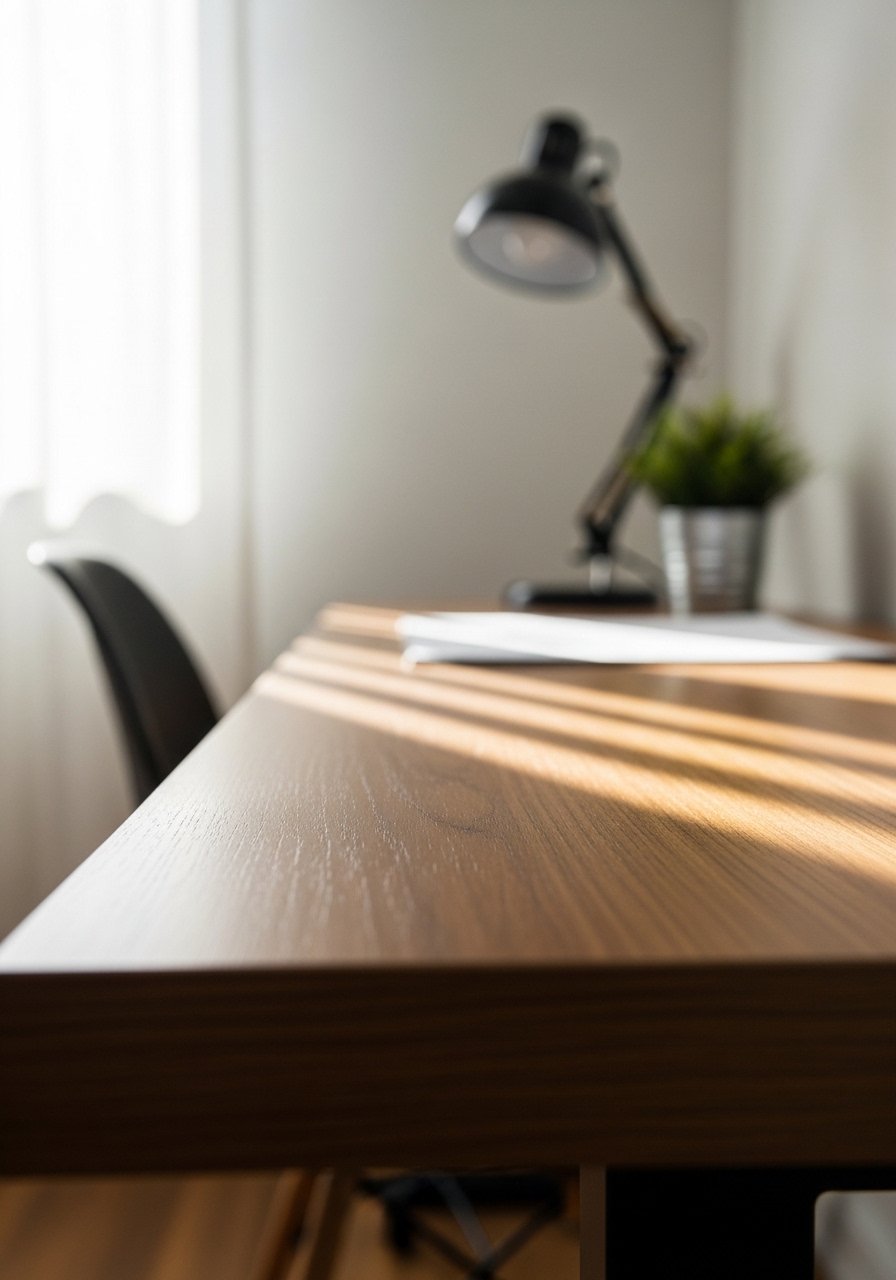
Most people start by choosing a desk and then move it around all weekend. Pick the spot first. The desk should take up about one-third to one-half of the chosen wall. That proportion keeps the room balanced. Leave at least 30 inches behind the chair so you can move freely.
Visually the room changes from scatter to intention when the desk feels anchored. People miss the scale. Too small a desk looks like an afterthought. Too large one crowds the room. Avoid centering the desk on a wall with a low window. That creates awkward sightlines.
Step 2: Anchor the Space with a Rug
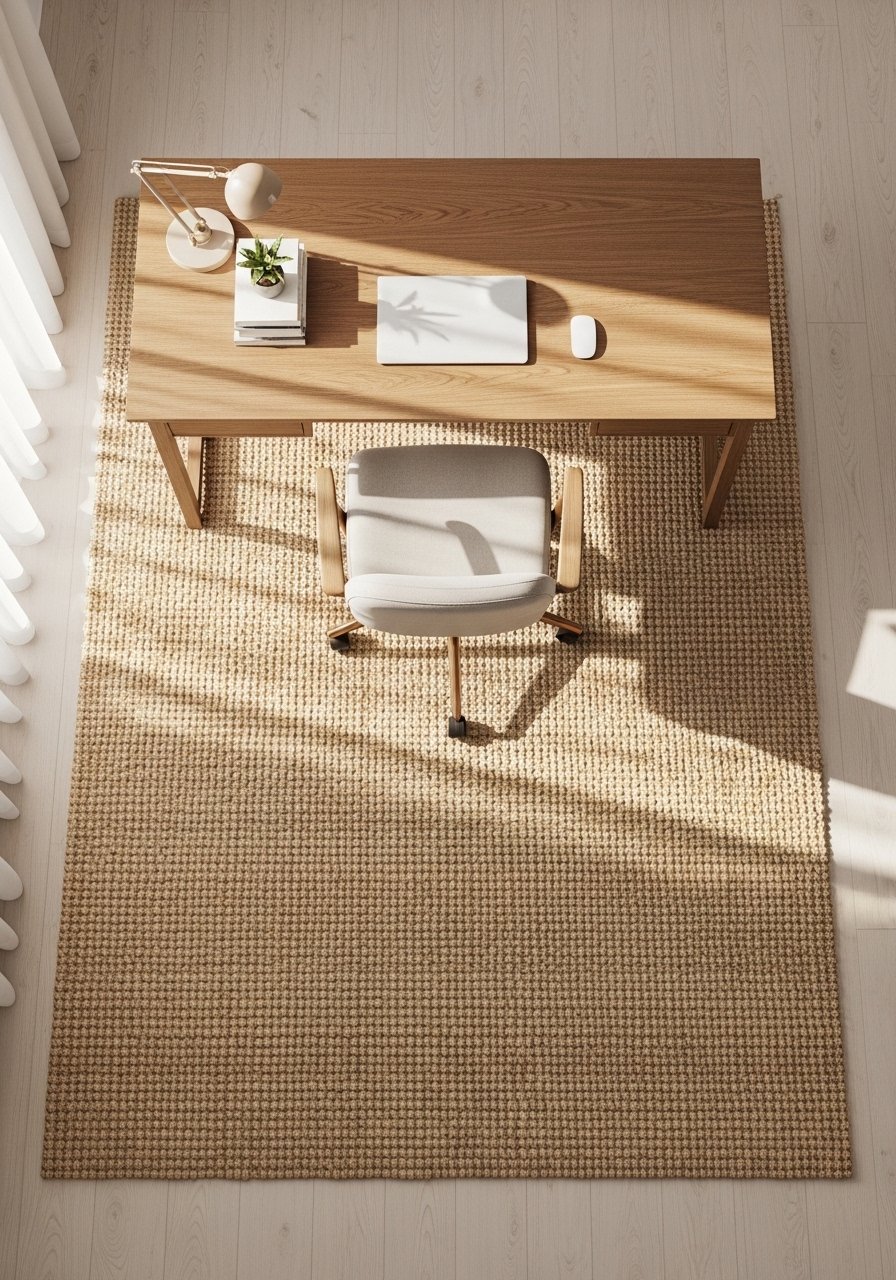
Pulling everything onto a rug makes the room feel finished fast. For a home office, place the front two legs of the desk and chair on the rug. If your room is compact, a 5×8 rug can work, but keep the chair base on the rug to prevent a floating look.
You visually gain cohesion. The rug ties furniture together and hides scuffs. A common mistake is using a rug that is too small so the desk seems to float on top of it. Another misstep is a busy pattern that fights a simple desk. Neutral, textured jute or sisal keeps the mood calm.
Step 3: Layer Light for Work and Mood
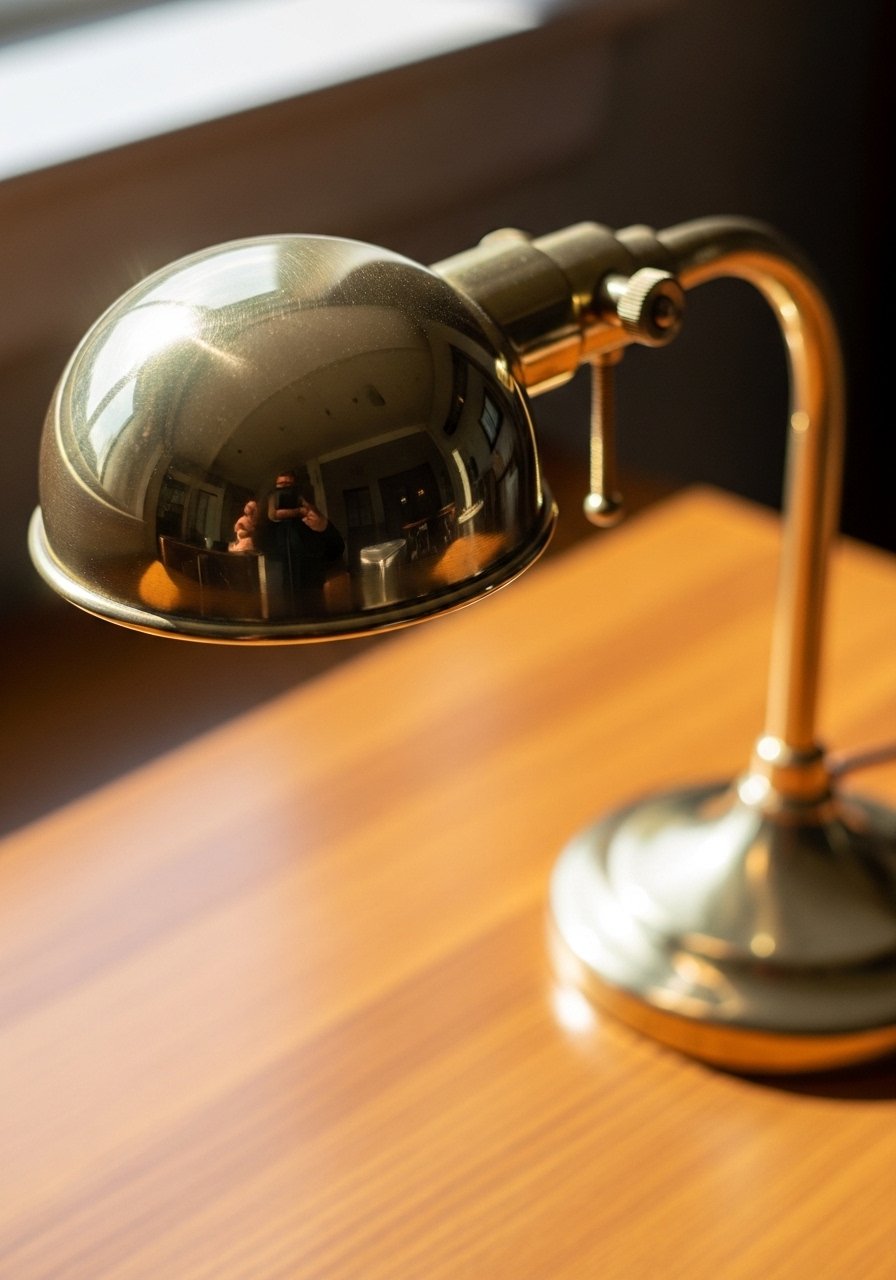
This is the step where the room stops feeling utilitarian and starts feeling deliberate. Add a task lamp plus one ambient source. Place the lamp 12 to 18 inches from your primary work area. If you are right handed, set the lamp on the left to avoid casting your hand in shadow.
What changes visually is depth and warmth. Flat, overhead lighting reads cold. A small insight many miss is using different bulb temperatures. Warm light for ambient fixtures and slightly cooler task light keeps the work area readable but cozy. Avoid too many lamps that compete for attention.
Step 4: Edit Surfaces and Add Intentional Storage
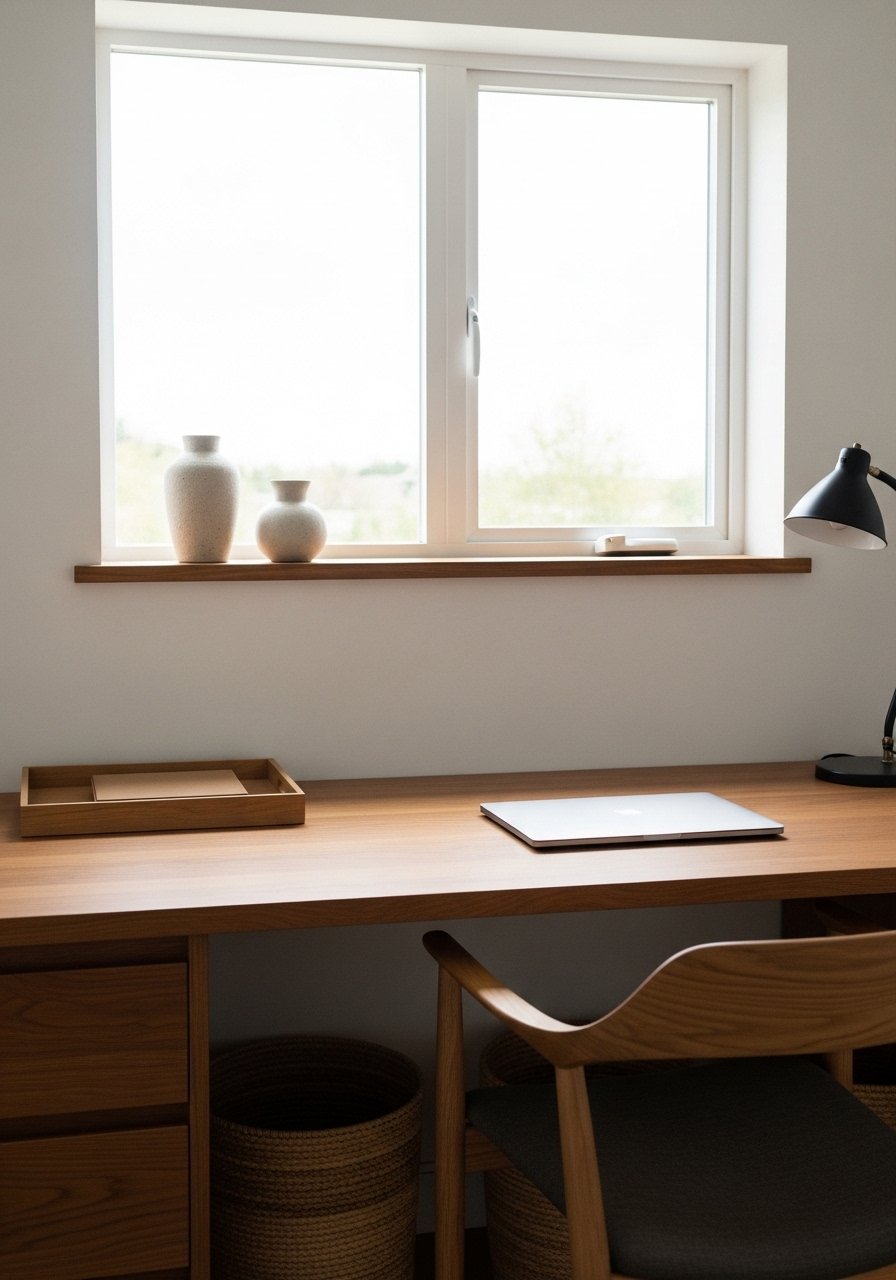
Pull everything off surfaces and choose three items to return. Use trays and baskets to keep small things contained. Group objects in odd numbers and leave 2 to 3 inches between groups so each cluster reads. The visual change is immediate. Surfaces look breathy instead of cluttered.
A detail people overdo is filling every shelf. Leave negative space. For storage, choose baskets with similar texture to the rug. Resist the urge to display every notebook. That temptation will bring back the mess.
Step 5: Balance Vertical Space with Art and Greenery
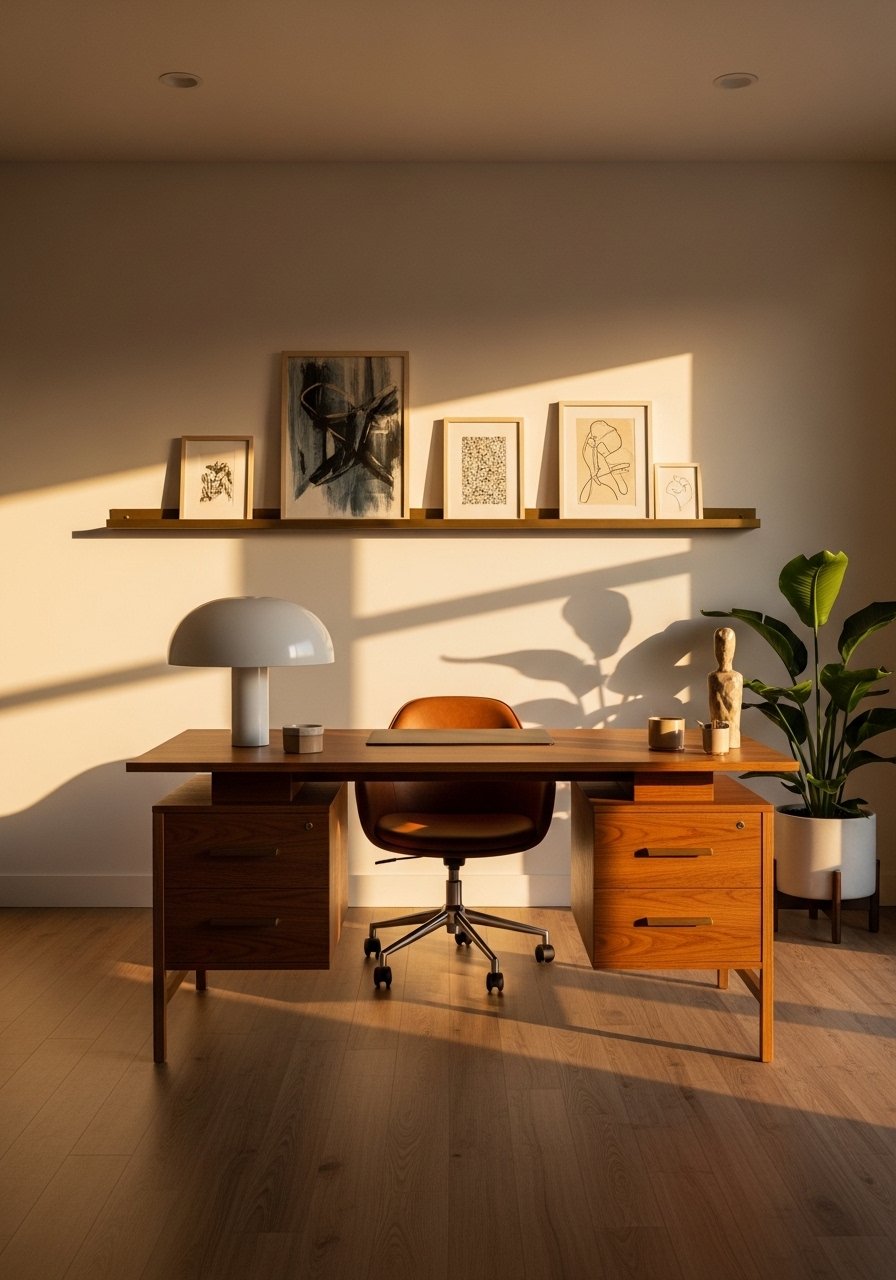
I used to hang everything too high. Aim for the bottom of frames to sit 8 to 12 inches above the desk surface. If using a picture ledge, layer a small print, a simple frame, and a plant. That mix creates a casual, edited look.
The room gains personality and a human scale when art and plants are introduced. People often make the mistake of centering a single small print. Multiple layered pieces feel curated and relaxed. Avoid heavy, dense frames that fight the lightness of the room.
Why Your Work Room Still Feels Cold
I keep seeing rooms with good furniture that still lack warmth. Often the issue is missing texture and personal scale. Small fixes:
- Swap one plastic accessory for a woven basket or linen curtain.
- Add a plant with a large green leaf to bring life and scale.
- Choose a lamp finish that repeats elsewhere, like brass paired with a brass ledge.
- Keep cords hidden. Visible cables instantly make a room feel unfinished.
These moves are low effort. They change how the room feels without a full redesign.
Making This Work in a Small Room
My feed is full of tiny offices squeezed into corners and closets. In small spaces, scale and negative space are everything. Use a narrow desk, 30 inches deep or less. Mount shelving above the desk instead of floor units. Keep the rug proportional, at least large enough for the chair front legs.
Try these layout ideas:
- Desk under a window if you need light, with curtains that reach the floor to add height.
- Floating shelf for a lamp and a couple of books instead of a bulky bookcase.
- Lighter wall colors and layered lighting to prevent a cave effect.
These adjustments keep the room functional and calm.
Mixing What You Own With a Quiet Luxury Look
Everywhere I look this year the quiet luxury feel is about restraint. You can mix what you already own by choosing one or two upgraded textures. Swap a polyester curtain for linen. Replace a busy rug with jute. Add a single brass accent like a picture ledge.
Example: keep your current desk, add linen curtains and a jute rug. Add one brass element and a matte ceramic vase. The room reads intentional. It looks like you thought about it. It does not require an expensive overhaul.
Start with One Corner
Pick one corner and finish it tonight. Add a lamp, a plant, and one piece of art. Keep the desk surface to three items.
Start small and be decisive. You will notice the difference right away, and that first completed corner will make the rest easier to handle.