
I stared at my living room for months, surrounded by wood and still feeling like something was missing. I had a walnut coffee table, floating pine shelves, and a broom-handle console. Everything was wood, but the room read flat and heavy. I tried adding more pieces. That made it worse.
What finally worked was editing down to one wooden anchor, then adding contrast in texture, height, and a little emptiness. The first three attempts looked crowded. The fourth felt almost right and the fifth stuck. I will tell you what I changed, the mistakes I made, and the simple proportions that make wooden decor feel calm instead of clunky.
Step 1: Choose one wooden anchor and let it ground the room
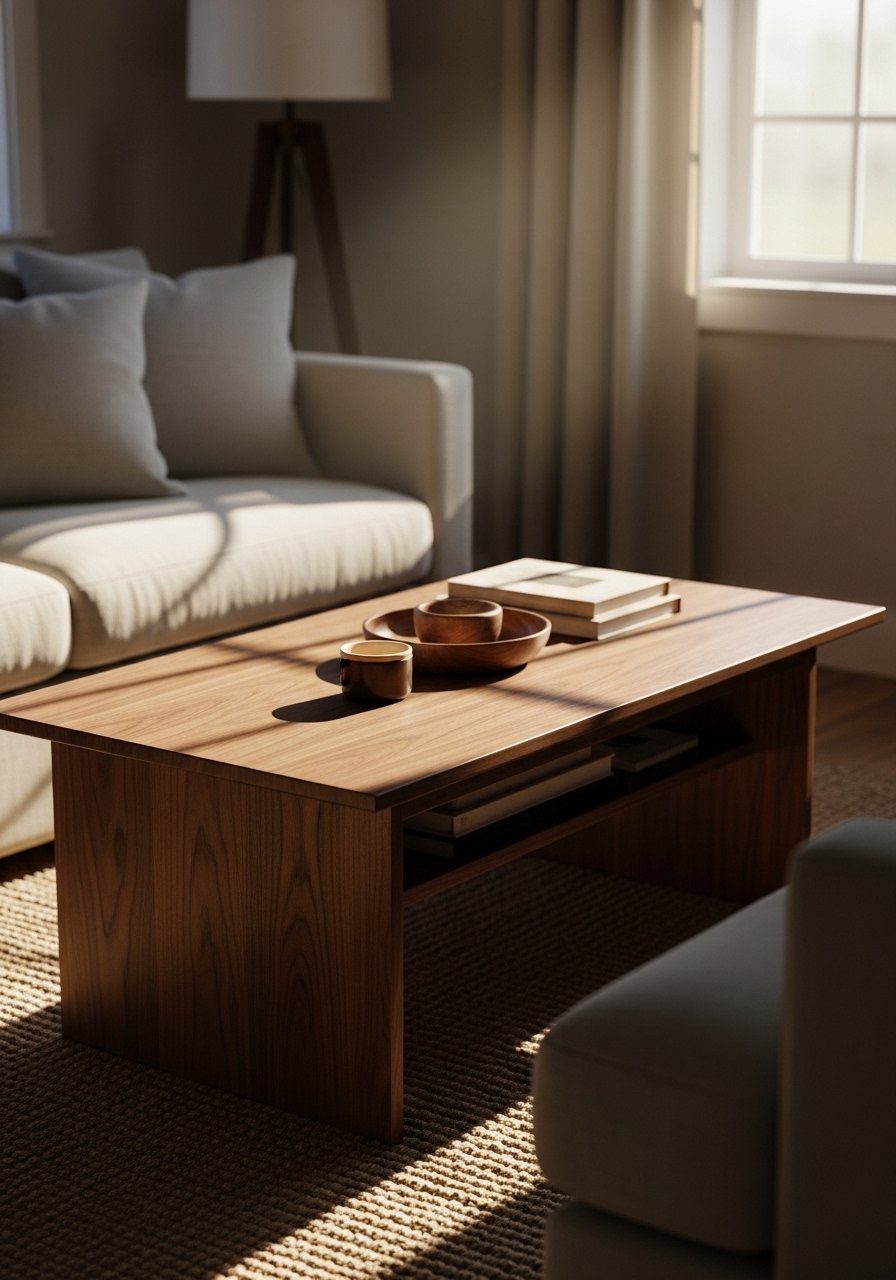
Pick the biggest wooden piece first, then stop. A 42-inch walnut coffee table or a 30×72 wood-and-metal bookshelf becomes the room’s anchor. If you try to make every piece the focal point, nothing reads as intentional. I learned this the hard way after buying a second side table that fought with the coffee table.
Aim for one dominant wood tone making up about 60 percent of visible wood, a secondary tone at 30 percent, and a small accent tone of 10 percent. For rugs, I use an 8×10 jute under the main seating area so feet and sofa legs feel grounded. The anchor should feel substantial in hand, cool and smooth if it’s walnut, lighter and slightly rough if it’s pine.
Step 2: Layer soft textures so wood does not feel cold
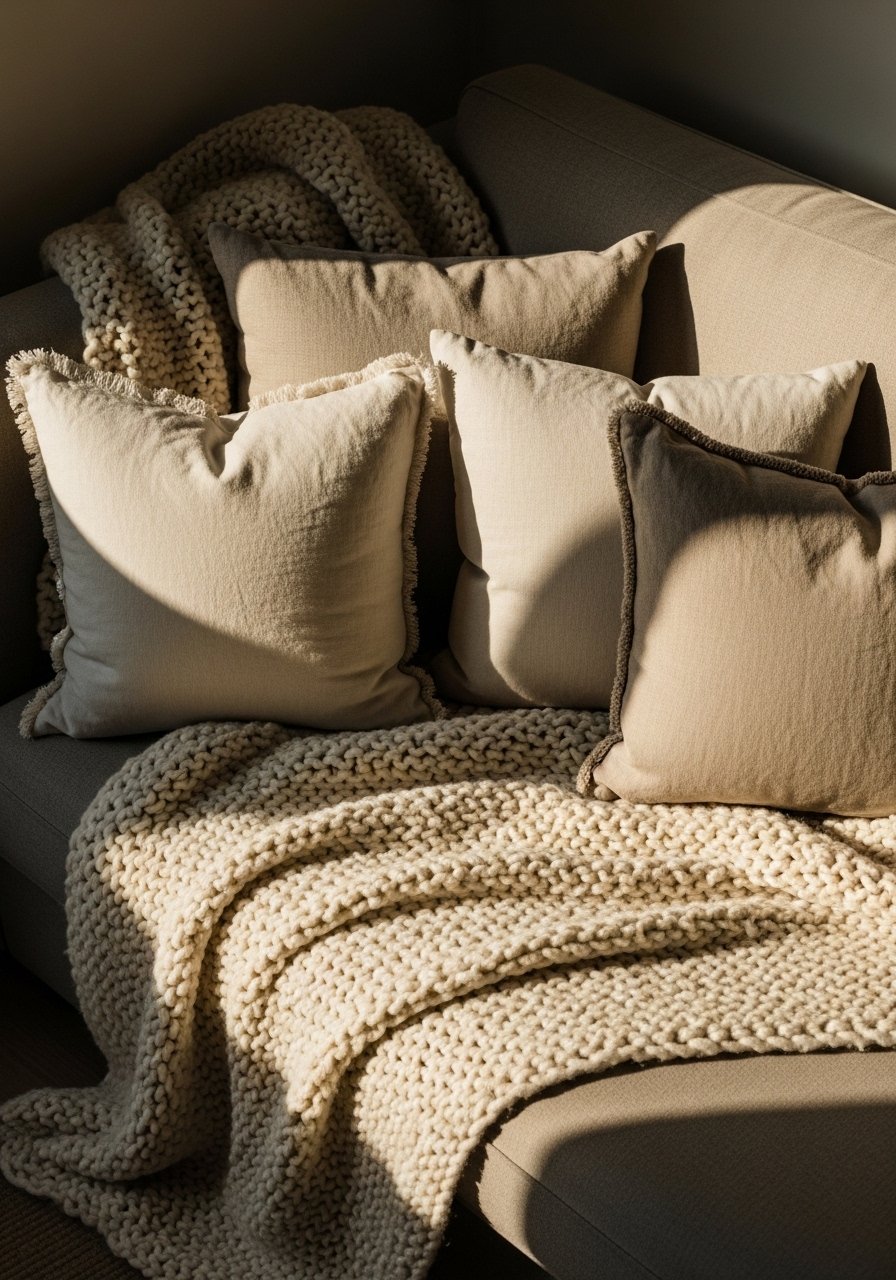
Wood wants company. Add soft textures that contrast the grain. I use one chunky knit throw and two linen pillow covers in varying sizes. The throw is heavy and nubby, the linen is crisp and slightly rough to the touch. That contrast makes the wood feel warmer without hiding it.
A good rule I use is two soft items for every hard surface visible on a seating vignette. Avoid piling five pillows in a row. That was my early mistake. Keep the cushions 20×20 and 18×18, and leave one cushion spot for empty space so the seating breathes. If you have pets, choose darker linen or washable covers.
Step 3: Build height with three levels in every group
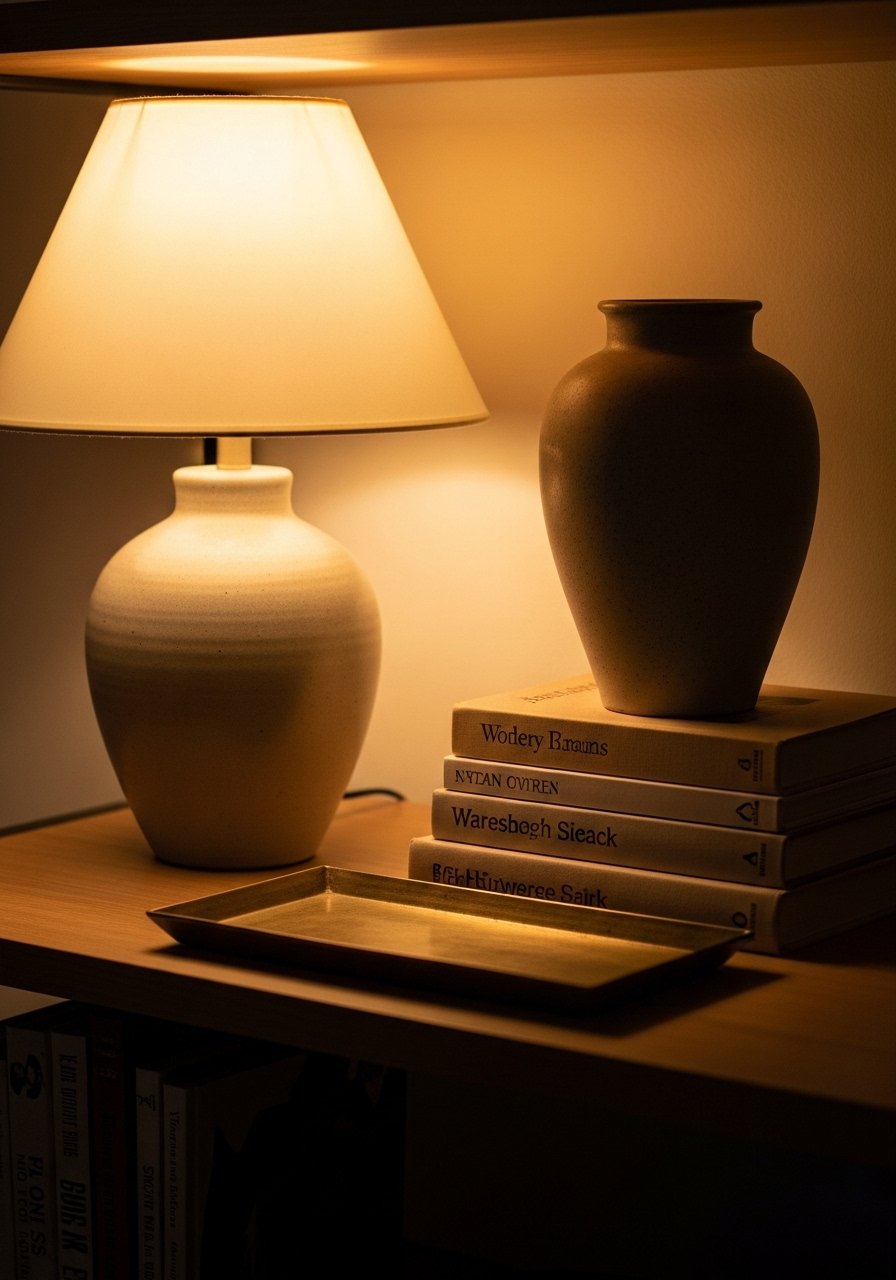
This is when the display starts to look like a thoughtful arrangement instead of random clutter. Pick three heights for every grouping: low, mid, tall. For shelves, I aim for a tall vase about 12 to 18 inches, a mid object like a small lamp or framed photo around 8 to 12 inches, and a low tray or stack of books under 6 inches. Odd numbers read better, so group in threes or fives.
I almost skipped this step several times. My first shelf felt lopsided because everything sat at the same height. After fixing heights, the room finally read as layered. Note that tall ceramic vases are cool and smooth in your hands, and book stacks feel dense and grounded when you lift them.
Step 4: Balance wood tones and finishes, don’t match everything
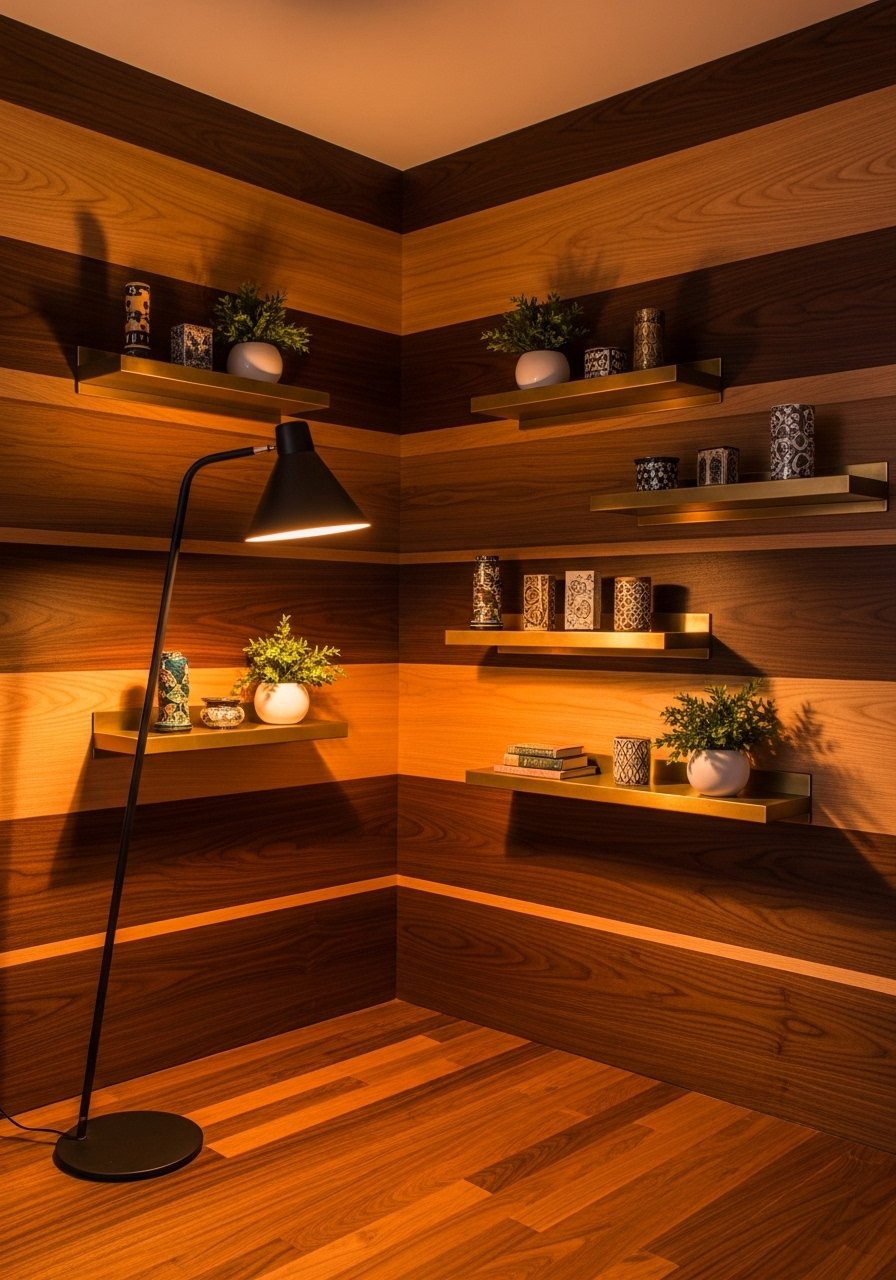
Matching all the wood in the room was my second mistake. The result was boring. Mix finishes instead. If your anchor is warm walnut, layer a lighter pine shelf and a darker stained frame. Use hardware or small accents in a contrasting metal. I like aged brass picture ledges paired with a matte black table lamp.
Use the 60-30-10 proportion for wood tones, and keep about 25 to 40 percent of shelf space intentionally empty. That emptiness reads as calm, not unfinished. The mix of textures matters too. A pine shelf has a soft grain under your palm, while walnut feels dense and cool. Those differences add depth when placed next to each other.
Step 5: Live with it, then edit again
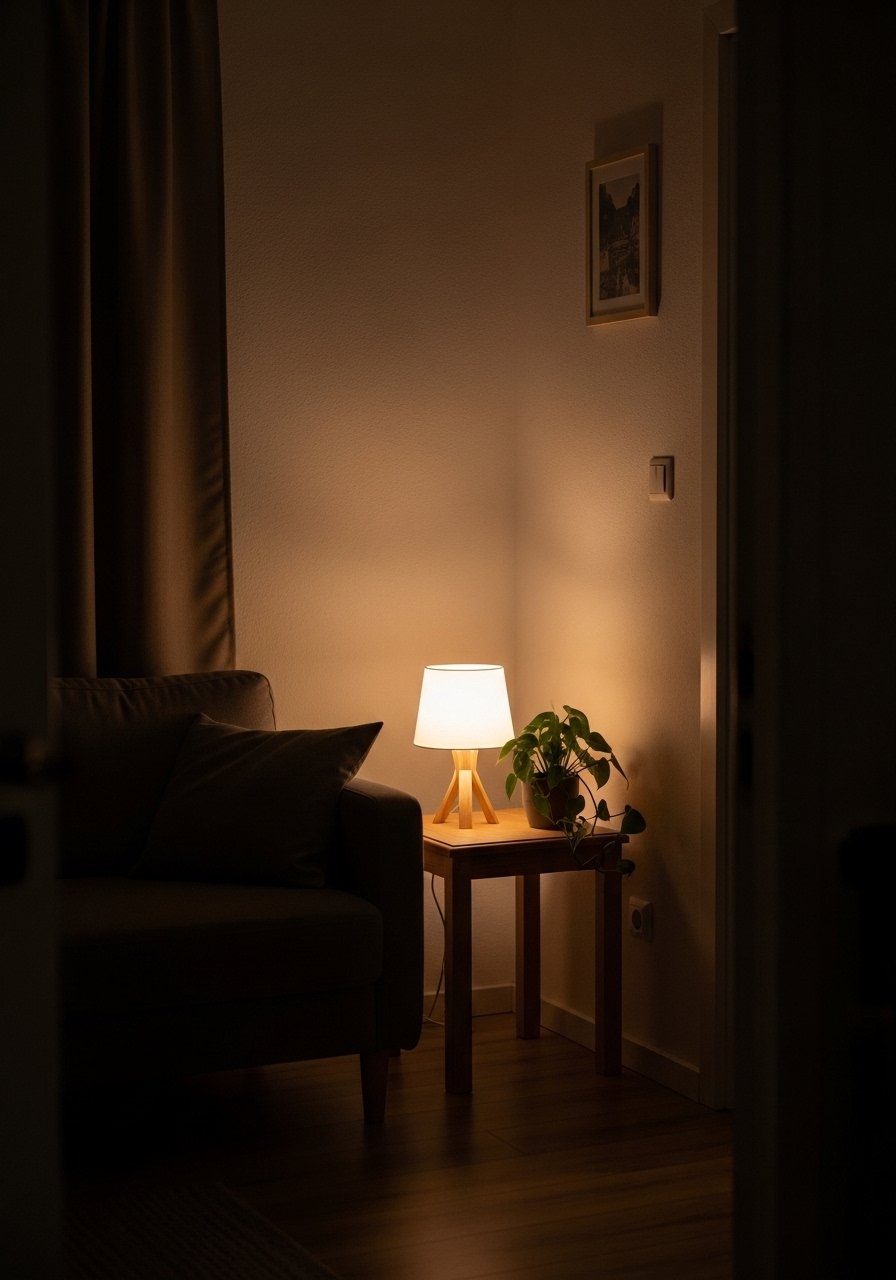
This step feels strange because you have to walk away. After you style the room leave it alone for a day. I let my partner sit on the sofa, walked out, and came back ten minutes later. Things that seemed essential suddenly looked like clutter. I trimmed two objects and kept a ceramic vase and a tray.
Living with pieces shows wear, how light hits wood through the day, and how often you actually use an item. My roommate knocked over an open-bottom shelf twice before I moved it. That was annoying, but it taught me which items needed anchors or wall mounting. Trust the pause.
What to Grab for a Wooden-Decor Room
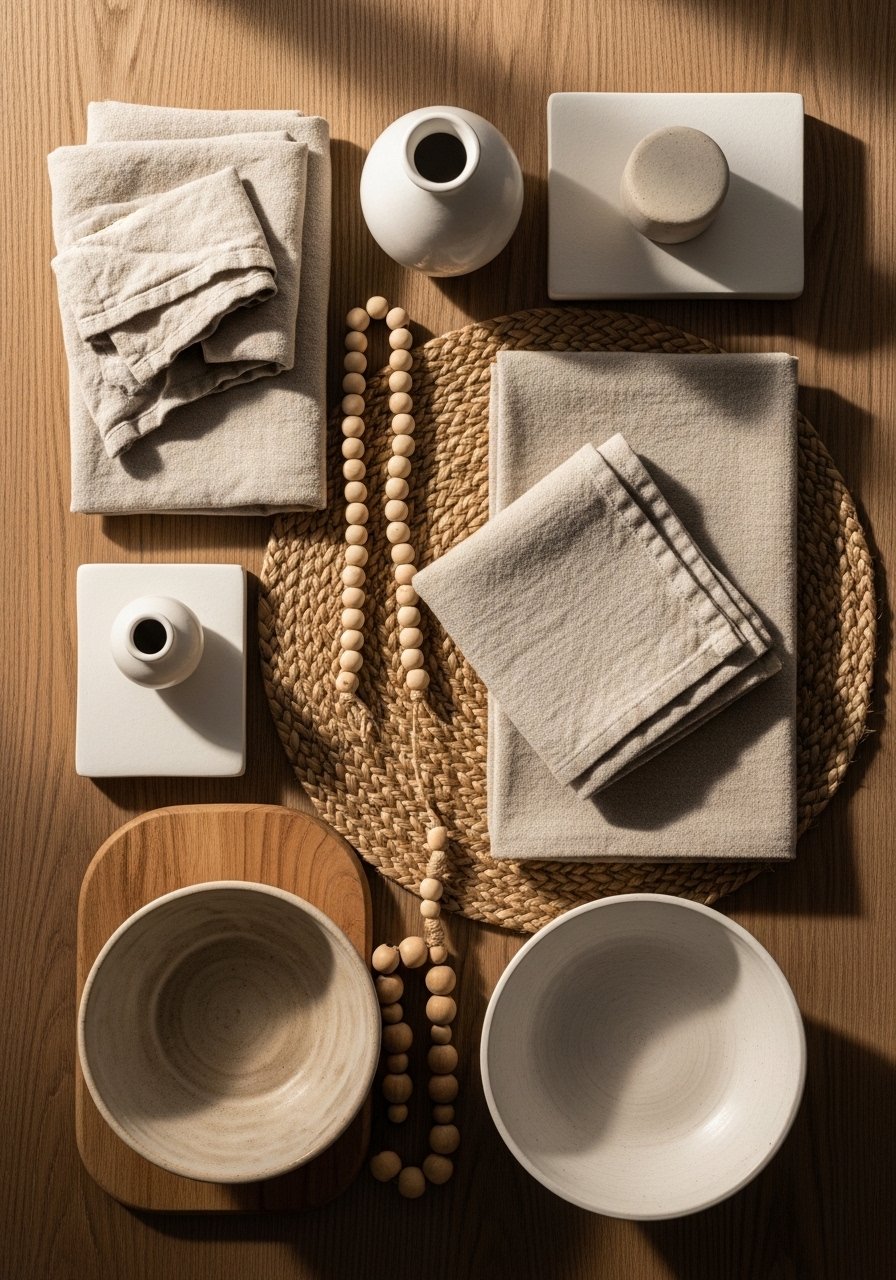
- Jute area rug, 8×10 ($90-160). Use under sofas to anchor the seating area as in Step 1.
- Walnut coffee table, 42-inch round ($220-420). The anchor piece I describe in Step 1.
- Wood and metal bookshelf, 30×72 ($120-260). For vertical storage and Step 3 height groupings. Similar styles at Target.
- Chunky knit throw in oatmeal, 50×60 ($40-65). Adds texture as used in Step 2.
- Linen pillow covers, 20×20, natural ($15-30 each). Two sizes for comfortable, layered seating in Step 2.
- Ceramic vase set, matte white, 3-piece varying heights ($25-40). For tall, mid, and low groupings in Step 3.
- Brass picture ledges, 24-inch ($18-30). Use for mixed finishes and small art arrangements from Step 4.
- Table lamp with linen shade, 26-inch ($45-90). Adds warm light and the mid-height element mentioned in Step 3.
Why Your Room Still Feels Unfinished
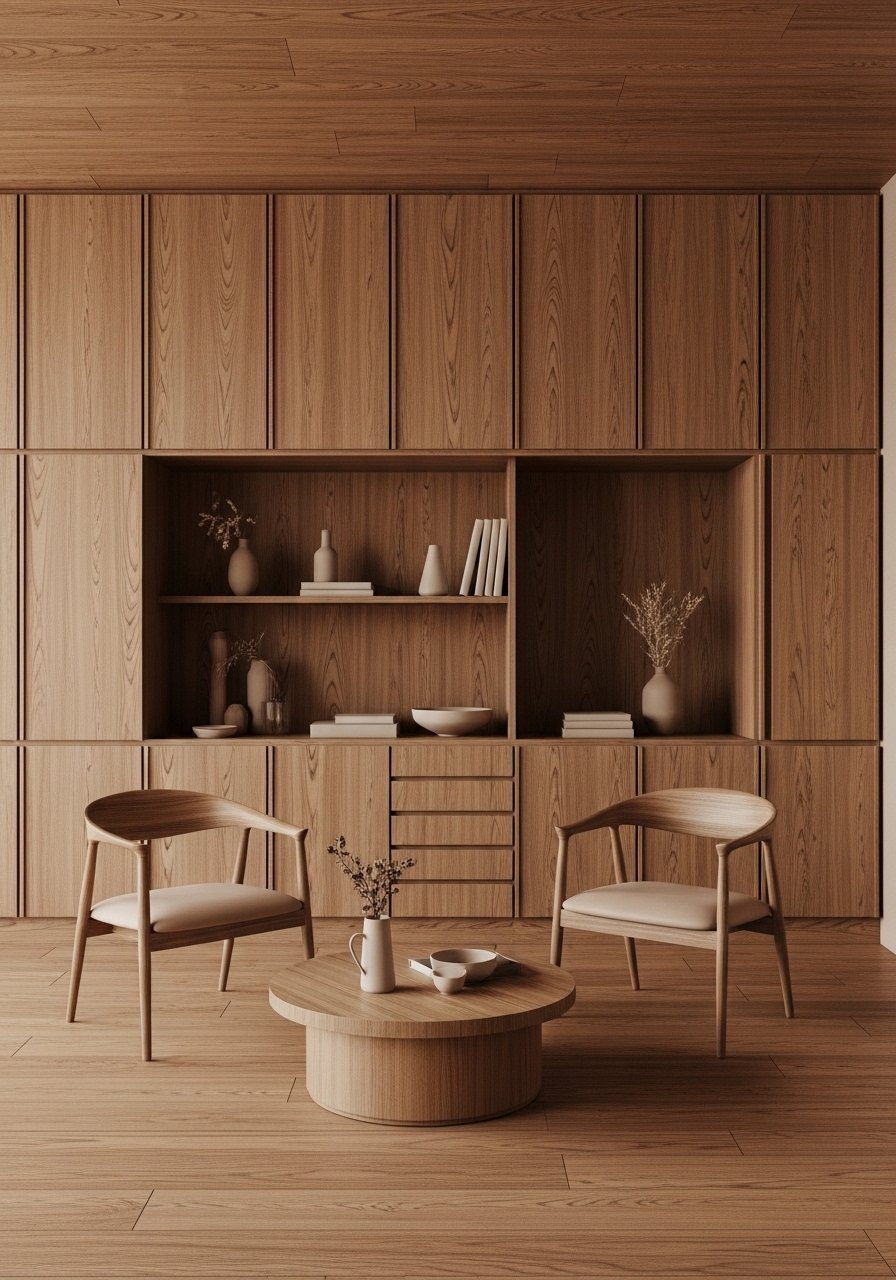
Often the problem is repetition not lack. Two matching wooden tables and a matching mirror can make the space read like store stock. Another issue is light. Dark woods swallow light, so if the room has limited daylight, introduce lighter woods or mirrors. I used to pile framed photos so the wall read heavy. When I replaced half with a linen textile and one tall plant, the room settled. Small swaps like a linen pillow or a single ceramic vase change the tactile story of a room.
Making This Work in a Small Room
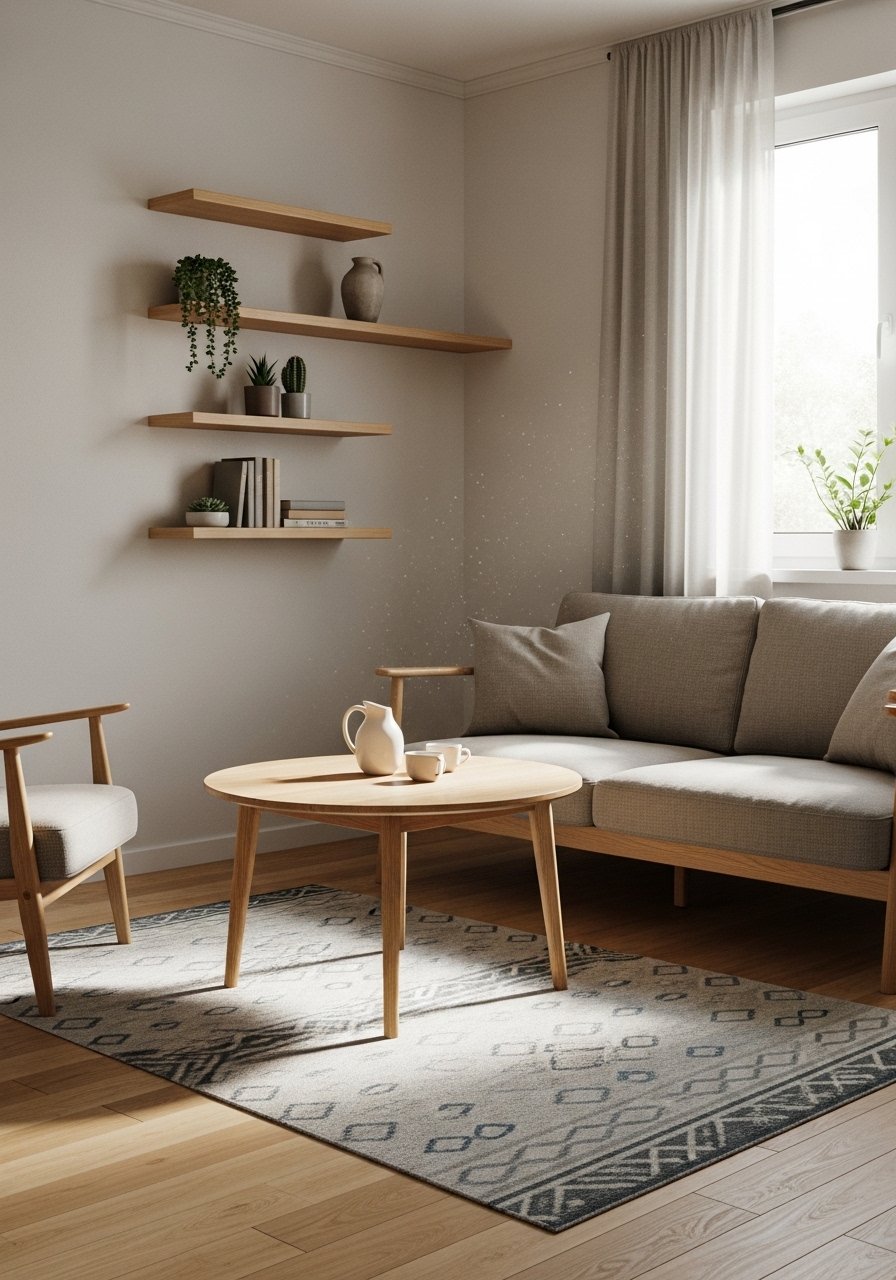
Small rooms need scale and breathing room. Try these swaps and tricks
- Use a 5×8 jute rug instead of 8×10 to keep walkways clear.
- Pick a round 30 to 36-inch coffee table so traffic flows.
- Mount one shelf instead of a full bookcase to keep the vertical plane light.
- Choose lighter wood tones that reflect light.
These moves keep wooden decor from overwhelming tight spaces. I reduced the number of objects by half and the room immediately felt bigger.
What This Looks Like After a Week with Kids and a Dog
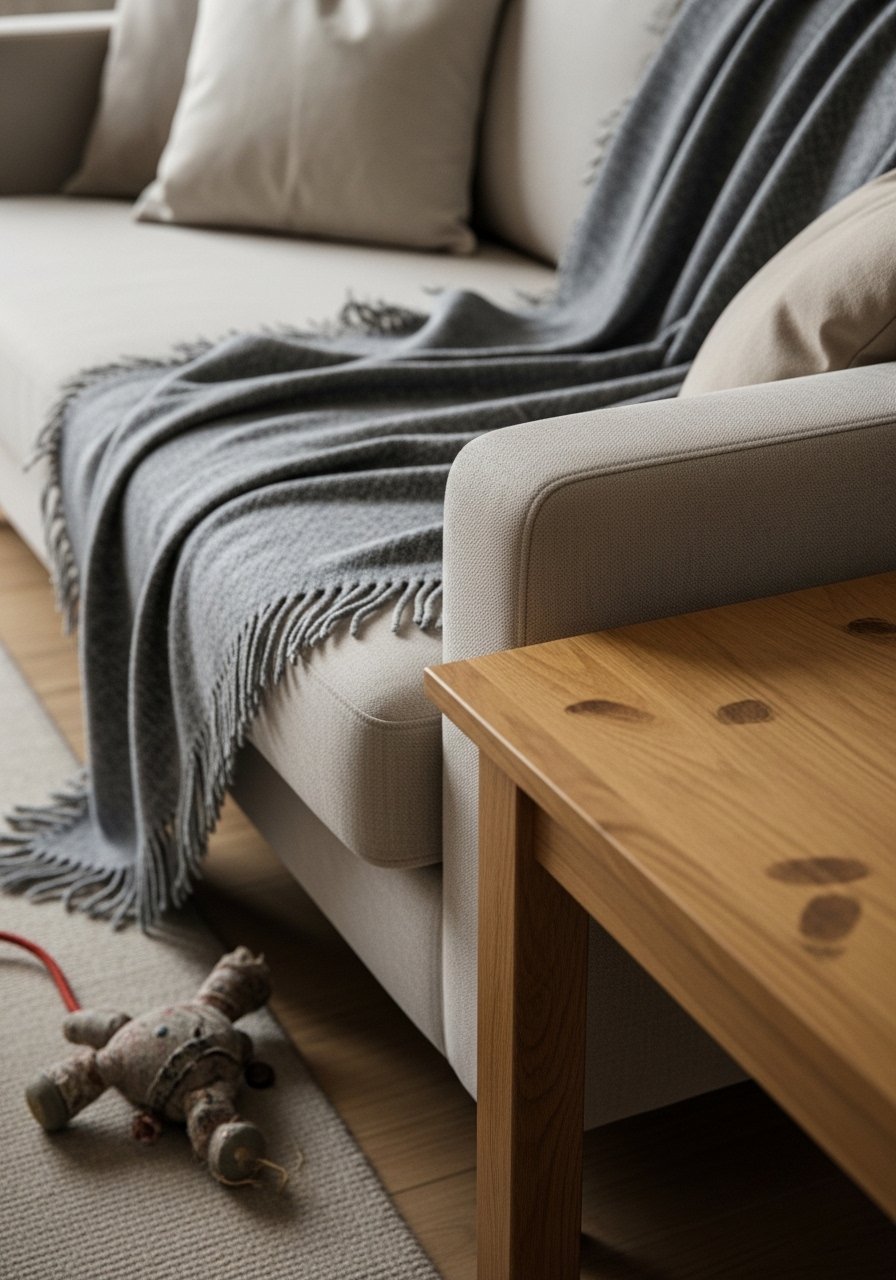
Real life tests the styling quickly. After a week with pets and kids you will notice crumbs on light linen, scuffs on low wooden legs, and one or two knocked over items. Swap open low shelves for baskets on the bottom row. I changed my vase from a thin-necked tall one to a squat version because the dog kept brushing the taller piece. Expect to edit once more after a week. The goal is to keep the look intentional so daily wear reads as lived-in, not messy.
Start with One Corner
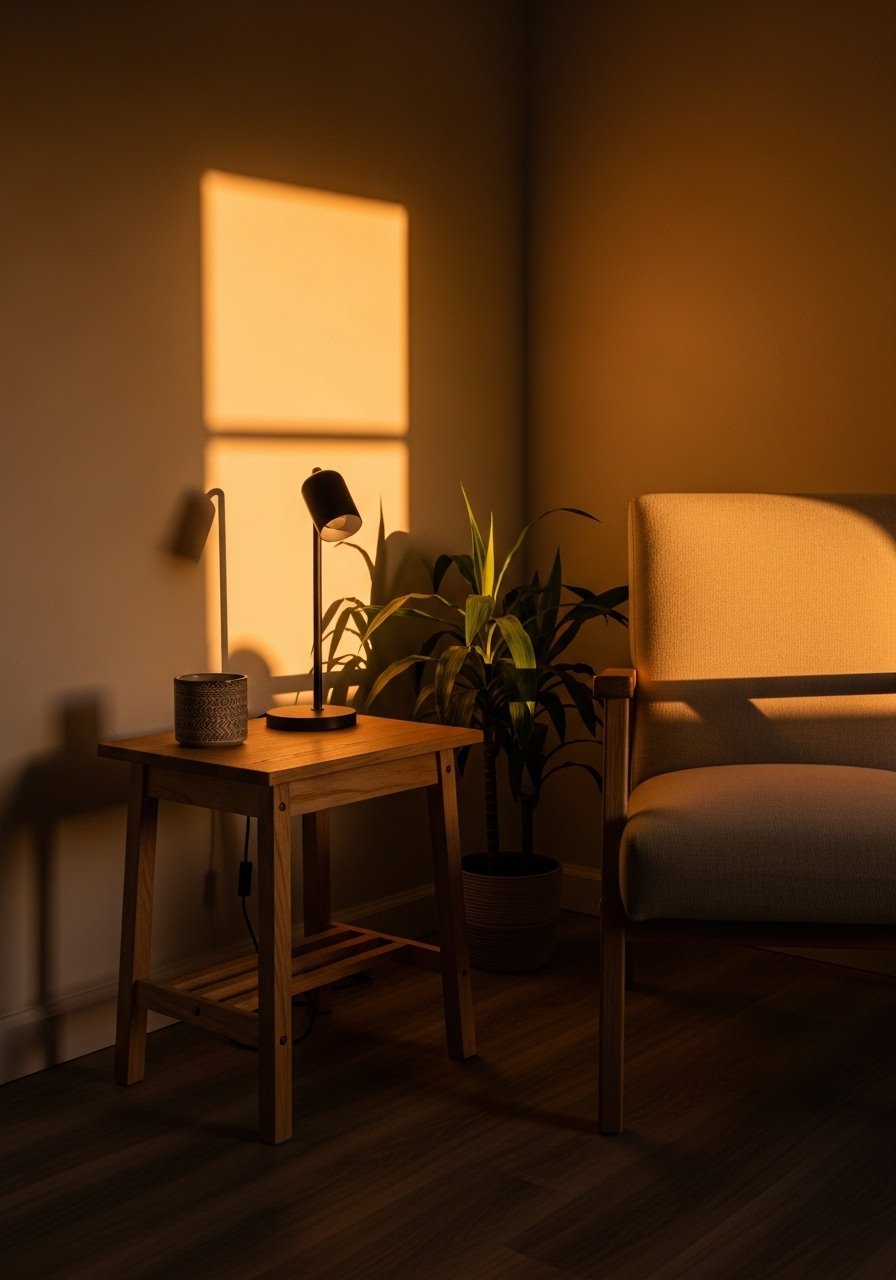
Begin with one corner. Pick either the anchor or the soft textile and work outward. If you want a low-commitment start grab a ceramic vase set and a linen pillow from the shopping list. Place the vase on the anchor, add one pillow, step back, and live with it for a day.
When I first did that the whole room slowly shifted. It became more calm and welcoming with just a few edits. You will know it is working when the space feels easier to use and your hand naturally rests on the wood without the urge to hide it.