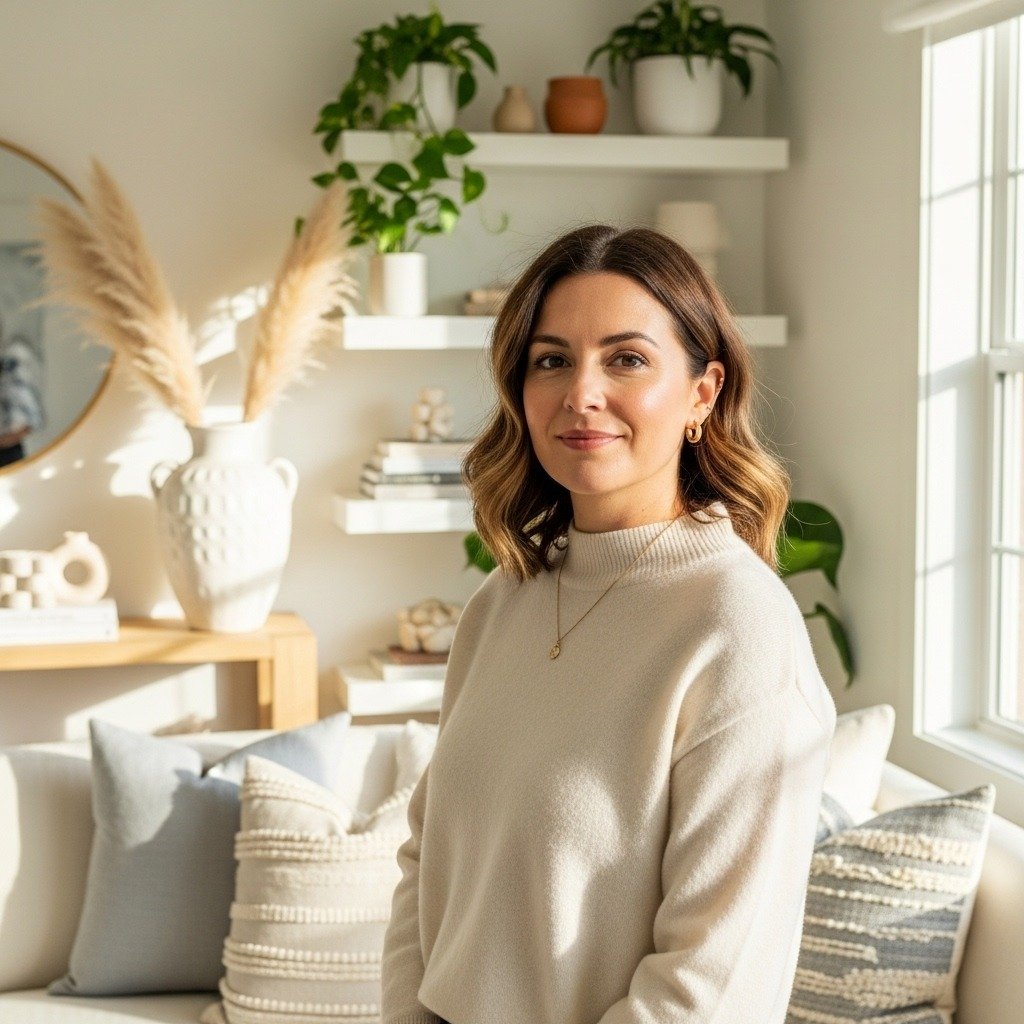
My living room had nice furniture and decent lighting but it still felt like a waiting room. Took me embarrassingly long to figure out it was missing texture. Every surface was smooth, every color was flat, and nothing invited you to actually sit down. Adding cat shelves changed that. Suddenly there was height, movement, and a playful eye line that made the room feel used in the best way.
A friend walked into my apartment last month and said "this looks like a real adult lives here." Highest compliment I have ever received. Here is every change I made to earn it. These ideas lean modern with a touch of Scandinavian warmth. Most builds run $20 to $120 depending on materials, and they work in living rooms, bedrooms, entryways, and narrow halls.
Minimalist Floating Shelves For Small Living Rooms
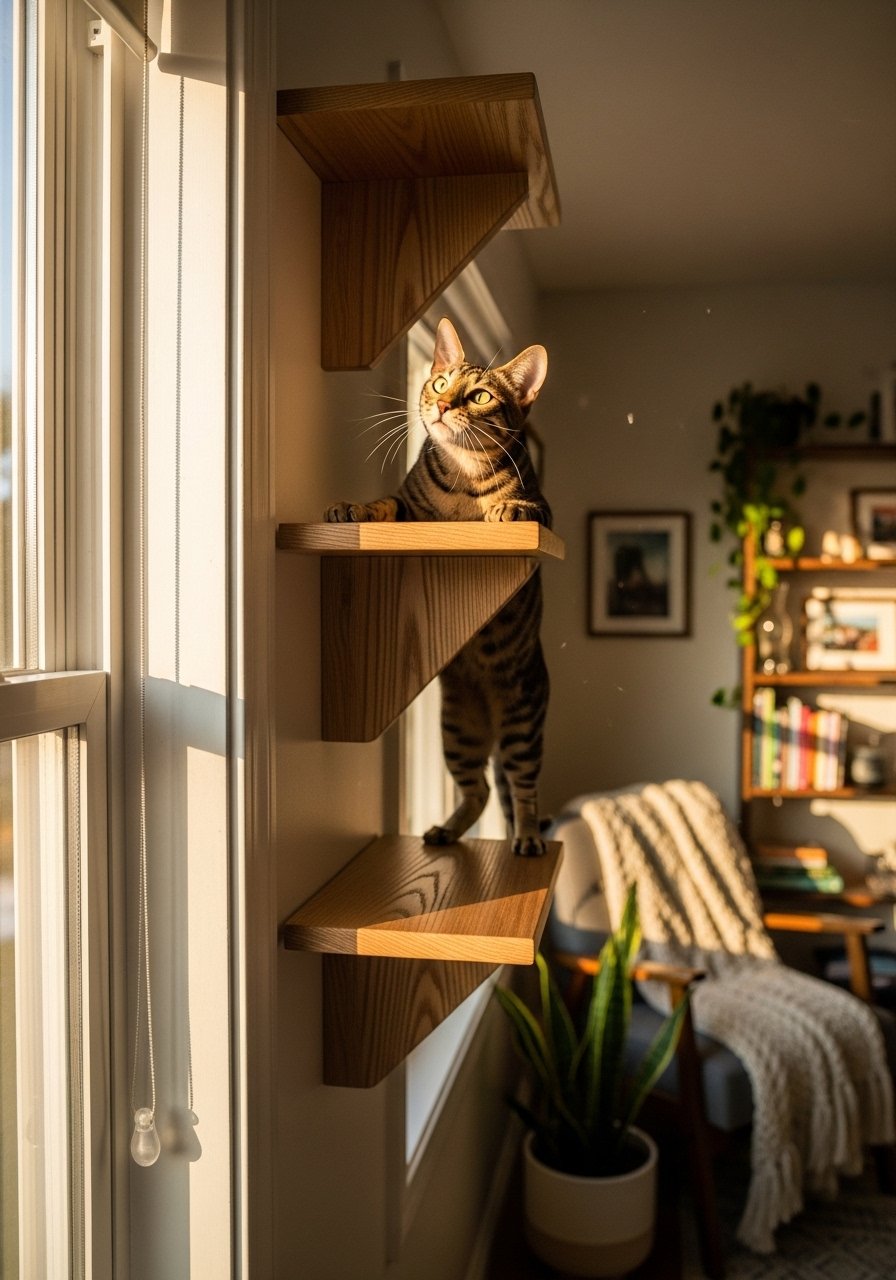
The clean look of floating ledges keeps a small living room from feeling cluttered while giving your cat a highway up the wall. I space each shelf 14 to 18 inches apart so a medium cat can leap comfortably. A common mistake is using shelves that are only 4 inches deep. Go 8 to 10 inches so paws rest completely. For these I used white oak floating shelves and stainless hidden brackets behind the wood. Budget here is $40 to $120 depending on the wood. Pair with a slim console below to create a cohesive vertical vignette.
Sisal-Wrapped Platforms For Playful Hallways
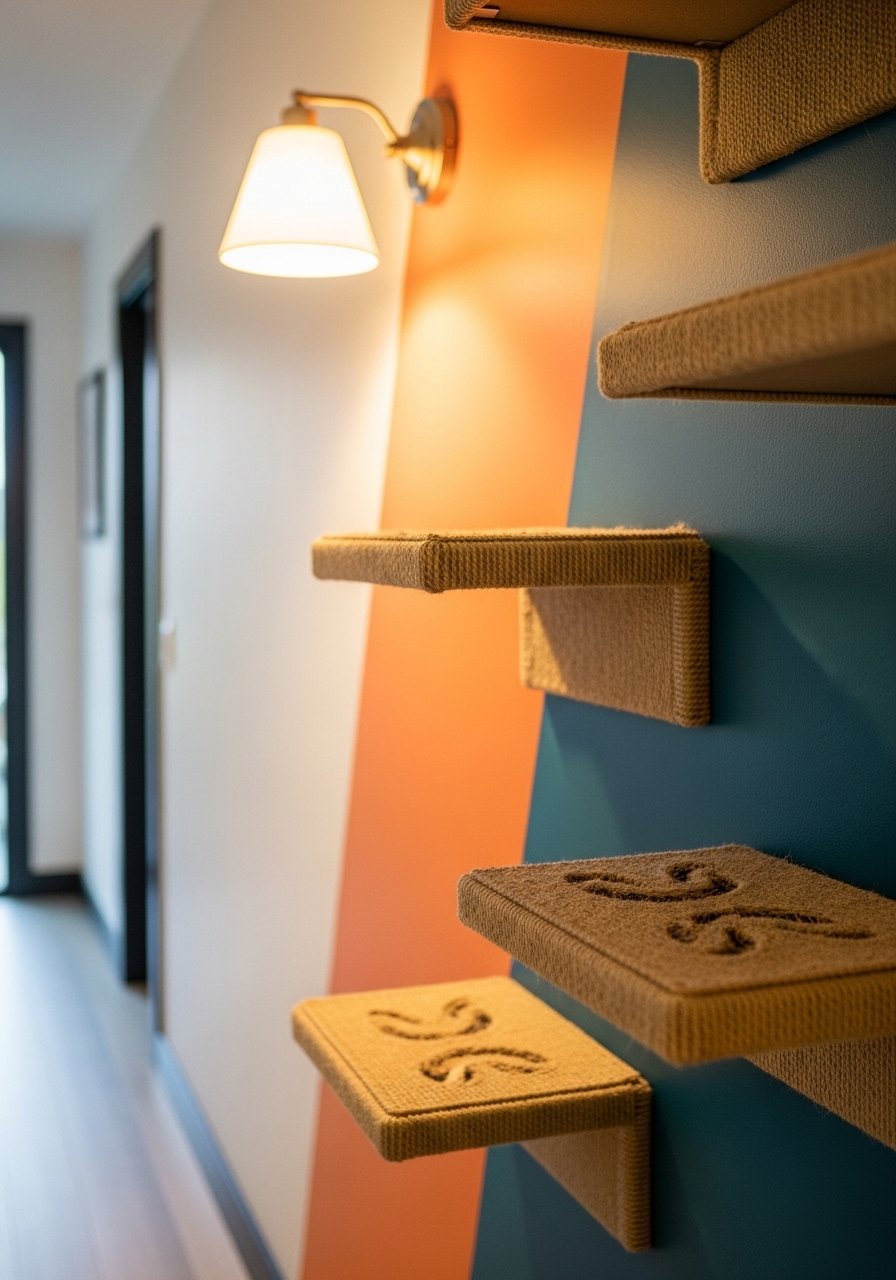
If your cat scratches drywall, sisal is the best swap. I wrapped 8-inch deep pine boards with sisal rope and stapled it tightly. That material holds up to serious clawing and looks intentional next to wood tones. The mistake I see is using thin rope that peels after a month. Use 1/2-inch sisal and a staple every 2 inches on the back. These cost about $20 to $35 per platform including rope. I recommend natural sisal rope for a clean look that still reads durable.
Corner Climbers For Narrow Apartment Spaces
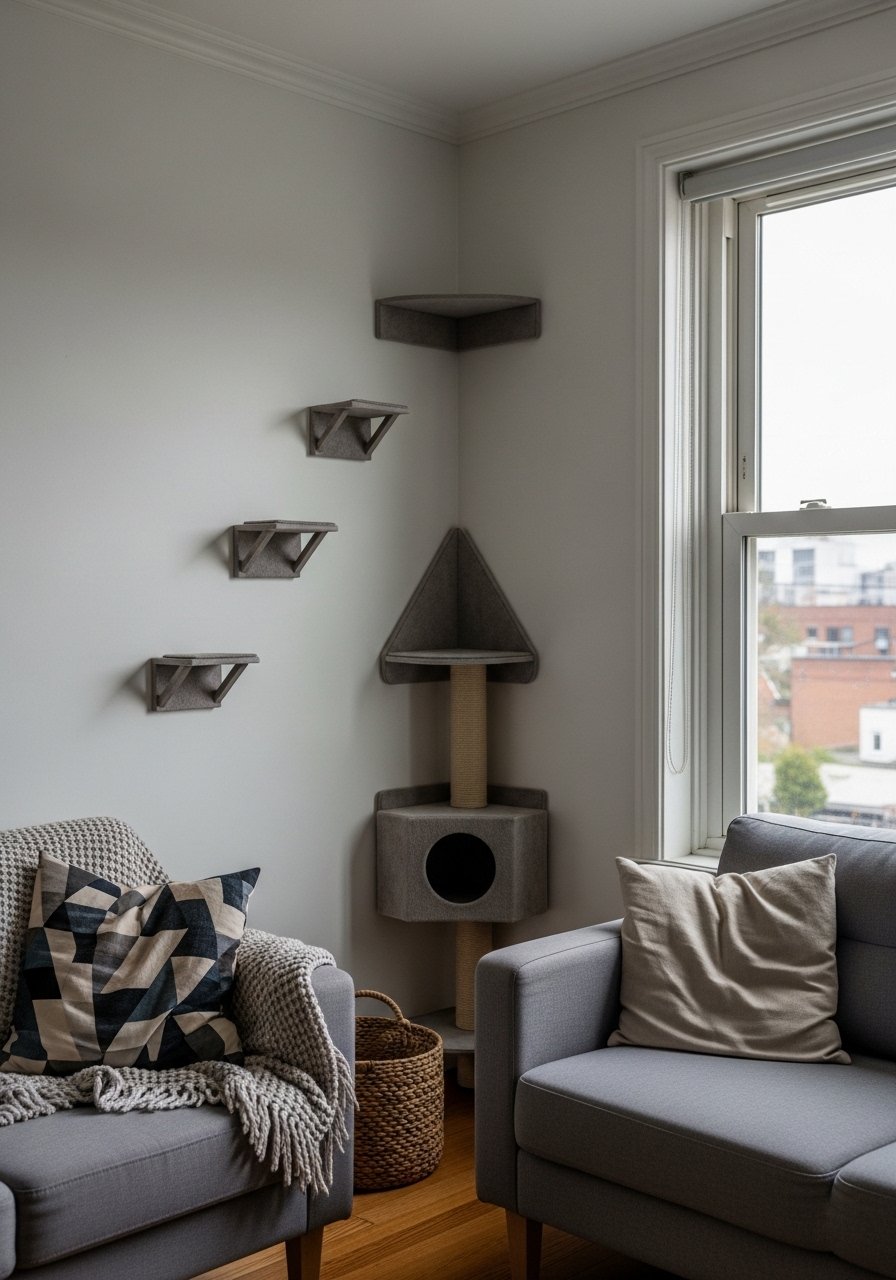
Corners are wasted space until you give your cat a route up. I cut triangular shelves 10 inches on the longest side and staggered them 60/40 vertically, so the cat can use short hops or long leaps. A common error is screwing into drywall alone. Always find a stud or use toggle anchors rated for at least 75 pounds. These corner shelves run $15 to $45 each with basic pine. I linked heavy-duty wall anchors when I installed mine for peace of mind.
Scandinavian Step Shelves For Bedroom Nooks
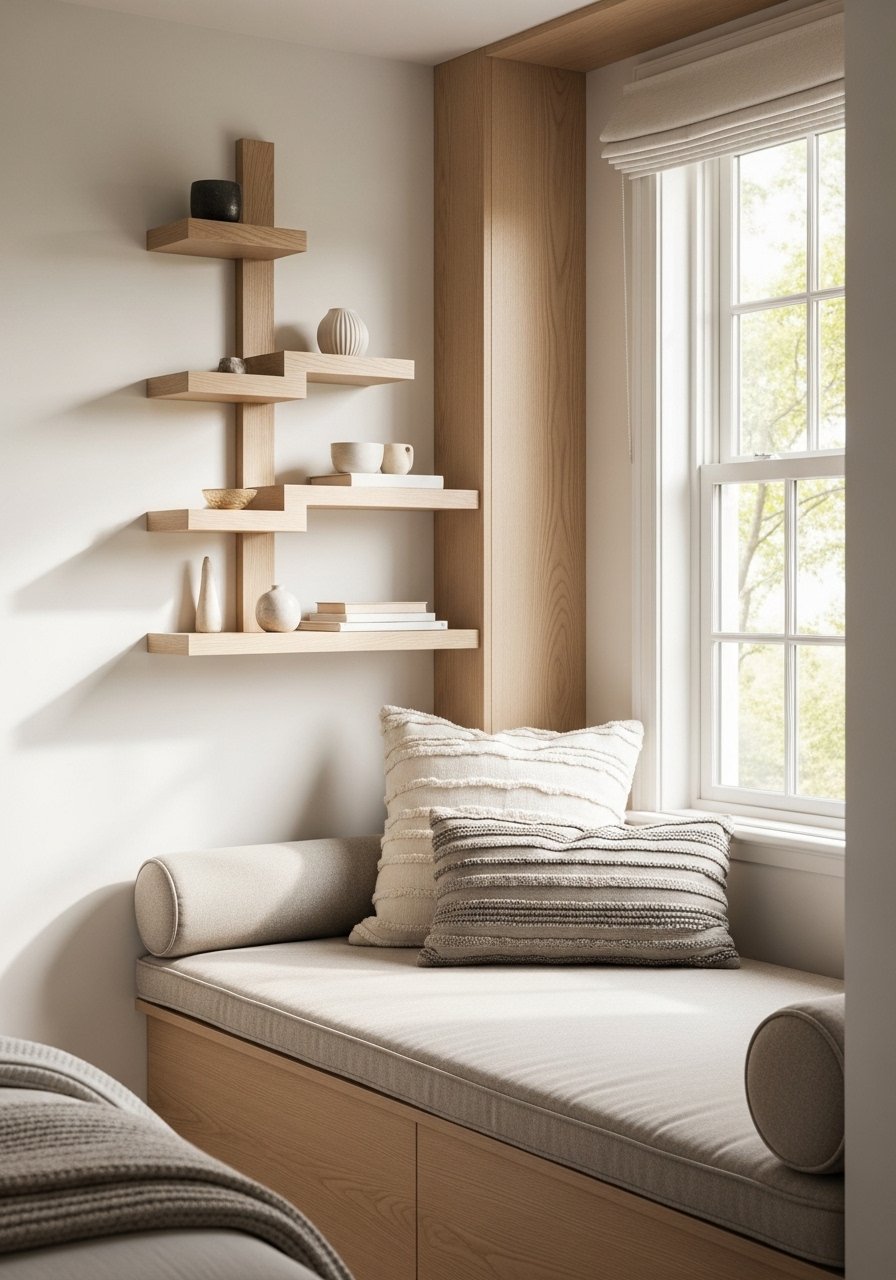
There is something about staggered wood steps that makes a bedroom feel calm and useful at the same time. I build steps from 8 to 12 inches deep so they double as perches and book nooks. Keep a consistent 80/20 color ratio here, 80 percent pale wood and neutral textiles, 20 percent one accent color on cushions. A mistake people make is oversanding and losing grip. Leave a bit of texture and add a nonslip pad under the top layer. I used padded shelf liners when I finished mine.
Modular Box Shelves For Multi-Cat Homes
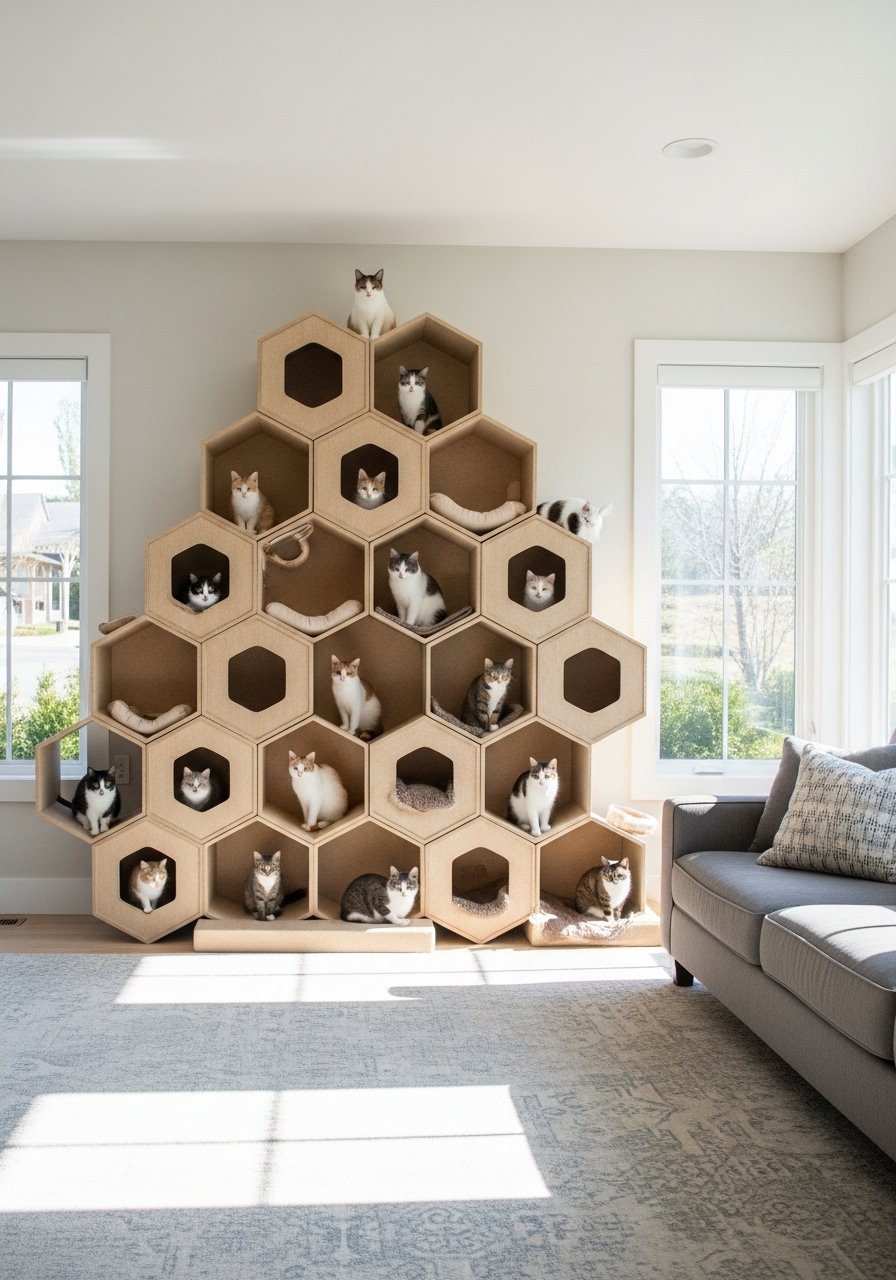
Multiple cats need branching routes to avoid standoffs. I built box shelves 12 inches deep and arranged them in clusters so each cat has an entry and an exit. The rule of three works well here. Group boxes in sets of three to five for a natural rhythm on the wall. A frequent mistake is making entrances too small. Cut entry holes at least 7 inches wide for medium cats. Materials cost ranges from $60 to $200 depending on finish. These modular cube shelves made the layout effortless.
Hidden-Bracket Floating Ledges For Modern Living Rooms
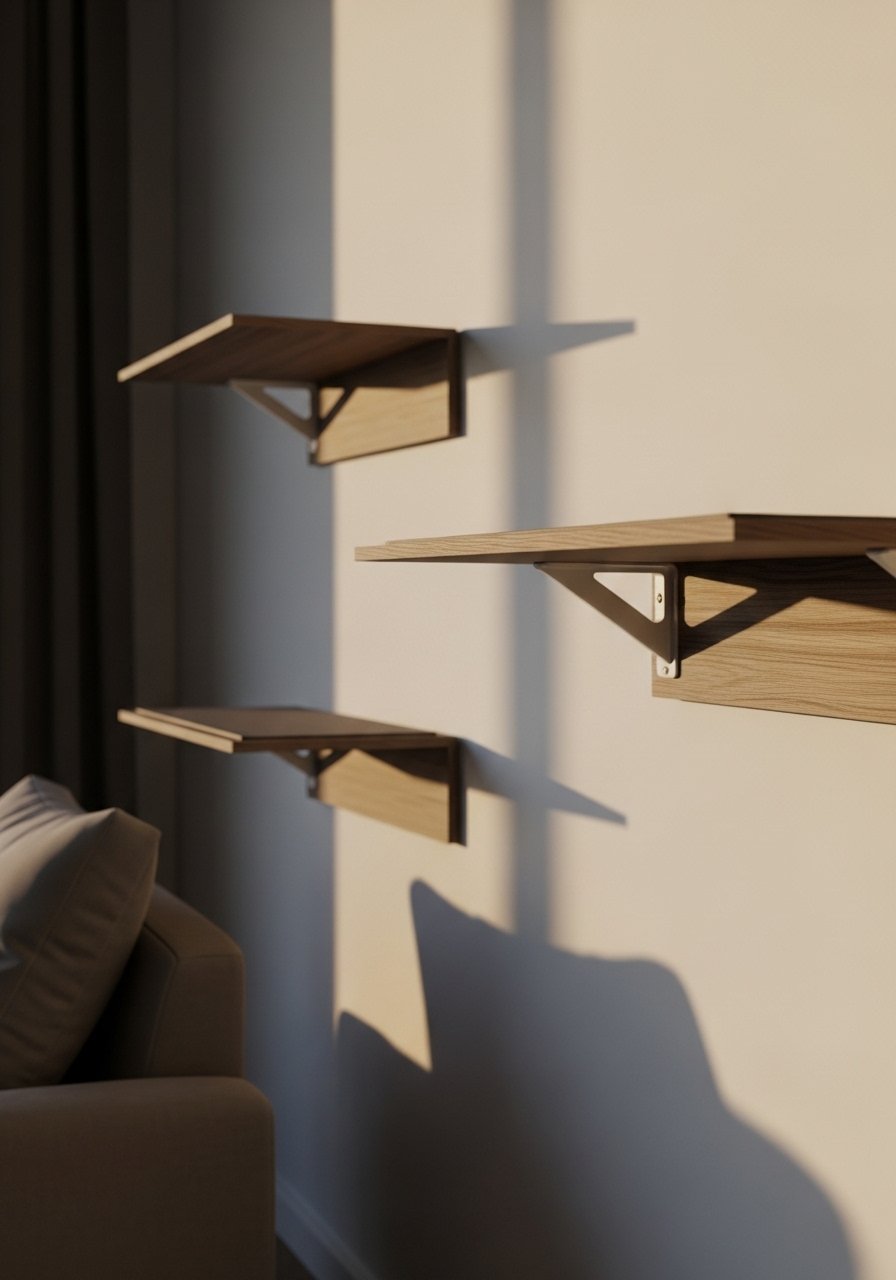
I love the nearly invisible look of hidden brackets because it reads less like pet furniture and more like modern shelving. The trick is pocketing the bracket inside a routed groove and leaving a 1/4-inch reveal at the front for visual lightness. Common mistake is under-sinking the screws. Use 2 1/2-inch wood screws into studs or 3-inch into anchors. Budget for a set of three is $50 to $150 when you include brackets. Pick hidden floating shelf brackets rated for 50 pounds each.
Window Perch Shelf For Sunbathing Cats
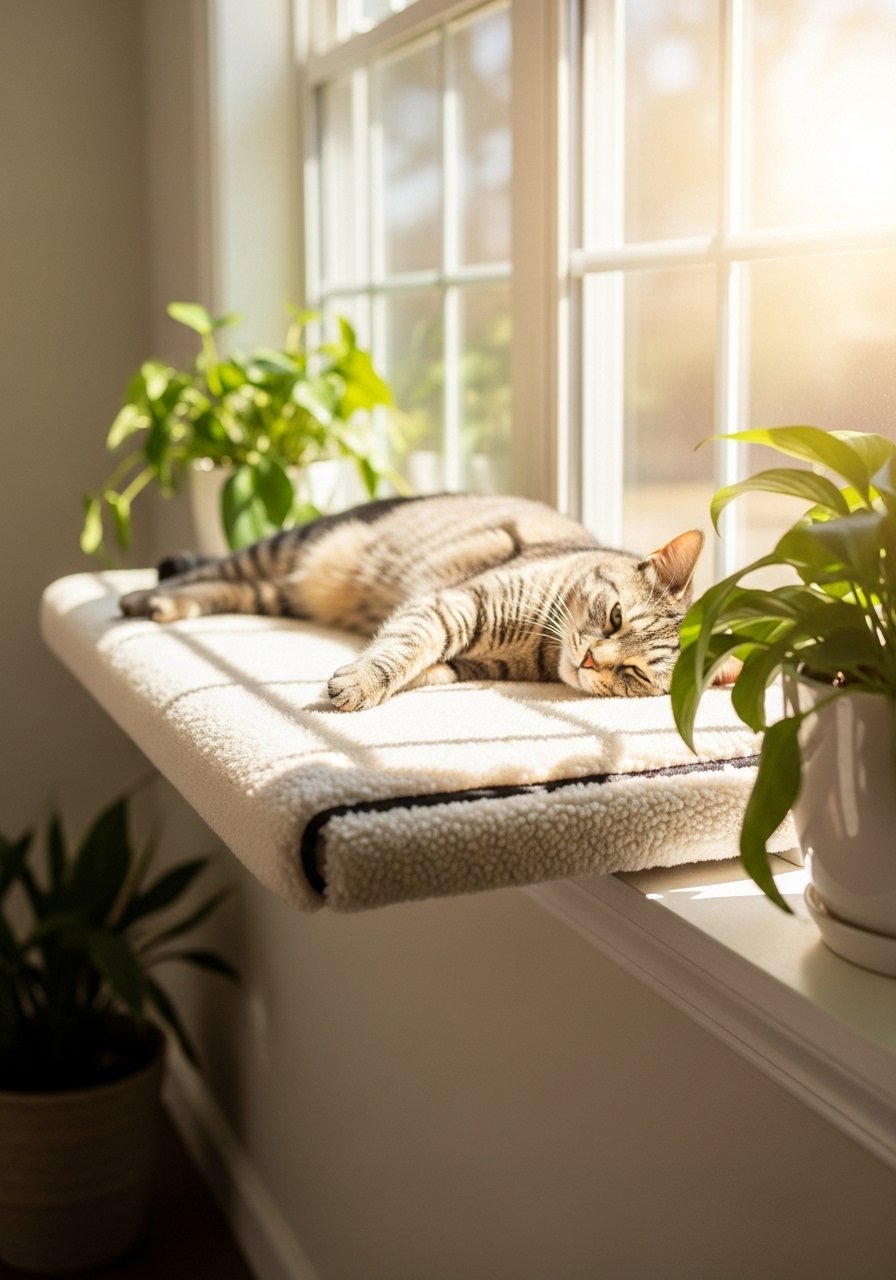
Cats love the sun. A window perch that sits at or just above sill height becomes a favorite spot. I build mine 12 to 14 inches deep so the cat can sprawl. Mistake I see is placing the perch too high for older cats. Keep one route with a 10 to 12 inch step distance. For padding, I use a washable fleece pad tied underneath so it does not slide. These washable fleece pads are fast to clean and stay put.
Staggered Step Wall For Active Climbers
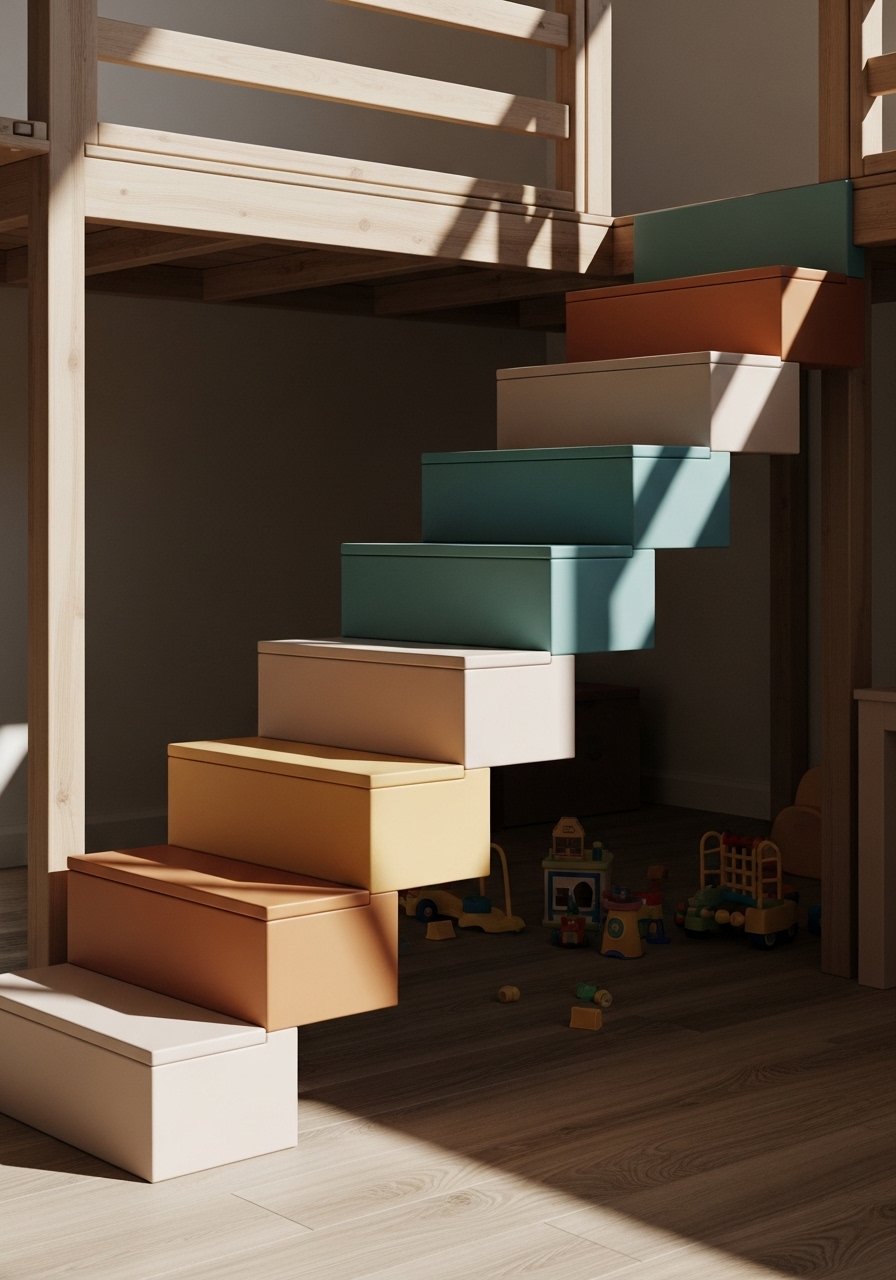
Active cats need variety in jump distances. I alternate step depths between 8 and 12 inches and keep vertical gaps at 14 inches for regular jumps and 18 inches for longer leaps. A common mistake is uniform spacing which bores a cat quickly. Add a mix of textures, like felt pads and sisal strips, to keep interest. This build cost me about $80 in wood and hardware. For fast traction updates try adhesive sisal strips to test the layout before committing to permanent materials.
Ladder-Style Climbing Wall For Wide Walls
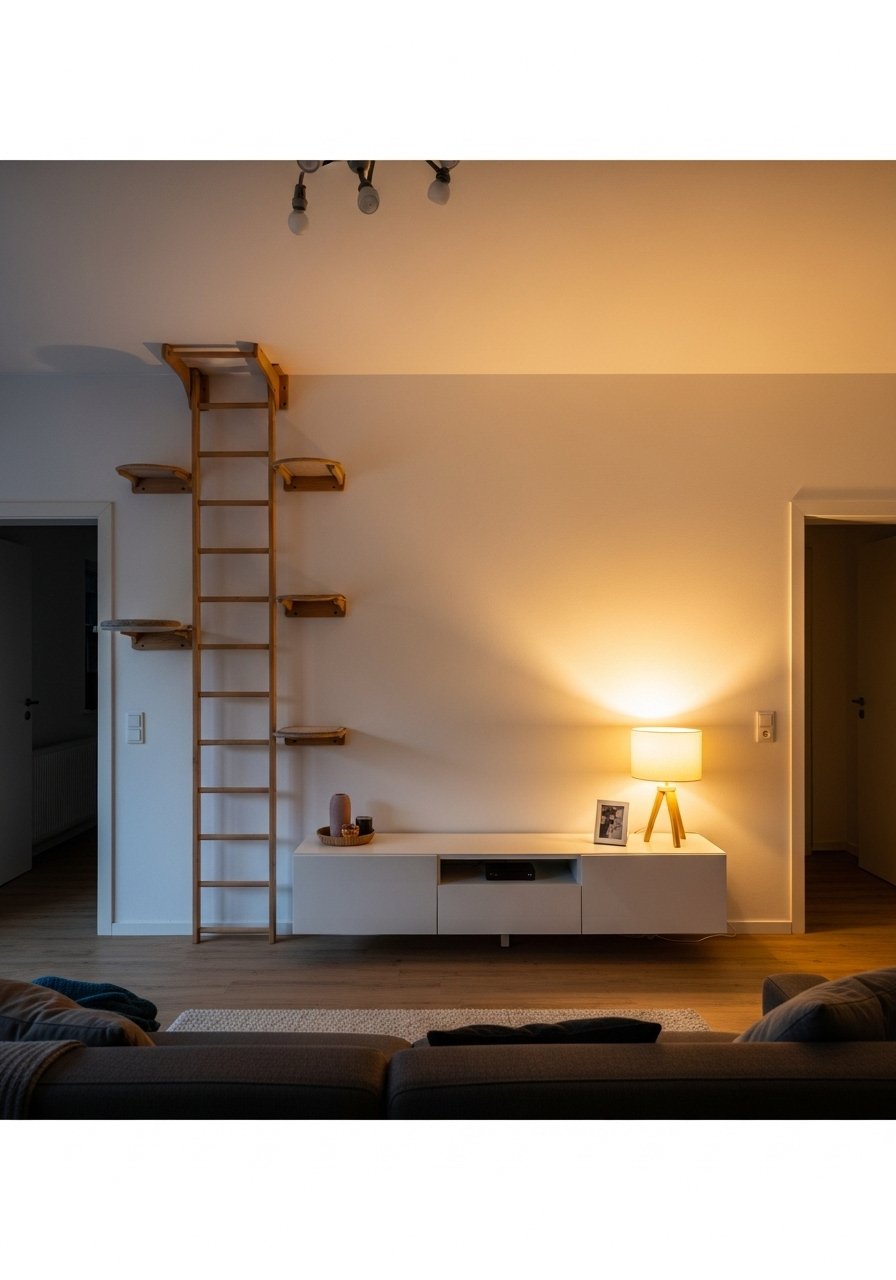
A ladder-style route reads architectural on wide walls and gives you ceiling height without cluttering the floor. I placed ladder rungs 10 inches apart and anchored the top to a ceiling joist. People often forget to stagger the ladder away from heat sources like radiators. Keep 12 inches clearance where possible. Materials are straightforward. Use hardwood rungs for resilience. I used hardwood dowels and capped them for safety.
Built-In Bookcase With Cat Ledges For Home Office
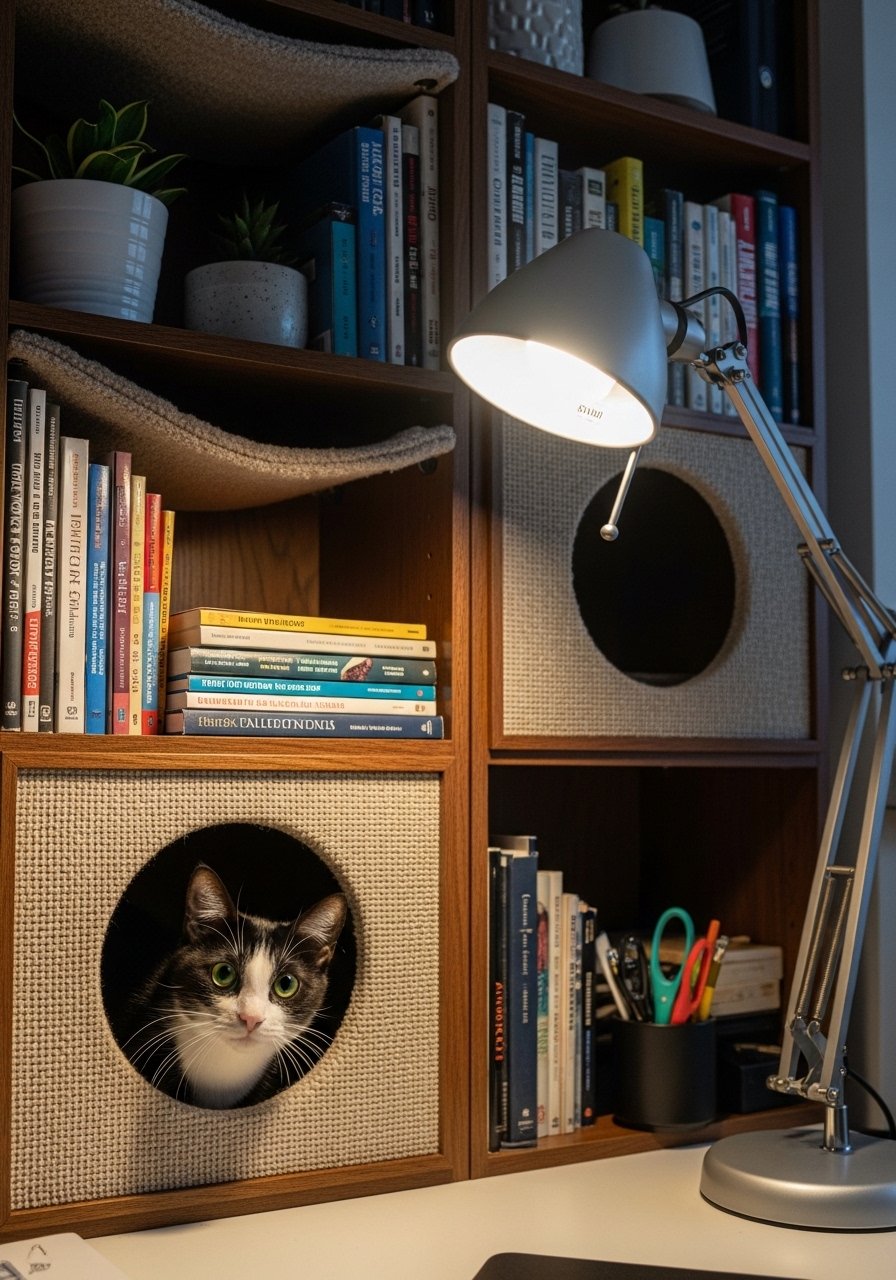
If you work from home, integrating cat routes into a bookcase keeps your cat close but out of your keyboard. I cut horizontal ledges into the shelves and kept the ledges 9 inches deep. A pitfall is putting fragile items on the same shelf your cat prefers. Leave the top of ledge clear and use the lower shelf for books. This project took $120 to $300 to finish depending on materials. I keep a few woven storage baskets in nearby cubbies to hide cords and cat toys.
Roped Hanging Shelves For Boho Rooms
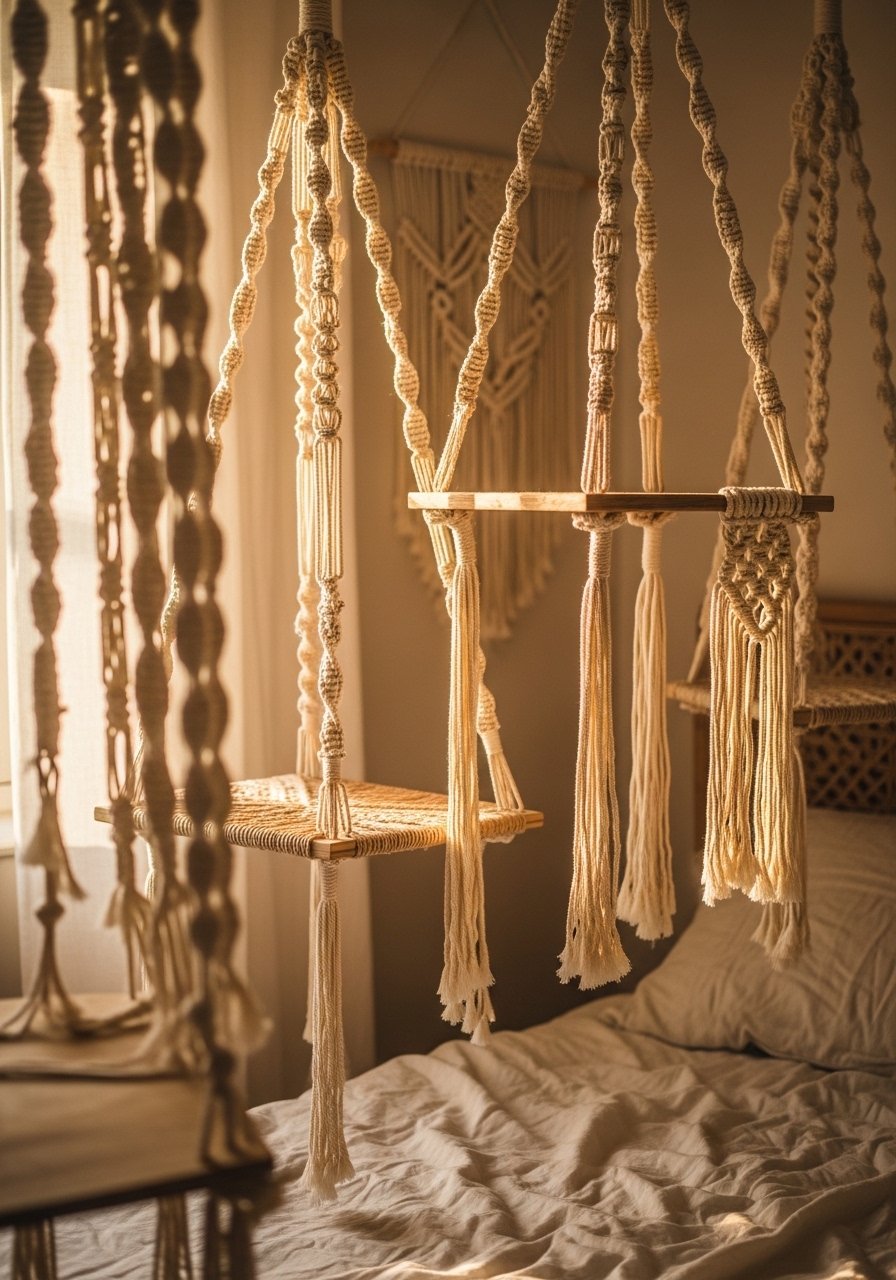
Hanging rope shelves add movement and a relaxed vibe that works well in boho rooms. I anchor the top ring into a ceiling joist and use 12-inch diameter round platforms. Mistake people make is using thin rope that stretches. Use polyester or cotton rope rated for weight and check knots after a week. These are renter-friendly if you can find a secure ceiling stud. The platforms can be made of plywood and cost about $25 to $60 each. I finished mine with natural cotton rope.
Wall-Mounted Cat Tree With Scratch Panels For Entryways
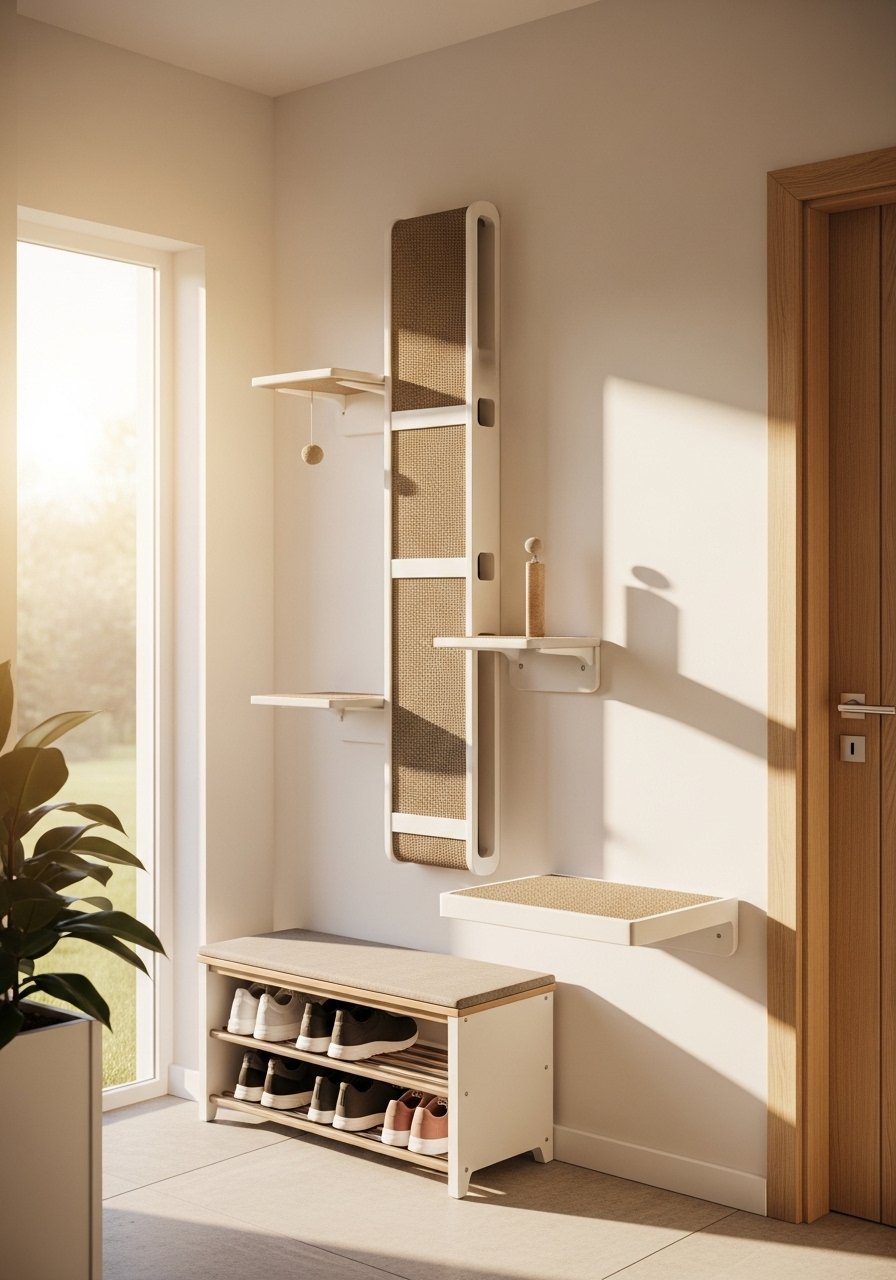
Entryways are ideal for a vertical cat tree because they are visible and often underused. I alternate perches with vertical scratch panels made from cardboard and sisal, 24 inches tall, so cats can stretch up. A common mistake is placing a landing too high above the bench. Keep the first perch 12 inches above any furniture to avoid awkward leaps. This setup is around $60 to $140 depending on panels. Try these corrugated cardboard scratch panels as a low-cost test.
Tucked-In Nook Shelf For Cozy Reading Corners
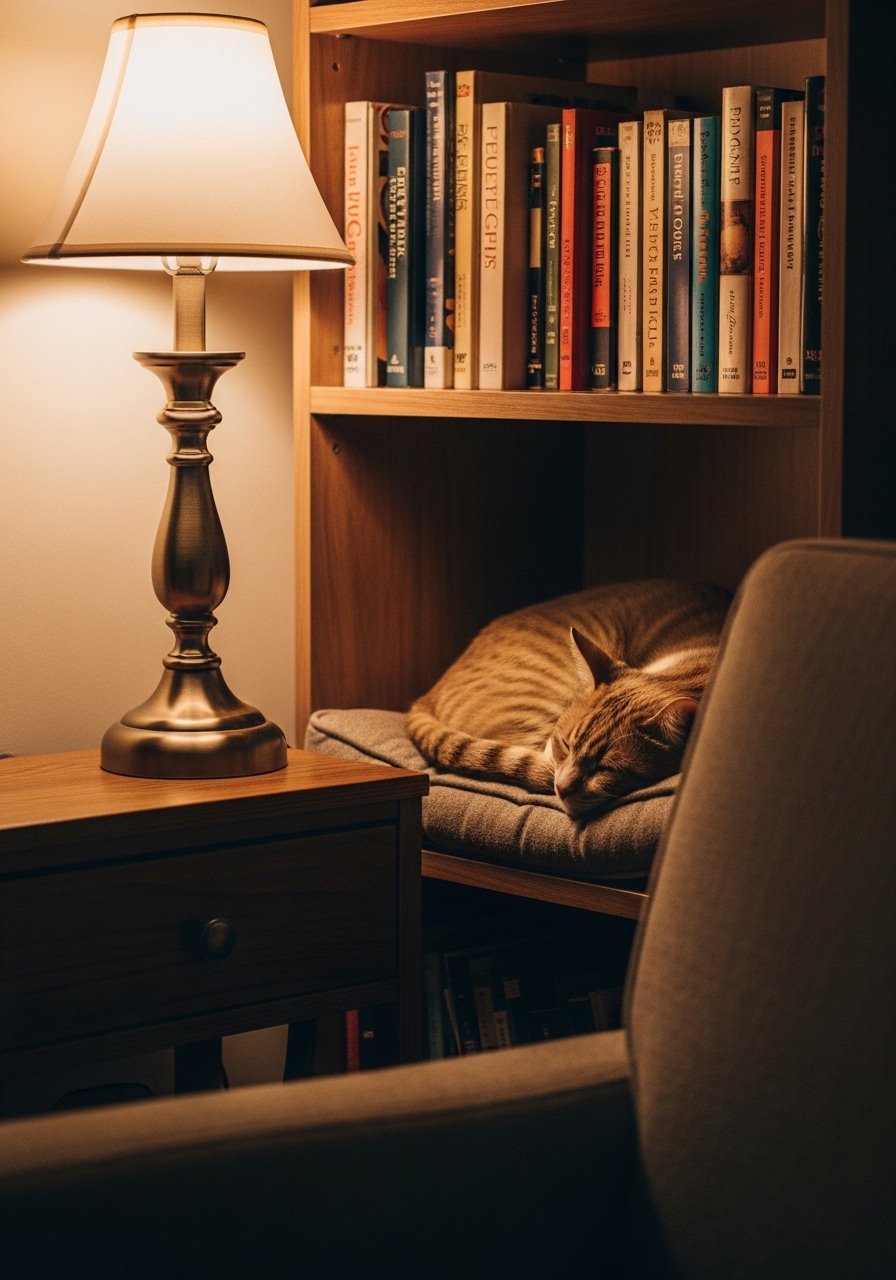
A tucked-in shelf that sits at chair-back height becomes a peaceful perch during reading sessions. I make mine 10 inches deep and attach a small lip to prevent sliding. People often forget about stability and use thin plywood. Use 3/4-inch solid wood and attach two brackets to studs. Budget is $30 to $80. The small detail most articles miss is adding a 2-inch foam cushion wrapped in a washable cover. I use small foam seat cushions sized to fit the shelf.
Gallery Shelf With Integrated Cat Route For Dining Areas
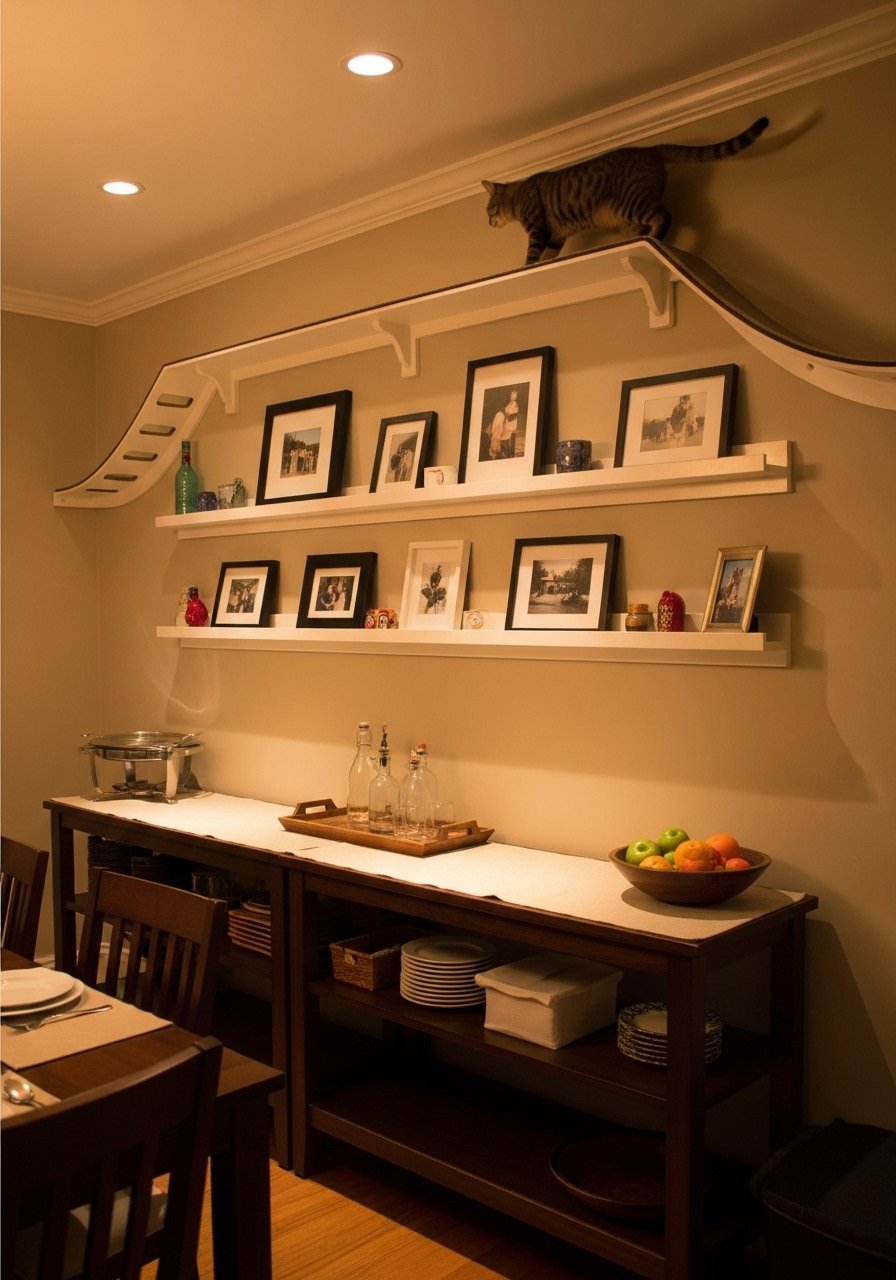
I turned a gallery shelf into a cat pathway by leaving the top 6 inches clear and adding stiles at 18-inch intervals. That way art sits below and cats move above without knocking frames. The mistake is overloading the shelf with heavy frames. Keep the top route light and anchor heavier art to the wall itself. A good budget for a sturdy gallery ledge is $40 to $100. I used picture ledges that are wide enough to accommodate both frames and a narrow cat lane.
Budget-Friendly PVC Pipe Climbers For Renters
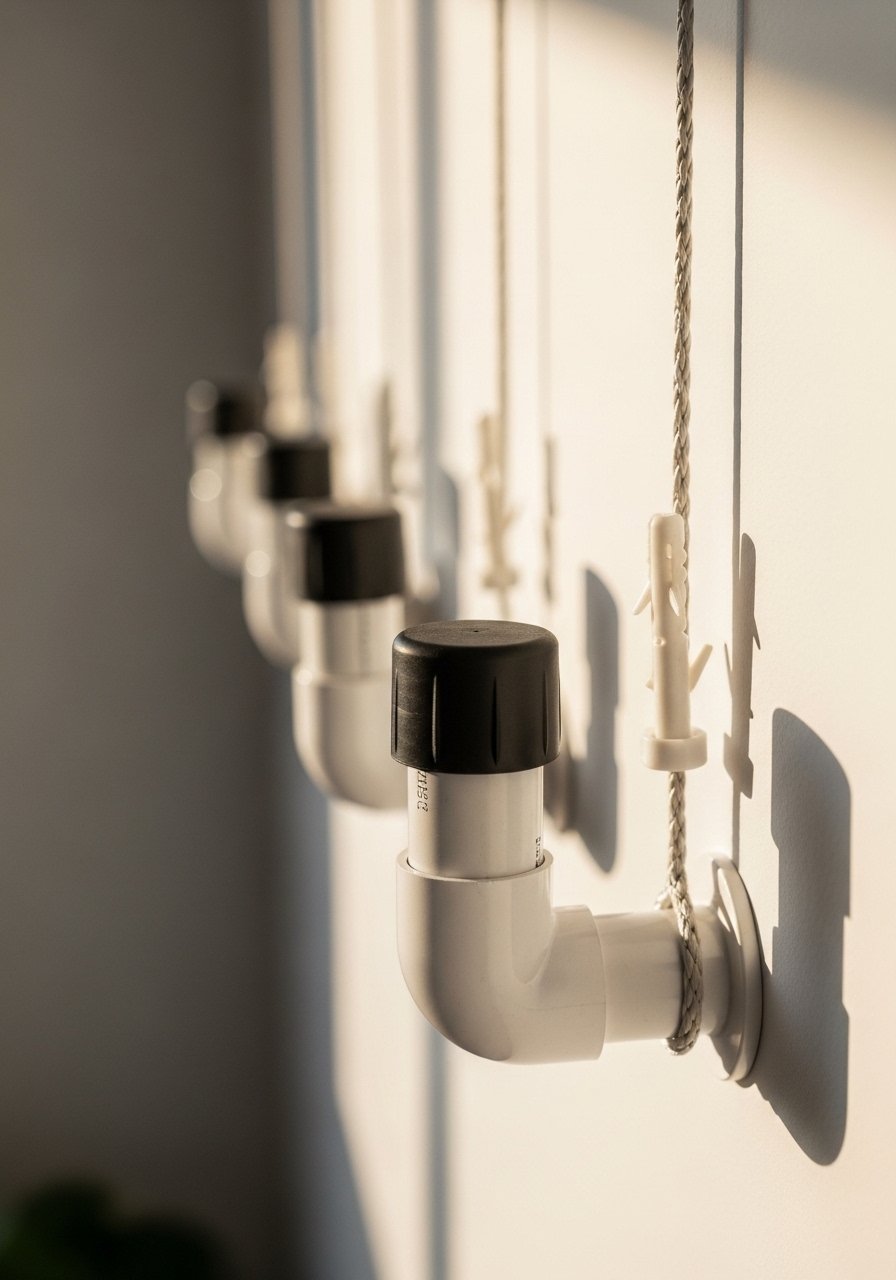
Renters need reversible solutions. PVC peg systems mounted with heavy-duty removable anchors are a fast, low-cost option. I use 1-inch PVC with rubber end caps and space pegs 10 to 14 inches apart. Biggest mistake is trusting cheap anchors that pull out. Test with a weight before letting your cat try it. This build ran under $40 and required only basic tools. For quick testing try these removable wall anchors and swap to screws into studs if they pass the test.
Your Decor Shopping List
Textiles
- Honestly the best $40 I have spent. 22-inch down-filled linen pillow covers, set of 2 in warm gray for layering
- Chunky knit throw in cream (~$35). Drape over the sofa arm for instant warmth
Wall Decor
- White oak floating shelves in 10-inch depth, set of three
- Picture ledges 36-inch wood for gallery-and-cat-route setups
Lighting
- Warm plug-in wall sconce to highlight ledges without rewiring
Pet-Specific
- Natural sisal rope 1/2-inch for wrapping platforms
- Washable fleece pet pad 14×20 for window perches
Hardware & Anchors
- Hidden shelf brackets heavy duty for clean floating looks
- Toggle wall anchors heavy duty for apartments
Budget Finds
- Corrugated cat scratch boards pack (~$15). Similar at Target or HomeGoods
Organization
- Woven storage baskets set of 3 to tuck toys and cords
Shopping Tips
White oak beats dark wood in 2026. Design feeds have shifted completely. These white oak floating shelves look current, not dated.
Grab washable fleece pet pads for $12 to $20 each. Swap them seasonally and the shelf looks different without a full remodel.
Curtains should puddle or kiss the floor, never hang halfway up. These 96-inch linen panels are right for standard 9-foot ceilings.
Everyone buys five small succulents. One single 6-foot faux fiddle leaf fig has ten times the visual impact.
Frequently Asked Questions
Q: How far apart should I space cat shelves vertically?
A: Aim for 14 to 18 inches between shelves for average cats. Shorter, older, or shy cats do better with 10 to 14 inches. Measure your cat's comfortable leap at home before you fix everything to the wall.
Q: Can I install cat shelves in a rental without damaging walls?
A: Yes. Use toggle anchors rated for the load or test removable anchors first in an inconspicuous spot. PVC peg systems can be mounted temporarily and swapped out when you move.
Q: What depth should a shelf be so a cat can lounge comfortably?
A: Go 8 to 12 inches deep for perches. Anything under 6 inches feels tight. For lounging shelves I use 12 inches so the cat can turn and sprawl.
Q: My cat keeps knocking frames off the shelf. How do I prevent that?
A: Leave the top route clear for passage and hang heavier frames on the wall below. Use 1/4-inch lip strips on ledges to stop slippage and anchor picture frames independently of shelf weight.
Q: Are soft or hard surfaces better for traction?
A: A mix is best. Cats like sisal for scratching and a little foam or fleece for lounging. Try adhesive sisal strips on one shelf and a fleece pad on another to see your cat's preference.
Q: How do I plan a multi-cat route so they do not fight?
A: Give at least two separate entries and exits on any cluster. Use the rule of three when grouping boxes. If a cat can move horizontally at the top without reversing, conflicts drop dramatically.