
My first real home office fix was moving a lamp. Everything else stayed the same but the light change made the room work for me. I lean modern with warm neutrals. Most projects below are under $75, with a few splurges near $150. These ideas suit small dedicated offices, a desk corner in a bedroom, or a nook in your living room.
Layered Textures For A Modern Focused Desk
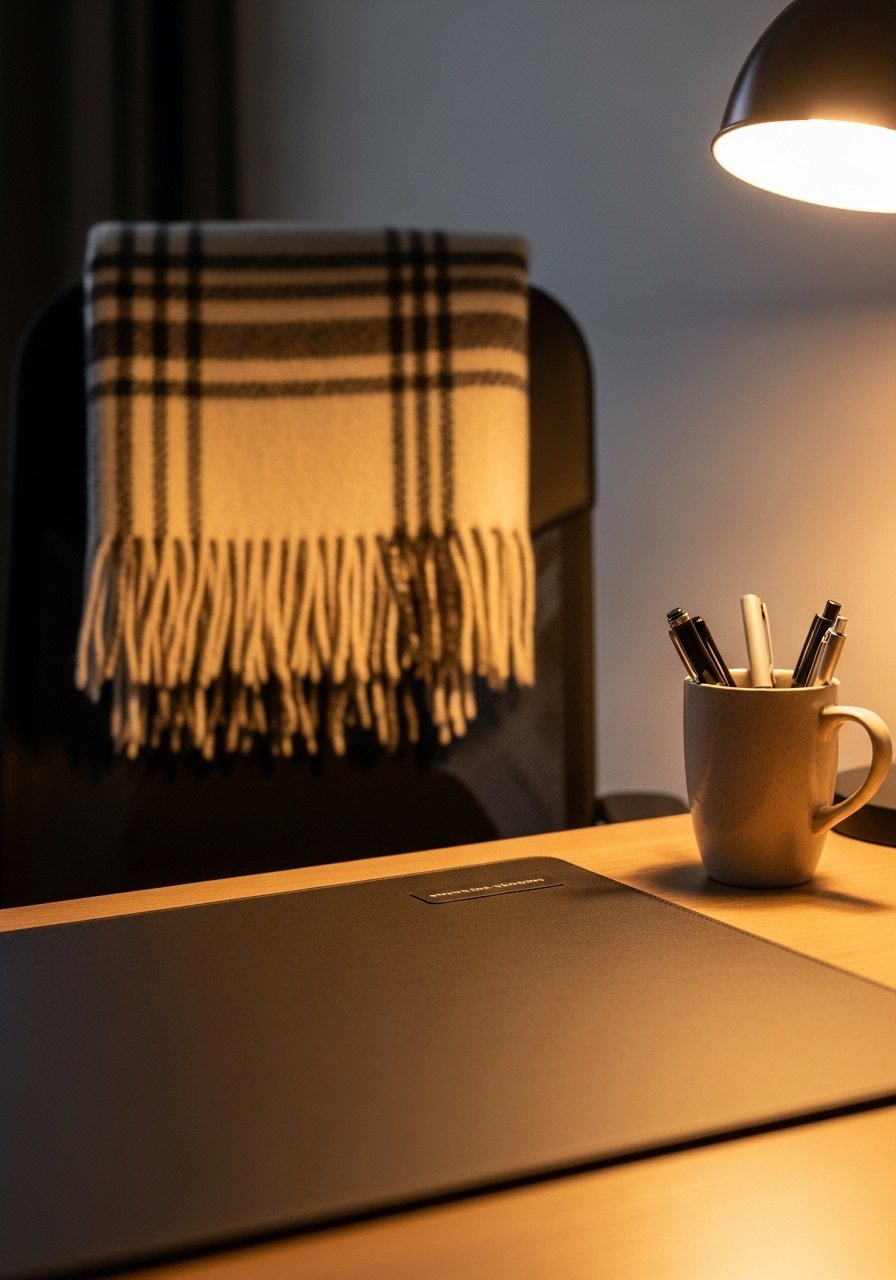
The moment I put a soft wool seat cover on my office chair, I stopped fidgeting during long work sessions. Layering texture quiets the eye and gives your brain a subtle signal that this is a work zone. Aim for an 80/20 color ratio, where 80 percent stays neutral and 20 percent is your accent. Budget: $20 to $60. Common mistake is picking fabrics that crush easily. Choose a 22-inch wool chair pad or a chunky-knit throw that survives weekly use. I like using a textured desk pad to define the workspace and protect the surface.
Minimalist Gallery Shelf For Office Walls
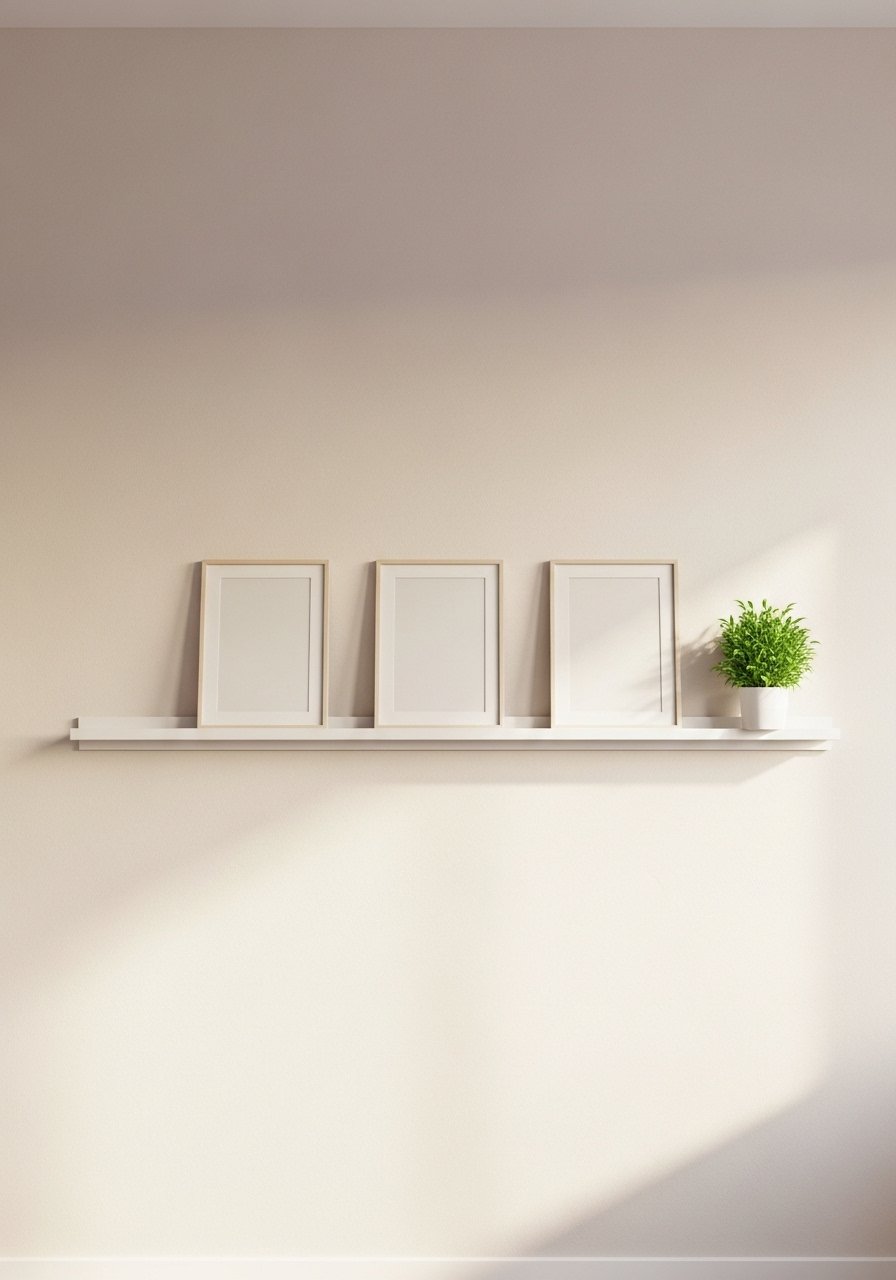
I found brass picture ledges on Amazon for under $20 and they solved my gallery wall commitment problem. A single shelf keeps things editable, and swapping one frame takes 30 seconds. Use the rule of three when styling the ledge: one tall object, one medium, one low. Depth tip, pick a shelf 6 to 8 inches deep so frames lean safely. Works best in home offices and study nooks. Avoid hanging too high. Keep the shelf at eye level when seated. Try these picture ledges for a simple start.
Floor To Ceiling Curtains To Add Height
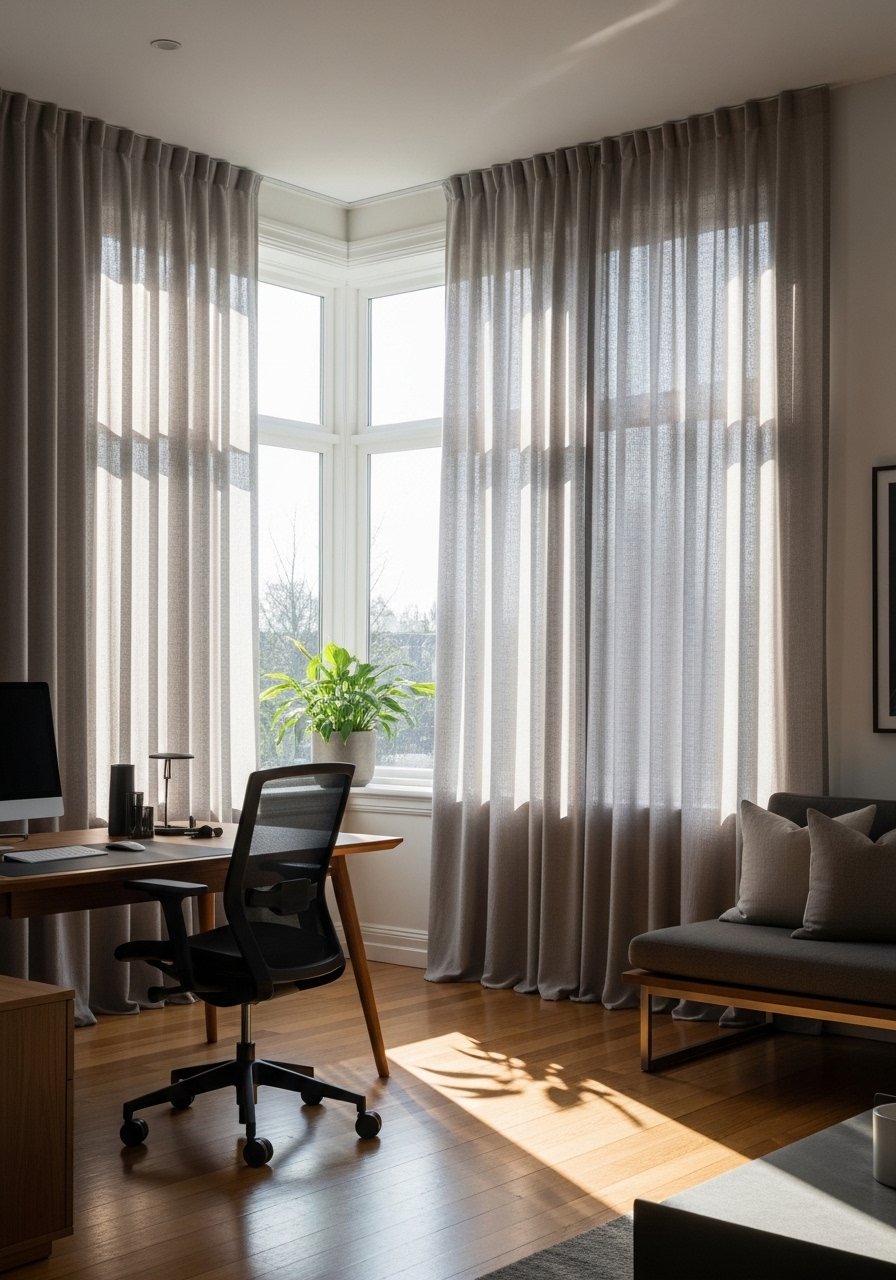
Most people hang curtains right at the window frame. That is why their rooms look shorter than they are. Hanging panels 4 to 6 inches above the frame creates instant height. For a modern look pick a neutral linen in 96- or 108-inch lengths depending on your ceiling. Budget: $30 to $80 per panel. A common mistake is choosing panels that are too narrow. Aim for 2 to 2.5 times the window width for full coverage. These linen curtain panels are a good neutral option.
Task Lighting With Warm Dimmer Control
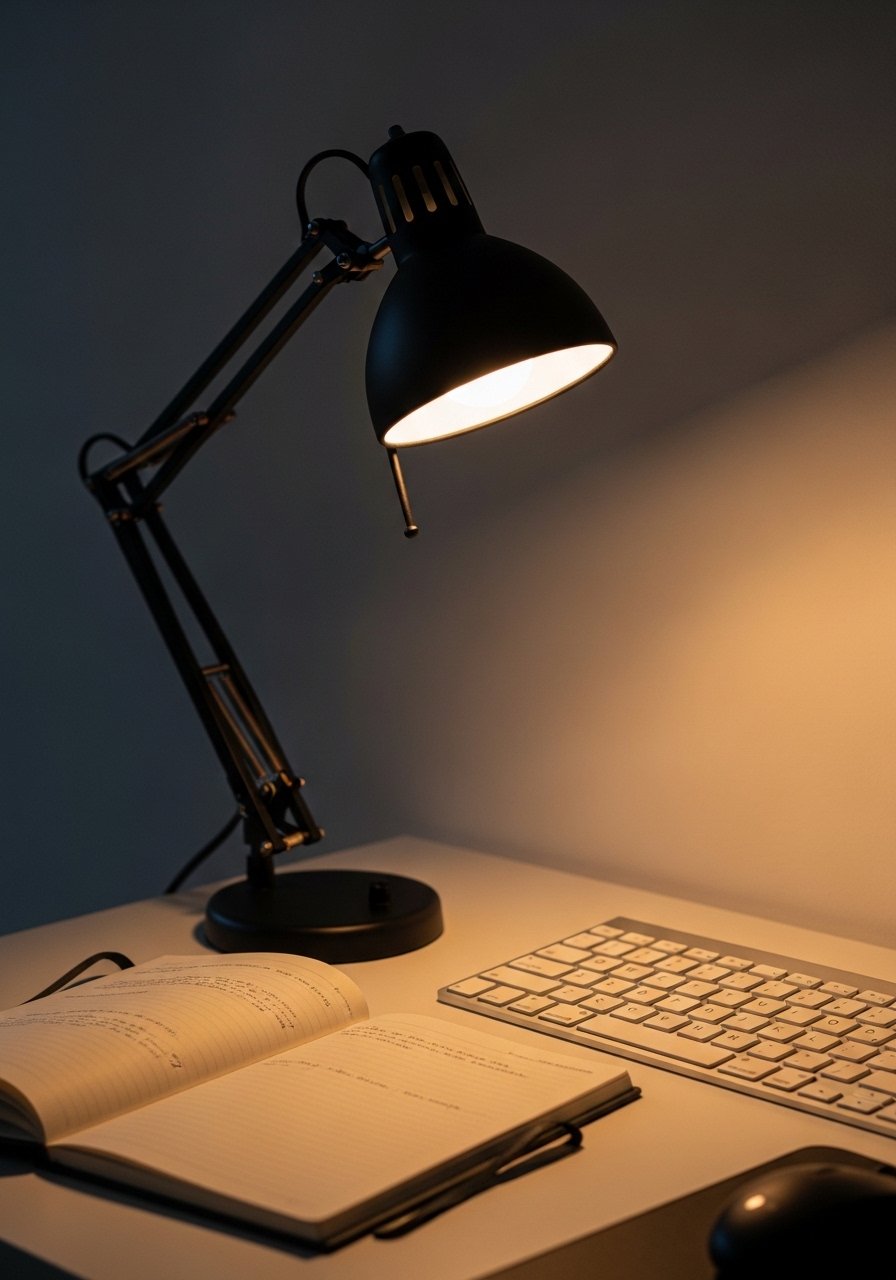
Glare and too-bright overhead lights kill concentration. A task lamp with a warm dimmer solves both problems. Place the lamp 18 to 24 inches from your monitor and slightly to the side to reduce screen reflections. Budget: $40 to $120. Many people choose a purely aesthetic lamp and forget about angle. Get one with at least 300 lumens and a dimmer. I use an adjustable LED task lamp that lets me dial the warmth when hours get late.
Large Plant For Visual Rest And Scale
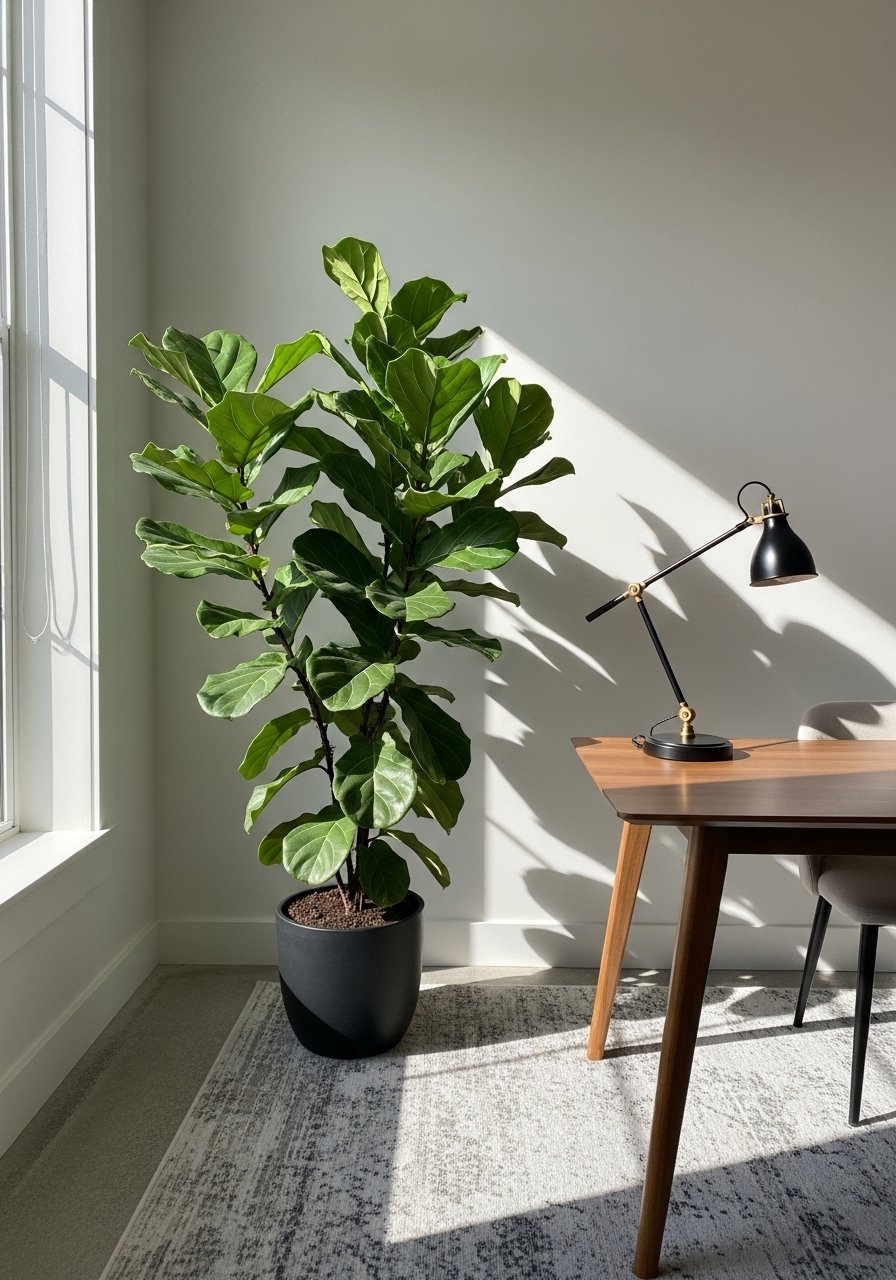
There is something about a reading nook with layered pillows that makes you want to cancel your plans. The same applies to a plant next to your desk. A single 5 to 6 foot plant gives your eye a place to rest and makes small rooms feel intentional. Budget: $40 to $150. Common mistake is buying three little succulents and expecting the same effect. If you want low-maintenance, consider a faux option or a hardy snake plant. I like a faux fiddle leaf fig when sunlight is unreliable.
Acoustic Panels From Thrifted Textiles
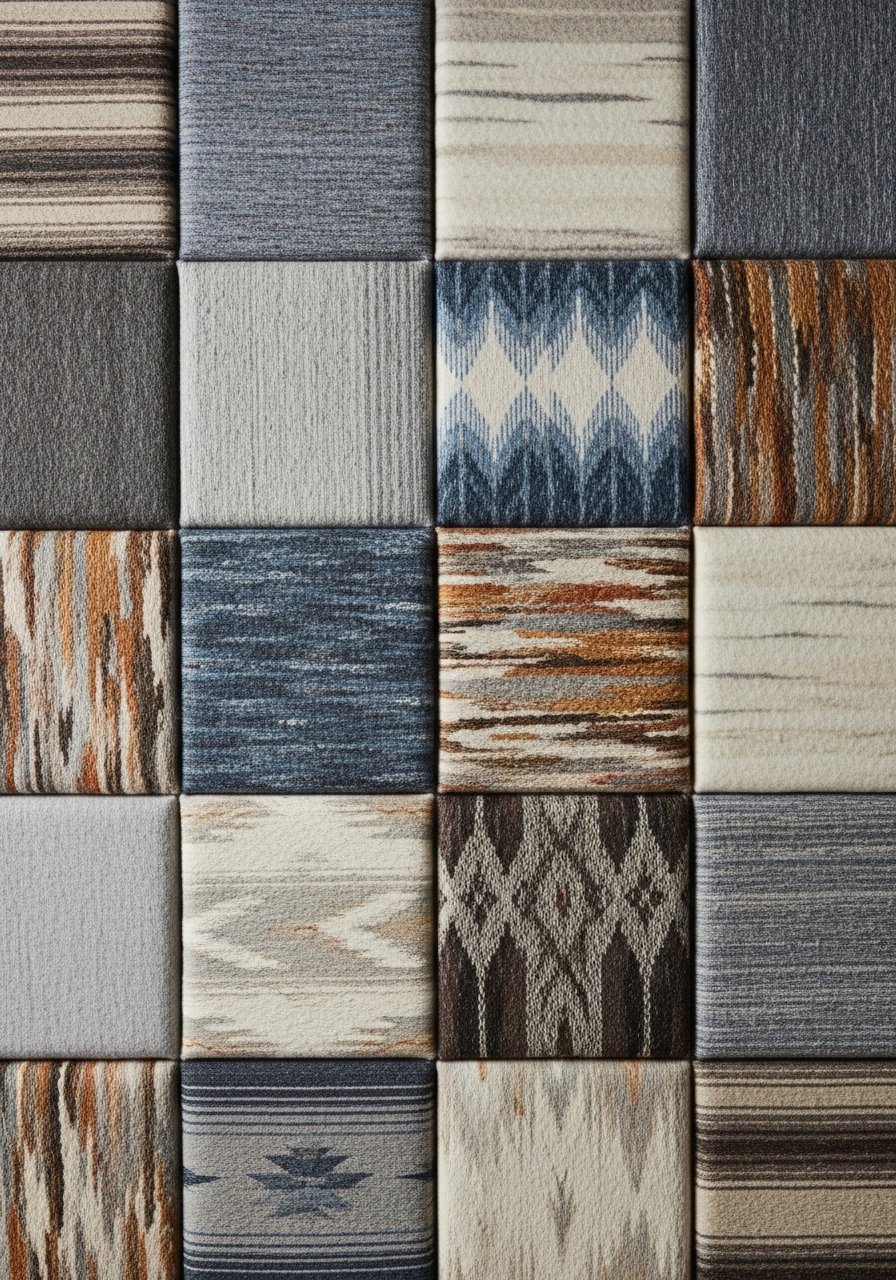
If echo and Zoom background noise distract you, try making acoustic panels from thrifted wool blankets. Mount a 24×48 inch reclaimed frame, stretch the blanket, and hang them behind your desk. They cut sound while adding pattern. Total cost can be under $40. People often assume acoustic treatments must look industrial. Use fabric with 1 to 1.5 inch weave and pair panels in a staggered grid for the best absorption. These double as art and work great in attic offices or converted bedrooms.
Cable Management As A Styling Detail
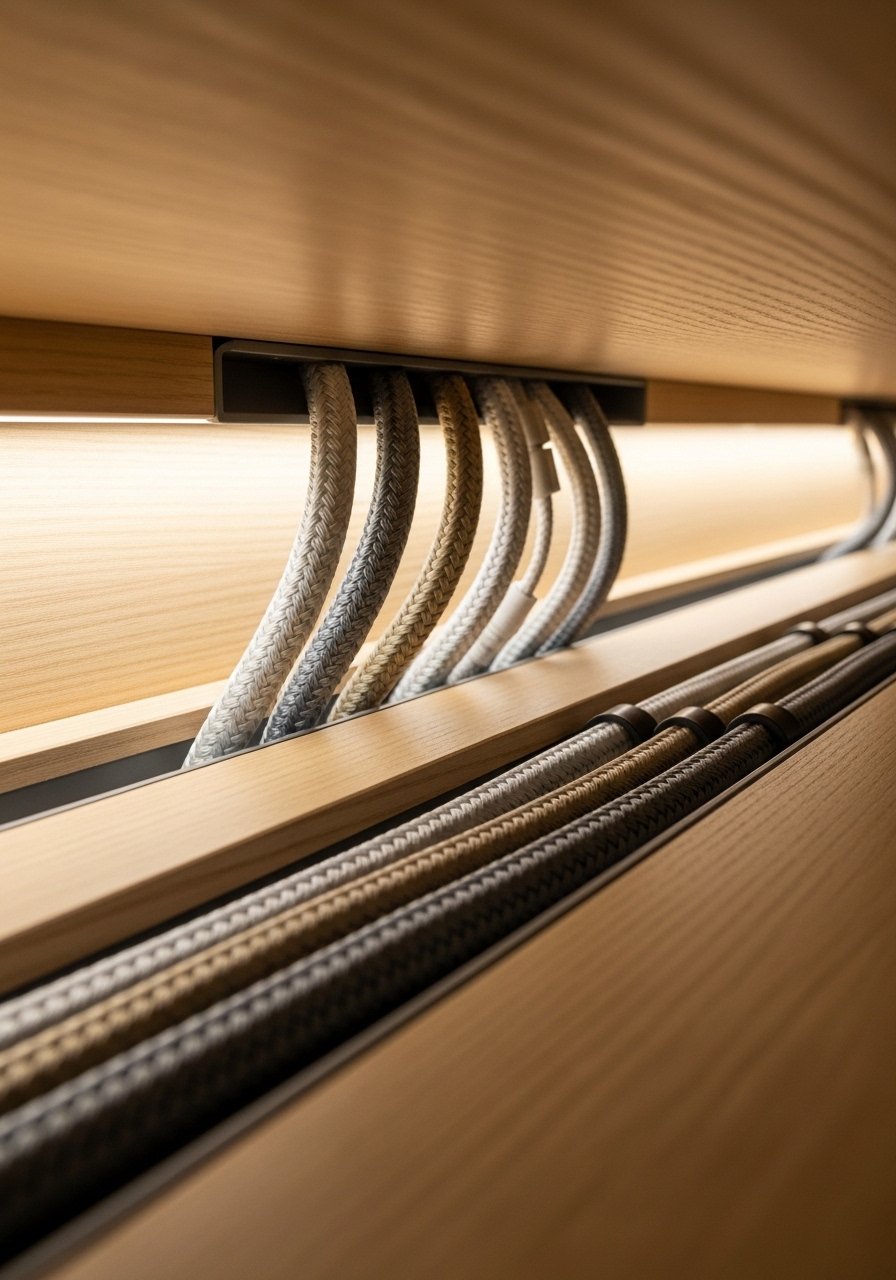
Cluttered cables scream distraction. Instead of hiding everything, style them. Use color-coded braided sleeves and route cords in a zigzag that mirrors your desk layout. I cut sleeve lengths so cables loop 2 to 3 inches under the desk for easy unplugging. Budget: $10 to $25. A common mistake is taping wires directly to the desk which peels paint. Use adhesive cable channels instead. Try a multipack of braided cable sleeves to tidy while adding a subtle design line.
Neutral Pinboard Gallery For Notes And Inspiration
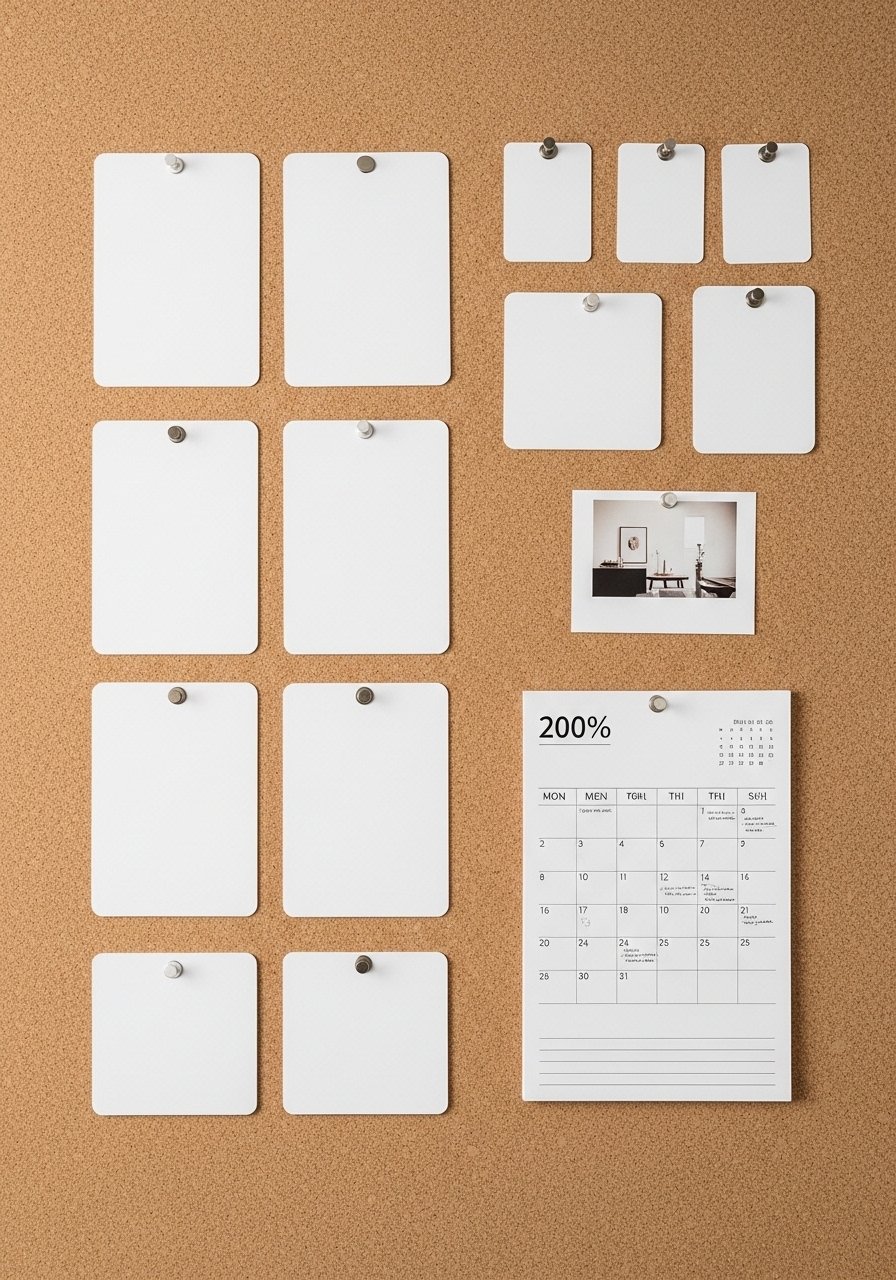
I used to keep sticky notes on the monitor and they always fell off. A neutral pinboard keeps notes visible without the chaos. Cut cork to 24×36 inches and frame it in raw wood for contrast. Use a simple grid of index cards and no more than five pinned items to avoid noise. Budget: $15 to $40. A detail many miss is spacing pins 3 to 4 inches apart to avoid visual clutter. These cork boards come in useful sizes for home offices.
Rolling Cart As Portable Supply Station
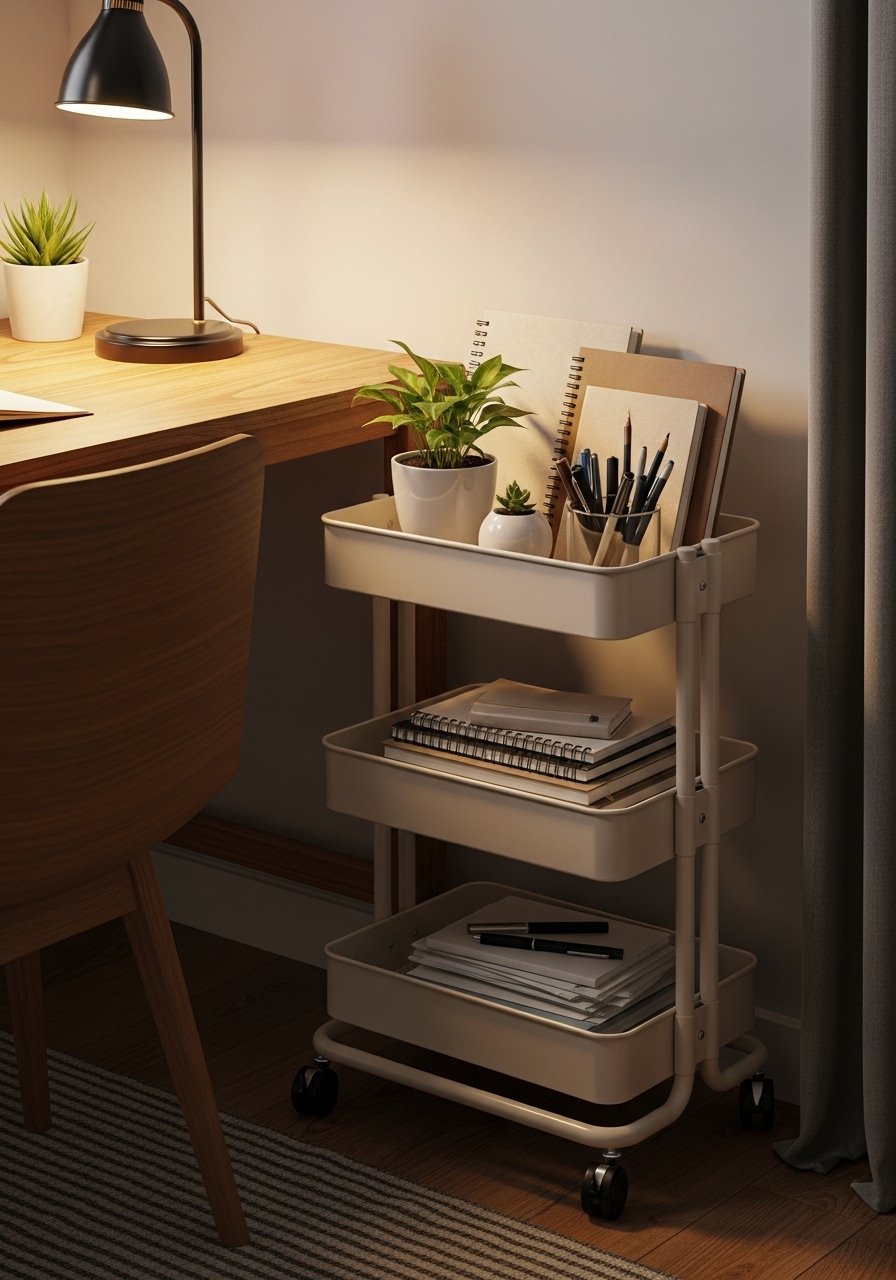
My entryway used to be a dumping ground for keys and shoes. One console table and a round mirror changed everything. The same logic applies here. A narrow rolling cart keeps supplies within reach and tucks away when guests arrive. Aim for a cart 12 to 14 inches wide so it fits between desk and wall. Budget: $30 to $70. Common mistake is overloading the top shelf, which becomes wobbly. Use the top for daily items and the bottom for paper or a small shredder. This rolling cart is a tidy option.
Floating White Oak Shelves For Trendy Storage
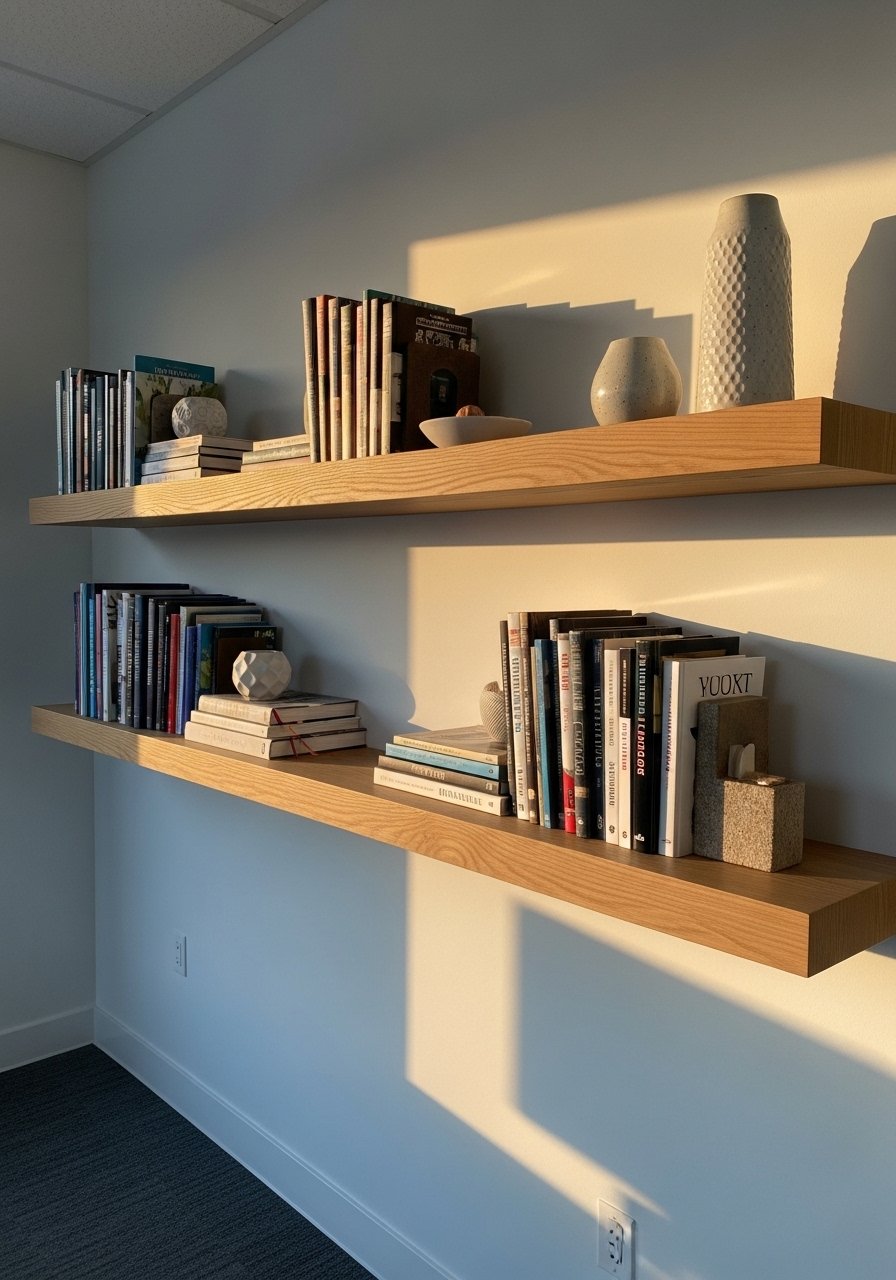
White oak shelves are in every design account I follow this year. They read modern and warm at the same time. Pick 10 to 12-inch deep shelves for books and a small plant. Budget: $40 to $120 for a pair. A misstep is loading shelves uniformly; vary heights and use the rule of three for styling. Pair these with a small bank of drawers below to balance texture. These white oak floating shelves look current without feeling trendy in a cheap way.
Statement Desk Mat To Zone Your Work
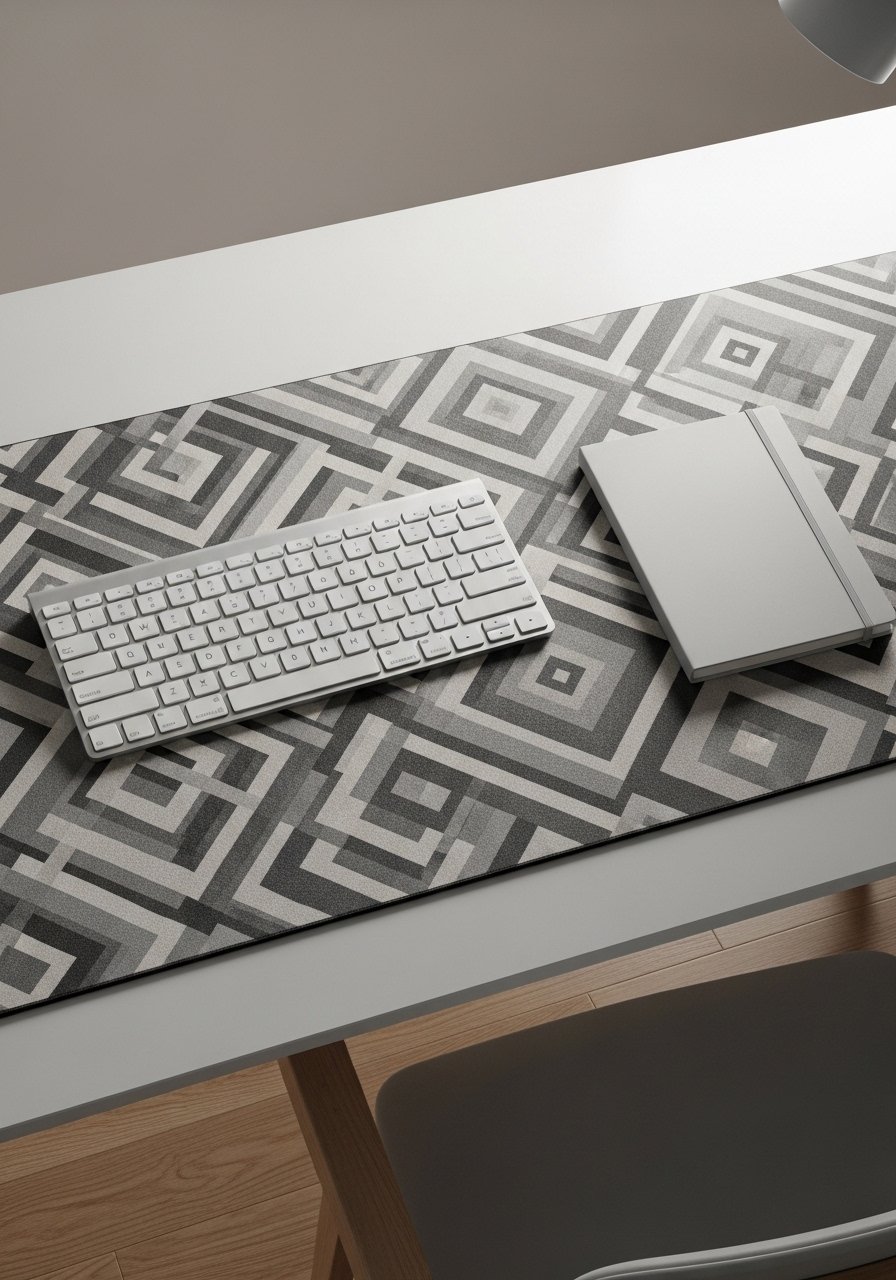
I bought a plain mat and never noticed it. Then I swapped to a patterned mat and it defined my work area instantly. Use a mat that extends 20 to 24 inches in front of your keyboard to allow mouse movement. Budget: $15 to $60. People pick mats too small or too bright. Stick to a low-contrast pattern that hides scuffs. A leather or woven surface improves mouse tracking and feels nicer to rest your wrists on. Consider this large desk mat.
Dual-Zone Desk Layout For Focus And Flexibility
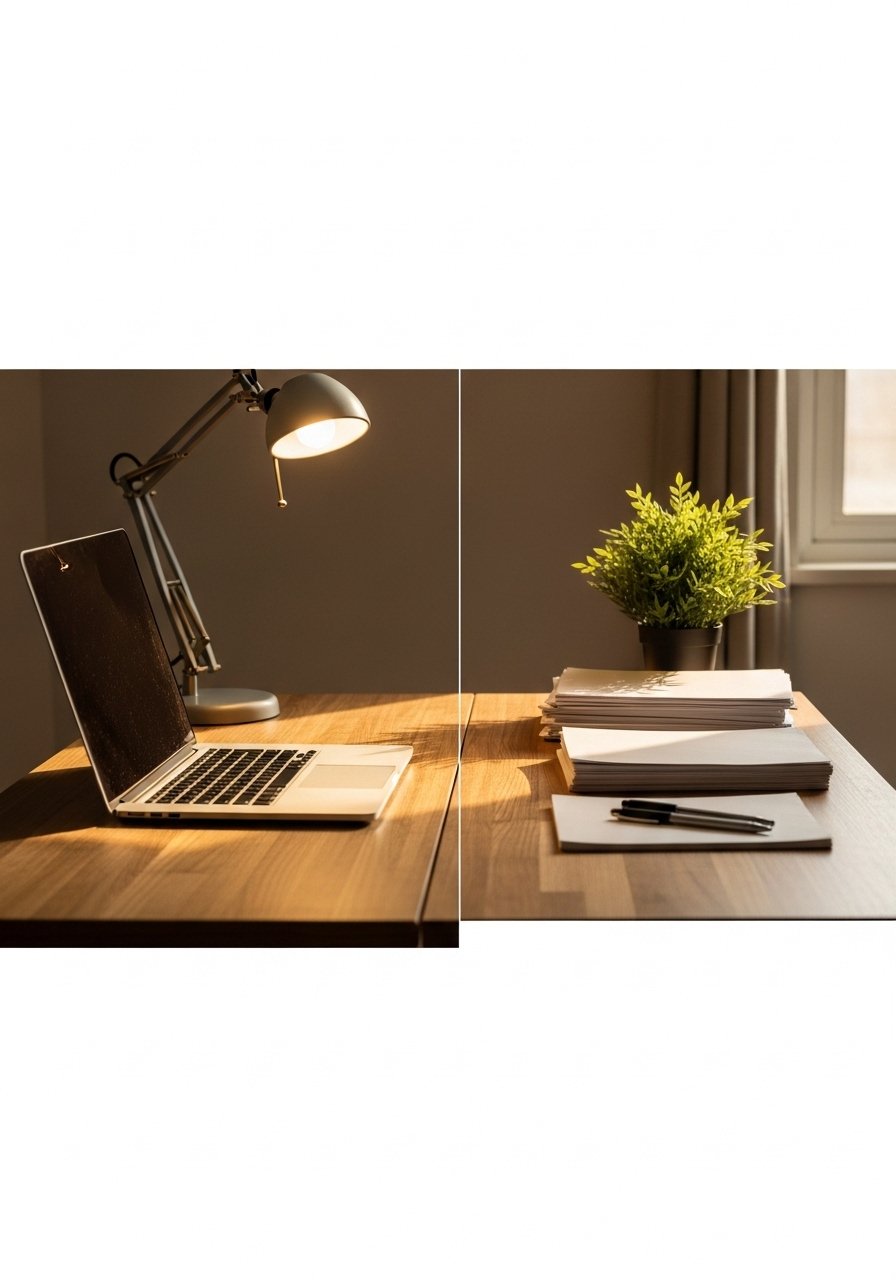
Split your desk into a tech zone and a paper zone. I mark the divide visually with a small tray or a change in surface texture. The trick is keeping the tech side clear of paper and the paper side clear of cords. Use a 60/40 split so your tech area is slightly larger. Budget: $0 to $50. A common error is trying to use the entire desk for one task. Make the zones and commit to them for a week. A small desk organizer tray seals the separation.
Color-Blocked Accent Wall Behind Desk
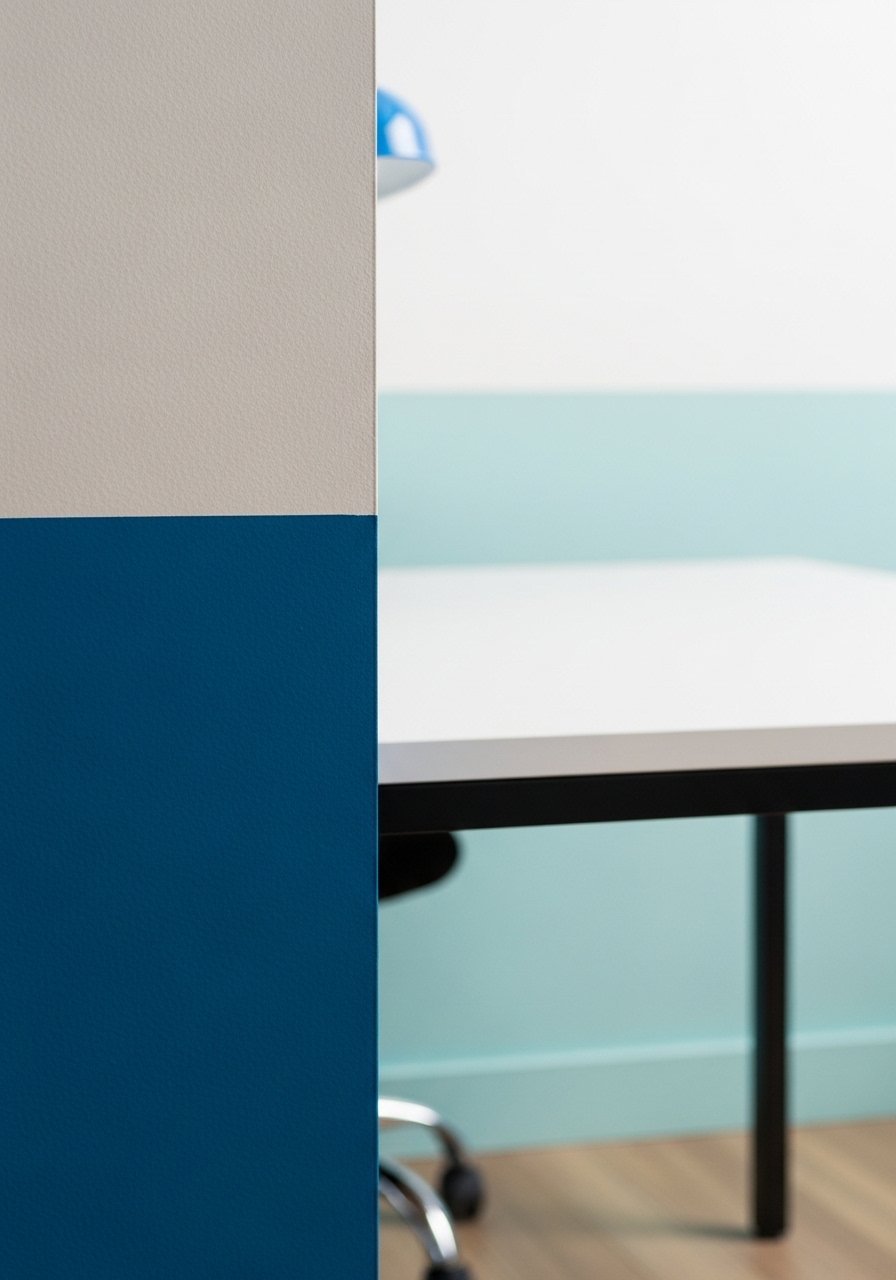
If your walls make you glaze over, paint a simple color block behind the desk to create depth. Pick a muted accent that covers the lower third of the wall when seated. Use painter's tape and measure the top edge at 42 to 48 inches from the floor for a chair-height anchor. Budget: $25 to $80. A common mistake is choosing a bright color that competes with screens. Pick a low-saturation shade for an office. These matte interior paints are great for testing first.
Layered Rugs To Define A Compact Office
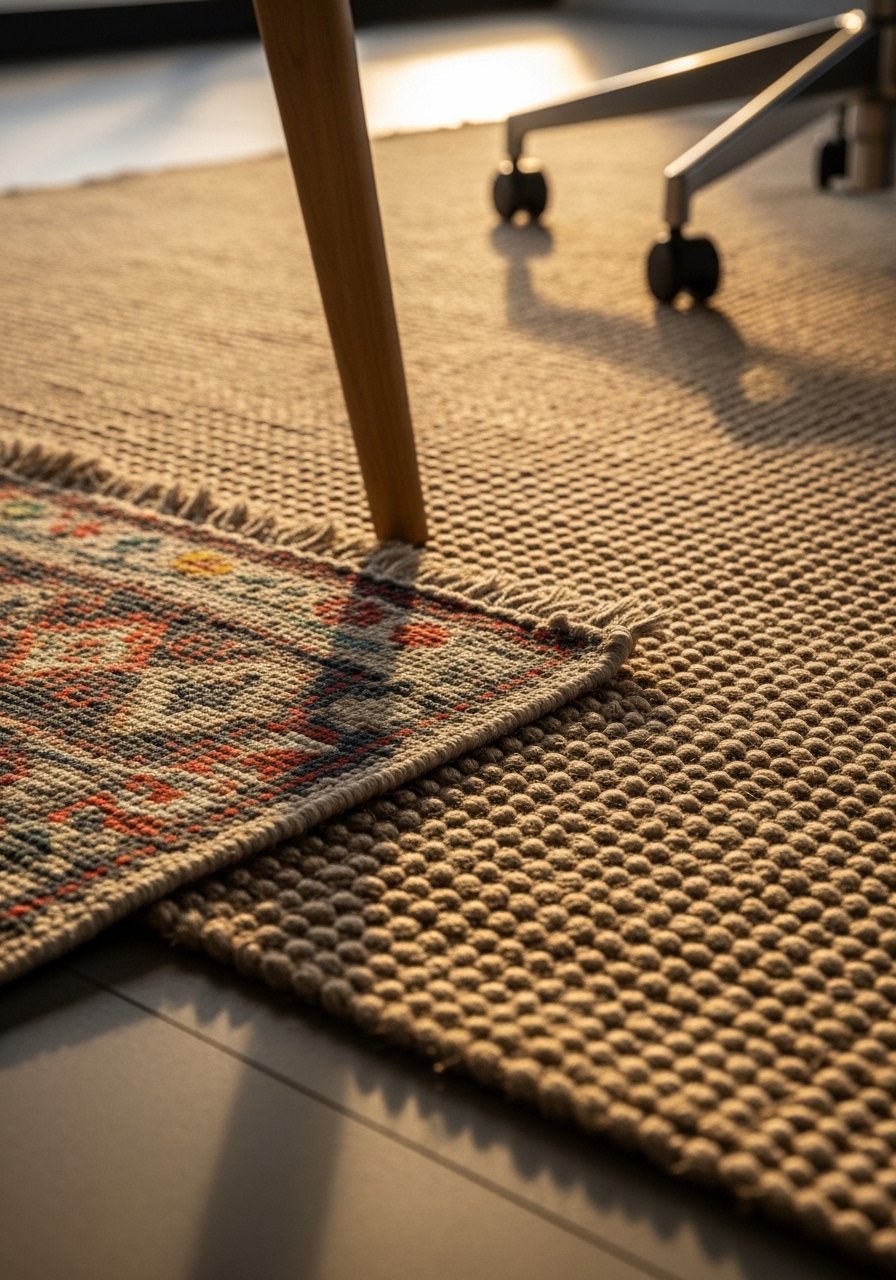
Layering rugs is my secret for giving a cheap chair and desk a lived-in look. Place a natural fiber rug as the base and a softer 5×7 rug centered under your desk. Let the top rug overlap the base by about 6 inches on all visible sides. Budget: $40 to $150. People often pick rugs that are too small. A small runner under the desk should extend at least 18 inches beyond the chair to avoid it catching. Try this 5×7 wool rug for the top layer.
Oversized Mirror To Brighten Dark Corners
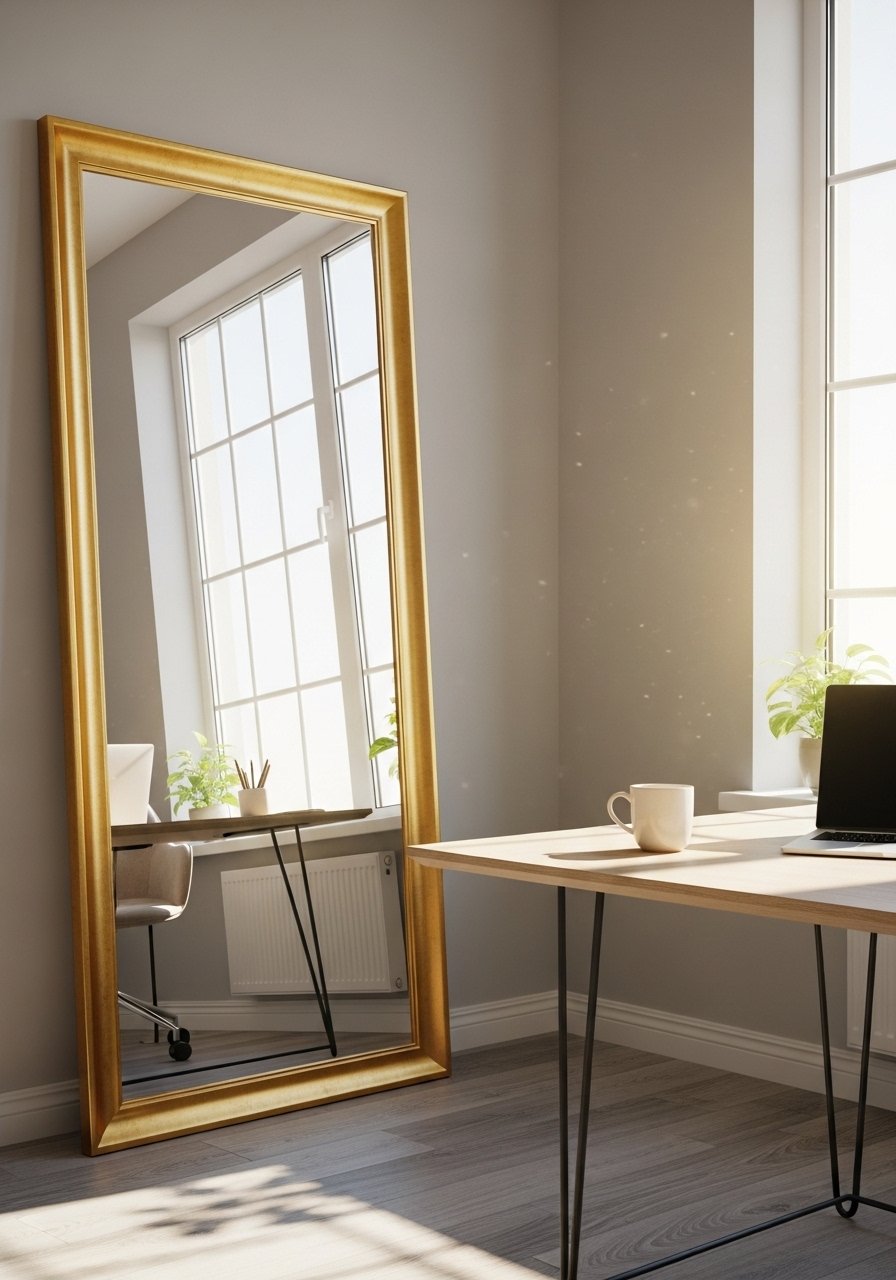
Dark offices feel smaller and more draining. A tall mirror opposite a window bounces light and creates a sense of depth. A leaning mirror 24×72 inches works well behind a chair or next to a shelving unit. Budget: $60 to $200. People hang mirrors too high. The center of the mirror should sit roughly at seated eye level, about 48 inches from the floor. I use a simple frame and let it reflect the room for an instant brightness lift. This leaning full-length mirror is an easy option.
Your Decor Shopping List
Textiles
- Honestly the best $40 I have spent. Chunky knit throw in cream 50×60 inches for chair and shelf styling
- 22-inch wool chair pad for desk chairs, machine-friendly, budget friendly
Wall Decor
- Brass picture ledges 24-inch set for easy gallery swaps
- 24×36 cork board framed in raw wood for notes
Lighting
- Adjustable LED task lamp with dimmer 300-800 lumens, warm light option
Plants
- Artificial fiddle leaf fig 6ft for low-light spots, realistic leaves
Storage & Organization
- Narrow rolling storage cart 12-inch wide, three tiers
- Braided cable sleeves multipack for tidy cords
Rugs & Mats
- Large desk mat leatherette 24×36 inches
- 5×7 wool area rug for top-layer rug
Notes: Many of these items have similar options at Target or HomeGoods if you prefer to see them in person.
Shopping Tips
White oak beats dark wood in 2026. Design feeds have shifted completely. These white oak floating shelves look current, not dated.
Grab velvet pillow covers for $12 each. Swap them every few months and the whole room feels different.
Curtains should puddle or kiss the floor, never hang halfway up. These 96-inch linen panels are right for standard 9-foot ceilings.
Lead with this insight, not just price. One large plant gives more impact than five small ones. Try a 6ft artificial fiddle leaf fig for rooms with little light.
Contrast tip. Swap shiny chrome lamps for matte black to avoid dated reflections. Matte black task lamp offers a modern look and readable light.
Frequently Asked Questions
Q: What size rug should I use under my desk?
A: Bigger than you think. For a compact home office a 5×7 top rug layered over a natural base works well. Make sure the rug extends at least 18 inches past the back of the chair so it does not catch when you move. This 5×7 wool rug is a reliable size.
Q: Can I mix different decorative metals in an office?
A: Yes, mix them. Use one metal as the dominant finish and another as an accent. For example, brass picture ledges with matte black lighting reads intentional. Keep the ratio about 80/20 in favor of one finish.
Q: How do I reduce echo without compromising style?
A: Use fabric panels covered in thrifted wool or upholstery fabric. Panels sized 24×48 inches, hung in a staggered grid behind the desk, cut a surprising amount of sound while doubling as art.
Q: Will an accent wall distract from video calls?
A: Pick a muted, low-saturation color behind you and keep the pattern simple. A color block that covers the lower third at 42 to 48 inches from the floor reads calm and intentional on camera.
Q: Real plants or faux for an office with low light?
A: Both work. Real snake plants and pothos handle neglect. If light is truly lacking, a realistic faux like this artificial fiddle leaf fig gives scale without the upkeep.
Q: How should I hang curtains for small windows?
A: Hang them 4 to 6 inches above the frame and choose panels that are 2 to 2.5 times the window width. Use 96- or 108-inch lengths based on your ceiling height so the fabric pools slightly or kisses the floor.