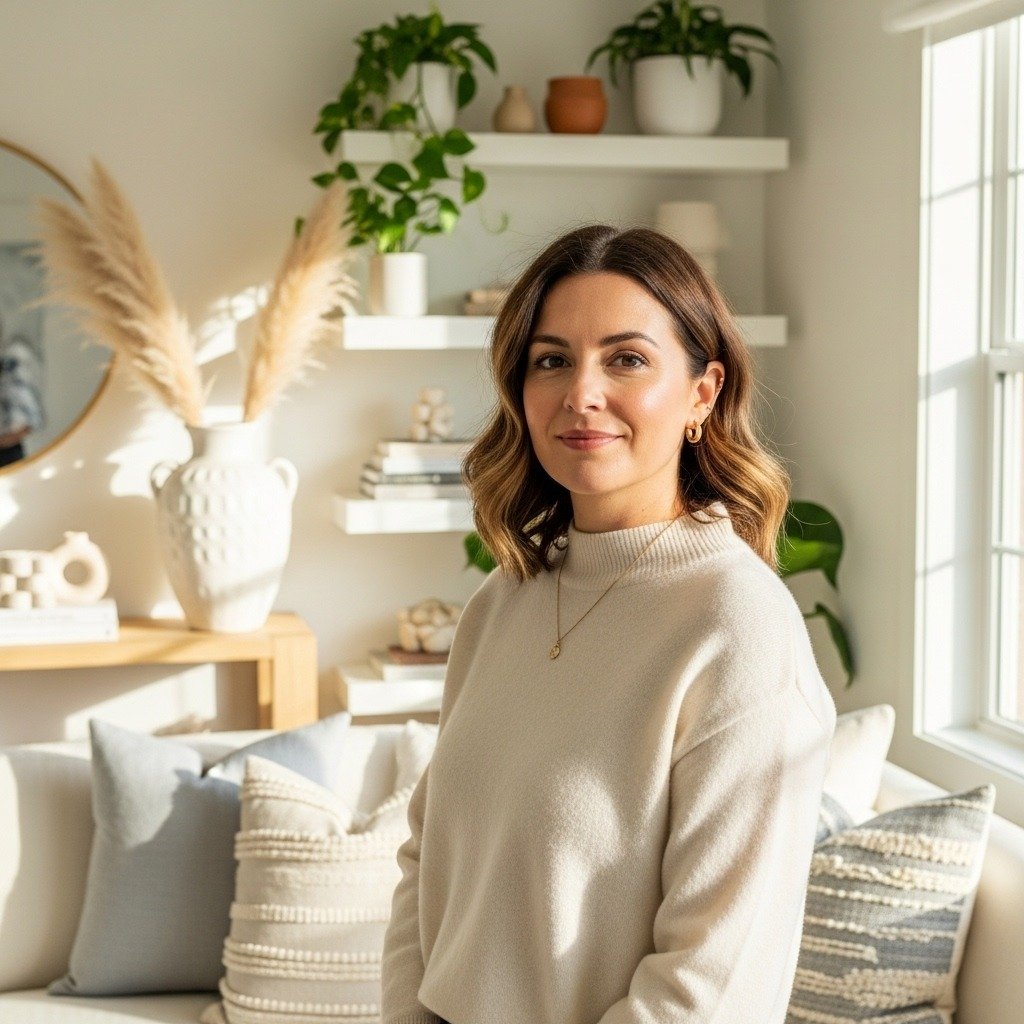
I had a living room that read as tired and wishy-washy for months. I painted the walls a pale blush, bought matching pillows, and still it felt flat. One afternoon I realized the problem was not the color itself. It was how I had spread it everywhere in the same small doses. Everything whispered instead of one thing leading the eye.
At first I tried adding more objects, then more pattern. It only made the room noisy. After a few rounds of removing things, measuring spaces, and sitting with the room for a week, I found a simple formula that keeps soft colors from disappearing into blandness.
Step 1: Pick a soft palette and use the 60/30/10 split
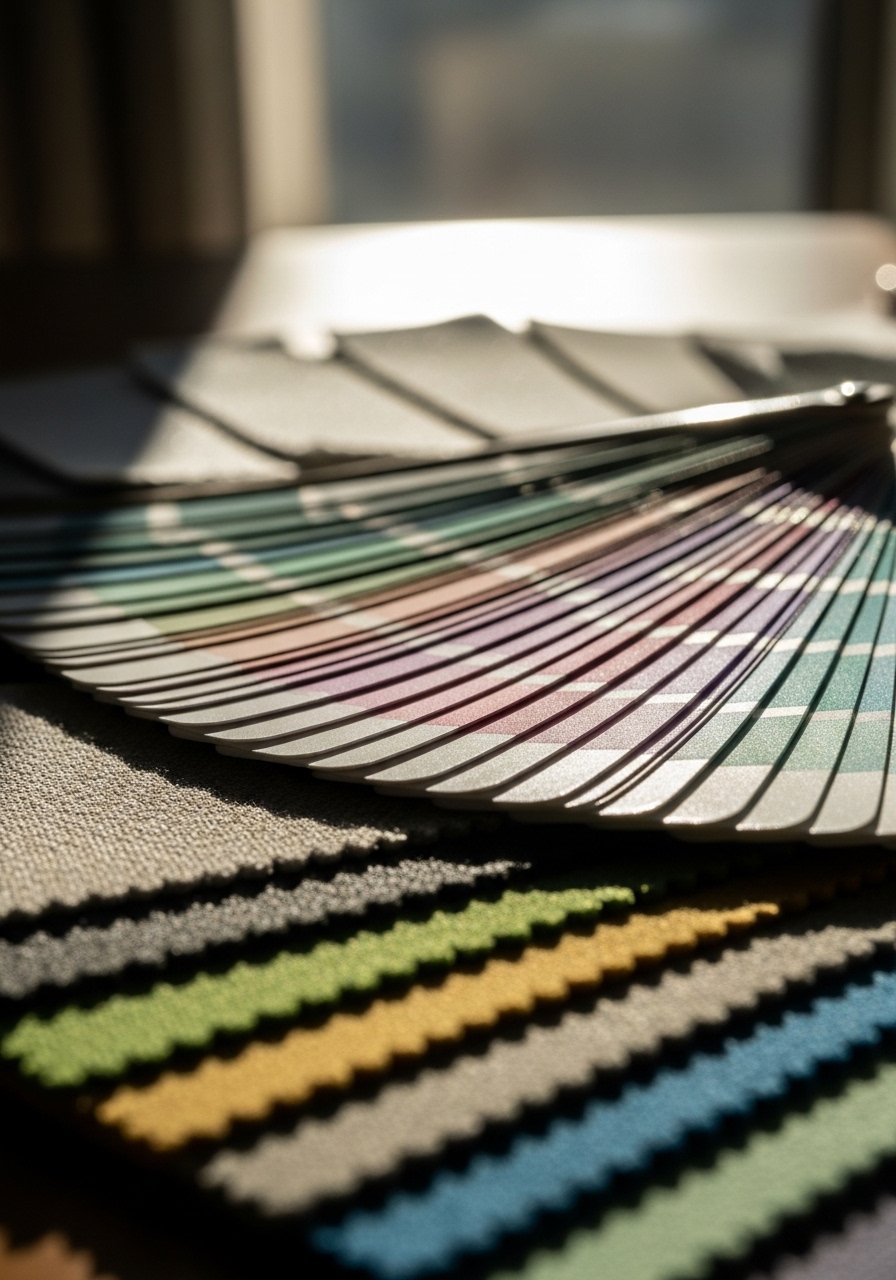
Start by choosing three layers of color. Use about 60 percent for the dominant, 30 percent for the secondary, and 10 percent for accents. I usually make walls and the largest upholstered piece the 60 percent, a rug or sofa the 30 percent, and small accessories the 10 percent. For example, off-white walls, a warm gray sofa, and small accents in dusty rose or brass.
A common mistake is treating every item as equal, which makes the room feel muddled. Linen has a cool, slightly crisp feel, while a chunky knit throw is heavy and cozy. I got the balance wrong twice before I measured and stuck to the split.
Step 2: Anchor the room with the right rug and scale
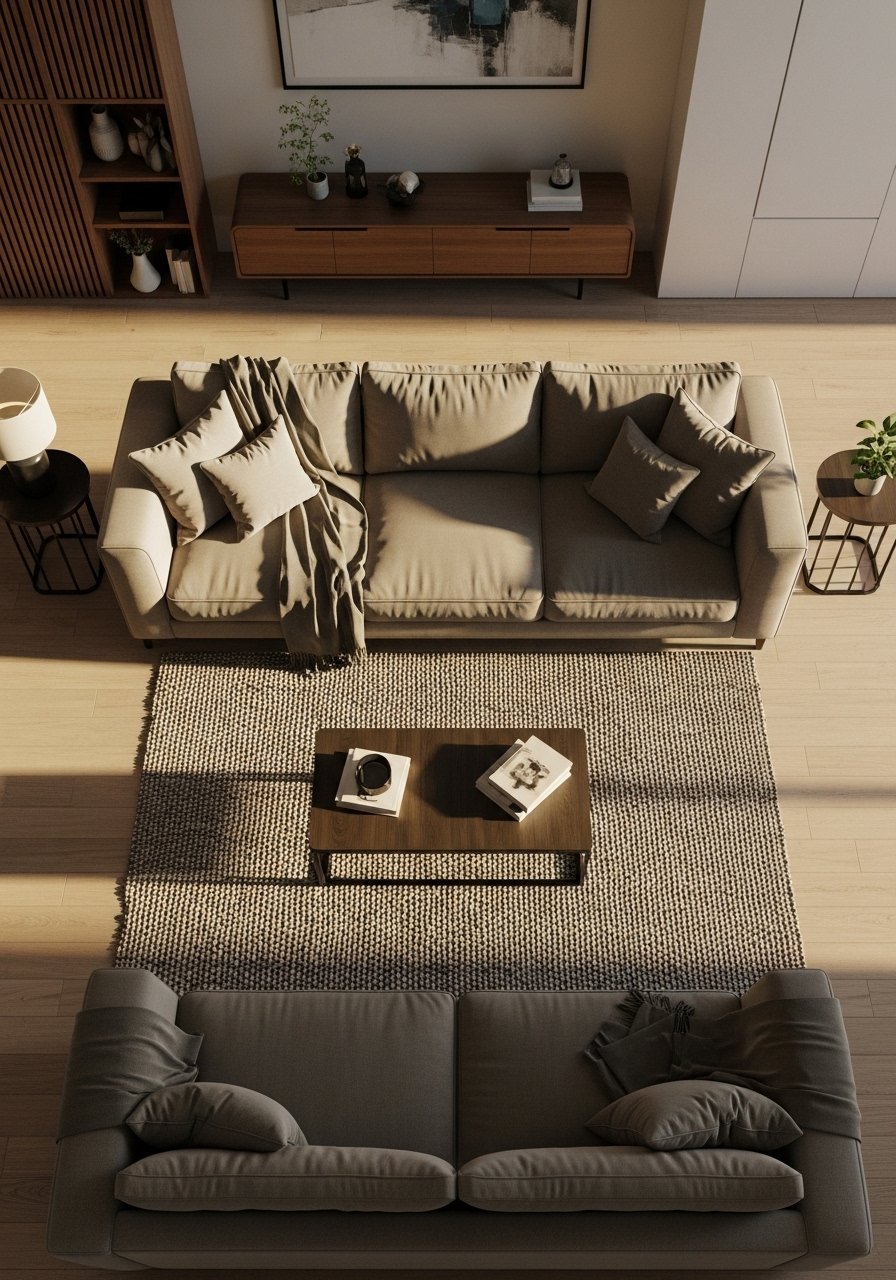
Pick a rug big enough to make the seating feel like one area. Aim for the front legs of sofas and chairs to sit on the rug, or choose one that extends at least 12 inches beyond the sofa front. In a typical living room that means an 8×10 rug or larger. Too-small rugs chop the room and make soft colors look weak.
Natural fiber jute reads soft in photos but feels a little rough underfoot, so add a wool pad or a softer wool rug if you want warmth. I learned the hard way that a rug that is just a touch too small makes everything above it wobble visually.
Step 3: Layer textiles for texture and touch
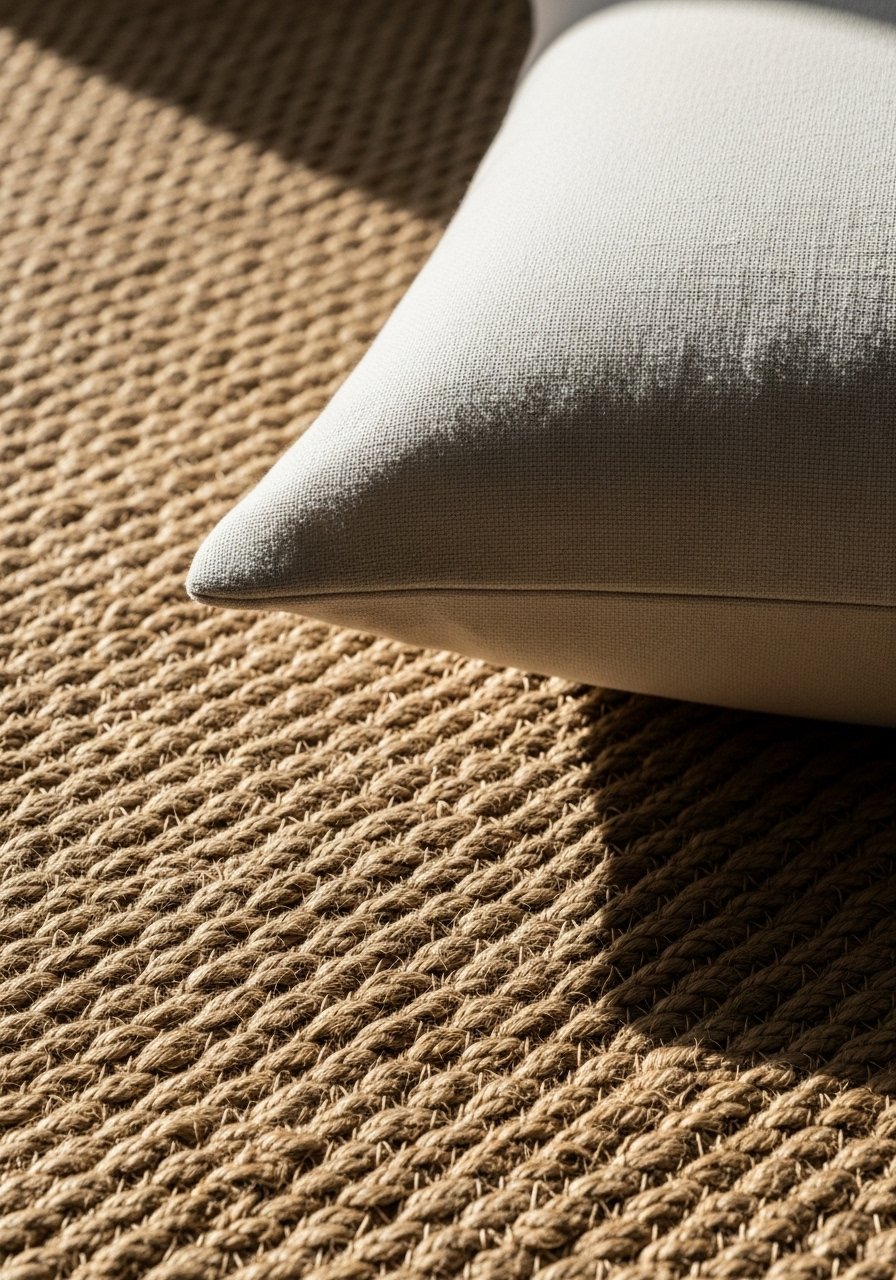
Textiles bring depth in a soft palette more than color does. Use a mix of linen, cotton, and one nubby texture like boucle or a chunky knit. Pillow sizes should vary. I use a pair of 20x20s, one 12×20 lumbar, and a 22×22 for a casual, layered look. Throws at 50×60 are perfect for draping.
A mistake I made early on was using only thin cottons. The room stayed visually flat. Adding a heavy knit throw made the sofa invite you to sit. Remember to limit patterns to two scales so the space stays calm, not busy.
Step 4: Create a calm focal point with art and accessories
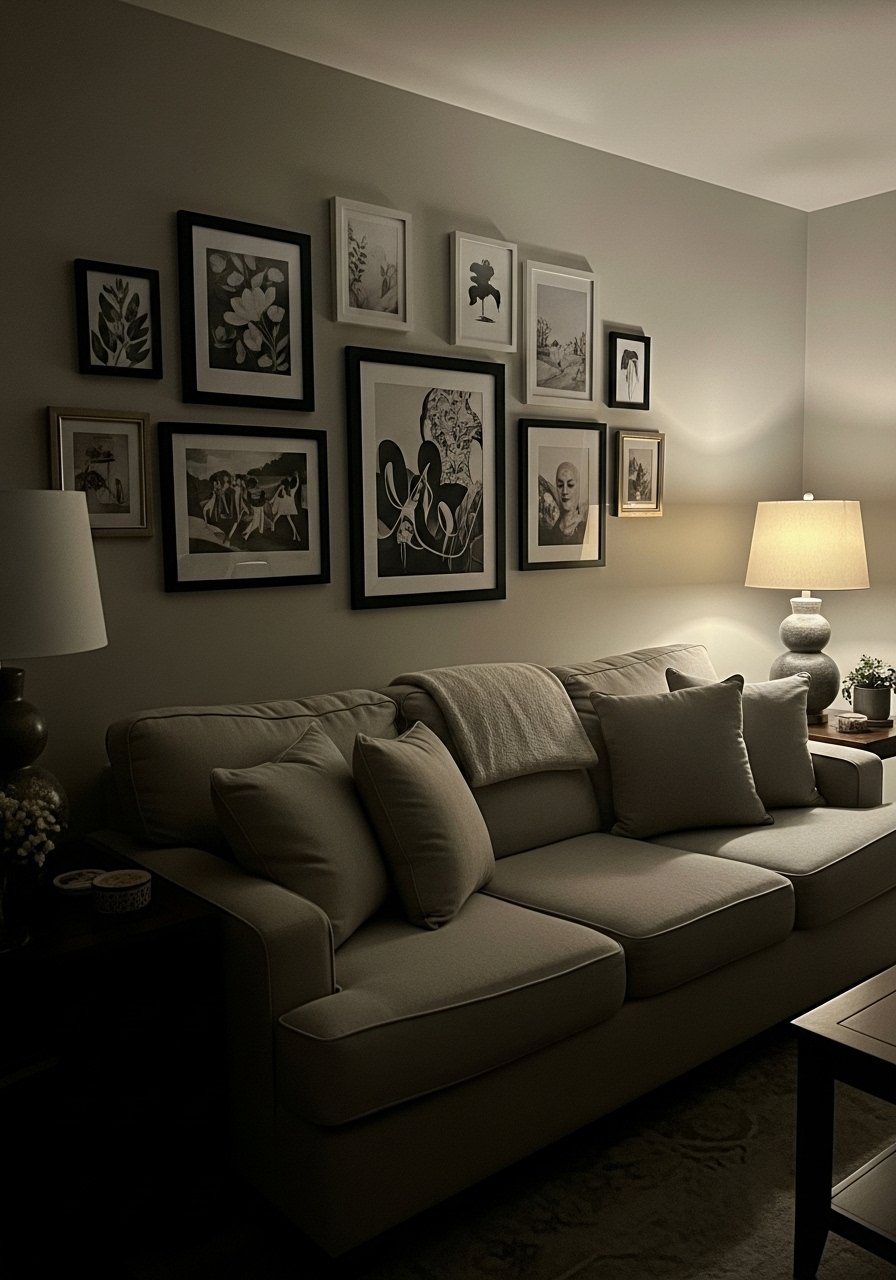
Most people start with small accessories. Start with the big piece instead. Pick a single art piece or mirror that sets the tone and place it slightly off center above the sofa. Build a vignette on a side table or console with three objects at different heights. Aim for odd numbers, and let the tallest piece be roughly two thirds of the vertical space above the surface.
I once filled a console with too many small items and it read cluttered. Reducing to three pieces, including a matte ceramic vase, gave the room a calm center. Ceramic feels cool and solid in your hands, brass will warm slightly if you touch it in sunlight.
Step 5: Edit, live with it, then tweak after a week
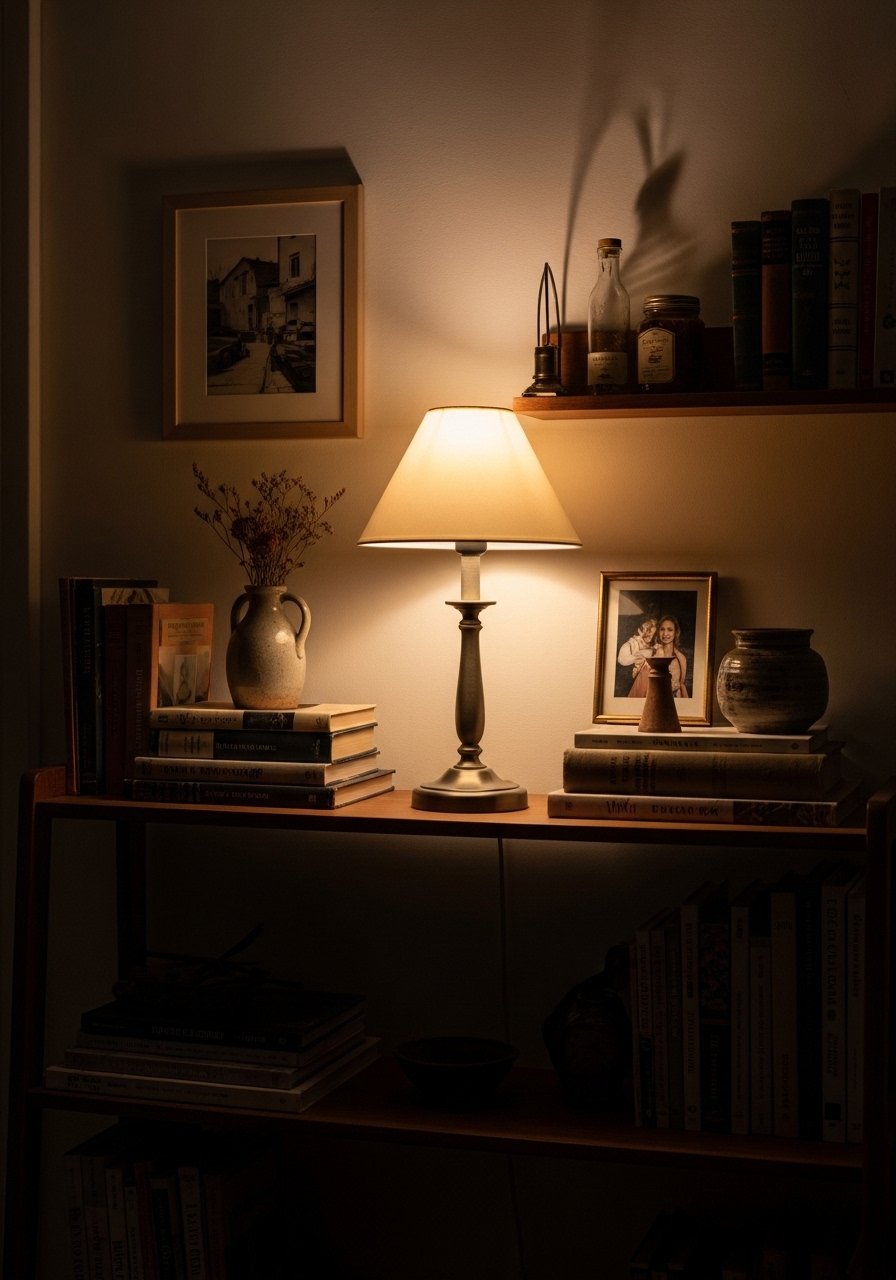
This part feels wrong while you are doing it. Leave empty space. Step back, sit with a cup of tea, and walk away for ten minutes. Then come back and remove one more thing. Live with the arrangement for about a week before changing it. Small shifts after real use are where the room finally starts to click.
I almost skipped this step and kept rearranging. The second week, I only added one small pillow and it made the whole setup feel intentional. The room should feel calm to the hand and eye, not precious.
What to Grab for a Soft-Colored Room
- Chunky knit throw in oatmeal, 50×60 ($40-65). I keep one on the arm of every sofa I own, used in Step 3.
- Linen pillow cover in sage, 20×20 ($12-22). The cool, slightly crisp texture anchors pillows in Step 3.
- Boucle pillow, 18×18 ($20-35). Adds that nubby touch mentioned in Steps 3 and 5.
- Jute area rug, 8×10 ($90-160). Use this as the anchoring texture from Step 2. Softer wool options available at HomeGoods.
- Ceramic vase set, matte white ($25-40). For the tall piece in Step 4.
- Brass picture ledges, 24-inch ($18-30). Helps with an adjustable focal point from Step 4.
- Linen curtain panels, 52×84, natural ($35-70). Softens windows and boosts the 60 percent layer in Step 1.
Why Your Room Still Feels Flat After Styling
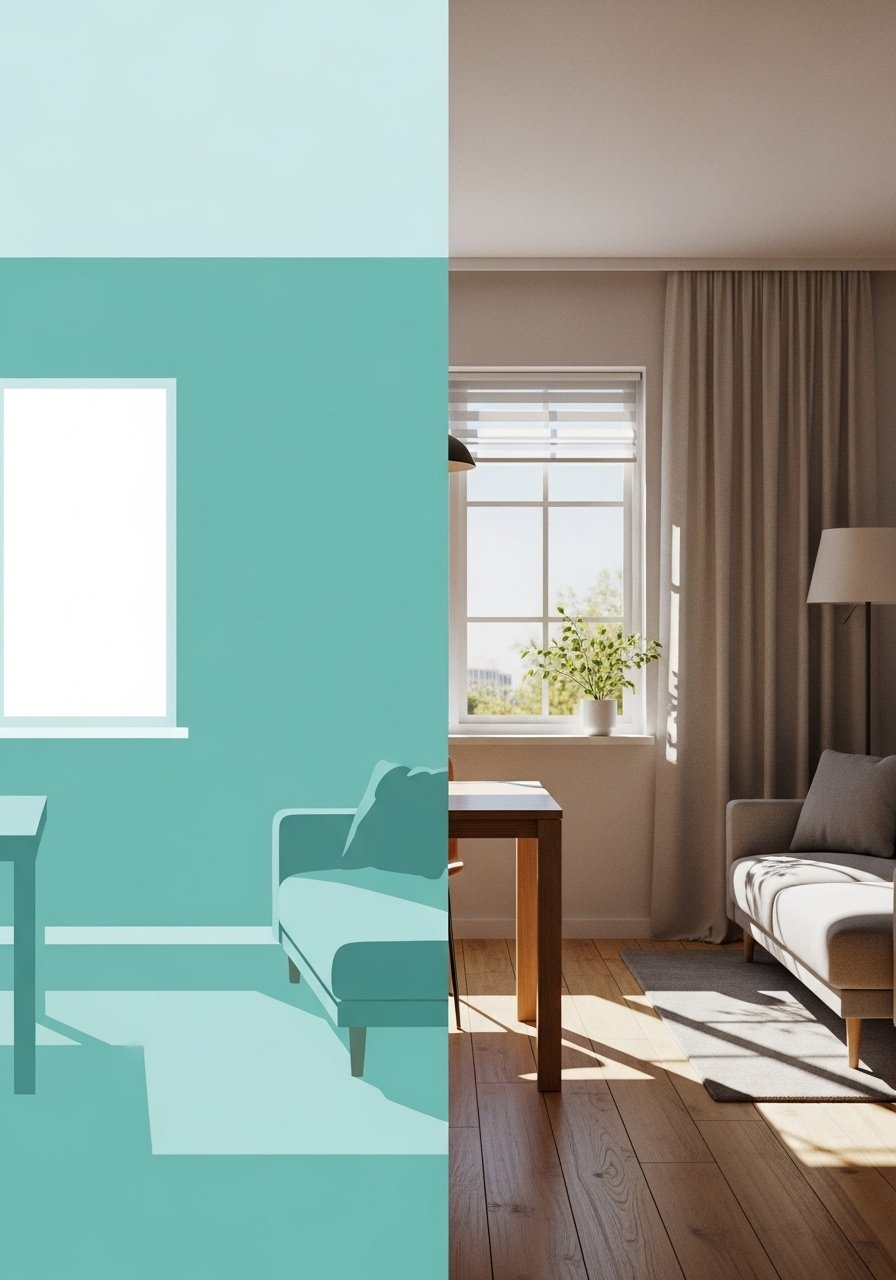
If the room still feels flat, check these three things. First, did you commit to a dominant color at about 60 percent. Half measures make everything whisper. Second, is your rug anchoring the furniture or leaving pieces floating. Small rugs often break visual flow. Third, did you add tactile contrast. Smooth linen plus a nubby pillow will read deeper than more of the same fabric.
I learned the importance of texture the hard way. My third try was the one that finally stopped feeling staged.
Making This Work in a Small Room
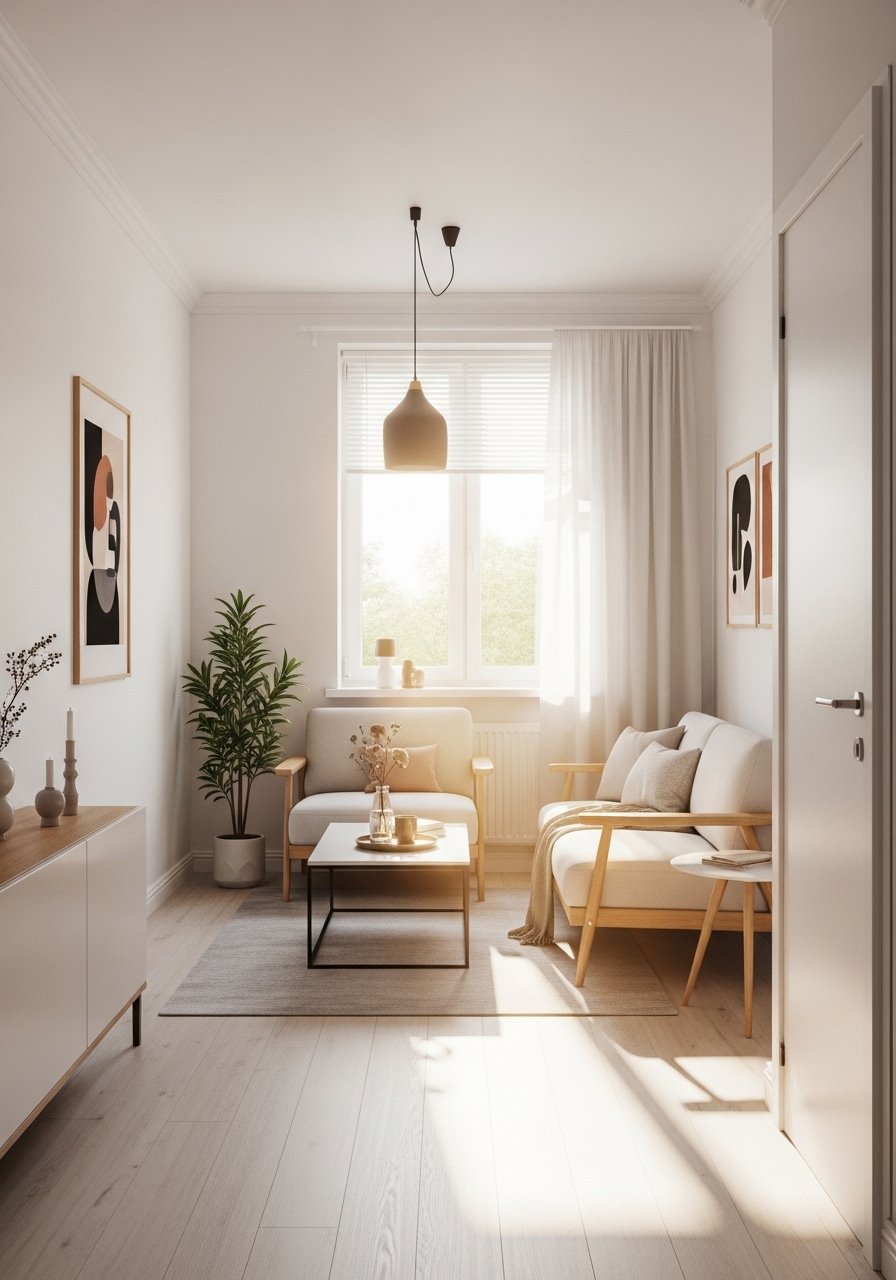
Small rooms need the same principles but tighter. Use the 60/30/10 split across surfaces, not square footage. For example, paint three walls the dominant soft color and leave one wall as the secondary or add a smaller area rug that still reaches the sofa legs. Keep one large-scale item, like a 6×9 rug, to avoid visual chopping.
Practical tips:
- Choose lighter textiles with texture so warmth does not equal weight.
- Hang curtains high and wide to make the window feel larger.
- Skip overcrowding shelves. Two to three items per shelf keeps it calm.
What This Looks Like After a Week with Kids and a Dog
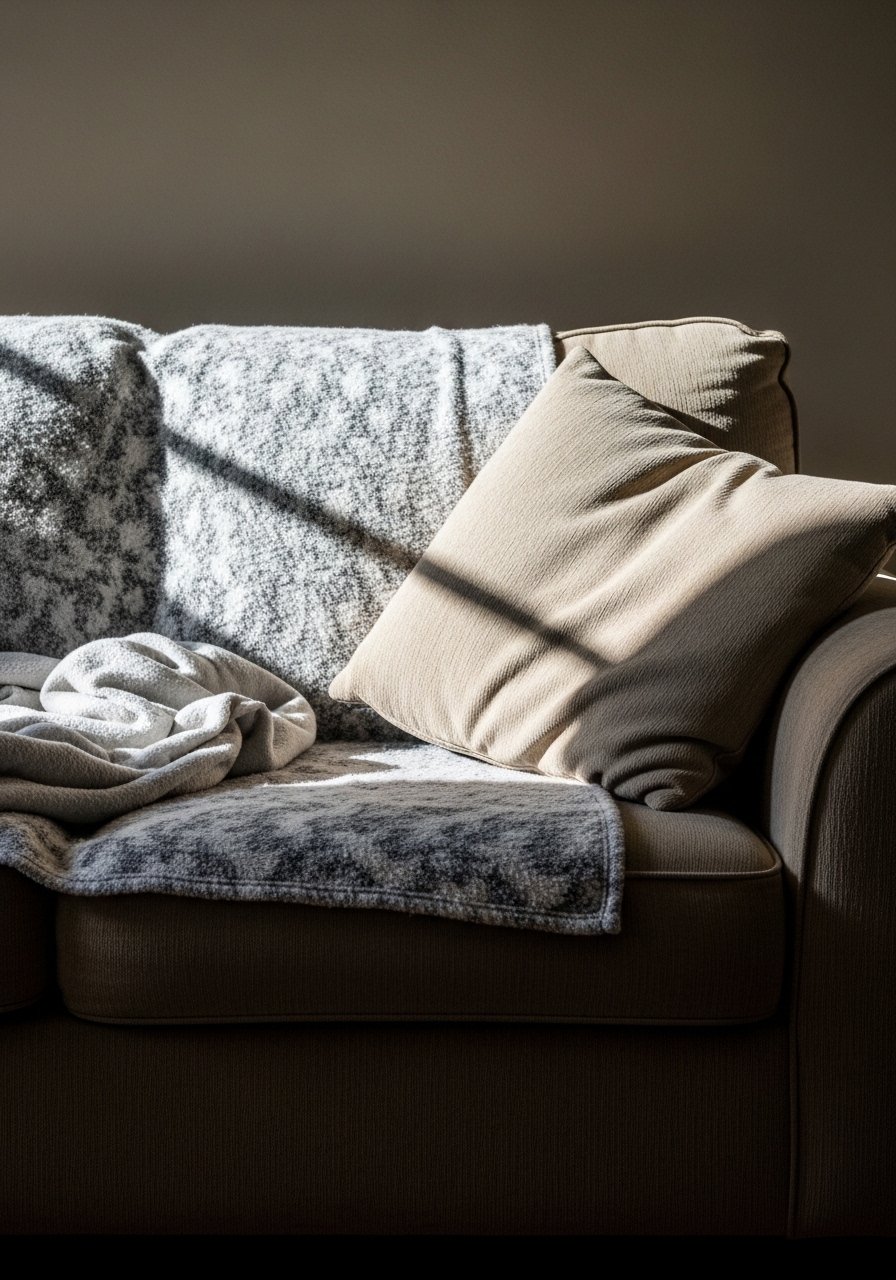
A styled room needs to survive real life. After a week with a dog and a toddler, I expect one pillow on the floor and a throw bunched up. That is fine. Keep one washable pillow cover and a durable throw in the palette, and place delicate items on higher surfaces or on the console that is out of reach. I use an extra chunky knit throw in oatmeal, 50×60 specifically so the living room still reads intentional after everyday use.
If a shelf keeps getting knocked, move the vase to a higher ledge and swap in a heavier ceramic bowl that can stand up to daily life.
Start with One Corner
Pick the smallest corner of your room and apply the method there. Choose your 60 percent item, anchor with a rug or chair, layer textiles, and add one art piece and three accessories. Live with it for a week, then repeat for the next corner. Starting small makes decisions easier and keeps soft colors from fading into background noise. My first corner is where I still make most of my tweaks, and it has become the quiet proof that the approach works.