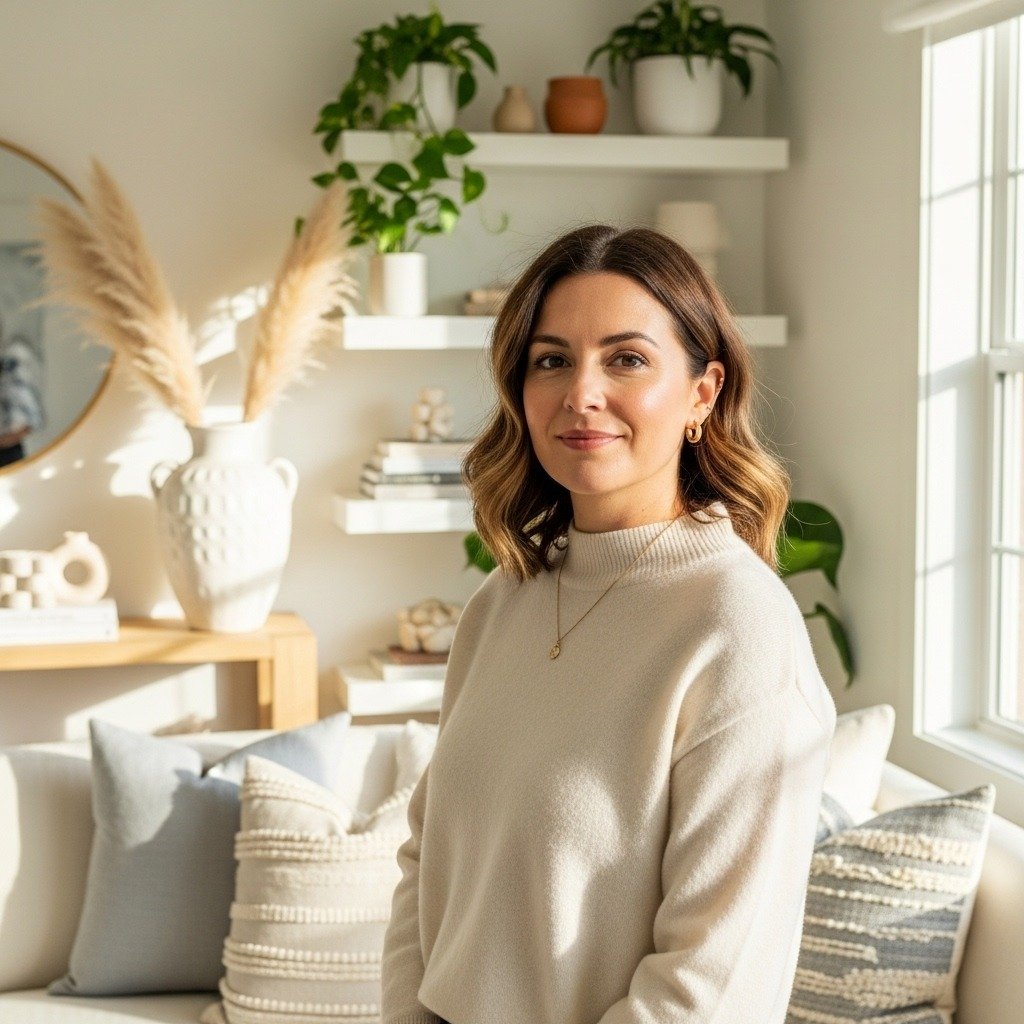
I kept arranging things until my arms ached, yet the room still felt off. I had a big print over the sofa that looked too small, two different lamps that fought each other, and shelves that read messy even when every object had a place. I finally realized the problem was not the pieces. It was how I placed them around a center.
I tried matching everything exactly and then tried full asymmetry. Both failed at first. What worked was a measured approach: pick an anchor, mirror the weight on either side, and give the eye small differences so the symmetry feels calm, not forced.
Step 1: Find the center and set your anchor
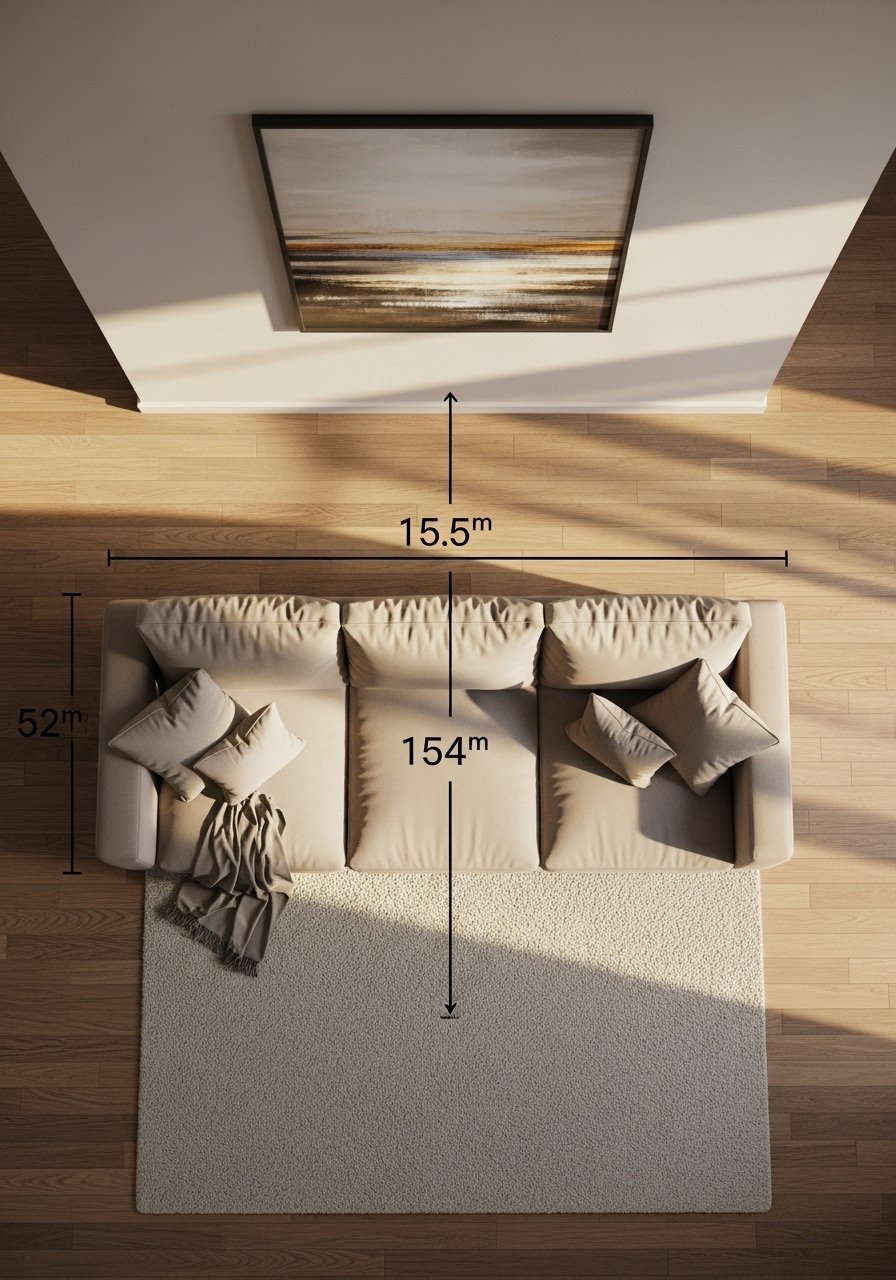
Start by choosing the anchor for the room. For a sofa wall that is usually a large artwork. Hang the artwork so its center sits about 58 to 60 inches from the floor. If the art is above a sofa, aim for the piece to be 60 to 75 percent of the sofa width. That little math prevents tiny art from floating and oversized art from crushing the space.
Common mistake: hanging art too high. Another mistake: using a piece far narrower than the furniture below. Visually the center creates everything else, so measure, mark, step back, then adjust. I hung my first piece three inches too high and it ruined the whole rhythm until I moved it.
Step 2: Mirror mass, not exact objects
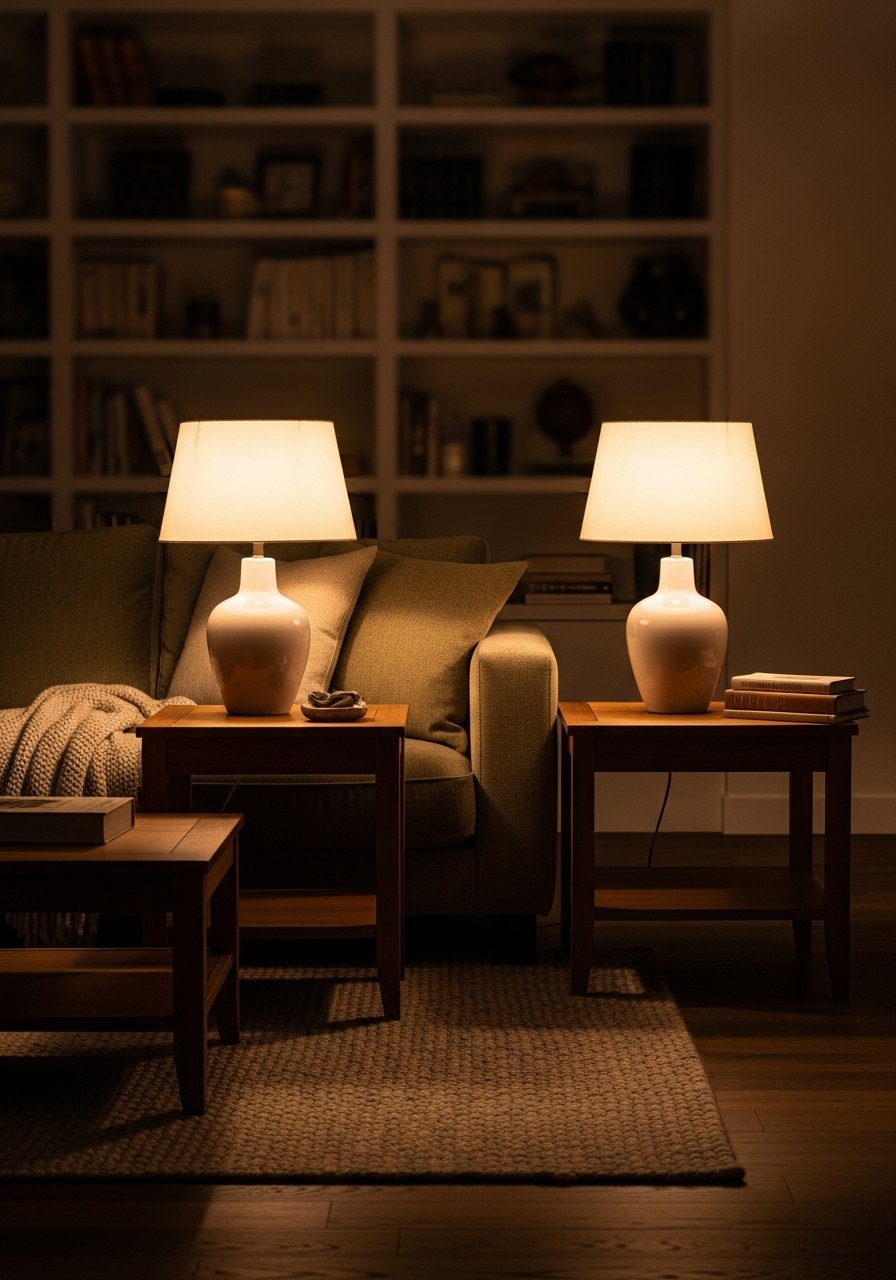
Most people try to copy items exactly and miss the opportunity to vary texture. Pair matching lamps or tables on either side of the anchor so the visual weight balances. Use equal heights, but mix materials. For example, a cool metal lamp on one side and a ceramic lamp on the other still reads balanced if both are about 26 inches tall.
Leave about 6 to 12 inches between the lamp bases and the edge of the artwork. I learned this the hard way when my first setup looked like a hotel foyer. It was symmetrical, but flat. Adding a woven basket or a plant on one side fixed the stiffness while keeping the overall balance.
Step 3: Style bookcases and shelving as mirrored pairs
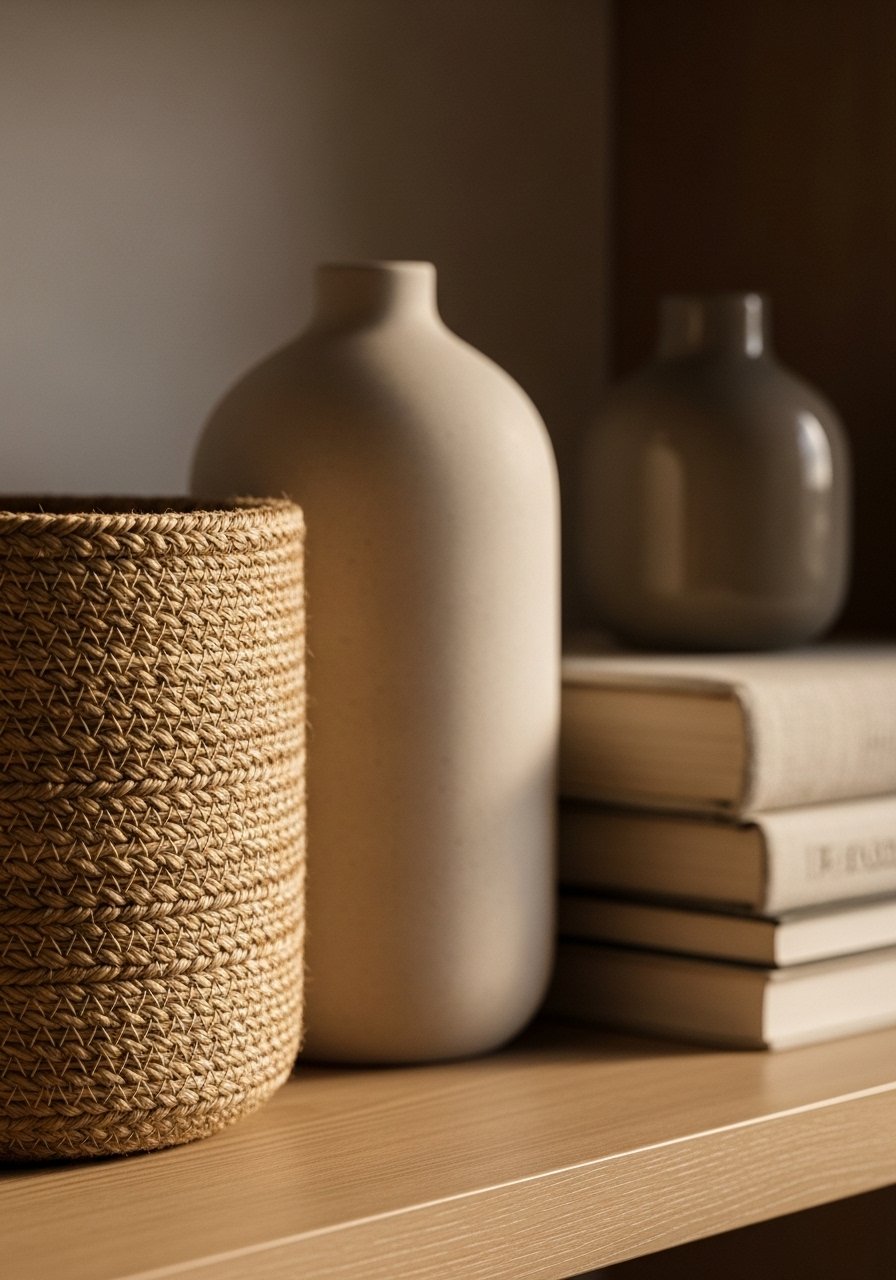
If you have bookcases on either side of a focal point, style them as mirrored compositions rather than identical clones. Keep groupings similar in overall mass. For instance, a tall vase on the left should be balanced by a stack of books plus a medium object on the right. Leave 2 to 3 inches between objects so the shelf breathes. A useful rule I use is to keep one third of each shelf intentionally empty, which stops things from feeling crowded.
Common mistake: filling every inch. I used to shove small items into gaps until the shelves read chaotic. When I edited down, the symmetry read intentional and calm. For tall accents, I use this ceramic vase set, matte white referenced in the shopping list.
Step 4: Use textiles to reinforce symmetry while keeping it soft
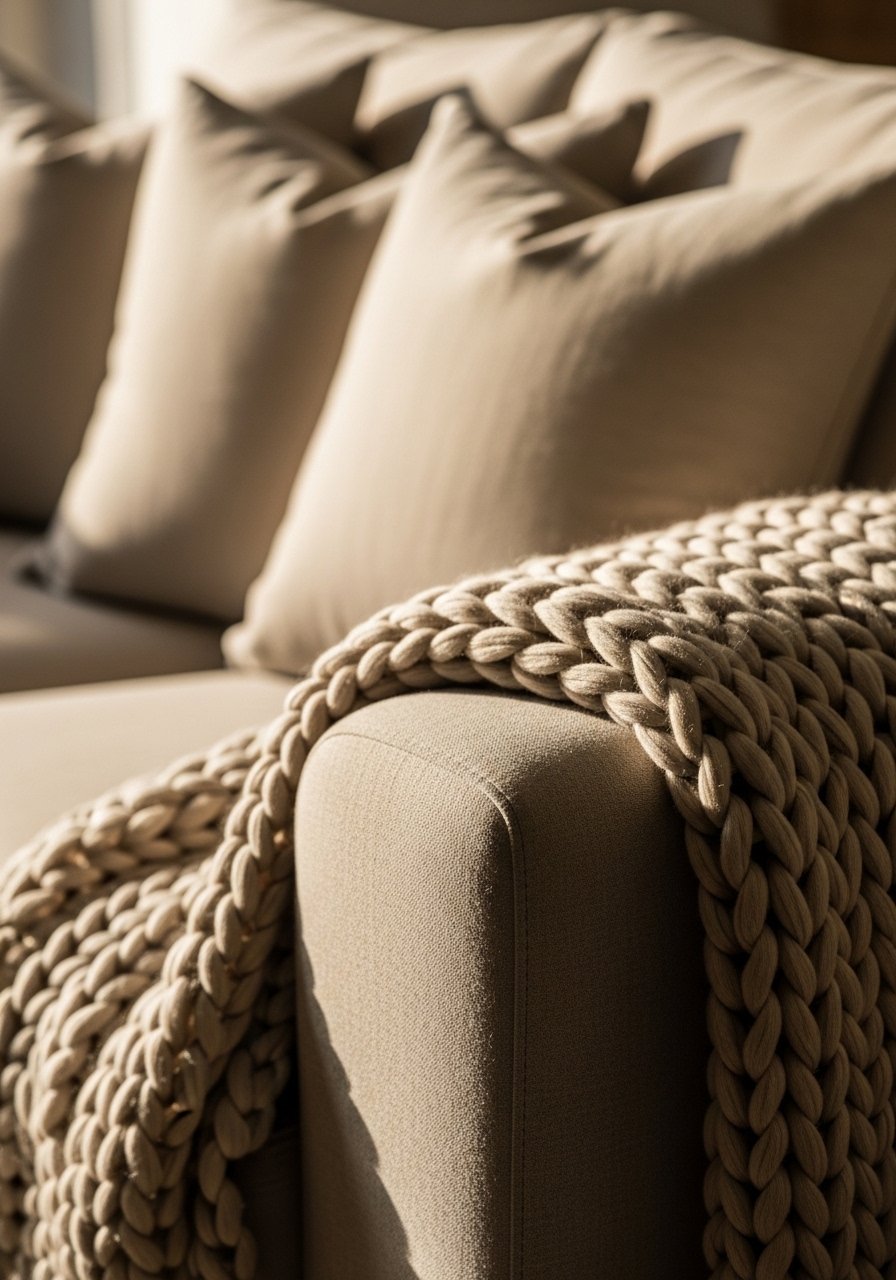
Textiles are the easiest way to pair without being rigid. Put matching pillows on each end of the sofa, but fold a throw differently on one arm so the setup reads lived-in. For scale, use two 20×20 pillows per side and a long lumbar in the center when the sofa is wide. A chunky knit throw feels heavy and comforting, whereas a thin cotton throw lays flatter and reads more casual.
Personal failure: I once matched pillows so perfectly the room looked staged. I left them that way for a week and it felt wrong. After moving the throw and loosening one cushion, the room relaxed while still feeling balanced. If you have pets, skip a low open shelf the first month.
Step 5: Live with it, then edit once
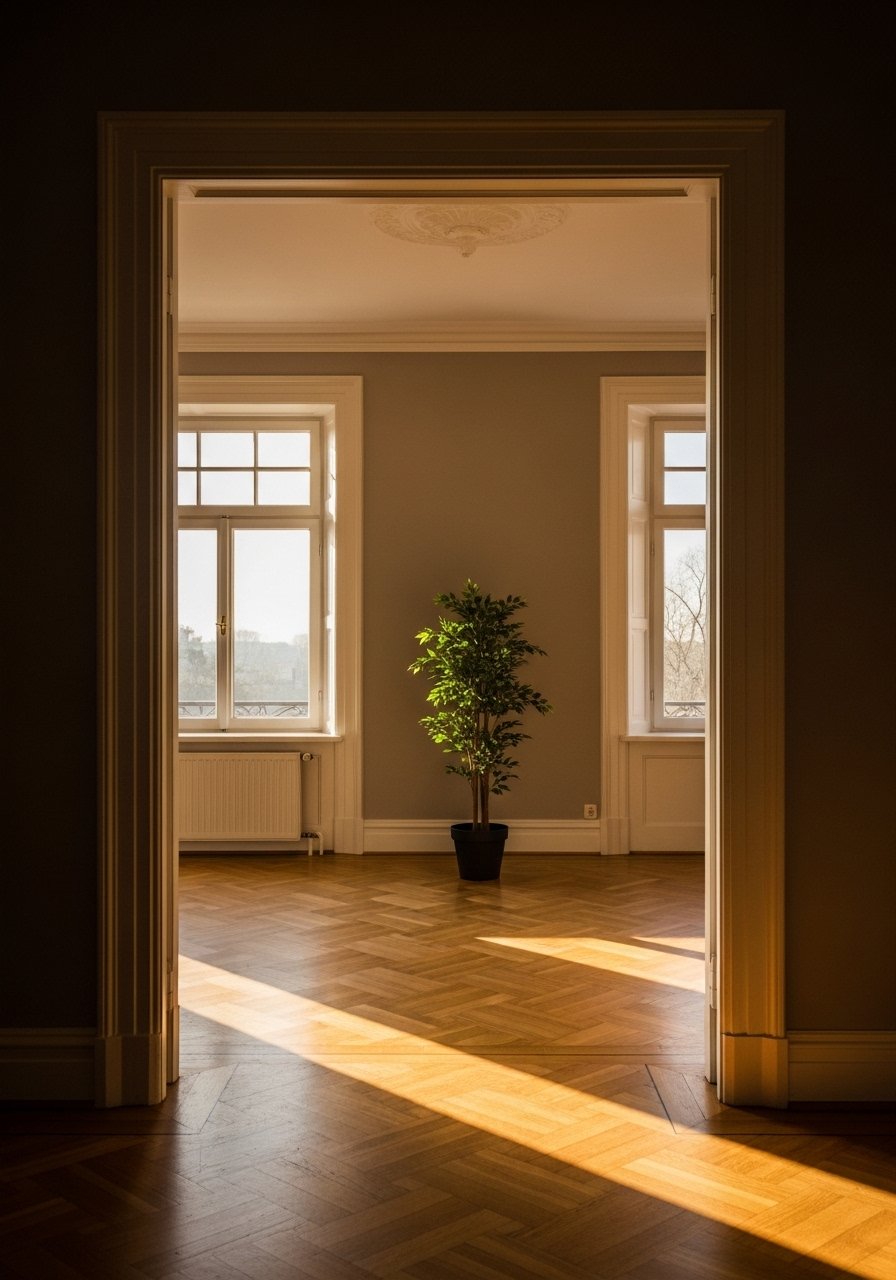
Symmetry works best when you test it in real life. Use the room for a week before declaring it done. Walk in from different angles and at different times of day. Notice whether the lamps cast harsh light or create warm pools. If one side looks heavier, swap a taller object or add a tray to ground the weight.
Mistake to avoid: constant tweaking while standing in the room. Step away, get a drink, and return. I moved a plant three times before it finally felt right. After a week, small asymmetry like a single stack of magazines or a slightly askew frame will make the scheme feel human instead of staged.
What to Grab for a Symmetrical Living Room

- Chunky knit throw in oatmeal, 50×60 ($40-65). I keep one on the arm of every sofa. Used in Step 4.
- Linen pillow covers, set of 4, 20×20, natural ($25-45). Neutral texture that layers well in Step 4.
- Pair of table lamps, 26-inch, brass base with linen shade ($60-120). For Step 2 balancing.
- Ceramic vase set, matte white, set of 3 ($25-40). For Step 3 shelf height and texture.
- Brass picture ledges, 24-inch ($18-30). Helpful when you want symmetry without drilling many holes. Use in Step 1 and Step 3.
- Jute area rug, 8×10 ($90-160). Grounds the whole arrangement in every step.
- Tall faux fiddle leaf tree, 6-foot, in woven basket ($50-120). A living texture for gentle asymmetry mentioned in Step 5.
- Ceramic bookends, heavy, matte finish ($20-35). Useful for mirrored shelving in Step 3.
Why Symmetry Can Still Read Cold
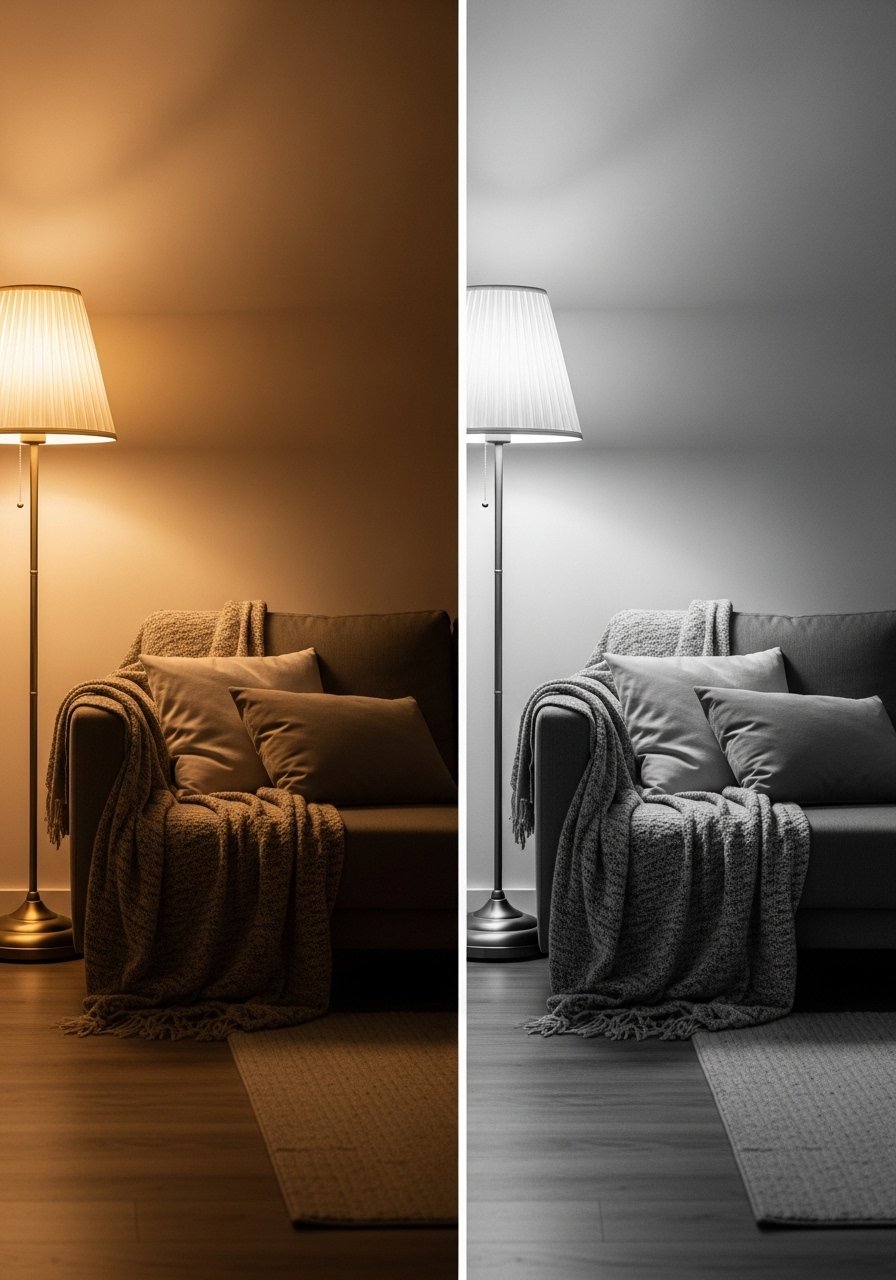
People often mistake matching for warmth. Exact copies of everything can feel clinical. The fix is texture and light. If both sides have the same mass, vary materials so the eye has something tactile to rest on. Swap one smooth ceramic piece for a woven basket, or change one lamp shade to a slightly warmer tone.
Also check the light. Warm bulbs, around 2700K, soften metal fixtures and make matched pieces feel inviting. I learned that switching bulbs made my balanced setup feel like a living room instead of a showroom.
Making Symmetry Work in a Small Room
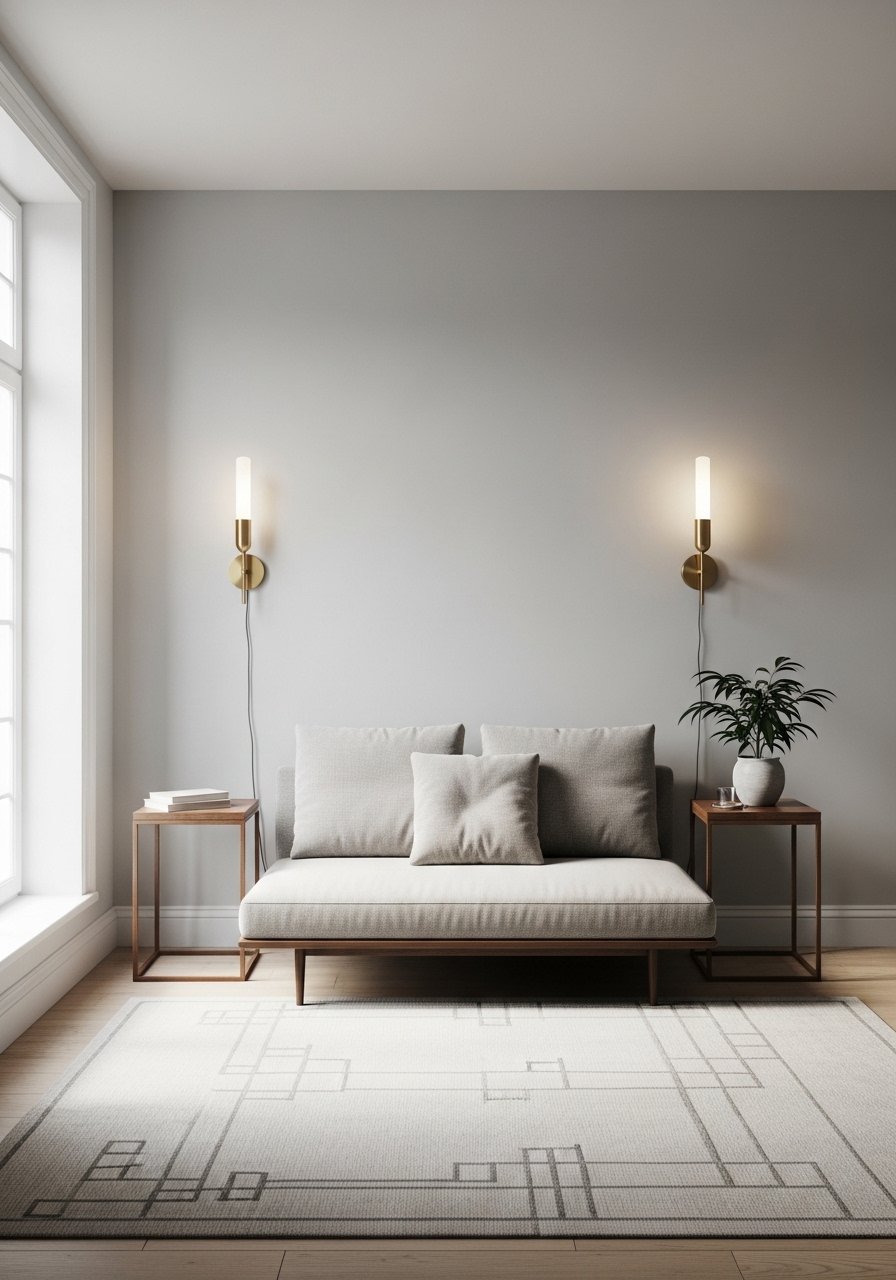
Small rooms need the same rules but smaller scale. Choose art that is 60 to 75 percent of the furniture width and use slim side tables rather than chunky ones. Use mirrors to reflect light and double the perceived space, placing them centered over narrow consoles with 6 to 10 inches of margin on each side.
Quick checklist:
- Use lower profile furniture to keep sight lines open.
- Pair narrow lamps or wall sconces instead of table lamps.
- Keep negative space around objects so the layout does not appear overcrowded.
What This Looks Like After a Week with Kids and a Dog
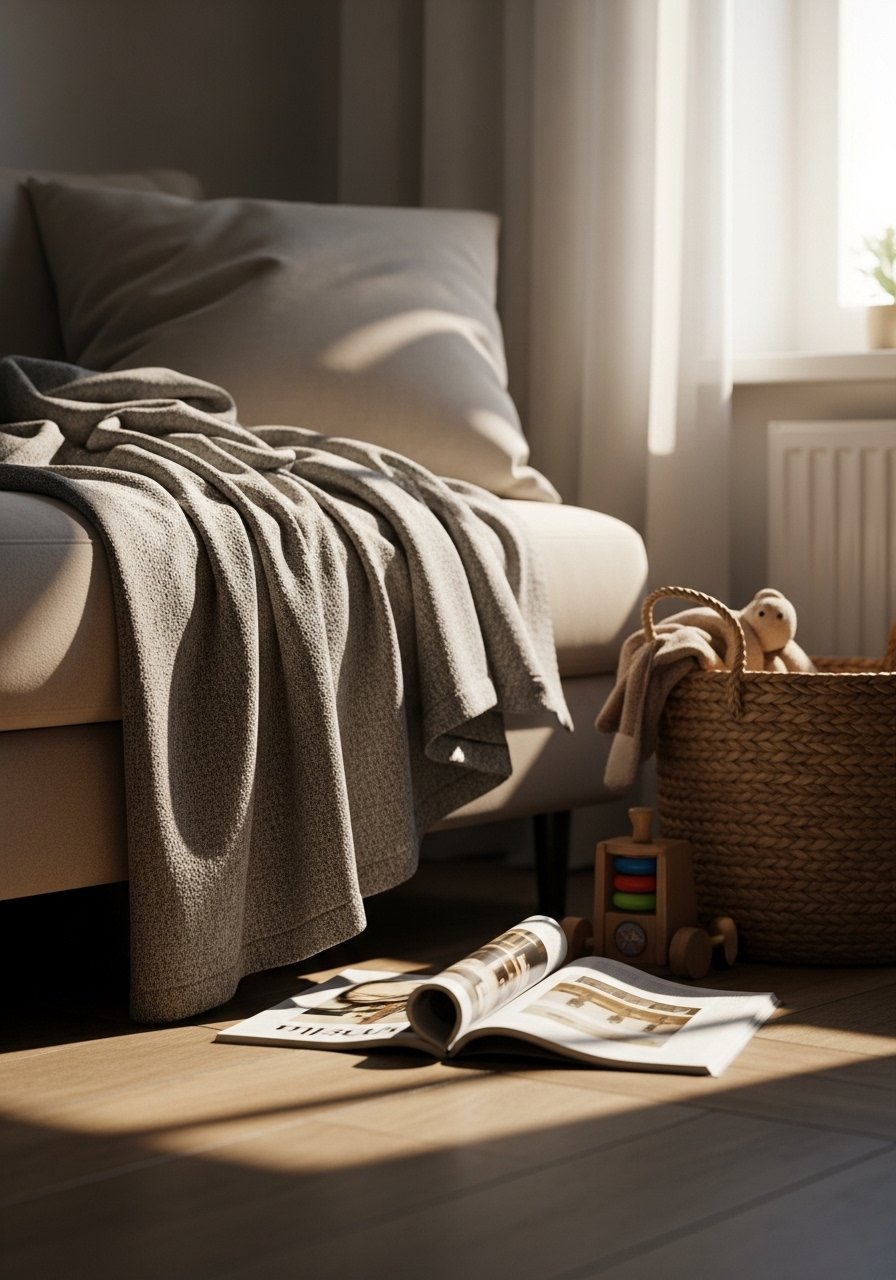
Symmetry survives life when you edit for durability. I tested this by living in the room for a week with a dog and a kid. The throw got hair, a magazine went askew, and the plant lost a leaf. I replaced delicate objects on the lower shelves with baskets and heavier bookends, which stopped the constant re-styling.
If you have pets, choose washable textiles and avoid fragile items on lower shelves. A small asymmetry, like a stack of well-read books on one side, protects the overall balance and keeps the room usable.
Start with One Pair
Pick a single mirrored element to begin, like a pair of lamps or two matching pillows, and see how it anchors the room. Edit the rest around that pair. Measure your anchor carefully, then add matching weight opposite it while varying texture so the space feels intentional and lived-in.
If you want a tiny test, add the chunky knit throw in oatmeal, 50×60 to one arm, fold it differently on the other, and live with that for a week. You will notice what needs to move and what can stay.