
I stared at my living room one evening and realized everything felt lukewarm, literally and visually. I had beige walls, beige sofa, beige rug. Swapping pillows did nothing. I tried buying more patterned cushions and heavier curtains. It looked busier, not warmer. It took a long time to see the real problem, which was balance and material contrast, not more stuff.
Once I tuned the palette toward true warm tones and added texture, the room settled down. The method below is what finally worked after three awkward attempts and one version I hid behind a plant for a week.
Step 1: Pick one dominant warm tone and build a 60/30/10 palette around it
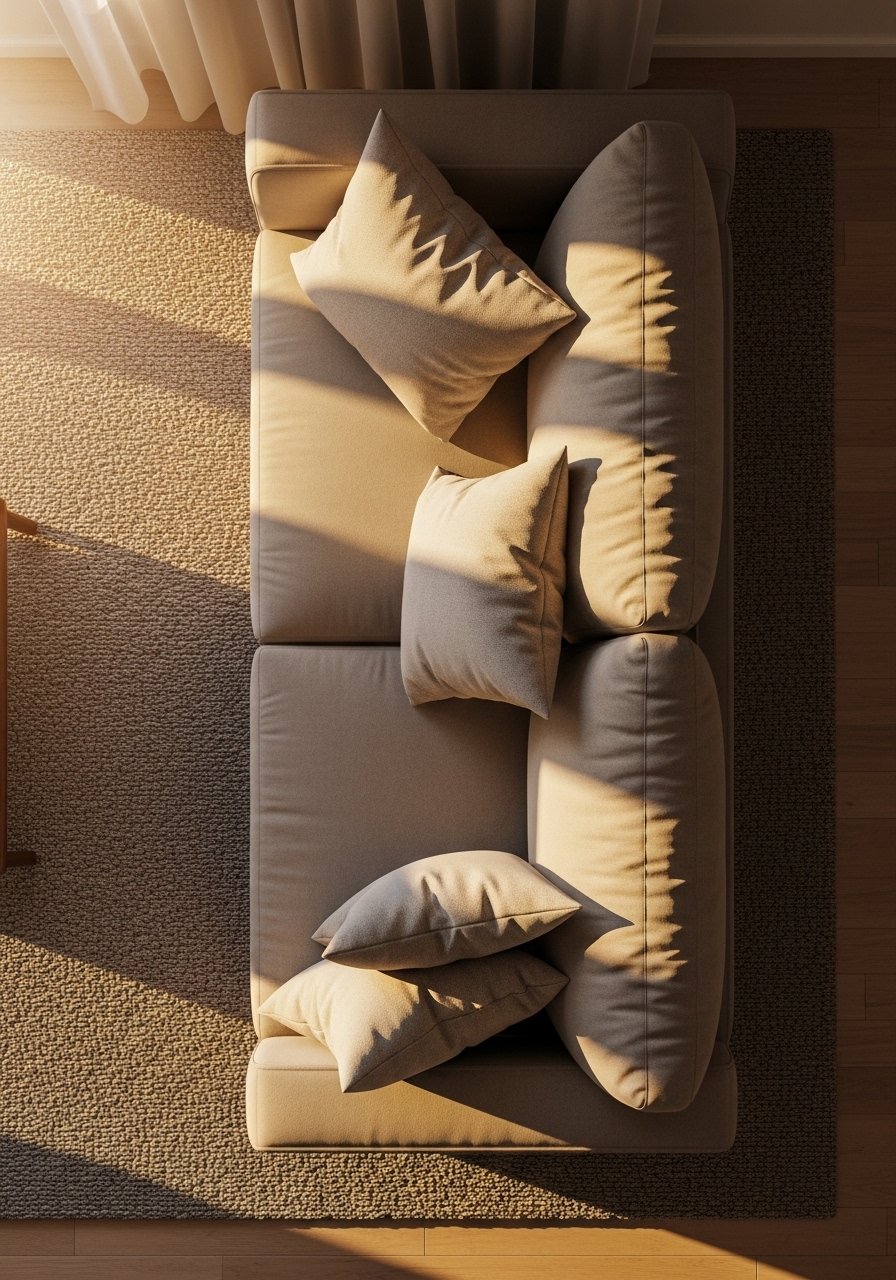
Start by choosing a dominant warm color, like terracotta, mustard, or caramel. Use the 60/30/10 rule: 60 percent neutral base, 30 percent main warm tone, 10 percent accent. I painted one wall a soft clay and kept the rest neutral. Visually, the room went from flat to anchored. The 60/30/10 split keeps warmth present but prevents it from feeling heavy.
Common mistake: matching everything in the same shade. Mix warm woods, a wool rug, and a linen throw to create contrast. Textures matter more than exact color. The clay wall feels warm to the eye, while a nubby wool pillow feels soft and grabs light differently.
Step 2: Anchor with a natural-fiber rug sized to fit the furniture
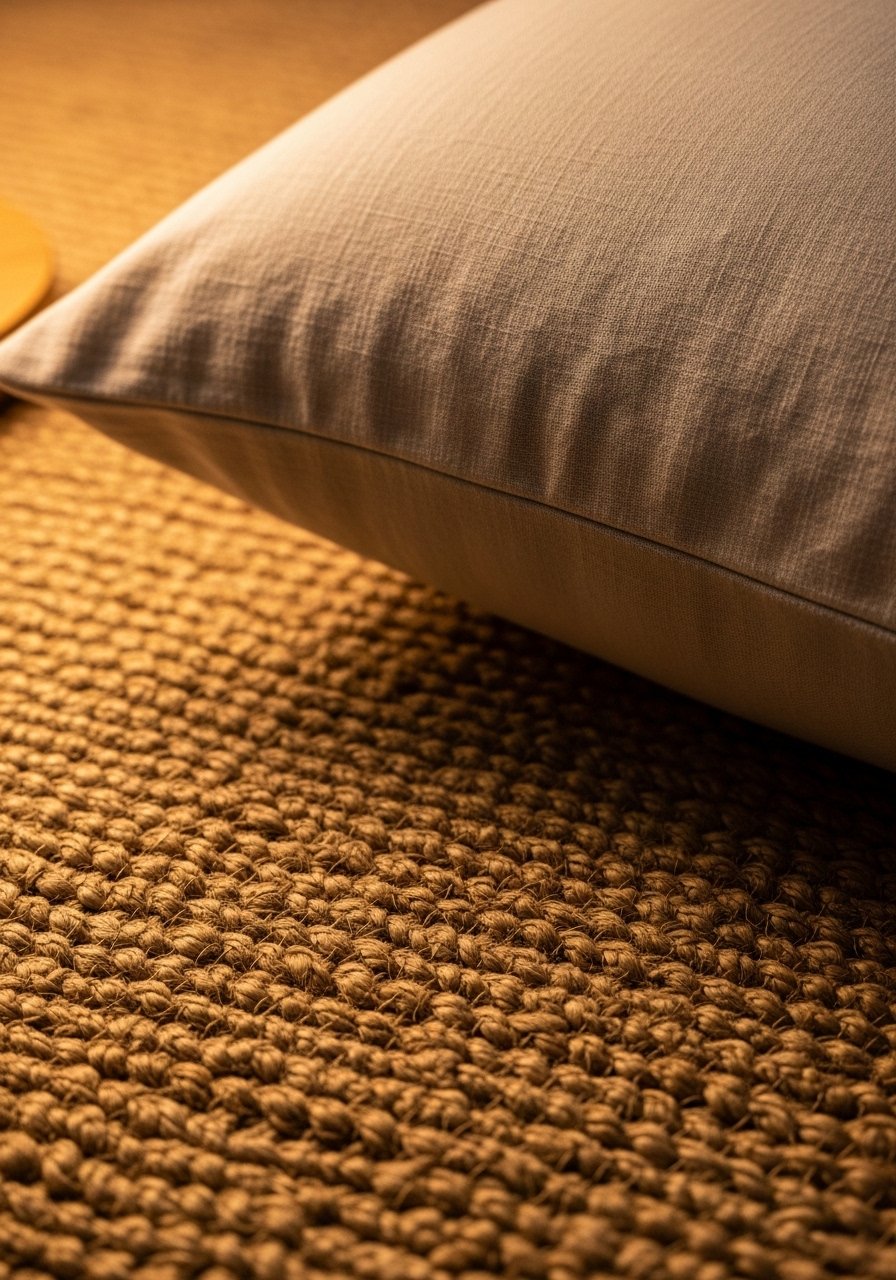
Choose a jute or sisal rug large enough so at least the front legs of seating sit on it. For a standard living area, that usually means an 8×10 or 6×9 depending on sofa placement. A too-small rug makes the room feel disjointed. The jute adds an earthy scent when you first unroll it and a rough, grounding texture under bare feet.
I once used a rug that left six inches of floor showing around the sofa. It looked like a stage prop. Fixing that was a small purchase that made the whole arrangement feel intentional and anchored.
Step 3: Layer three textures and three heights on every vignette
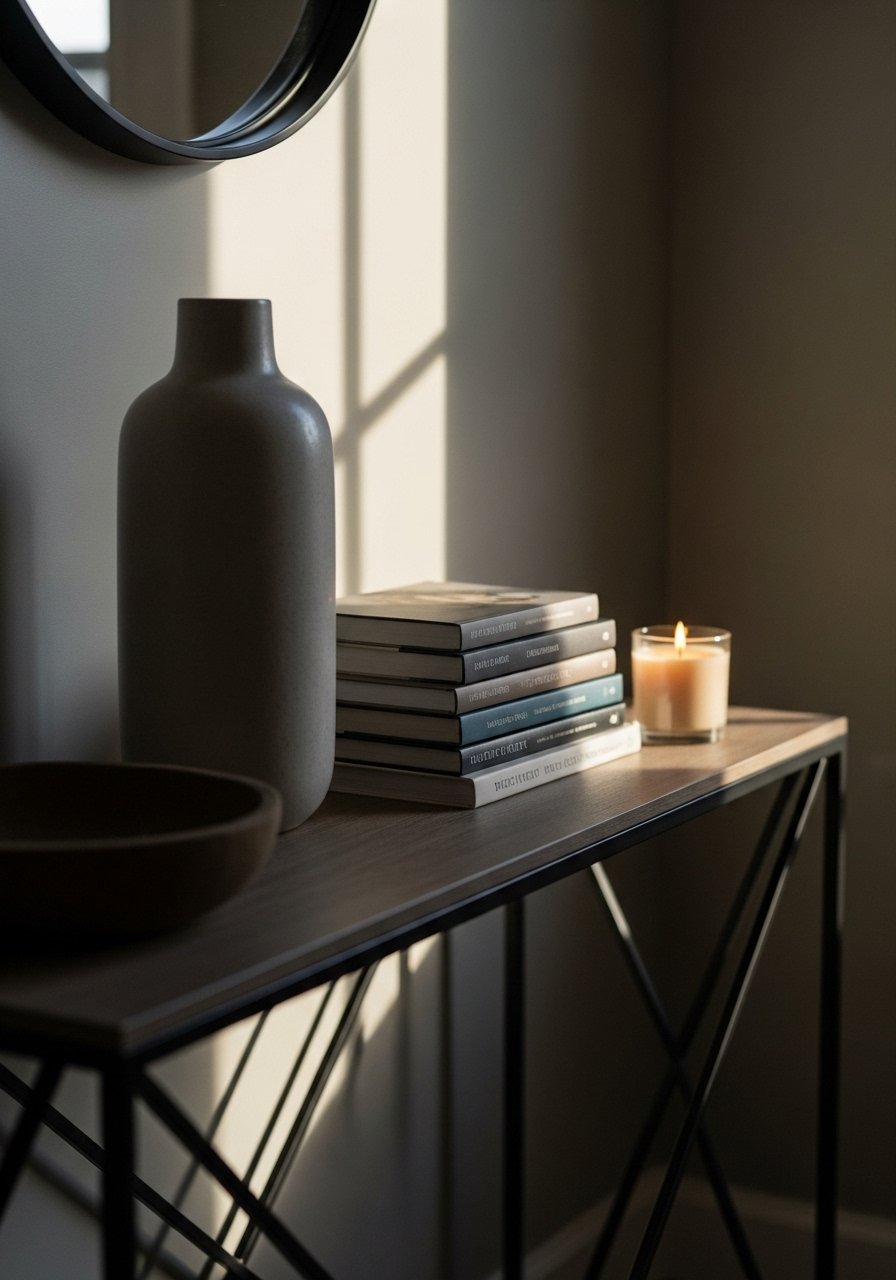
Every surface needs a tactile trio: one soft, one hard, one woven. For height, think tall, medium, short. On my console I used a tall matte ceramic vase at 14 inches, a medium stack of two books, and a short brass candle bowl. Visually, it reads as deliberate. Keep 2 to 4 inches between objects so the arrangement breathes.
A typical mistake is cramming items flush together because you think more equals better. Step back after placing three pieces. Empty space is part of the styling. The arrangement should feel light in your hands when you pick it up, not heavy.
Step 4: Use metal and wood to temper warmth and add visual weight
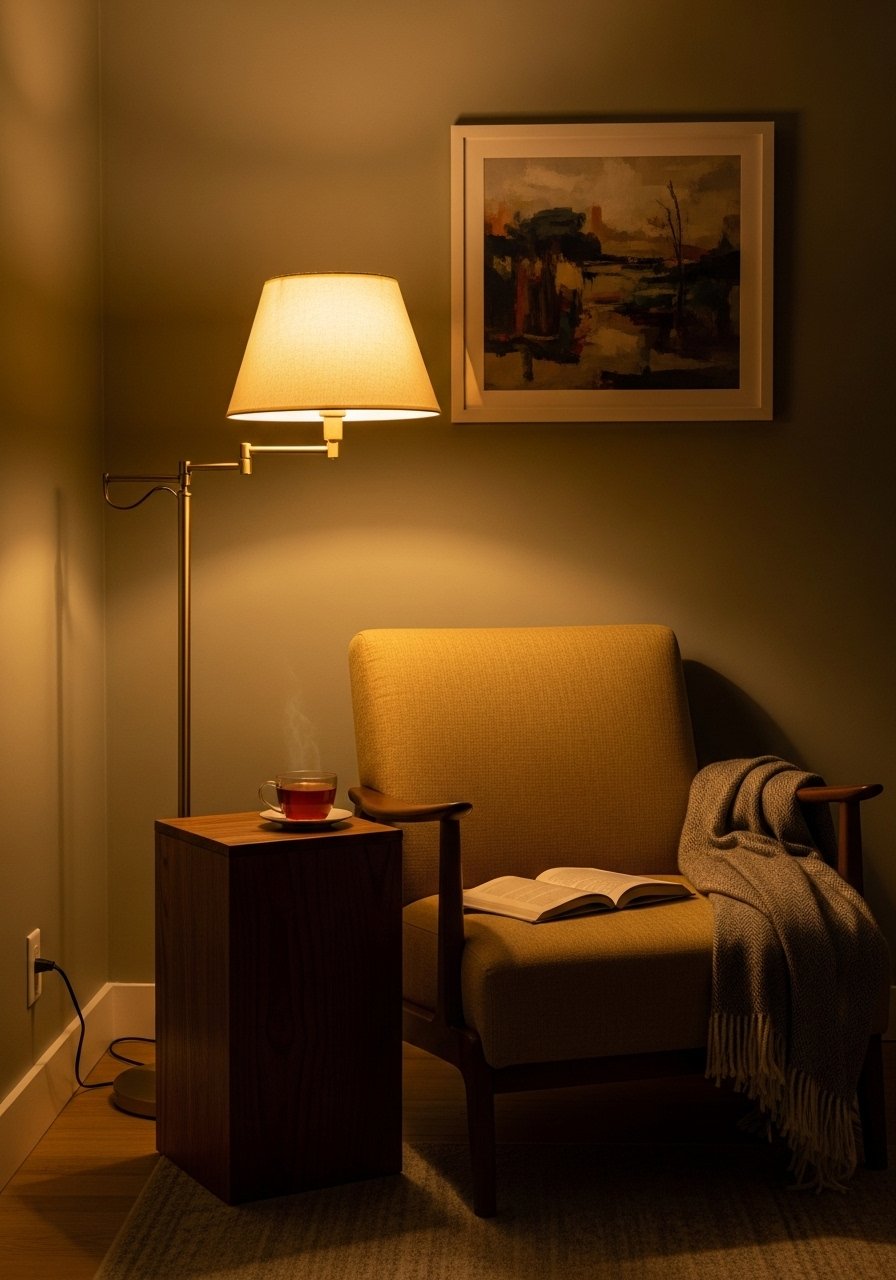
Warm rooms can tip into being too sweet. Add a brass lamp or walnut side table to ground the palette. Metals catch light, giving a small flash that keeps the eye moving. A brass lamp base feels cool and solid when you pick it up, which contrasts nicely with a chunky knit throw that feels heavy and cozy draped over the arm.
My partner hated the asymmetrical lamp placement at first. He was wrong. The offset metal anchor stopped the seating area from floating. If you want less flash, pick aged brass or oil-rubbed finishes.
Step 5: Edit with living reality in mind and commit to wear
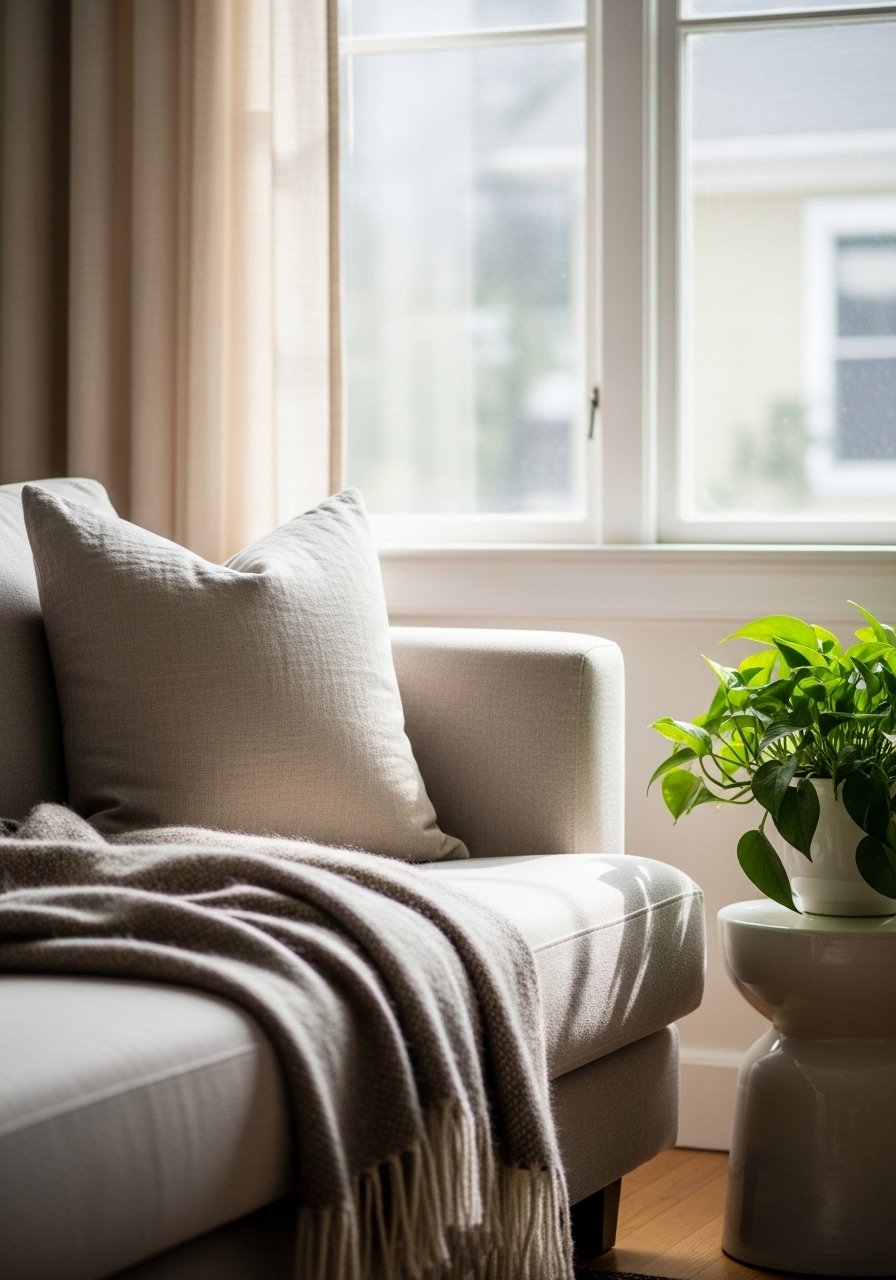
Style for how the room will be used. If you have kids or pets, choose washable linen pillow covers and a durable rug. I kept a boucle pillow for photos and swapped it for a tighter-weave cushion after my cat used it as a scratching post. Live with the layout for a week before adding more. That waiting period showed me one side table was unnecessary.
A small win comes when you can sit down and the room still feels comfortable after a meal and some movement. At that point you know the balance is real, not staged.
What to Grab for a Warm-Toned Room Refresh
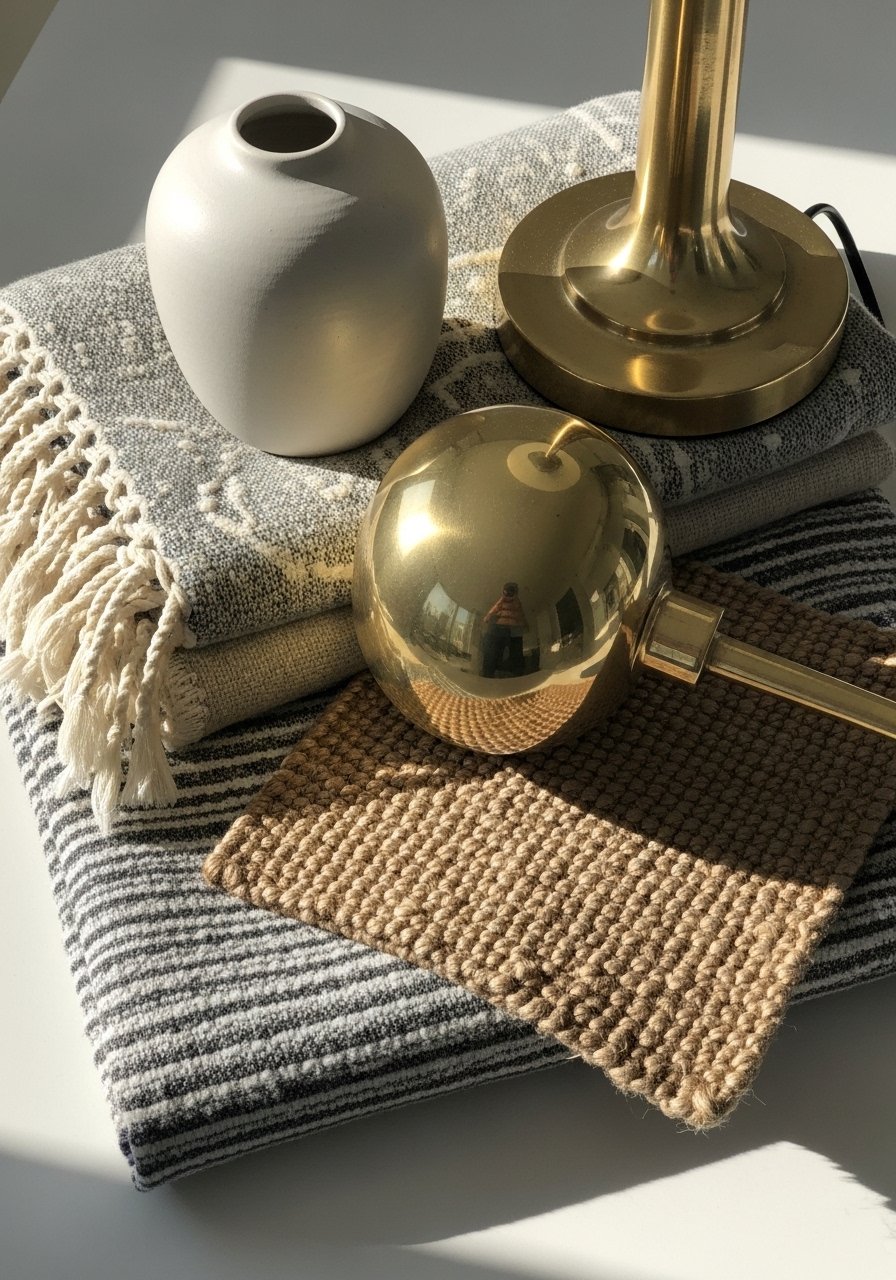
- Chunky knit throw in oatmeal, 50×60 ($40-65). I keep one on the arm of every sofa I own. Used in Steps 3 and 5.
- Linen sofa pillow covers, set of 2, mustard ($20-35). Swap covers seasonally. Used in Steps 1 and 5.
- Jute area rug, 8×10 ($90-160). Neutral with texture. Referenced in Step 2.
- Matte ceramic vase set, 3 pieces, terracotta white ($25-40). For tall-medium-short groupings in Step 3.
- Brass floor lamp, 63-inch adjustable ($80-140). Adds warm metal highlight in Step 4.
- Walnut side table, 18-inch round ($60-120). Anchors seating group, Step 4 use.
- Washer-friendly linen duvet cover in clay, queen ($70-110). For bedrooms using same palette. Cross-referenced in Step 1.
- Ceramic tealight holders, set of 2, antique brass finish ($12-20). Small accent for Step 3.
- Wool lumbar pillow, 14×20, saddle brown ($30-55). Adds durable texture mentioned in Steps 3 and 5.
Why Warm Rooms Still Look Flat
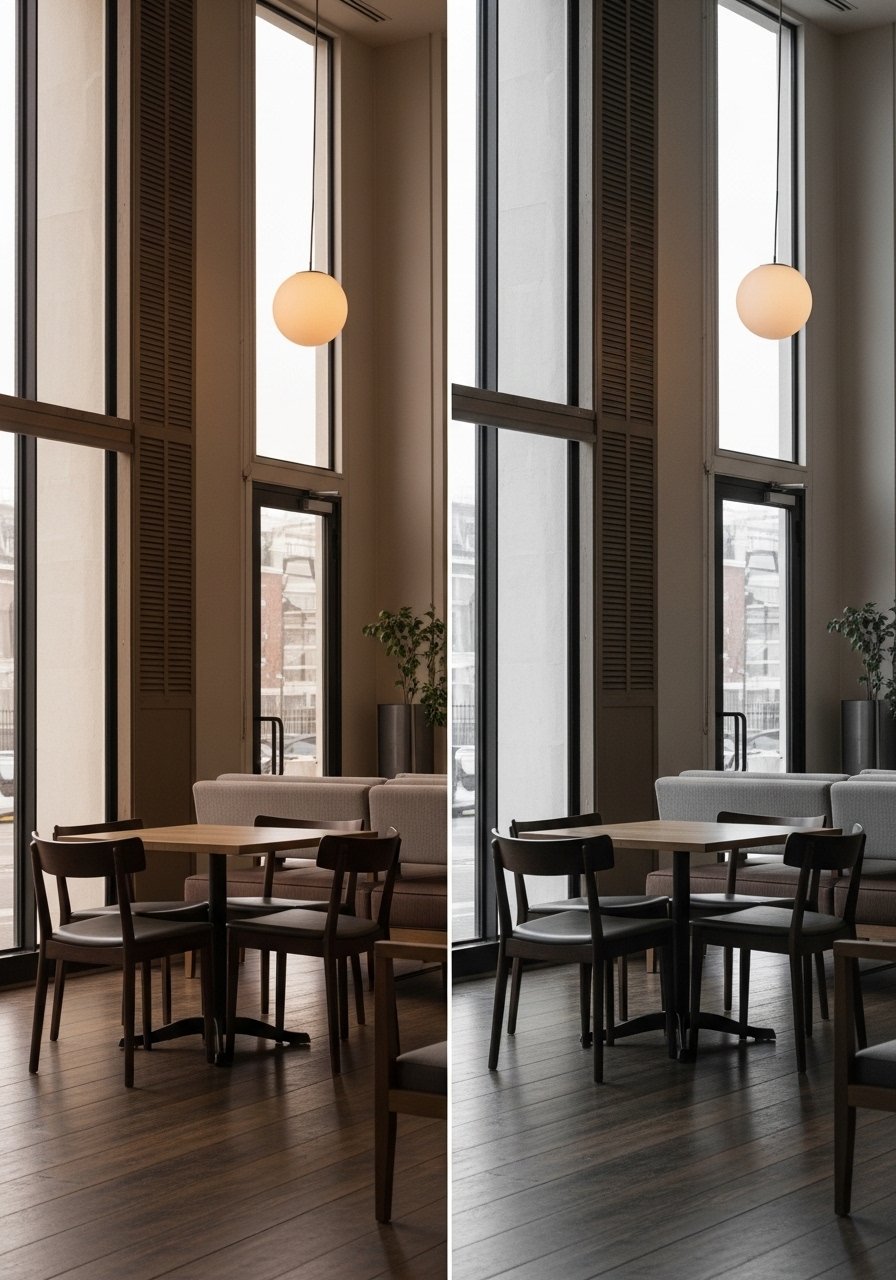
Flat warm rooms usually miss contrast, not color. Common errors are using only one material, choosing the same tonal value across every surface, or placing everything at the same height. Fix this by adding one cool fiber, like a gray wool throw, and one reflective surface, like a brass lamp. Small shifts of 2 to 4 inches in spacing make a surprising difference in perceived depth.
I tried matching wood tones once and ended up with a monotone box. Pulling in a darker walnut piece brought the whole scheme alive.
Making Warm Tones Work in a Small Room
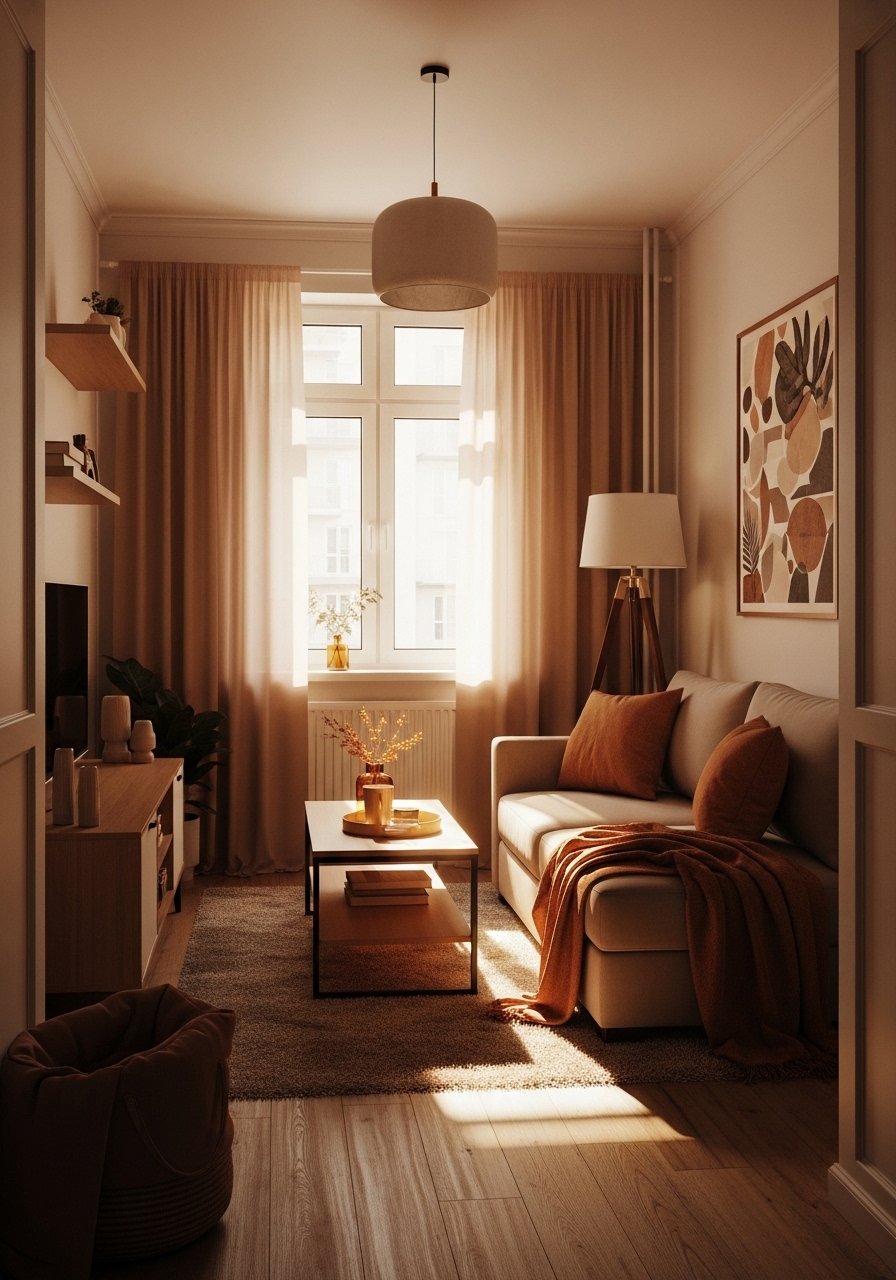
Small rooms need a lighter touch. Keep 60 percent of the space neutral, ideally through walls and larger furniture. Use a 30 percent warm tone on a single focal item, like an armchair or pillow group. Choose a rug that leaves 6 to 12 inches of floor visible around the edges. Use mirrors or a slim brass lamp to reflect light rather than adding more saturated color.
If you rent, peel-and-stick clay wallpaper on one panel gives the same effect as paint with less commitment.
What This Looks Like After a Week with Real Life
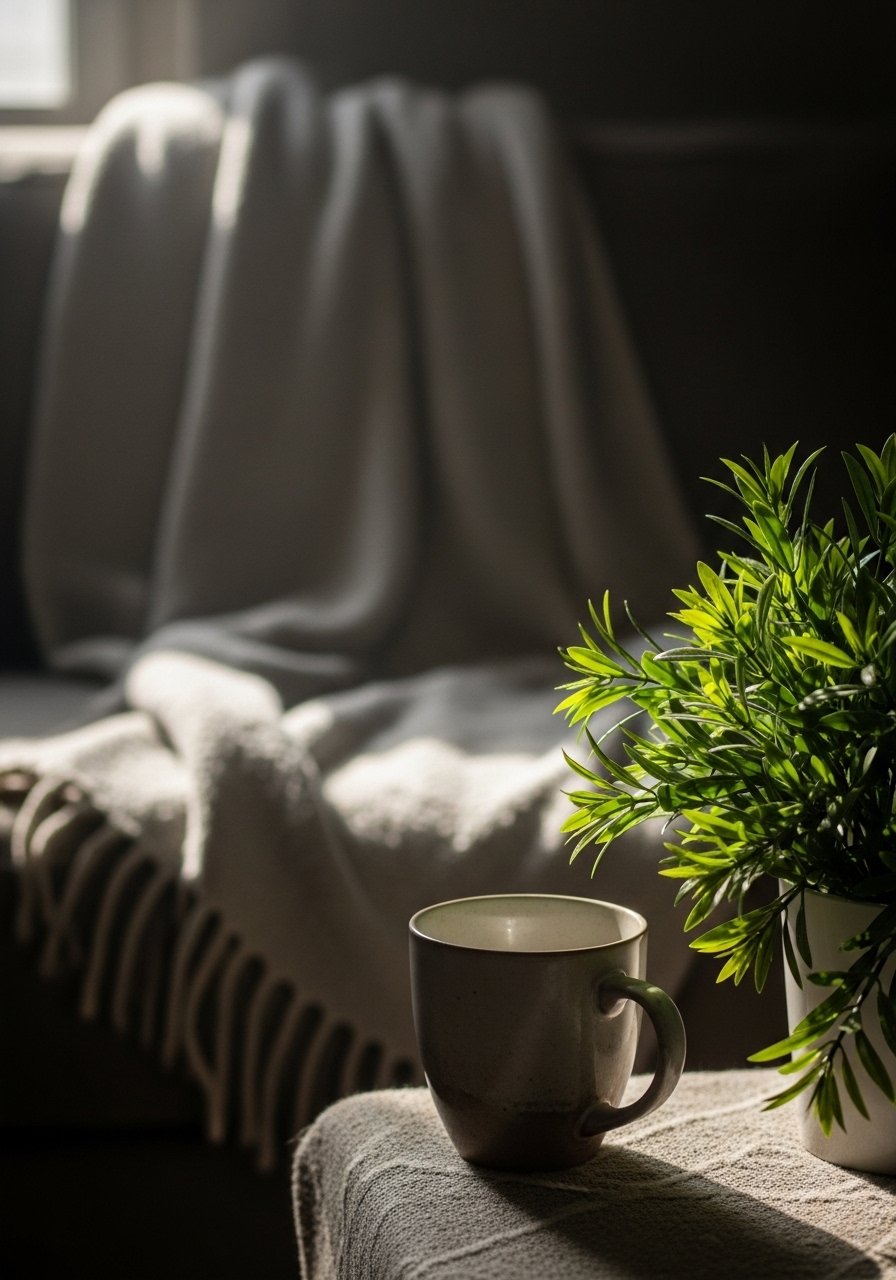
Expect small imperfections. A throw gets kicked off, a pillow slides, a candle leaves a ring. That is fine. The room still reads warm when layers and contrasts are in place. If a particular piece keeps getting moved, either secure it or move it to a less used spot. After one week, my favorite measure is whether the room still invites you to sit without thinking about fixing it.
I almost skipped living with the layout. Glad I did not.
Start with One Warm Corner
Pick one corner and apply the 60/30/10 rule, add a textured rug and a tall vase or lamp. Live with it for a week before expanding the scheme. If you want one low-commitment purchase to begin, grab the chunky knit throw in oatmeal, 50×60. After a few evenings, you will see where the next small change needs to go, and the room will feel like yours.