My living room had nice furniture but it still felt like a waiting room. Took me embarrassingly long to figure out it was missing texture and useful surfaces. I get the same feeling when a closet is full of things but still wastes space. These shelf ideas are all about fixing that, cheaply, often without tools, and making every inch work like it actually belongs to you.
These ideas lean practical with a slight modern-rustic vibe. Most projects are under $75, a few land around $100 if you want nicer wood or hardware. They work for reach-in closets, bedroom walk-ins, hallway linen closets, and pantry-style storage.
Slim Floating Shelves With Concealed Hardware for a Clean Closet Look
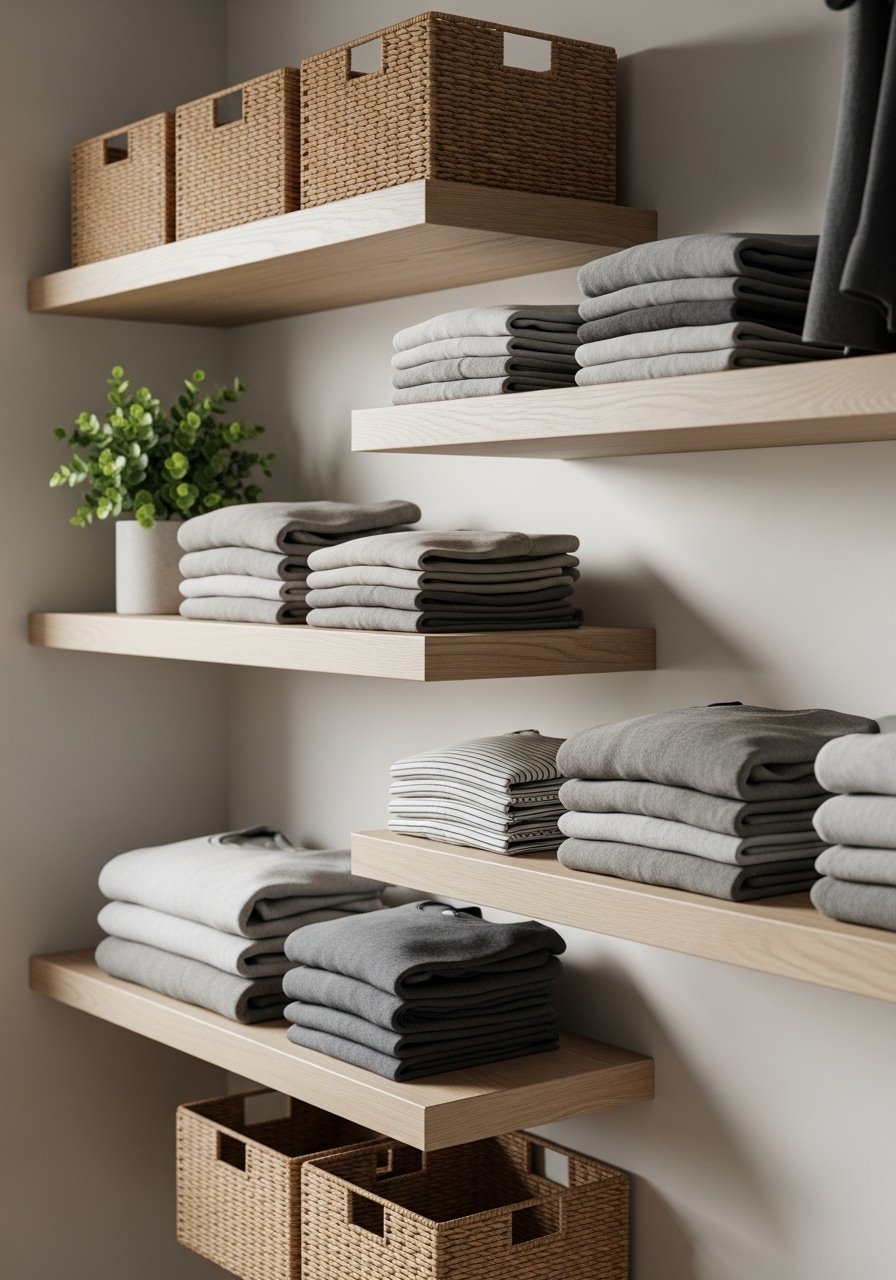
The secret is narrower shelves, 10 to 12 inches deep, that keep everything visible. They look modern and stop clothes from falling into the dark back of deep shelving. I used white oak floating shelves under $60 each and hidden brackets so nothing distracts from the neat stacks. This makes a small closet feel organized like a boutique. Common mistake is spacing shelves too far apart. For folded tees go 10-12 inches between shelves. For sweaters use 12-14 inches. Pair this with the under-shelf lighting idea later for shelf-level glow.
Adjustable Pegboard Shelving for Flexible Closet Storage
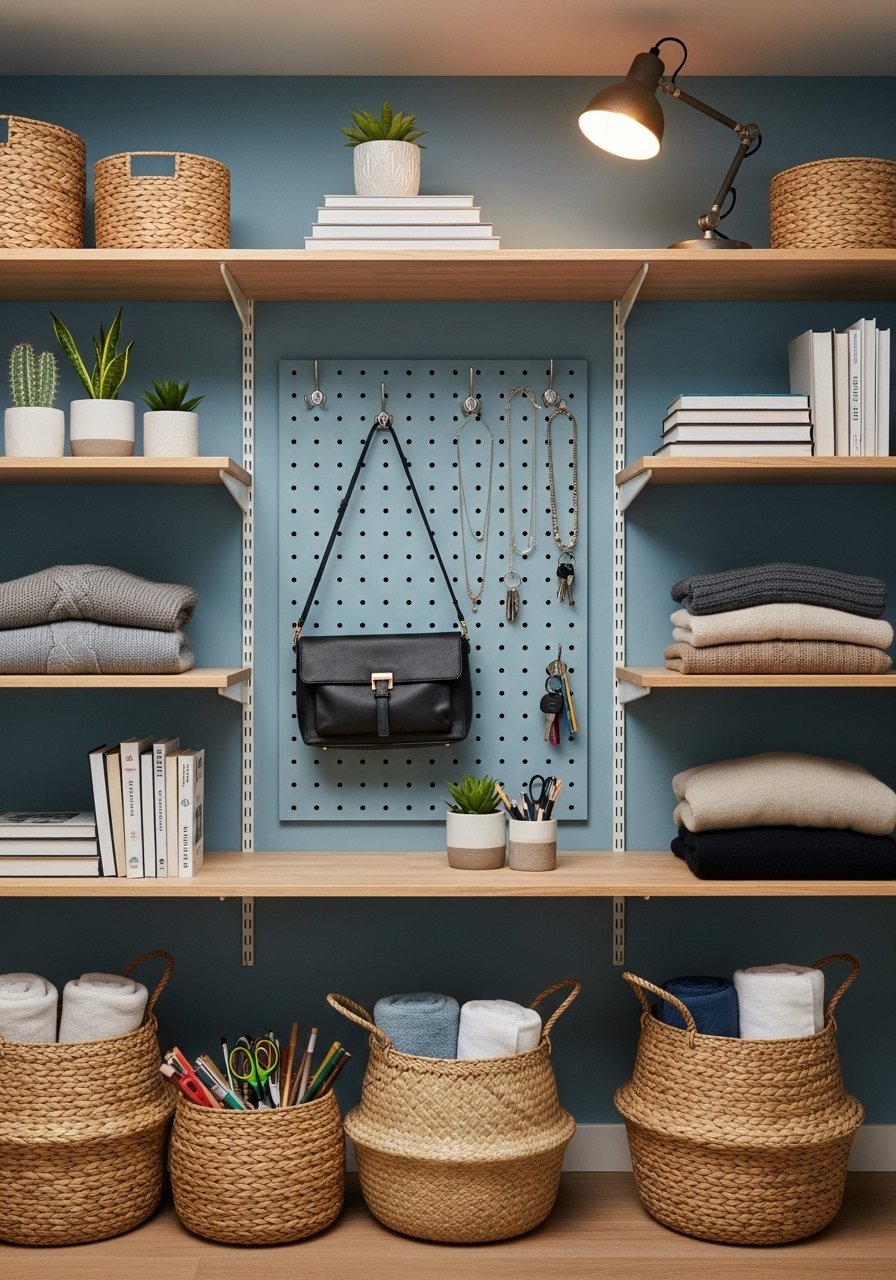
If you hate fixed rules, pegboard is your friend. Drill a pegboard panel to the back wall, then move shelf pegs around as needs change. I like 1×10 inch boards for shelf faces and adjustable shelf brackets that hold baskets. This grows with you from shoes to sweaters to childcare gear. The common mistake is using too small pegs that sag under weight. Buy thicker pegs and test with 20 pounds before you commit to a full wall. A practical detail most write-ups skip is painting the pegboard the same color as the wall so the shelves appear to float.
Modular Cube Cubbies Using Repurposed Crates for Casual Closets
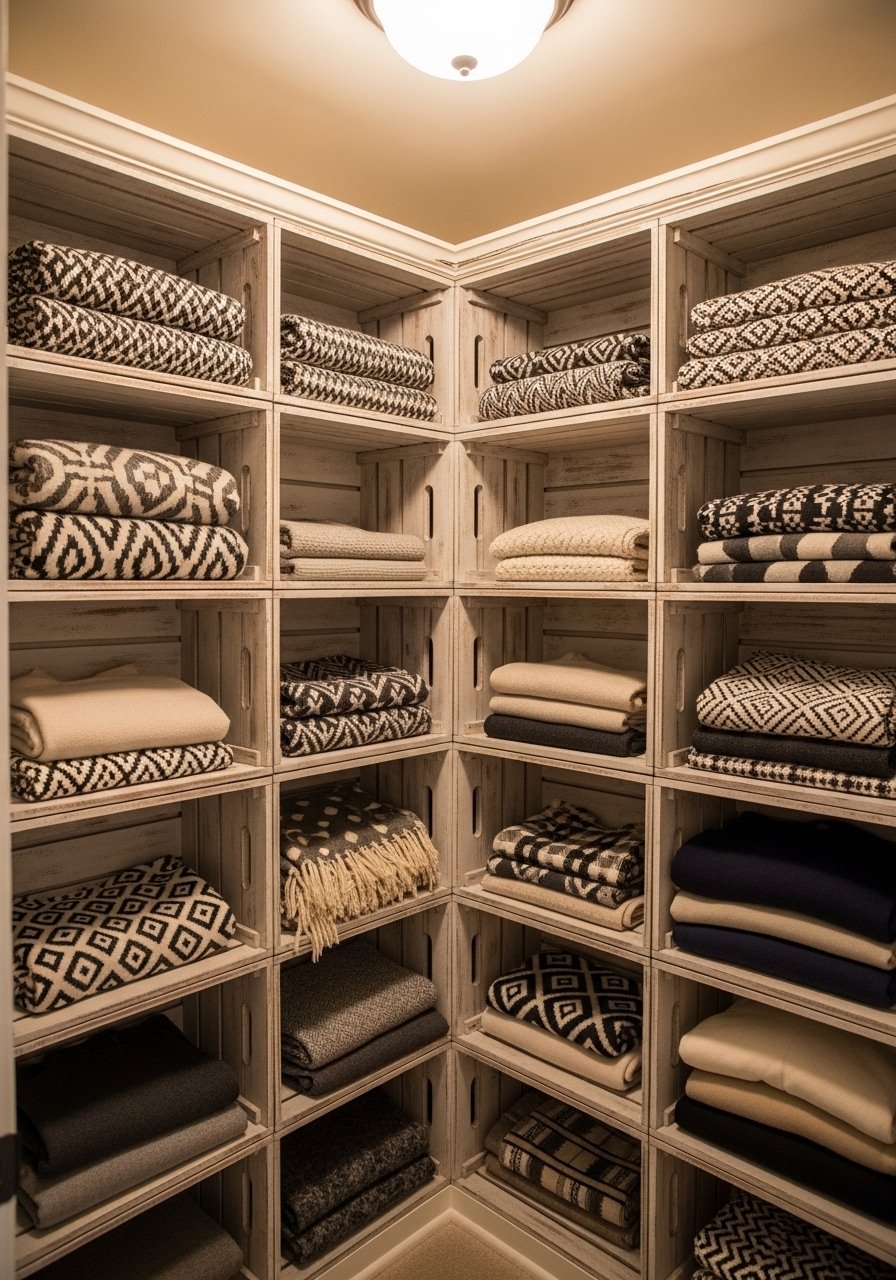
Crates stack into cubbies that keep sweaters, bags, and kids items neat. I painted ours a soft gray so the grain peeks through and anchored the stacks to the wall with small L-brackets. Use 12×12 inch cubes for scarves and tees, 15×15 for bulkier sweaters. I linked up wooden storage crates that are easy to paint and cost under $40 for a pack. Most people skip fastening stacked crates to the wall and then complain when the top one tips. Secure each column and use crate liners if you want a cleaner look.
Pull-Out Wire Baskets That Make Accessories Visible
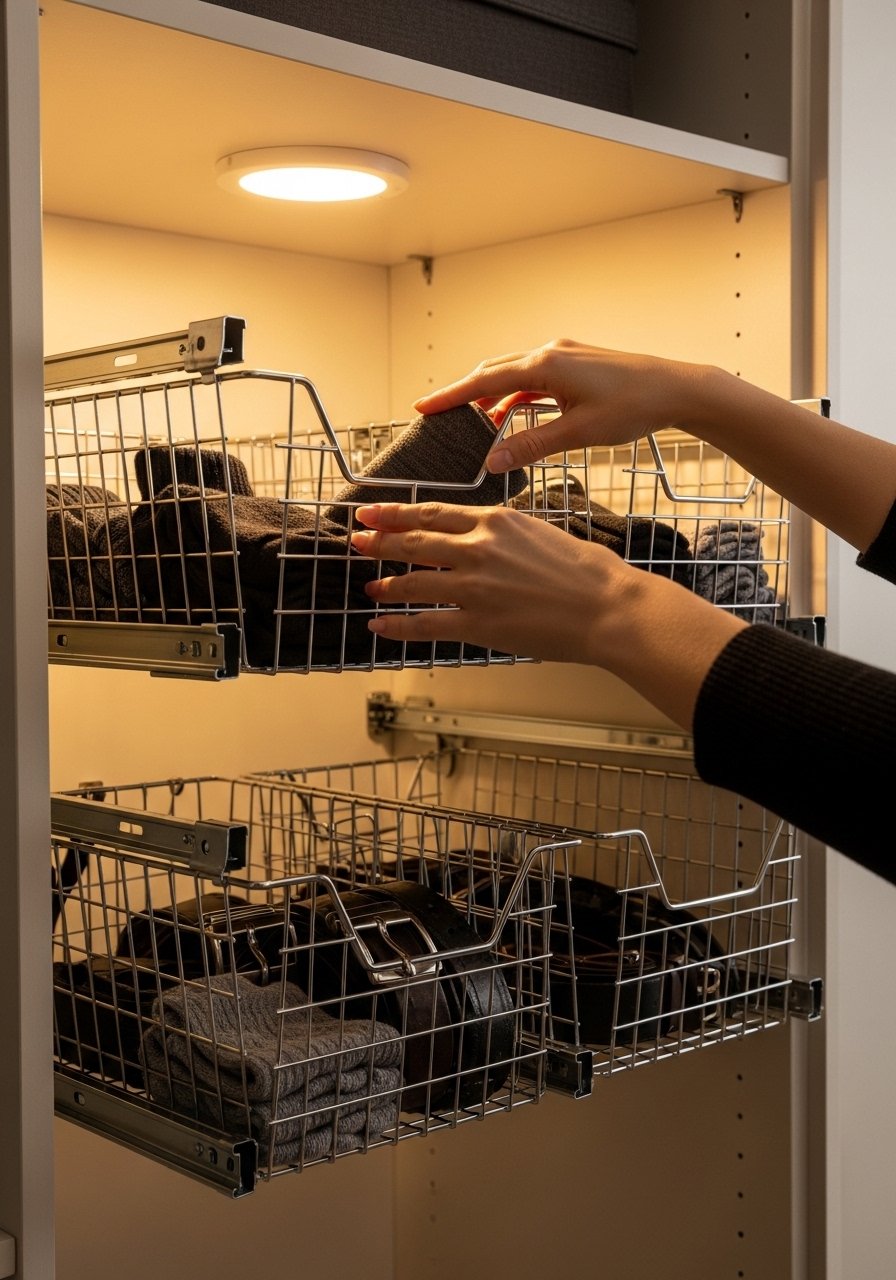
Wire baskets on drawer slides are cheap and accessible. They keep small things from getting lost and double as visible drawers. I bought 12-inch-wide slide hardware and mounted wire storage baskets so my scarves and beanies are at arm level. Budget is $30 to $60 for a two-basket setup. The mistake people make is buying slides rated for too little weight. Get 50-pound slides for full baskets. A small detail I love is sloping the front rim down 1 inch so you can grab contents without pulling the whole unit out.
Corner Triangle Shelves to Use Dead Closet Space
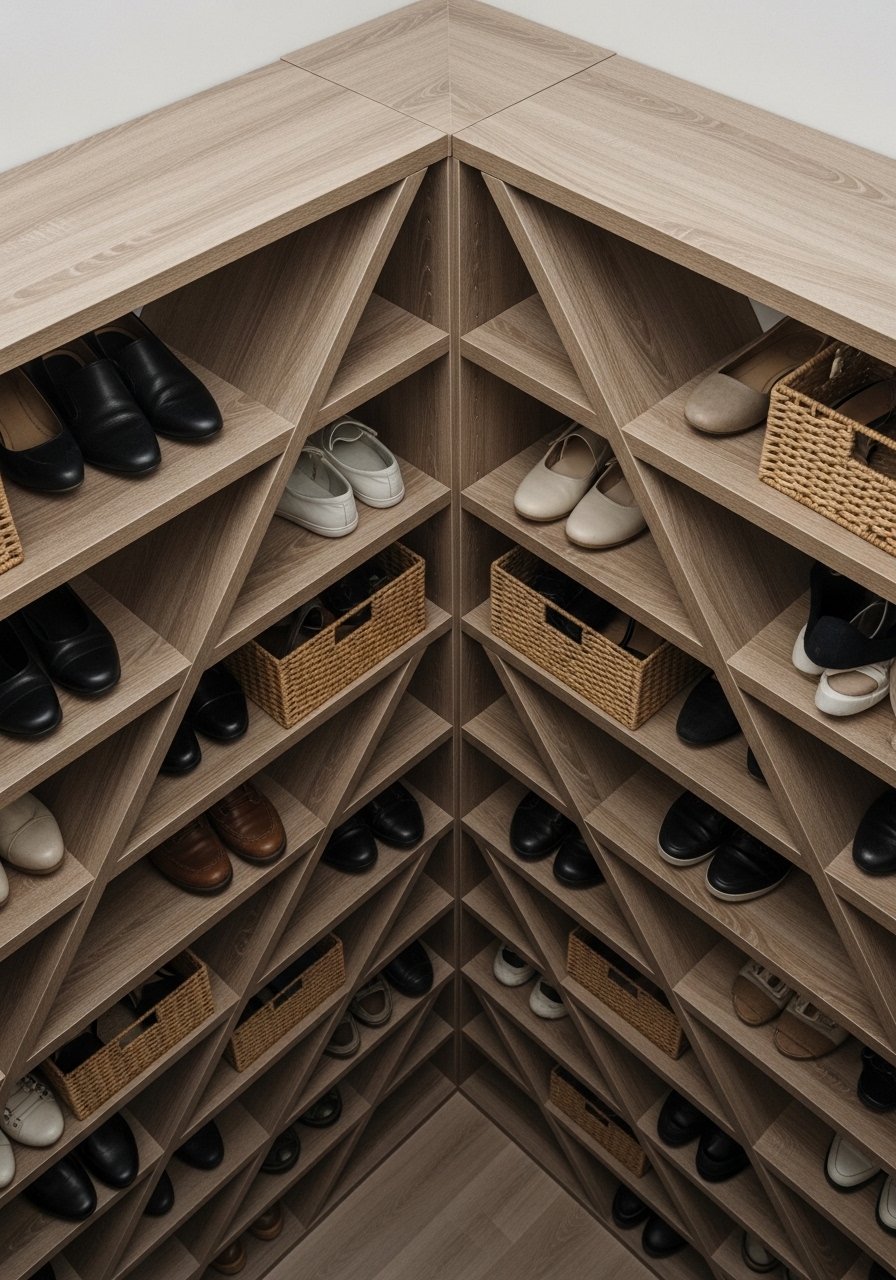
Corners are the most wasted real estate. Cut triangular shelves to 12 to 14 inches on the long side and stack four high to take advantage of vertical space. I fastened raw-edge pine triangles and used painted baskets for a tidy look. Corner shelf brackets cost under $10 a piece and keep the shelves stable. Many people make them too deep and then can not reach the back. Keep them shallow and use them for shoes, folded tees, or small bins.
Vertical Shoe Slots Using Tension Rods for Narrow Closets
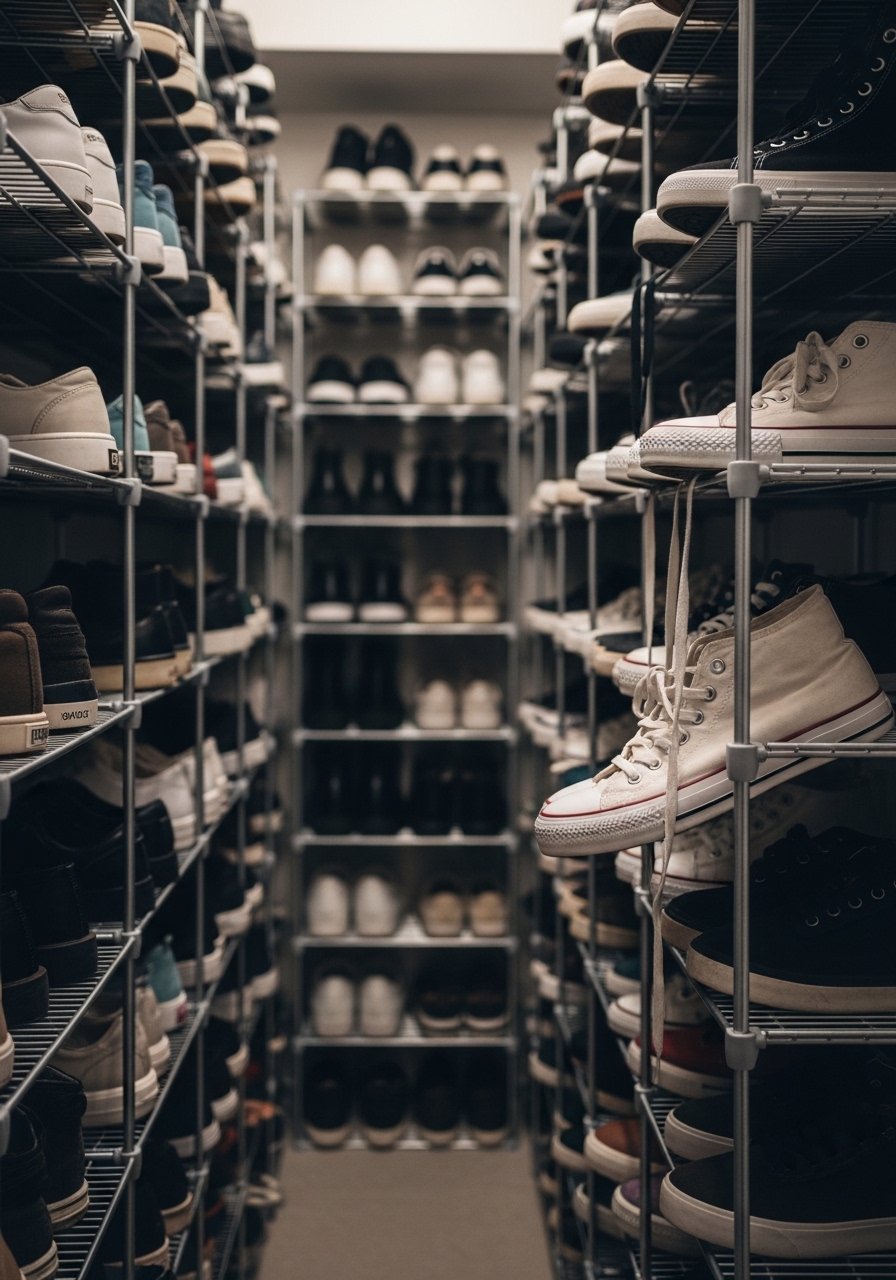
Tension rods are a renter-friendly trick. Install two rods vertically, 6 to 8 inches apart, and slide heels between them to stand shoes vertically. I picked up adjustable tension rods and cut foam to protect shoes from scuffing. Budget under $25 for a set. The mistake is spacing rods too close or too far. Measure shoe widths first and plan for 1-inch clearance. This frees floor space and makes each pair easy to grab.
Pull-Out Hamper Shelf That Keeps Dirty Clothes Hidden
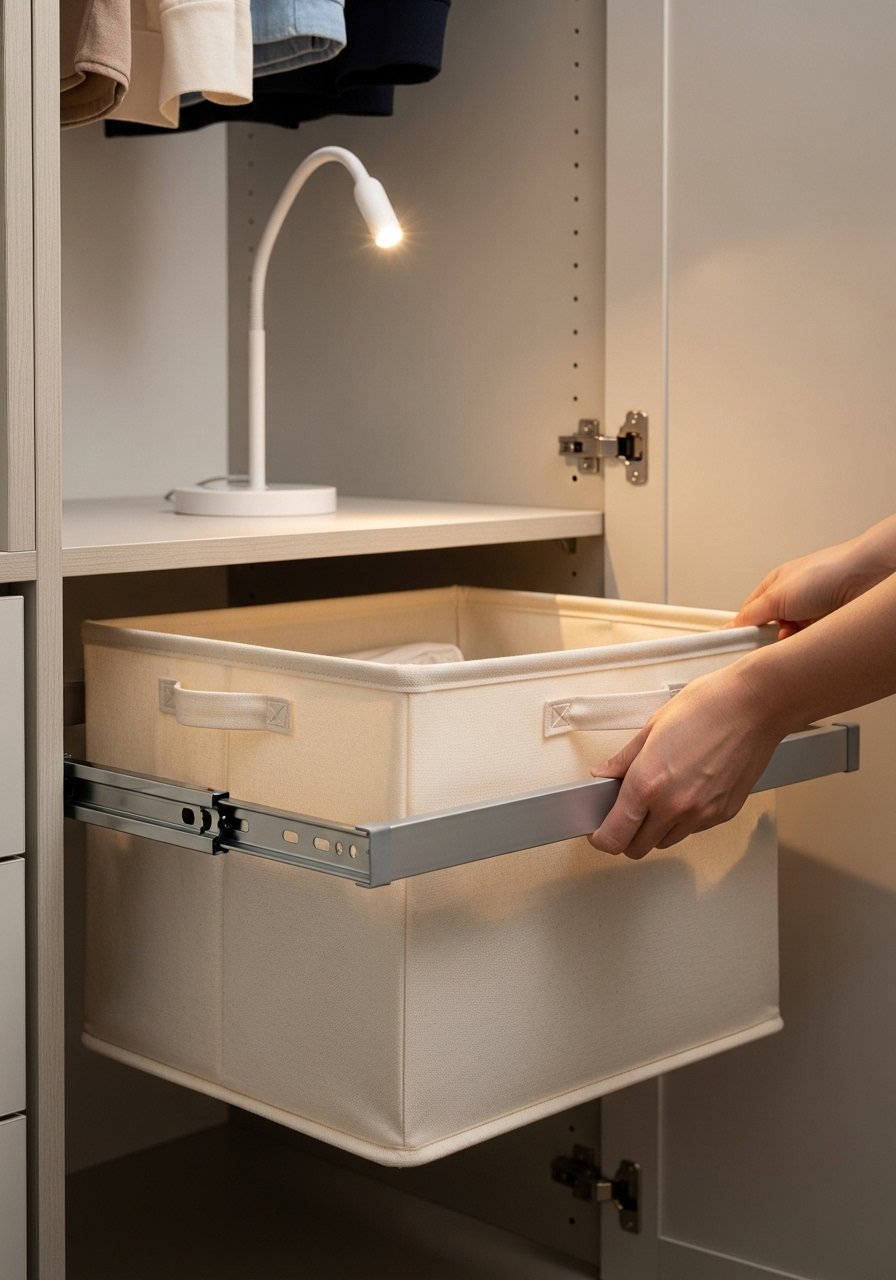
A sliding shelf for a laundry basket keeps the floor clear. Use 18-inch deep slides and a 16×16 inch canvas hamper so it tucks under the hanging clothes. I used drawer slides for pull-out shelves and a collapsible hamper under $30. Common mistake is not reinforcing the shelf. Screw a 3/4-inch plywood shelf into the cabinet face to stop sag over time. This trick works great next to a double-hang rod setup.
Over-the-Door Pocket Shelves Reimagined as Modular Dividers
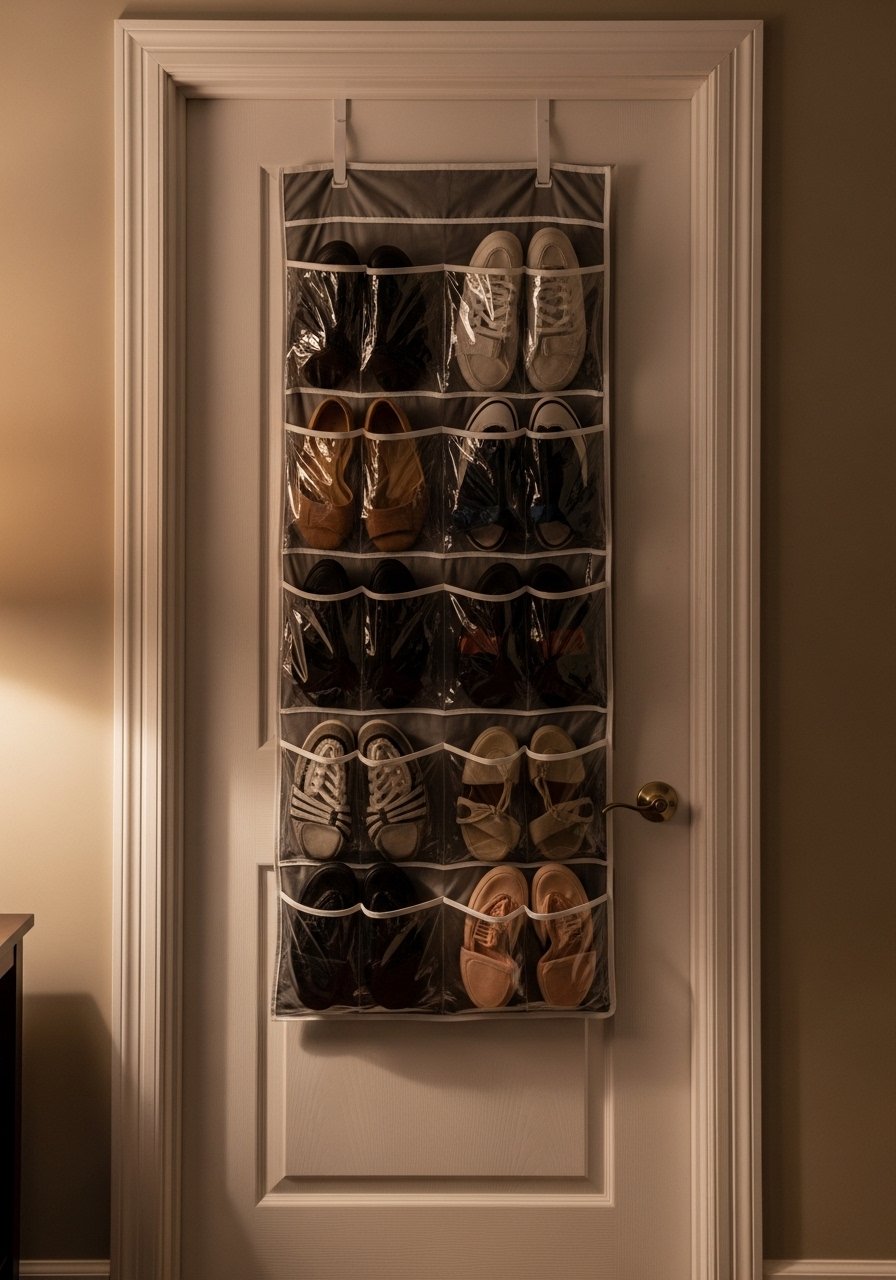
Turn an over-the-door shoe pocket into mini shelves by folding pockets flat and fastening small wooden slats across each pocket opening. I bought a neutral over-the-door organizer for about $20 and added trim to make firm shelves for sunglasses, belts, and kid socks. The usual mistake is overstuffing pockets so they sag. Limit each pocket to three light items and reinforce the top two rows with stitched-in interfacing.
Under-Shelf LED Tape to Make Dark Shelves Usable
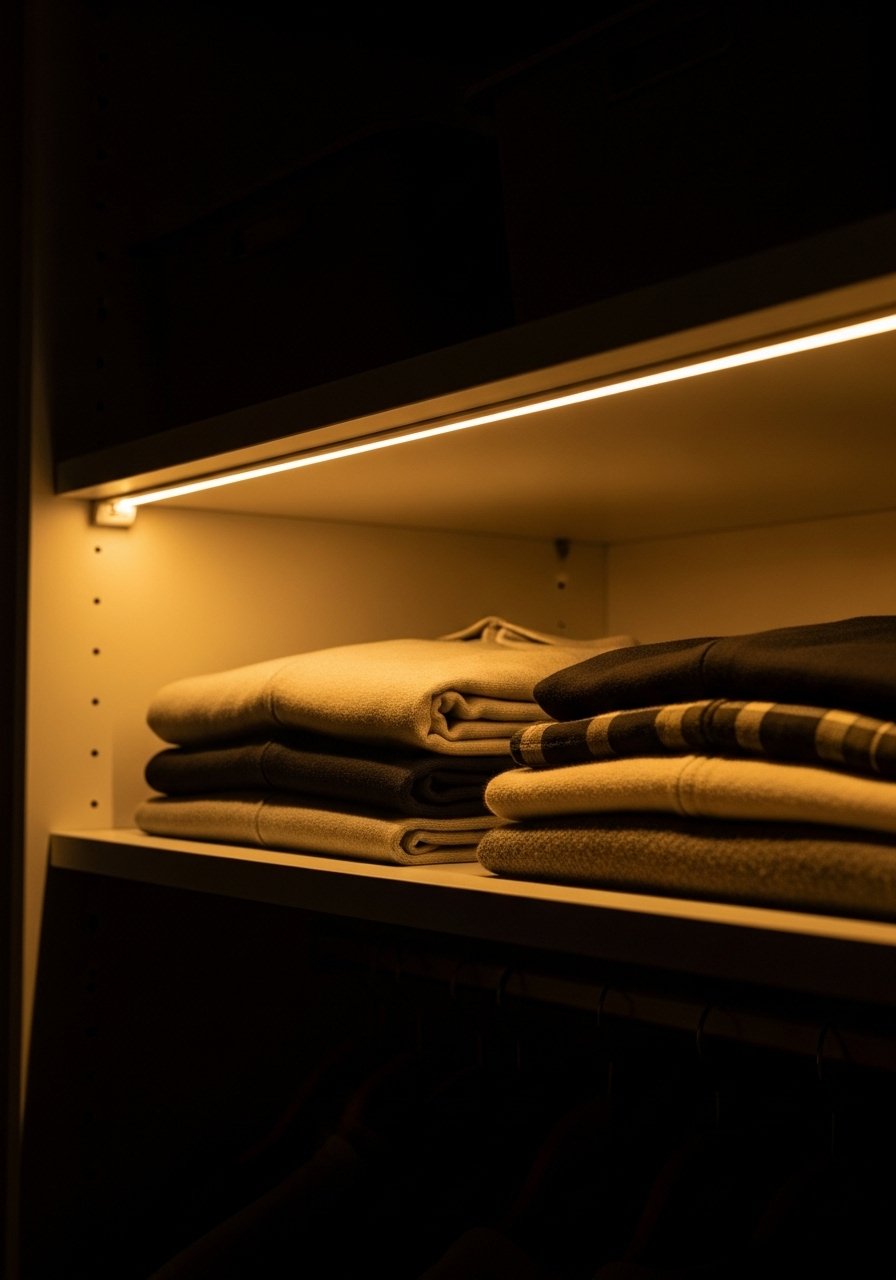
Adding LED tape under each shelf turns a black hole into a display. I used warm 2700K tape and placed strips 1 inch from the front edge so light washes the surface evenly. LED strip lighting kits are $15 to $30. Many people put LEDs at the back and only light the wall. Front placement actually shows the fabric textures and prevents grabbing the wrong sweater. If you're wiring, plan for a single plug-in transformer at the base to hide cables.
Stackable Crate Shelves Painted for a Cottage Closet
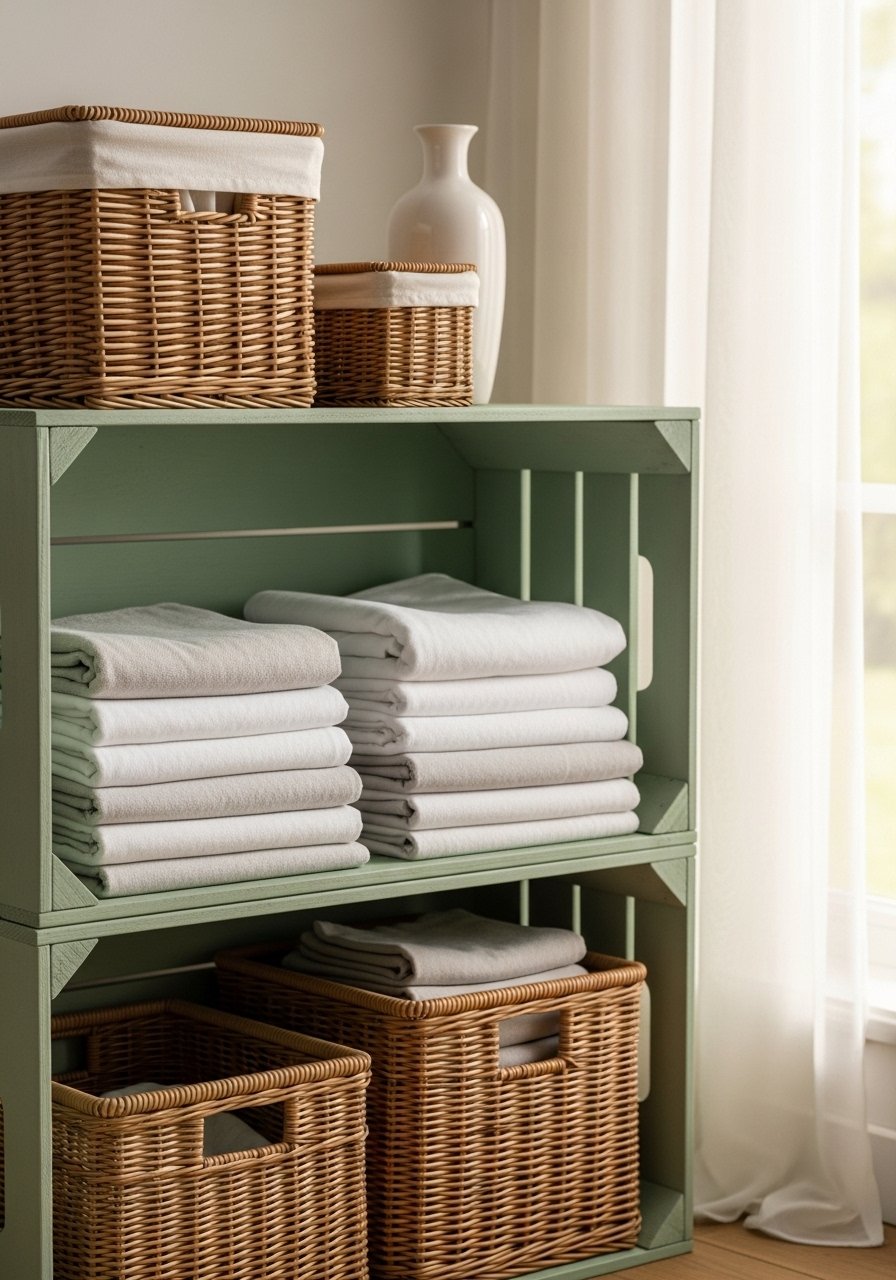
This is a zero-skill painting and stacking project. Use uniform crates 14×14 inches, stack them in columns, and anchor to the wall. A coat of chalk paint hides mismatched wood and creates a built-in vibe. I linked stackable wooden crates that fit a standard linen closet. Budget runs $40 to $90 depending on paint. People forget to sand edges for a worn look if they want that cottage feel. Light sanding on corners gives a finished result.
Picture Ledge Shelves for Scarves, Jewelry, and Small Bags
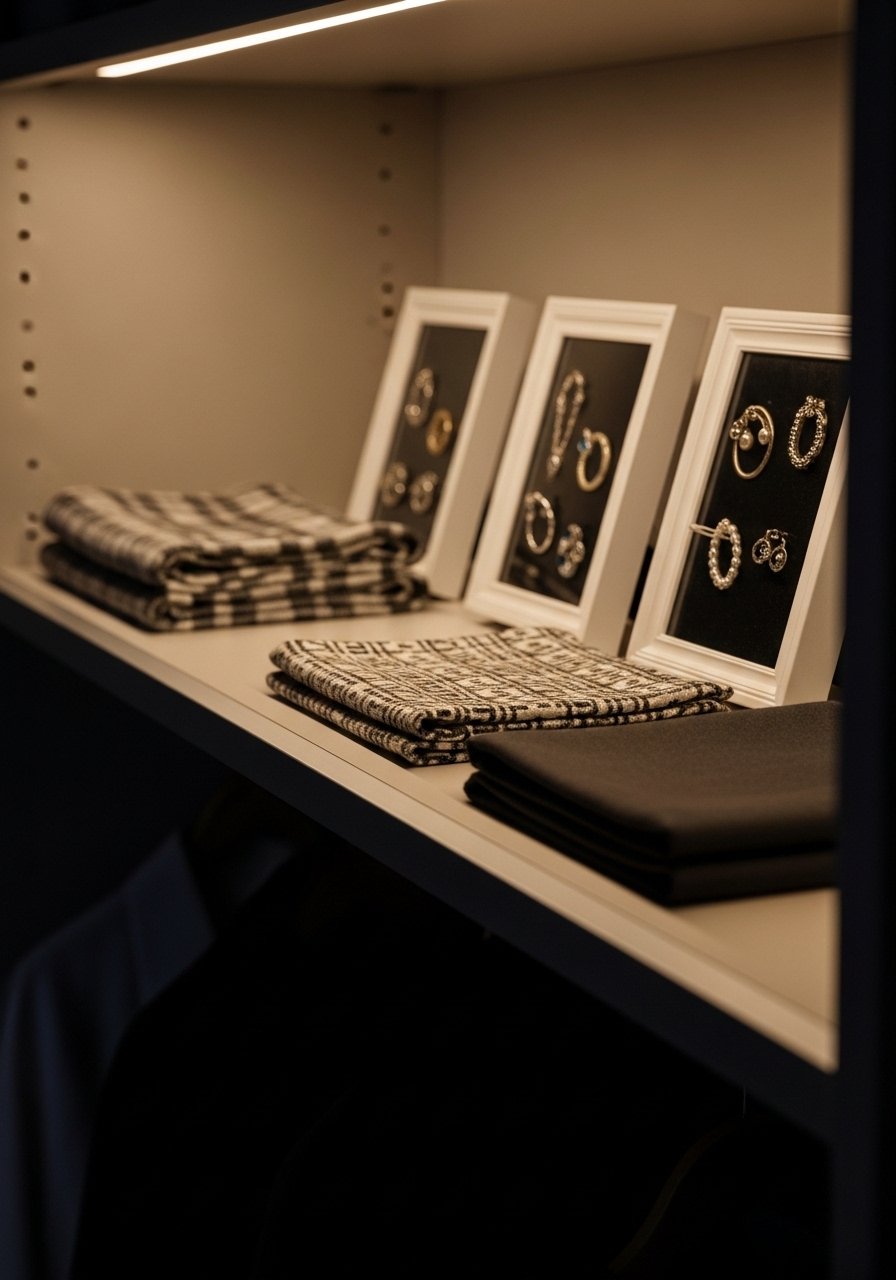
Picture ledges are fine for flat items that like to be displayed. A 3-inch ledge at about 54 inches high works for necklaces hung on small pegs and for folded scarves lined up. I used brass picture ledges to add a soft metal accent. People make the ledge too deep and it competes with other storage. Keep it slim and pair it with a column of cubes for bulkier items.
Double Rod System With Shelf Above for Maximum Hanging Space
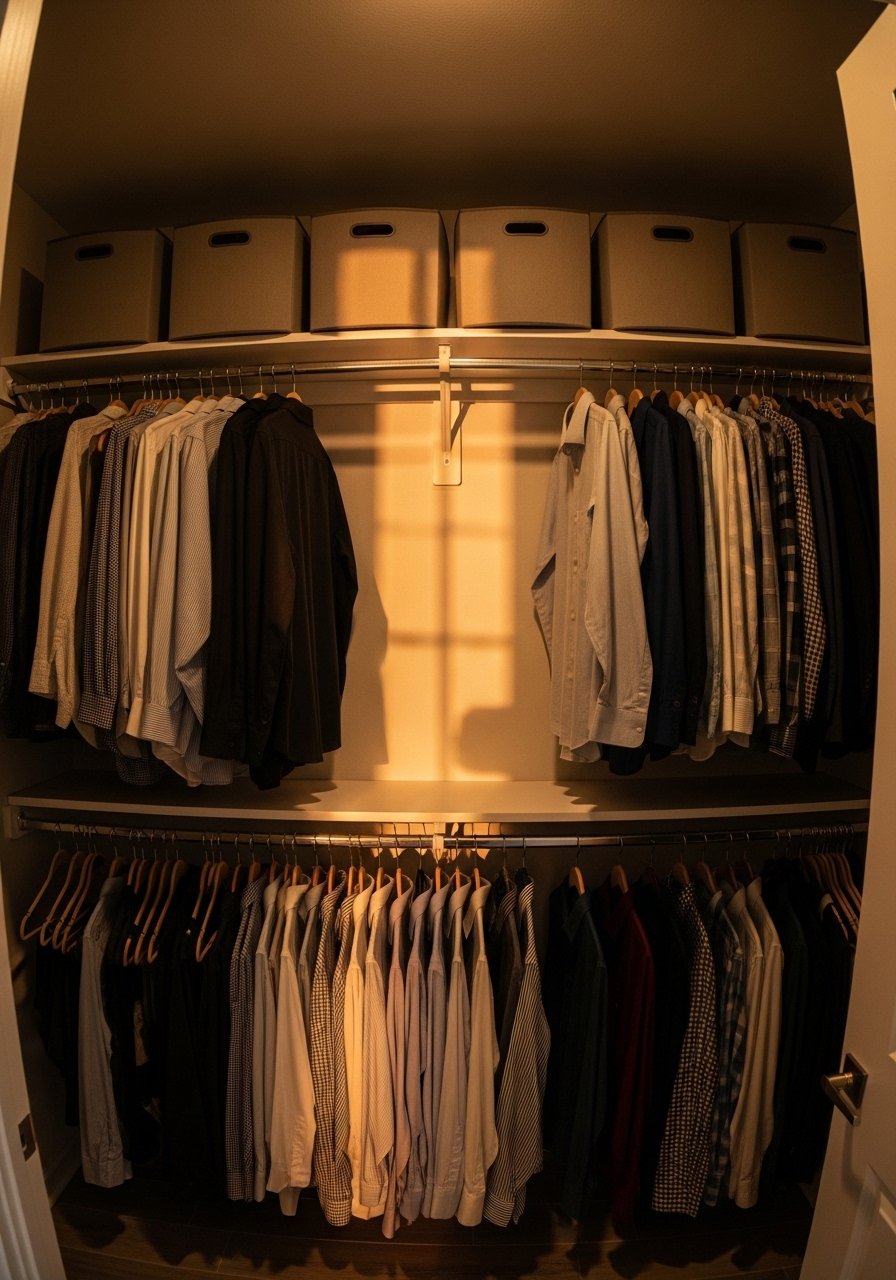
Double hanging gives you double the usable space for shirts and pants. Install the lower rod 40 to 42 inches from the floor and the upper rod 80 to 84 inches high. Top shelf works well at 86 inches for boxes. I used a sturdy closet rod kit and labeled bins so swapping seasonal items is fast. The common oversight is not reinforcing the rod with a center bracket on runs over 48 inches. Add one to avoid sag.
Ceiling-Hung Shelves for Scarves and Hats to Use Vertical Airspace
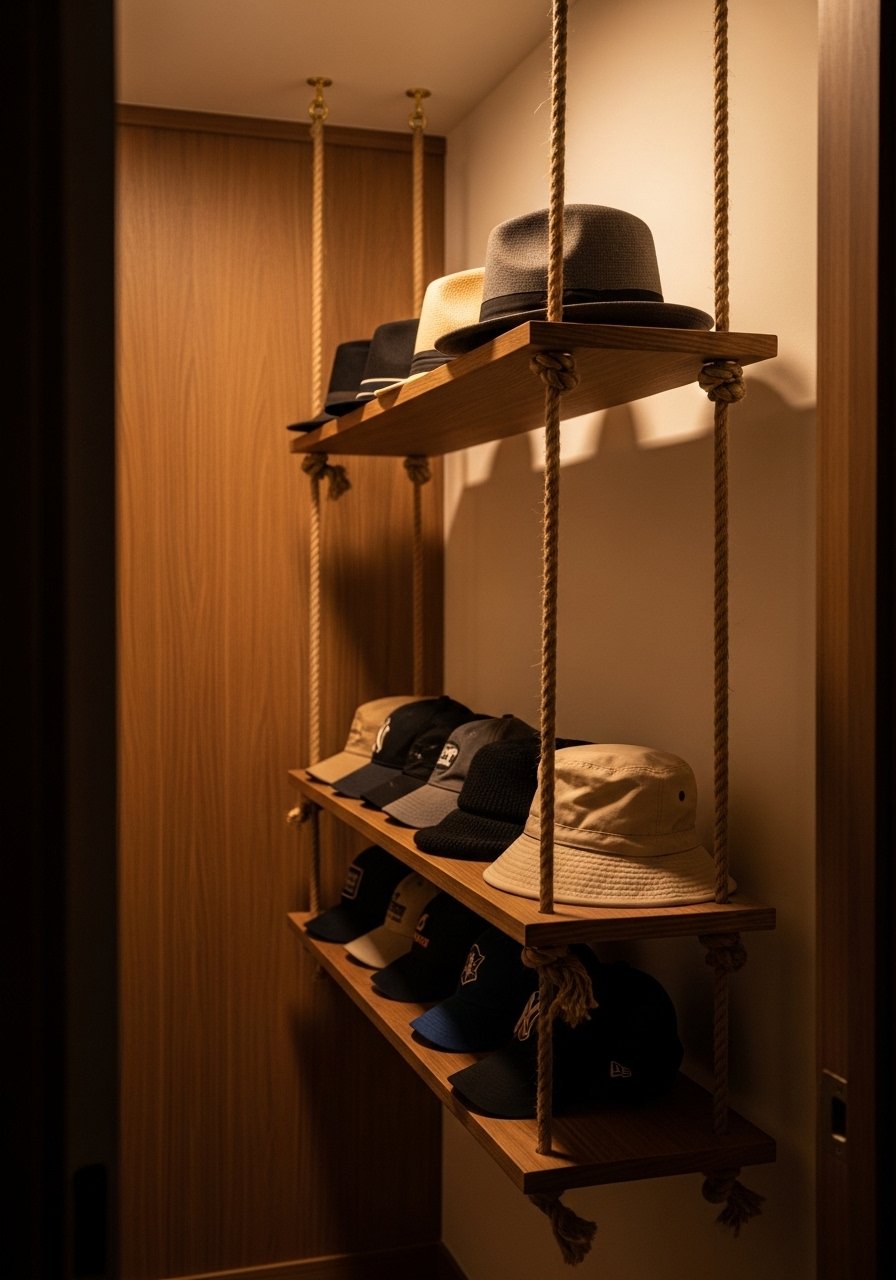
Suspend a narrow shelf from the ceiling to hold hats or lightweight bins. Use 4-inch deep boards and brass hooks into studs so the shelf carries load safely. I used ceiling hooks and rope kits and lightweight baskets so nothing feels top-heavy. Most people install these without anchoring to studs which leads to problems. Always find and use at least two strong anchors for each hanging shelf.
Renter-Friendly Folding Shelf Bracket That Stows When You Move
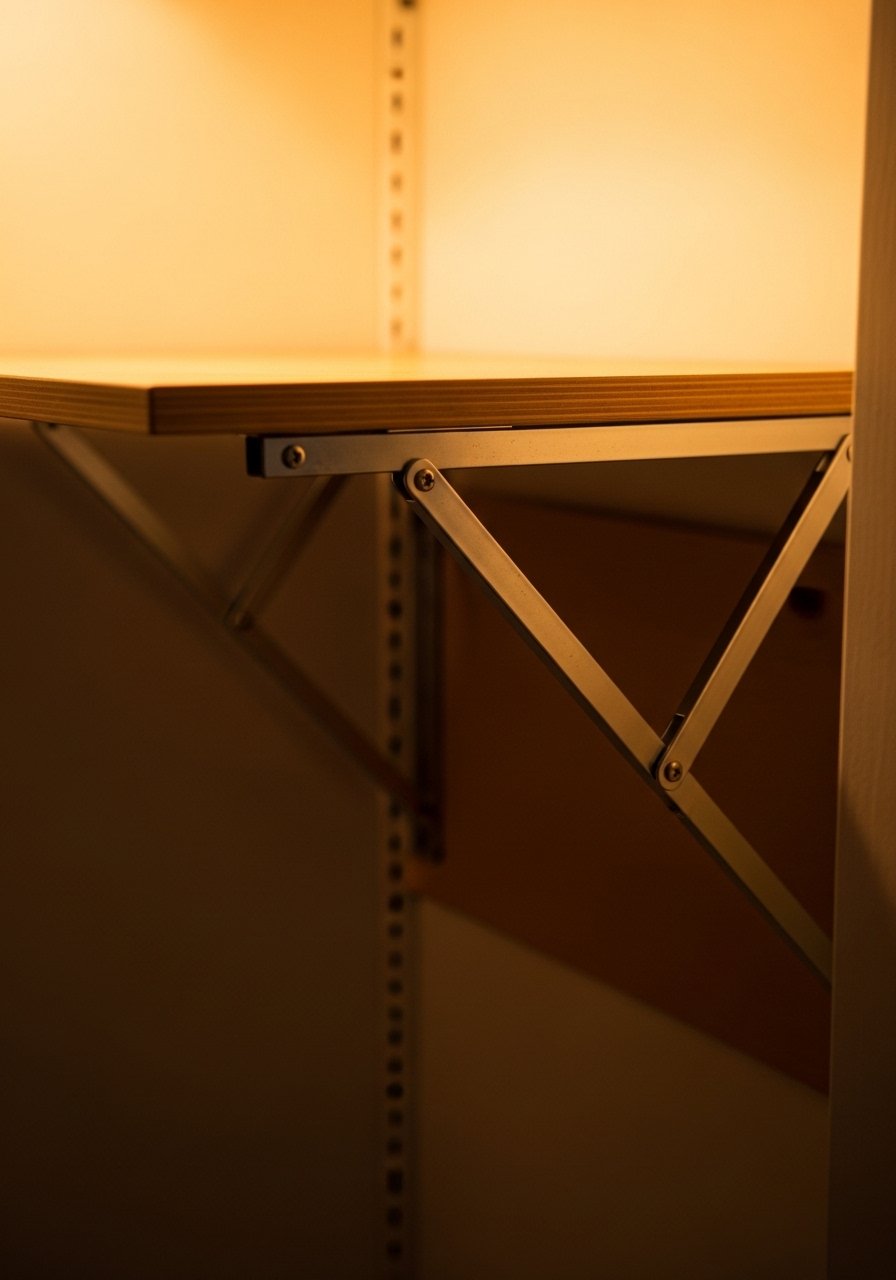
If you cannot drill much, folding brackets are lifesavers. They fold down when not needed and fasten with just a few screws to the wall. I used a 20×12 inch pine board on folding shelf brackets so the top shelf doubles as a small standing desk. Budget is under $40. A frequent mistake is not counting the hinge depth when folded. Measure clearance from clothing so nothing catches when you open the shelf.
Built-In Ledges for Sweaters With 12-Inch Spacing Rule
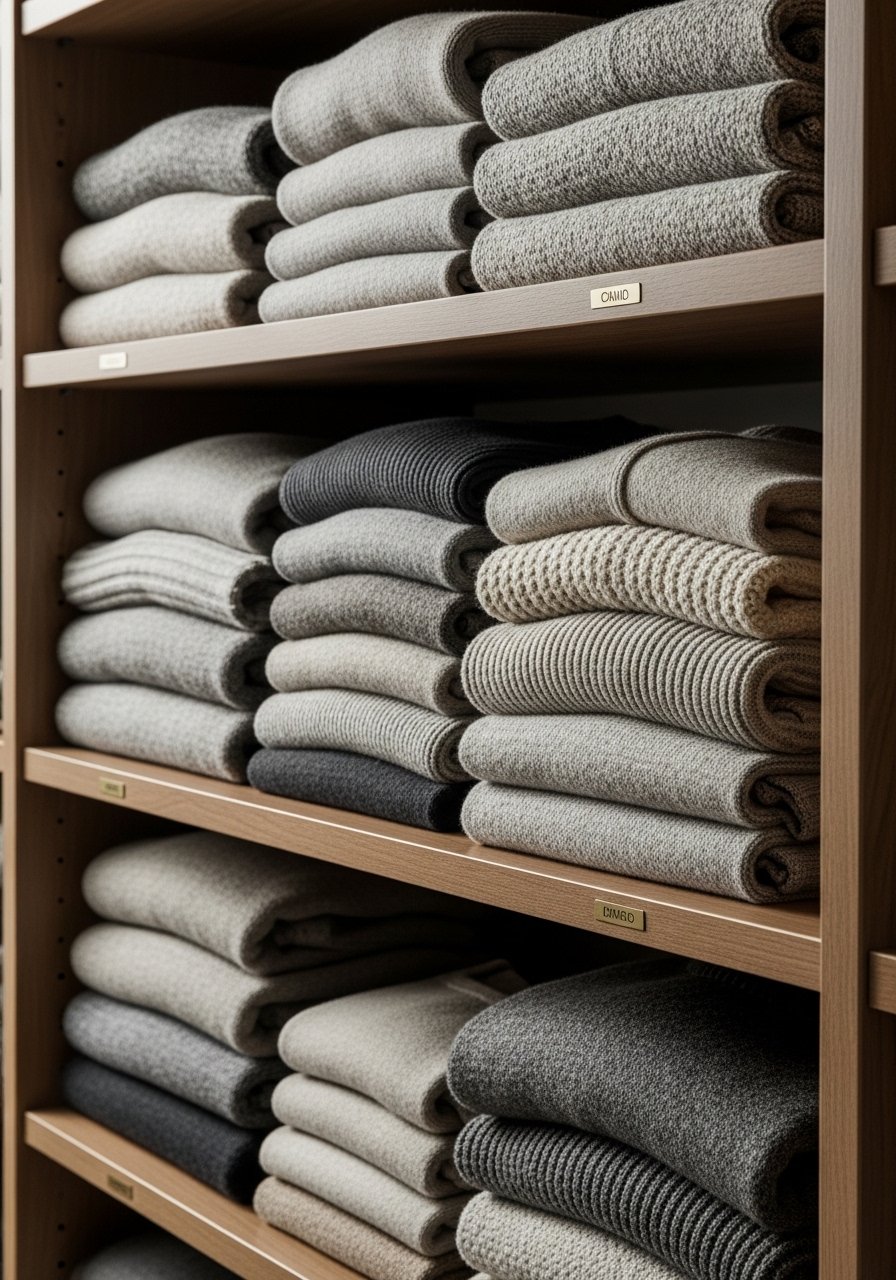
This is the sweater shelf done right. Build ledges 12 inches apart to keep stacks stable and prevent toppling. I prefer solid wood 3/4 inch thick for less sag. Use small front lips of 1/2 inch to stop rolls. Solid wood shelf boards in pine or oak finish under $30 per board look expensive when sanded and oiled. Too-large spacing leaves gaps that make things look sloppy. Keeping the 12-inch rule gives a retail neatness without rigidity.
Your Decor Shopping List
Textiles
- Honestly the best $40 I have spent. 22-inch linen pillow covers, set of 4 in warm neutrals for soft shelf styling
- Chunky knit throw in cream (~$35-55). Drape over a bottom shelf for texture
Wall and Shelving Hardware
- White oak floating shelves (~$50 each) for a modern closet feel
- Hidden floating shelf brackets (~$12-20 per set) to keep shelves clean
Organizers and Baskets
- Wire storage baskets, pull-out style (~$25-45)
- Stackable wooden crates set (12×12 or 14×14 sizes) for casual cubbies
Lighting and Small Hardware
- LED strip lighting kit warm (~$15-30). Place 1 inch from shelf front
- Adjustable tension rods closet for vertical shoe storage
Budget Finds / Similar at Big Box
- Over-the-door organizer neutral (~$20). Similar at Target or HomeGoods
Shopping Tips
White oak beats dark wood in 2026. Design feeds have shifted completely. These white oak floating shelves look current, not dated.
Grab LED strip lighting kits for $15. Run one low-voltage transformer for the whole closet so cords stay hidden.
Measure depth before buying bins. 12×12 woven baskets fit shallow shelves better than tall boxes and give a finished look.
Curtain trick for open closets. If you need to hide a row, linen curtain panels 96 inch kiss the floor and keep things soft.
Everyone buys five small succulents. One single 6-foot faux fiddle leaf fig has ten times the visual impact in a closet corner.
Frequently Asked Questions
Q: How deep should closet shelves be for folded clothes?
A: Go 10 to 12 inches for T-shirts and 12 to 14 inches for sweaters. That spacing keeps stacks reachable and stops clothes from getting lost at the back.
Q: Can I install floating shelves in a rental without drilling a lot?
A: Yes. Use folding brackets that require only a couple of screws or freestanding cube crates anchored lightly to the wall. If drilling is absolutely off limits, look for high-strength removable adhesive brackets but test weight first.
Q: What is a common mistake when adding lighting to shelves?
A: Putting LEDs at the back so the front stays dark. Place strips about 1 inch from the front edge and pick a warm color temperature so fabrics look natural.
Q: How do I prevent shelf sag on longer runs?
A: Add a center support or a 3/4-inch plywood backing to distribute weight. For rods over 48 inches, install a middle bracket rated for at least 50 pounds.
Q: Can I mix open shelving with closed bins without it looking messy?
A: Yes. Use a rule of three visually. Group three open items with two identical bins. Keep a roughly 80/20 color ratio so the bins read as one block and the open parts breathe.
Q: Is it worth buying expensive hardware or stay budget?
A: Spend on things you touch often like drawer slides and rods. Save on visual items like painted crates that look high-end for little money. Spent $400 on a coffee table. Room still looked off. Spent $35 on a throw and three candles. Suddenly everything clicked.