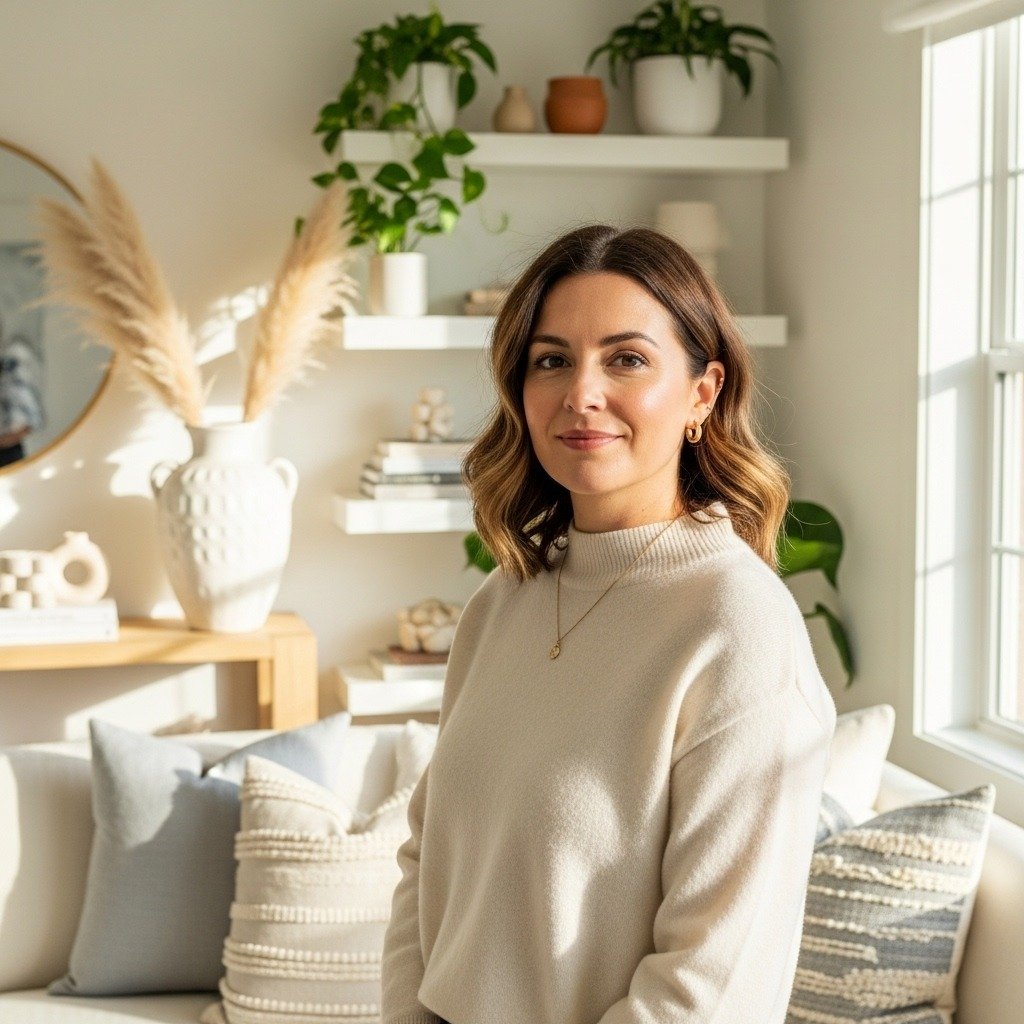
Walking into a living room should feel like a deep exhale. Warm. Relaxed. Lived-in—but still pulled together. The kind of space that quietly says, *“Stay awhile.”* If your living room feels cold, cluttered, or unfinished, the good news is you don’t need a full renovation to fix it. With a few intentional choices, you can transform it into a space that feels cozy, welcoming, and effortlessly comfortable.
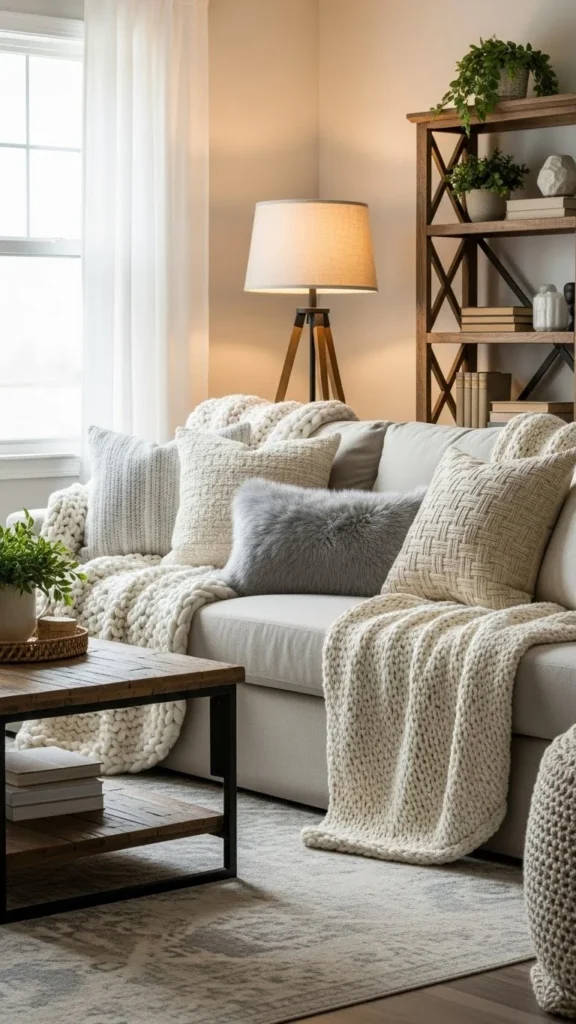
Below are simple, practical ways to decorate a living room that feels warm and inviting—without overthinking it.
—
## Start With a Soft, Comfort-First Foundation
Warm living rooms always begin with comfort. Before decor, focus on the pieces people actually use.
Think about:
– A sofa that feels sink-in comfortable, not stiff or overly formal
– Chairs positioned for conversation, not pushed against walls
– A rug large enough to anchor the seating area
Soft furnishings make a huge difference. Even a simple room feels warmer when it includes:
– Upholstered seating
– A plush area rug
– Cushions that invite you to sit, not just look
Avoid the temptation to leave too much empty space. A slightly “full” room feels more welcoming than one that feels sparse or echoey.
—
## Use Warm, Layered Lighting Instead of One Harsh Source
Lighting can instantly change how a living room feels. Overhead lighting alone often makes a space feel flat or cold.
The goal is **layers**, not brightness.
Include:
– A table lamp or two for soft glow
– A floor lamp near seating areas
– Warm-toned bulbs (never stark white)
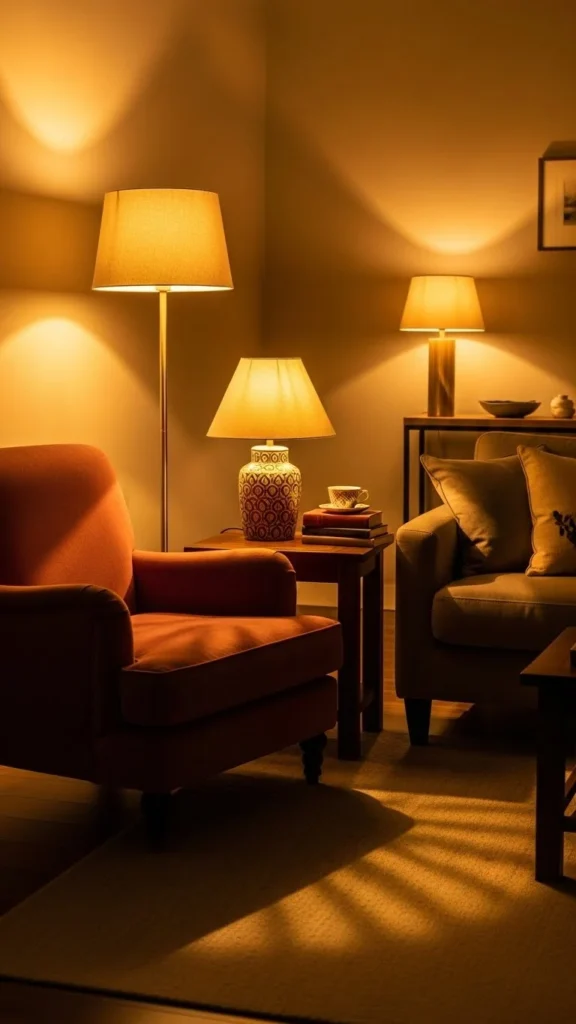
Lighting placed at different heights makes a room feel intimate and relaxed. If possible, use dimmers or low-watt bulbs so the light feels gentle rather than overpowering.
Pro tip: If a room feels uninviting at night, lighting—not furniture—is usually the problem.
—
## Layer Textures to Create Visual Warmth
Texture adds warmth even when colors stay neutral. A room filled with smooth, flat surfaces can feel cold, no matter how expensive the furniture is.
Mix textures intentionally:
– Knit or woven throw blankets
– Linen or velvet cushions
– Wood, rattan, or ceramic accents
– Soft curtains instead of bare windows
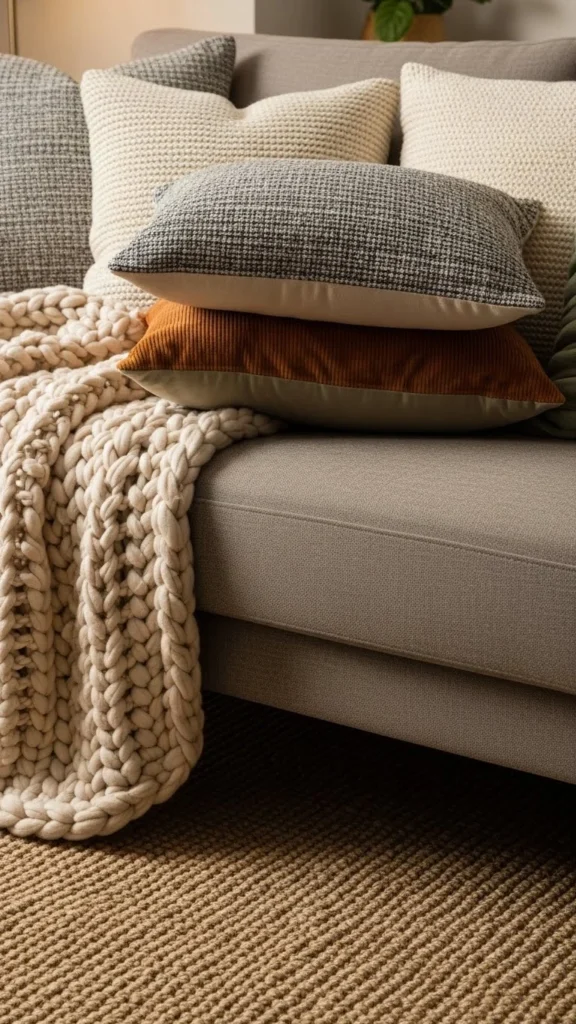
You don’t need bold patterns. Even subtle texture changes—rough with smooth, matte with soft—create depth that feels cozy and welcoming.
—
## Choose a Warm, Cohesive Color Palette
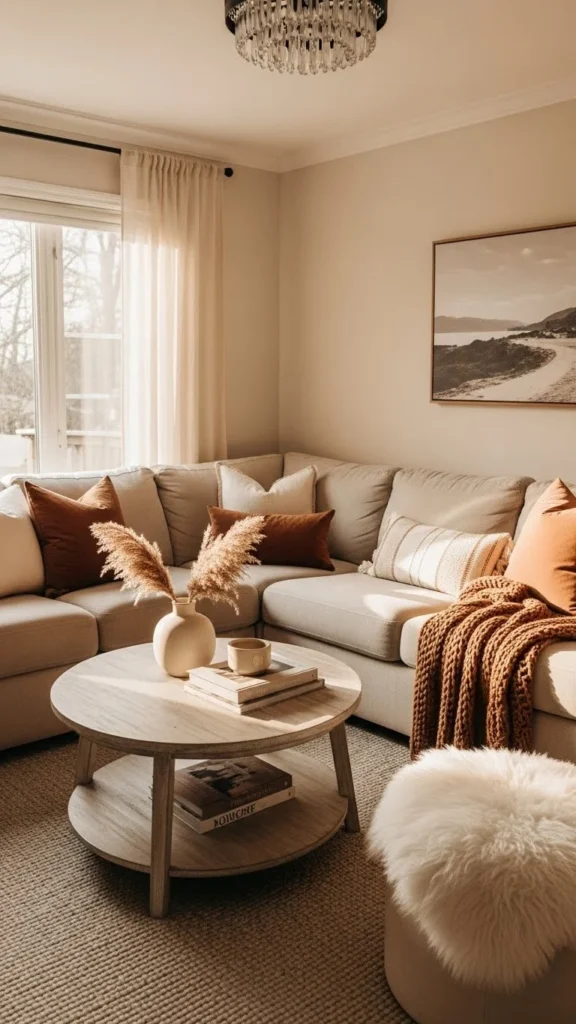
A warm living room doesn’t have to be dark or heavy. It just needs colors that feel grounded.
Safe, inviting choices include:
– Warm whites and creams
– Soft beige, taupe, or greige
– Muted earth tones like clay, olive, or caramel
Stick to one main color family and layer variations of it. Too many competing colors can make a space feel chaotic instead of calm.
If your furniture is neutral, add warmth through:
– Pillows and throws
– Artwork
– Decorative objects
—
## Style With Personal, Lived-In Details
What truly makes a living room inviting is personality. Rooms that feel like showrooms rarely feel warm.
Add elements that tell a story:
– A stack of favorite books on the coffee table
– Framed photos or meaningful artwork
– Objects collected over time, not all bought at once
Avoid over-styling. A little imperfection—like a casually draped throw or a slightly uneven stack of books—makes the room feel human and welcoming.
If it looks *too* perfect, it usually feels uncomfortable.
—
## Bring in Nature for Instant Warmth
Natural elements soften a space instantly. Even one organic touch can make a living room feel more alive.
Easy options:
– A leafy plant or small tree
– Dried branches in a ceramic vase
– Wood trays or stone accessories
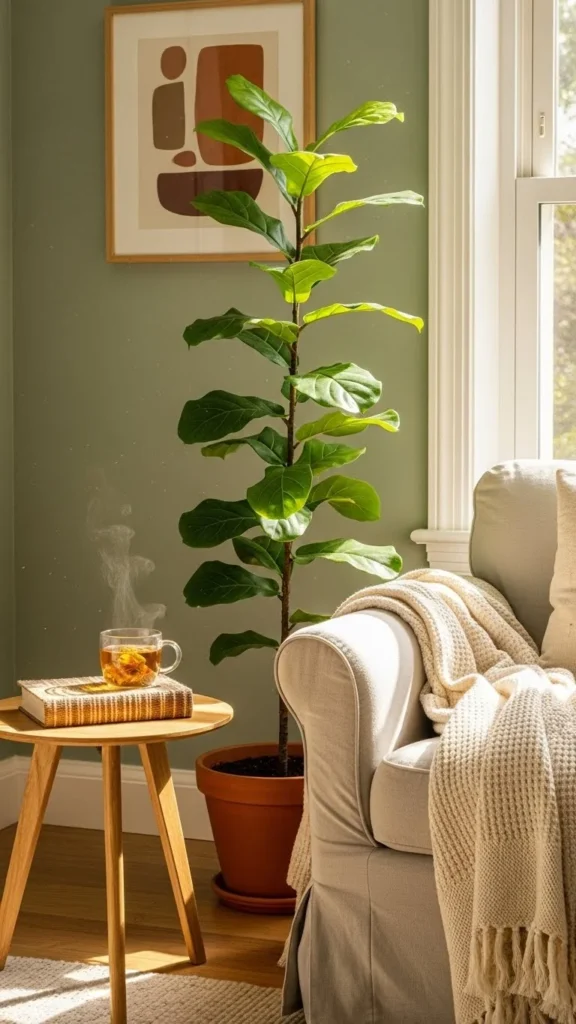
If you don’t have a green thumb, high-quality faux plants still work. The goal is softness and life—not perfection.
—
## Keep the Layout Conversation-Friendly
A warm living room encourages connection. Arrange furniture so people can easily talk without raising their voices or shifting chairs.
Tips:
– Face seating toward each other when possible
– Keep coffee tables within easy reach
– Avoid blocking natural pathways
When a room flows naturally, people relax. That’s what makes it inviting.
—
## Final Thoughts
Decorating a warm and inviting living room isn’t about following trends or buying expensive pieces. It’s about comfort, balance, and intention. Soft textures. Warm lighting. Personal details. A layout that welcomes people in instead of keeping them at a distance.
Focus on how the room *feels*, not just how it looks.
Save this guide for later and come back to it anytime you want to refresh how to decorate a living room that truly feels like home.