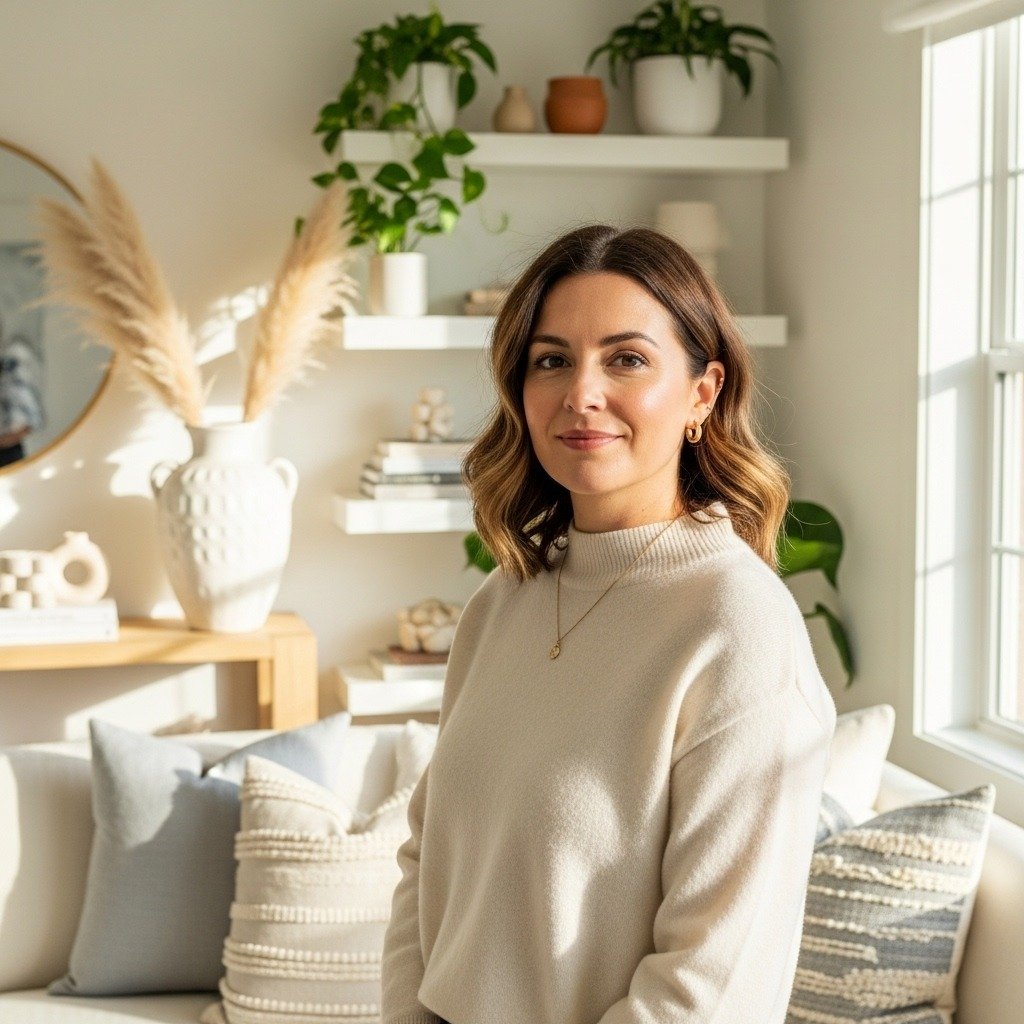
I kept staring at my pale living room, thinking it looked cold and empty despite neutral furniture. The pieces were fine. The feeling wasn't.
It took layering warm tones, mixed textures, and one small pattern to make it feel comfortable and intentional. If your neutral room feels flat or uninviting, this is how I warm mine up without redoing everything.
How to Decorate a Neutral Room So It Feels Warm
This is the method I use every time a room feels unfinished. You’ll learn how to pick warm undertones, layer texture, and add one muted accent so the room reads as cozy and intentional. It’s achievable with a few swaps and small buys for an organic modern, lived-in look.
What You'll Need
- Chunky knit throw in oatmeal, 50×60 (~$40–65)
- Linen duvet cover in sage green, queen (~$70–110)
- Velvet mauve pillow covers, 20×20, set of 2 (~$30–60)
- Patterned flatweave area rug, neutral motifs, 5×8 (~$100–250)
- Jute woven rug, natural, 3×5 (~$80–150)
- Floor-length linen curtains in cream, 52×84 (~$50–120)
- Ceramic table lamp with warm brass base (~$40–120)
- Small potted houseplant (faux or real), 6–10" pot (~$20–50)
Step 1: Anchor the room with a warm base
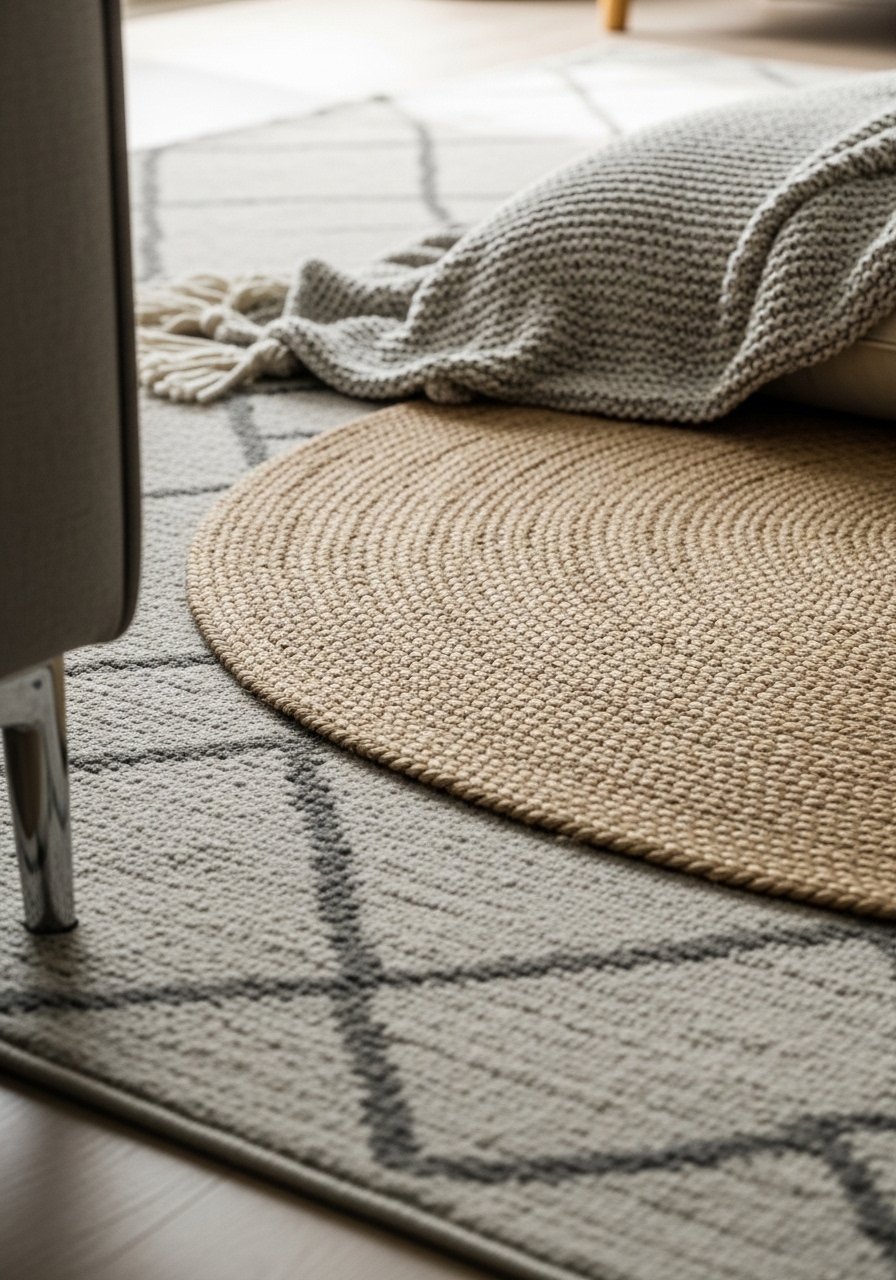
I always start with the largest visible surface—the rug or upholstery. Choosing a warm base rug in a caramel, tan, or cream keeps the room from feeling cold. It immediately sets the undertone for everything else.
What many miss is undertone mismatch. A cool gray sofa with a warm wool rug looks off if the undertones fight. Avoid the mistake of layering too many cool grays; instead, echo the warm base in a few smaller pieces so the room reads cohesive.
Step 2: Layer texture for depth
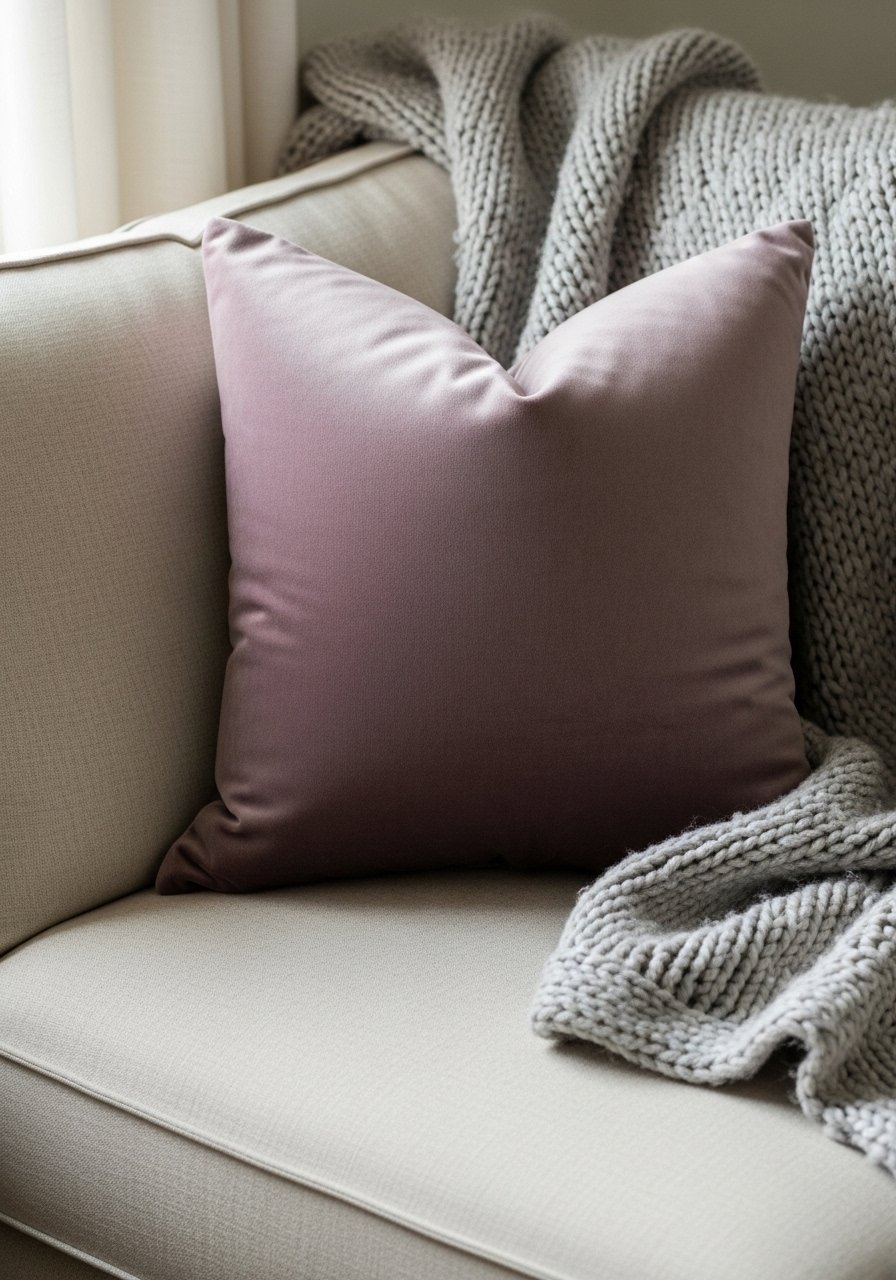
I pile textures next—linen, velvet, nubby wool, and jute. Texture reads as warmth on sight. A linen cushion plus a velvet mauve pillow and a chunky throw makes the sofa feel inviting without adding color noise.
People often match everything too precisely. That creates flatness. Mix smooth and nubby textures and vary scale. One small mistake is using only identical neutrals; instead, aim for contrast like velvet against woven fibers to read cozy and layered.
Step 3: Add one muted accent color
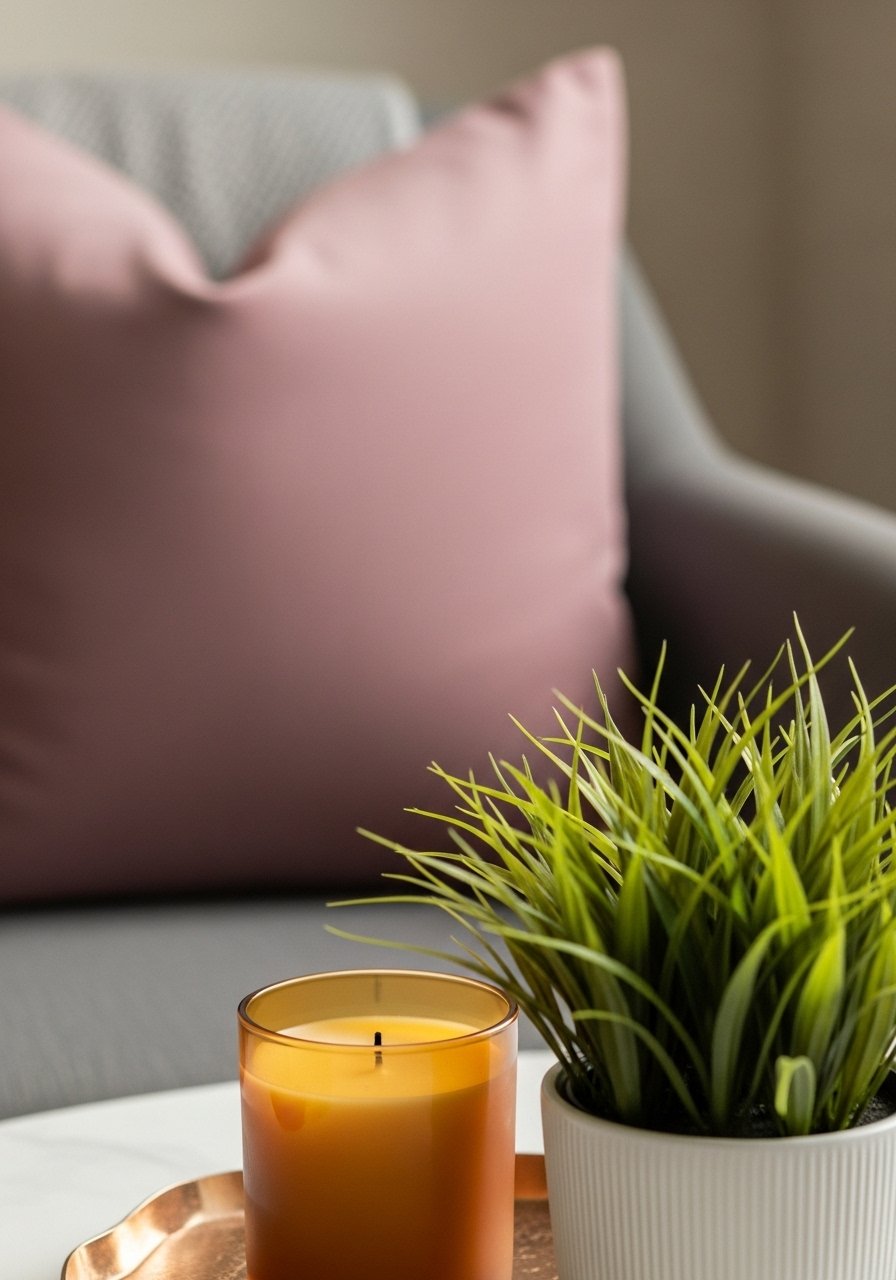
I pick a single muted accent—mauve, sage, or olive—and keep it to about 20% of the visual weight. A couple of mauve pillows or a sage throw adds personality while keeping the calm neutral base intact.
The trick people miss is subtlety. Too many bright accents dilute warmth and make the scheme feel busy. Avoid adding several competing colors. Stick to one muted accent and repeat it in 2–3 places for quiet cohesion.
Step 4: Bring in natural life and materials
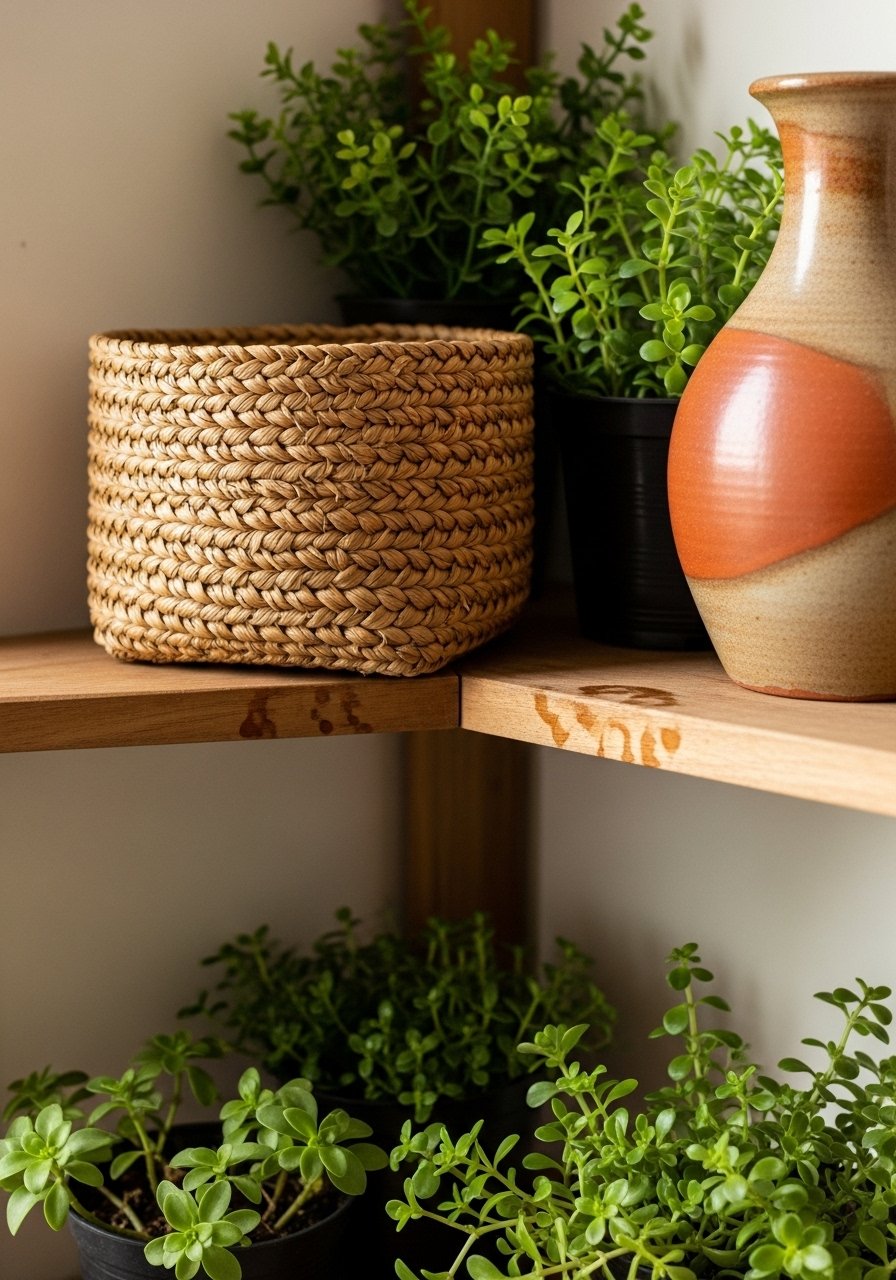
Plants and natural materials change the room’s energy instantly. A couple of small potted plants, a woven basket, and a ceramic vase add life and organic texture that warm neutrals love.
A common oversight is treating plants as optional décor. They act like a color and texture layer. Don’t overfill with fake, glossy plants that read plastic. Choose simple forms and real or high-quality faux options placed where they catch light.
Step 5: Soften light and consider the ceiling
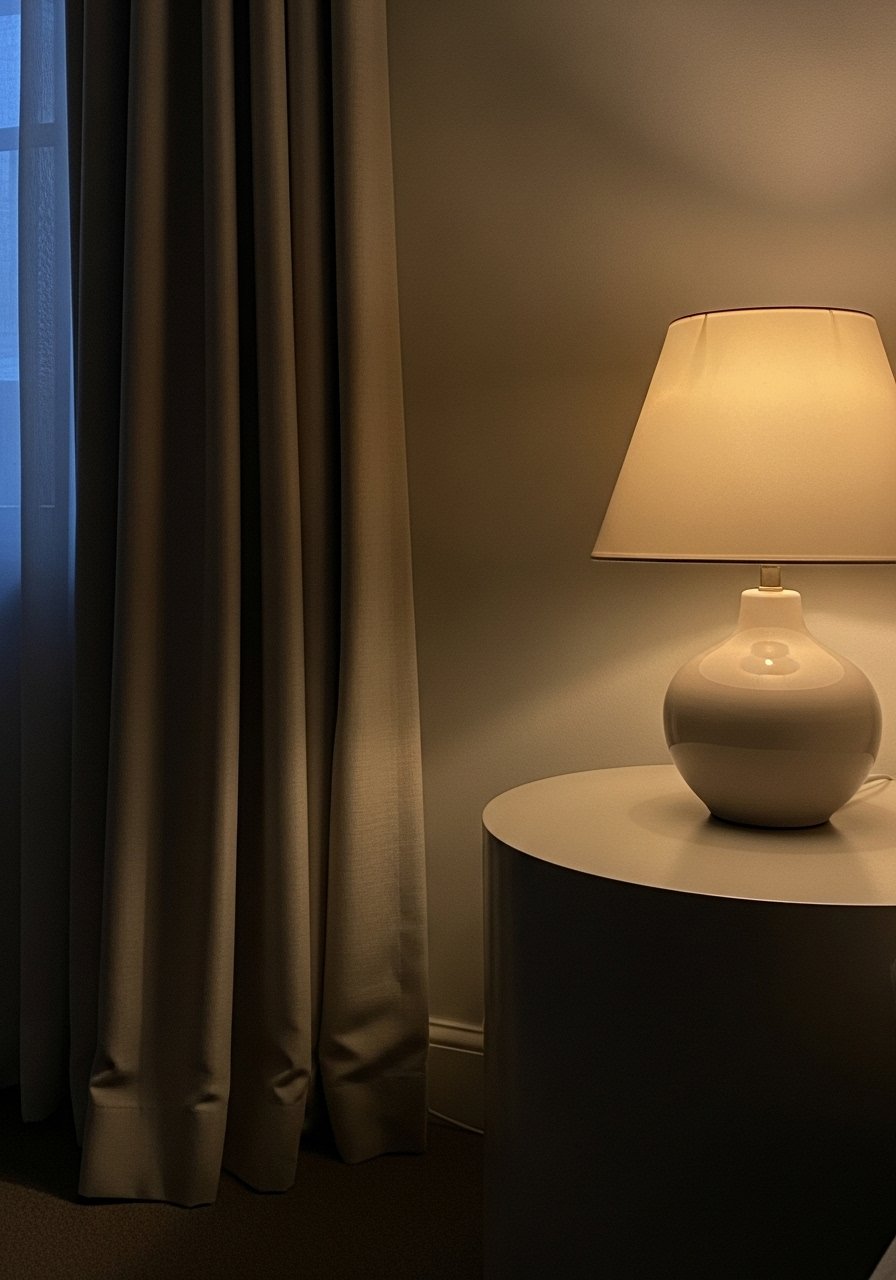
I soften the lighting with warm bulbs and a lamp instead of relying on bright overhead light. Table lamps with warm brass or ceramic bases give skin tones a friendly glow and tie into warm textiles.
People underestimate the ceiling. A slightly warmer cream or a grasscloth texture on the ceiling can stop light from feeling harsh. Avoid harsh white bulbs and a single overhead fixture; layer light and let shadows make the room feel intimate.
Why neutrals feel cold (and how to fix it)
Neutrals go cold when they’re uniform in tone and texture. If everything is the exact same beige or the room relies solely on cool grays, it will read clinical. The fix is simple: introduce warm undertones and contrast.
- Start with one warm base (rug or upholstery).
- Add two textured elements (throw, woven basket).
- Repeat one muted accent color in small doses.
Most people try to fix this with more accessories. Instead, change the undertone first—it's the easiest way to shift the whole room.
Small rooms and budget-friendly swaps
Small rooms need light bases and selective warmth. I use a light flatweave rug to keep space airy, then layer a small jute runner for texture. That keeps the room from feeling crowded.
Budget swaps that actually help:
- Swap one pillow for a velvet mauve cover (~$15–$30).
- Add a chunky throw (~$40–$65) instead of new upholstery.
- Use a single plant (~$20–$50) for freshness.
These moves cost less than big furniture changes and give immediate warmth.
Mixing this warm neutral look with what you already own
I never toss everything. I work with what’s there. Identify the largest piece’s undertone—warm or cool—and match your layers to it. If your sofa is cool, introduce warm textiles to balance it; if it’s warm, stick with complementary accents.
Tips:
- Keep pattern scale varied: large rug pattern, small pillow pattern.
- Use odd-numbered groupings for vignettes (three items look natural).
- Repeat one metal finish (brass or black) to tie pieces together.
This keeps the room intentional without feeling staged.
Final Thoughts
Start with one small swap—a patterned rug or a mauve velvet pillow—and live with it for a week. Small changes teach you what to repeat or drop.
You don’t need a full makeover to make a neutral room feel warm. Layer warmth, texture, and a muted accent, and the room will feel comfortable and deliberate.