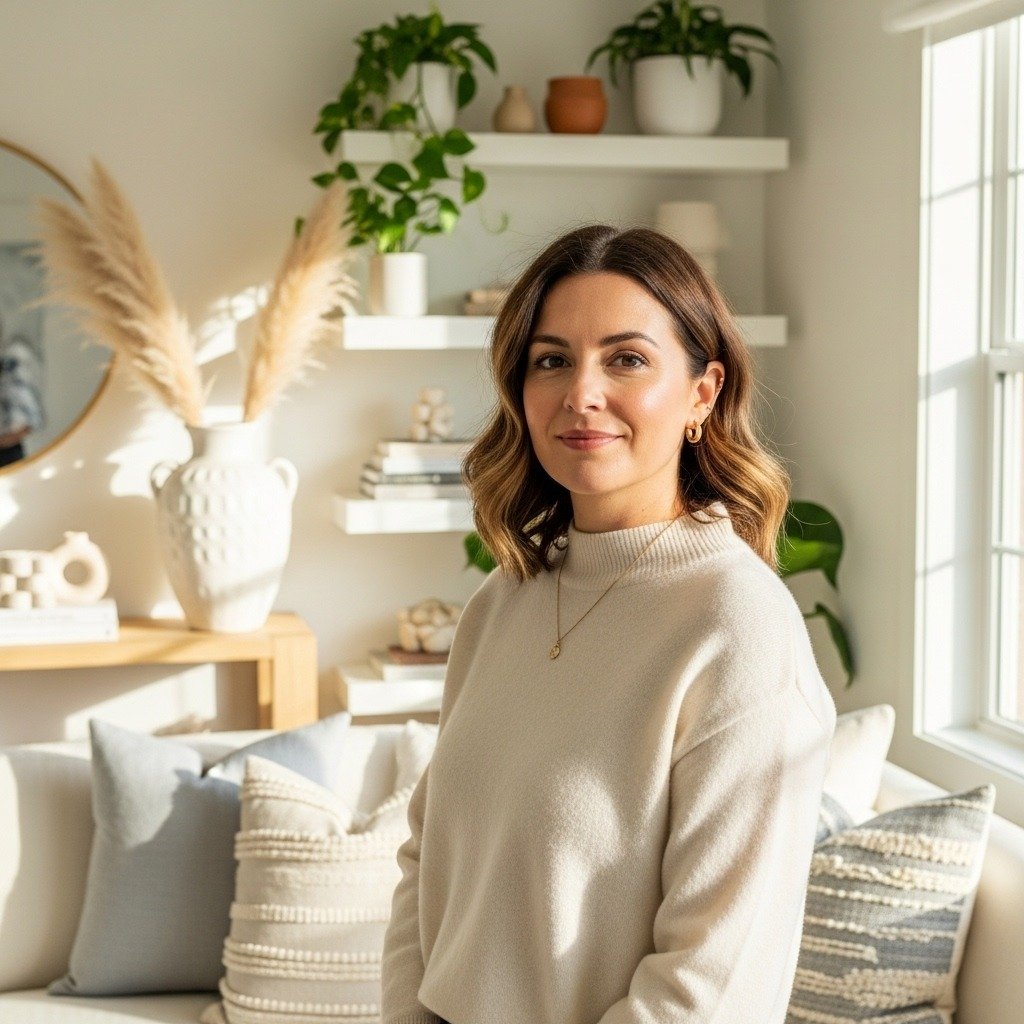
I stared at three mismatched shelves and felt stuck. Each time I added something the shelf read as clutter. I kept swapping pieces until the room felt worse, not better.
It took rethinking placement and small groups to make the shelves feel like part of the room, not an afterthought. You can make a shelf feel curated in about an hour, using what you already own.
I've noticed the most successful shelf looks are quietly balanced. You will end with a room that reads calm, layered, and lived-in, no dramatic spending required.
What You'll Need
- Floating shelf set in oak, set of 3 ($45-90). Pick widths that match your wall span
- Set of 3 ceramic vases, matte white ($25-40). Useful for odd-number groupings
- Small terracotta plant pots, set of 4 ($18-30). Greenery brings shelves to life
- Woven storage baskets, medium ($30-55). Hide clutter and add texture
- Stack of paperback books in neutral covers. Use about 6 to 12 across shelves
- Adjustable LED shelf lighting strip, warm white ($12-25). Subtle under-shelf glow
- A small framed print, 8×10, matted. I keep one leaning on every shelf group
- Sculptural bookends, brass finish ($20-40). One pair anchors stacked books
Step 1: Clear the Shelves and Start with Groups

Pull everything off. Yes, everything. Starting from blank avoids the tendency to jam items back where they stood. When the shelf is empty you see spacing and proportions clearly.
Arrange items into three piles: tall, medium, and low. Each shelf should have 2 to 4 visual anchors, not ten. That reduction creates negative space and breathing room.
Most people try to fill every inch. That makes shelves read busy. Leave at least 2 to 3 inches between grouped objects when possible. A common mistake is stacking only tall items. Mix heights so the eye moves across the shelf.
Step 2: Anchor with Weight and Repeat a Material
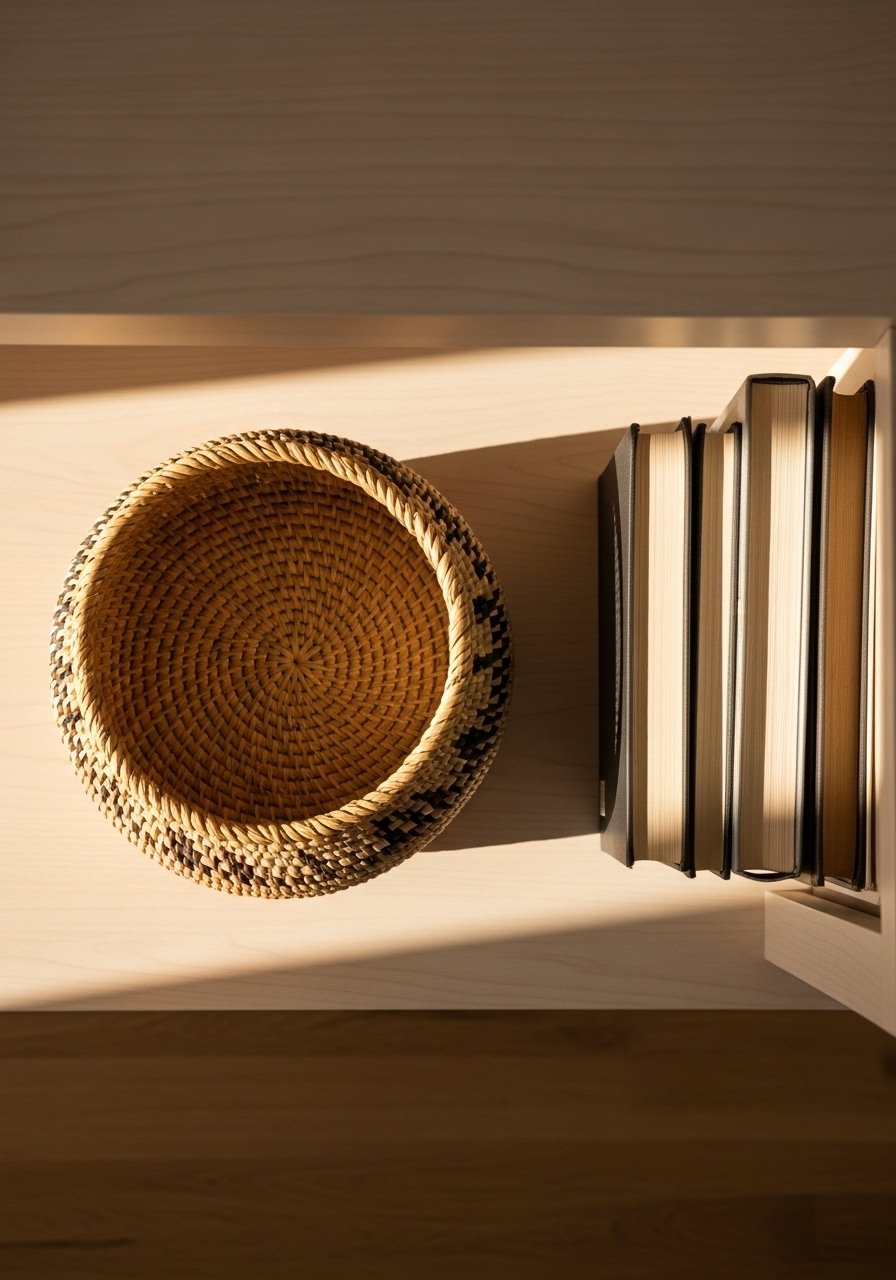
Start each shelf with one heavier object, like a basket or a stack of large books. That anchor gives weight and helps the shelf sit with the rest of the room. Repeat a material across shelves, for example wood and matte white ceramics, to tie the wall together.
Visually, the shelving will stop looking like random displays. It will start to feel cohesive and intentional. One thing people miss is repeating a finish at least twice. That small echo makes the whole arrangement read as a set.
Avoid placing all heavy pieces on the same side. Spread the weight so the overall wall feels balanced front to back.
Step 3: Group in Odds and Vary Heights
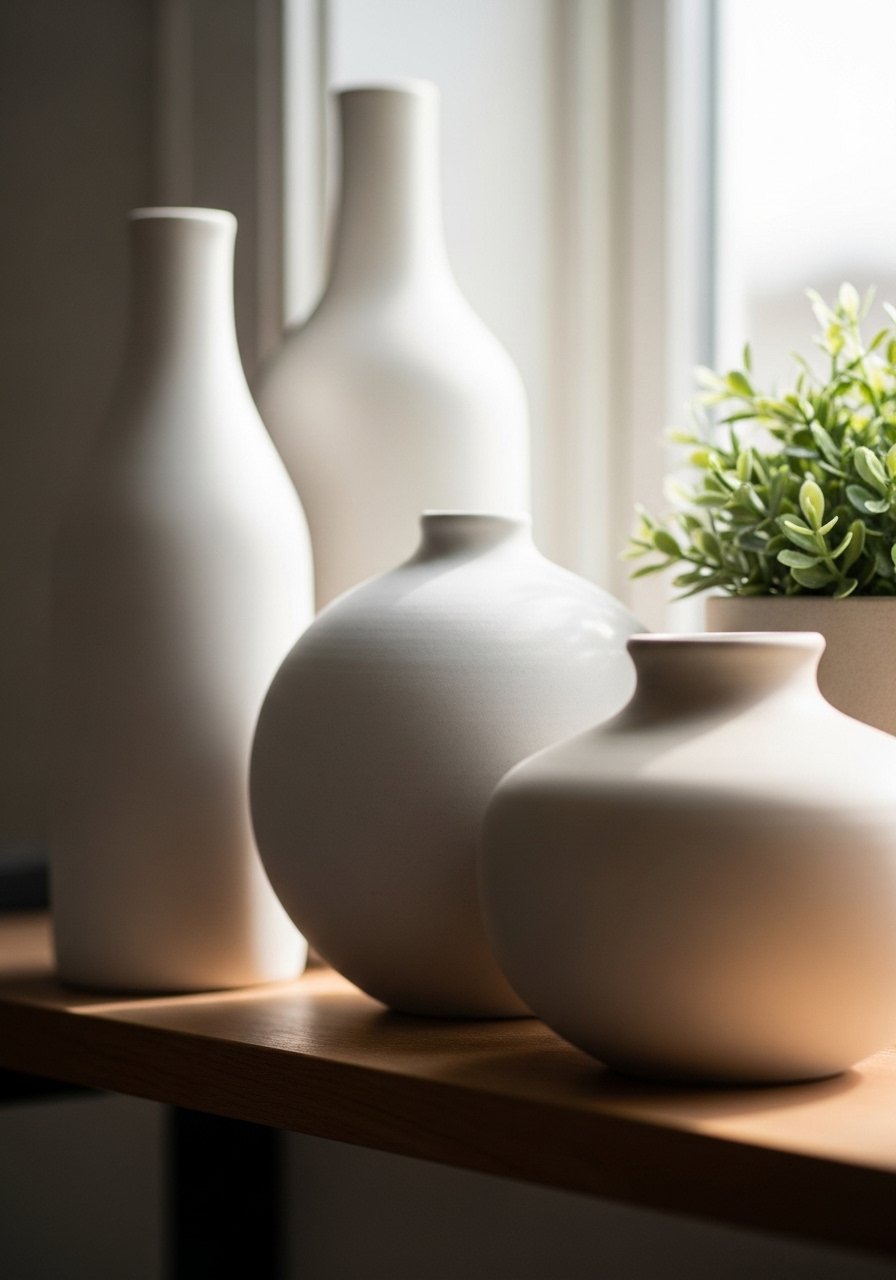
A group of three looks better than two. I used to stack pairs because they felt neat. After trying odd groups I stopped second-guessing. Place three objects together with varying heights. For example a vase, a small plant, and a framed print leaning behind them.
When done wrong the group looks forced or too symmetrical. When done right the group feels effortless and captured. Keep about 2 to 4 inches between the tallest and shortest in the trio. That spacing keeps the eye moving.
A common temptation is matching everything exactly. Don’t do that. Slight differences in scale or finish make the group lively.
Step 4: Add Greenery and a Touch of Light
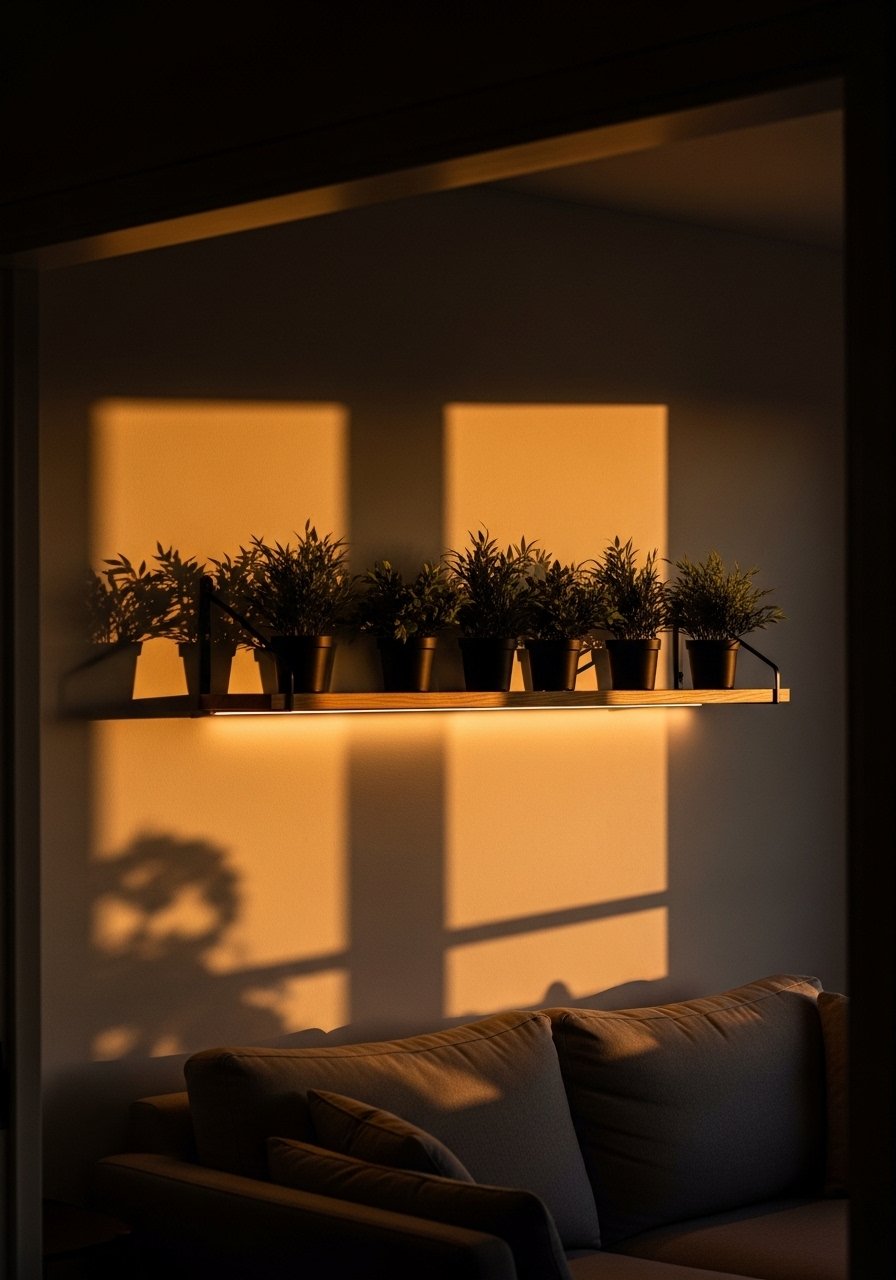
Greenery makes shelves feel lived-in instantly. Place a small trailing plant on a higher shelf so it can visually connect levels. Add a warm LED strip behind the underside of a shelf to create depth at night.
The visual change here is depth. Shelves stop feeling flat. People often overlook lighting and then wonder why their styling vanishes after sunset. A tiny light under a shelf costs little and adds big mood.
Avoid overwatering pots and then leaving water stains on wood. Use saucers or choose faux plants if you cannot maintain live greenery.
Step 5: Edit Down and Repeat Across the Room
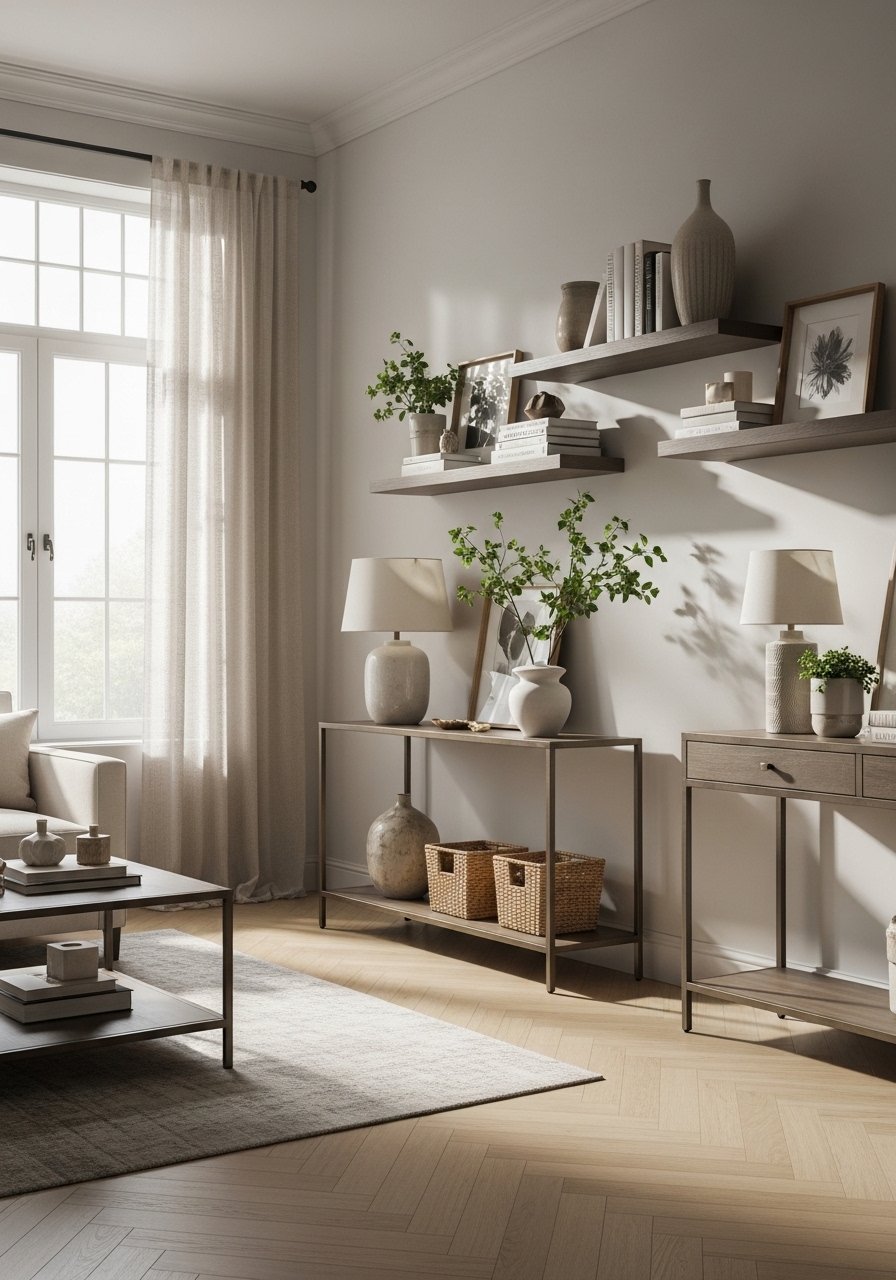
Step back and edit. I always remove one object after arranging. That one less thing usually makes the group breathe. Repeat a couple of motifs on adjacent furniture, for example a framed print or a woven basket on the console below, to create a flow across the room.
When shelves feel mismatched the room still reads disjointed. Repeating one or two elements across the space makes the shelving part of the room story. Don’t try to match every object. Aim for a rhythm.
Resist the urge to add small souvenirs just because you like them. They often break the visual line. Keep a box for those and rotate seasonally.
Why Your Shelves Still Look Cluttered After Styling
Most cluttered-looking shelves share a few problems. One is too many small objects. Another is no repeat of color or material. Fix those and the whole wall calms.
I keep this checklist in my head when re-editing:
- Remove at least one object from each shelf after styling
- Repeat one finish, like matte white ceramics, on two or more shelves
- Keep 2 to 3 inches of negative space around groups
- Use baskets to hide what must be hidden
Everywhere I look this year I see the same rule: less intentional stuff looks better than more accidental stuff.
Making This Work in a Small Room
I work in a small apartment. Floating shelves were my trick to add storage without bulk. Here is how I adjust proportions.
- Choose narrower shelves, 8 to 10 inches deep, to avoid overwhelming tight walkways
- Use taller objects near the ceiling to draw the eye up and create perceived height
- Lean one small framed print instead of hanging many small frames to save wall real estate
- Opt for shallow baskets for hidden storage rather than large bins
A friend asked me about this last week, and the main change I suggest is fewer pieces per shelf. Keep it simple.
Mixing Floating Shelves with What You Already Own
I used to think only a matching set would work. After trying mismatched pieces I learned how to harmonize different finishes. Start by choosing one unifying element, like a repeated wood tone or a consistent ceramic finish.
If your sofa has warm tones, echo that with warm wood shelves. If your room follows an organic modern palette, add natural textures and matte white ceramics. One specific example: pair an oak shelf with a jute basket and a matte white vase. It creates a small, repeatable recipe you can use on each shelf.
When you match too many things exactly the space reads staged. Allow small contrasts so the room feels lived-in.
Start with One Corner
Pick one corner and style a single shelf. That small win changes how the room feels and gives you confidence to keep going. Start with one repeated material and one living plant.
I switched to a pair of matte white vases six months ago and found repeating them across shelves made the whole wall read calm. If you can commit to one corner for an hour you will see what a difference a little editing makes.