I used to walk into rooms that felt flat and cold. Windows and lamps were on, but light never moved and corners stayed dim.
I started placing mirrors where the light could bounce and where walls needed a friend. Suddenly rooms felt larger, warm, and complete without adding visual clutter.
How to Decorate a Room With Mirrors to Add Light
You'll learn how to place one or two mirrors to catch and redirect daylight, choose shapes that soften a room, and pick a focal mirror that reads like furniture. It's a simple method I use for quiet, organic modern spaces.
What You'll Need
- Large arched wall mirror, 30" x 40" (~$80–250)
- Oversized full-length leaning mirror, 60" x 30" (~$150–400)
- Bouclé frame round mirror, 24"-30" (~$120–280)
- Fluted glass framed mirror, 28" x 36" (~$130–300)
- Backlit arched mirror with halo lighting, 24" x 36" (~$150–350)
- Organic puddle-shaped wall mirror, medium (~$100–250)
- Round window-facing mirror, 20" diameter (~$70–180)
Step 1: Put a mirror opposite or near a window to bounce daylight
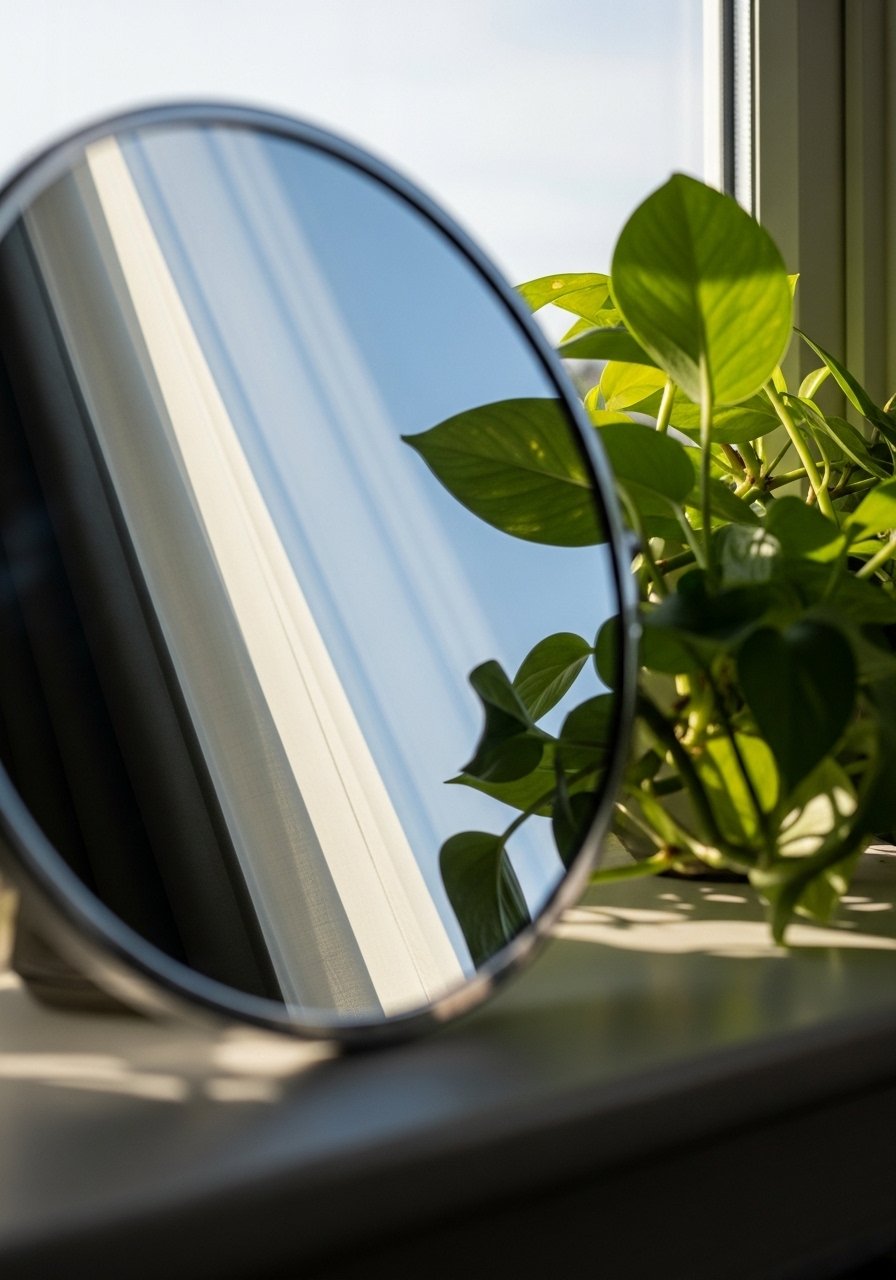
I start with the window because light is the easiest thing to move. I hang or lean a mirror across from or adjacent to the window so the glass catches sky, trees, or just the open view. Visually the room deepens — reflections create another layer and make light feel like it’s coming from more angles.
People miss that a slightly angled mirror captures more sky and depth than one hung flat. Small mistake: don’t place it where incoming glare hits eyes when you sit. Aim to reflect the scene, not the sun.
Step 2: Tuck an arched mirror into a corner to expand small spaces
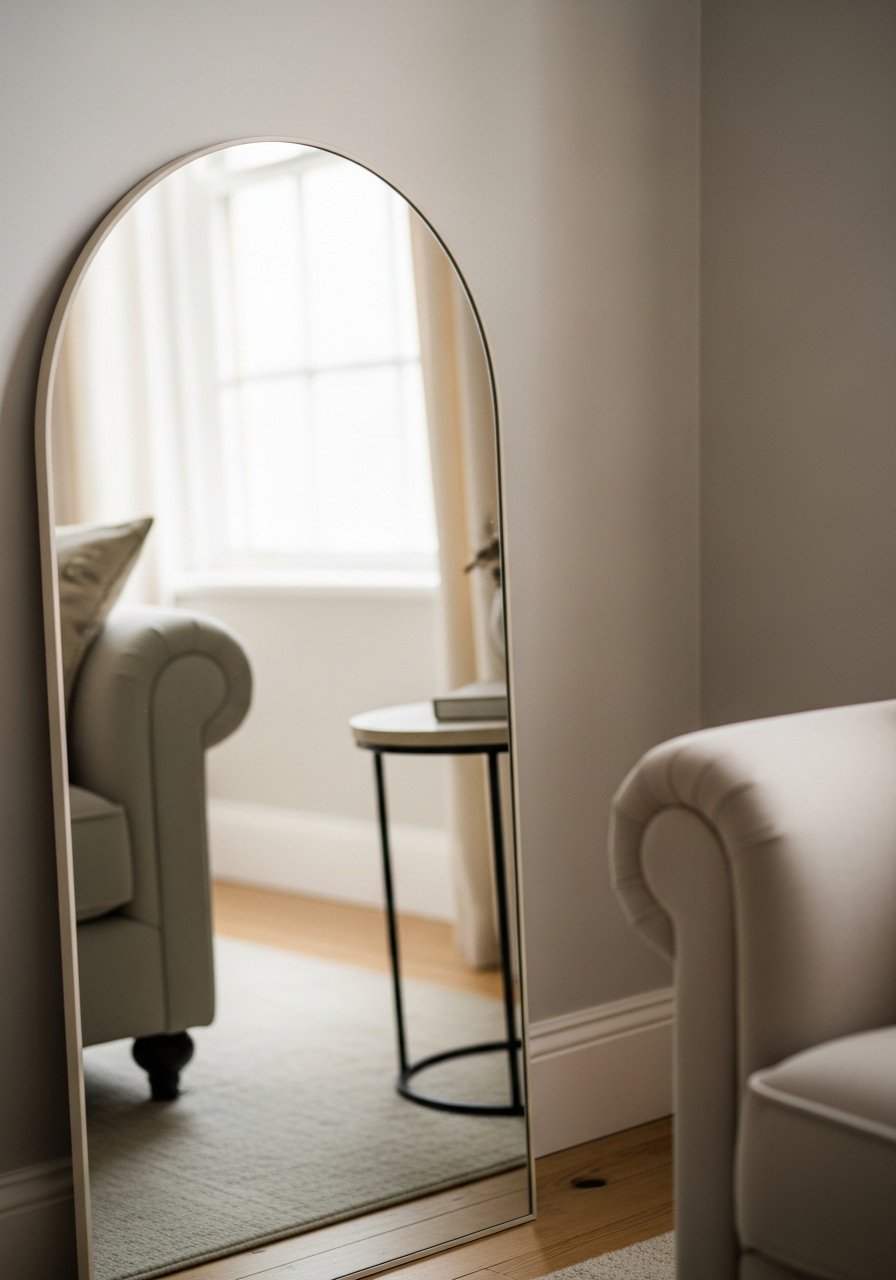
Corners are often the darkest, so I tuck a narrow arched mirror there. It reads like a quiet architectural detail and visually pushes the wall back. The room instantly feels less boxed-in; shadows soften and the corner becomes intentional instead of ignored.
An insight I learned: a vertical arch gives height without competing with art. The small mistake to avoid is choosing a mirror too tiny for the corner — it should feel like a choice, not an afterthought.
Step 3: Use one oversized mirror as a focal over a mantel or console

When a wall feels empty, I pick one large mirror and make it the room’s anchor. Over a mantel or console, an oversized piece reads like art and reflects the room back into itself. The visual change is big: you get scale, light, and a single calm focal point.
People often hang large mirrors too high. I keep the center of the mirror at eye level for a seated view and mirror width around two-thirds of the furniture below. Avoid tiny decorative frames that disappear against a big wall.
Step 4: Layer mirrors with art and texture for a soft reflection
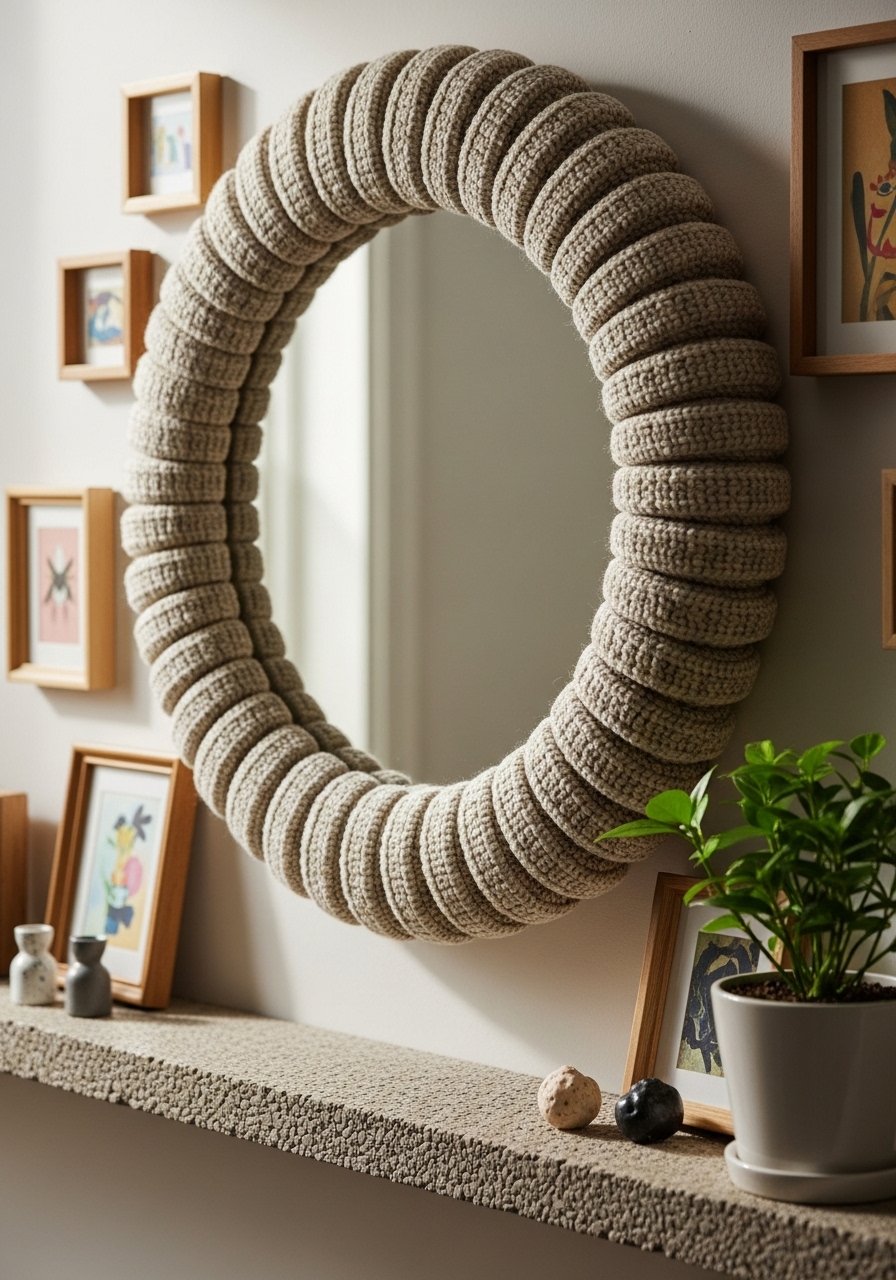
I layer a tactile or fluted mirror with art and textiles to make reflections feel cozy, not clinical. A bouclé frame or fluted glass mirror adds texture that softens what’s reflected. Visually, reflections become part of the room’s material story instead of a shiny interruption.
One insight: staggered heights create depth — don’t align every edge. A common mistake is crowding too many shiny surfaces together; leave negative space so reflections breathe.
Step 5: Choose a backlit or illuminated mirror to add a halo glow in dim areas
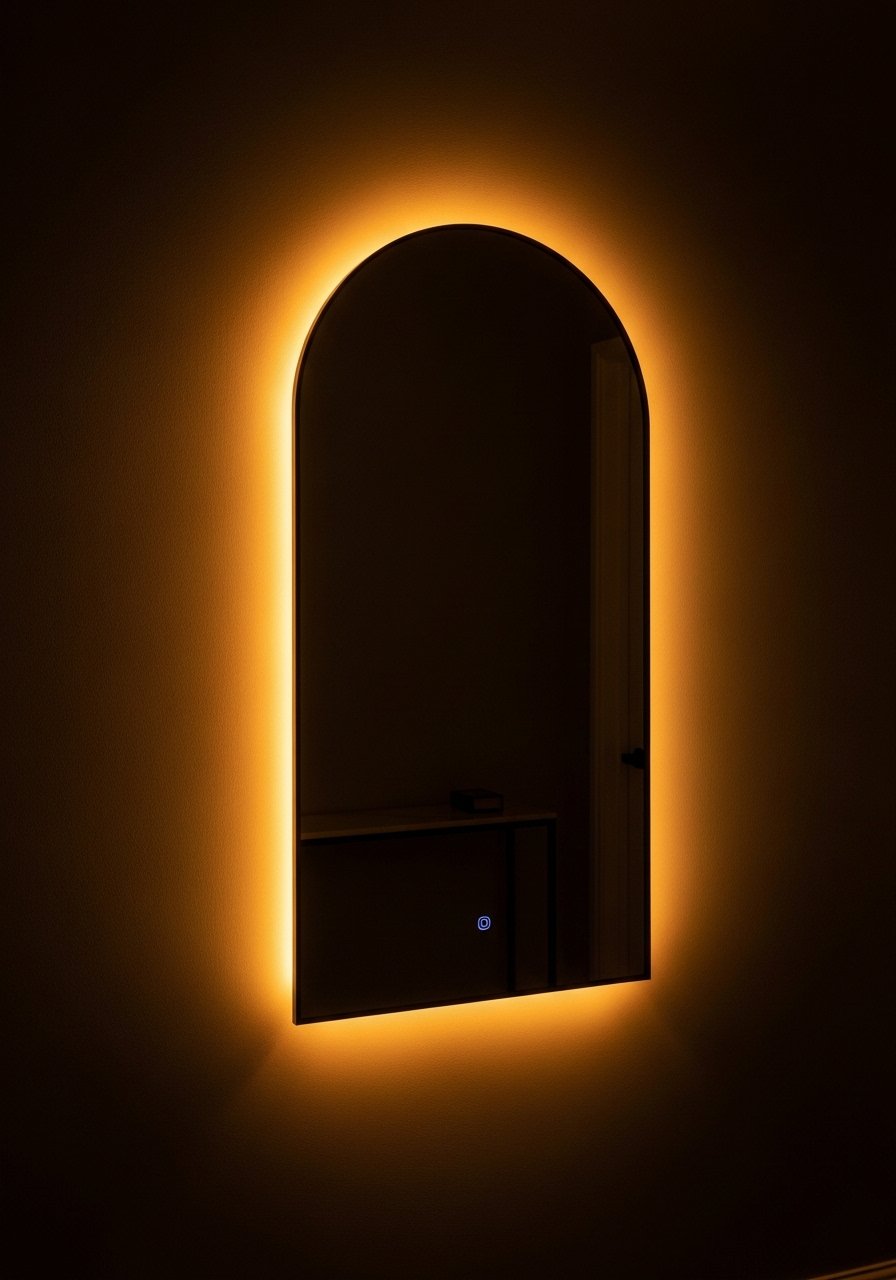
In awkward, dim corners I swap a standard mirror for a backlit arch. The halo light creates gentle fill without needing another lamp. It shifts the mood — corners read as intentional and the reflected glow makes fabrics and artwork look richer.
People forget light color. I aim for warm-toned backlight so reflections feel natural. Small mistake: don’t rely only on the mirror for task light; it’s for ambiance and balance, not bright work lighting.
Step 6: Match mirror scale and shape to furniture for balanced rooms
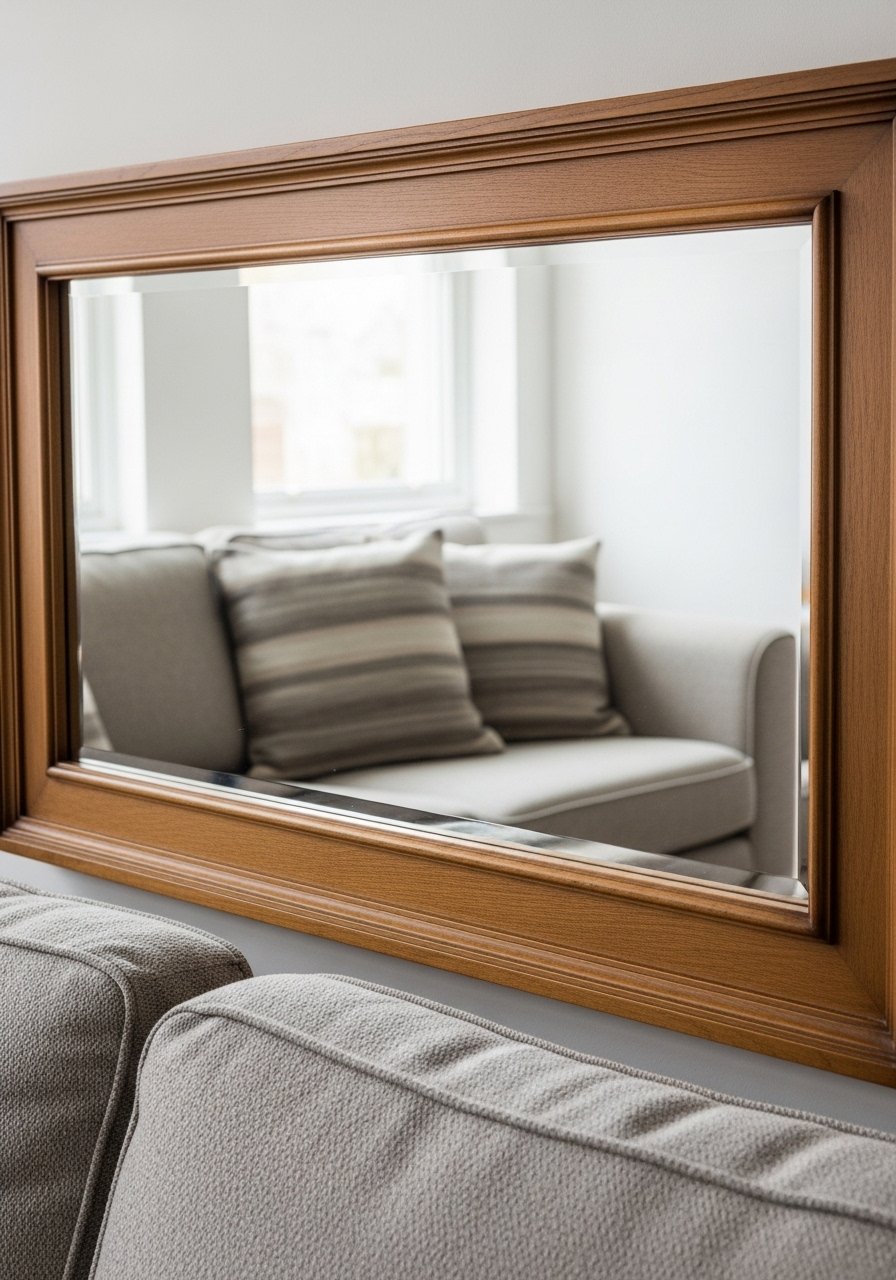
Scale is where rooms finally stop feeling "off." I size mirrors to furniture: a mirror over a sofa or console should feel balanced — not dwarfing the piece, not lost on the wall. Curves soften hard lines; organic puddle or arched shapes warm up minimal rooms.
One insight: repeating a curve elsewhere (lamp, rug motif) ties the look. The mistake I see most is mixing mirror sizes without a clear rhythm — either commit to symmetry or an intentional stagger, not randomness.
Common mistakes and how to fix them
I’ve seen rooms go wrong by treating mirrors as decoration only. A mirror should serve light and proportion first, style second. Avoid placing mirrors where they reflect clutter or private areas.
Quick fixes:
- Don’t hang them too high — think seated sightlines.
- Keep the frame language consistent with nearby finishes.
- If reflections feel busy, swap a mirror for a softer textured piece.
How to adapt mirrors for small rooms or a tight budget
Mirrors are one of the most cost-effective ways to add light. In a small room I choose a taller narrow mirror or tuck one into a corner rather than an expensive full wall. Leaning mirrors save wall holes and feel relaxed.
Budget tips:
- Look for arched or puddle shapes in affordable ranges ($80–$250).
- Try a single statement mirror instead of multiple matching pieces.
- Use Secondhand or thrift finds and reframe them for texture.
Mixing mirror styles with what you already own
I match mirror frames to something in the room — brass hardware, a wood tone, or a boucle pillow. That small echo makes the mirror feel like furniture. If your room is modern minimal, pick frameless or fluted glass; if it’s layered cozy, choose tactile frames.
A simple approach:
- Pick one dominant frame finish and repeat it twice.
- Use shape to contrast rigid furniture (soft arches with square sofas).
- Keep reflections uncluttered by removing small items from view.
Final Thoughts
Start with one mirror that solves a real problem: a dark corner, a blank wall, or dull light. I often begin with an arched wall mirror — it’s inexpensive and changes the room quietly.
Place it where the light moves, scale it to furniture, and let the frame add texture. Small changes here make a room feel intentional and comfortable.