I’ve laid down rugs that somehow still left a room feeling cold and unfinished. A too-small rug or one that floats alone can make furniture look scattered instead of settled.
I learned to think in scale, texture, and layering. These quick rules help me make living rooms feel warm, bedrooms feel grounded, and open plans read as distinct zones.
How to Decorate a Room With Rugs the Right Way
This is what you’ll learn: how to pick the right size, where to place it, and how to layer for texture and balance. It’s achievable. The result should read as intentional, lived-in, and comfortable — often using a neutral base with a textured topper.
What You'll Need
- Handbraided jute area rug, 8×10, natural (~$50–150)
- Neutral micro-shag area rug, 6×9, oatmeal (~$80–200)
- Flatweave kilim rug, 5×8, faded pattern (~$100–250)
- Washable area rug, 6×9, neutral (~$100–200)
- Non-slip rug pad, 6×9 (~$15–50)
- Bouclé accent rug/topper, 4×6, cream (~$80–200)
- Kilim runner, 2.5×8, low-pile (~$50–150)
- Hand-tufted wool abstract rug, 6×9, brushstroke (~$150–300)
Step 1: Measure and map your room first
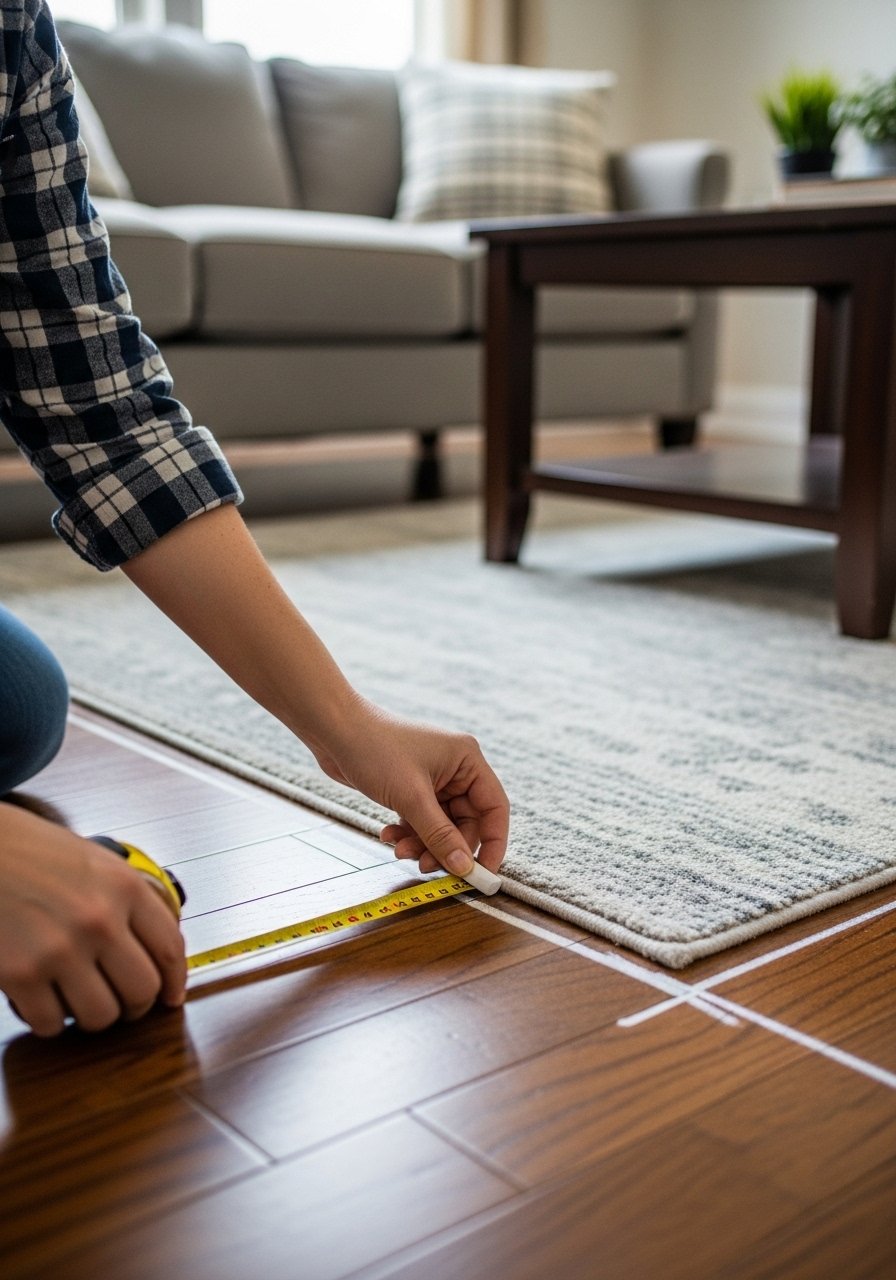
I start with a tape measure and a mental map. I measure the overall floor, seating group, and the distance between furniture legs. This tells me whether to go big — keep at least 6–12" beyond seating — or to choose two smaller rugs.
Most people miss that proportion matters more than pattern. A too-small rug makes everything look off. One small mistake to avoid: buying the biggest pattern you like before confirming scale. Size first, then style.
Step 2: Pick the right shape and size for the mood
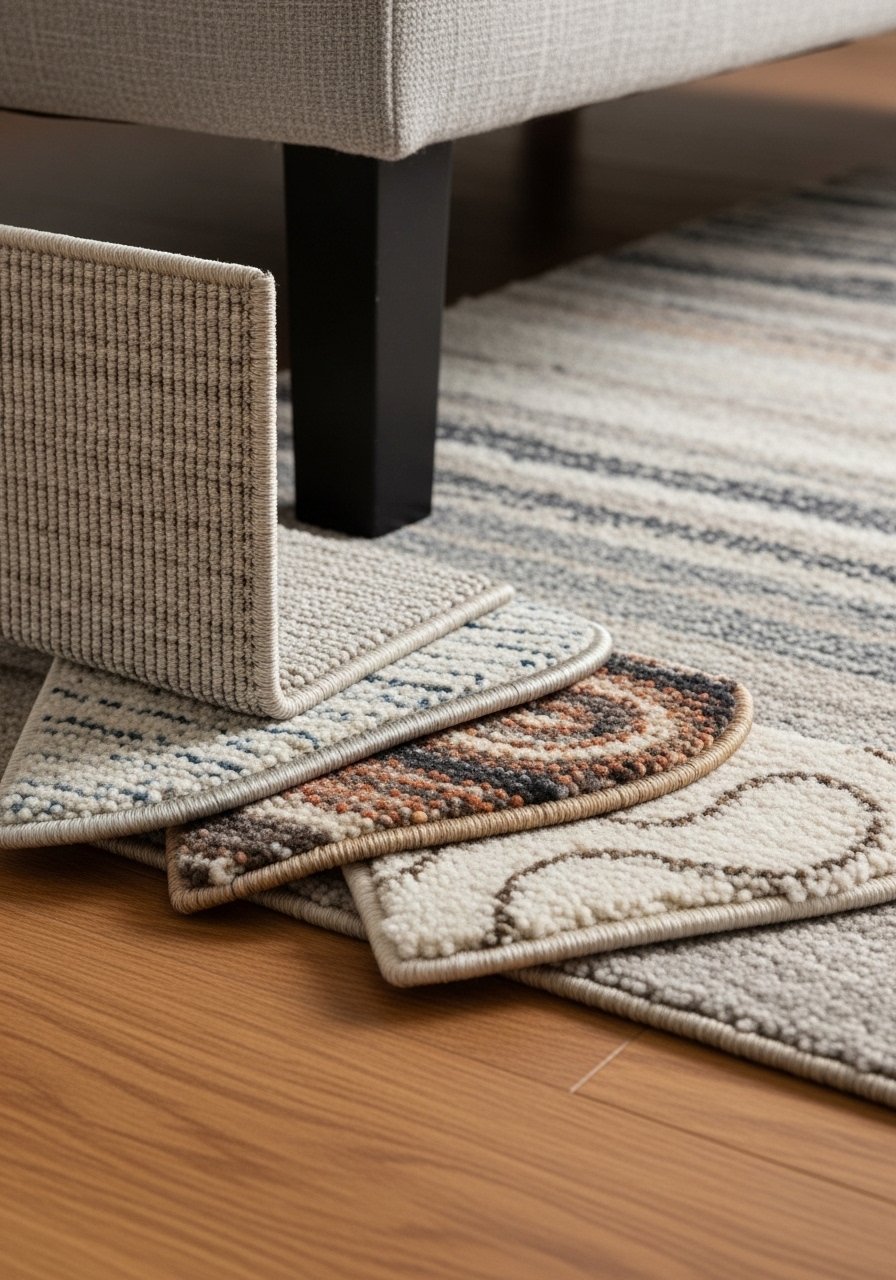
I decide shape by how the furniture sits. For a tight seating cluster, I place a large rectangle with the front legs on the rug. For a modern, softer feel I’ll use an oversized organic-shaped rug to soften straight lines.
An insight I use: curves change the room’s energy — an organic rug can make a rigid arrangement feel relaxed. Small mistake: choosing a rug that visually competes with everything else. If you want calm, choose texture over loud pattern.
Step 3: Anchor furniture properly
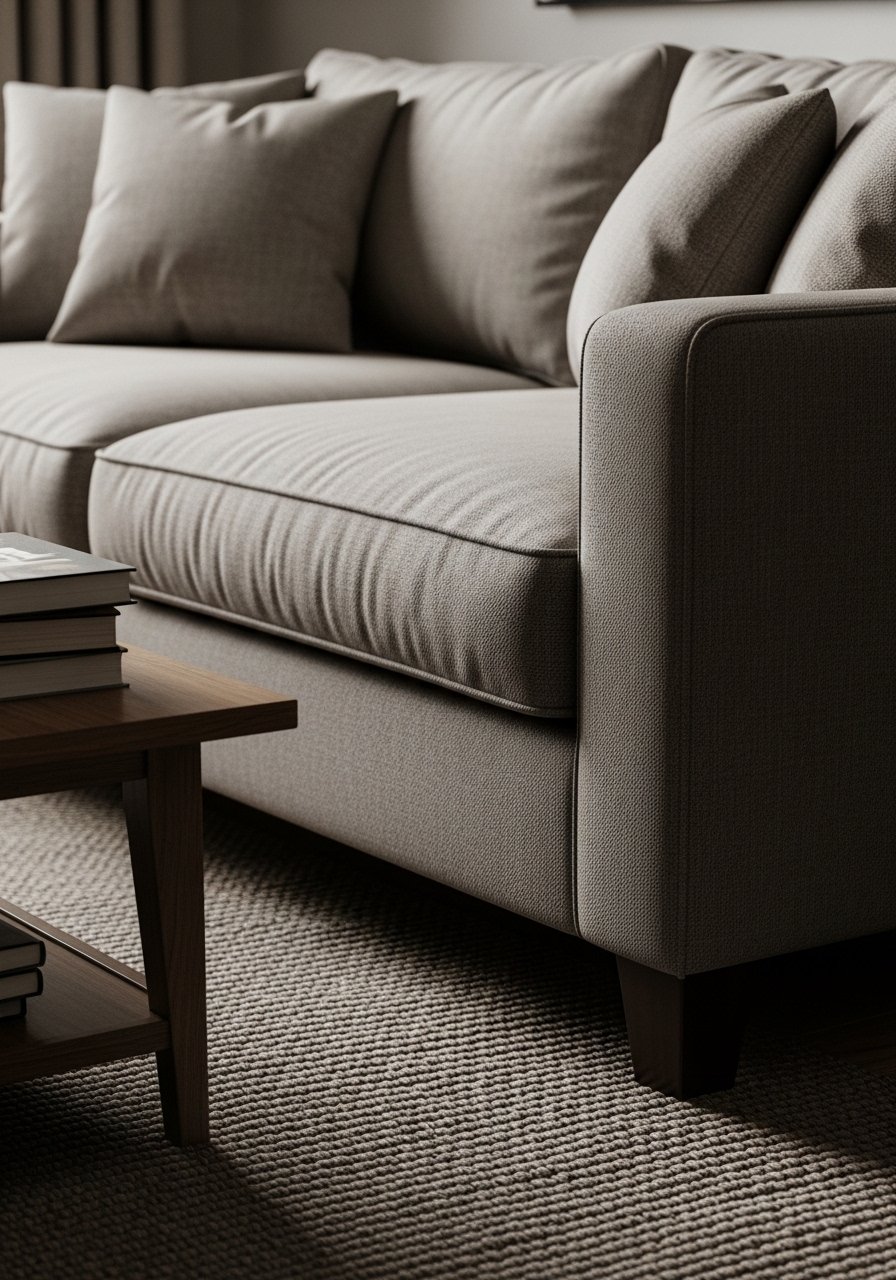
I place the rug so furniture feels connected. In living rooms I put at least the front legs of the sofa and chairs on the rug. In bedrooms I extend about 24" past the sides of the bed when possible so stepping out feels intentional and warm.
People often miss that “floating” rugs make a group look disconnected. The small mistake to avoid: letting only a coffee table sit on a tiny rug. It reads unfinished. Aim to visually tie pieces together.
Step 4: Layer for texture and depth
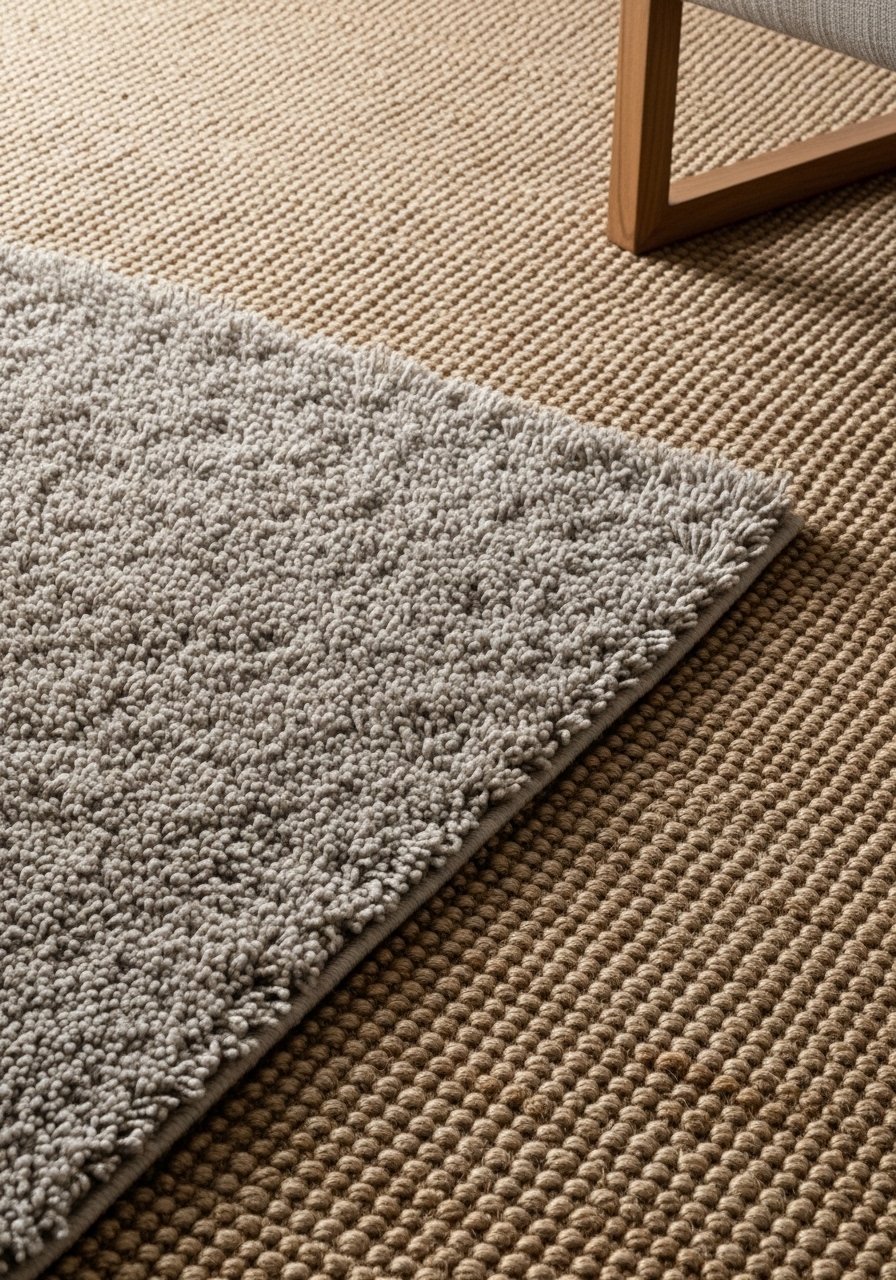
I almost always layer — a jute base with a textured topper gives depth without loud color. Layering defines zones in open plans and keeps high-traffic durability underfoot. I like a neutral flatweave base and a bouclé or shag topper for contrast.
An insight: layers let you mix durability and comfort — jute takes wear, shag gives softness. Don’t make the mistake of matching piles; let the textures speak to each other so the top rug doesn’t look like an afterthought.
Step 5: Finish with small edits and care
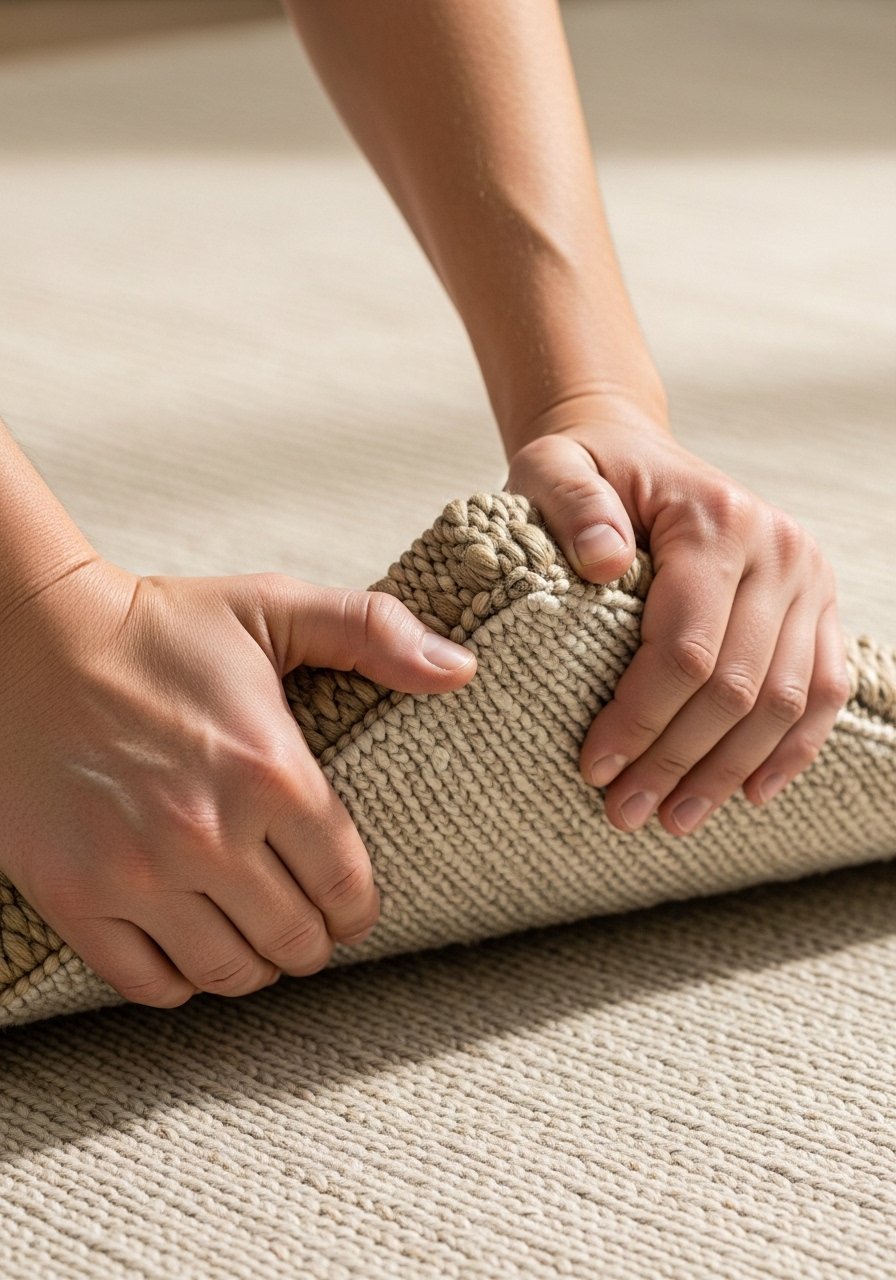
I add a non-slip pad, straighten edges, and pull throw placement back an inch if needed. This is where the room stops feeling like a shop display and starts looking lived-in. I also pick washable or low-pile options where kids or pets live.
People miss maintenance until stains or trips happen. Don’t skip the pad — it stops slipping and preserves the rug. If you’re unsure, pick a washable rug as a low-commitment test before committing to wool.
Common rug placement mistakes (and how I fix them)
I see the same missteps in friends’ rooms. Small rugs that sit under only a coffee table. Rugs that end at the door. Patterns that fight the furniture scale. I fix these by prioritizing size and texture before pattern.
Quick fixes I use:
- Move furniture so front legs sit on the rug.
- Swap a loud pattern for a neutral, textured topper.
- Use runners or two rugs to create intentional pathways in open plans.
Rugs in small rooms or on a budget
Small rooms benefit most from scale and light neutrals. If an 8×10 won’t fit, I put two runners or use a rug at the foot of the bed plus two bedside runners. Budget-wise, a jute base with an affordable shag topper gives a layered look for less.
Practical tips:
- Use a 5×8 flatweave under a small sofa, with a 4×6 bouclé on top.
- Try washable rugs for family rooms to avoid replacement costs.
- Runners can flank furniture when a full rug won’t fit.
Mixing vintage with modern pieces
I like faded kilims or Persian-inspired rugs with clean-lined sofas. The trick is to mute the palette — go for faded, dusty tones or low-pile versions so the rug reads as worn-in, not loud. Place a neutral textured topper over a vintage base if you want to soften pattern.
How I balance it:
- Keep larger furniture neutral and let the rug be the subtle personality.
- Use repeat colors from the rug in pillows or a throw to tie the room.
- If the vintage pattern is busy, choose sculpted texture (bouclé, shag) on top to calm the eye.
Final Thoughts
Start with scale and a pad. A neutral jute base plus a small bouclé topper is an easy test that makes rooms feel balanced without a big spend. Try one change — moving the sofa forward onto a larger rug — and you’ll see how much steadier the whole room feels.
You don’t need perfect styling to get a comfortable result. Small, thoughtful edits make a place feel intentionally lived-in.