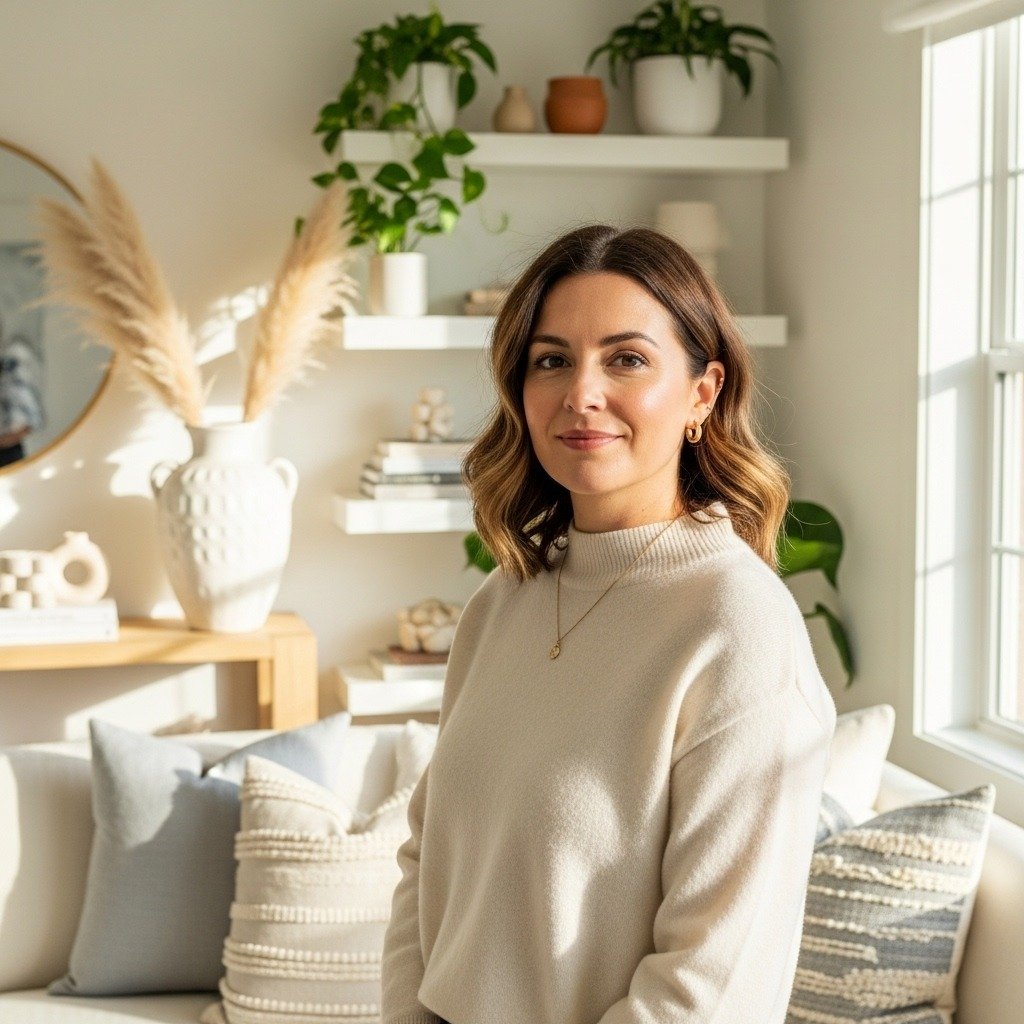
I’d grown used to shelves that shouted “stuff” instead of a room that felt calm. I’d pile books, photos, and knickknacks until the whole wall read as clutter. It made the space feel busy and a little cold at the same time.
I learned to edit and place with intention. Small moves—leaving air, choosing one anchor per shelf, and mixing textures—made shelves feel collected, not chaotic.
How to Decorate a Room With Shelves Without Clutter
This is exactly the method I use when a room feels unfinished. You’ll learn how to make each shelf tell one short story, keep negative space, and hide function so the room reads calm and lived-in. The result: balanced, intentional shelves that feel approachable and not over-styled.
What You'll Need
- Live-edge floating shelf, walnut, 36" (~$100–200)
- Floating wall shelf set, acacia wood, 3-pack (~$60–150)
- Small potted pothos plant, set of 2, real (~$20–60)
- Mixed photo frame set, black/wood/white, 4-pack (~$30–80)
- Woven seagrass basket, medium (~$25–50)
- Vintage-style decorative book box, set of 2 (~$15–40)
- Sculptural ceramic vase, matte white, 10" (~$20–70)
- Warm LED strip lights, dimmable, 16ft (~$40–100)
Step 1: Edit ruthlessly so each shelf reads like one small vignette

I start by removing everything. I literally put items on the floor and only bring back the pieces that belong together. The goal is one short story per shelf—a single mood or color thread. Visually the wall gets lighter and calmer; eye paths land on anchors instead of getting lost.
Most people keep too many similar objects. The miss: you don’t need a knickknack on every shelf. Avoid the mistake of filling holes just to “balance” a shelf—empty space is a design choice.
Step 2: Pick one anchor per shelf and place it off-center
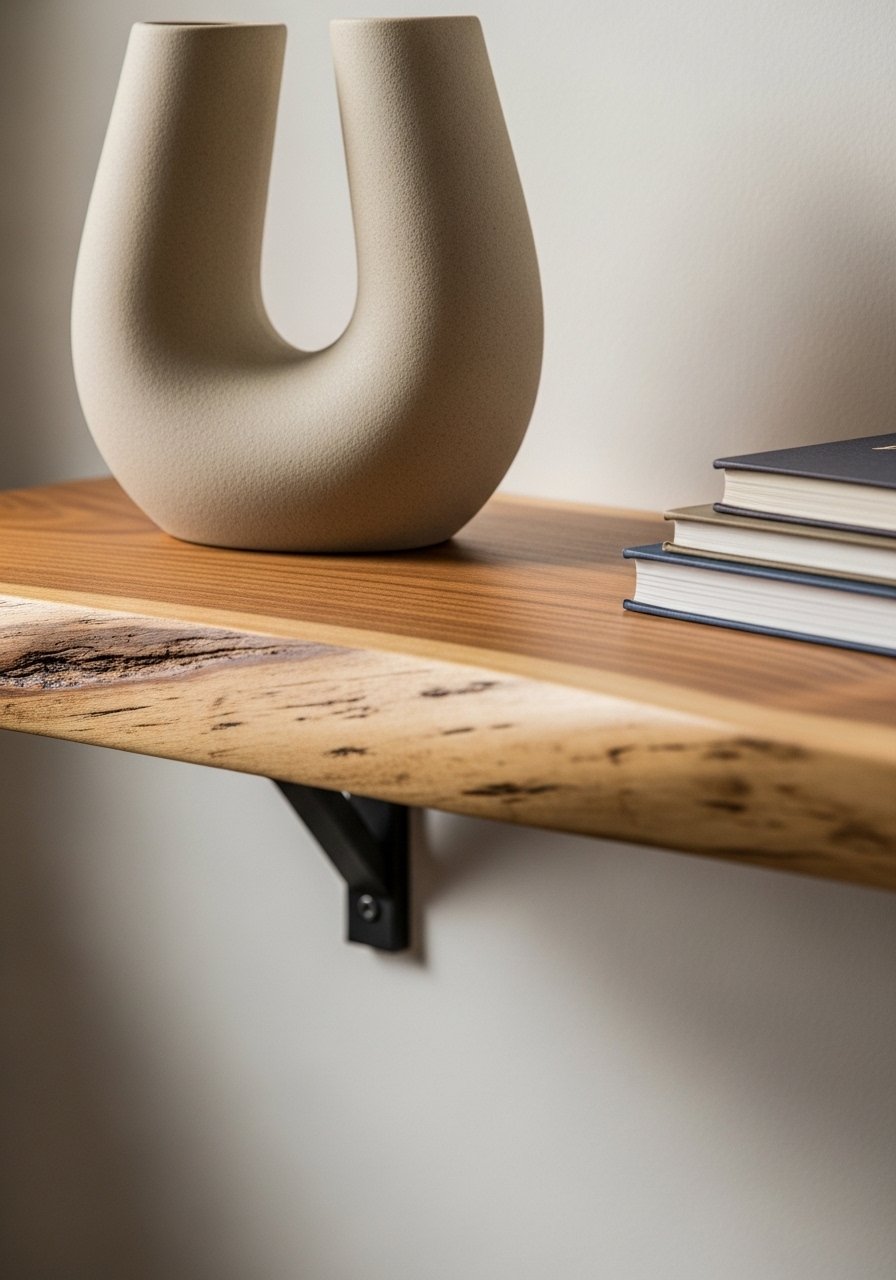
I always choose one dominant object—a live-edge shelf ledge with a strong vase, a framed photo, or a plant. I place that anchor slightly off-center and let smaller items support it. The shelf looks intentional the moment you can name its focal piece.
People often center everything. The insight: a slight offset feels more natural and less staged. Don’t cluster only at the shelf’s edge; give the anchor room to breathe so surrounding items don’t compete.
Step 3: Layer heights and textures for depth
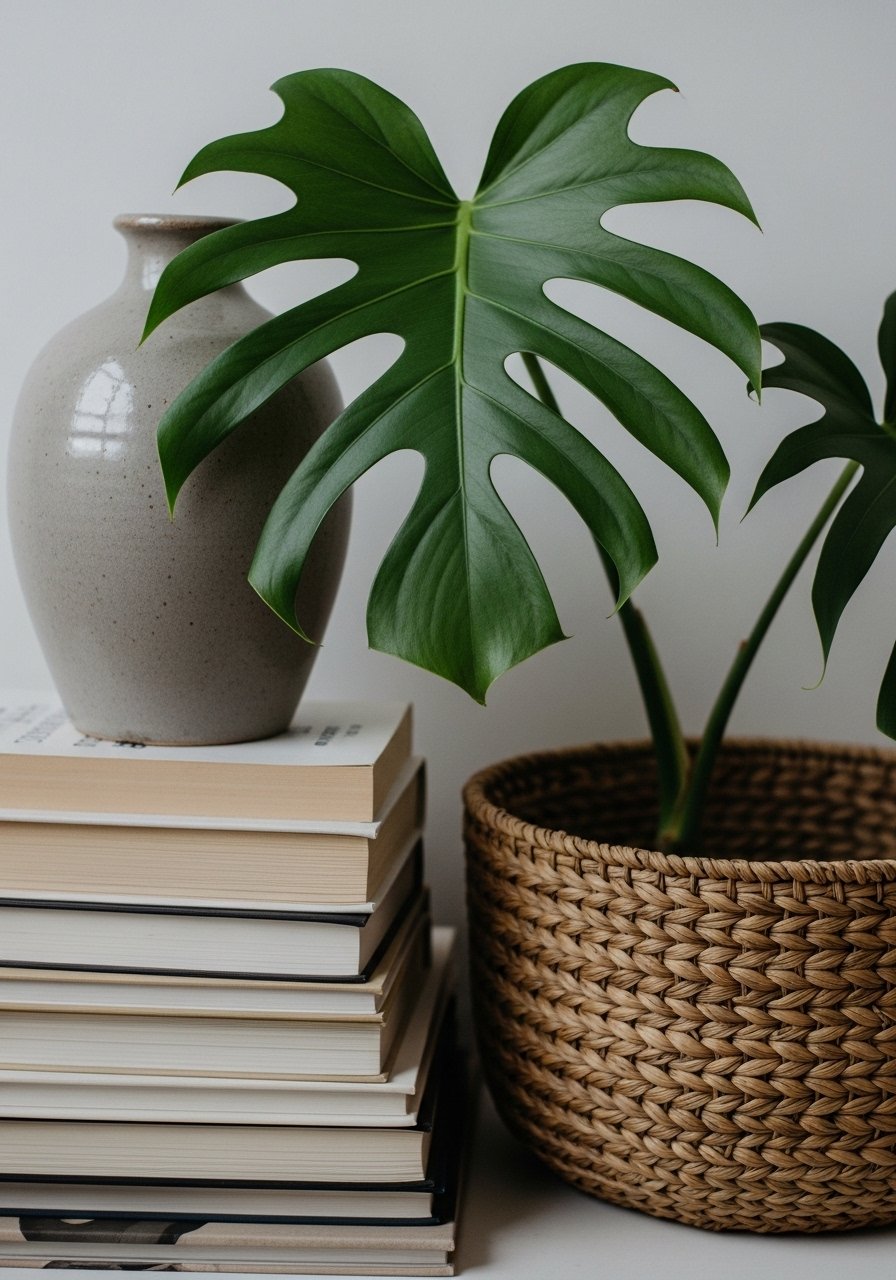
I layer books, a low basket, and a tall plant to build depth. Books give height and can act as stands for smaller objects; baskets add texture and hide things. The visual change is immediate—shelves go from flat to dimensional without adding clutter.
A lot of people forget texture. The miss: too many similar finishes read boring. Avoid repeating the same material three times in row; mix matte ceramic, wood grain, and woven fibers for richness.
Step 4: Group in odds and leave breathing room between clusters

I arrange objects in odd numbers—three or five—so groups feel balanced without being symmetrical. Then I step back and make deliberate gaps between groups. That negative space gives the eye places to rest and prevents visual noise.
Many people try to fill every inch. The insight: empty space anchors your styling. Mistake to avoid: pushing groups too close together because you think “more looks fuller.” It usually reads messy.
Step 5: Hide function — use decorative boxes and baskets
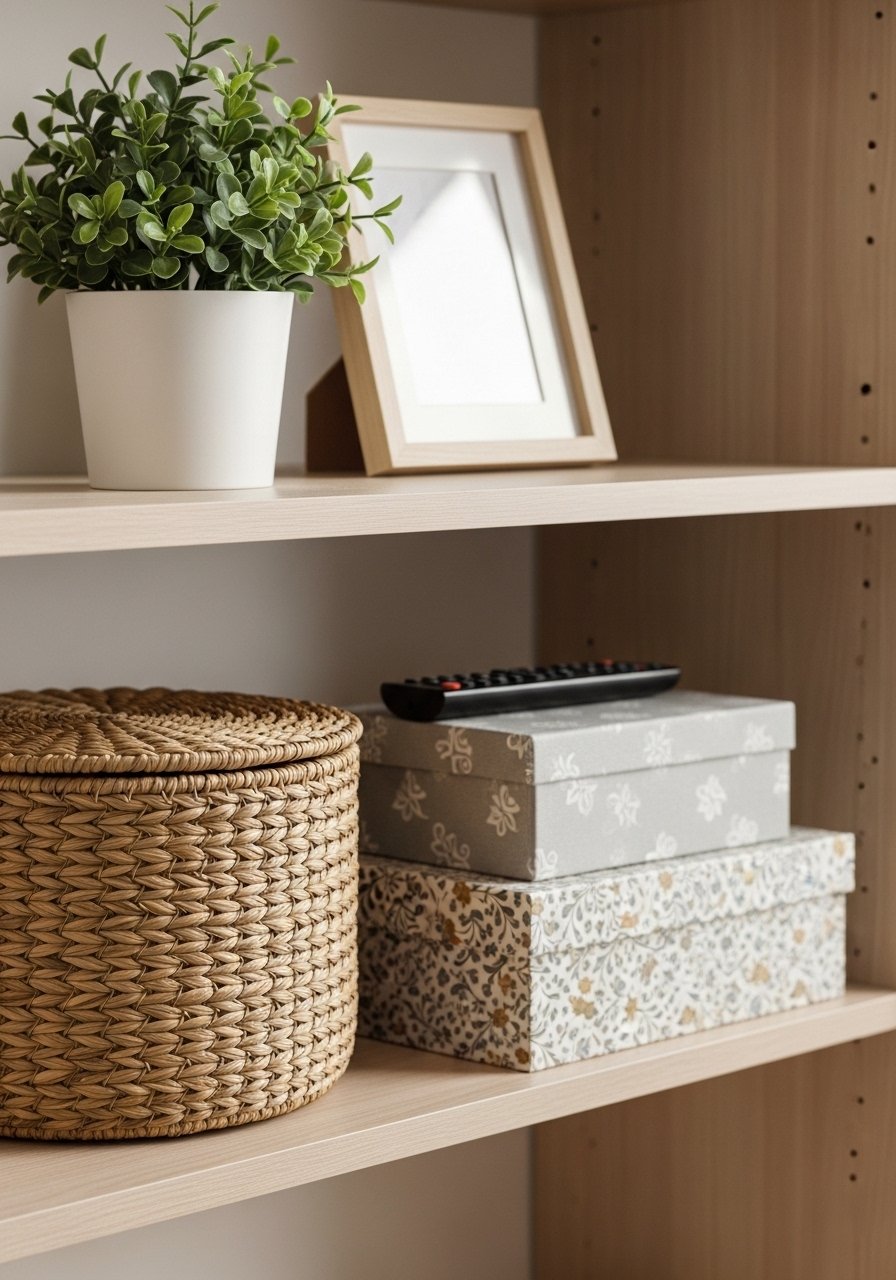
I always reserve a low basket or a decorative book box for the things that don’t look good—remotes, chargers, dog treats. Put them on a lower shelf so practical items are out of sight but still easy to reach. The shelf reads cleaner and the room feels more intentional.
People assume storage has to be obvious. The miss: attractive storage exists—use it. Don’t shove ugly items on a high shelf; they’ll be visible and ruin the look. Keep function out of the focal line.
Step 6: Tailor layout to your room—corners, alcoves, and small spaces

I treat corners and alcoves as separate mini-rooms. In a small room I use triangular cane or narrow floating shelves to save wall space and create a cozy nook. In a bigger room I go for wider live-edge shelves to read as furniture. The change is flow—you win floor space and the shelves feel integrated.
People try one-size-fits-all. The insight: scale matters more than quantity. Avoid overpowering a narrow wall with deep shelves; choose shallower ledges or reduce objects to maintain balance.
Common mistakes (and tiny fixes)
I’ve learned a few repeating errors that wreck shelf calm. Here’s what I look for and how I fix it.
- Too many small items: Combine three into one layered group on a tray.
- Everything same height: Add a stack of books or a tall plant for contrast.
- Mismatched finishes: Introduce one unifying material—wood or black metal—and edit around it.
- Over-rotation of personal photos: Mix framed photos with other objects so they read as part of a story, not a gallery.
Working with small spaces, budgets, and renters
I’ve done this in tiny apartments and older houses. You don’t need custom built-ins to look curated.
- Use shallow floating shelves or a slim ladder shelf to keep floors clear.
- Try a set of three small shelves instead of one large piece; it’s cheaper and more flexible.
- Renter tip: picture ledges or tension-shelf systems let you style without drilling permanent holes.
- Budget finds: woven baskets and a single sculptural vase (under $70) add polish for little cost.
Keeping shelves kid- and pet-friendly, and low maintenance
I live with pets, so I keep safety and durability in mind. I favor heavier anchors on lower shelves and move fragile items higher. Potted plants go where curious paws can’t reach, or I choose sturdy, non-toxic varieties. For wood shelves, I wipe regularly with a damp cloth and avoid very humid bathroom spots. If you want the live-edge look but low fuss, pick sealed finishes or faux ceramic accents that read organic without the upkeep.
Final Thoughts
Start with one shelf and edit until it breathes. Small changes—an anchor, odd-number groupings, and one woven basket—shift a wall from cluttered to calm. I often begin with a single live-edge or acacia shelf as a grounding piece; it’s an easy, low-commitment way to try the look and keep the room feeling collected and comfortable.