
Some rooms look finished except they feel cold and empty when the lights go down. I used to stack floor lamps and still get nothing but flat shadows.
String lights fixed that. They make corners read as cozy, not staged. You'll learn how to place lights so a room finally feels intentional and comfortable.
How to Decorate a Room With String Lights for Ambience
This is the method I use every time a room feels unfinished. I’ll show simple ways to layer string lights, balance them with lamps and texture, and place them so the glow reads intentional. End result: a warm, lived-in ambience that suits organic modern or cozy styles.
What You'll Need
- Warm white globe string lights, 25ft, plug-in (~$25–40)
- Battery-operated fairy lights, 33ft, warm white (~$10–20)
- LED string lights with remote dimmer, 33ft, warm white (~$20–35)
- Curtain string lights 6x4ft, warm white for wall (~$15–30)
- Clear Command medium hooks, pack of 16 (~$7–12)
- Smart plug for scheduling lights, Wi‑Fi (~$15–25)
- Photo clips for string lights, 20-pack (wooden) (~$8–15)
- Chunky knit throw in oatmeal, 50×60 (~$40–65)
Step 1: Map the glow before hanging
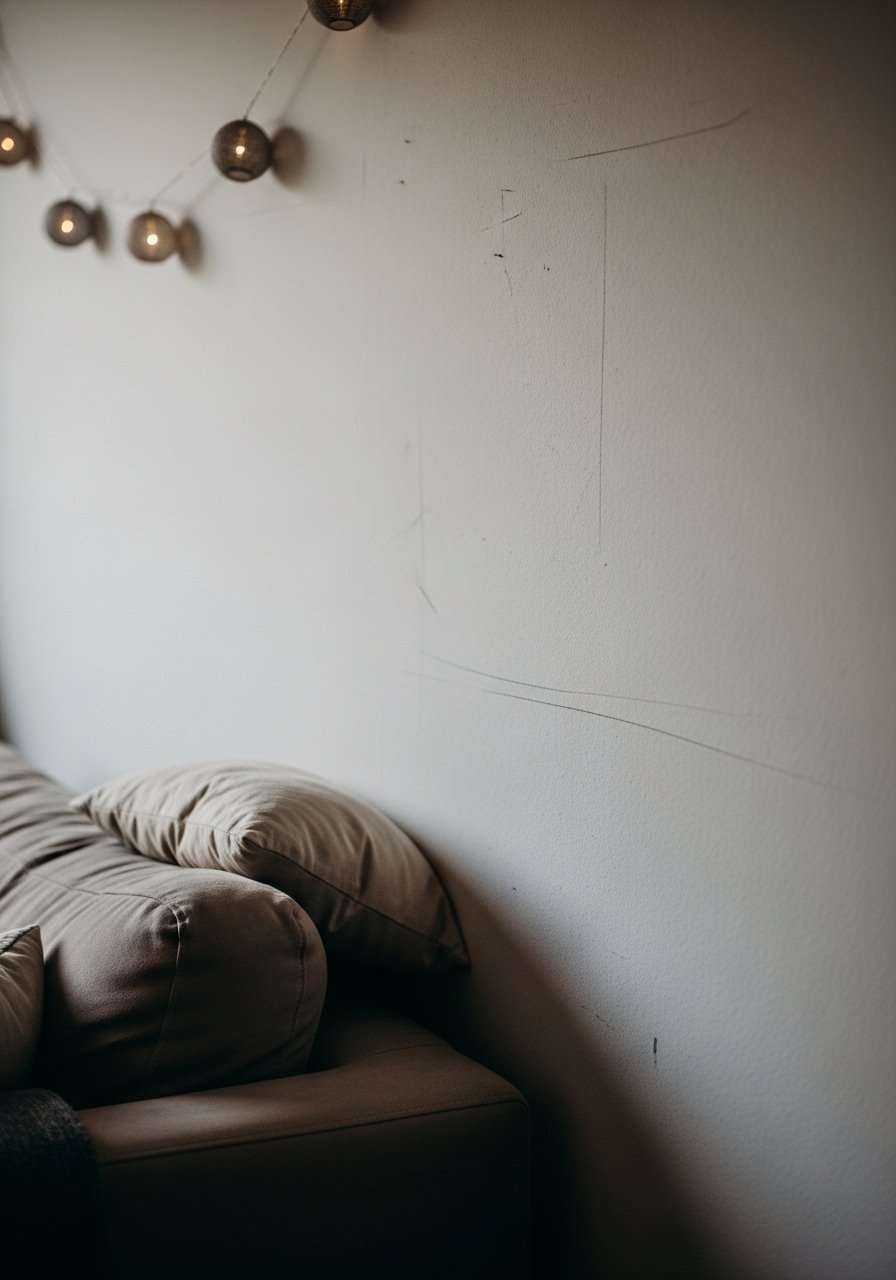
I walk the room and mark sightlines where the glow will show: above eye level on the sofa wall, along a shelf, and around a mirror. This simple mapping keeps lights from floating awkwardly in the middle of a wall. Visually, the room begins to read as layered instead of lit by a single source. People often miss how much the path of the cord matters—run it where shadows fall favorably. Small mistake to avoid: guessing placement from the box. I test first by holding the lights in place and stepping back.
Step 2: Layer string lights with lamps and dimmers
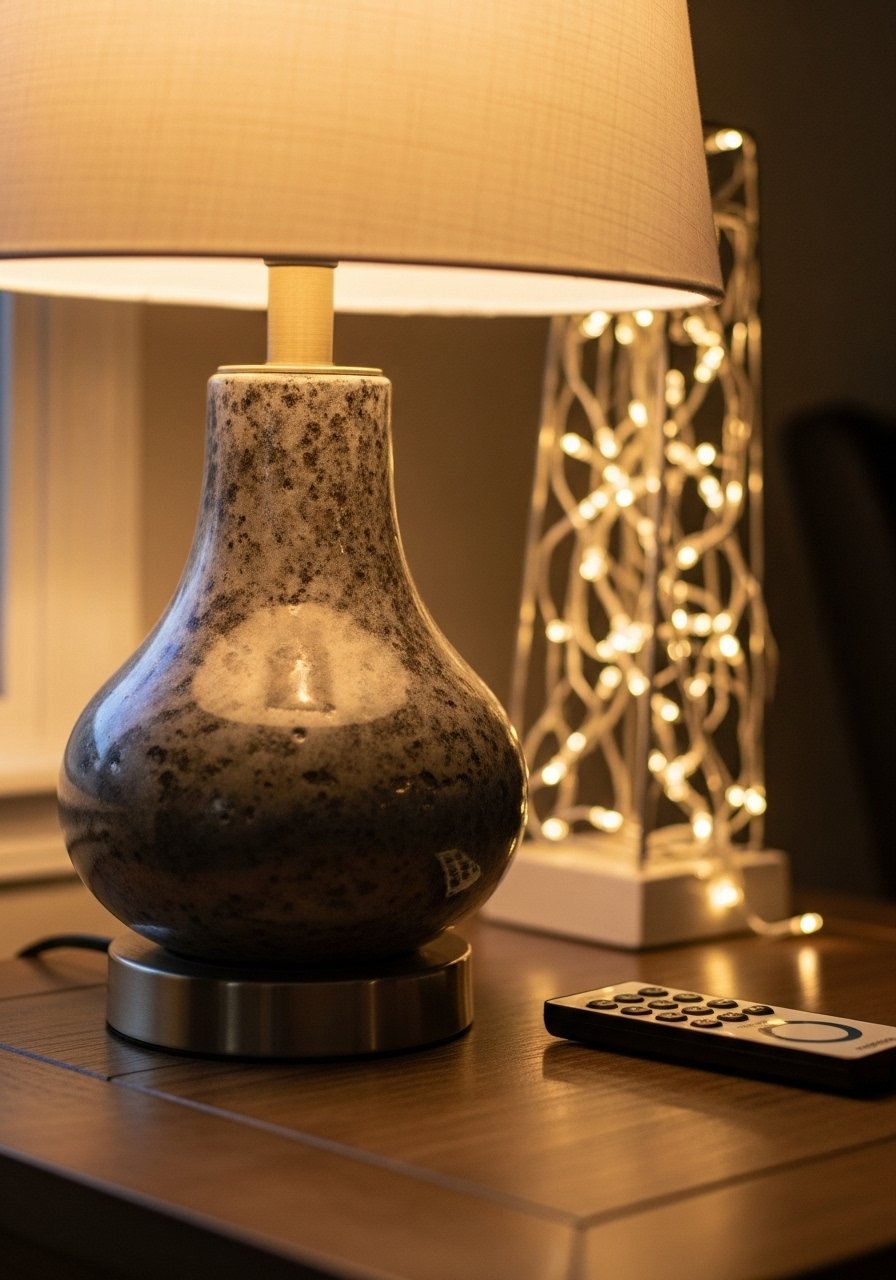
I place string lights to fill the low-level glow that lamps don’t hit. I rely on an LED string with remote dimmer or a smart plug so I can set the intensity to match table lamps. The room visually softens when the lights are slightly lower in brightness than task lamps—this reads calm and intentional. A common miss is keeping everything at the same bright level; it looks flat. Small mistake: forgetting to test dim levels in the evening. I always adjust after sunset for best balance.
Step 3: Anchor lights to define corners and frames
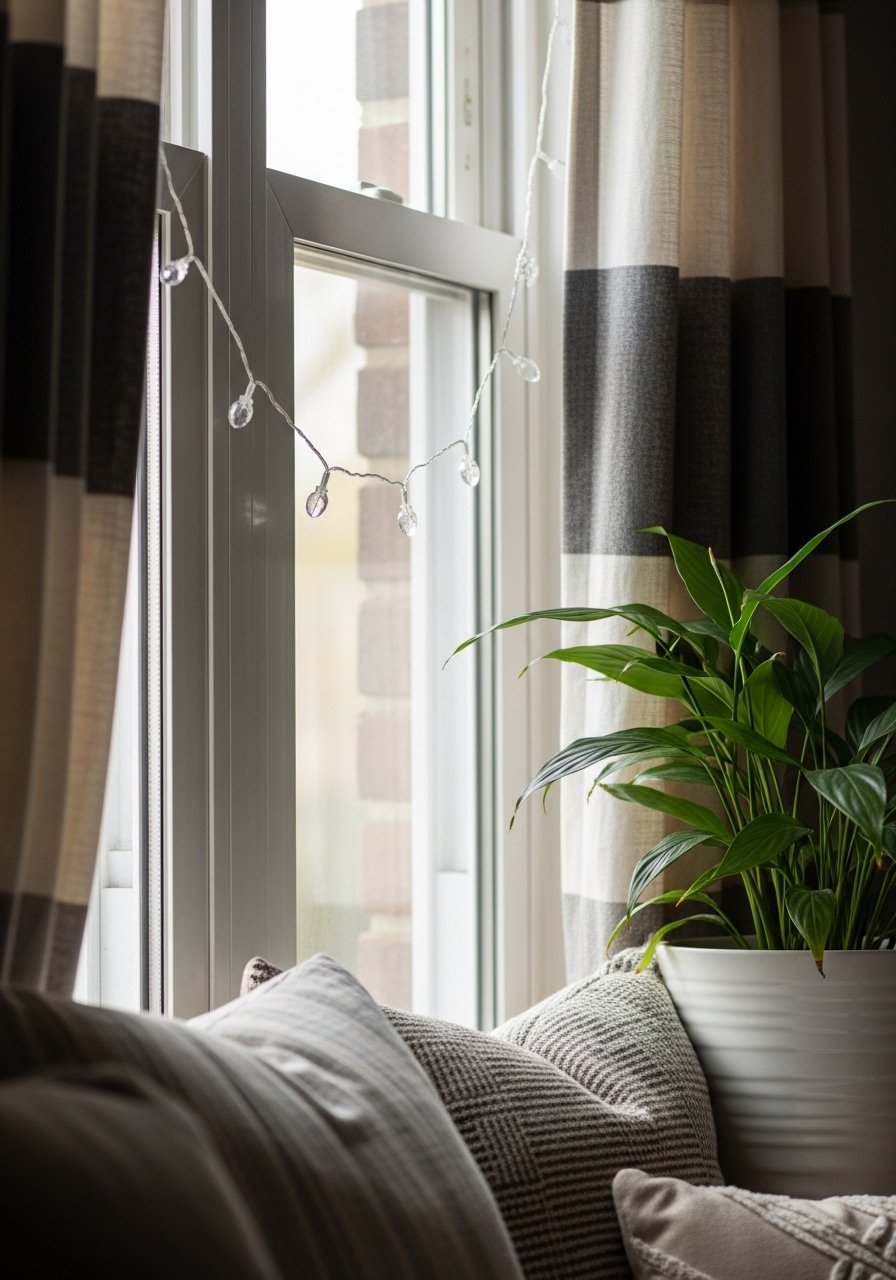
I anchor string lights at thirds—top corner, midpoint, and base—to make them read like part of the architecture. I use clear Command hooks for invisible support and curtain lights for windows or a wall behind a sofa. Visually, corners stop feeling like voids and instead become cozy edges. People often miss that slight tension (not slack) makes a string read tidy. Small mistake: stapling or knotting directly into trim; hooks leave the finish intact and allow easy changes.
Step 4: Make focal points with contained clusters
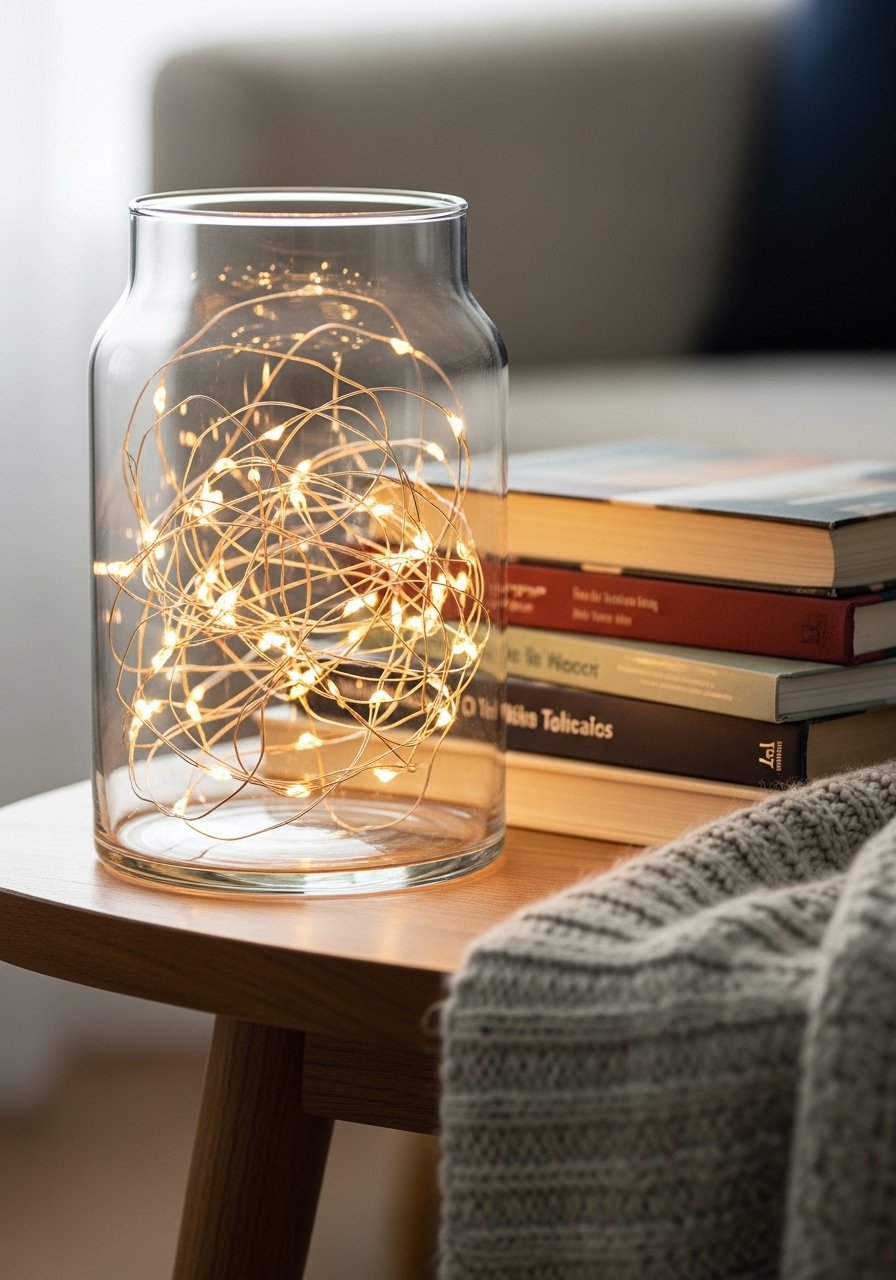
I create small focal clusters—a vase of battery fairy lights, lights tucked behind a mirror, or woven through a rattan basket. These pockets attract the eye without overwhelming the room. Visually, they provide layers of sparkle that feel curated. People usually miss scale: a 33ft battery string can be adapted to many containers; it’s low-commitment and cooler to the touch. Small mistake: stuffing too many bulbs in small spaces; I leave breathing room so the light reads soft, not frantic.
Step 5: Finish with texture so the glow reads cozy
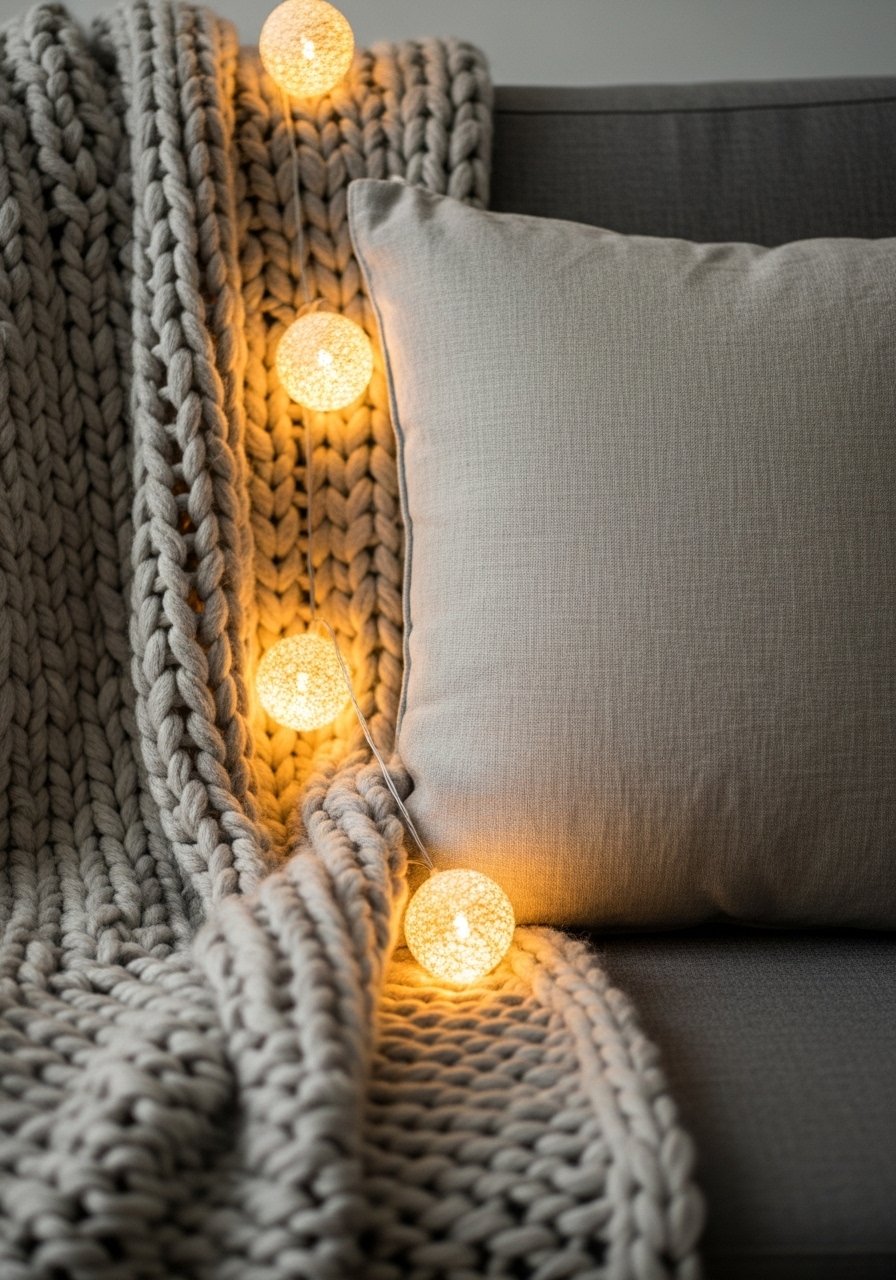
I place a chunky throw and a few textured pillows where the string light glow lands. The light on fabric reads warm and lived-in. Visually, shadows from knit and linen add depth that bare walls never do. One insight people miss is that lights need something to reflect on—a light-colored throw or woven rug will pick up the glow nicely. Small mistake: letting lights sit directly against delicate fabric for long periods; I keep a small gap or use battery options for safety.
Common mistakes I see and how I fix them
I often walk into rooms where string lights look accidental. The usual culprits are symmetry gone wrong and too-bright bulbs. I fix symmetry by shifting one strand a foot left or right—suddenly the layout feels deliberate.
Quick checklist I use:
- Avoid centering a single strand on a big wall. Off-center feels intentional.
- Don’t mix white temperatures. Stick to warm white for ambience.
- Test dim levels at night, not midday.
How I adapt this for small rooms or a tight budget
I scale down by using battery-operated fairy lights and a single cluster instead of multiple long strands. Battery options are often $10–$20 and don’t need outlets, which helps in rentals.
Budget tips:
- Start with a 33ft battery string for $10–20.
- Use Command hooks instead of extra hardware.
- Reuse lights across seasons for more value.
How I mix string lights with what I already own
I look for places where the glow complements existing pieces. If I have a bouclé chair or linen curtains, I drape lights nearby to highlight texture rather than compete with it. For an organic modern feel, I pair warm globes with natural materials like wood and rattan.
A simple approach:
- Let lights skim surfaces, not dominate them.
- Use lamps as anchors; lights do the softening.
- Swap decor under the glow seasonally (greenery in spring, knit layers in fall).
Final Thoughts
Start with one small cluster or a battery string. I find that a single, intentional glow changes how a room feels more than many scattered strands.
Take it slow, test after dark, and keep the lights working with texture and lamps. Even one 33ft battery string can make a living room feel comfortable and lived-in without big effort.