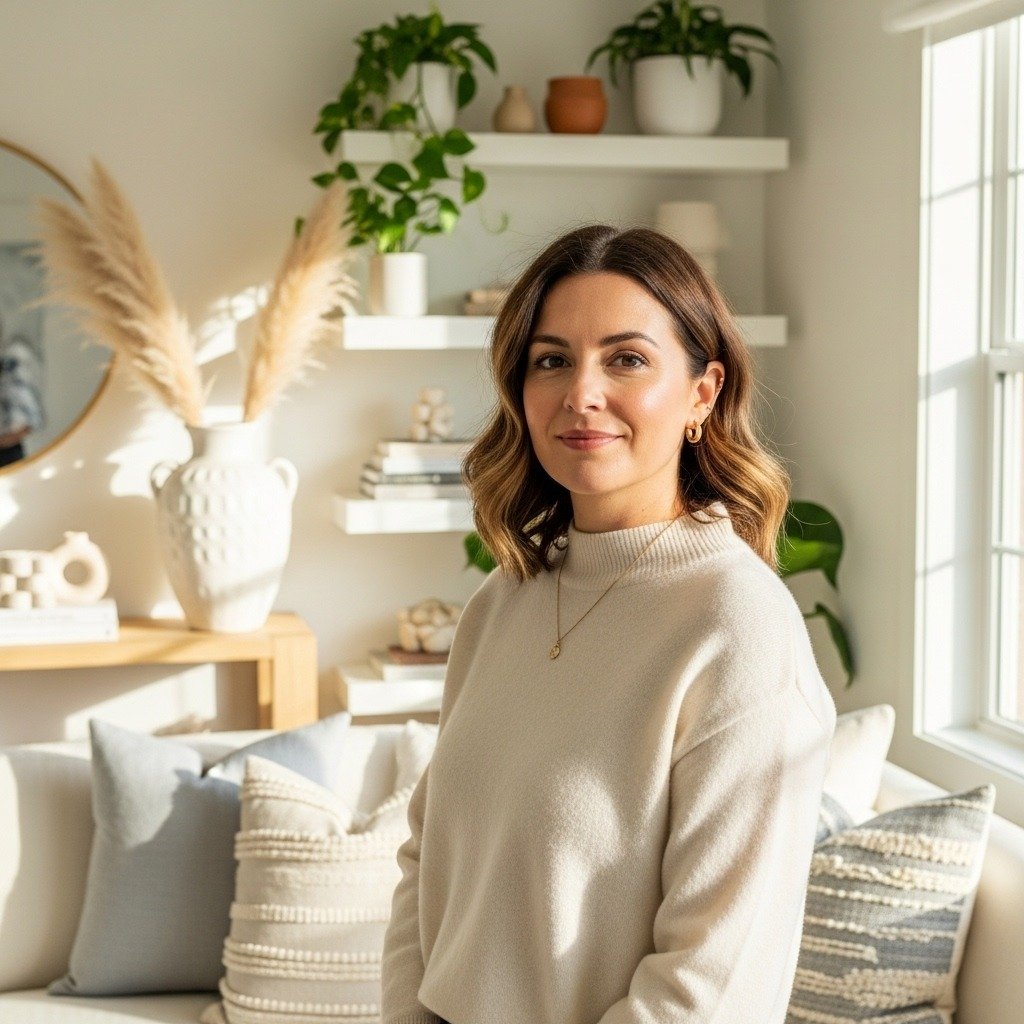
I always notice walls when a room feels unfinished. The blank above the sofa, the awkward corner, the space that reads cold and empty — it drags the whole room down. Hanging a tapestry changed that for me. It added color, texture, and a softer, more lived-in feeling without painting or heavy furniture swaps.
How to Decorate a Room With Tapestries Easily
This is the method I use whenever a wall or corner feels overlooked. You'll learn how to choose scale, where to hang, and how to layer with throws, plants, and simple shelves, so the room reads intentional and cozy—boho, organic modern, or neutral.
What You'll Need
- Large boho tapestry, 60×80, earth tones (~$25–60)
- Small vintage-inspired tapestry, 50×60, muted blue (~$20–45)
- Natural wood tapestry rod, 48-inch (~$15–35)
- Chunky knit throw in oatmeal, 50×60 (~$40–65)
- Linen floor cushion in neutral, 24-inch (~$30–80)
- Hanging macramé planter, cotton (~$15–30)
- Slim picture ledge shelf, white oak, 36-inch (~$25–60)
Step 1: Pick the right scale for the wall
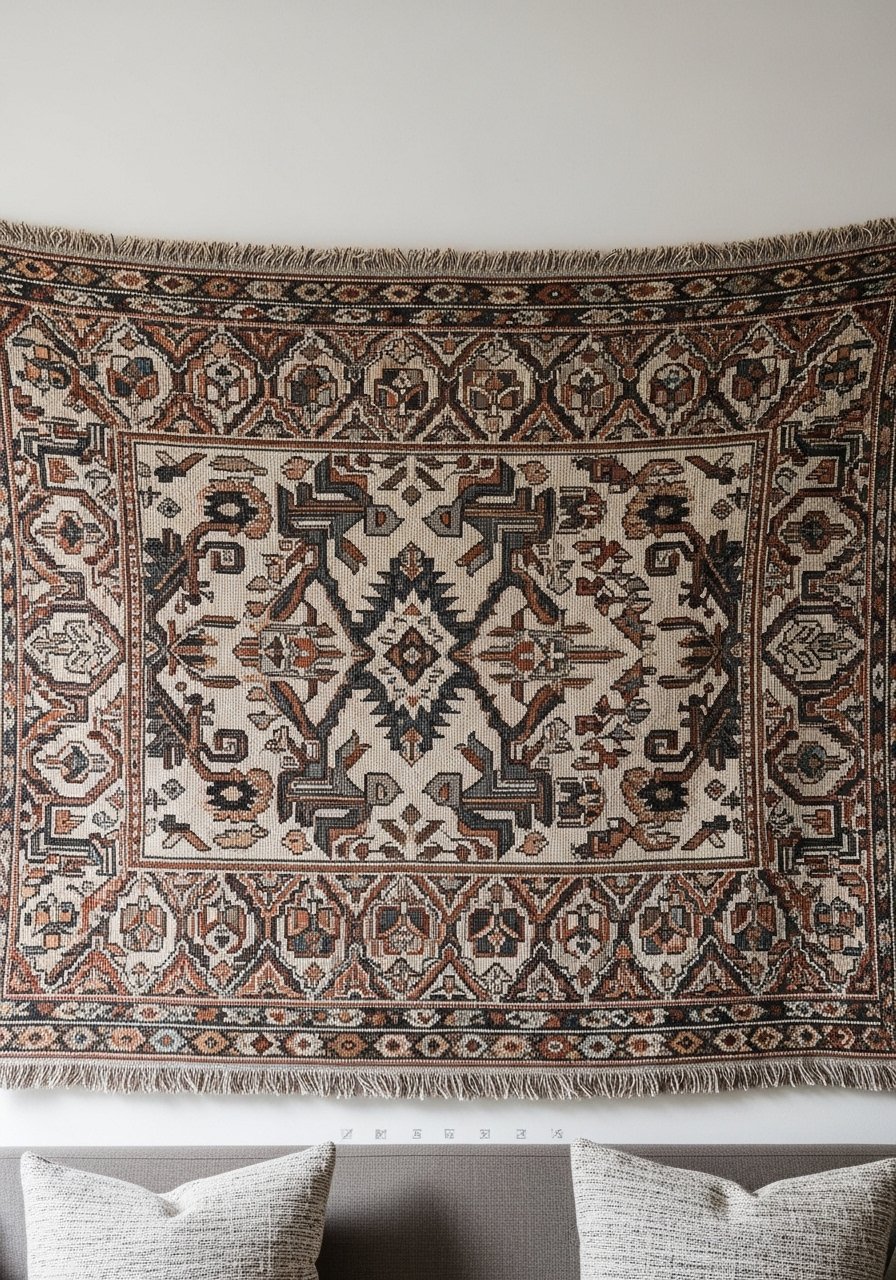
I start by holding the tapestry up where it will live and squinting. If it’s too small, the wall still feels lonely. If it’s too big, it overwhelms the furniture. The goal is balance: the tapestry should feel like it belongs with the pieces already in the room. People often miss that scale matters more than pattern — a simple, larger piece can read calmer than a busy small one. Avoid the mistake of choosing a tapestry purely for color and ignoring how it fills the wall.
Step 2: Find the right height and anchor point
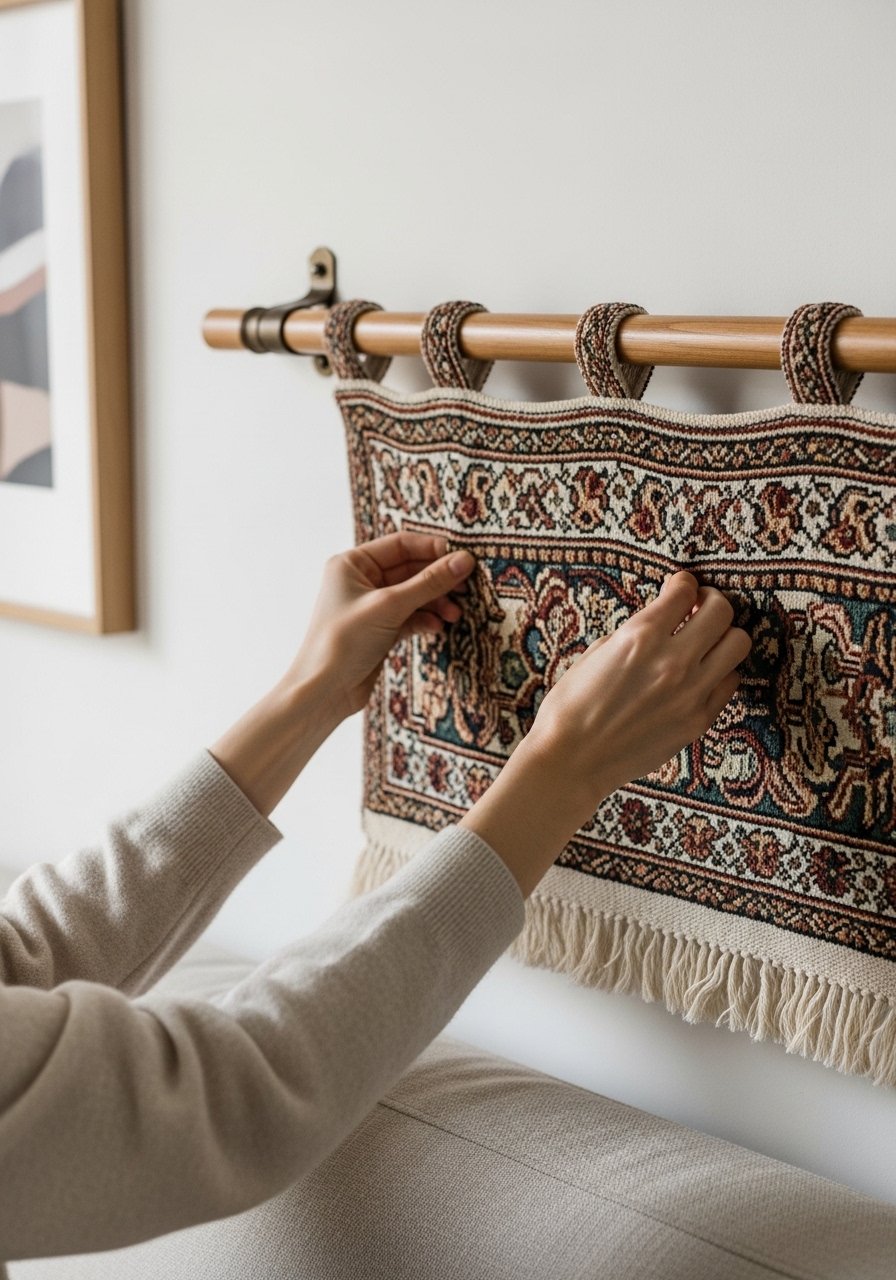
I treat the tapestry like a fabric picture frame. It should anchor the furniture, not float above it. I hang mine low enough to feel connected to the sofa or bed, but with breathing room so the top of the piece doesn’t feel cramped. One insight I use: it’s better to tilt or offset a tapestry slightly than force it exactly centered — it creates a relaxed, intentional look. The common mistake is hanging it too high so it reads disconnected from the room’s focal point.
Step 3: Layer textures around the tapestry
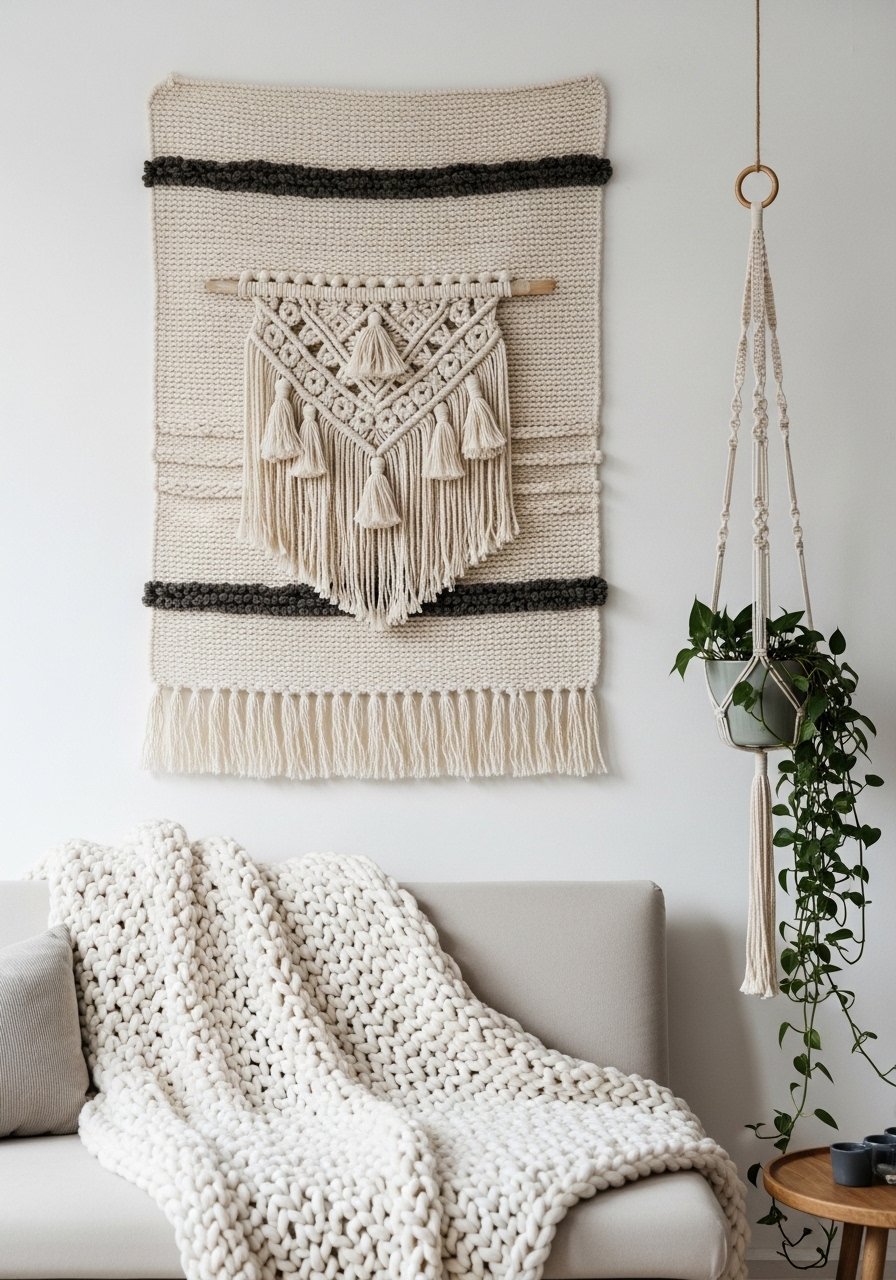
Once the tapestry is up, I bring in soft, tactile pieces to echo its texture: a chunky throw, a linen cushion, a woven planter. This makes the wall feel part of the room rather than a single statement. People usually overlook scale when layering — match the weight of textures (heavy tapestry, heavier throw; light tapestry, lighter accents). A small mistake is adding too many competing patterns; I prefer one patterned tapestry with simpler surrounding textures so the space stays calm.
Step 4: Use tapestries to define zones
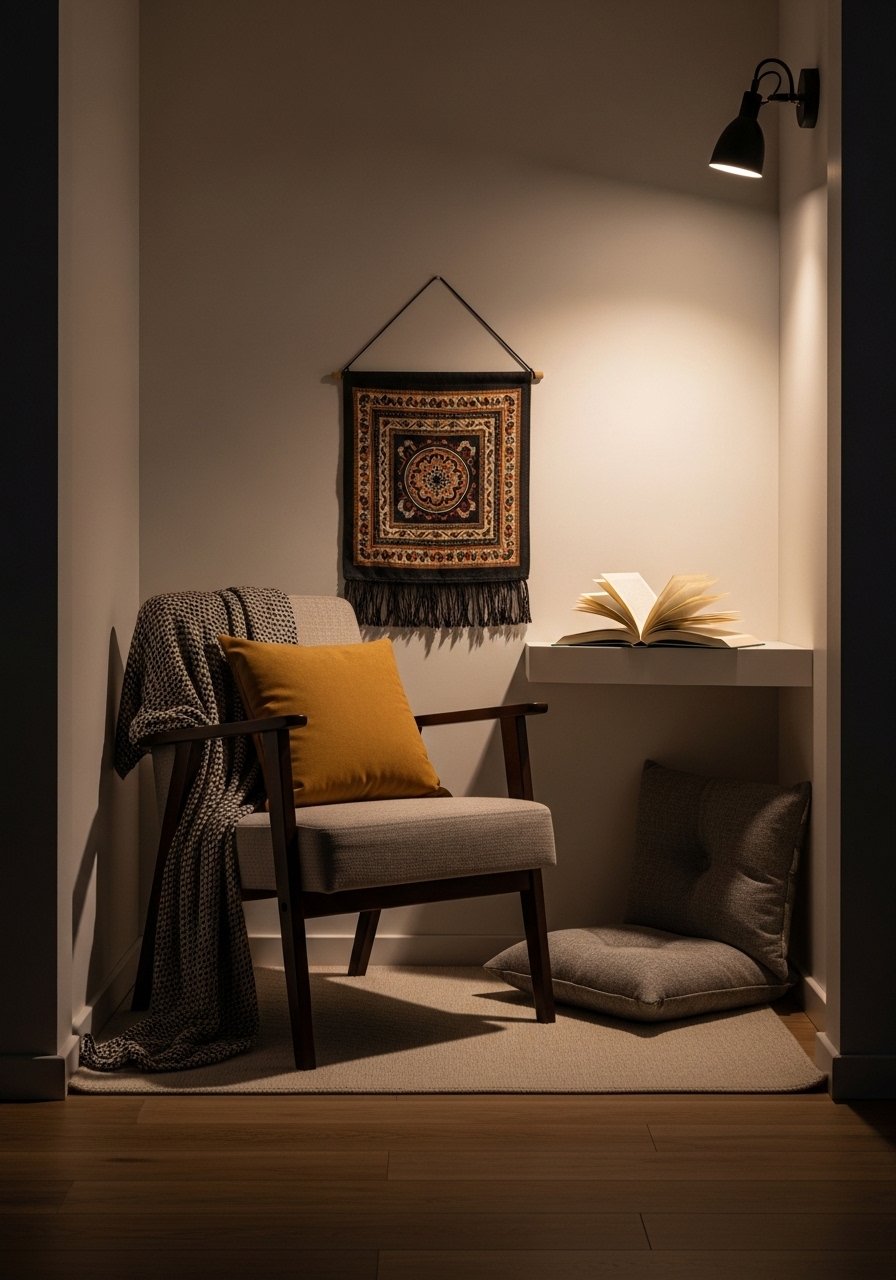
I use tapestries to mark places: behind a bed as a soft headboard, behind a chair to create a reading nook, or on a blank hallway wall to slow your eye. In open rooms, a tapestry becomes a visual room divider without bulk. An insight I learned: the tapestry’s role changes with the furniture — it can be the focal point or a backdrop. Don’t make the mistake of treating it as a full room solution; sometimes the rest of the room needs a counterpoint, like a shelf or plant, so it reads balanced.
Step 5: Edit, live with it, and adjust
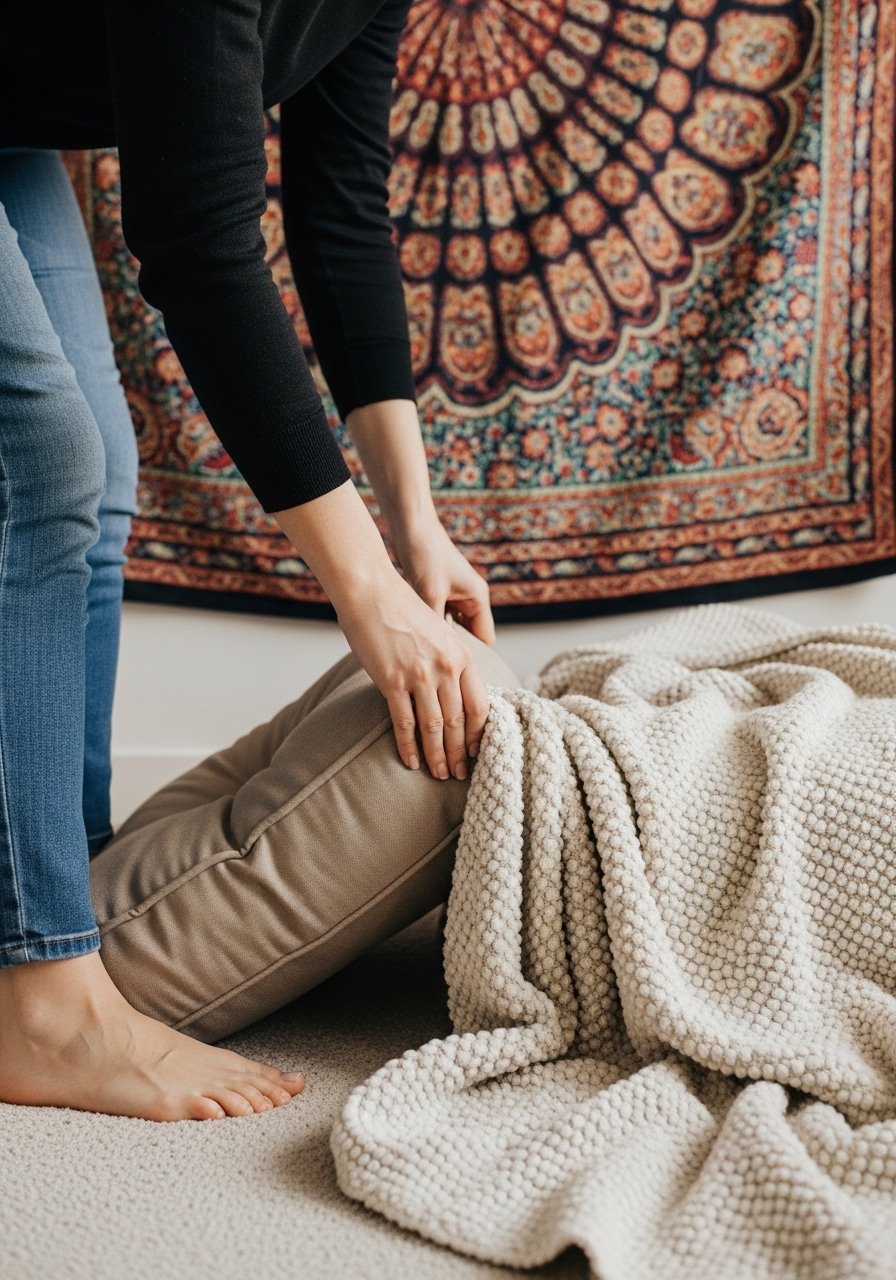
After hanging, I live with the tapestry for a few days. I move a lamp, swap a cushion, or add a plant to see how the piece breathes in the space. The small insight: a tiny change (a pillow color or a shelf item) can shift the balance dramatically. A common mistake is to overcommit immediately — if something feels off, try small edits before replacing the tapestry. Tapestries are forgiving; a little shifting usually does the trick.
Common Mistakes and How I Fix Them
I’ve learned a few repeat problems and quick fixes. First, picking a tapestry that’s too small for a large wall — I swap for a larger piece or group multiple small tapestries together. Second, hanging it too high — I lower it so it visually connects to furniture.
Quick checklist I use:
- Check scale against the largest adjacent piece of furniture.
- Limit competing patterns to one or two.
- Anchor with a throw or plant to integrate the tapestry.
Adapting This Look to Your Room and Budget
If you’re in a small apartment, a single small tapestry behind a chair can make the whole corner feel curated without crowding. On a tight budget, I shop for secondhand or choose a simple, larger tapestry rather than several smaller buys; one larger piece reads calmer. For larger rooms, layer two pieces or add a shelf beneath the tapestry to ground it.
Practical tips:
- Small room: use light-colored fabrics to keep airiness.
- Large room: consider an oversized tapestry or a pair.
- Budget: start with a small vintage find or a simple neutral piece.
Mixing a Tapestry with What You Already Own
I rarely replace everything. I work with what’s already in the room. If your furniture is mid-century, choose a tapestry with clean lines or a subtle geometric. If your room is boho, go for patterned, textured weavings. Match the tapestry’s color intensity to your cushions and rugs for cohesion.
Simple rules I follow:
- Match one dominant color from the tapestry to another decor piece.
- Use texture rather than more pattern when the tapestry is busy.
- Let one accessory (a plant or a lamp) echo the tapestry’s tone.
Final Thoughts
Start small. A single, well-placed tapestry can make a room feel curated and cozy without a big budget or a repaint. Edit after a few days and don’t be afraid to move cushions or a plant to find balance. If you want a low-commitment starter, a small vintage-inspired tapestry is an easy, affordable way to see the effect.