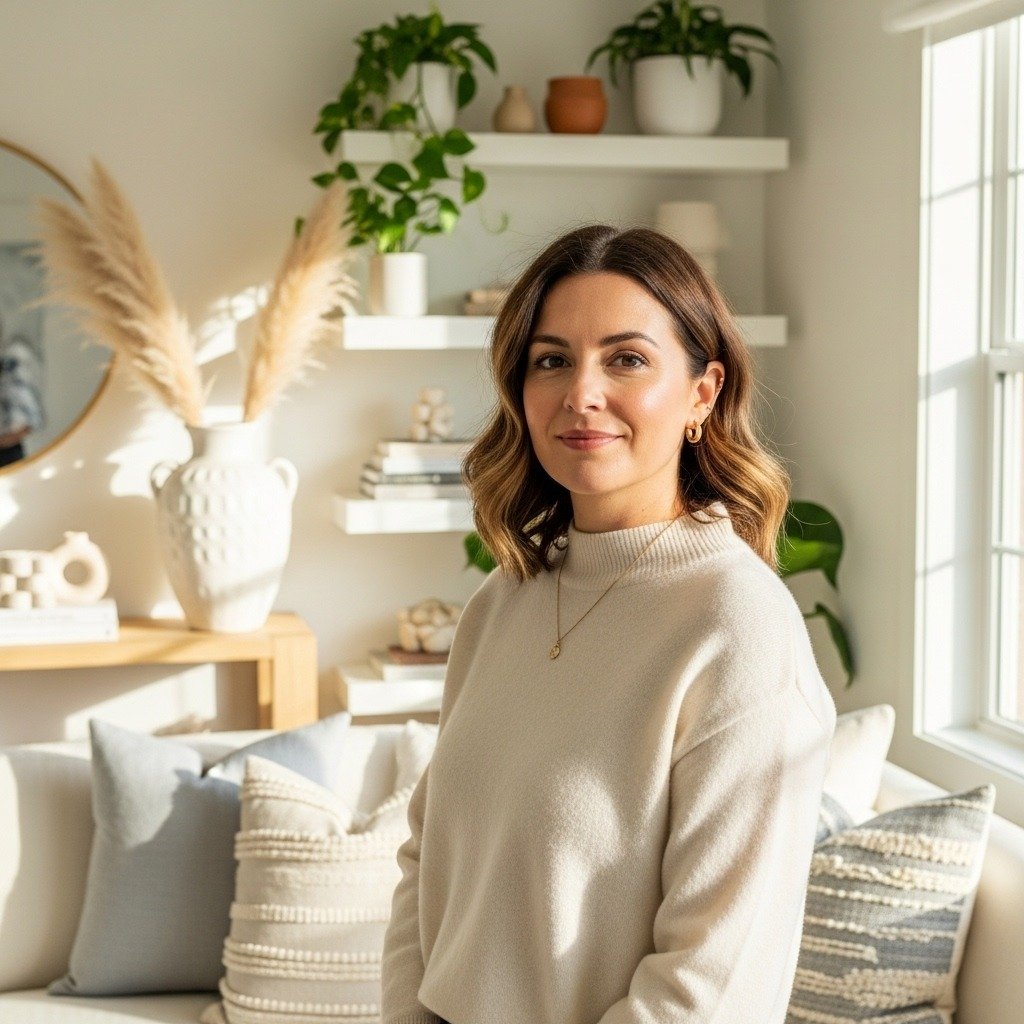
Creating a beautifully decorated room doesn’t require a full makeover—often, the right wall art is enough to transform a space from plain to polished. The challenge? Most people struggle with balance: choosing pieces that are the right size, placing them at the proper height, and mixing styles without making the wall feel cluttered.
In this guide, you’ll learn how to decorate your room with wall art so everything feels intentional, airy, and perfectly balanced.
1. Start With a Focal Point (Think Oversized Art)
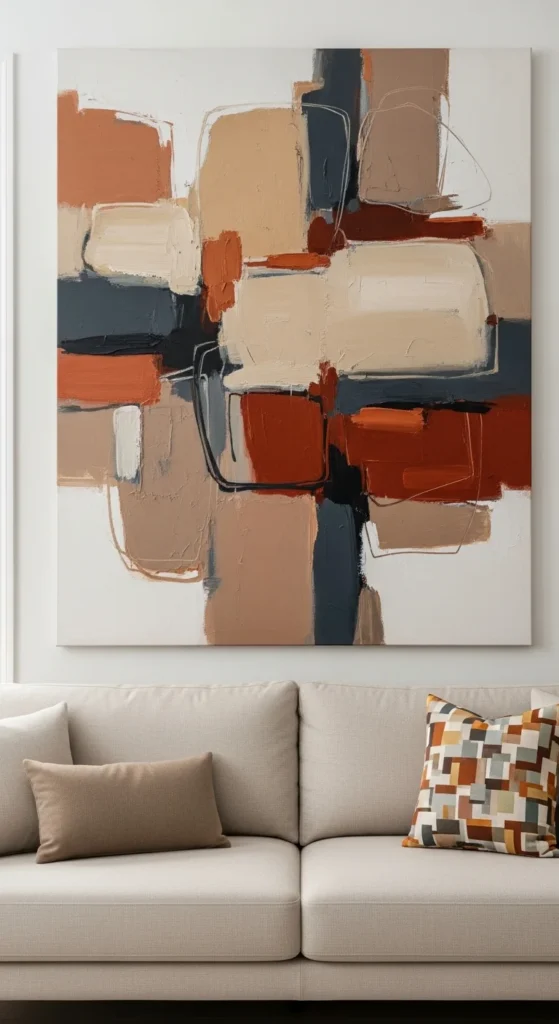
One of the biggest design mistakes is choosing artwork that’s too small—especially for large, open walls. Oversized or XXL art instantly grounds a room and gives your eye a place to land.
- Pick a piece that’s at least 60% the width of your furniture, especially above a sofa or bed.
- Neutral walls make bold, colorful art stand out even more.
- Earthy abstracts, botanicals, or Japandi-style muted pieces are trending for 2026.
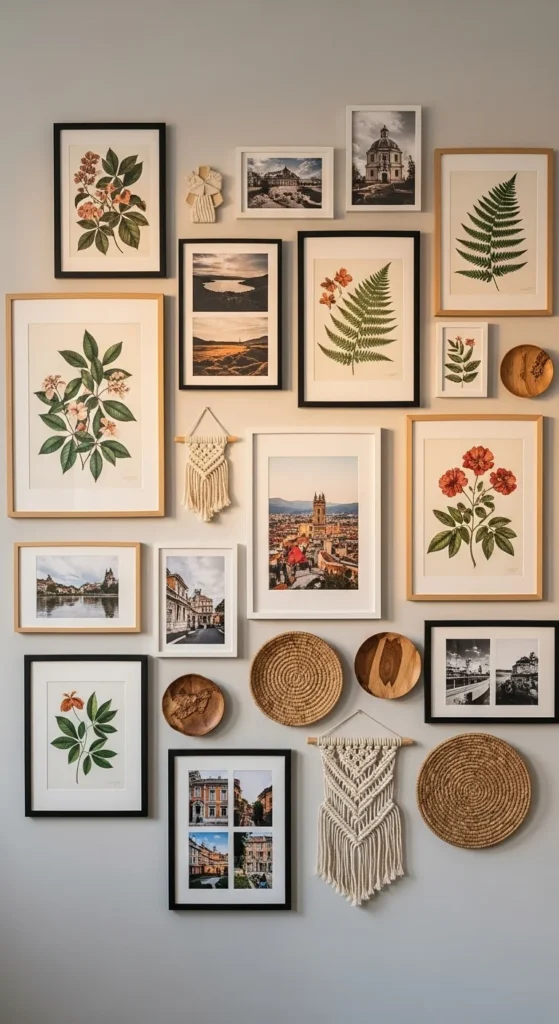
If one large piece doesn’t fit your budget, don’t worry—you can still create impact with a well-planned gallery arrangement.
2. Build a Balanced Gallery Wall (Without Overcrowding)
Gallery walls remain the most popular wall-art trend because they’re endlessly customizable. To keep yours cohesive and balanced:
Use a clear layout style
- Grid layout → sleek, modern, symmetrical
- Organic layout → relaxed, playful, perfect for mixing frame sizes
- Odd numbers rule (3 or 5) → naturally more pleasing
Keep spacing consistent
- Leave 2–3 inches between frames.
- Prioritize negative space so the wall doesn’t feel chaotic.
- Think of the entire gallery as one large piece.
Incorporate personal touches
Instead of only prints, include:
- Personal photos
- Travel snapshots
- Mini sculptures or textiles
- Macramé or woven pieces for warmth
This adds emotion and dimension without overcrowding.
3. Hang at the Right Height—Every Time
Designers stick to a simple rule:
Center artwork at 57–60 inches from the floor.
Why? It places the art at natural eye level, making the space feel polished.
When hanging above furniture:
- Leave 6–8 inches above the top edge of sofas, headboards, or consoles.
- For a set of two or three pieces, treat them as one unit and center them as a whole.
This small detail instantly makes your wall look professionally styled.
4. Match (or Contrast) Your Room’s Color Palette
Your artwork should support the room—not compete with it. A simple way to achieve balance is by pulling colors from your art and using them throughout the room:
- Throw pillows
- Rugs
- Vases
- Accent blankets
- Curtains
A bold painting with terracotta, sage, or dusty blue? Use those same tones elsewhere.
If your room is already colorful, go neutral with linen textures, minimalist abstracts, or Japandi-inspired prints.
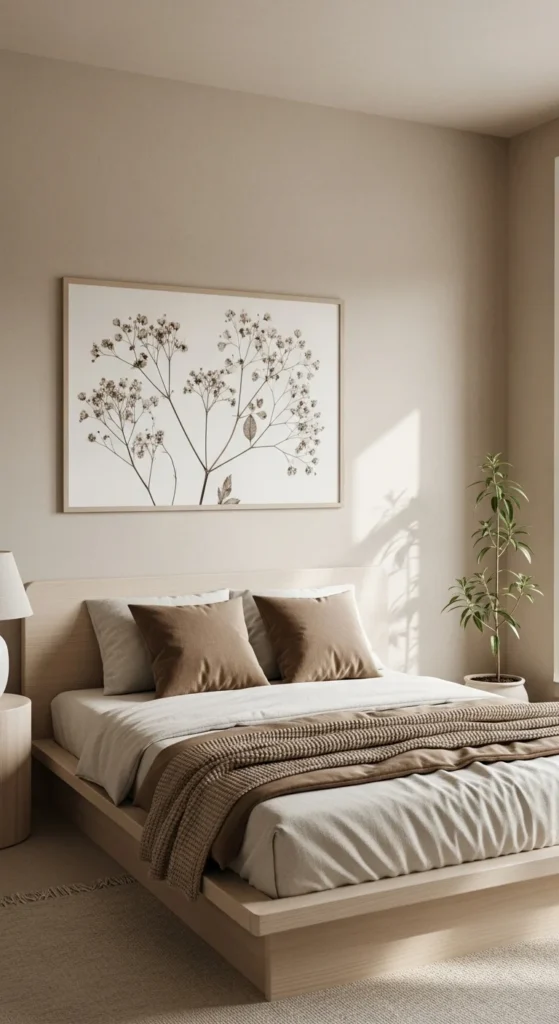
This creates visual harmony and prevents your room from feeling stylistically “split.”
5. Mix Mediums for Dimension and Warmth
A flat wall filled only with prints can feel one-note. Balance comes from adding texture and dimension.
Try layering:
- Tapestries
- Woven or macramé hangings
- Metal accents
- Wood carvings
- 3D sculptures
- Fabric or linen canvases
Sustainable materials like wood, cotton, and linen are especially trending because they soften a space and create warmth—perfect for cozy minimalism.
6. Use Leaning Art for a Relaxed, No-Drill Upgrade
If you’re renting or just prefer a laid-back vibe, leaning artwork is your friend. It feels modern, casual, and allows for easy styling changes.
Where to lean your art:
- On a dresser
- On a console table
- On floating shelves
- On the floor for oversized pieces
Layering two or three pieces—big in the back, smaller in front—adds depth without overwhelming the room.
7. Bring Nature & Calm Into the Space
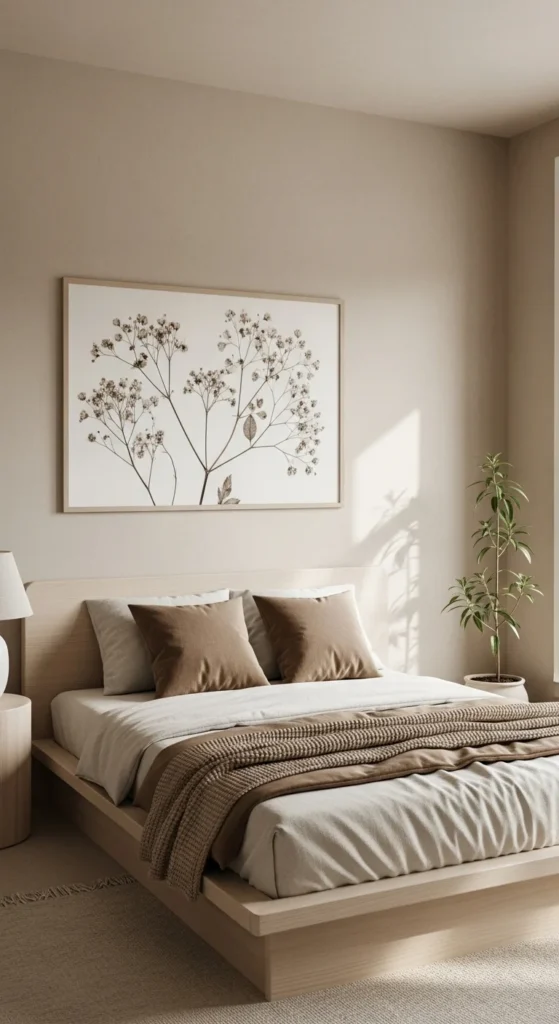
Nature-inspired wall art remains one of the strongest design trends for 2026. Biophilic vibes help create a grounded, soothing atmosphere.
Popular motifs include:
- Leaves
- Botanicals
- Landscapes
- Earth-tone abstracts
- Organic shapes and curves
Pair these with warm neutrals or Japandi elements for a perfectly balanced space.
8. Enhance Your Art With Proper Lighting
Lighting is the secret weapon that transforms wall art from “nice” to gallery-worthy.
Try:
- Picture lights
- Small spotlights
- Wall sconces
- LED strip lighting above floating shelves
Warm lighting enhances textures, metallic accents, and natural materials—instantly elevating your art.
9. Keep Practical Rooms in Mind Too
Wall art doesn’t just belong in living rooms and bedrooms. Balanced styling works great in places most people overlook:
- Kitchens with small durable abstracts
- Laundry rooms with cheerful prints
- Entryways with oversized statement pieces
- Hallways with grid gallery walls
- Bathrooms with moisture-safe framed art
Don’t ignore these spaces—they complete the feeling of a cohesive home.
Final Takeaway
Decorating with wall art is one of the simplest ways to make your home feel stylish, personal, and well-balanced. Whether you choose an oversized statement canvas, a curated gallery wall, or a soft Japandi-inspired palette, the key is to plan intentionally and let your art guide the room.
Save this guide for later so you can style your walls like a pro!