
My living room had nice furniture and decent lighting but it still felt like a waiting room. Took me embarrassingly long to figure out it was missing texture. Every surface was smooth, every color was flat, and nothing invited you to actually sit down.
These ideas lean farmhouse with a practical maker twist. Most projects run $30 to $150, with a few upgrades you might spend $250 to 500 on. They work for converted garages, spare bedrooms, under-stairs nooks, or even a backyard shed.
Pegboard Wall That Keeps Brushes Off Your Table
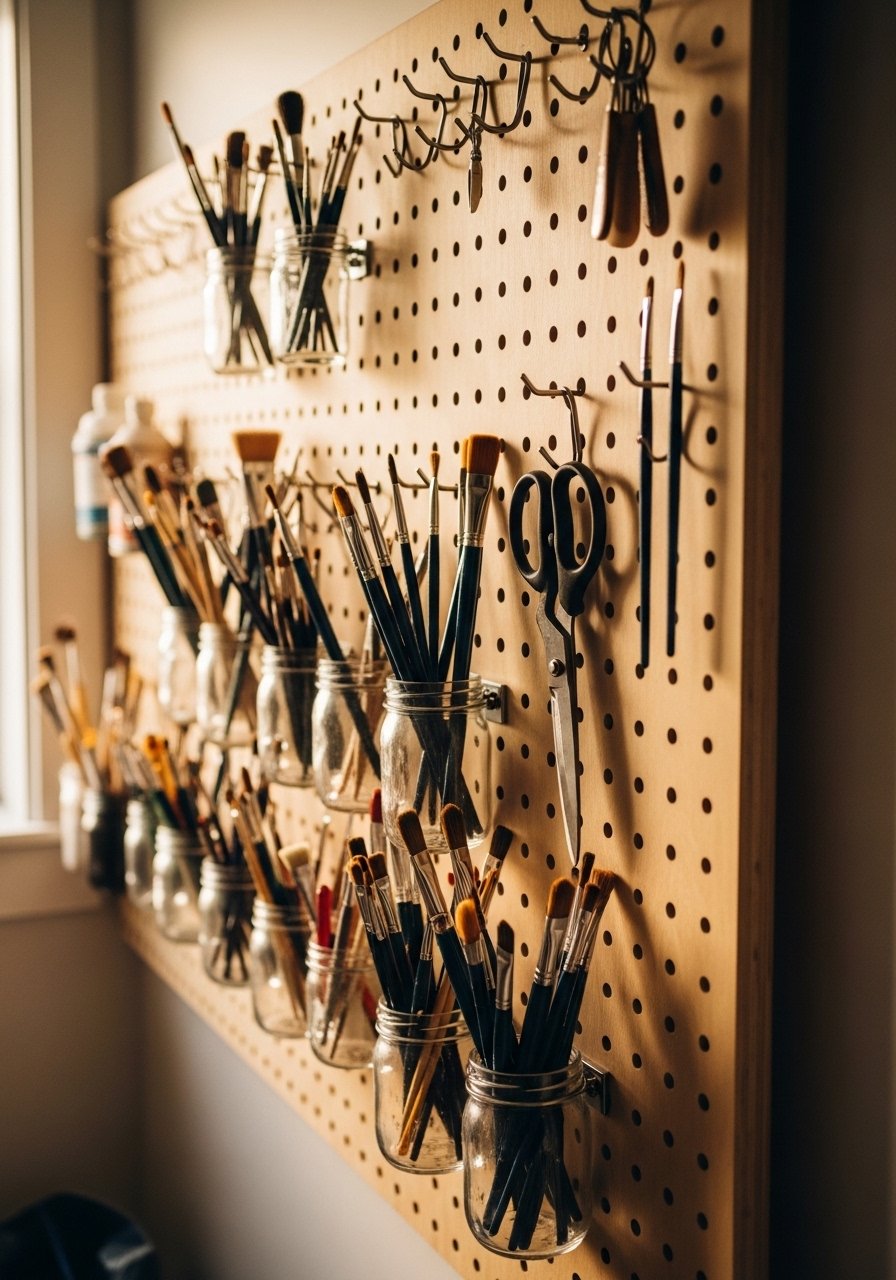
The pegboard is the first thing I added and it solved the scatter problem overnight. Aim to cover about 80% of one wall so you can mount everything at eye level and avoid bending during flow. Use mixed hook sizes and odd-number groupings to keep it balanced. I like golden hooks for that farmhouse touch, try gold pegboard hooks for a warm look. A common mistake is only hanging small things up high. Keep large items reachable and leave a clear work strip at table height so your brushes never hit the tabletop. Renter tip, use command-strip compatible peg panels.
Rolling Supply Cart You Pull to the Easel
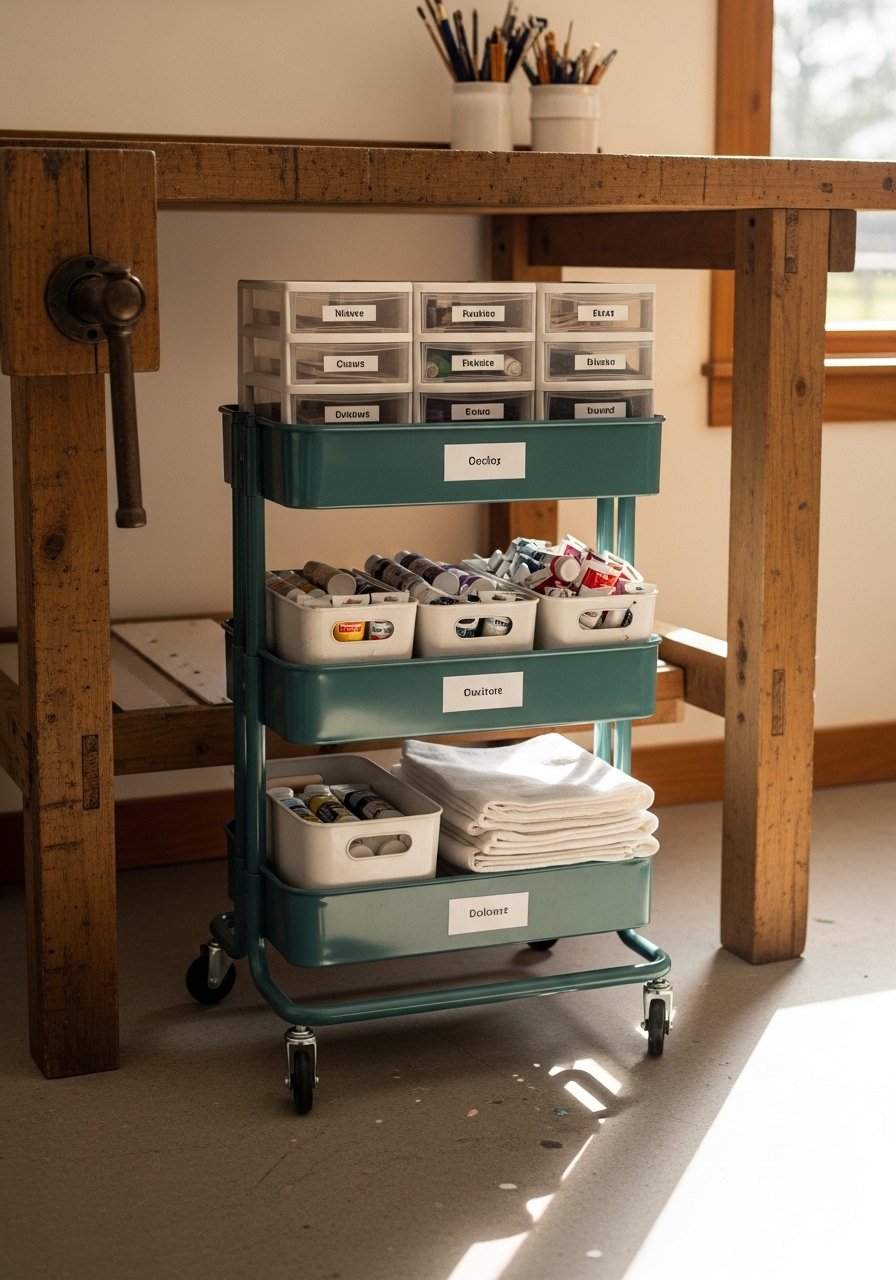
Most artists say scattered supplies kill their flow right when it starts. A rolling cart with 4 to 6 bins fixes that. I store inks on the top tier, brushes in cups on the second tier, and paper below. Keep the cart within arm reach of your table, not tucked in a corner. I stack two Sterilite drawers when I need height, or go for a sturdier three-drawer rolling cart. Mistake people make is buying a cart that tips when loaded. Weight the bottom drawer heavier and lock the wheels while you work.
Garage Door Vent Setup for Light and Fresh Air
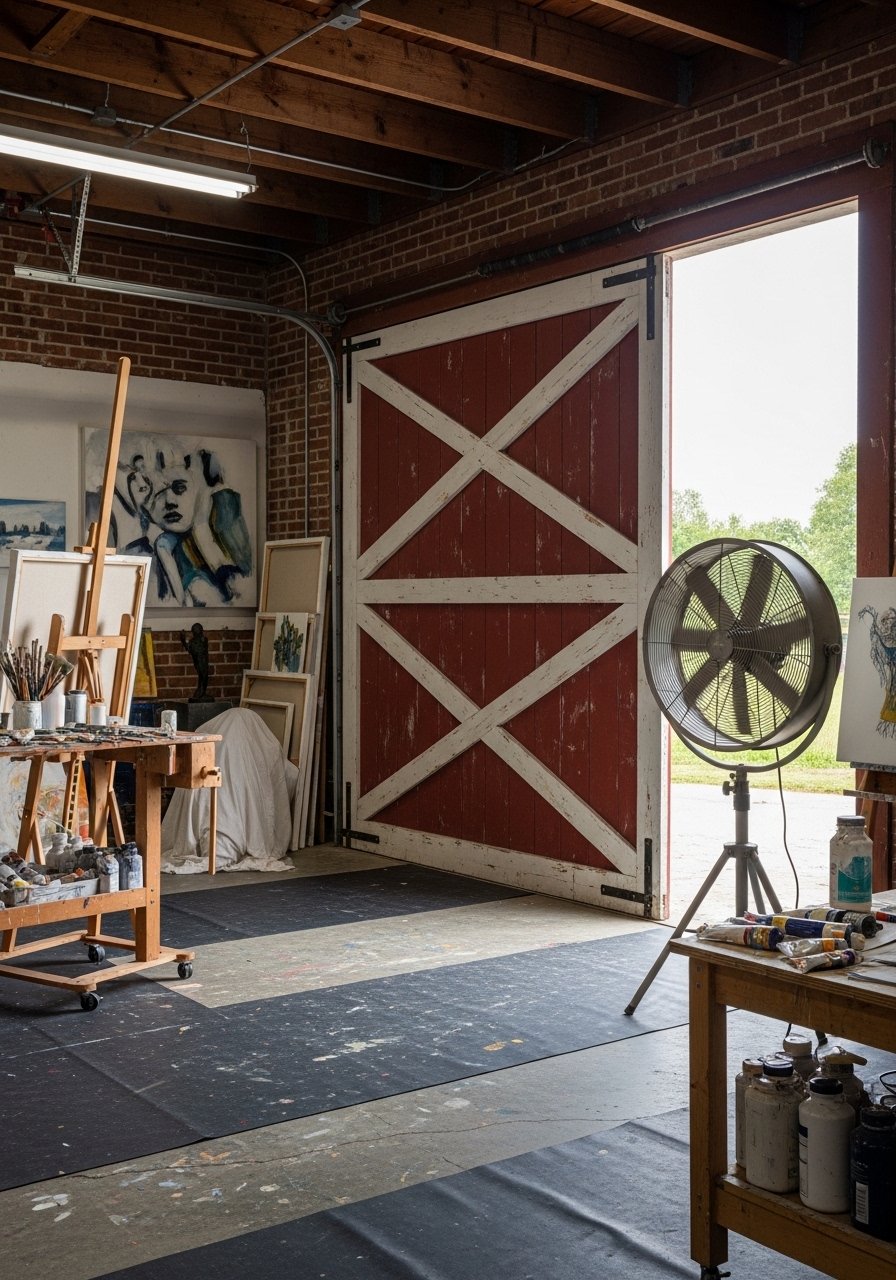
Nearly half pick garages now for spill-proof work, and opening the garage-style door halfway gives the light without full glare. I open mine about 50% and pair it with a floor mat to catch drips. If you work with oils or spray sealants, position a small exhaust fan pointing out the opening. A cheap fix is a high-velocity window fan placed near the sill. People forget to test for wind direction first and end up blowing dust into wet work. If you rent, skip permanent tracks and use a clamped setup.
Under-Stairs Nook for Sketchbooks and Small Canvases
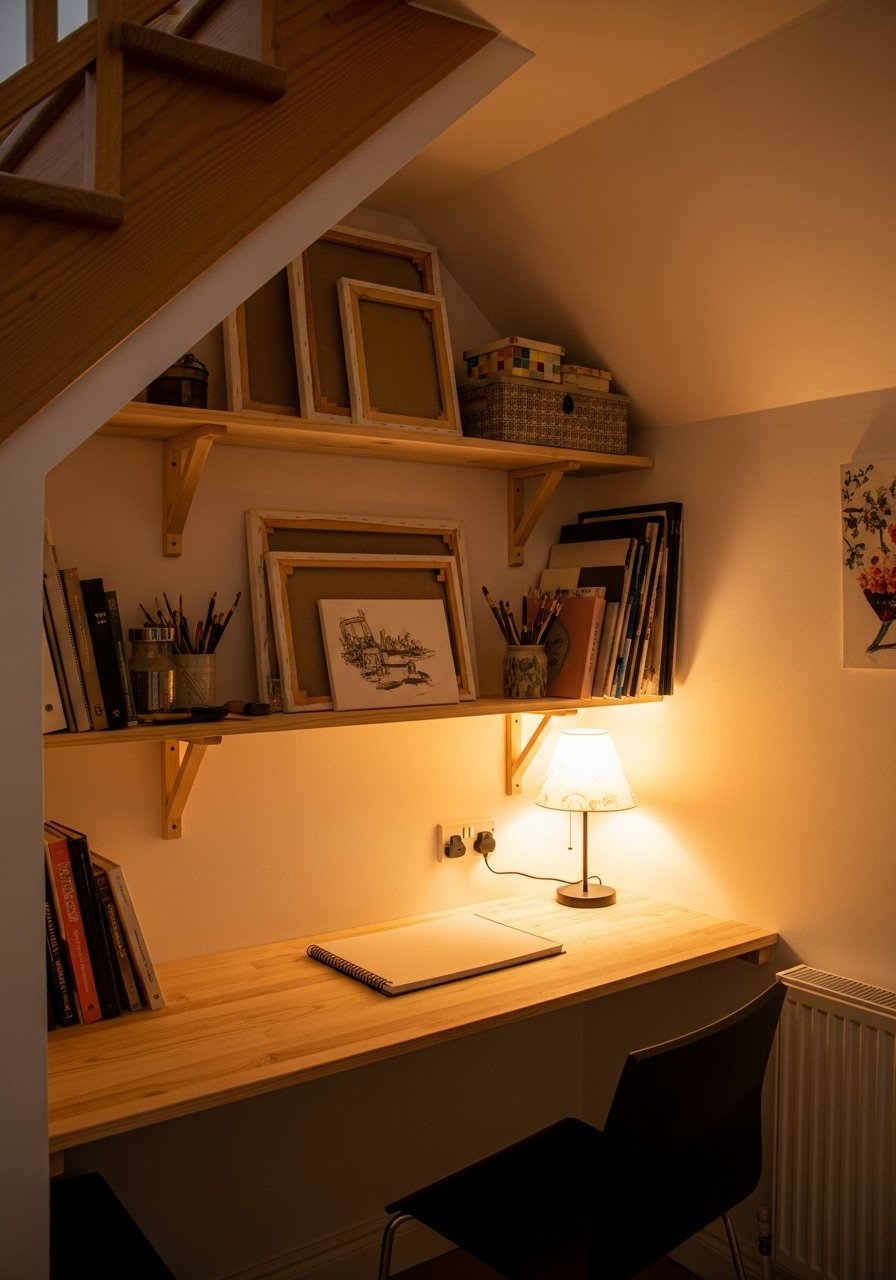
Under-stairs space saved my sanity. Keep shelves no deeper than 24 inches so sketchpads and canvases slide in without making the walkway feel tight. Add a slim desk and a power strip at the back so your tablet and lamp stay charged. I used pine floating shelves and a clamp lamp for a soft farmhouse vibe. Common mistake is trying to shove big easels into that space. Instead, store small canvases upright and reserve larger work for the main table. Check for outlets before you build any fixed shelving.
Magnetic Strip High and Out of Reach for Pets
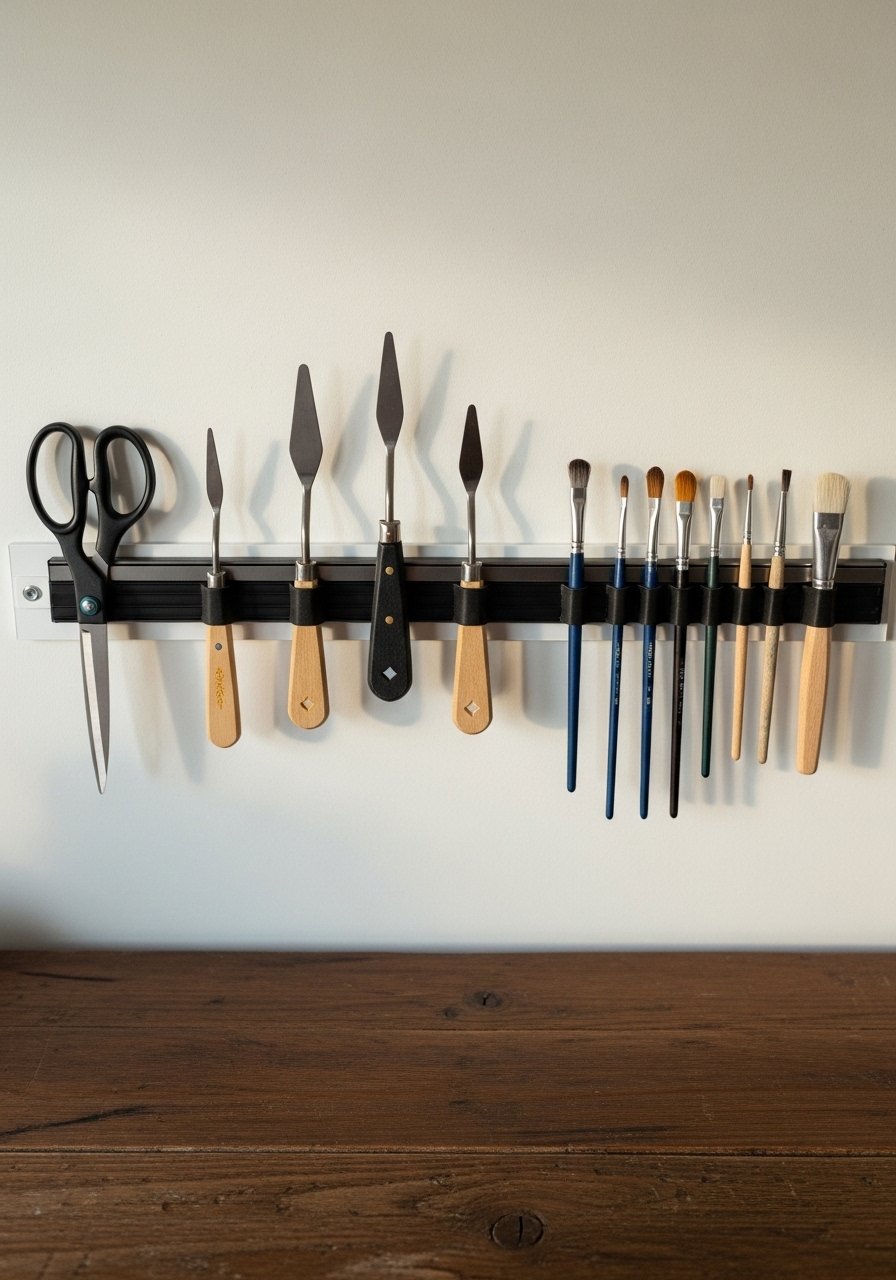
Kids and pets knock everything over if tools live on the table. Mount an 18-inch neodymium magnetic strip above your desk for metal tools. It clears the surface and keeps sharp things up high. I use two strips spaced three feet apart to balance weight. Try strong magnetic tool bar. The mistake is mounting it too low. Put it at least six inches above your eye line so nothing is in reach of curious paws. This is a renter-friendly swap with adhesive-backed options.
Easel Corner That Stands Six Feet Tall

If you paint standing up, get an easel at least six feet tall so you can step back and read your piece without hunching. I upgraded and immediately stopped slouching after an hour. A sturdy floor easel that tilts works for oils and acrylics. I linked a reliable adjustable floor easel that was worth the splurge. Beginners buy cheaper tripod-style easels that wobble when the canvas is large. Pair the easel with a rubber mat under the front legs and you reduce slipping and spills.
Shed Conversion for Clay and Big Messes
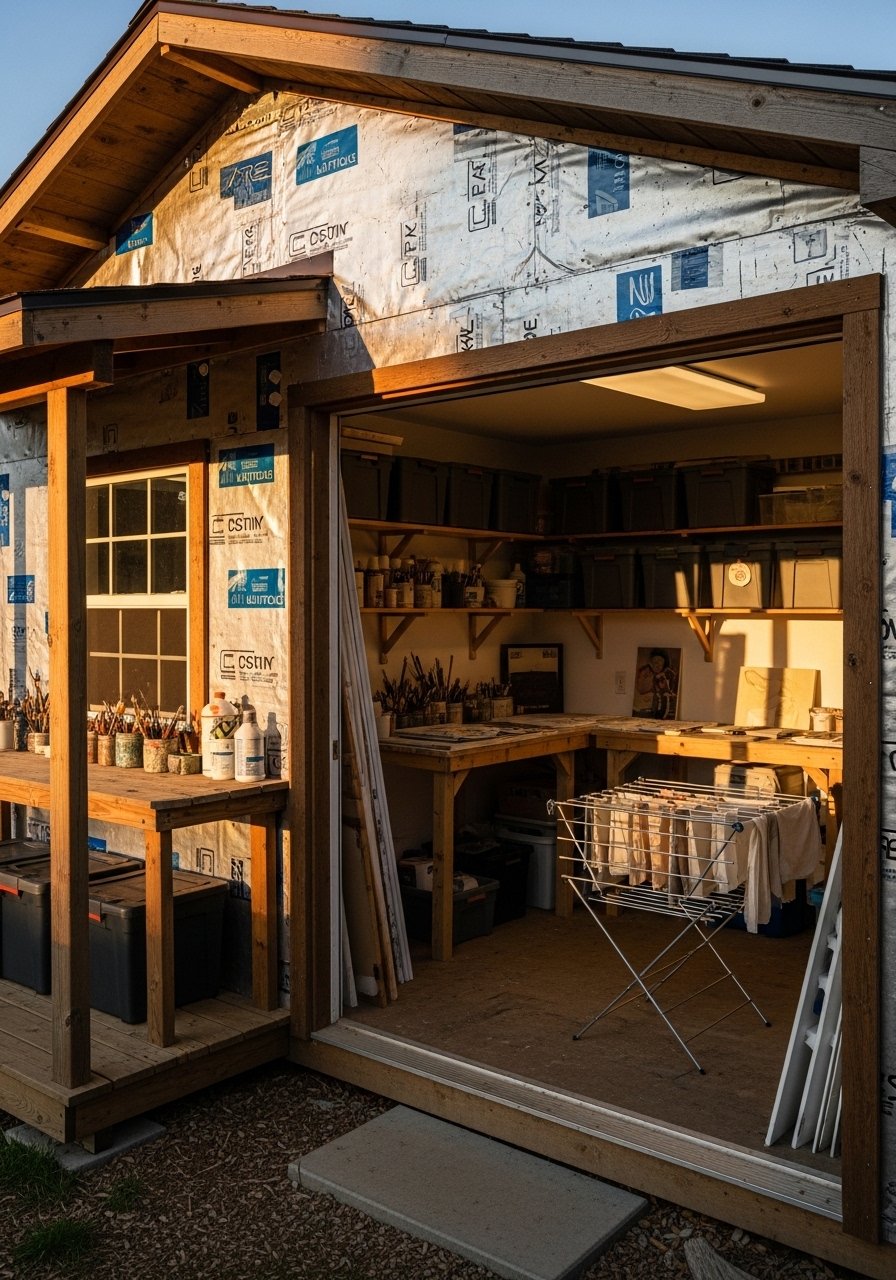
When you have really messy projects, an outdoor shed has been the best choice I made. It gives daylight and serious ventilation. Weatherproof Rubbermaid bins stack for drying shelves and you can hardwire a small exhaust if needed. I spent $300 setting mine up, and it changed what I felt comfortable making. If you rent, a prefab insulated shed is an option, but confirm neighborhood rules. A frequent oversight is forgetting to level the floor, which makes cabinets wobble. Add a cement or plywood pad and you are set.
Wine Rack Repurposed for Paint Tubes
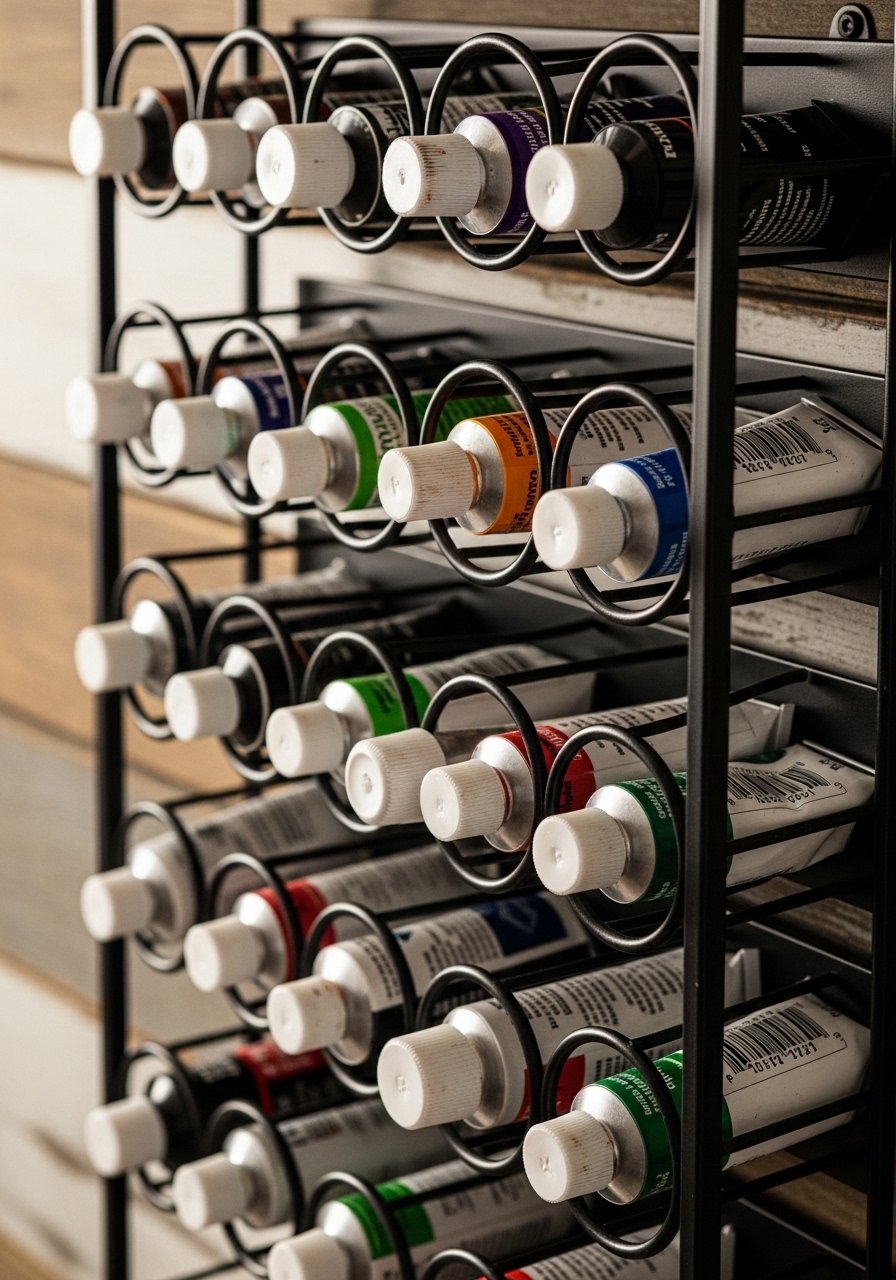
I found an old vertical wine rack and it became miracle paint storage. Tubes stand upright so you grab one with one hand. Look for a rack that fits your tallest tube and stash it next to your rolling cart. A small metal rack like vertical wire wine rack works great. People make the mistake of laying tubes flat and losing labels. Upright storage saves time and keeps the counter clear.
Closet Door That Swings Out Into an Easel
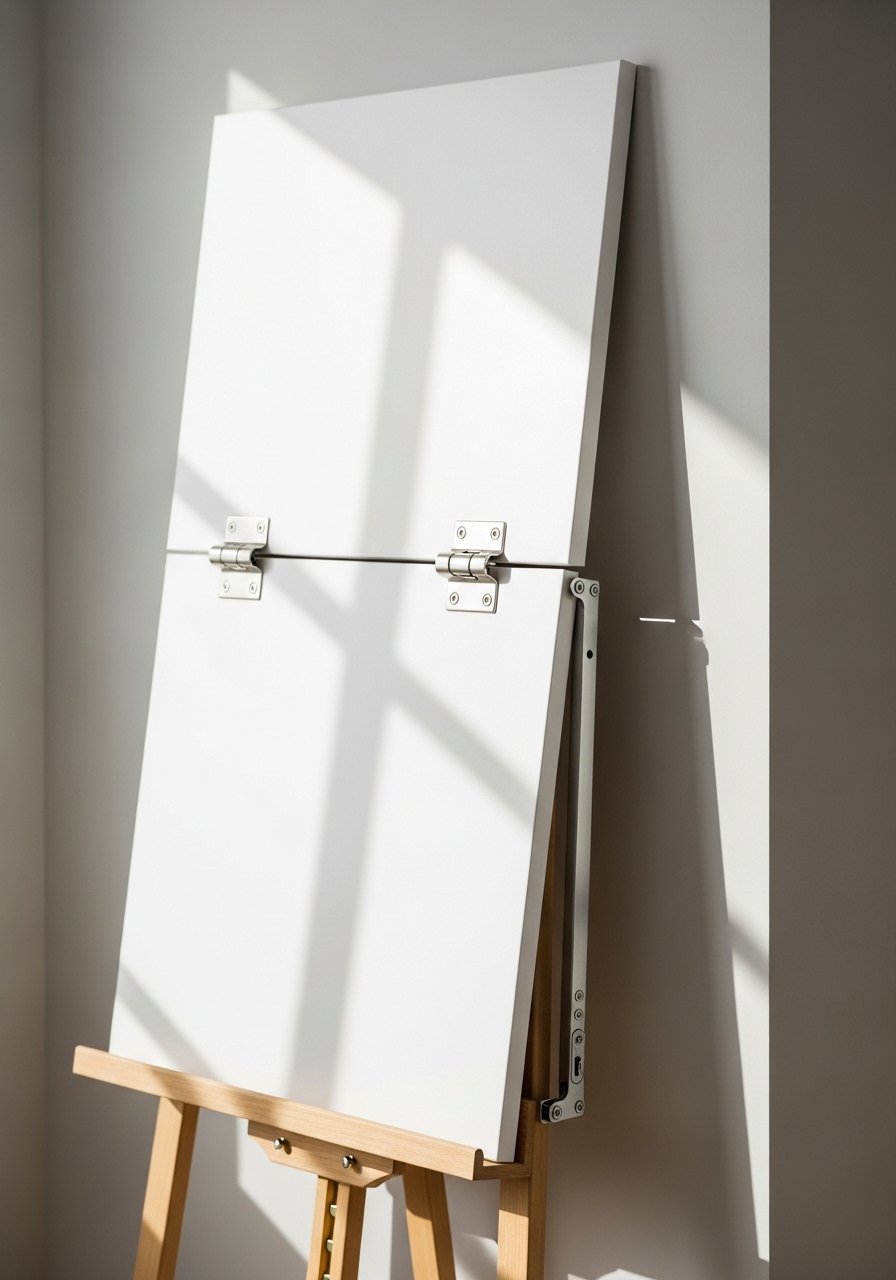
I converted a closet door so it swings out flat and acts like a hidden easel and supply closet. It tucks away when guests come over and gives a 90-degree lock when open. Use a hinge kit rated for the weight and add two small shelves on the inside for paints and mediums. I used a heavy-duty hinge kit. The common mistake is underestimating the door weight and stripping screws. Reinforce with longer screws and block the frame if needed.
Cement Floor Mats That Take the Worst Spills

Cement floors handle spills but they can look sad without layers. I layered a canvas drop cloth over a rubber mat so I can hose off the rubber and wash the canvas. Avoid cheap vinyl that becomes sticky. Use an industrial rubber mat and a heavy drop cloth like canvas drop cloths. People forget to secure mats and then easel legs slide. Tape the corners or use an anti-slip underlay.
Attic Loft Desk That Sneaks a Second Workspace Up High
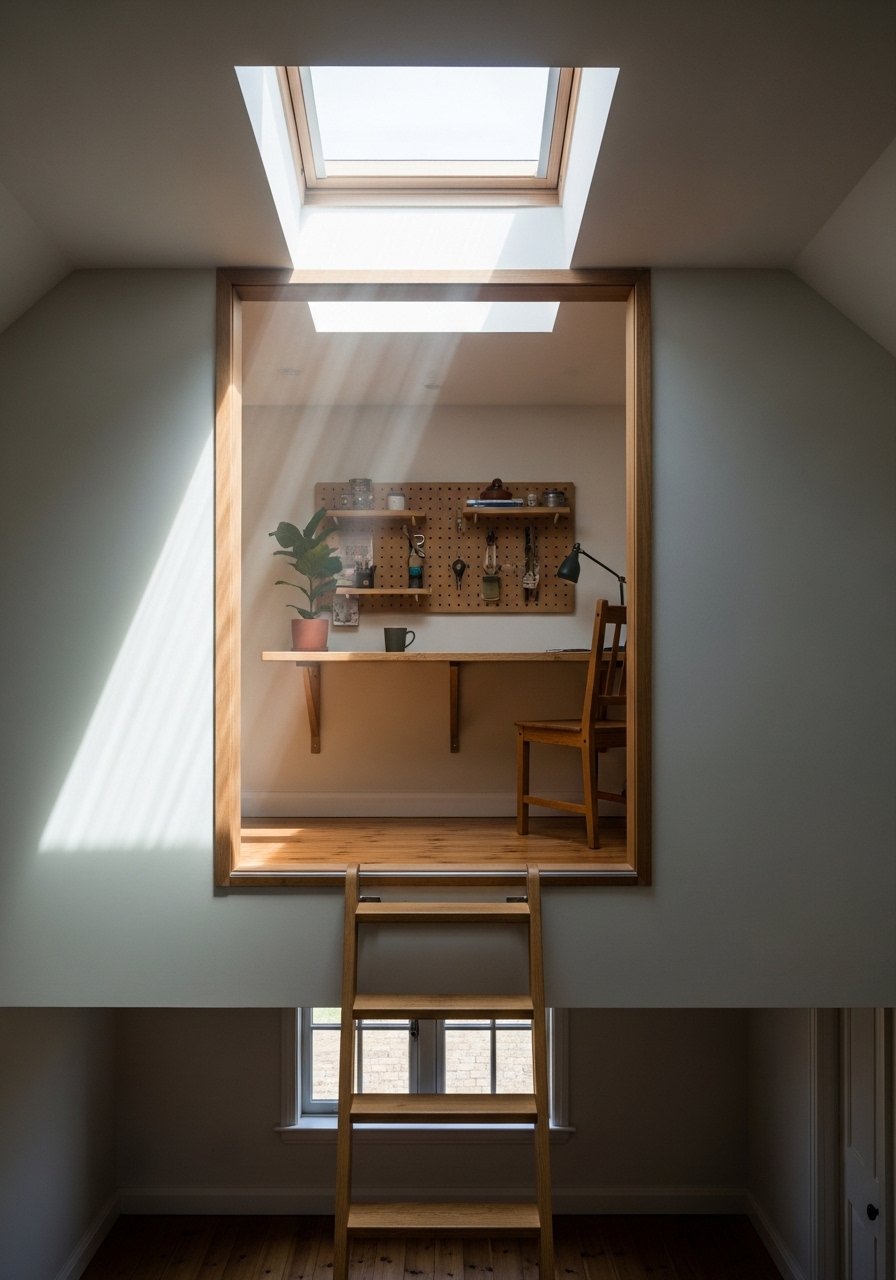
If floor space is tight, build a loft desk. A peg ladder doubles as storage and steps. Keep the loft shallow and use a 24-inch deep desk so you do not feel cramped. My loft became the best spot for focused editing and small collages. Mistake is building too steep a ladder. Use a stable handrail and clamp a shelf for a laptop. Try pine ladder shelf for a quick install.
Resin Workspace with a Vent Fan and Safe Zone

Resin needs respect and venting. I set up a small table with a window-facing fan and a removable shield to keep fumes from drifting through the house. Pair the fan with a carbon filter for sticky fumes and never skip a respirator. I use a compact exhaust fan near the window. Many people try to work resin in shared rooms and then regret the lingering smell. This is not renter-friendly if you plan to install permanent ducts, but portable fans work well.
Mural Wall with One Long Worktable for Big Pieces
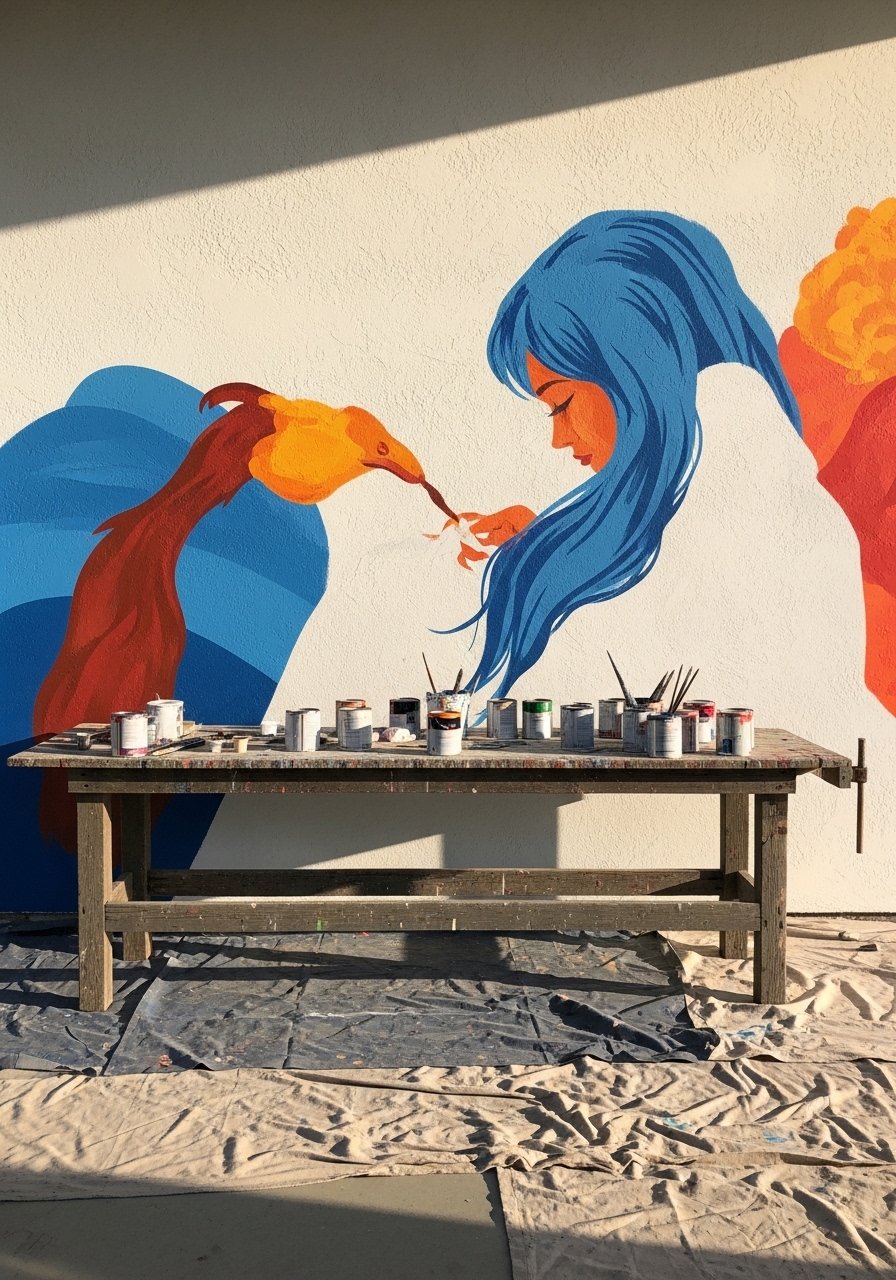
I swapped a standard desk for an 8-foot folding table and suddenly murals felt possible. Long tables let you lay out paper or canvas and work across a piece without moving it. I used an 8-foot table like 8-foot folding table that folded away when I needed the space. A mistake is putting the table flush against the wall, which forces awkward bending. Leave a 12 to 18 inch gap so you can reach the center and step back.
Floor-to-Ceiling Curtains to Control Light in a Studio Corner
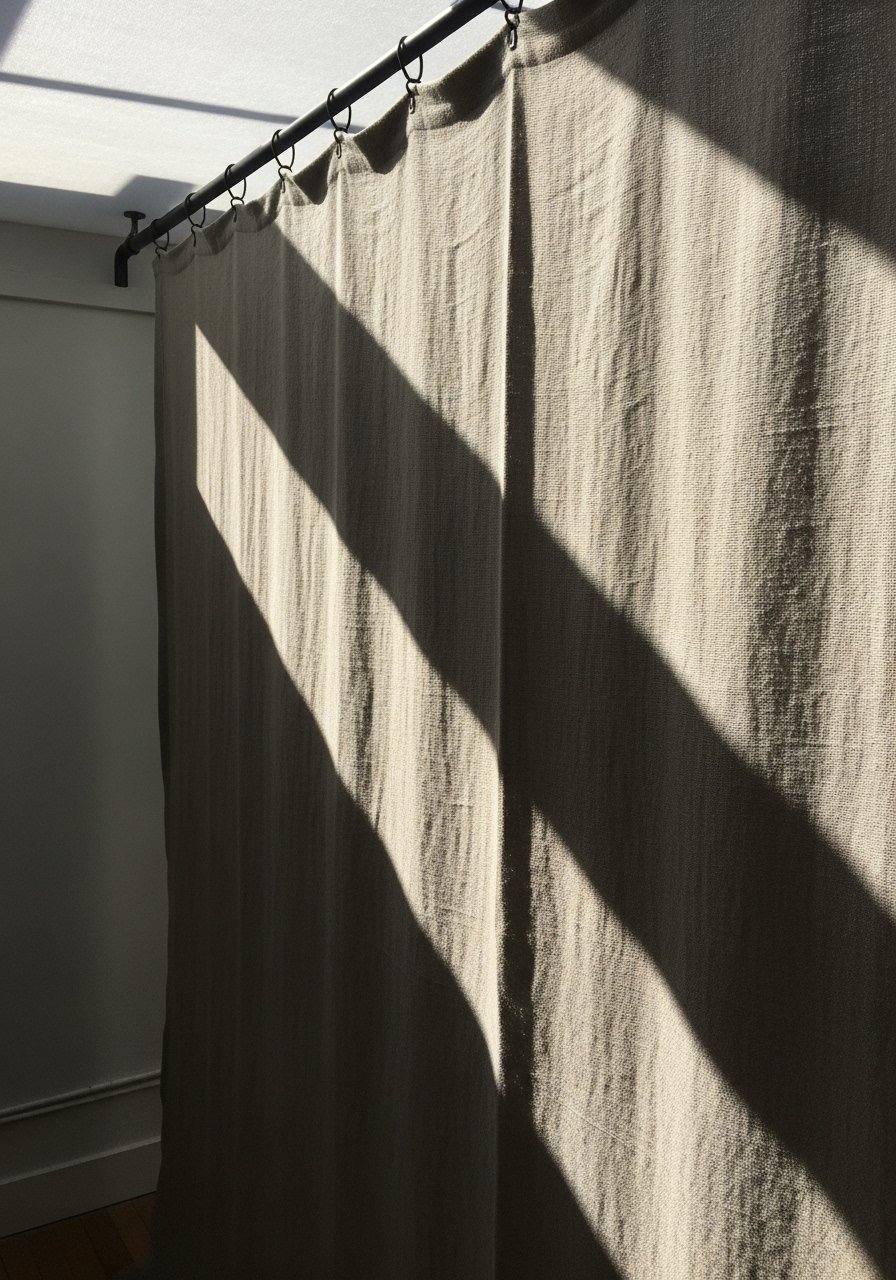
Most people hang curtains inside the window frame and rooms look shorter. Hang 96-inch panels high and wide to control light for delicate color work. Curtains double as a soft backdrop and reduce glare. I used linen panels to keep the farmhouse tone. Try linen curtain panels 96-inch. A frequent mistake is choosing blackout that flattens the space. Instead, pick light-filtering fabrics and layer with a roman shade for full control.
Layered Work Zones Using Adjustable Metal Tables
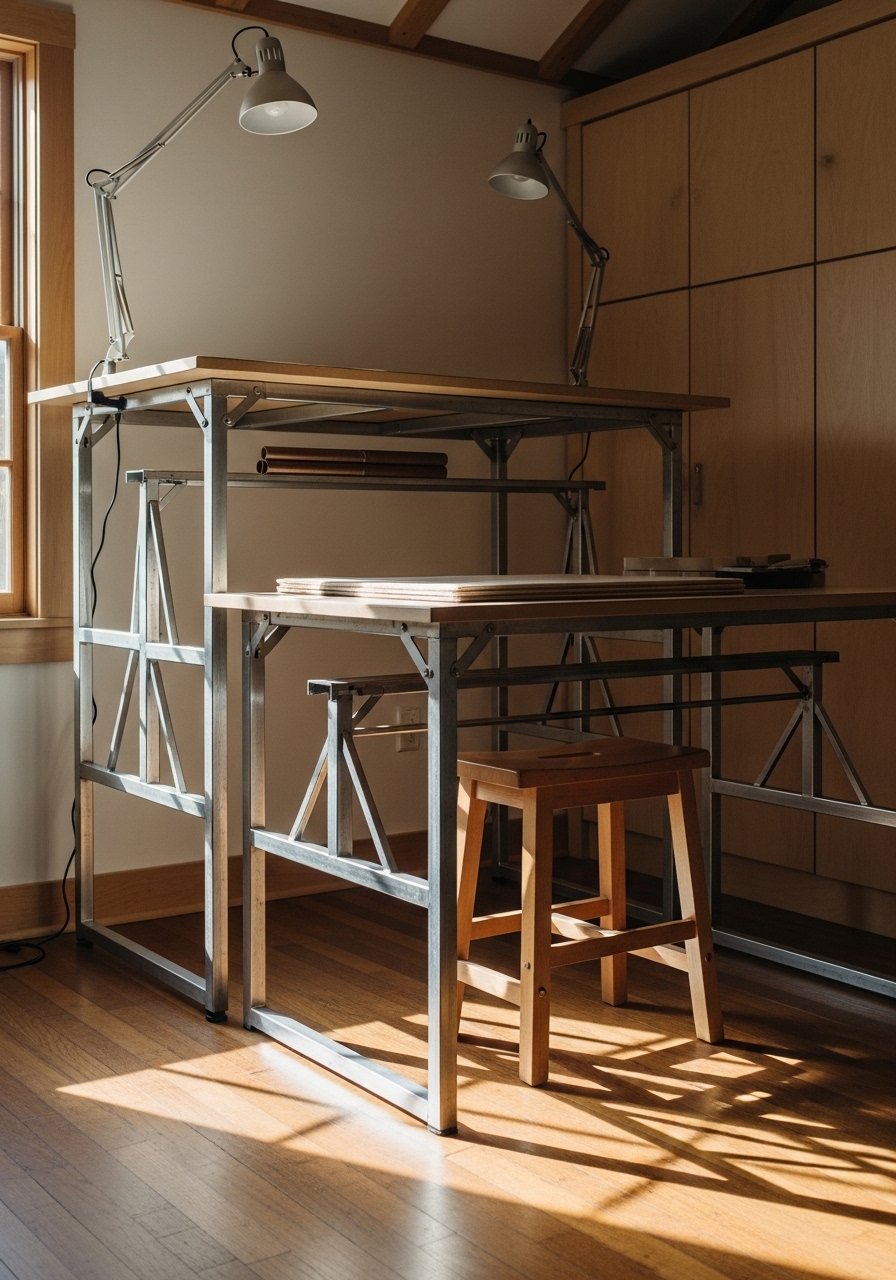
Wood desks are out and adjustable metal tables are in for mixed media work. One table at 30 to 36 inches works for seated tasks and a second higher one is perfect for standing or drying. I paired two adjustable tables and the flow is night and day. Try adjustable metal work table for a sturdy setup. Mistake people make is matching table heights. Keep at least a 6-inch difference and you will save your back and keep materials organized by task.
Your Decor Shopping List
Textiles
- Honestly the best $45 I have spent. Chunky knit throw in cream (50×60 inches) for draping over a bench
- Linen curtain panels 96-inch (~$30-50 per panel). Similar at Target or HomeGoods
Storage and Walls
- Gold pegboard hooks set (pack to cover 80% of a wall)
- Three-drawer rolling cart for under-desk mobility
Work Surfaces and Tools
- Adjustable floor easel (6-foot minimum recommended)
- 8-foot folding table for mural work
Floors and Venting
- Canvas drop cloth heavy duty, 9×12 feet
- Compact exhaust fan for resin or solvent work
Miscellaneous
- Magnetic tool bar 18-inch to keep metal tools up and away from pets
- Vertical wire wine rack repurposed for paint tubes
Shopping Tips
White oak beats dark wood in 2026. Design feeds have shifted completely. White oak floating shelves look current, not dated.
Grab velvet pillow covers for under $15 each. Swap them seasonally and the room feels refreshed without a full redo.
Curtains should puddle or kiss the floor, never hang halfway up. These 96-inch linen panels are right for standard 9-foot ceilings and give soft light control.
If you work with fumes, invest in a fan you can point out a half-open garage door. High-velocity window fans move air and keep smells out of the rest of the house.
One large plant beats five tiny ones. Try a 6-foot faux fiddle leaf fig if you do not want watering drama. It gives scale and anchors a corner.
Frequently Asked Questions
Q: Where should I put the pegboard for best flow?
A: Cover about 80% of one wall and keep a clear work strip at table height. That way your most used tools are at elbow level and you do not have to bend every time you need a brush.
Q: Can I set up a resin station in a rented place?
A: Portable fans and window-facing setups work for renters. Avoid installing permanent ducts. Use a respirator and a compact exhaust fan near an open window for safer venting.
Q: What table height is actually comfortable for long sessions?
A: Go 30 to 36 inches for seated tasks and add a stool with adjustable height. For standing work, a second table 6 inches higher keeps you from hunching.
Q: How do I keep kids and pets from wrecking supplies?
A: Mount a magnetic strip at least six inches above eye level and store solvents in a locked lower cabinet. Magnetic bars and high peg hooks move sharp and tempting items out of reach.
Q: Is a garage really better than a bedroom for messy art?
A: Nearly half pick garages now for spill-proof work, and for good reason. Garages tolerate splatters, are easier to ventilate, and often have cement floors that clean easily.
Q: How much should I budget to make a functional studio?
A: People drop $250 to 500 to get their studio right for basic setups. Add more for dedicated sheds or professional-grade ventilation.