
I used to think a pretty light fixture would solve everything. I had a bright overhead, two identical lamps, and a bed that still looked like a hospital room at dusk. Everything felt flat and too bright at once. I tried swapping lamps, adding candles, and even painting the ceiling a darker color. None of it fixed the way the room felt.
What finally worked was paying attention to placement, warmth, and how the light meets materials. I messed up the balance the first three tries, but once I learned where to put each light and how it should feel, the room stopped fighting me.
Step 1: Set the ambient tone with the right overhead and a dimmer
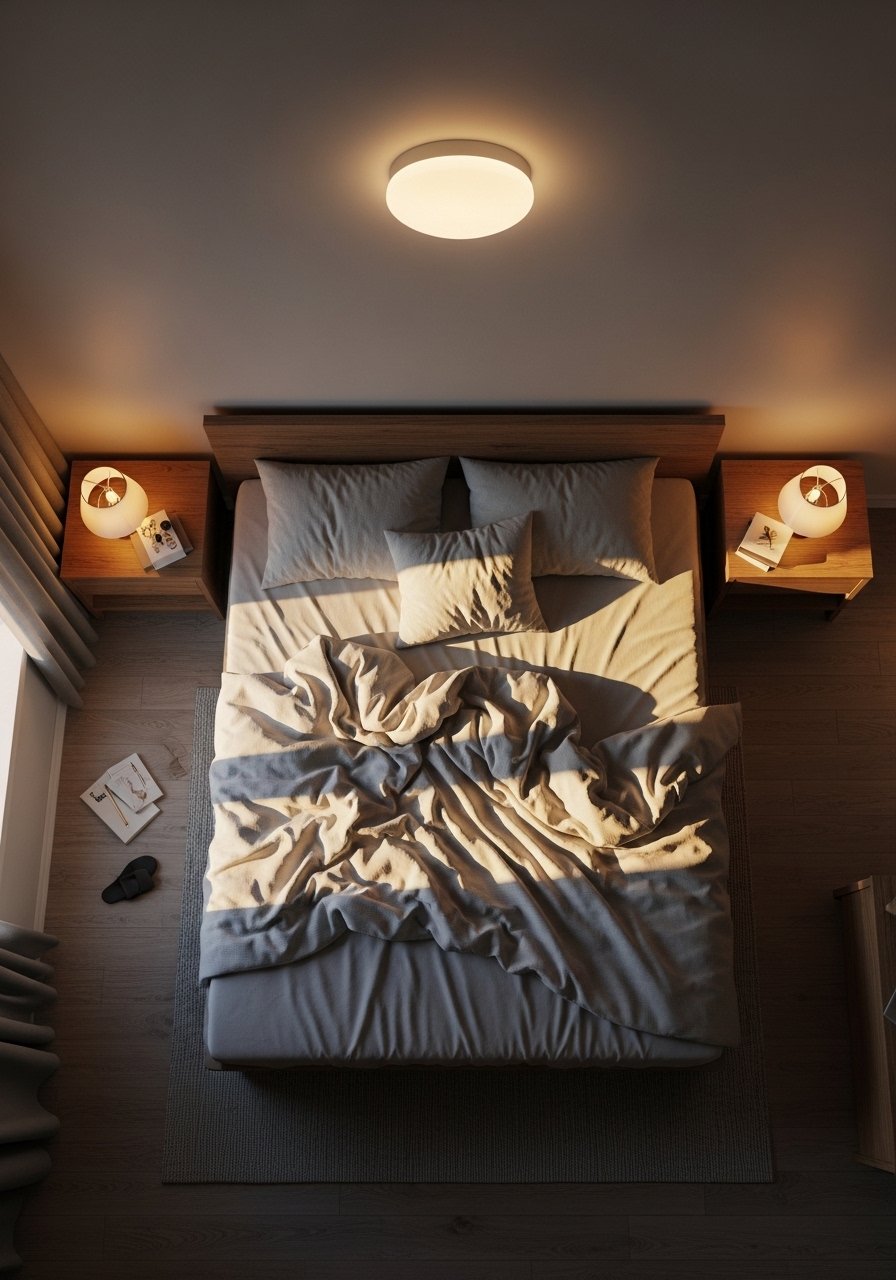
Start by getting the biggest source under control. Swap the bulb for a warm 2700K LED and put the circuit on a dimmer. A dimmer lets the ceiling be bright for cleaning, and golden for bedtime. If you have a can light, aim for 50 to 75 percent brightness in normal use, not full blast.
Common mistake: leaving the ceiling as the only light. It flattens textures and makes the room feel harsher. Insight people miss: warm light warms materials. Linen and wool read dramatically different under 2700K versus a cool bulb. I hesitated buying a dimmer, it seemed like extra work, but it was the single best change I made.
Step 2: Install a bedside lamp that actually fits the bed
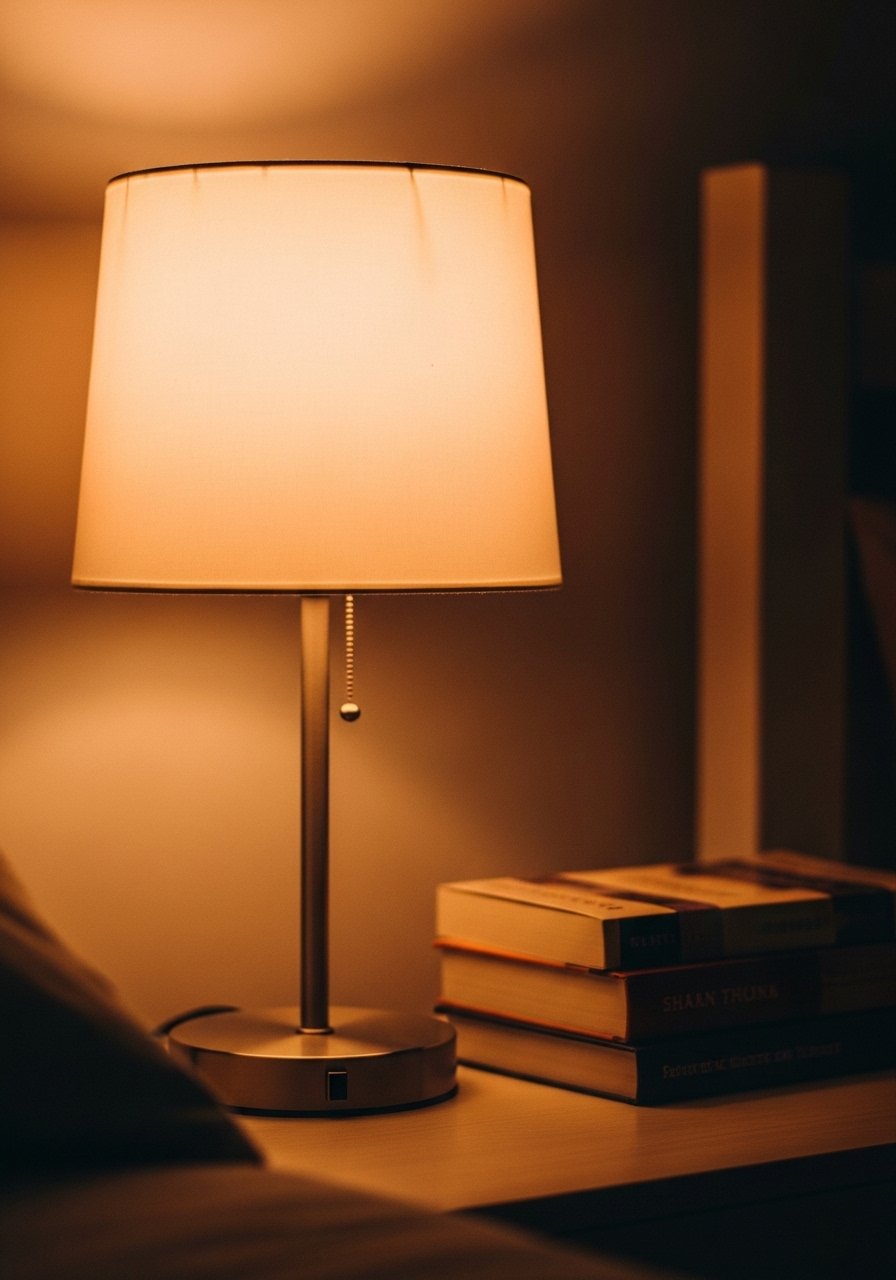
Pick a lamp whose top sits roughly 24 to 28 inches above the tabletop, so the bulb sits near eye level when you are sitting up. That height gives a readable pool of light and a soft face glow without shining into your eyes. Use a 800-lumen warm bulb for reading, or a lower lumen for lounging.
A common mistake is choosing a lamp because it looks small on a catalog page. Too small and the light disappears, too tall and it overwhelms the nightstand. I bought two tiny lamps once and had to return them. Texture matters here, choose a ceramic or metal base that feels cool and solid in your hands, and a linen shade that softens the edges.
Step 3: Add one accent layer for depth and atmosphere
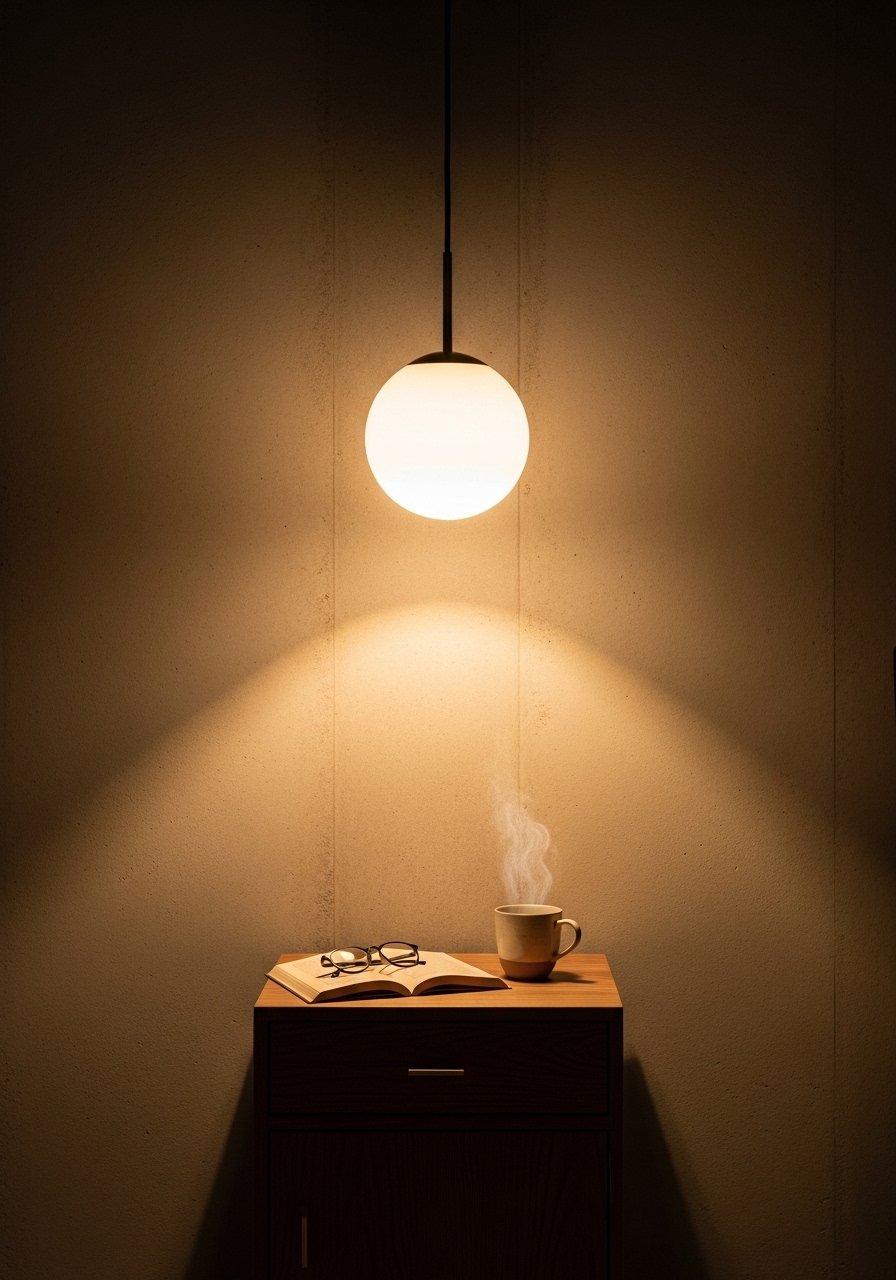
Introduce a single accent light, like a pendant, wall sconce, or LED strip behind the headboard. Hang pendants about 28 to 36 inches above the top of the nightstand so they glow without bumping your head. Accent lighting creates pockets of shadow, which is what makes a room feel cozy instead of uniformly lit.
People often overdo accent lights, turning on every lamp at once. The insight I missed was that contrast is the cozy ingredient. One small, intentional accent will add depth and make the bedside lamp feel more intentional. If you have kids or pets, choose a hardwired fixture or a mounted sconce to avoid knocked-over lamps.
Step 4: Use lamp shade material, bulb warmth, and dimmers to sculpt texture

Light shows texture. Swap a paper shade for linen or fabric to get a softer edge. Use bulbs labeled 2700K for that warm golden cast, and pick dimmers that work with LED bulbs so they actually glide down without flicker. A linen duvet will read nubby and warm under this light, not flat.
I almost skipped testing bulbs in my lamp, and the first bulb I bought washed out my whole pillow. Test one bulb, then live with it for a week. If it still feels off, try a lower lumen or a frosted bulb. Small changes here make the room feel tactile, the kind of place you want to sink into.
Step 5: Edit, live with it, then tweak the cords and scale
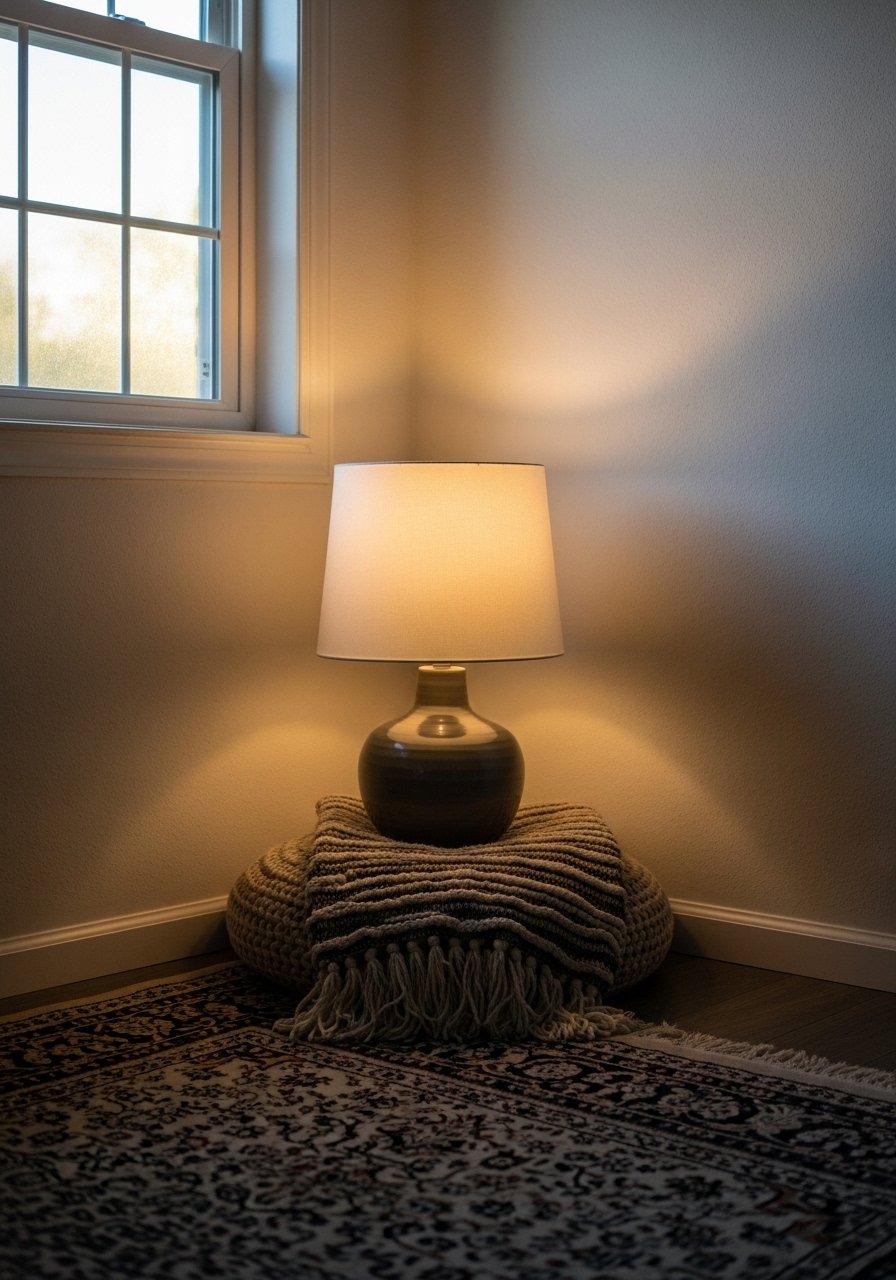
Step back and live in the room for a few days before adding more. You will want to add another lamp or a shelf light. Don’t. Walk away, then return and decide. Anchor the bed with a rug that extends 18 to 24 inches beyond the sides and foot of the bed, so the room reads grounded under light. Hide cords behind furniture so the warm pools of light feel intentional, not chaotic.
My first version had too many lights, and my partner hated the fuss. After a week he admitted it finally felt like a bedroom. Small edits, like moving a lamp 3 inches or swapping a bulb, can make the space feel settled. This is the part where you start to feel proud, not overwhelmed.
The Bedroom Basics You'll Actually Use
Chunky knit throw in oatmeal, 50×60 ($40-65). I keep one on the arm of the bed for texture and weight.
Linen duvet cover in sage green, queen ($70-110). The slightly rough weave catches the warm light.
Bedside table lamp, 24-28-inch height, ceramic base ($35-90). Use this in Step 2 for scale and feel.
Smart dimmer switch, compatible with LED bulbs ($25-60). This is the easy upgrade I mentioned in Step 1.
Hanging pendant light, low-profile, brass finish ($40-120). Use in Step 3 over a nightstand.
Warm LED bulbs, 2700K, 800-lumen, pack of 4 ($20-35). Bought these to test bulbs in Step 4.
Jute area rug, 8×10 ($90-160). Anchors the bed as described in Step 5.
Matte ceramic vase set, varying heights ($25-40). Works for accent lighting shelves mentioned in Step 3.
Why Your Bedroom Still Feels Too Bright at Night
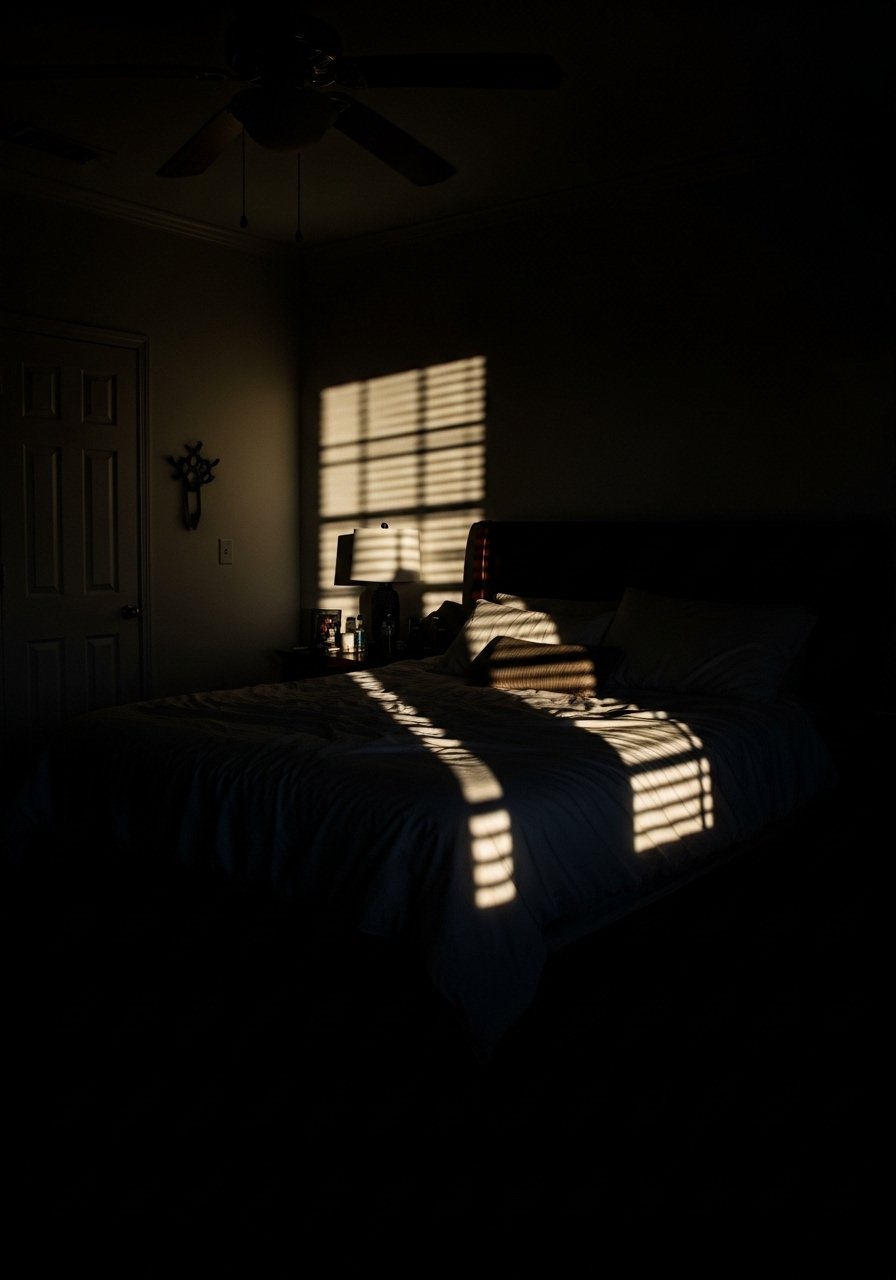
If it feels bright and washed out, you are probably using bulbs that are too cool or bright. Switch to 2700K and lower the lumen count. Also check where the light lands. Bright ceilings with dark furniture create glare. The fix is threefold: soften the ceiling with a dimmer, add bedside light that points down, and create one accent shadow. I underestimated how much a single pendant would change the perceived brightness.
Making This Work in a Small Room
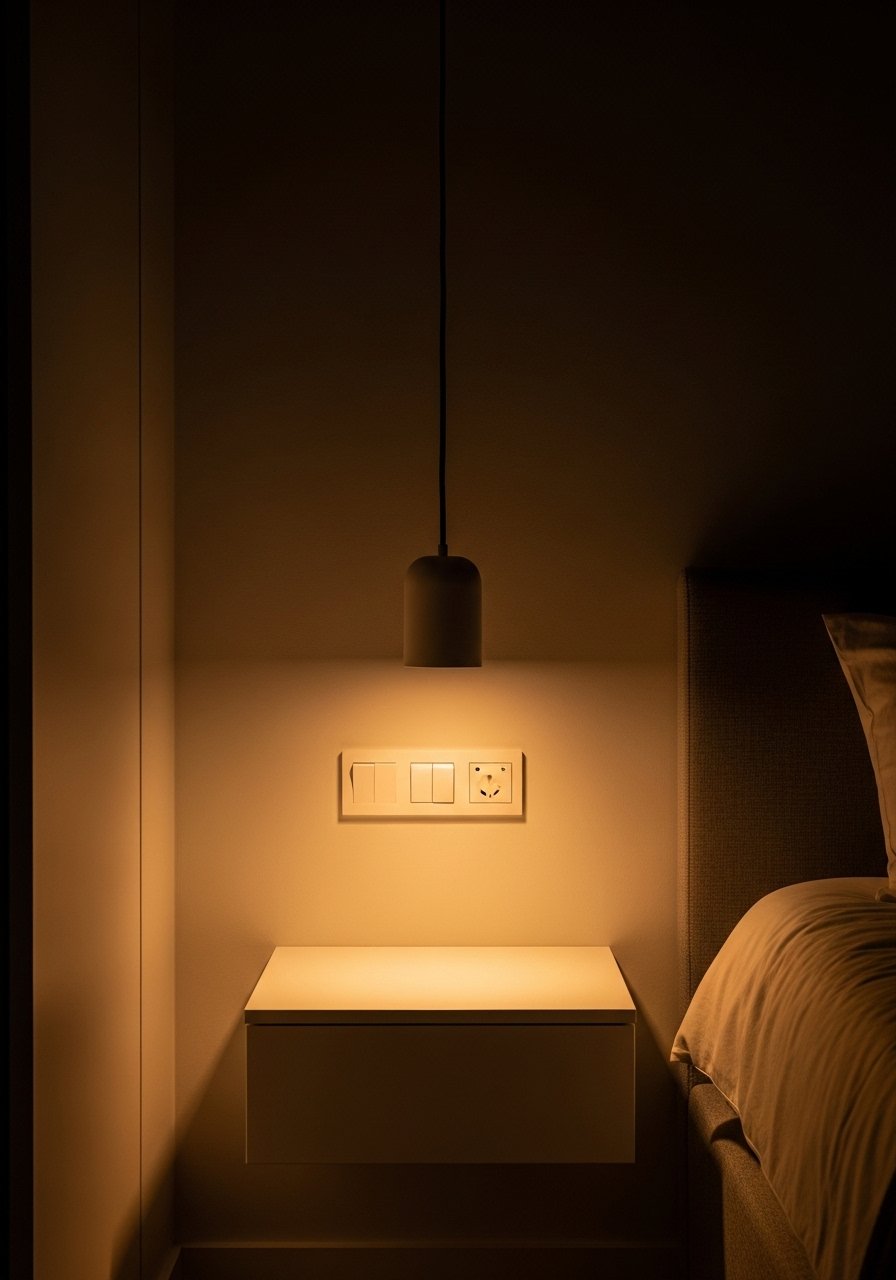
Small rooms need fewer, smarter sources. Try one wall sconce instead of two lamps, and choose a slim lamp base under 8 inches wide. Keep the pendant or sconce closer to the wall so it does not crowd the walk path. Bulb rule for small rooms, pick 400 to 600 lumens for ambient use, and 600 to 800 lumens for task lighting by the bed. I learned this after cramming two lamps into a narrow nightstand and feeling boxed in.
What This Looks Like After a Week of Real Life
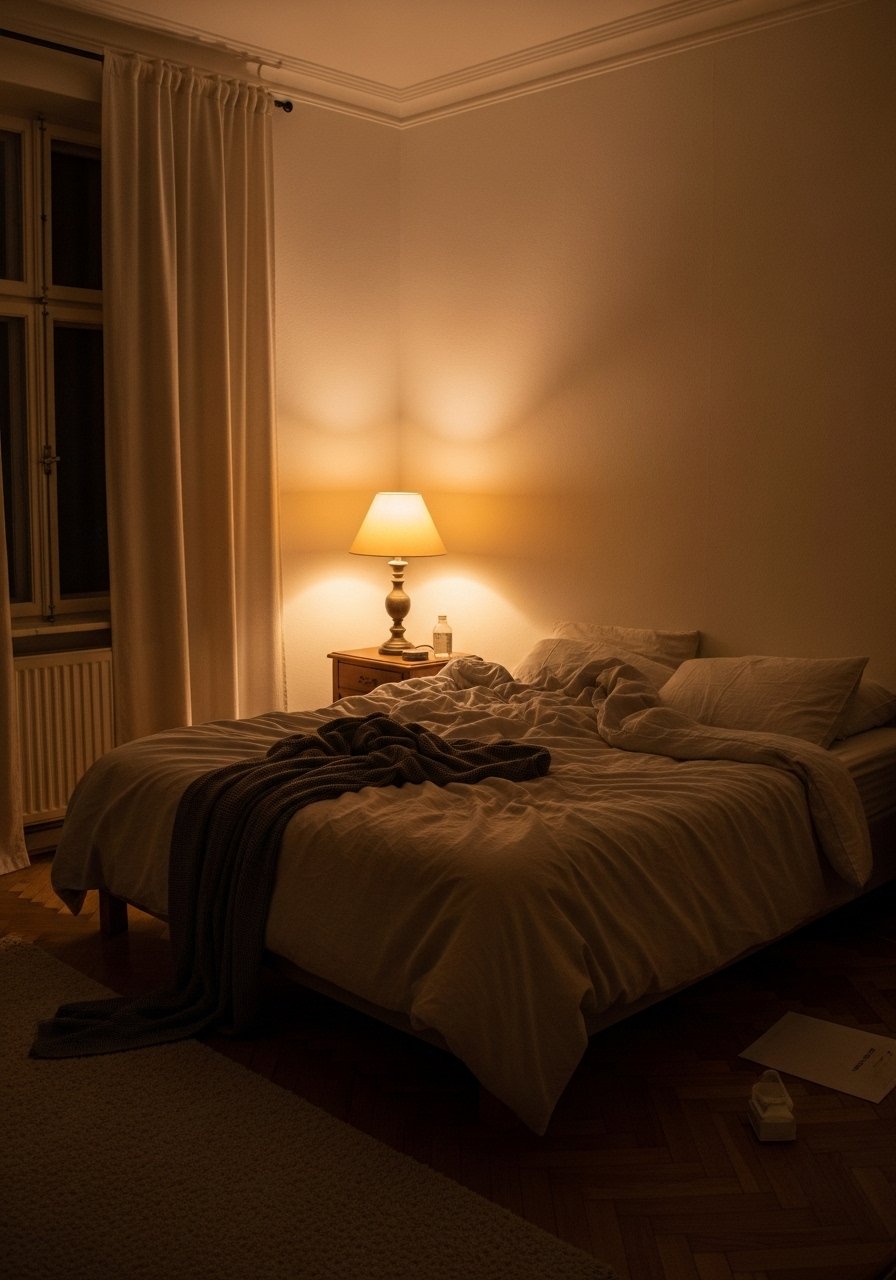
Expect a little mess. After a week you will find one lamp you use every night and one you never touch. The winning setup is the one that survives the real habits, not the one that looks perfect for a photo. My throw ended up tossed on the floor the second night. The light still read soft and inviting, and that small disorder made the room feel lived-in and human.
Start with One Bedside Lamp
Choose one bedside lamp, the warm 800-lumen bulb, and a dimmer if you can. Put the lamp at the height suggested and live in the room for a few nights. Adjust the bulb or shade if faces look washed or your books are hard to read. Once one side feels right, mirror the concept on the other side or add a single accent light. You will be surprised how small changes make the whole room feel calm and settled.