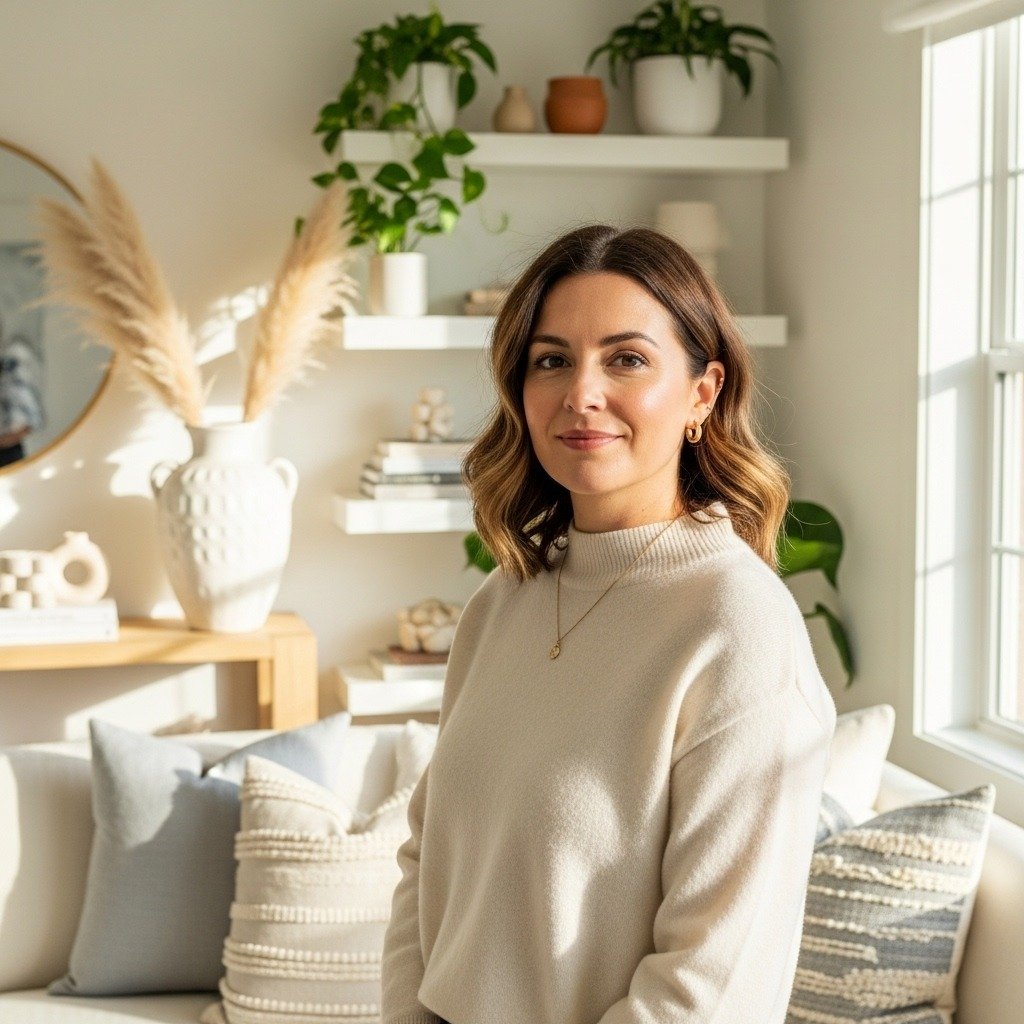
My living room had nice furniture and decent lighting but it still felt like a waiting room. Took me embarrassingly long to figure out it was missing height variety and a little bit of elbow room on the walls. Floating shelves fixed both problems in one go and suddenly the room felt edited without being staged.
These ideas lean modern and slightly rustic, with most projects under $75 and a few splurges near $150. Works for living rooms, entryways, bathrooms, and tiny nooks that need a personality boost.
Warm White Oak Shelves for a Modern Cozy Living Room
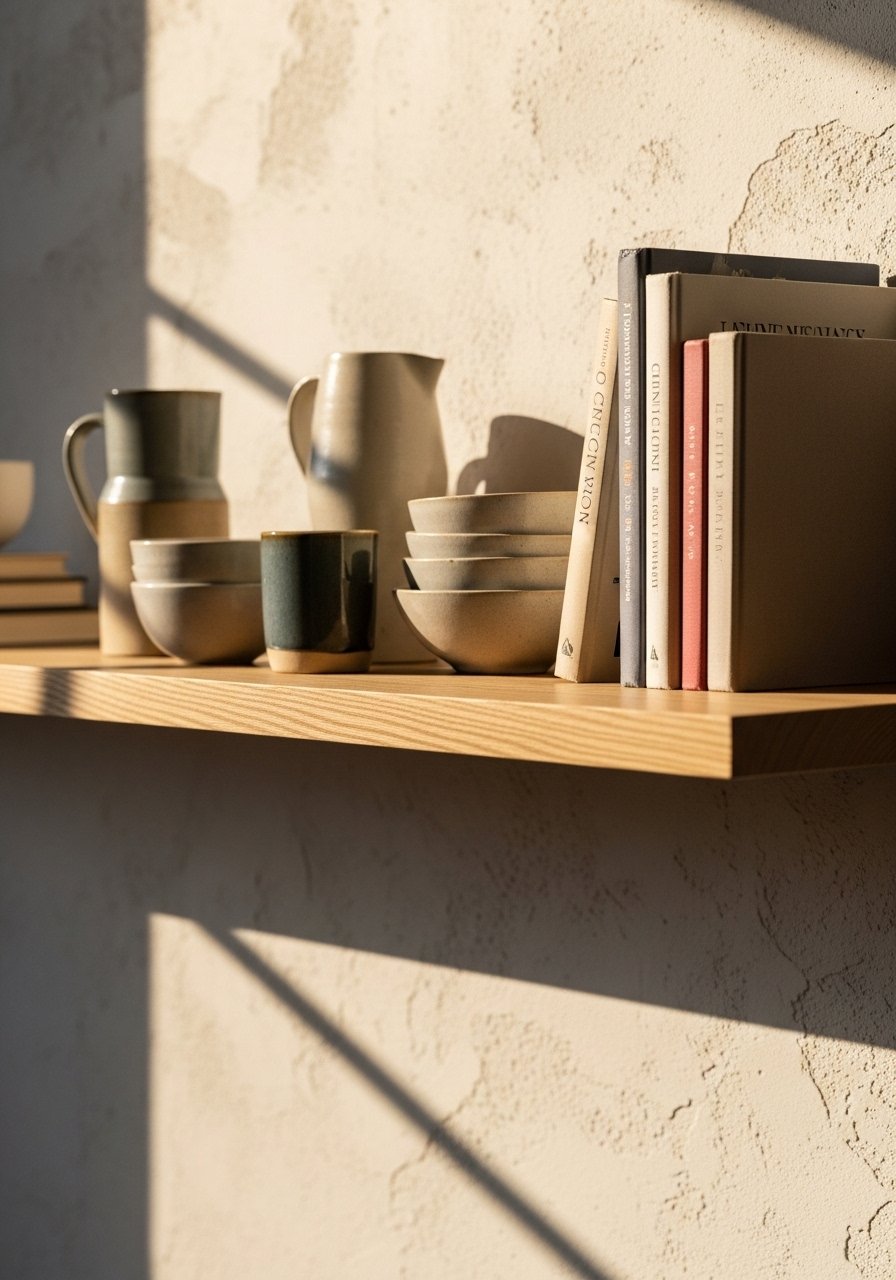
White oak reads current but soft, so it warms a living room without shouting. I use 36-inch shelves 10 inches deep for books and plants, hung with hidden brackets so you never see hardware. One mistake is choosing shelves too shallow for books, which makes styling feel cramped. For a budget-friendly set try white oak floating shelves and pair them with plain white 8×10 frames. Visual rule I swear by, keep 2/3 of the shelf clear and 1/3 layered with objects so things look intentional rather than busy.
Slim Floating Shelves for a Narrow Entryway
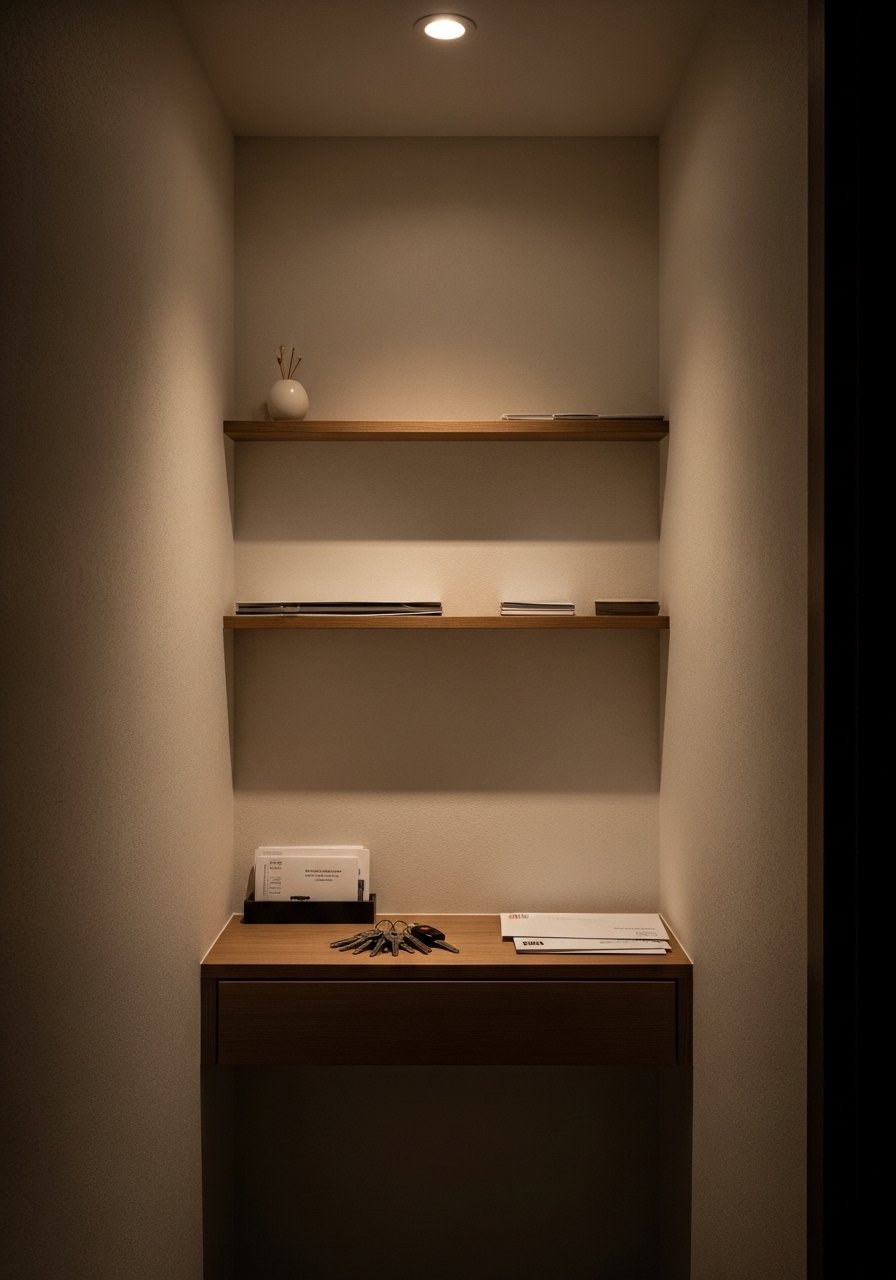
My entryway was a clutter magnet until I installed two 24-inch slim shelves at eye level. They catch keys, sunglasses, and a small plant without using floor space. Typical mistake is hanging them too high. Aim for 56 to 60 inches to the center of the top shelf so you can reach items easily. I bought a pair of floating shelf brackets and used 3-inch screws into studs for a solid mount. Budget friendly at under $50 if you sand and finish the boards yourself.
Industrial Pipe Shelves for a Cozy Rustic Kitchen
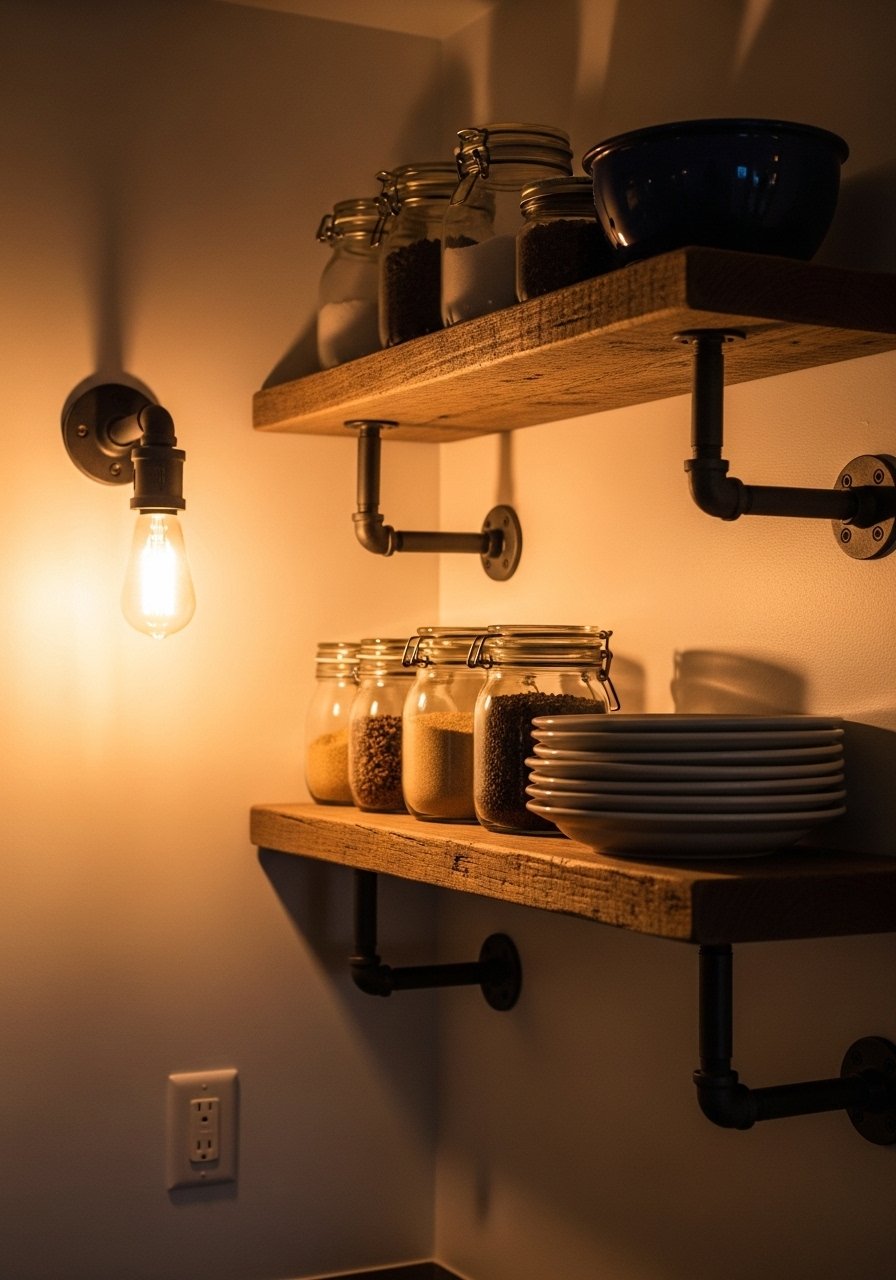
If your kitchen feels catalog-perfect but not lived-in, swap open cabinets for two reclaimed wood shelves on iron pipe brackets. They add texture and make grabbing a bowl feel friendly. People often overload these with mismatched dishes. Keep one shelf for everyday plates and the other for decorative jars to avoid looking like a restaurant supply room. I used black pipe shelf brackets and sealed the wood with matte polyurethane. Plan for 12 inches of vertical space between shelves so tall jars fit without a squeeze.
Floating Corner Shelves to Rescue Dead Corners
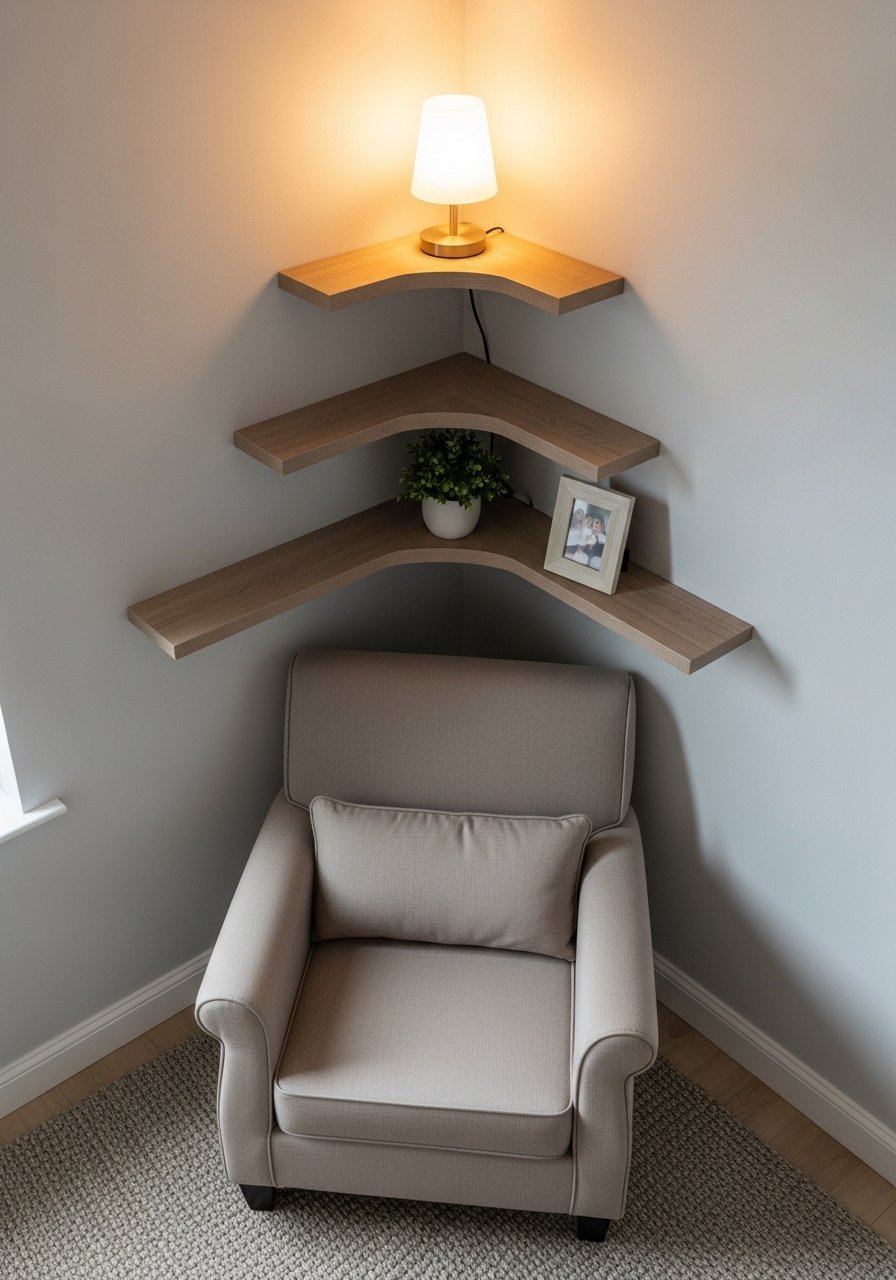
Corners are wasted space in most apartments. Installing three staggered corner shelves created a tiny vertical vignette that reads like purpose, not clutter. Mistake people make is keeping everything the same depth. I go 6, 8, then 10 inches from top down so eye travel feels natural. Use corner shelf brackets for stability and tuck a 6-inch lamp on the lowest shelf for warm glow. Pair this with the gallery wall idea later for a cohesive entry trio.
Minimalist Black Shelves for a Clean Modern Bedroom
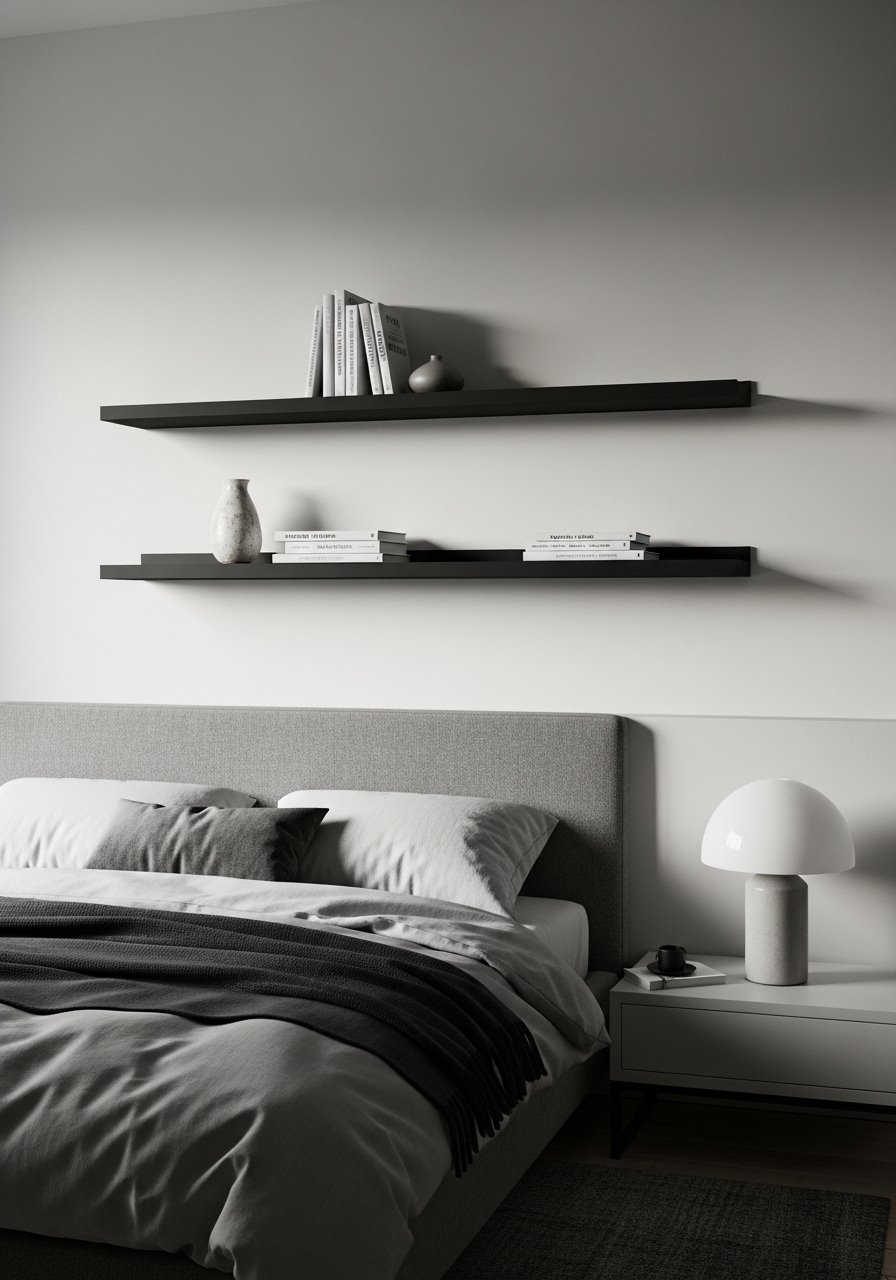
I swapped chunky nightstands for two 30-inch matte black shelves and a slim wall lamp, and suddenly the bedroom felt calm instead of cluttered. The key is scale. Go 8 to 10 inches deep for bedside use and keep only the necessities on them. A common error is overdecorating with tiny objects that look like filler. I like matte black floating shelves because they disappear visually and let textiles do the heavy lifting. Use a 1:3 ratio in styling, one lamp to three books to one plant.
Oak Slab Shelves with Visible Grain for a Scandinavian Nook
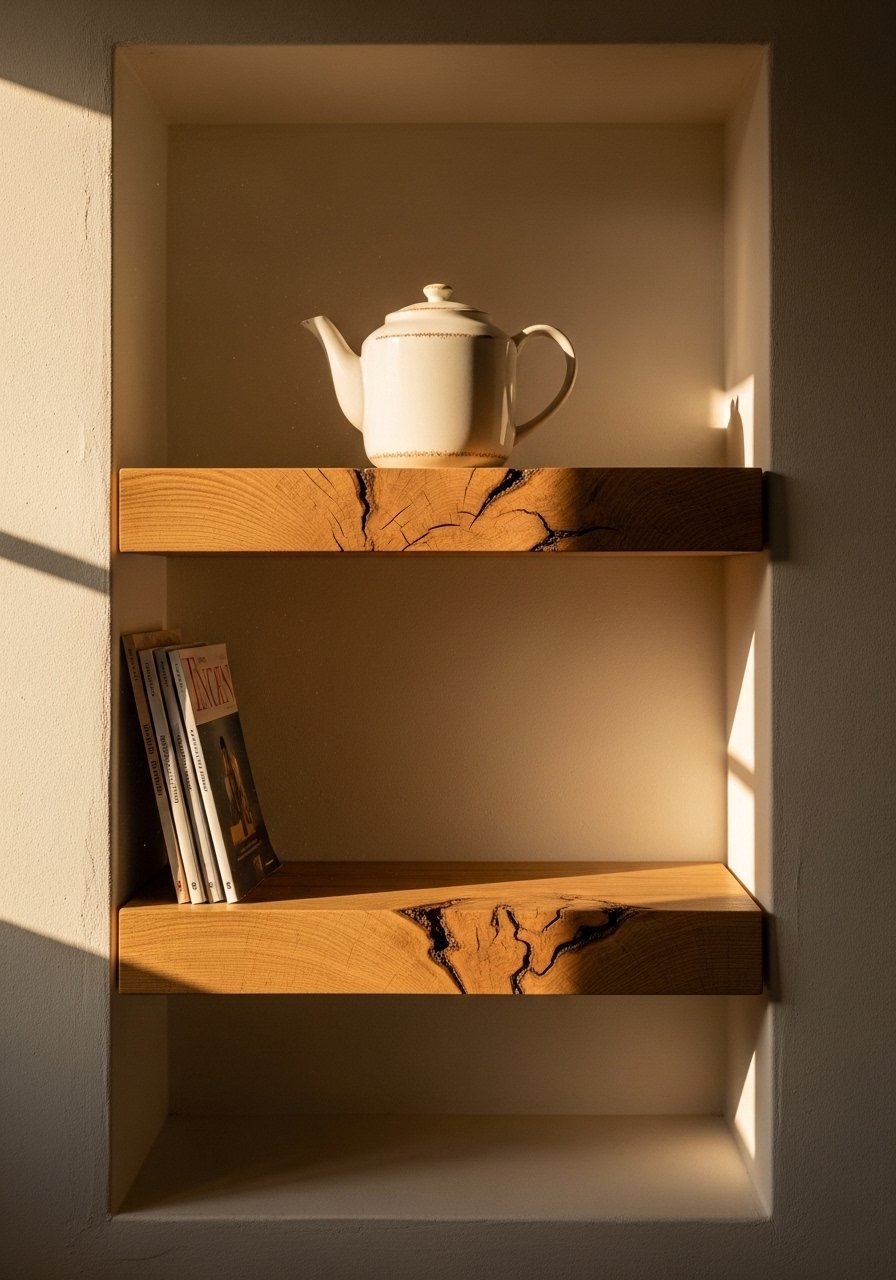
There is something about a reading nook that wants honest materials. Thick oak slab shelves look expensive but are simple to DIY by finishing boards with oil. The trick people miss is matching shelf thickness to wall scale. For a standard room, 1.5 to 2-inch thickness reads premium. I sanded and treated mine with tung oil and anchored with heavy-duty floating shelf brackets. Budget runs $60 to $120 depending on wood. Pair with a lamp that casts warm light and you have an instant stay-in-and-read corner.
Painted Shelves for a Playful Kid’s Room
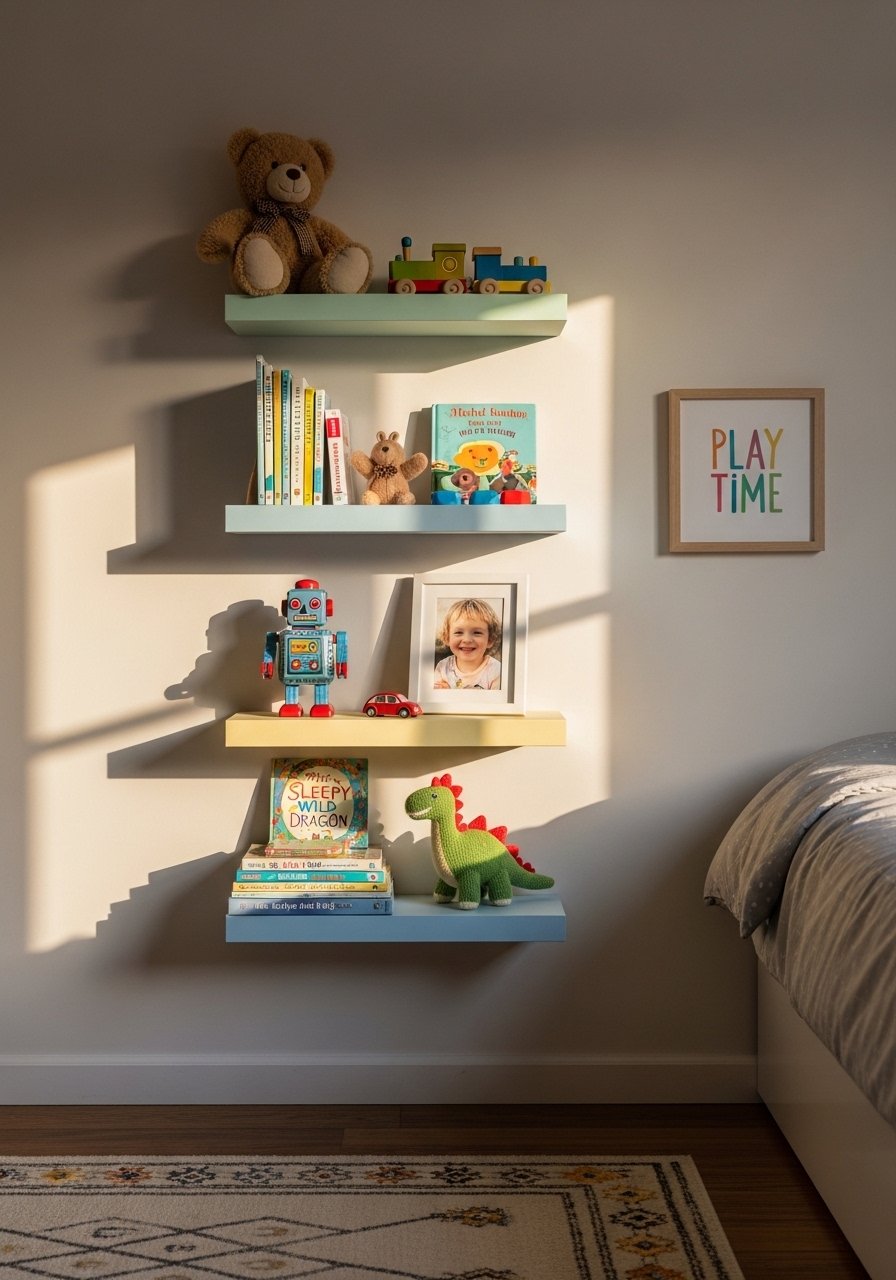
Painting shelves the same color as the wall creates a built-in look, while a single contrasting shelf can act as a toy highlight line. I painted mine Benjamin Moore's soft mint and mounted them at heights that fit small hands. Parents often mount shelves too high or too low. Use a 12-inch vertical spacing for books so kids can see covers. For durability pick water-resistant paint. Expect to repaint after heavy use but the payoff in personality is worth it.
Floating Shelves Over the Bath for a Spa Bathroom
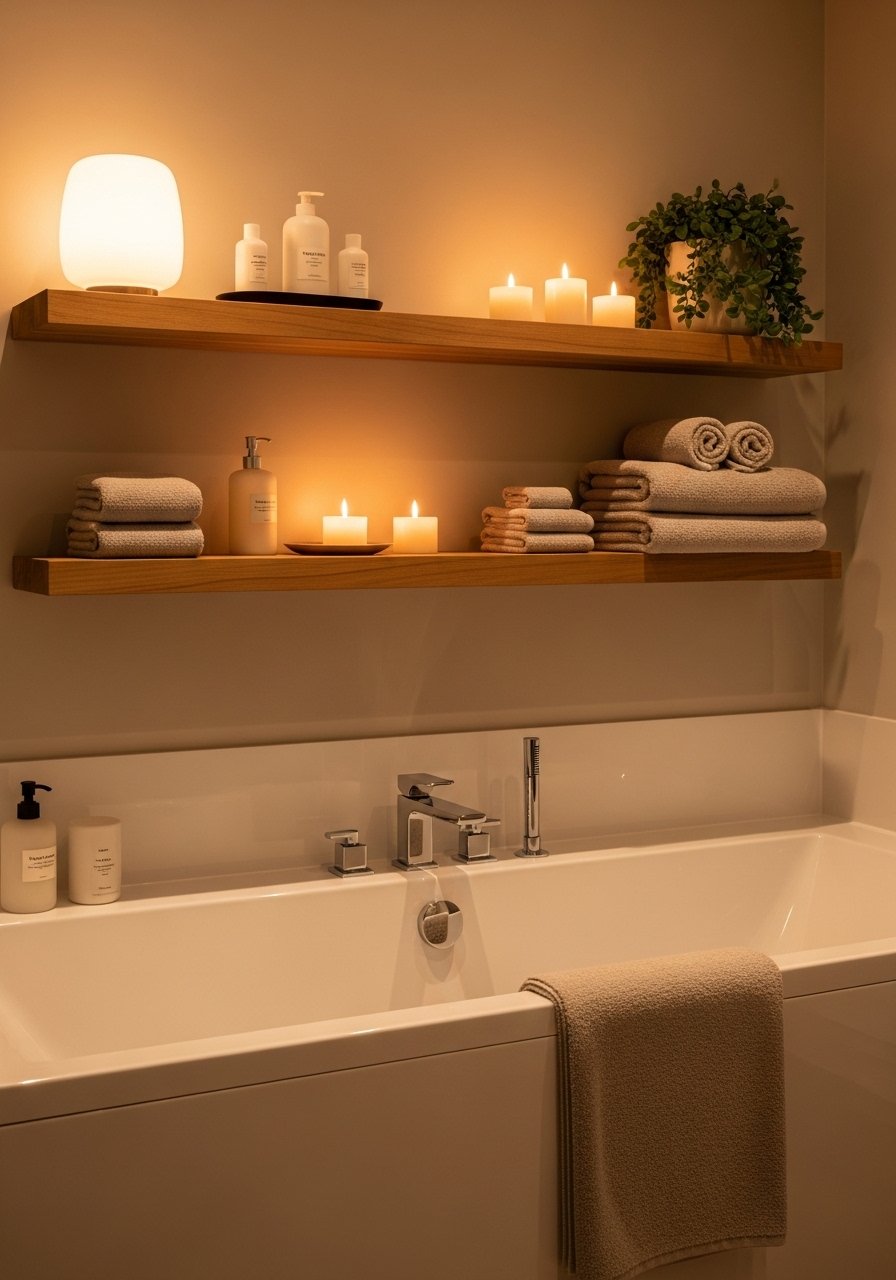
Bathrooms love floating shelves because they add storage without crowding. Teak is my go-to because it handles moisture. Avoid putting electronics near water and keep heavy items off the top shelf. I used 24-inch teak shelves 8 inches deep and installed them 12 inches above the towel bar for easy reach. Teak floating shelves cost a bit more but they last. Quick styling note, roll towels instead of folding to save space and look spa-like.
Brass-Lined Shelves for a Little Modern Glam in the Dining Area
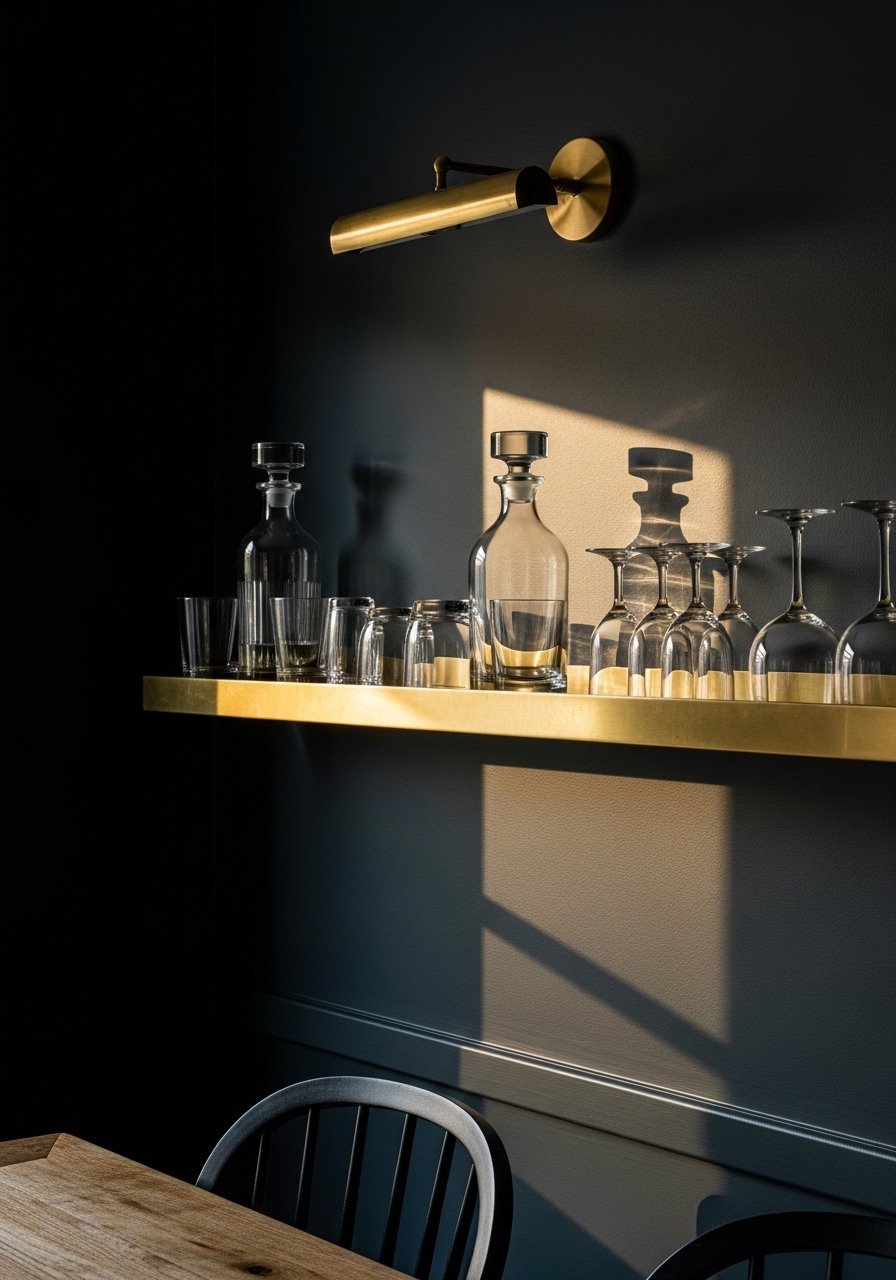
If your dining area feels plain, one brass-lined shelf adds a luxe edge without being flashy. Keep glassware and one art piece to avoid a bar-cart vibe. People often try to match every metal in the room. Instead mix metals gently, letting brass be the accent. I paired a brass picture ledge with matte black frames for balance. Tip, keep the shelf depth at least 10 inches to fit decanters comfortably.
Floating Shelves as a TV Console Replacement in a Small Living Room
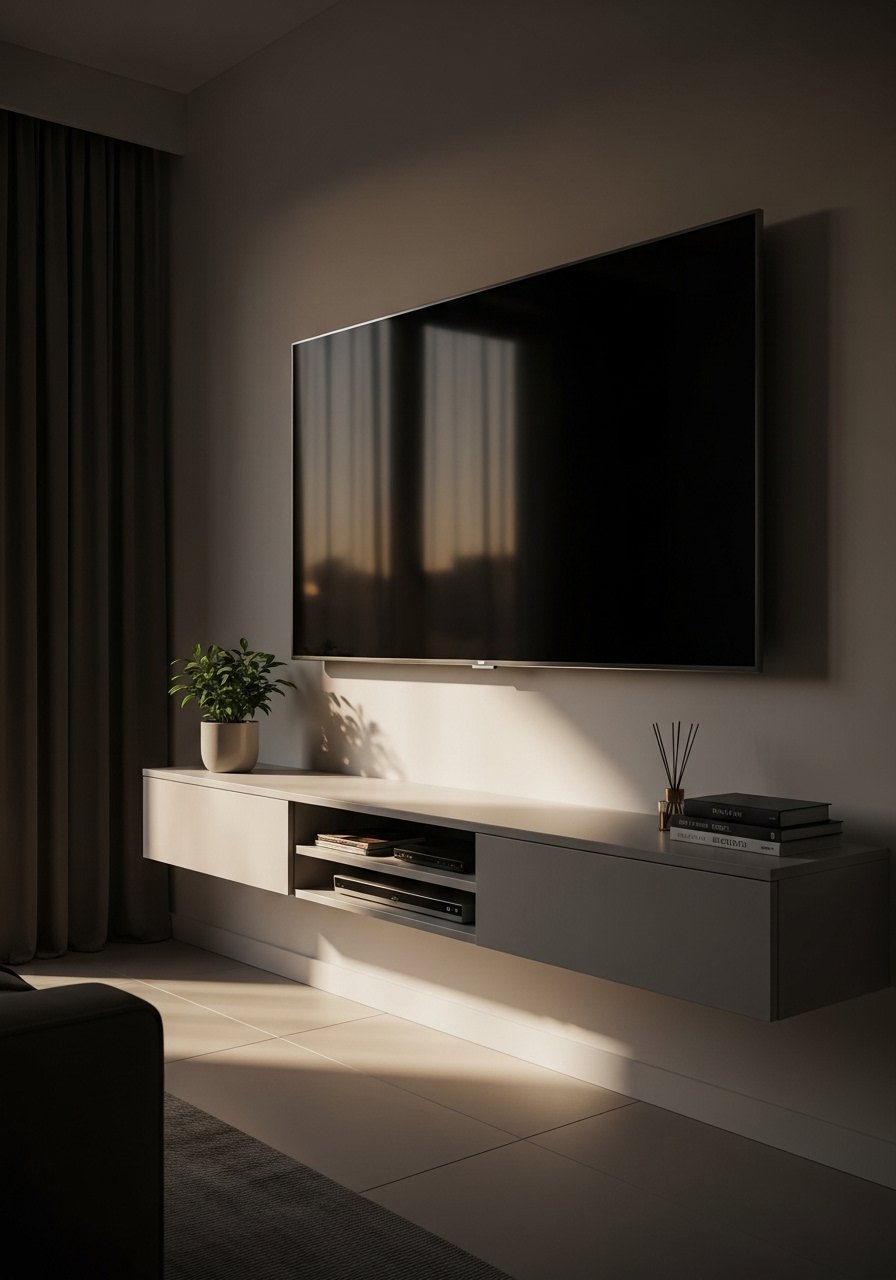
I ditched a heavy TV cabinet for a 72-inch floating shelf and the room instantly felt airier. Use a shelf 12 to 14 inches deep so consoles and game boxes fit. A common mistake is running cables visibly down the wall. Use a cable chase or route cables behind the shelf with adhesive clips. I mounted a long floating media shelf and stashed remotes in a tray for an edited look. This pairs well with the slim entryway shelves idea for visual flow.
Reclaimed Wood Shelves for a Vintage Hallway
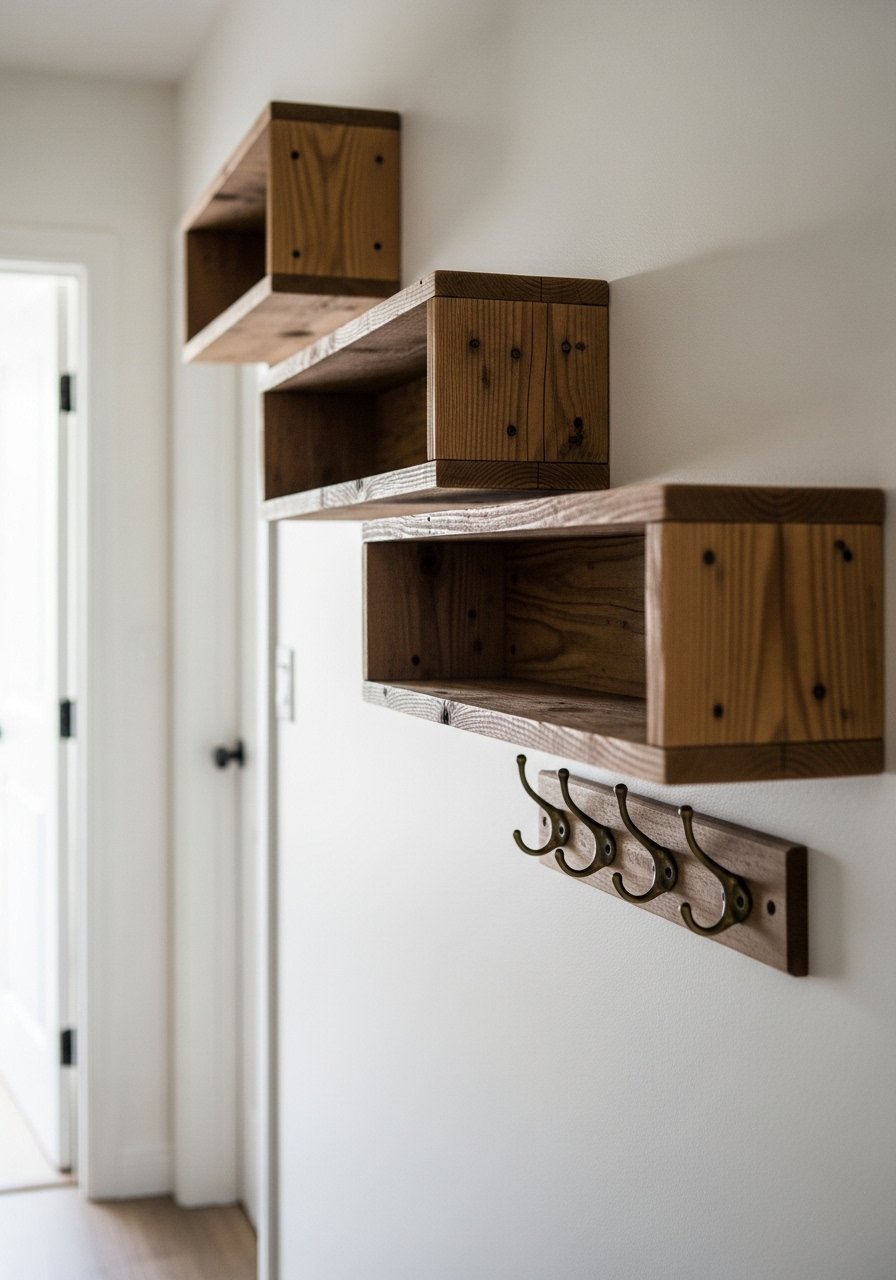
Reclaimed wood brings history into a plain hallway. I left one nail hole visible on purpose so it reads authentic instead of faux-vintage. The mistake is sanding everything perfectly. Keep one or two imperfections. Use 8-10 inch depths and mount on hidden brackets. I found reclaimed planks and sealed them with satin varnish. For hardware I used rustic shelf brackets. Budget varies widely depending on wood source, but you can replicate the look with stained pine for under $60.
Floating Shelves for a Gallery-Style Home Office
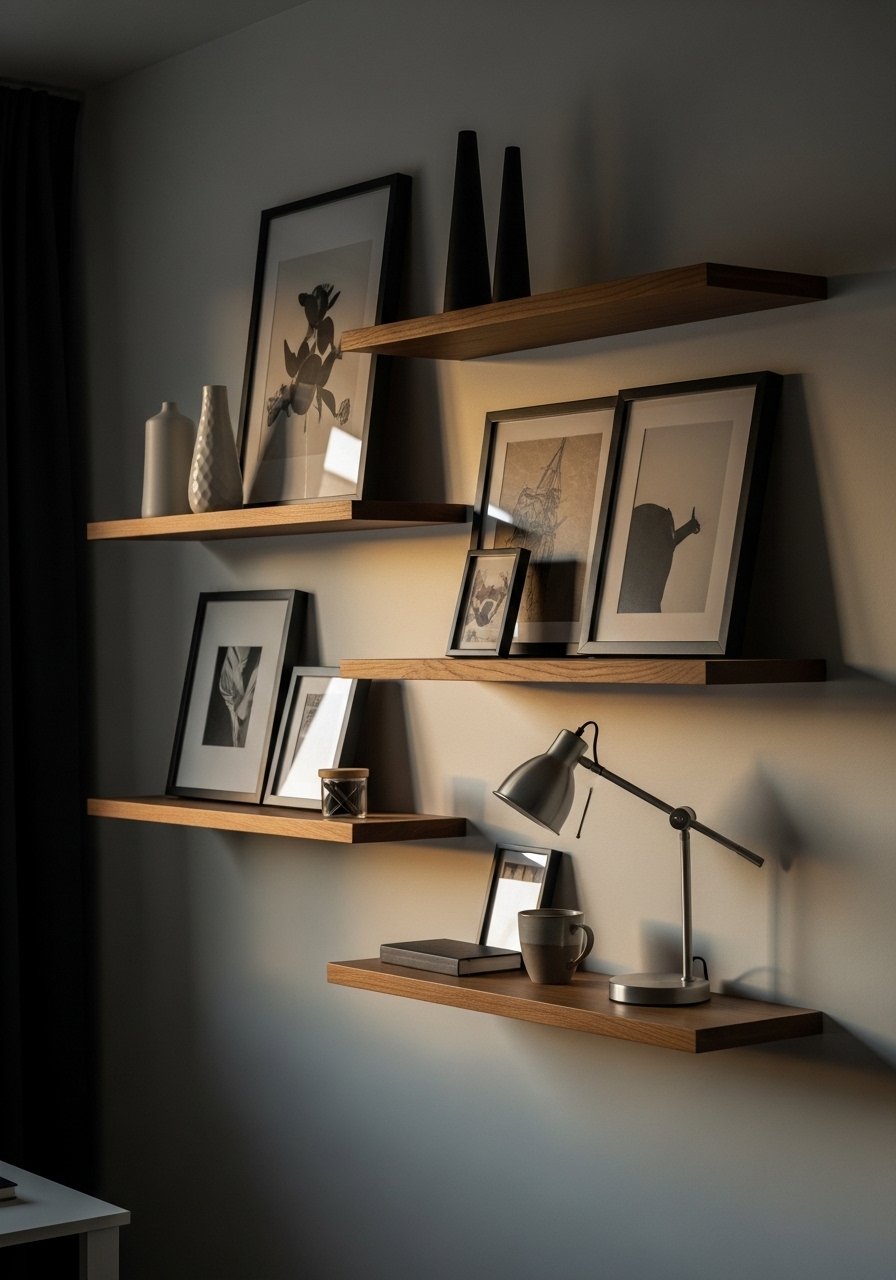
My home office needed personality without distraction. A set of three shelves, spaced irregularly, gave me room for reference books and rotating art. Use the rule of three when styling: group objects in odd numbers and vary heights. People often center everything. Try offsetting one shelf by 6 inches for a more curated look. I used floating shelf supports and kept the middle shelf slightly deeper for binders. That little asymmetry made the whole wall read intentional.
Mixed Material Shelves for an Eclectic Dining Nook
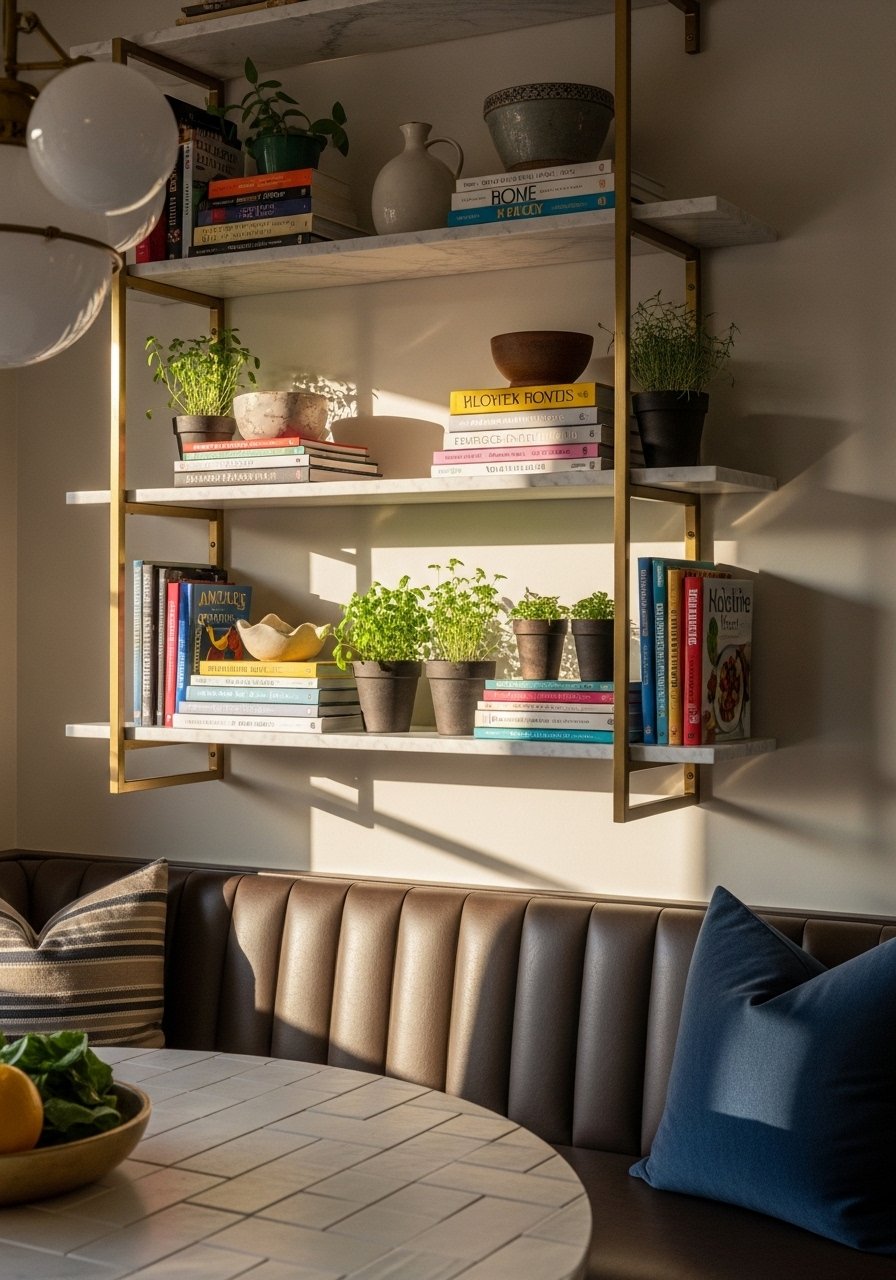
Mixing materials stops a space from feeling one-note. I did one marble-topped shelf between two wooden ones and it read elevated without being precious. The common mistake is over-matching textures. Let one material be the accent and repeat it only once elsewhere. I recommend marble for small shelves only because it’s heavy. Anchor with marble-top shelf brackets and keep the shelf depth to 8 inches to balance weight and visibility. This also pairs well with potted herbs on the kitchen window.
Invisible Bracket Shelves for a High-End Floating Look
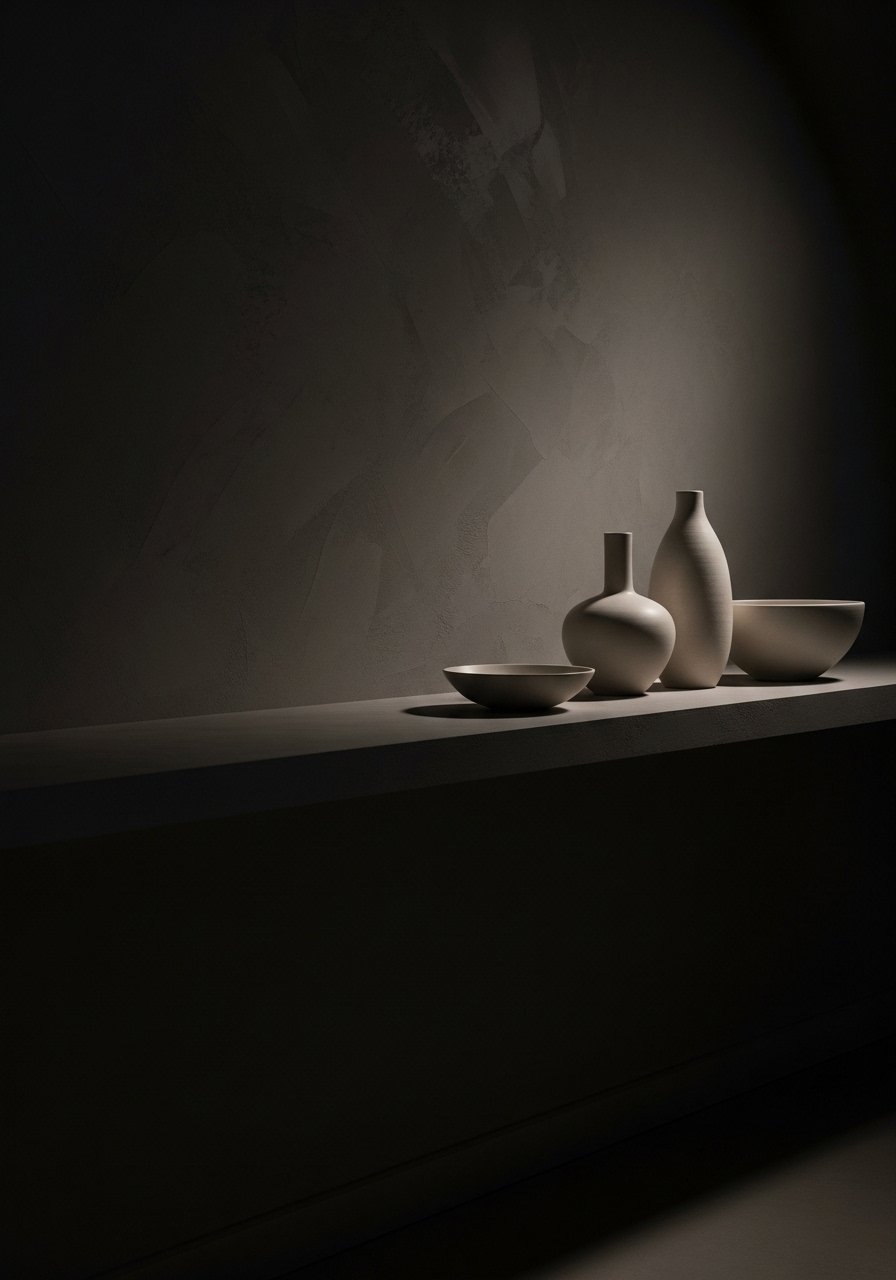
The secret to a premium look is invisible brackets that hide inside the wood. I used a jig to drill the perfect pocket and my shelves look like they hover. People underestimate load, so I picked brackets rated for at least 50 pounds per shelf and tested with books before styling. I bought invisible floating shelf brackets and pre-drilled into studs for safety. Small detail others skip, always measure from the center of the bracket to the wall edge to keep shelves perfectly level.
Layered Shelves and Art for a Statement Entry Wall
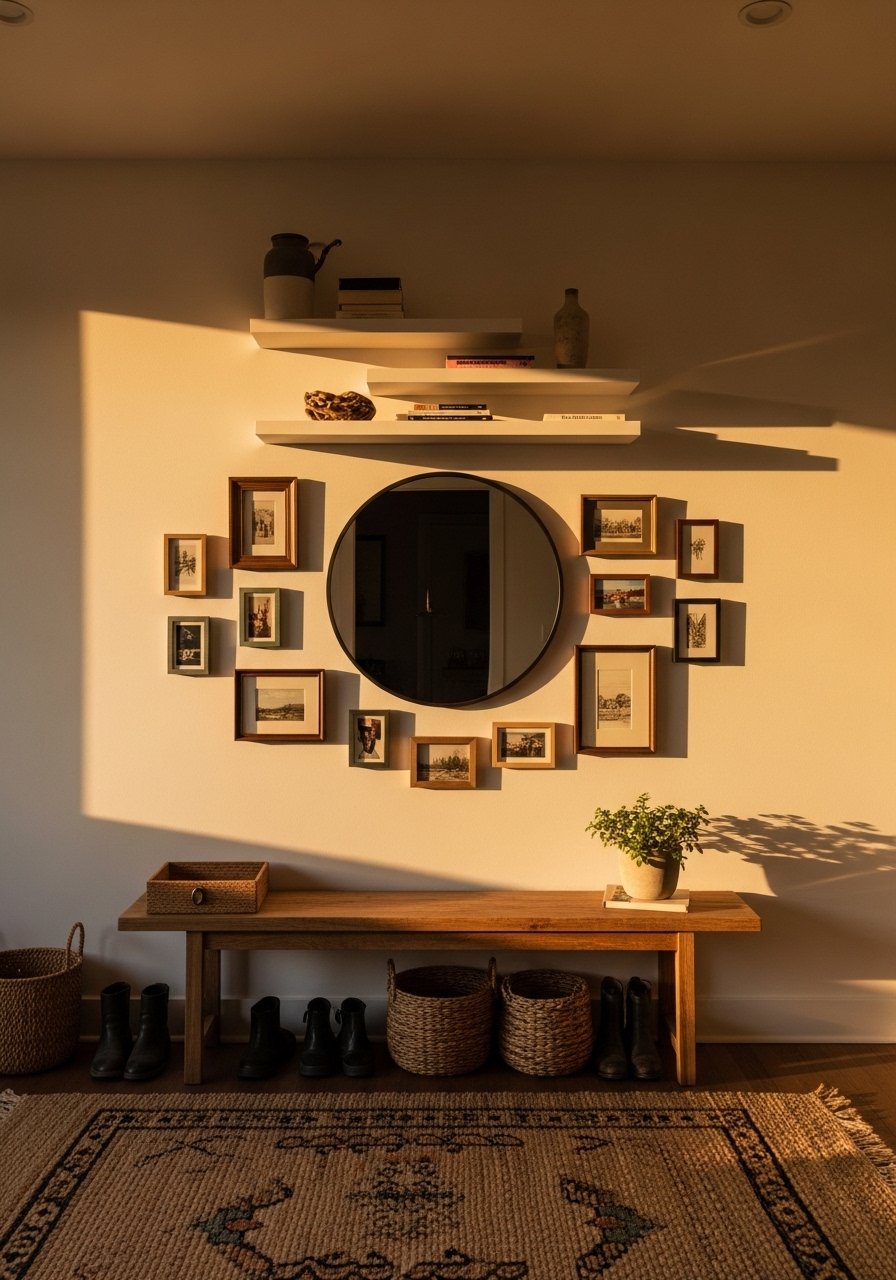
There is something about a layered entry wall that signals home. Start with one shelf and build up with framed art and a mirror so the composition reads like one piece. A mistake is spacing everything too evenly. Use the rule of three for objects and leave breathing room between frames and shelves. I mixed mixed-metal frames with a wooden shelf and kept the top shelf 8 inches shallower than the lower to lead the eye down. Cross reference this with the corner shelf idea for a cohesive foyer.
Your Decor Shopping List
Textiles
- Honestly the best $40 I have spent. Chunky knit throw in cream 50×60 inches. Drape it over the sofa arm for instant warmth
- 22-inch linen pillow covers, set of 2 in warm gray, down-fill recommended
Wall Decor
- Mixed metal frames, set of 6 8×10 and 11×14 sizes, for the gallery + shelf pairing
- Brass picture ledge, 36-inch for dining or hallway display
Shelving Hardware
- Invisible floating shelf brackets heavy duty, pack of 2 rated 50 lbs
- Black pipe shelf brackets, set of 2 for industrial kitchen shelves
Lighting
- Adjustable wall reading lamp for bedroom or nook, matte black finish
Plants
- 6-foot artificial fiddle leaf fig for height in dim corners, or similar at HomeGoods
Budget Finds
- Floating shelf support kit for DIY boards (~$18), works with 1.5 to 2-inch boards
Finishing
- Tung oil wood finish, quart for slab shelves, food safe once cured
Shopping Tips
White oak beats dark wood in 2026. Design feeds have shifted completely. These white oak floating shelves look current, not dated.
Grab velvet pillow covers for $12 each. Swap them every season and the whole room feels different.
Curtains should puddle or kiss the floor, never hang halfway up. These 96-inch linen panels are right for standard 9-foot ceilings.
Everyone buys five small succulents. One single 6-foot fiddle leaf fig has ten times the visual impact.
If you want the high-end floating look, buy invisible floating shelf brackets and anchor into studs. Test with weight before styling.
Mix metals slowly. Start with one mixed-metal frame like this set and repeat the metal once elsewhere to make it feel intentional.
Frequently Asked Questions
Q: How deep should floating shelves be for books and decor?
A: For books and decor, 10 to 12 inches is safe. Use 6 to 8 inches for small decorative objects and 14 inches if you plan to store media or large baskets.
Q: Can I install floating shelves in a rental without drilling a lot of holes?
A: You can use removable rail systems or adhesive-heavy shelves for very light items, but for books and plates you need screws into studs. A slim 24-inch shelf with stud anchors carries weight safely.
Q: What is a common styling mistake with floating shelves and how do I avoid it?
A: Overstuffing is the usual error. Stick to the rule of three for groupings and always leave negative space. Keep 2/3 of the shelf visually open when possible.
Q: Can I mix modern shelves with vintage decor?
A: Yes. Pair a sleek white oak shelf with one vintage ceramic piece and a matte black frame to make both styles sing. Mixing in one repeated accent keeps the look cohesive.
Q: Are faux plants okay on shelves that get low light?
A: Absolutely. Use a mix of real low-light plants like pothos and a realistic faux fiddle leaf fig where you need height without maintenance.
Q: What spacing looks best when stacking multiple shelves?
A: Aim for 12 inches between shelves for usable storage and 16 to 18 inches if you will place lamps or tall objects on them.