
I moved my laptop to a different corner last winter because my old setup felt like a clinic. The new spot had warmer light and suddenly I sat down without thinking about leaving. Most of these fixes are cheap and fast. They lean modern-rustic and warm contemporary, run from under $30 to a few mid-range splurges around $150, and work for dedicated studies, bedroom nooks, or an office corner in a living room.
Cozy Amber Lighting For Focused Evenings
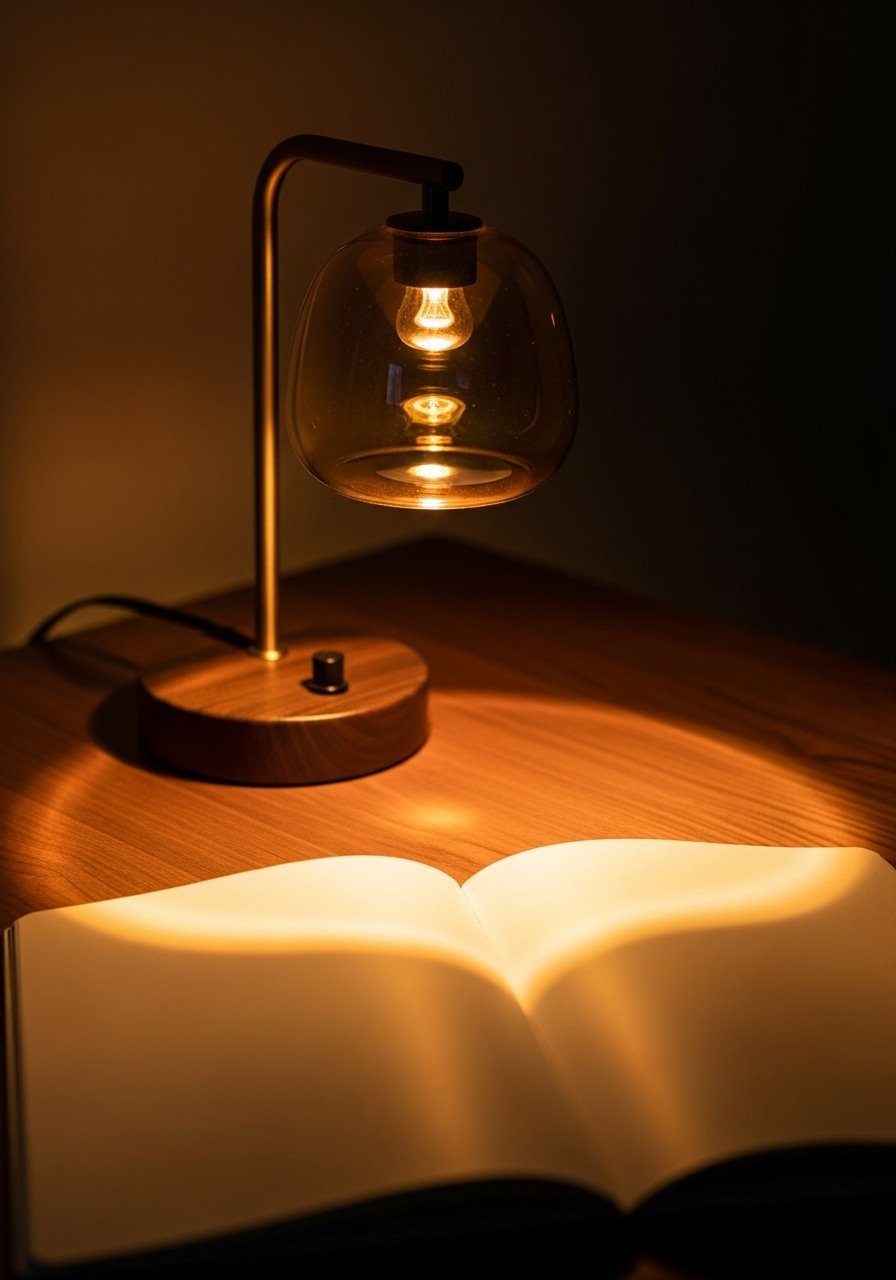
The right lamp can make a study feel like an invitation to concentrate, not a hospital ward. I use an amber glass task lamp to cut blue glare and make pages and notes easier to read. Swap a harsh overhead bulb for layered light, one warm bulb in the 2700K to 3000K range, and you will notice fewer distractions. A common mistake is buying a lamp that is too dim for task work. Aim for 400 to 800 lumens at the desk surface. I have an adjustable brass lamp that cost about $80 and keeps the light where I need it. Try an amber glass desk lamp for warmth, and pair it with a 2700K LED bulb to avoid glare.
Warm Wood Desk With Clean Lines For Less Clutter
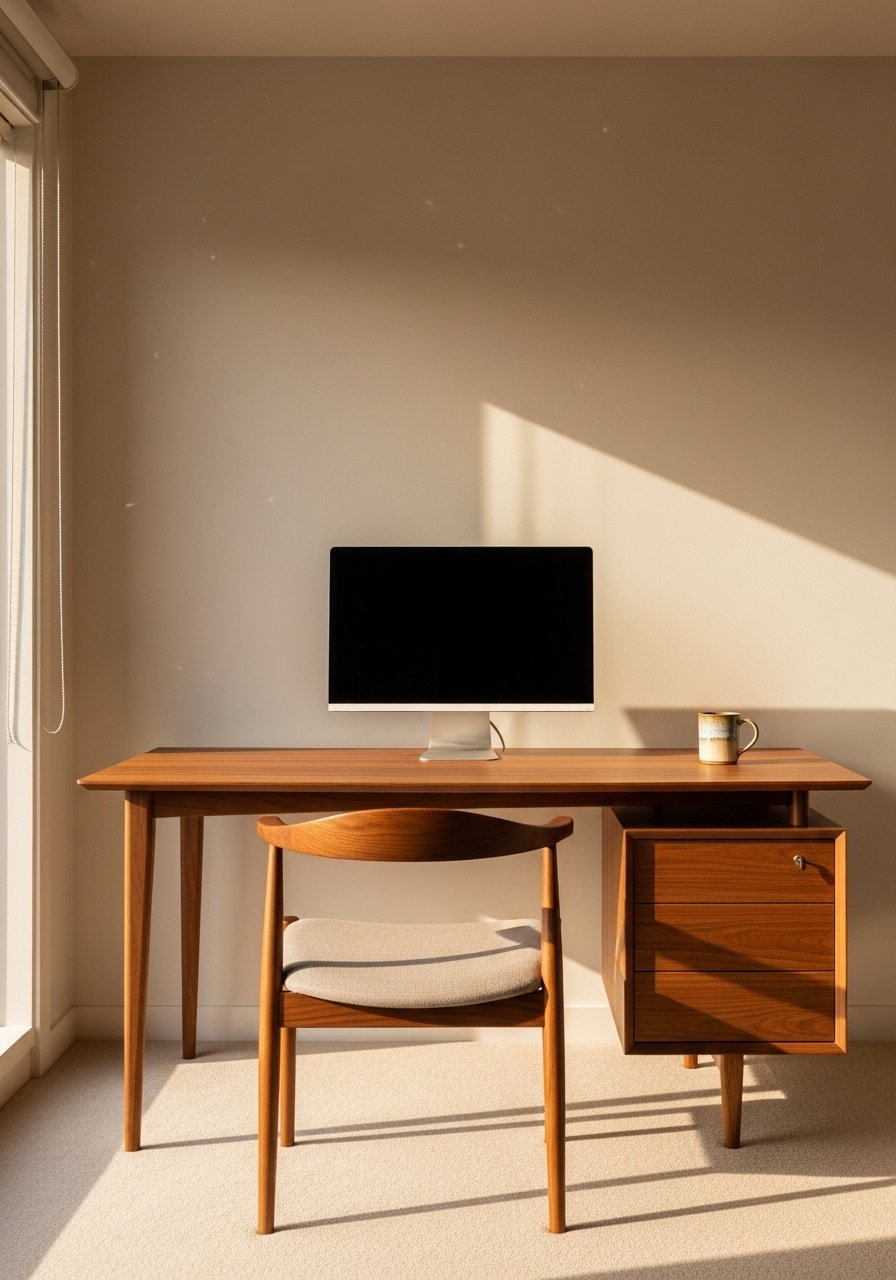
I replaced an overcrowded table with a walnut desk that has one shallow drawer and suddenly my papers stopped spreading like ivy. Warm wood grounds a study and makes tools feel intentional. Measure the depth you actually need before buying. I keep 24 inches of clear workspace in front of my keyboard and that measurement saved me from a too-deep desk. A clean-lined wood desk around $200 to $450 will be sturdy and simple. If you want something ready now, try a walnut writing desk. Pair it with a slim monitor stand so papers tuck underneath and the surface reads warm, not cluttered.
Soft Textile Layers To Absorb Noise And Add Warmth
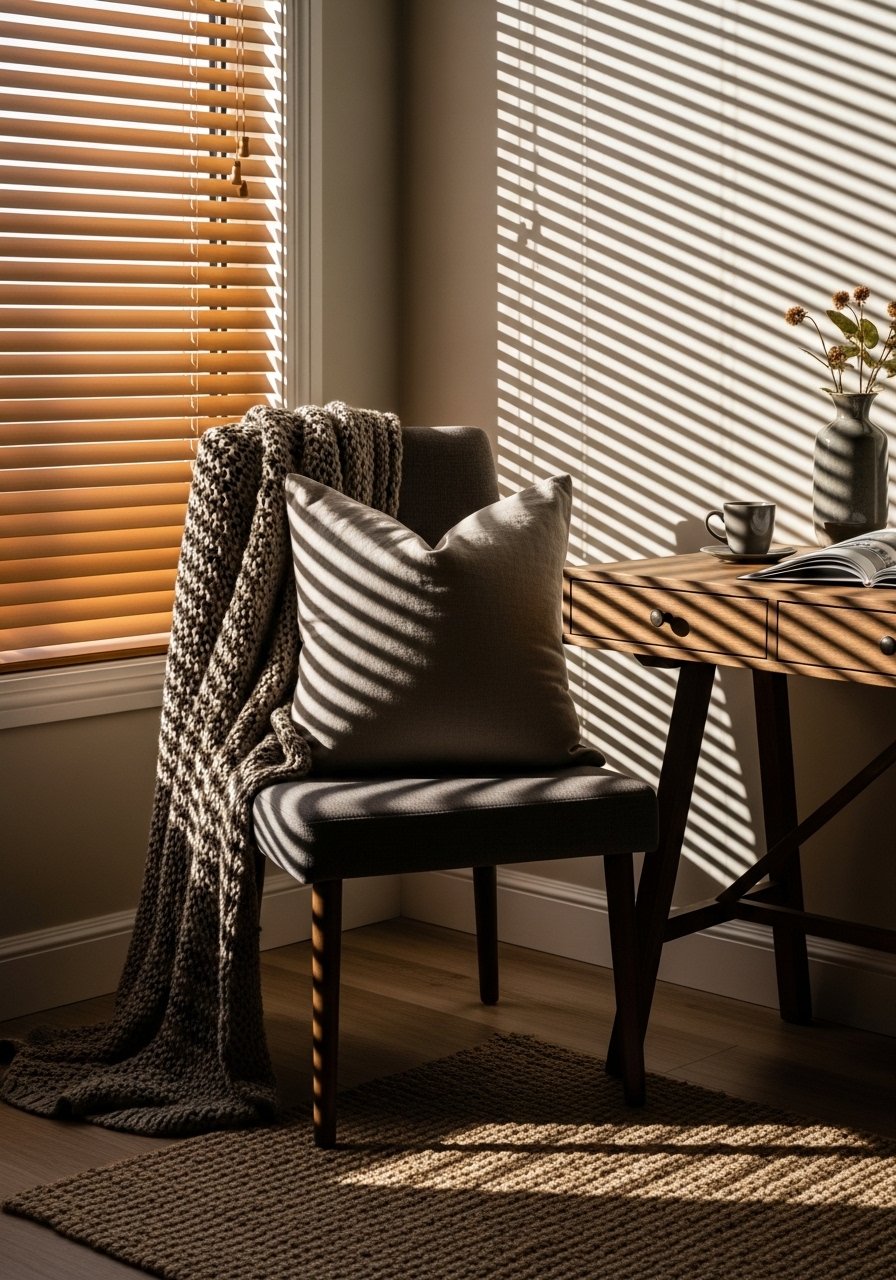
Adding textiles changed how the room sounded and how long I could sit there without feeling fidgety. A chunky knit throw, a 22-inch down-filled linen pillow, and a small jute rug soften echoes and make the room feel like a place to focus. A common mistake is using only small pillows so the chair never feels inviting. I add at least one 22-inch pillow and one lumbar for support. Budget for throws and pillows under $60 each or splash on a $120 wool rug if you want durability. I use a chunky knit throw blanket and 22-inch linen pillow covers to layer texture without fuss.
Single Warm Accent Wall With Scanned Paint For Perfect Tone
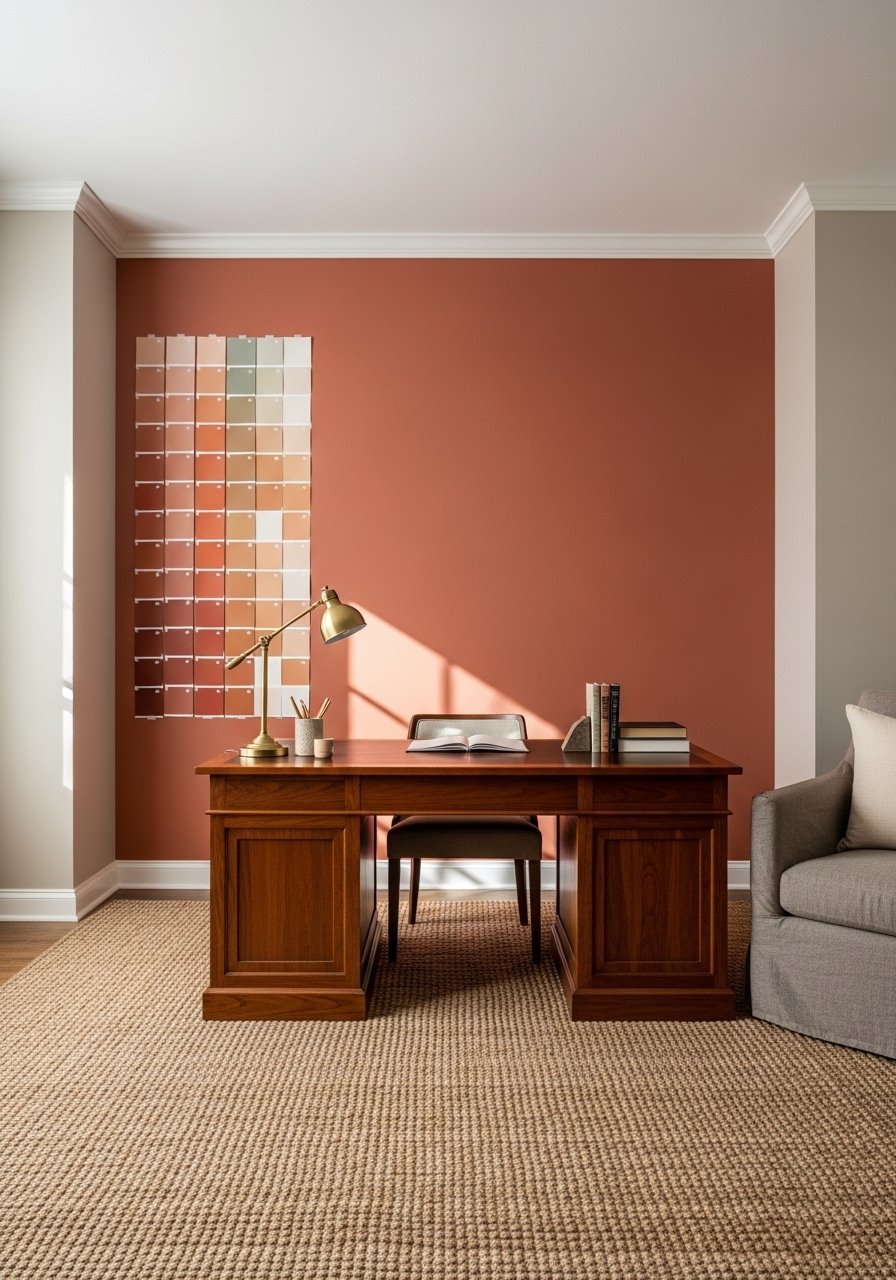
I learned the hard way that paint names lie unless you test them at home. Bring the actual chip to the store and ask them to scan it. You get about 9 out of 10 matches right with a good scanner. Test 3-inch swatches on the wall and check them at morning, midday, and evening light. Most flops come down to your room's lights fooling you. Start with a warm clay or terracotta tone and plan for 2 to 3 coats to true the color. For a DIY match, try a high-quality sample pot and a satin finish that wipes clean. I matched an old sample by bringing the card to a local store and then buying a terracotta sample pot to see the dry-down in my window.
Sheer Curtains To Soften Daylight And Reduce Glare
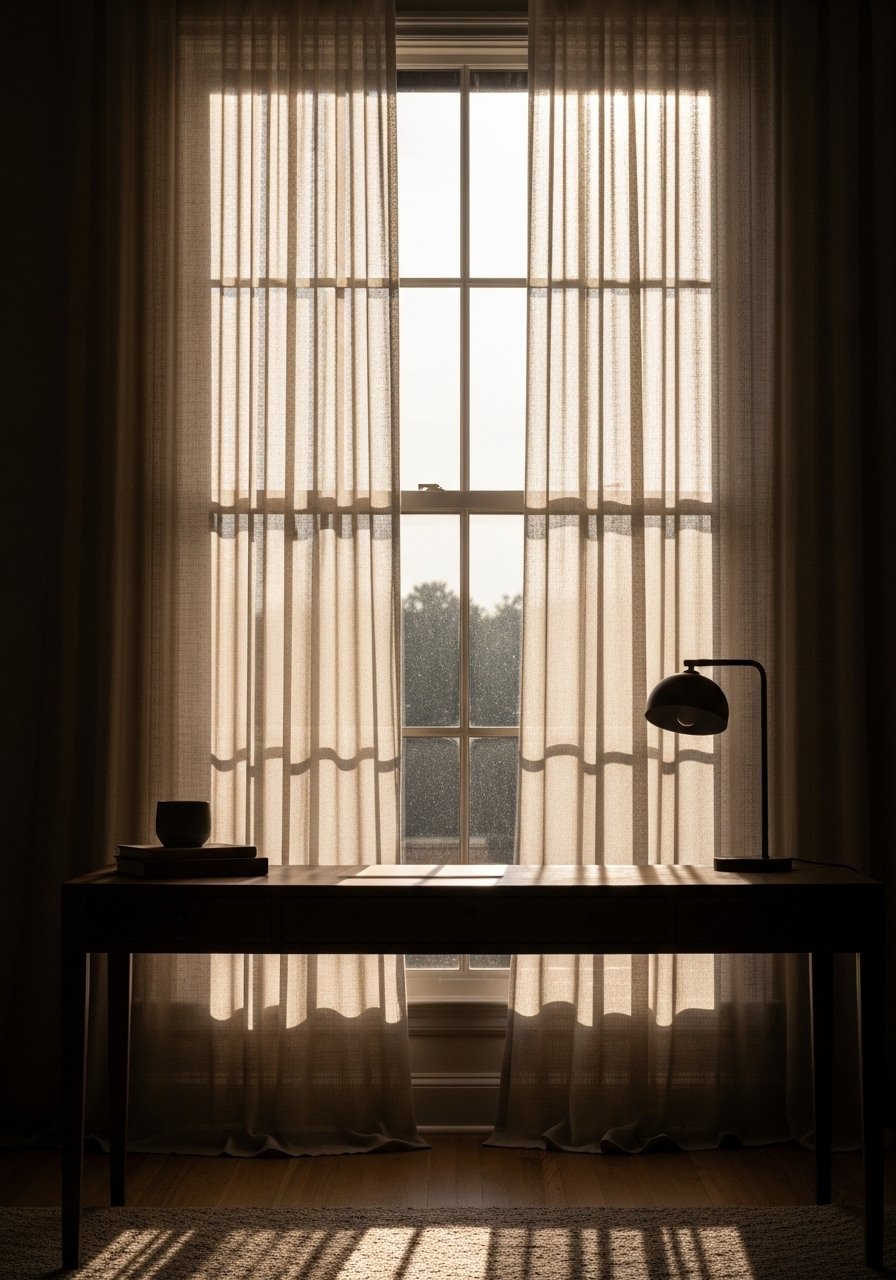
Hanging curtains too low is a classic mistake. Mount the rod close to the ceiling and use 96-inch panels to make the window feel taller. Sheer linen panels warm light without blocking it, so your screen glare improves but the room stays bright. I use a double rod, sheer underneath and a heavier panel on top for privacy. For standard 9-foot ceilings, 96-inch panels are the call. Sheers can be under $40 per panel. I like 96-inch linen curtains paired with a simple curtain rod set so the hardware reads intentional, not an afterthought.
White Oak Floating Shelves For Warmth And Function
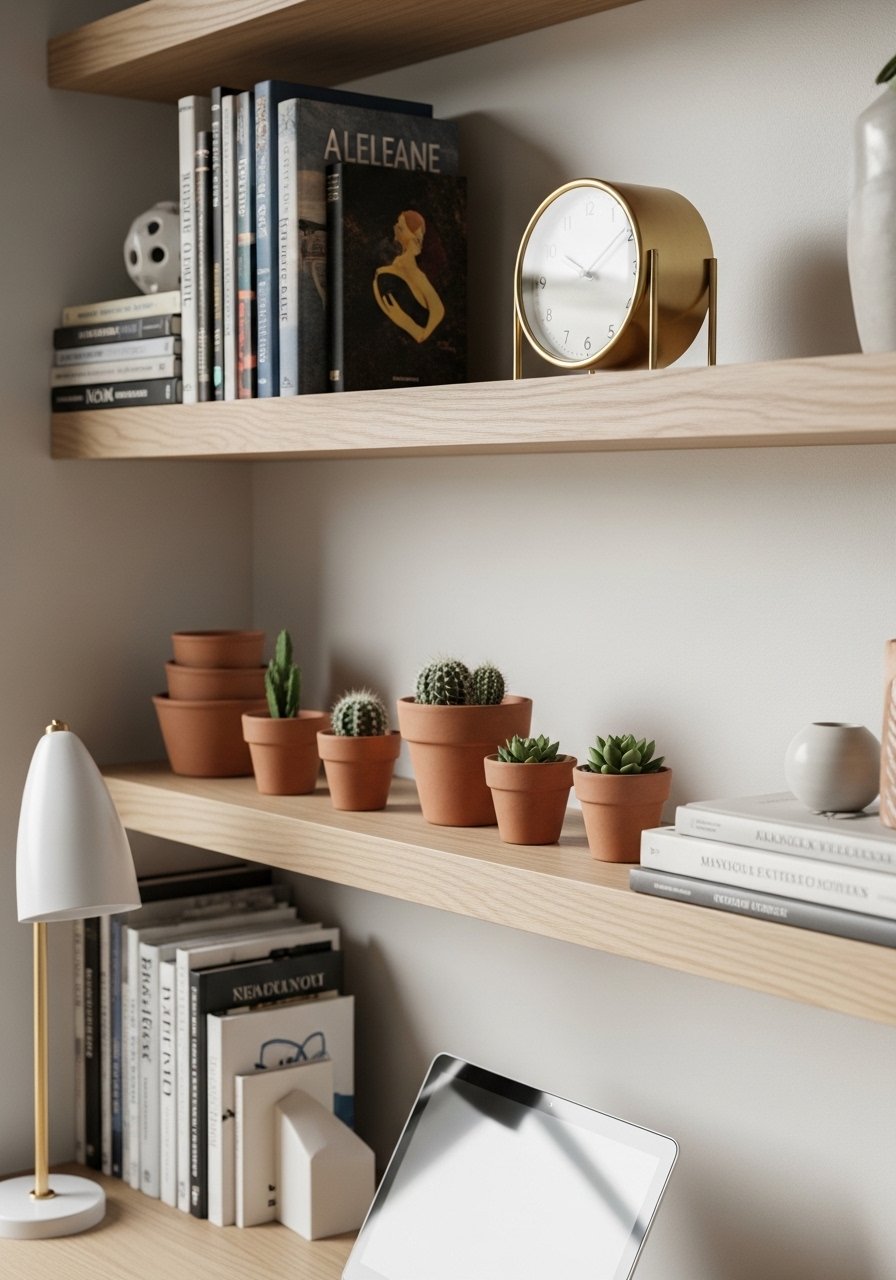
Open shelves in warm wood make your study feel put together even when you are mid-project. White oak reads modern and keeps the space feeling lighter than dark-stained plywood. Install shelves so the bottom one sits about 12 to 18 inches above the desk surface for easy reach. A mistake is overstuffing them. I style two shelves with a 60/40 mix of useful items and decorative pieces to avoid visual clutter. For a renter, use a rail system instead of drilled floating shelves. I use white oak floating shelves with small brackets hidden at the back for a seamless look.
Brass Desk Lamp And Mixed Metals For Depth
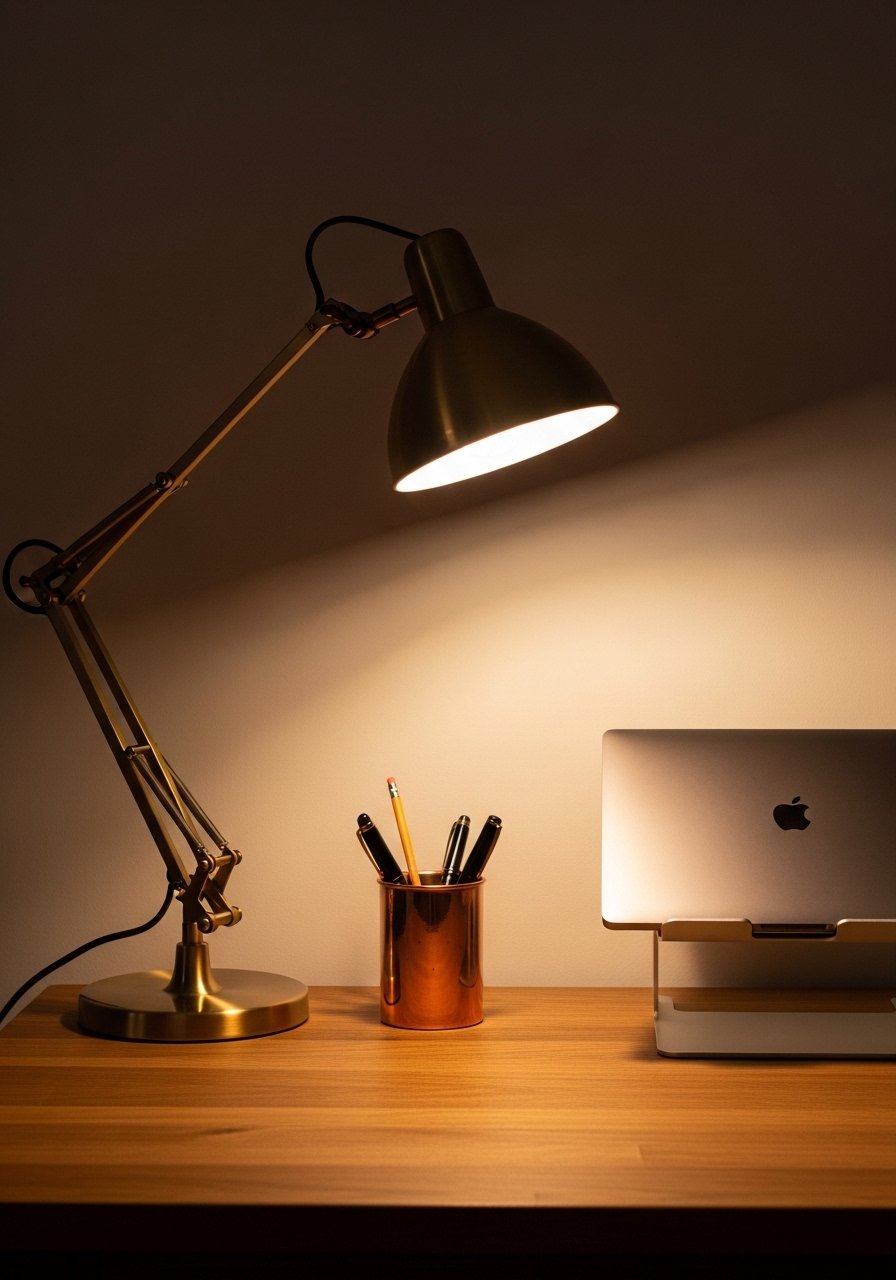
Matching metals perfectly makes a room feel staged. I mix them on purpose to make the space feel collected. A brass desk lamp, a copper pen cup, and a steel monitor stand create depth without looking chaotic. One wrong move is using the same finish everywhere, which flattens the palette. Use a dominant metal and then add one or two accents in other tones. For focus and longevity choose hardware with a warm finish that will not show fingerprints easily. I recommend a brass swing-arm lamp and a copper pen cup to get that layered look.
Cork Pinboard And Leather Accessories For Tactile Focus
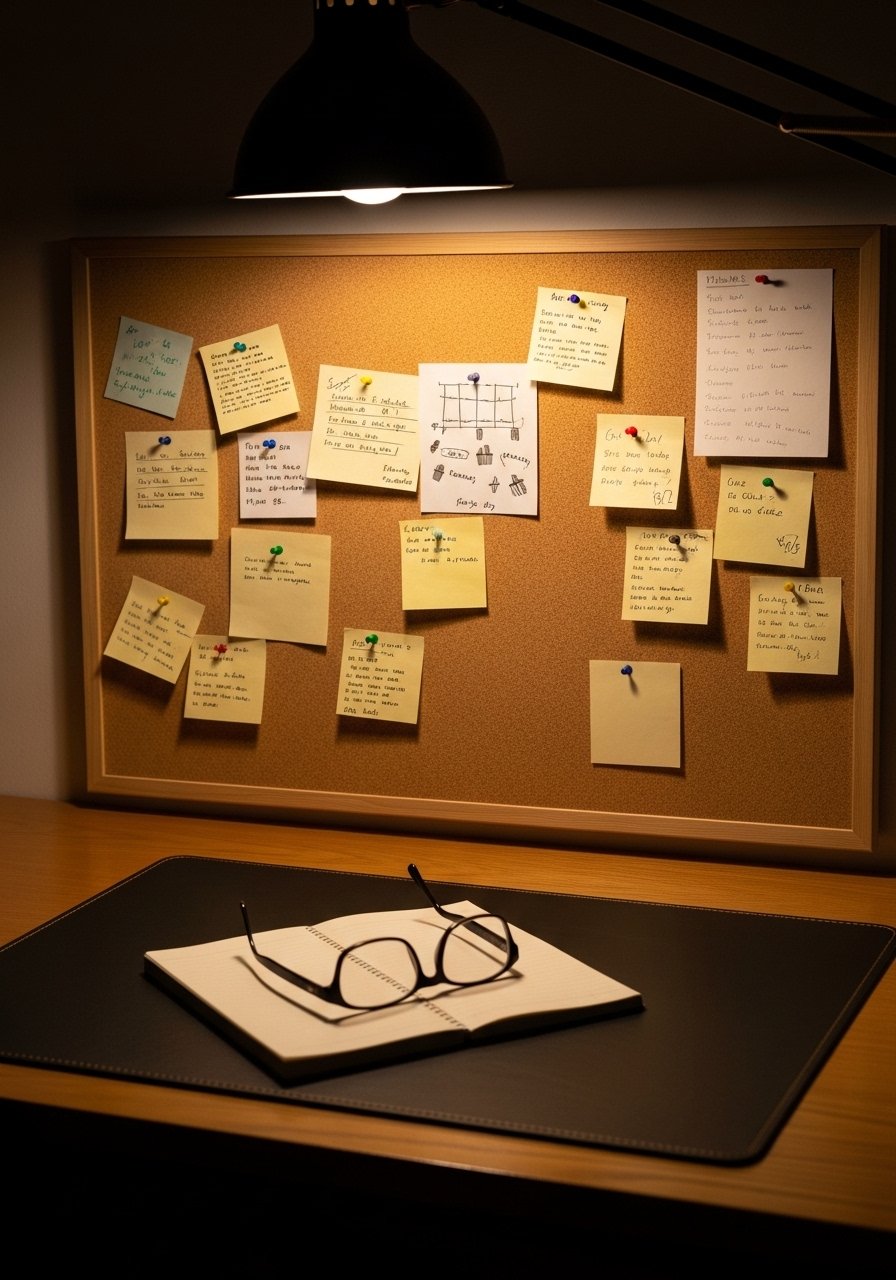
I started pinning ideas to a cork board when sticky notes were going missing. A 24 by 36-inch cork board gives enough room for a rotating visual map of priorities. Pair it with a leather desk pad to keep pens from sliding and to give your hands a warm surface. People often use tiny pinboards that become useless. Go bigger and organize zones on the board for current projects and reference. Cork and leather add texture and a warm palette that improves focus. I use a 24×36 cork board and a leather desk pad that wipes clean.
Area Rug Anchoring In Rust And Terracotta For a Quiet Floor
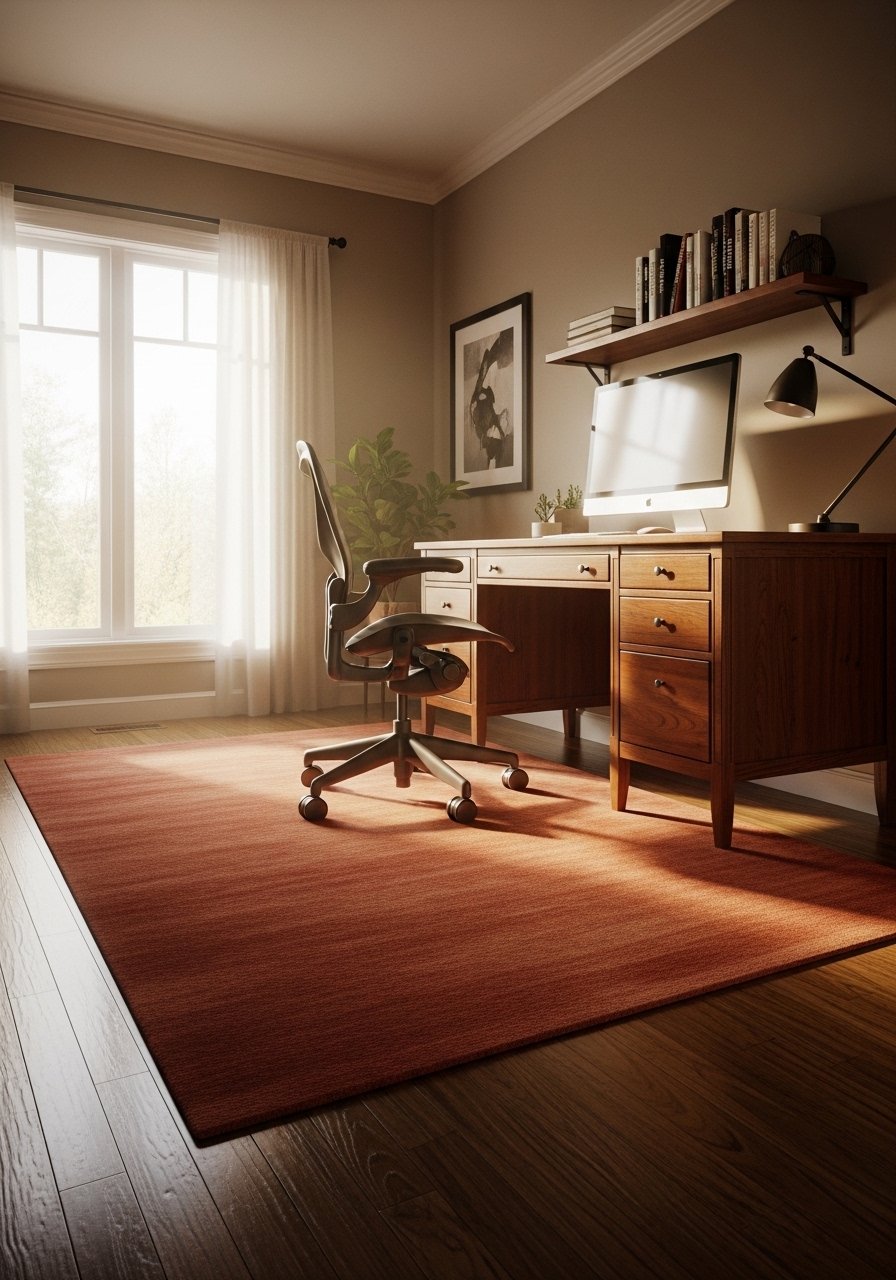
A small rug under your desk can reduce chair noise and visually anchor the workspace. For a focused study try a 5×8 or 6×9 rug so the chair legs stay on the rug when you move back. I prefer rust or terracotta tones because they hide marks and provide a warm base for the room. The mistake I see most is buying a rug that is too small, which makes the space look tiny. Rugs in the $80 to $250 range can be durable and flattering. I picked a 5×8 terracotta area rug and an inexpensive pad to keep it from shifting.
Warm-Toned Gallery Wall For Visual Interest Without Noise
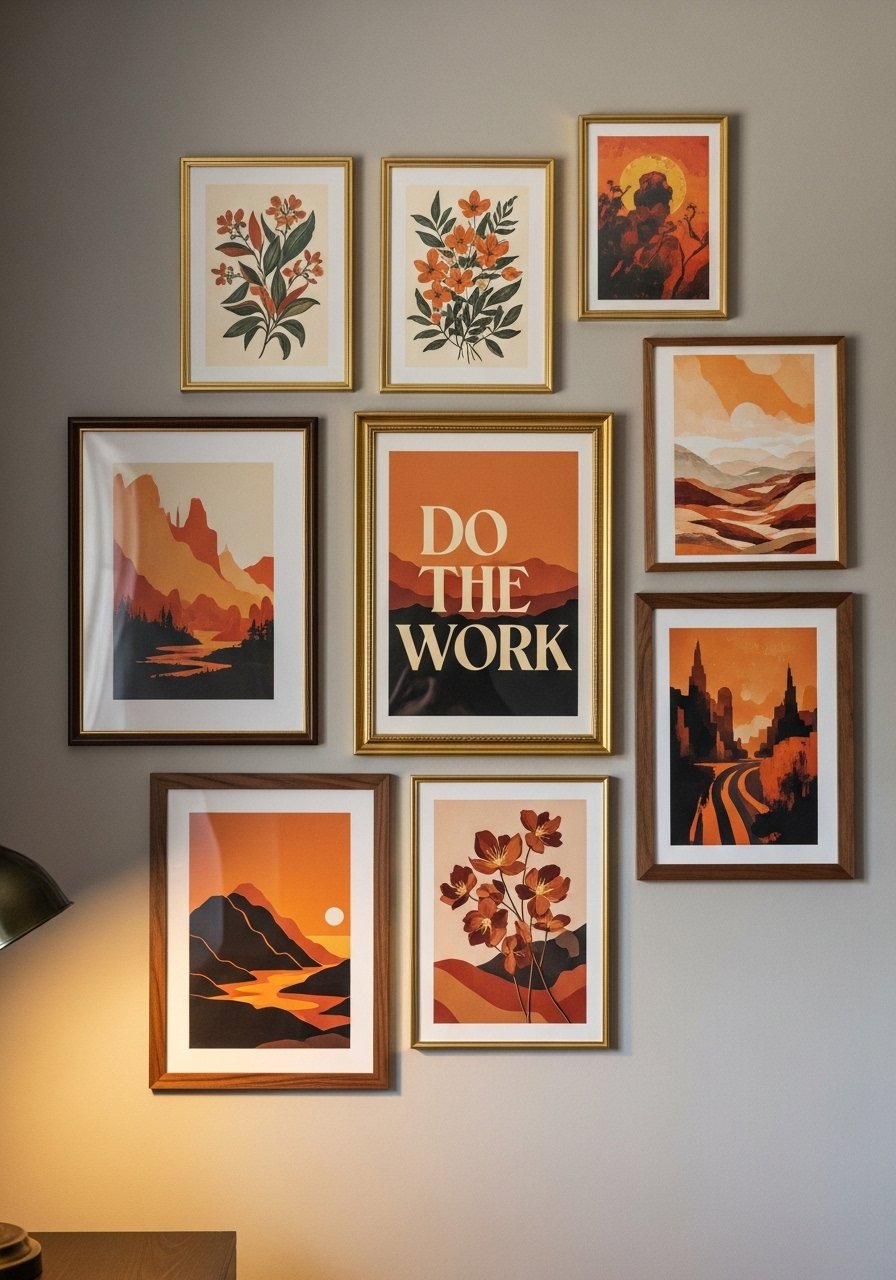
A gallery wall in warm tones keeps the eye moving but not wandering. Use a mix of walnut frames and thin brass frames for variety. Start with a central piece and work out with three to five surrounding prints. A common mistake is fingering the nails too close together so everything looks cluttered. I keep 3 to 5 inches between frames and use paper templates to plan before drilling. One detail people skip is measuring the midpoint of the wall and planning with a horizontal kit. I use mixed wood and brass frames and a small framed print reading "Do The Work" as a daily nudge.
Greenery With Warm Pots To Keep Air And Mood Right
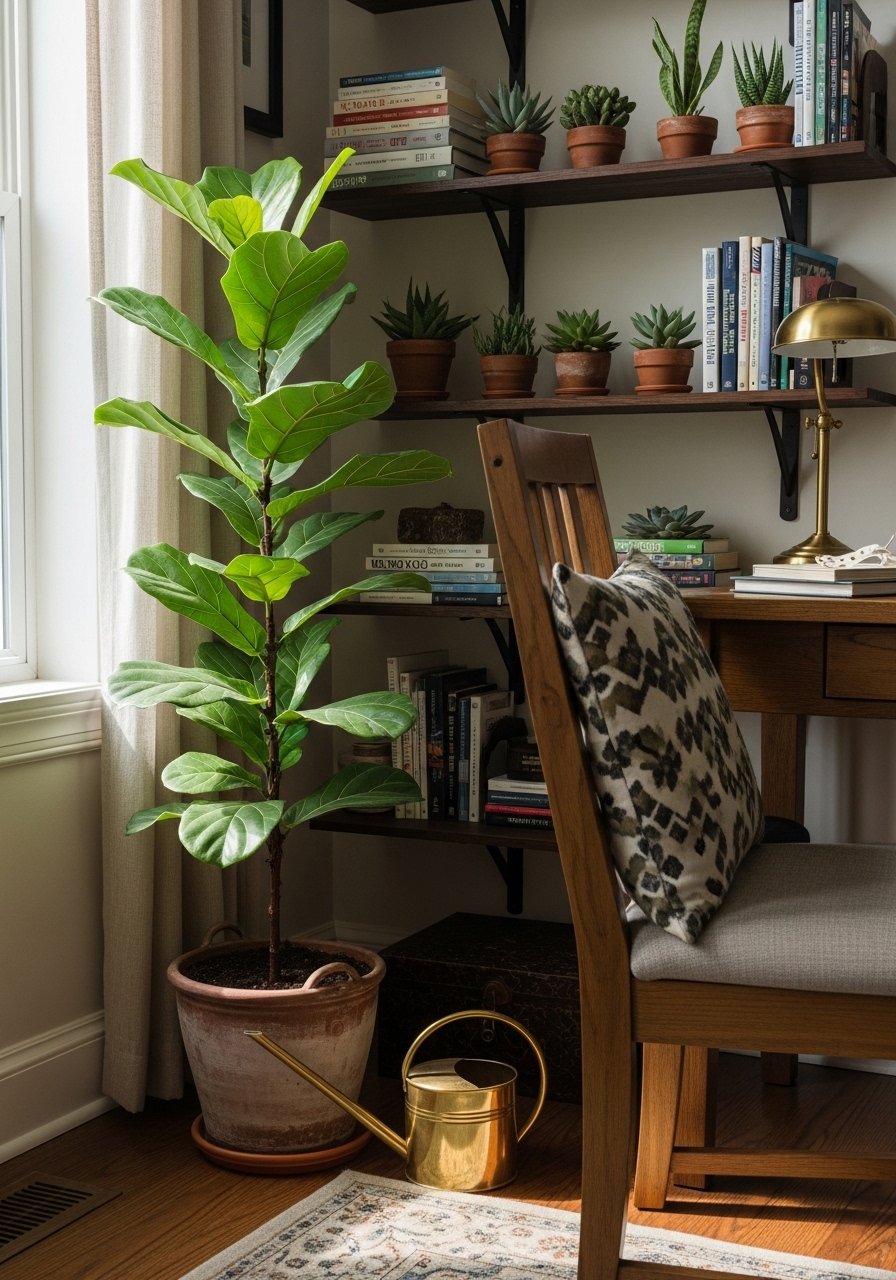
Plants boost air quality and slow you down enough to breathe between tasks. I use one tall plant, like a fiddle leaf fig, and two small succulents. One big plant gives ten times the visual impact that five tiny ones do. You can go faux where maintenance is a problem. A common mistake is choosing only glossy green pots that clash with warm wood. Terracotta or warm ceramic makes the palette cohesive. For low light choose a snake plant or ZZ plant. I keep a 6-foot artificial fiddle leaf fig for tricky corners and small terracotta pots for the shelves.
Your Decor Shopping List
- Textiles: Chunky knit throw blanket in cream (
$35), 22-inch linen pillow covers ($20 each). Similar at Target or HomeGoods. - Lighting: Amber glass desk lamp (~$60) and 2700K LED bulbs.
- Desk & Storage: Walnut writing desk (~$200-450) and white oak floating shelves.
- Wall & Paint: Terracotta paint sample pot for swatches, 24×36 cork board.
- Flooring: 5×8 terracotta area rug and rug pad.
- Accessories: Brass swing-arm lamp, leather desk pad, mixed wood and brass frames.
- Plants: 6-foot artificial fiddle leaf fig, terracotta plant pots set.
Shopping Tips
White oak beats dark wood in 2026. Design feeds have shifted completely. These white oak floating shelves look current, not dated.
Grab 22-inch linen pillow covers for $20 each. Swap them seasonally and the room reads different every few months.
Curtains should puddle or kiss the floor never hang halfway up. These 96-inch linen panels are right for standard 9-foot ceilings.
One big plant beats five tiny succulents. This 6-foot fiddle leaf fig gives instant height and presence.
Frequently Asked Questions
Q: What paint testing should I do before committing to a warm accent wall?
A: Bring the actual chip to the store and ask them to scan it. You get about 9 out of 10 matches right with a good scanner. Paint at least three 3-inch swatches on the wall and view them at morning midday and evening light. Plan for 2 to 3 coats to see the final tone.
Q: What size rug should I use under my desk?
A: For a desk area go 5×8 or 6×9 so the chair legs stay on the rug when you move. Too small makes the space look chopped. Add a rug pad to stop slipping.
Q: Should I pick all one metal finish or mix them?
A: Mix them. It looks more intentional. Start with a dominant metal then add one or two accents in a different finish so the space feels layered.
Q: My paint sample looks different at home what did I do wrong?
A: Most flops come down to your room's lights fooling you. Check swatches in your actual bulbs and windows, not under store fluorescents. Also pay attention to texture because fabric and matte paint reflect differently.
Q: Are faux plants okay in a study?
A: Yes. Use a faux fiddle leaf fig where you need height without maintenance and add one real low-light plant like a snake plant if you want air benefits. A faux option keeps the visual warmth without the care.
Q: How do I reduce screen glare without making the room dark?
A: Layer light. Use a warm task lamp at the desk and sheer curtains on the window so daylight is softer. Move your monitor to avoid direct backlight and consider an anti-glare screen if needed.