
A friend walked into my apartment last month and said "this looks like a real adult lives here." Highest compliment I have ever received. Here are the small thinking-once, do-it-yourself changes I made to my desk to actually get work done and stop hunting for pens every ten minutes.
These ideas lean modern Scandinavian with a touch of warm minimalism. Most projects are under $50, a few are $75 to $120 if you splurge on solid wood. They work for home offices, small desk nooks, and shared work tables where focus matters.
Streamlined Cable Channeling for a Cleaner Surface
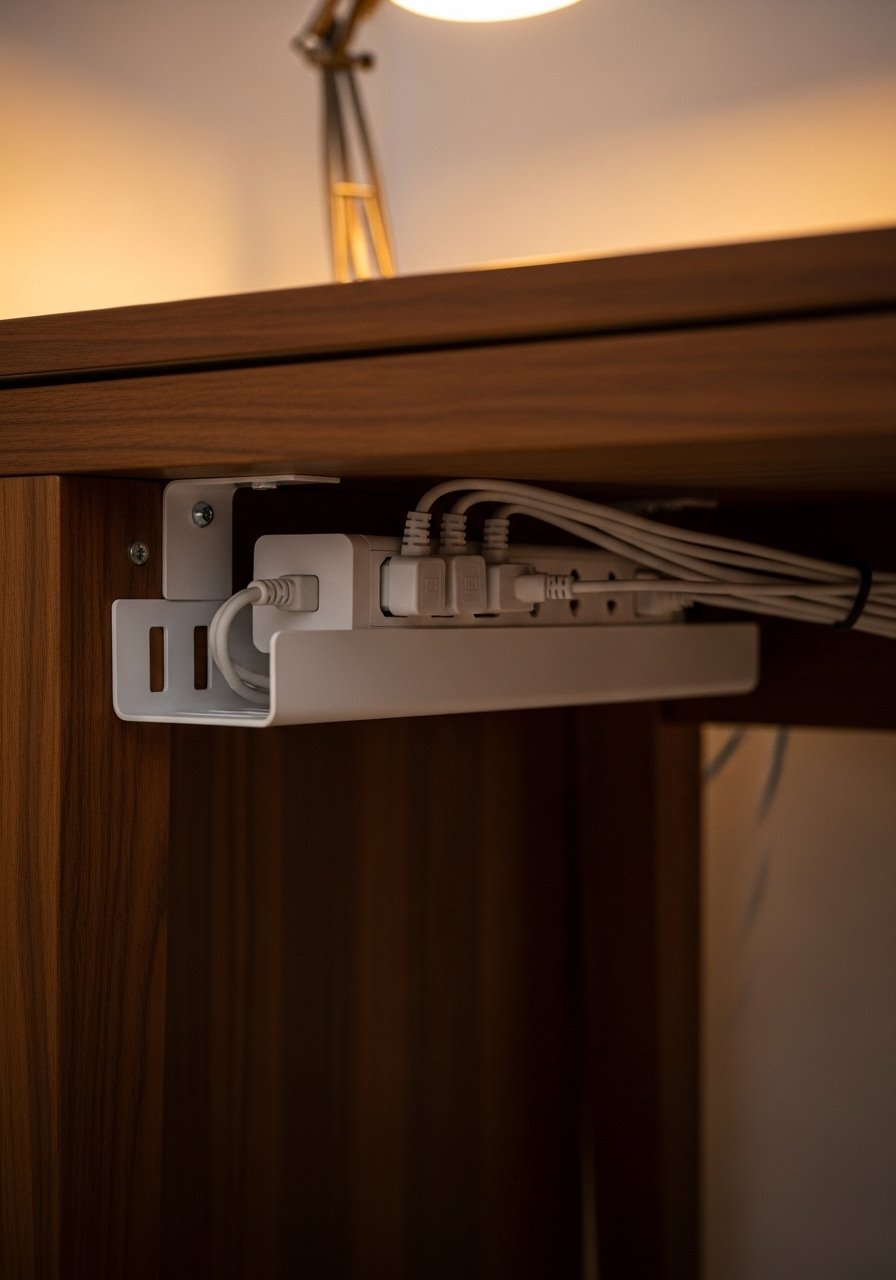
Cables are the fastest way a desk starts to feel chaotic. I mounted a plastic cable raceway under my desk so cords drop straight down, not across the tabletop. This creates a visual clean line and makes dusting easier. For projects like this aim for a 2-inch gap between the cable channel and the back edge of the desk so feet do not knock it. Avoid the common mistake of taping cords to the top of the desk where tape leaves residue. I used adhesive cable clips and a slim under-desk power strip to keep everything off the surface.
Drawer Dividers Using Foam Board for Small Parts
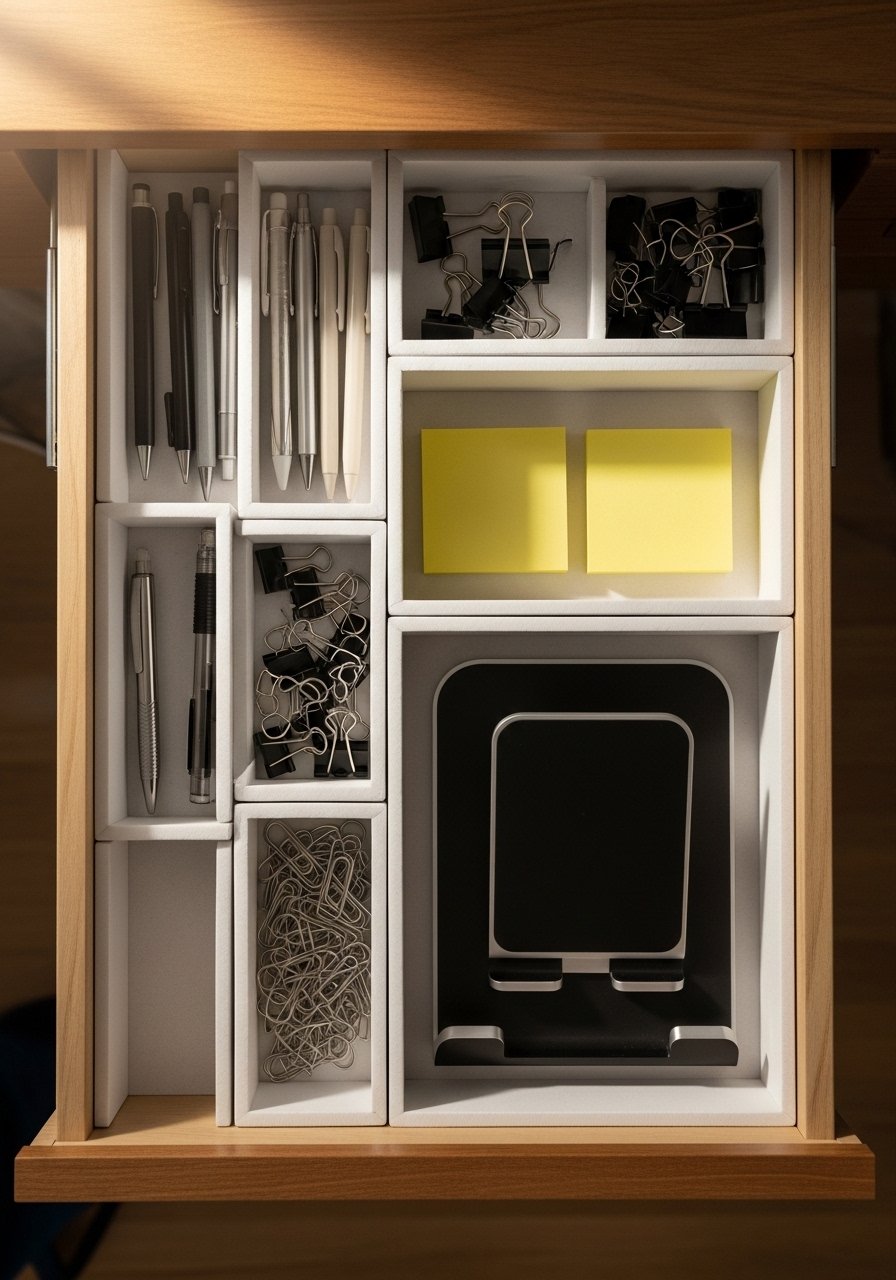
Drawers feel useful until they become junk pits. I cut foam board into 1.5-inch strips and glued them into a grid for pens, chargers, and sticky notes. The foam board is cheap and light, so you can reconfigure it when your needs change. A detail most people skip, measure the depth of your drawer and subtract 1/4 inch for a liner so the dividers sit flush without rattling. Common mistake, people pack the drawer full of decorative items instead of leaving one 3-inch zone for daily essentials. For a higher-end finish, use felt drawer liners under the grid.
Pegboard Command Center for Vertical Storage
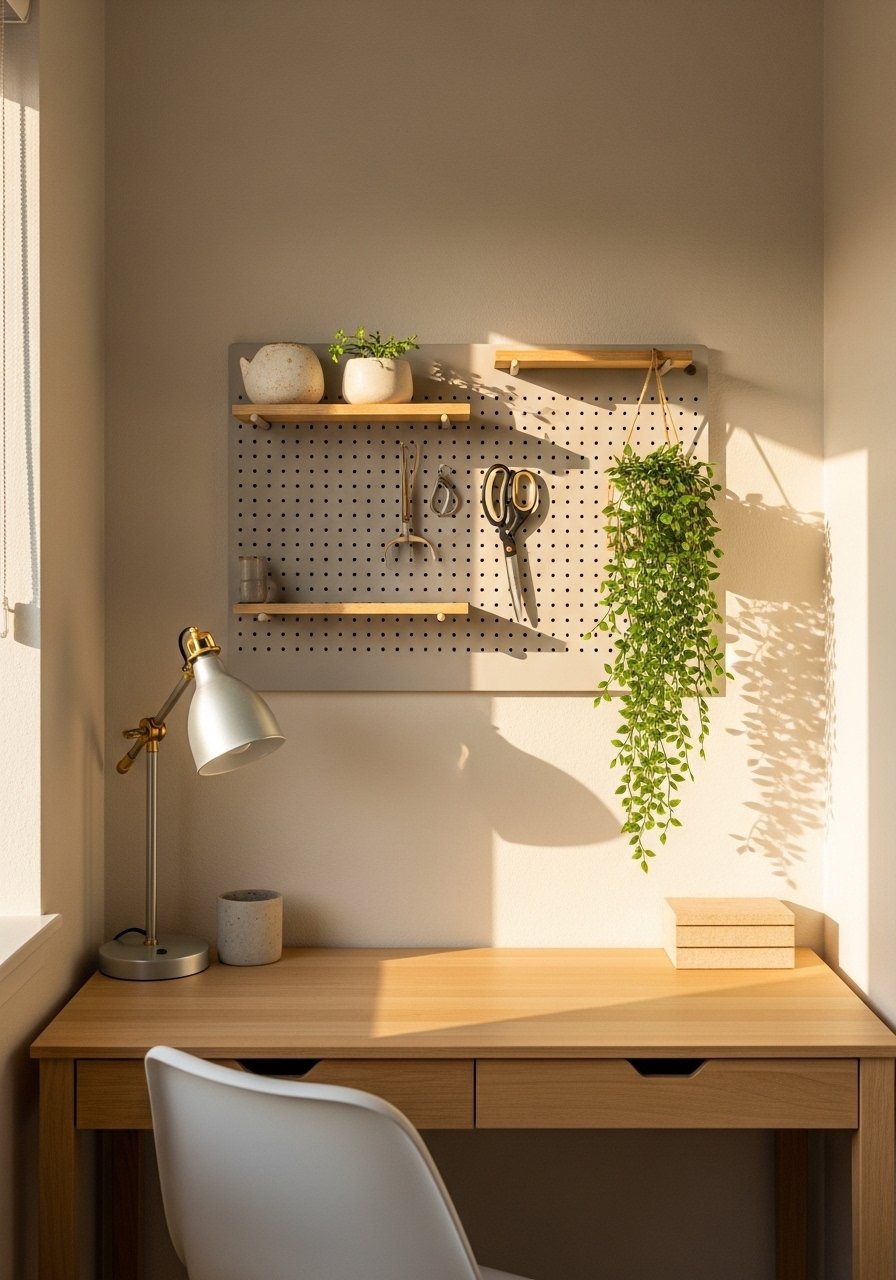
A pegboard gives vertical real estate back to you. I painted mine a muted sage to recede visually, then arranged tools and baskets in a rule-of-three group so it reads organized, not cluttered. It solves the pile-up of tools and charging cords. One practical measurement I use is to keep the center cluster within a 24-inch square so everything stays within reach. Mistake people make is placing too many hooks at the same level. Stagger heights and combine small baskets with open shelves. Anchor supplies with a small wooden shelf and a set of pegboard hooks.
Floating Shelf for a Minimal Paper Drop Zone
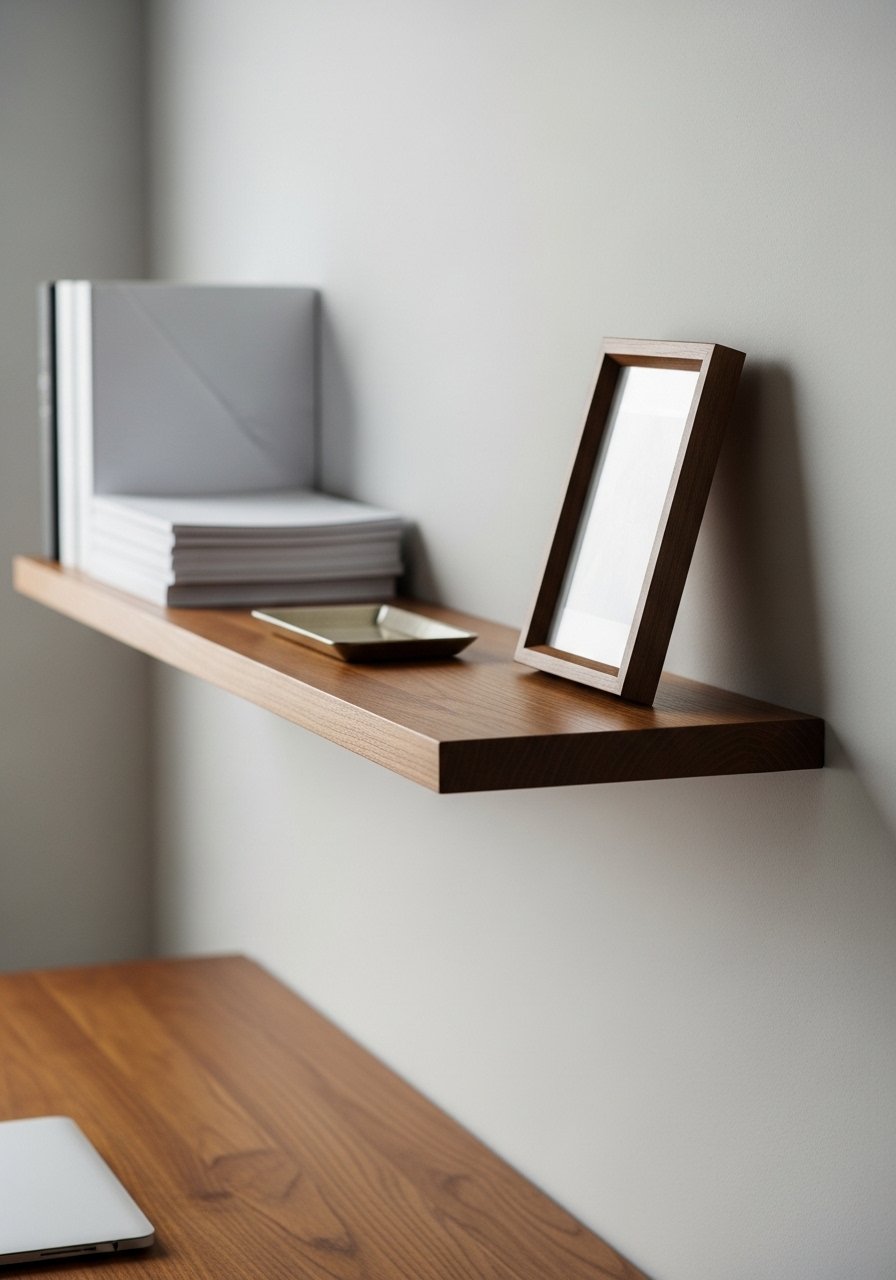
Paper piles are the classic focus killer. I installed a 12-inch floating shelf to act as a drop zone for active documents and a tray for bills. Visually it creates a single horizontal plane so the desk surface reads more intentional. Keep the shelf no deeper than 12 inches so it does not feel like a wall cabinet. The mistake is turning that shelf into a catchall, so use one small magazine file and one tray only. I like pairing this with a slim magazine file and a stacking letter tray.
Monitor Riser with Storage for Ergonomics and Hiding Clutter
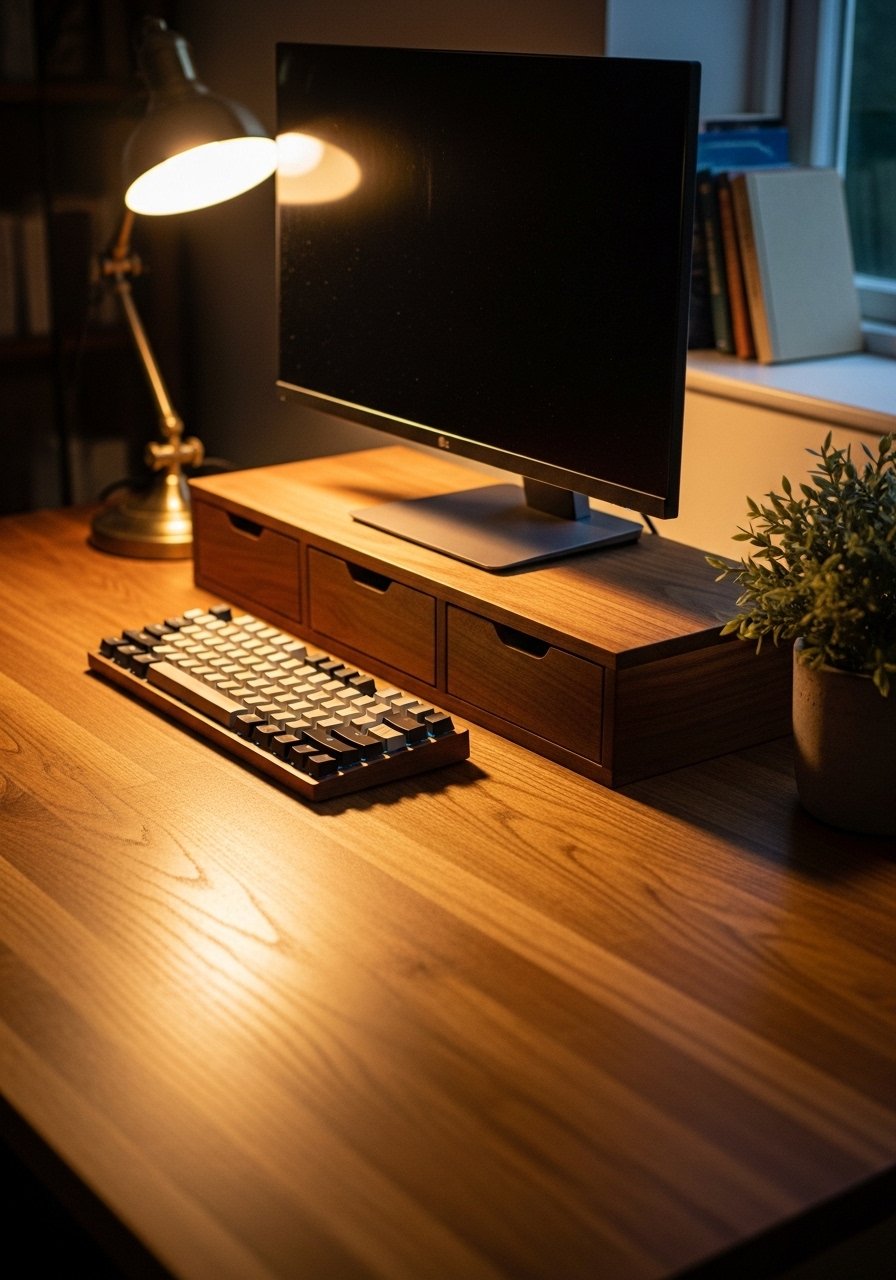
Raising your monitor saves neck strain and creates storage underneath the riser for the keyboard or notebooks. I built a simple riser from a 2×10 and stained it to match my desk. The riser should lift the top of the monitor to eye level, usually 4 to 6 inches depending on chair height. A mistake I see is making it too deep which pushes the screen away. Keep riser depth at 10-12 inches. If you prefer ready-made, try this solid option wood monitor riser.
DIY Magnetic Strip for Metal Tools and Clips
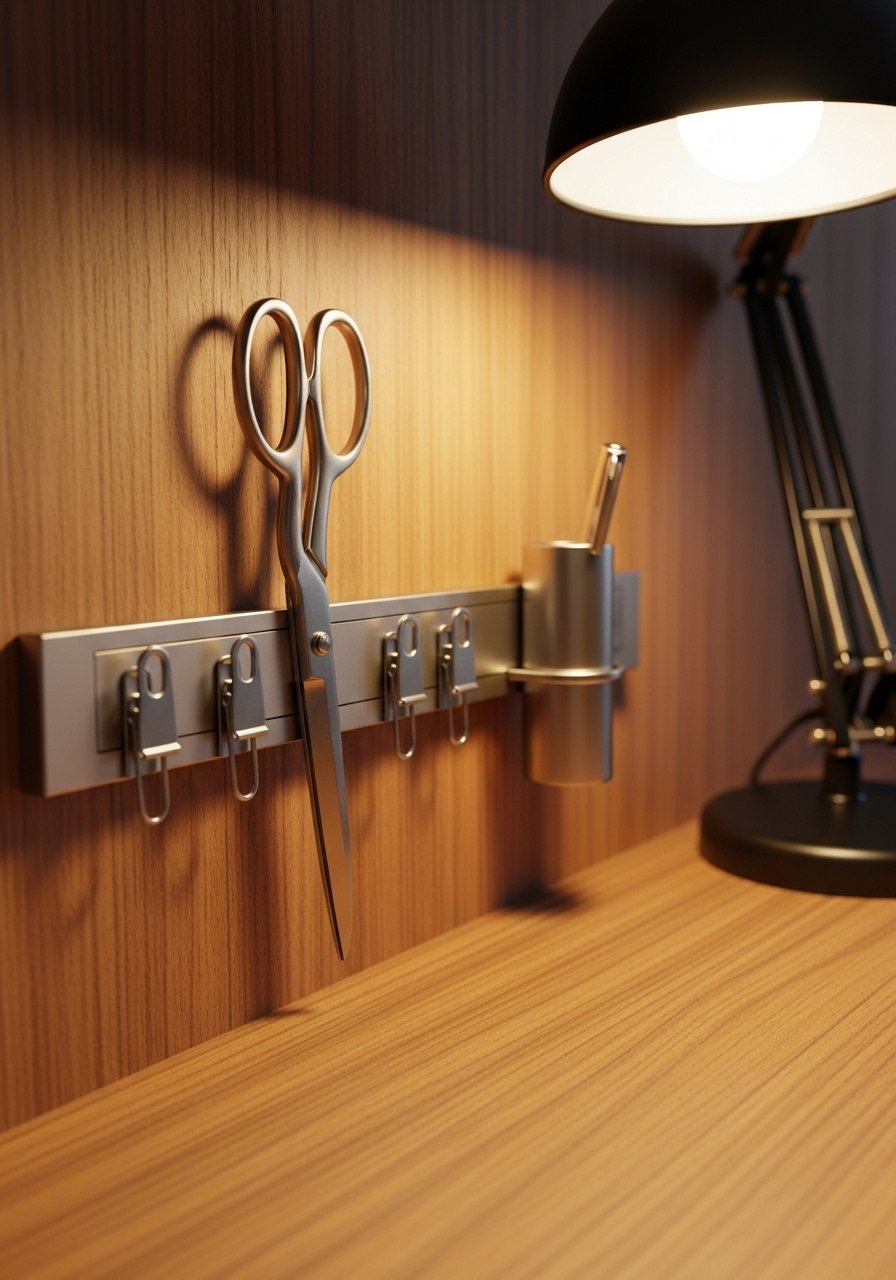
Magnets are underused. I installed a 12-inch magnetic strip along the inner lip of my desk to hold metal scissors and clips, so the top never has loose items. The visual benefit is immediate, the surface feels deliberately minimal. One detail most articles miss, use rare-earth magnets for heavier tools and keep the strip 1 inch from the desk edge so you still have wrist room. The common mistake is mounting it where it interferes with arm movement. I paired the strip with a small magnetic bar.
Under-Desk Drawer Charging Station to Hide Devices
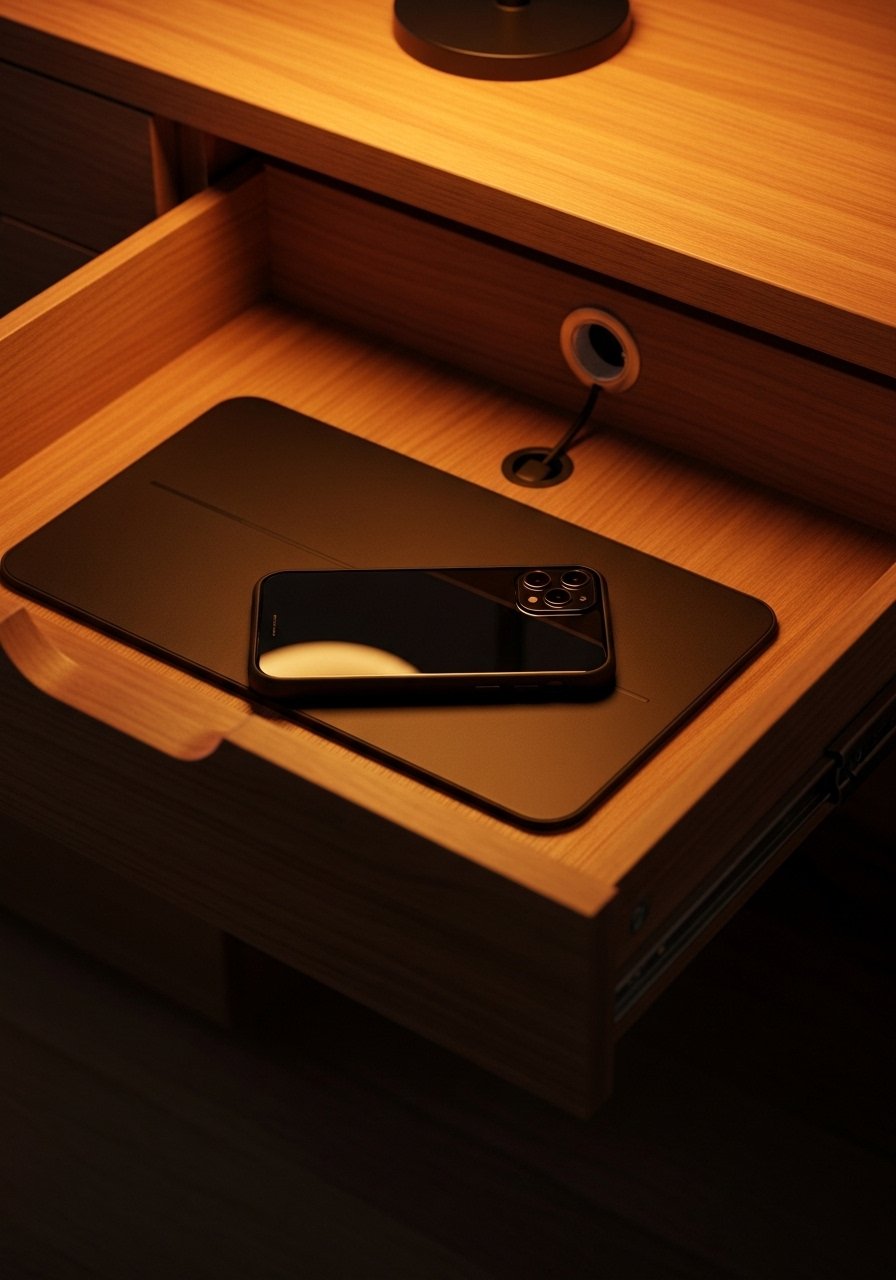
I wired a slim power outlet into a shallow pull-out drawer and added a wireless charging mat. This keeps phones and tablets out of sight while charging and reduces visual distraction during work. For this project, allow 1 inch clearance on height for phone cases and chargers. A common mistake is putting a power strip directly on the desk where it invites snags. You can buy a compact charging pad and a slim power strip.
Tiered Desk Tray for Tools and Decorative Balance
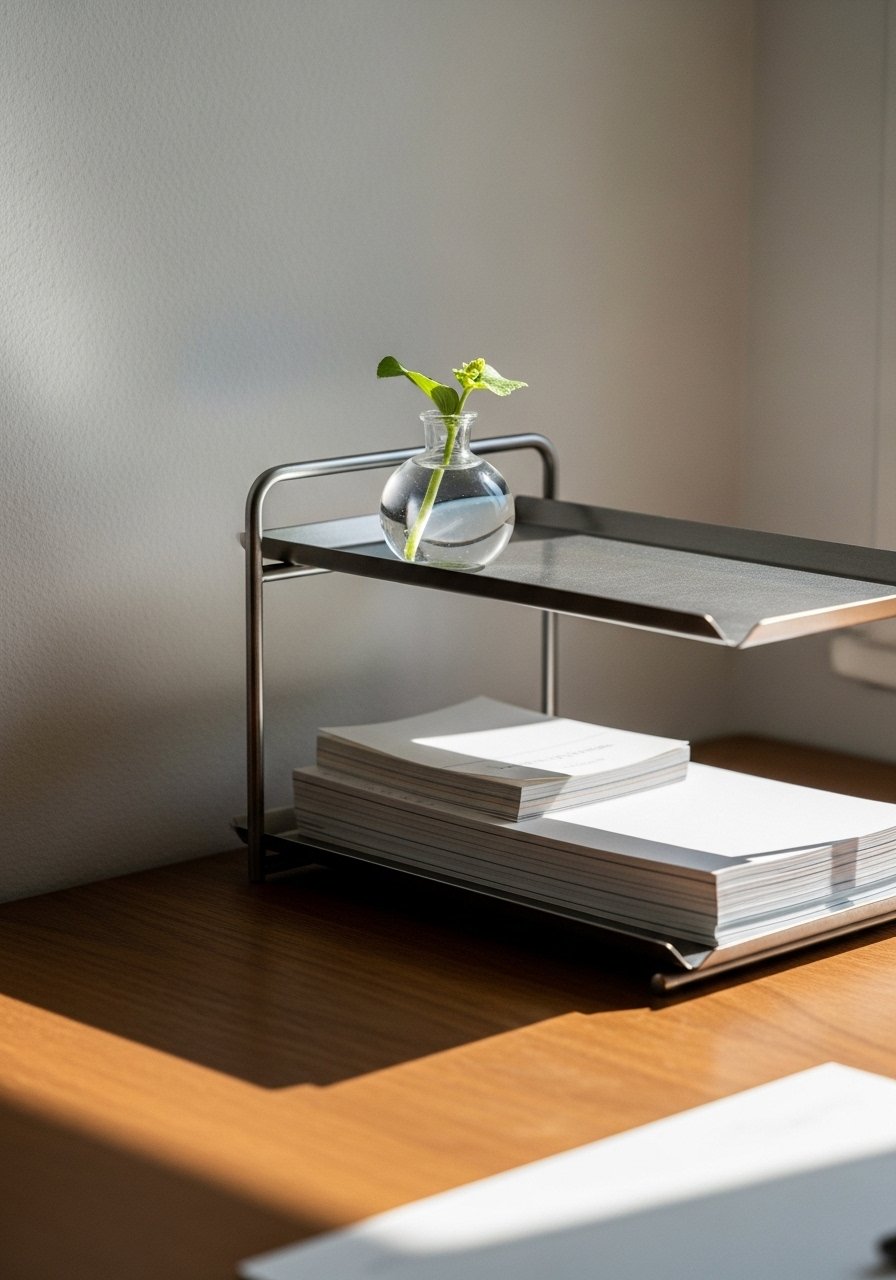
I used a tiered tray to keep functional items on the bottom and one decorative object on top. It helps maintain the 80/20 rule where 80 percent is functional and 20 percent is decorative. The result looks styled but usable. Avoid stacking too many decorative pieces that steal real surface area. A 2-tier tray with a bottom depth of 8 inches is just right for most desks. I recommend a sturdy two-tier desk organizer.
Corkboard and Timed Task Cards for Visual Focus
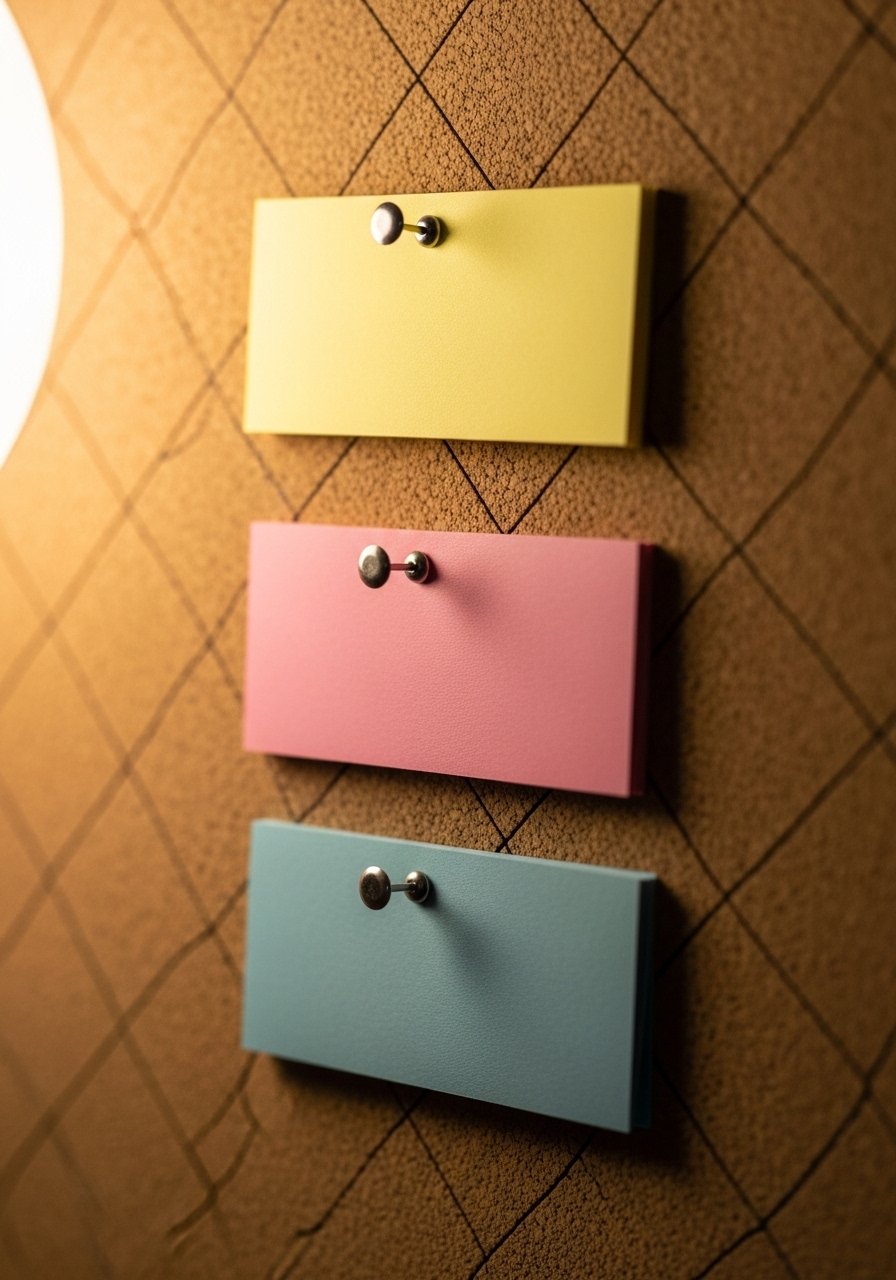
When I started pinning daily task cards on a corkboard instead of a to-do app, distractions dropped. Use three cards max for the day to follow the rule of three, and keep them color coded by priority. Physically moving a card to a done pile gives a satisfying finish and reduces scattered mental tabs. A mistake is overcrowding the corkboard with inspirational art. Keep it strictly task-focused near eye level. I used a natural corkboard and colorful index cards.
DIY Pen Cup with Leather Wrap for Texture
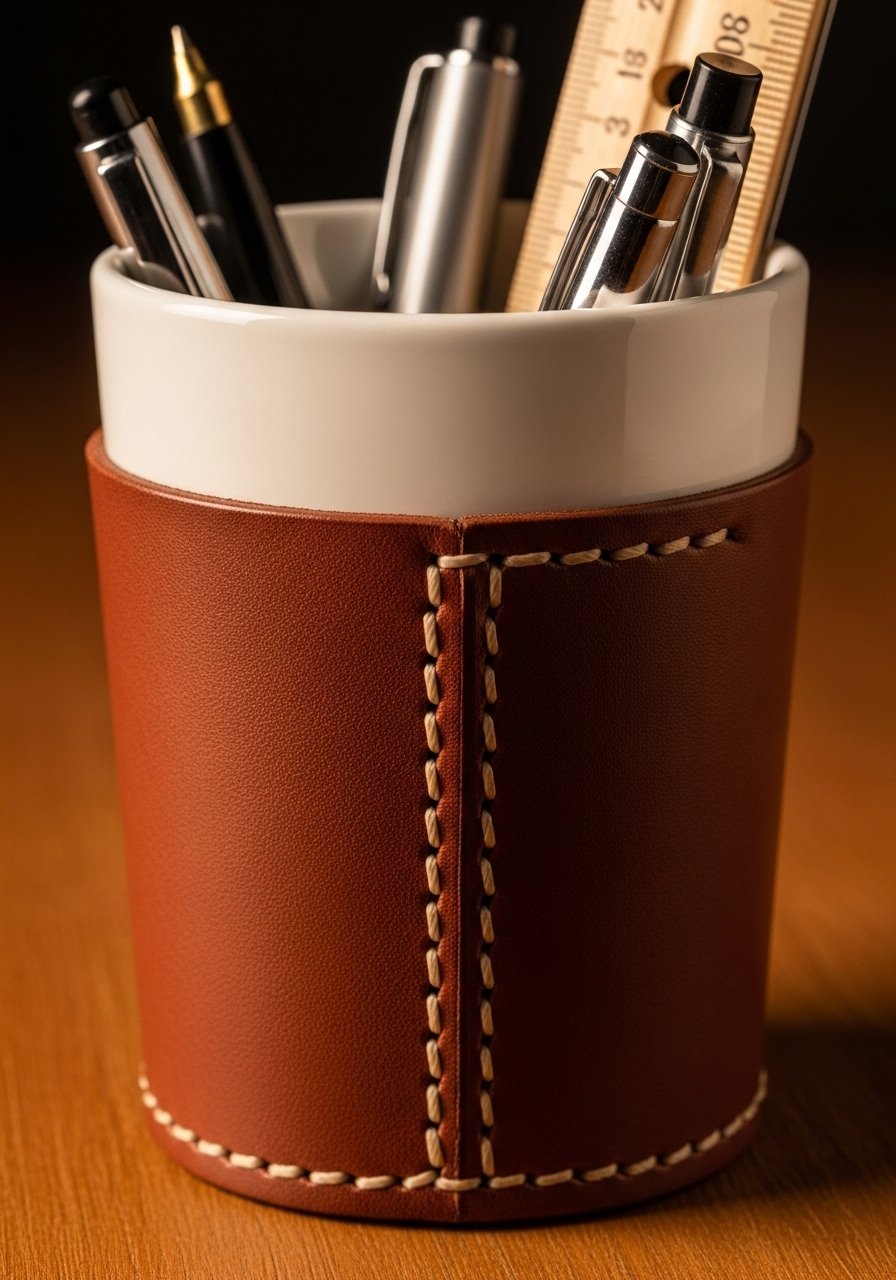
Pens disappearing is my personal pet peeve. I wrapped a ceramic cup in a scrap of leather and stitched it with a few hand-sewn knots. The leather gives weight and texture so the cup does not slide when you grab pens. If you make one, cut the leather 1 inch taller than the cup for a folded rim. Common mistake, people pick cups that are too wide and pens fall over. Try a simple ceramic pen cup plus a small leather tool kit.
Focus Lamp with Adjustable Warmth for Task Lighting
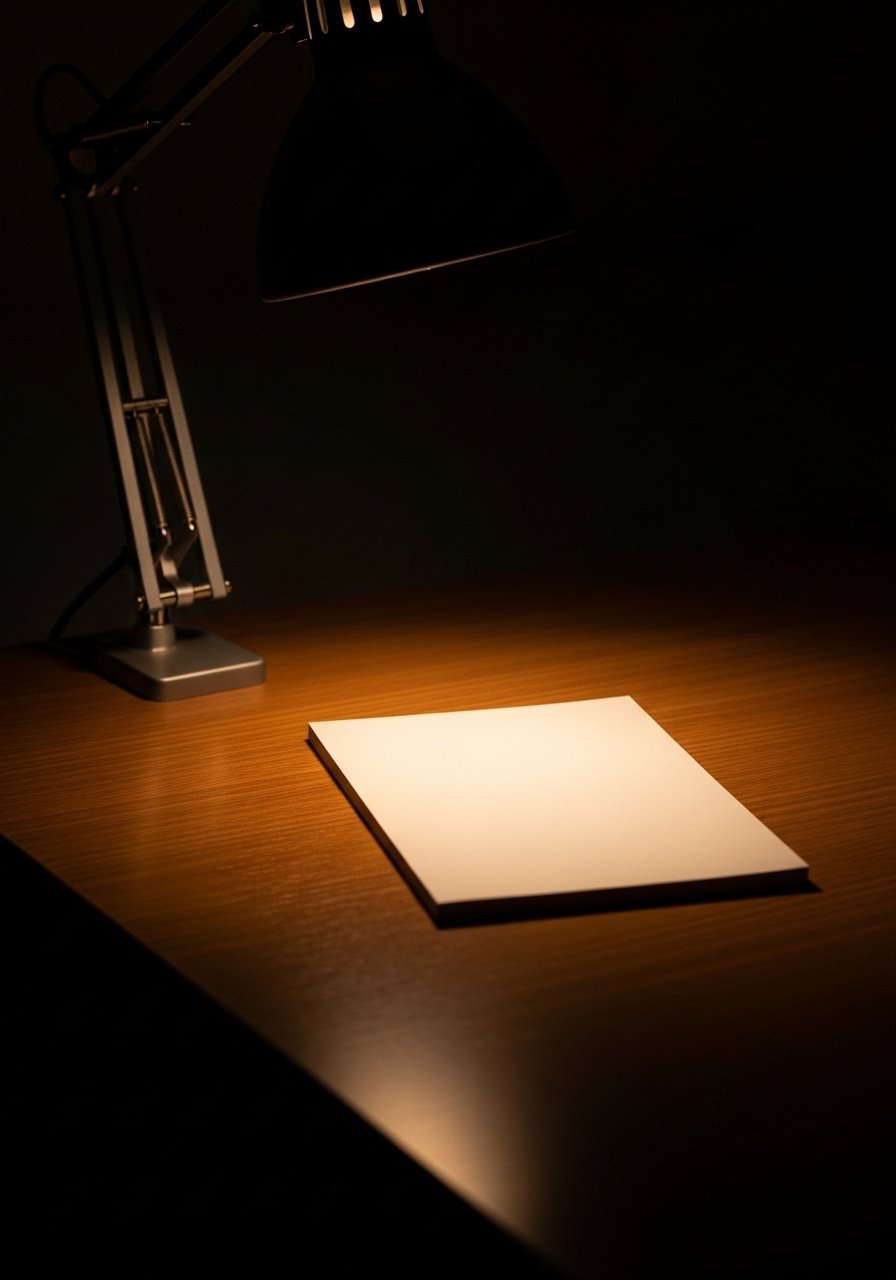
Good lighting makes all the difference. I swapped a harsh overhead bulb for a clamp lamp that adjusts brightness and warmth. For focused work aim for 500 to 800 lumens on the task area. The mistake is leaving the lamp on full brightness which creates glare on screens. Clamp lamps are great because you can position them at the edge of the desk. I use an adjustable LED clamp lamp.
Small Greenery for Calm Without the Mess
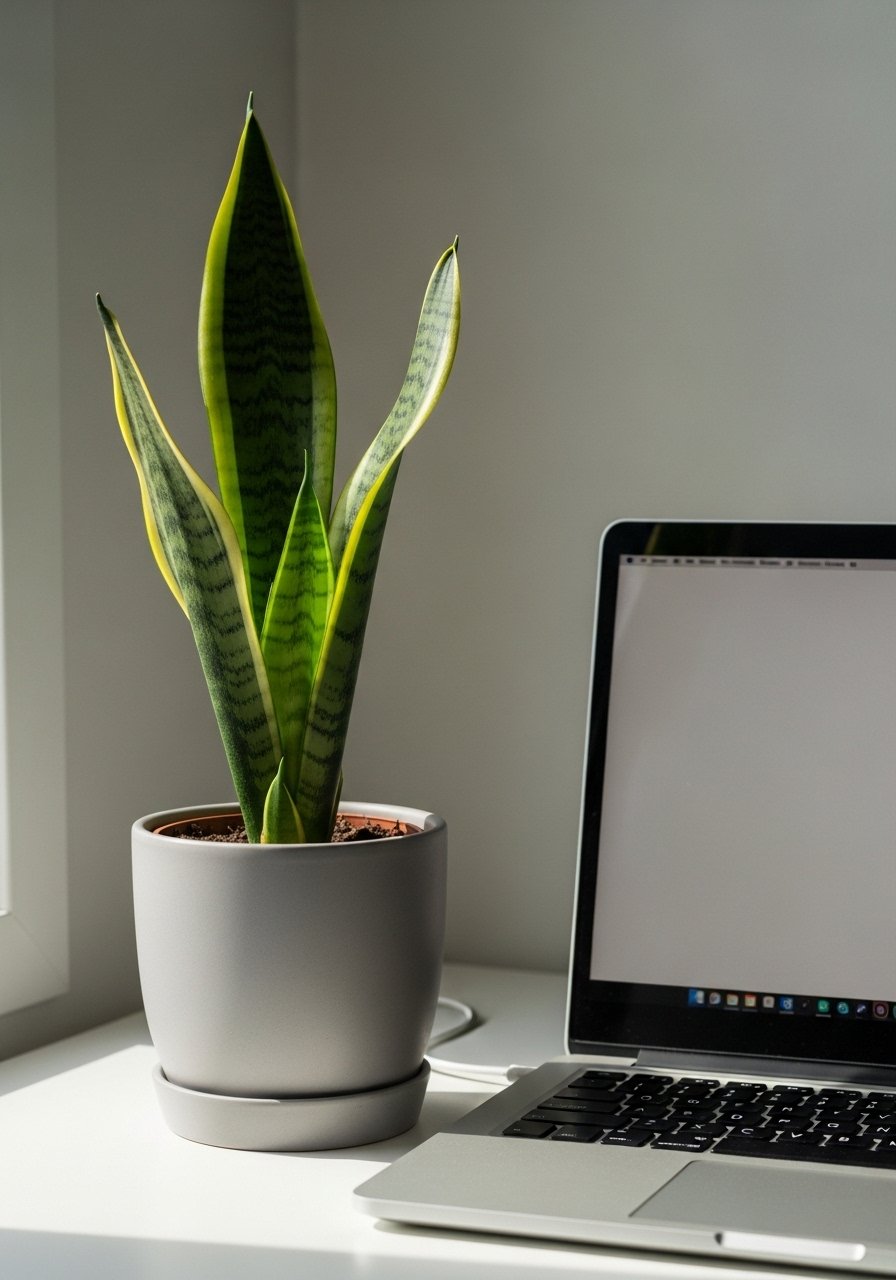
A plant can anchor your workspace and improve the feel of the room without becoming another thing to manage. I kept one low-maintenance snake plant in a 6-inch pot and avoided a dozen tiny succulents that need rearranging. Keep the pot no more than 6 inches away from your main work zone so it does not crowd your mouse. Mistake people make is choosing plants that need daily care. If you need height without upkeep, pair this with an artificial fiddle leaf fig.
Labeling with a Consistent Handwritten System

I label everything in my drawers and bins with a black paint pen. Handwritten labels read more approachable than printed ones and they are faster to change. Use a 1-inch writable tape width for small jars and 2-inch tape for bins. A frequent mistake is over-labeling decorative boxes which makes them look like storage rather than decor. For a quick fix, use writable masking tape and a fine tip paint pen.
Portable Whiteboard for Quick Brain Dumps
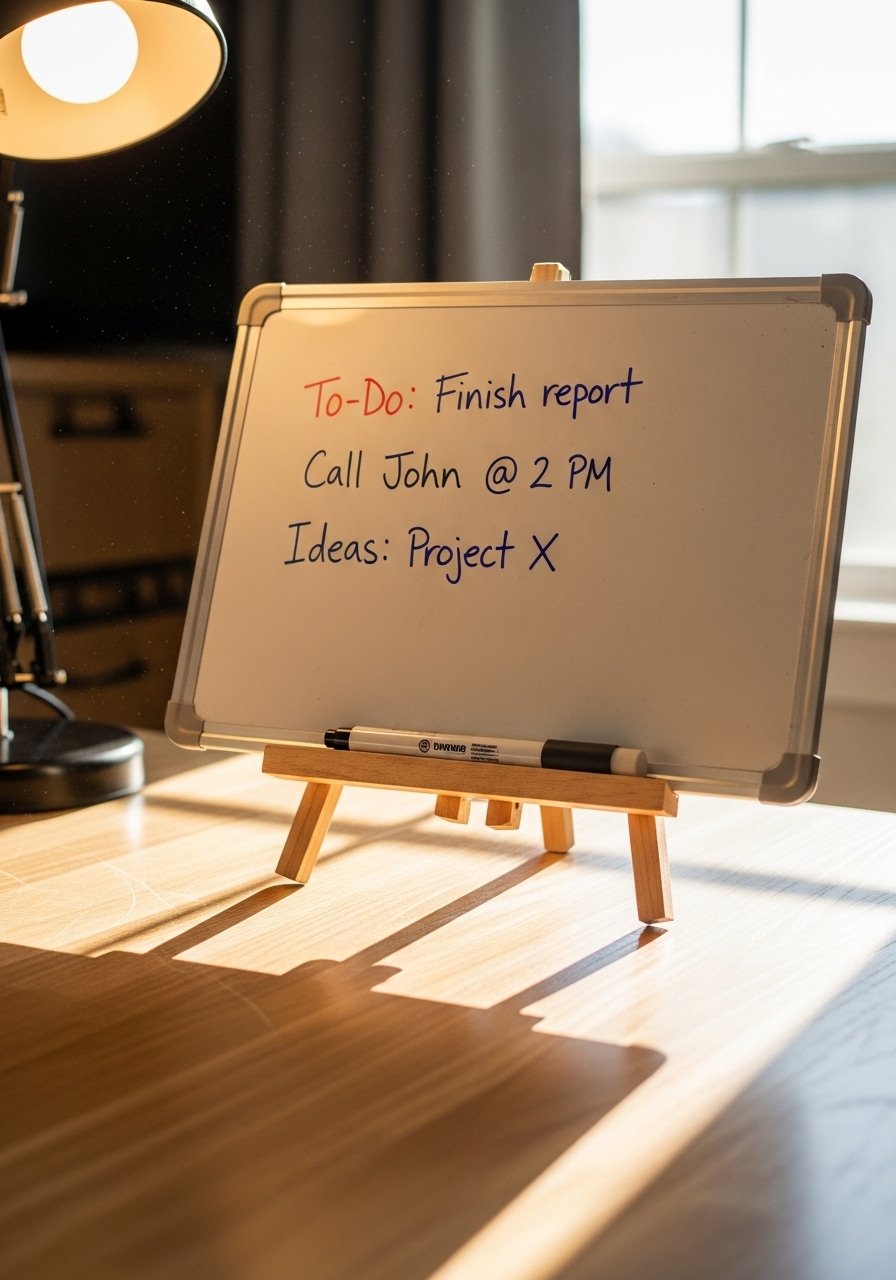
When ideas pile up, I keep a small whiteboard on a tabletop easel for three-minute brain dumps. It clears mental clutter and reduces the temptation to open a browser tab. The trick is to limit it to one 12×16 board and erase at the end of the day. The mistake is leaving the board full for weeks which makes the area look messy. Try a compact desktop whiteboard and a dry erase marker set.
Hidden Storage Box Under Desk for Personal Items
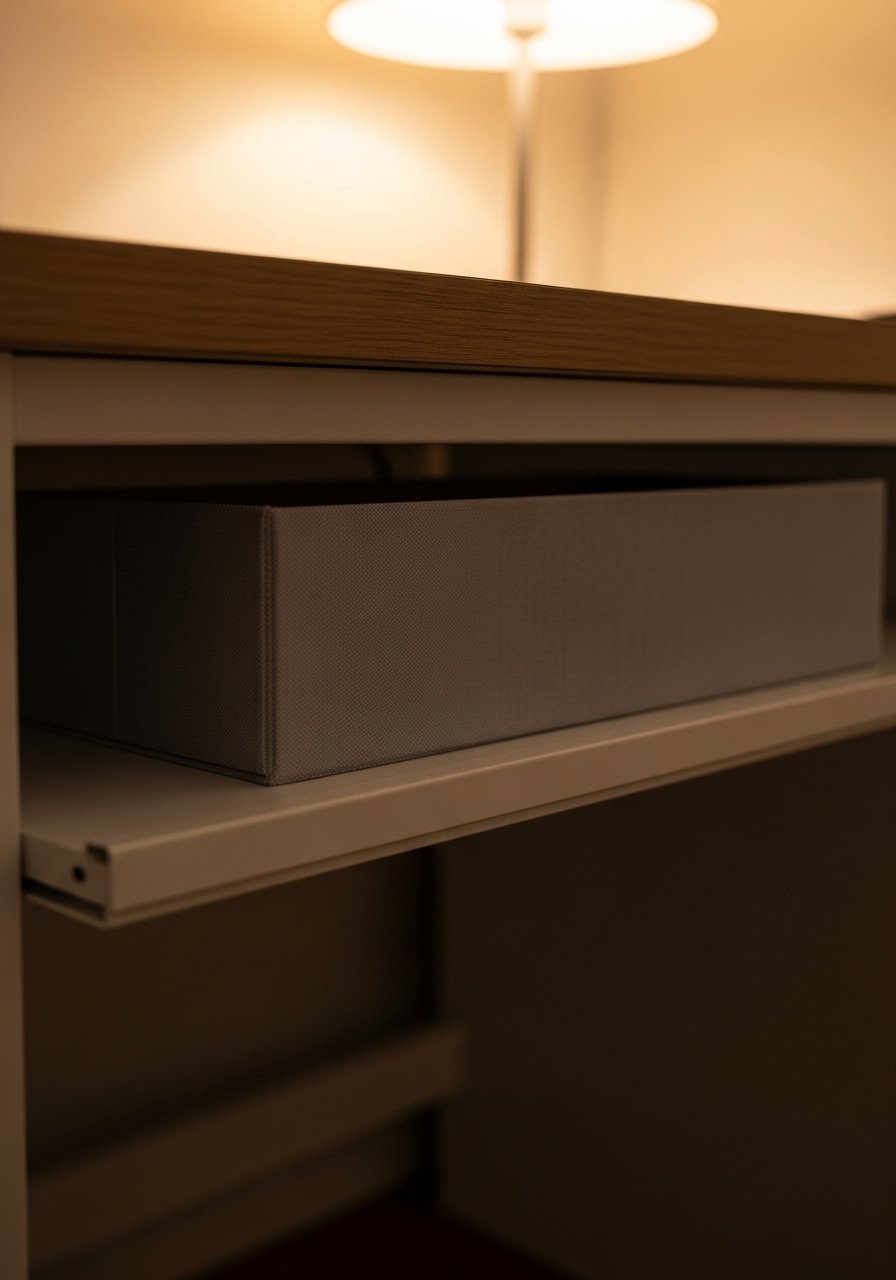
I mounted a slim slide-out tray under my desk for personal items like headphones and snacks. It keeps the surface clear and is perfect for shared spaces. For this, keep the tray width at least 2 inches narrower than the inner desk measurement so it glides freely. A common mistake is using an open basket that looks messy. Go for a fabric box with a lid or a drawer-style tray like this slim under-desk tray.
Your Decor Shopping List
Textiles
- Honestly the best $35 I have spent, chunky knit throw in cream (50 x 60 inches). Drape it on a daybed or fold in a basket.
- Felt drawer liners, pack of 6, cut to fit 1/4 inch under your dividers.
Wall Decor
- Natural corkboard, 24×18 inches for task cards and pin notes.
- Wooden floating shelf, 12-inch depth in white oak tone, similar styles at Target.
Lighting
- Adjustable LED clamp lamp (500 to 800 lumens).
- Warm LED desk bulb for soft task lighting.
Organization Essentials
- Two-tier desk organizer for tools and paper
- Adhesive cable clips, pack of 20
- Slim under-desk tray
- Desktop whiteboard 12×16
Budget Finds
- Many of the small organizers and labels can be swapped for similar items at HomeGoods or Target.
Shopping Tips
White oak beats dark wood in 2026. Design feeds have shifted completely. These white oak floating shelves look current, not dated.
Grab velvet pillow covers for $12 each. Swap them seasonally and the whole room feels different.
Curtains should puddle or kiss the floor, never hang halfway up. These 96-inch linen panels are right for standard 9-foot ceilings.
Lead with function when you shop for desk pieces. This two-tier desk organizer is useful every day, so buy the best you can afford.
Everyone buys five small succulents. One single 6-foot artificial fiddle leaf fig has ten times the visual impact.
Buy visually consistent storage. A set of matching fabric boxes makes even random contents look intentional.
Frequently Asked Questions
Q: Can I hide charging cords without drilling into the desk?
A: Yes. Use adhesive cable channels and a slim under-desk power strip. They stick on and hide cords without permanent damage. I like adhesive cable clips for quick runs along the desk underside.
Q: What is the best way to stop paper piles from growing?
A: One floating shelf for incoming papers and one shallow tray for current projects. Keep the tray depth under 9 inches so it forces prioritizing rather than hoarding.
Q: Should my desk have decorative items at all?
A: Yes, but limit decorative items to 20 percent of visible surface area. A single plant or a small framed photo is enough. Mixing in the rule of three helps keep things intentional.
Q: Can I mix modern desk accessories with vintage furniture?
A: Absolutely. Mix a modern metal organizer with a vintage wooden desk, but balance textures. Use a 2:1 ratio of functional to decorative objects to keep the vibe cohesive.
Q: How high should my monitor be on a riser?
A: The top third of the screen should be at eye level. For most sitting setups a riser of 4 to 6 inches works. Keep riser depth at 10 to 12 inches so the screen does not sit too far away.
Q: What do I do if I do not have wall space for a pegboard?
A: Use a desktop pegboard panel or a small standing pegboard behind your monitor. It gives similar vertical storage without drilling into a wall.
Q: Can a small desk feel like a proper workspace?
A: Yes. Keep only daily essentials on the surface, use one vertical storage solution, and reserve a 12×16 whiteboard for quick planning. That combination reduces visual noise and boosts focus.