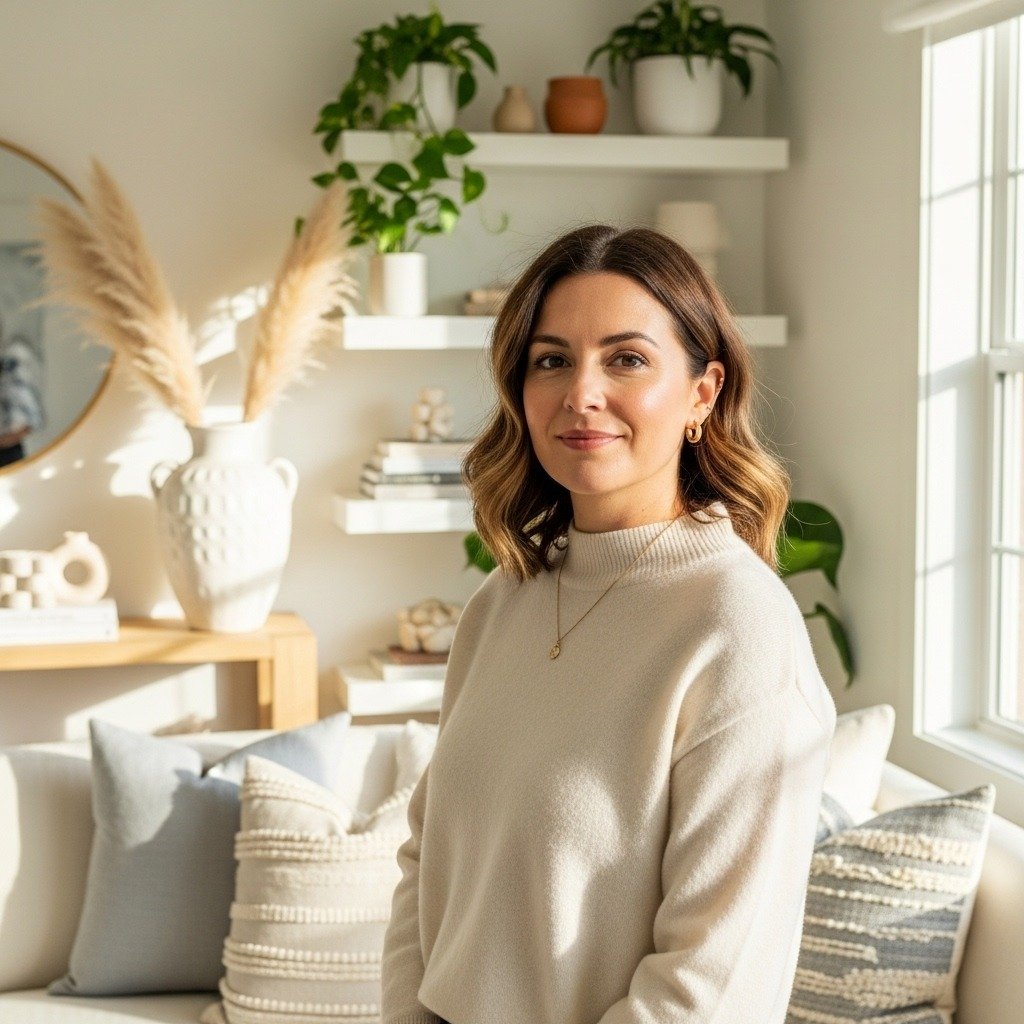
Spent $400 on a new coffee table. Room still looked off. Spent $35 on a throw and three candles. Suddenly everything clicked. That exact feeling is what I chase when I organize a closet. Small moves that make the space feel used, not chaotic. I promise you do not need a contractor or a lot of money to get a closet that feels calm and easy to use.
These ideas lean modern cozy with practical vintage touches. Most projects are under $50, a few around $100-150 if you want nicer hardware. They work in reach-in closets, tiny walk-ins, hallway linen closets, and even rental wardrobes.
Slim Velvet Hangers for a Clean Minimal Closet
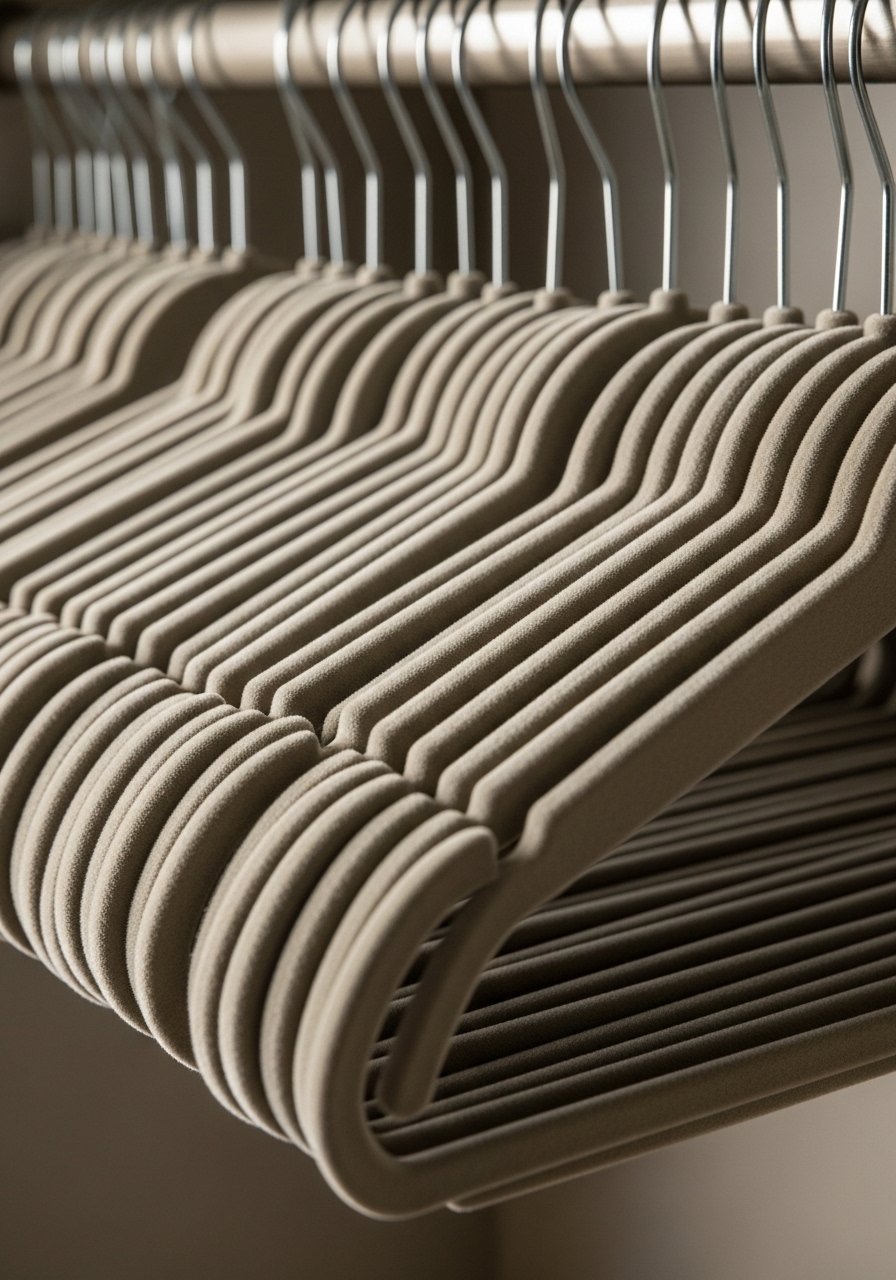
The second I swapped mismatched plastic hangers for a set of slim velvet hangers my shirts stopped sliding and the rod fit 20 to 30 percent more clothes. For a tight closet this is the easiest space win, visually and practically. Use 0.5-inch depth hangers to keep shoulders neat. A common mistake is buying colorful hangers that add noise. Stick to one color and aim for an 80/20 ratio of dark to light for a cohesive shelf line. I like these slim velvet hangers because they’re thin and grippy.
Double Hanging Rod to Double Your Clothing Capacity
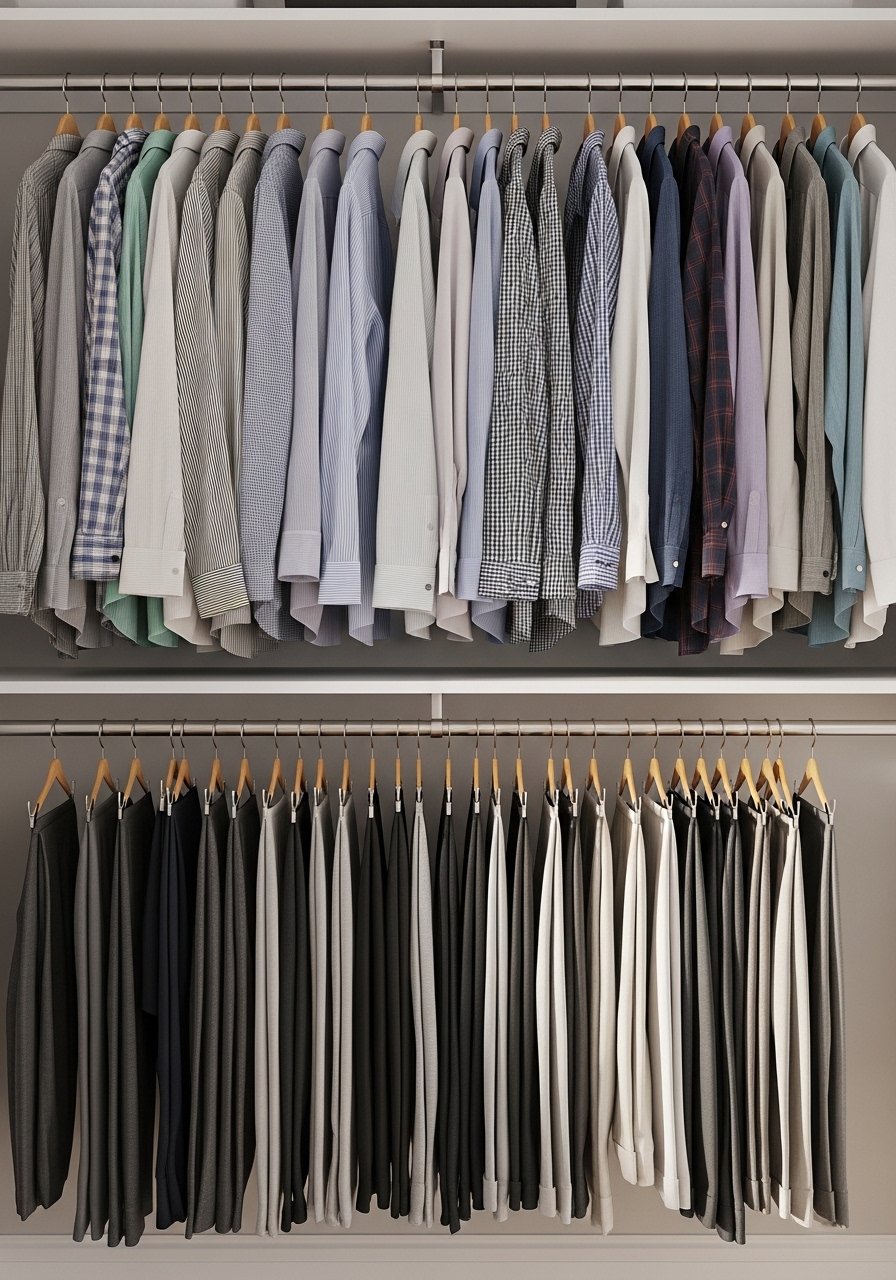
My partner’s shirts used to live on the floor. Adding a second rod beneath the main one doubled hanging space without changing the closet footprint. Use the bottom rod at least 38 inches from the top rod for tops and 18 inches for folded pants. People forget to measure door swing, and that ruins the solution. For a renter-friendly version, try a tension double rod and avoid drilling. I paired mine with adjustable closet rods so I could tweak height by an inch or two.
Adjustable Shelving for Folded Clothes and Bags
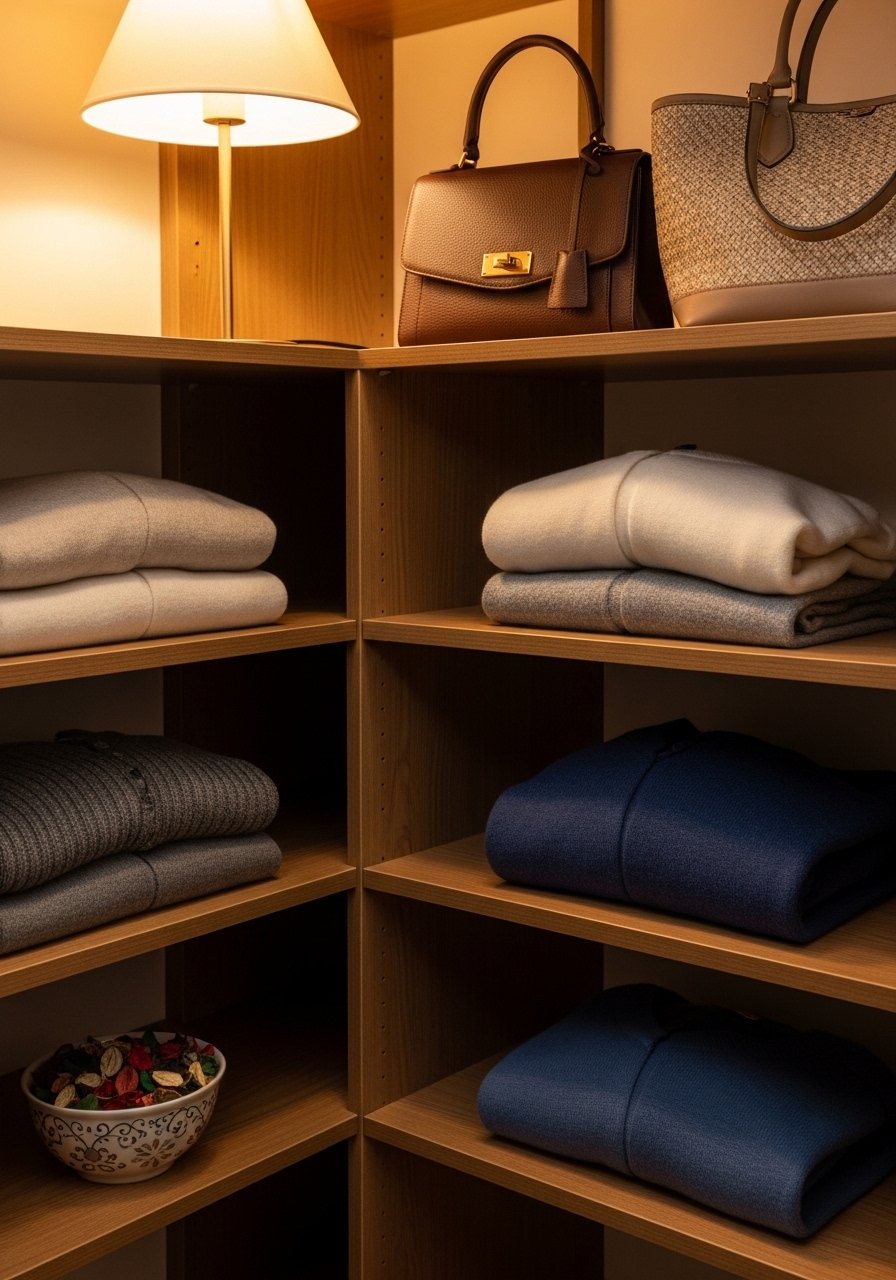
Shelves that move in 1-inch increments are a small detail that makes a big difference. I set mine to 12-inch depths and spaced shelves roughly 10 to 12 inches apart for tees, and 14 to 16 inches for sweaters. A common error is one deep shelf that hides things at the back. Use shallow shelves near the door and deeper ones at the back. These adjustable shelf brackets and boards let you experiment. The rule of three applies here: group folded items in threes for visual balance.
Clear Bins with Front Labels for Seasonal Rotation
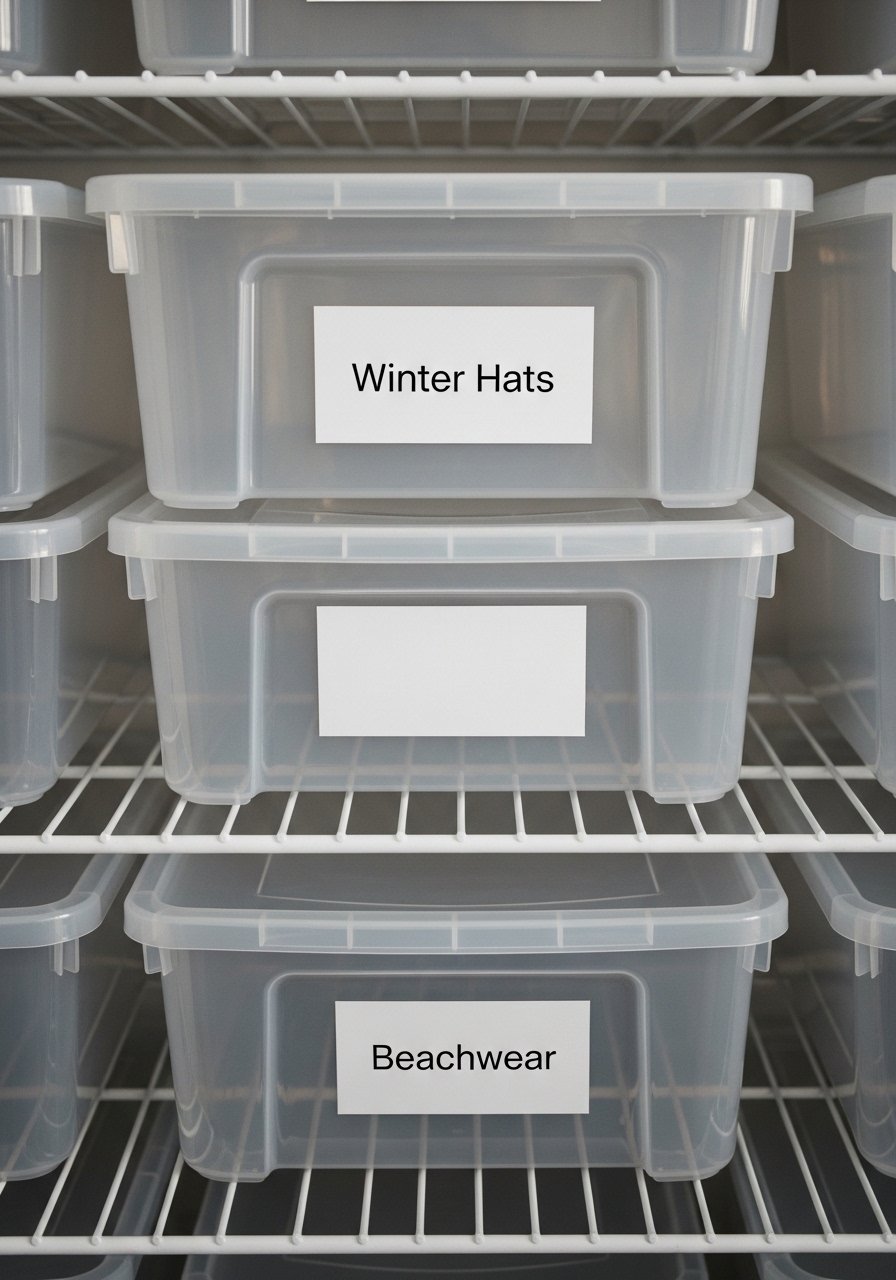
Seasonal clutter disappears when you can see what is inside a bin at a glance. I use clear bins sized 16x12x10 inches for scarves and hats, with printed front labels. The mistake people make is using opaque bins and then stacking without a system. Try photographing the contents and taping the photo to the front if you hate handwriting. These clear storage boxes with lids are durable and stack neatly on shelf ledges.
Over-the-Door Shoe Rack for Small Reach-Ins
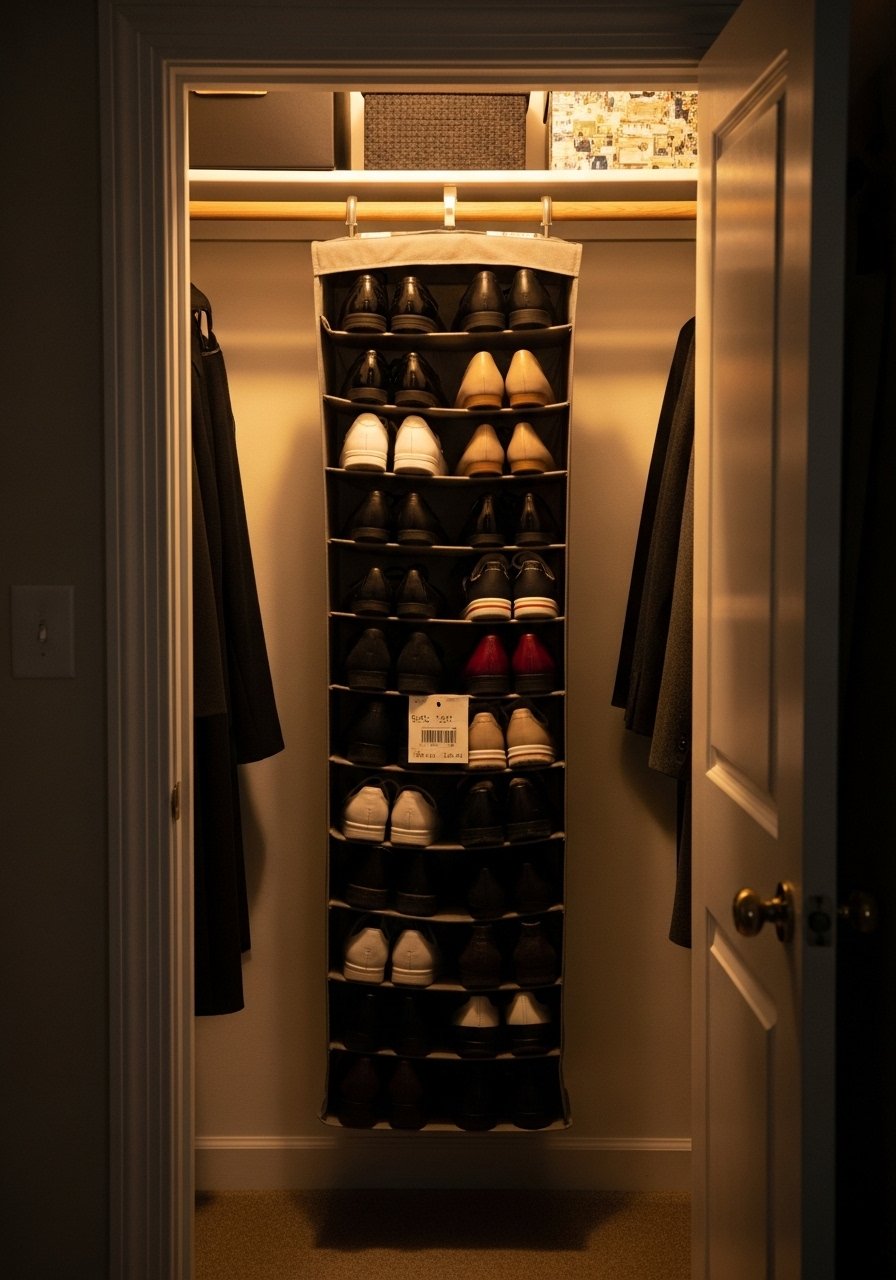
Shoe piles are the single fastest way a closet feels out of control. An over-the-door shoe organizer turns floor chaos into vertical storage and frees up 1.5 to 2 square feet of floor. The oversight people make is jamming sneakers in front pockets so flats are hidden. Arrange by type and put the shoes you wear most at eye level. I recommend over-the-door shoe organizers that have clear pockets so you can see the toe box.
Drawer Dividers That Make Small Items Behave
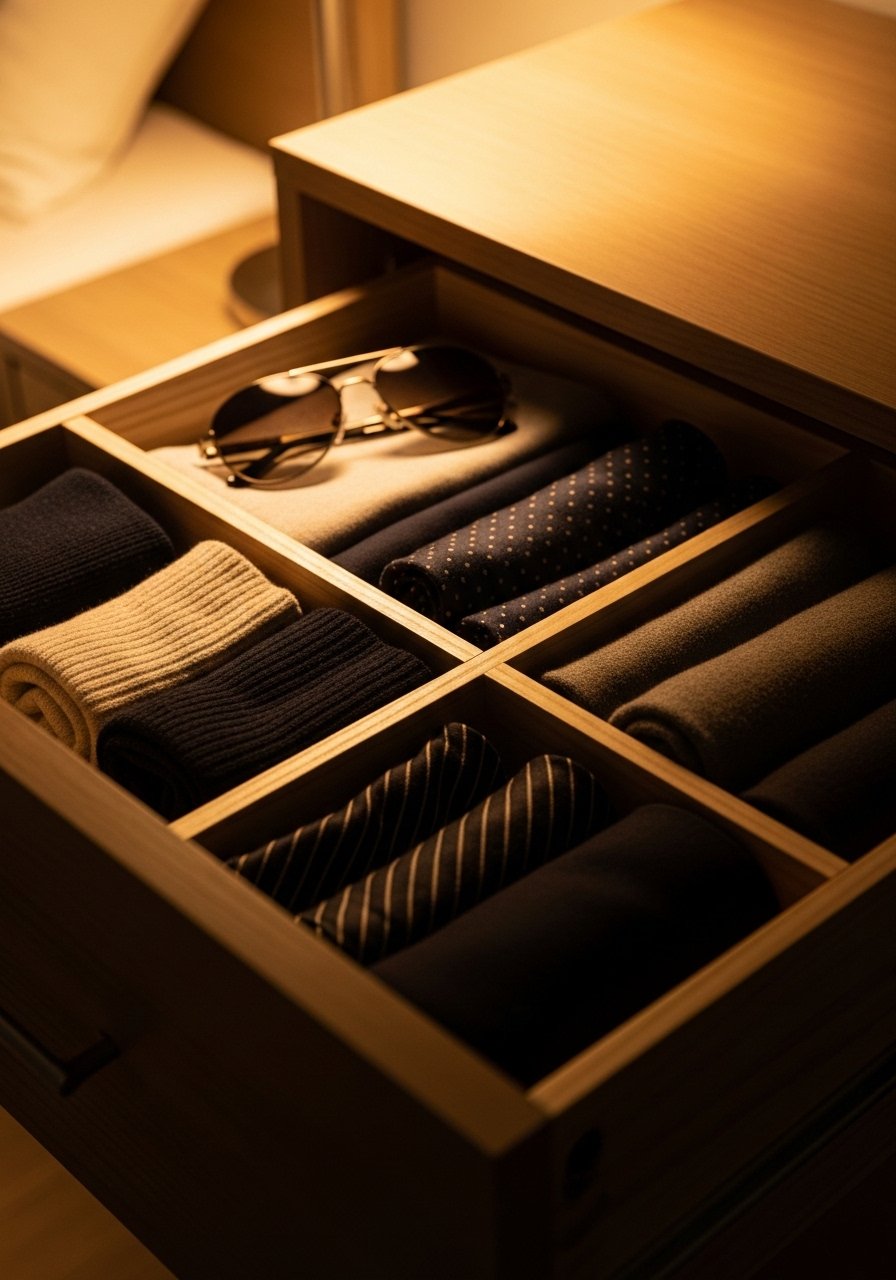
A shallow drawer full of mismatched items does not organize; it buries things. I cut inexpensive plywood into 3-inch wide dividers to create a grid. For socks and underwear keep sections 4×6 inches. People often skip measuring the drawer interior before buying dividers and end up with wasted space. These adjustable drawer dividers are simple and hold their place. Pro tip, line sections with thin felt to reduce noise when you open drawers.
Tension Rod Solution for Scarves and Belts
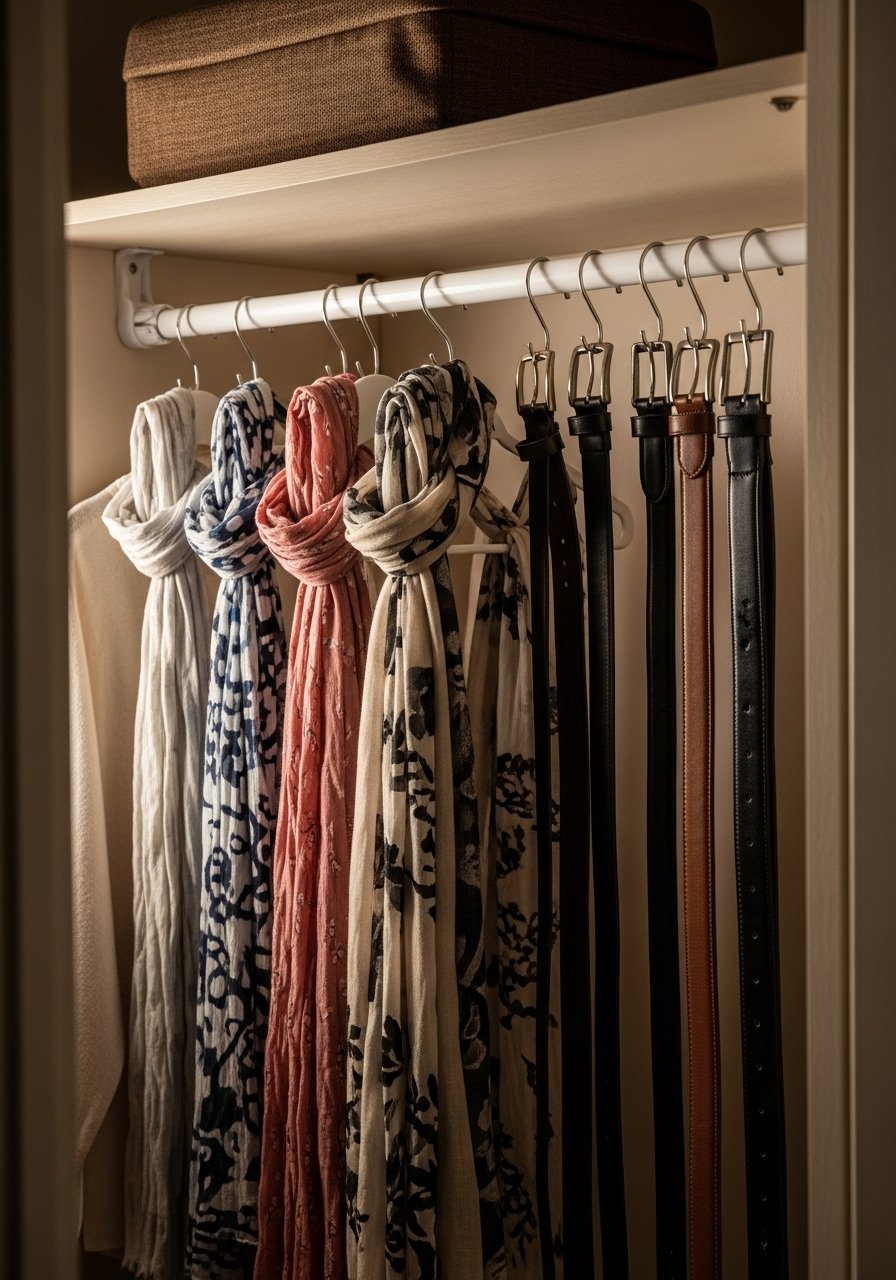
I installed a short tension rod vertically and it instantly became the go-to spot for scarves and belts. The beauty is no drilling and you can set it at any height. A common mistake is dangling too many items on one rod so it sags. Spread items across two rods if you have more than eight pieces. Try one of these mini tension rods and loop scarves over to keep them wrinkle-free.
Pegboard Wall for Purses and Jewelry Display
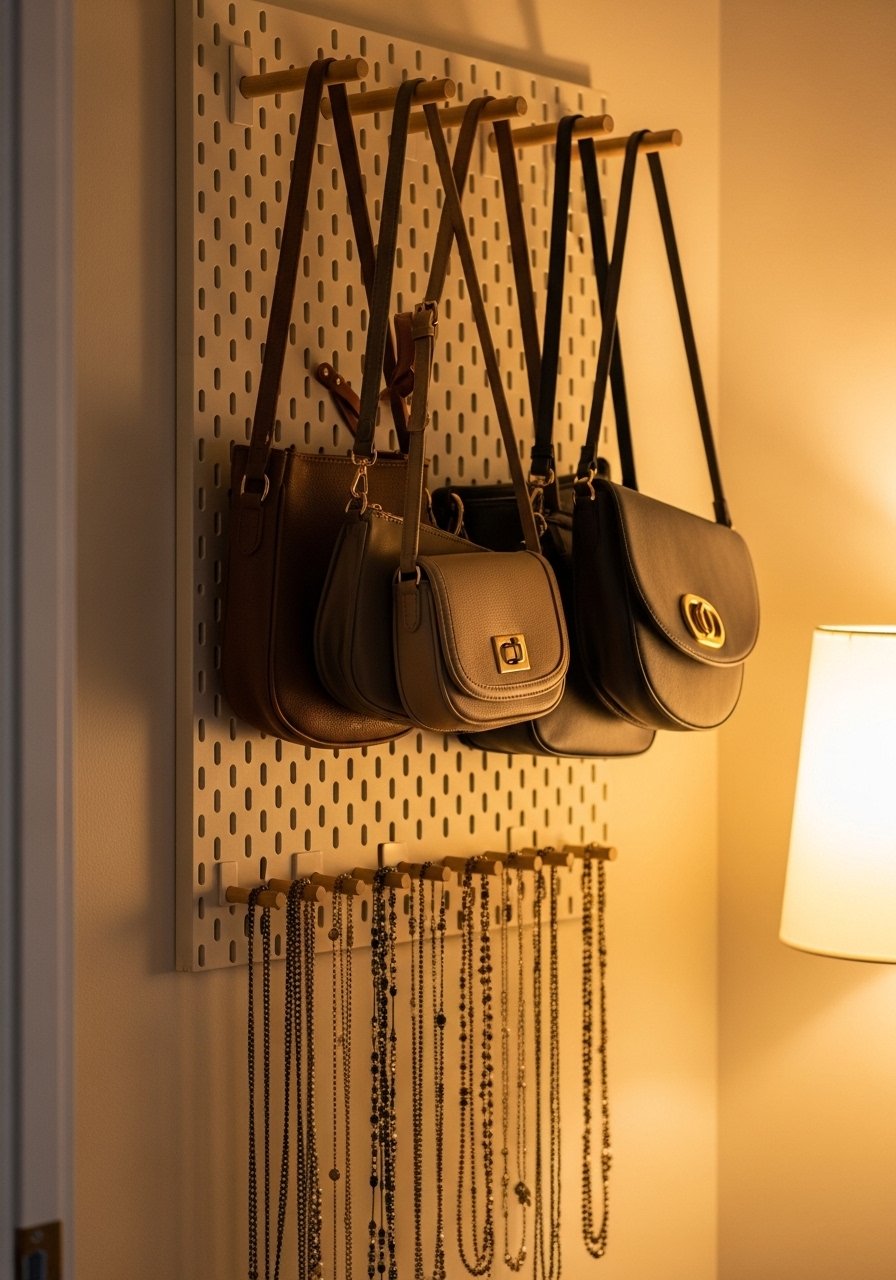
Turning a blank wall into a pegboard display makes purses look intentional and stops necklaces from tangling. I used 1/4-inch pegs spaced 3 inches apart to create a grid that fits different widths. The mistake people make is using tiny hooks that bend under weight. Pick solid pegs and plan for a 30/70 split: 30 percent display, 70 percent storage. These pegboard kits are easy to cut to size and paint to match the closet.
Under-Shelf Baskets for Sweaters and Hats
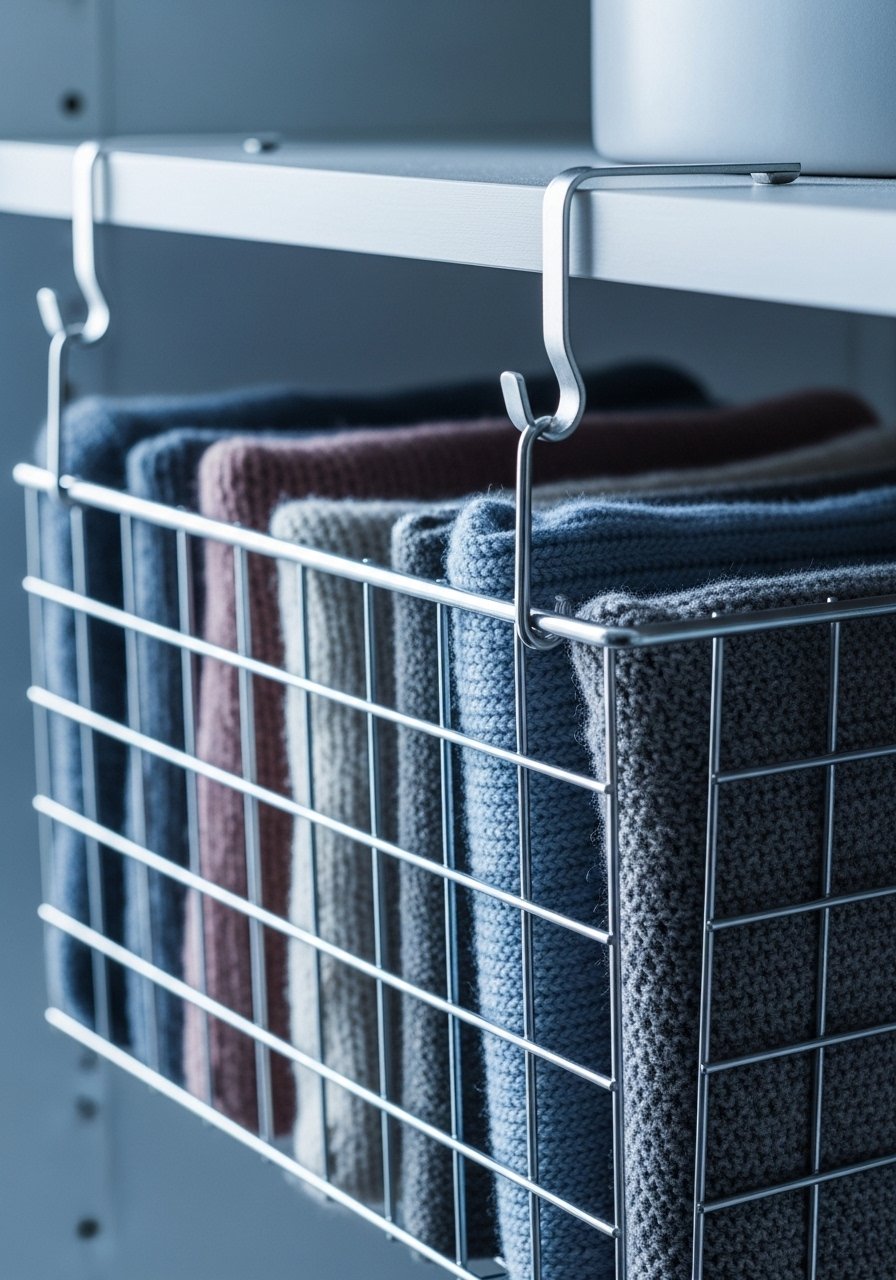
Under-shelf baskets use dead space beneath a shelf and are ideal for sweaters or beanies. I space them so the basket lip sits 4 inches below the shelf front. People shove heavy items in these, which makes them flare out. Keep light items in them and rotate seasonally. I use wire under-shelf baskets that clip on and slide out for easy access. Pair this with the adjustable shelving idea for maximum flexibility.
DIY Pull-Out Baskets on Smooth Glides
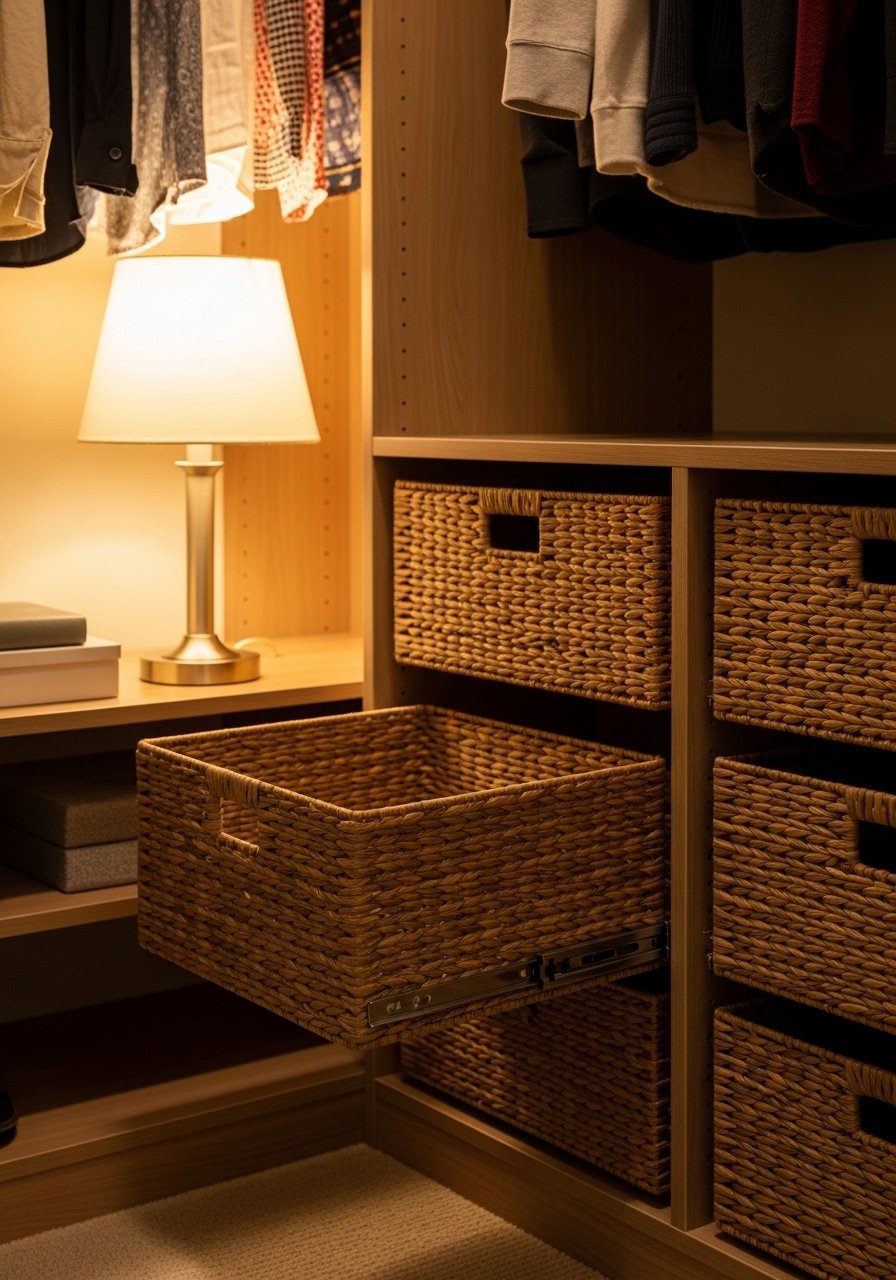
If your closet has wasted depth near the floor, build pull-out baskets on IKEA-style glides. I lined baskets with cotton and mounted them on 12-inch glides to make reaching winter boots painless. The usual error is fixed shelves that force you to crouch and fish. For dimensions aim for baskets 14 to 16 inches deep so they don’t block the door. These drawer slide sets are quiet and make the basket system feel custom.
Valet Rod for Outfit Planning and Daily Wear
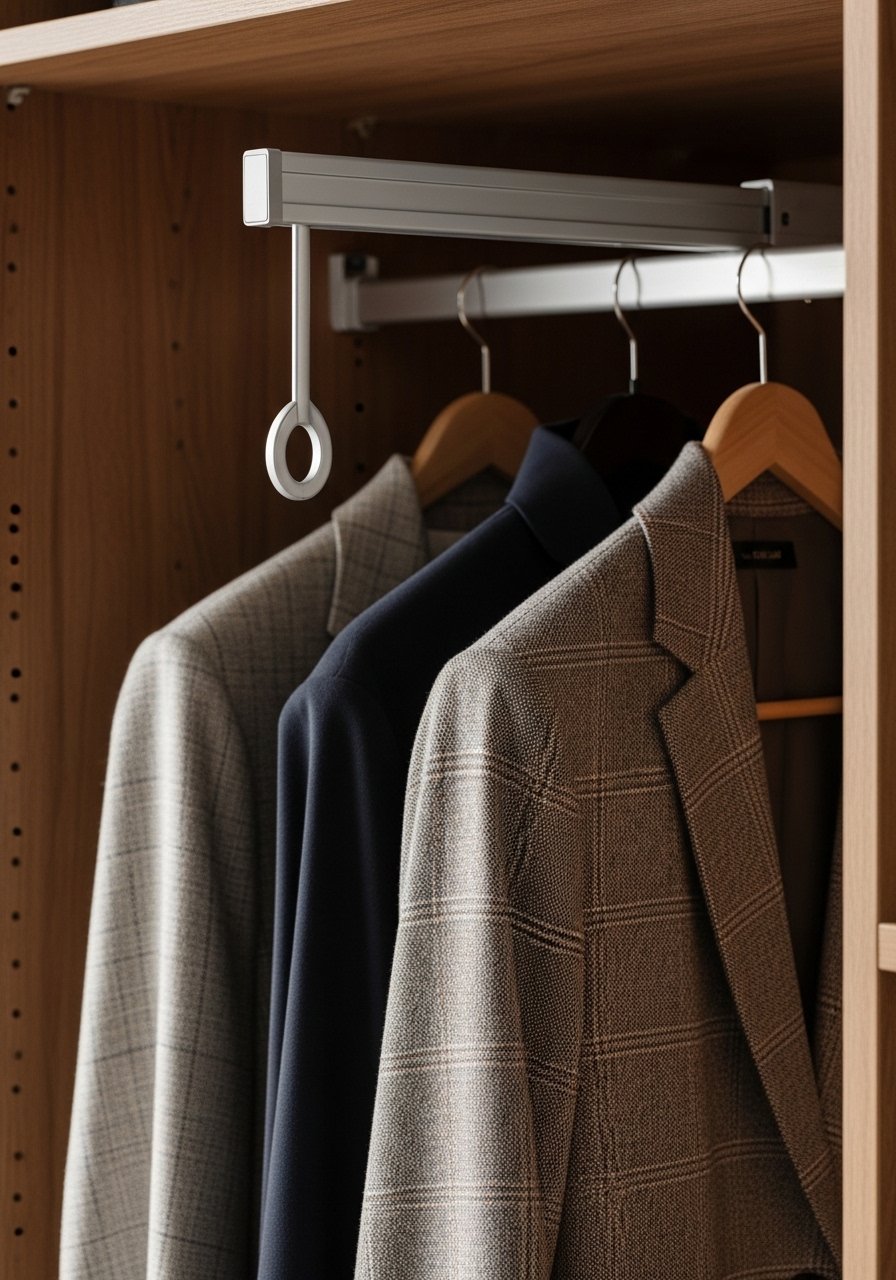
A valet rod is a tiny luxury that saves half an hour of outfit stress. I installed one near the door and it became my daily staging area. Common mistake is placing it too high to reach comfortably. Mount between 48 and 52 inches from the floor for easy access. A simple retractable valet rod is under $30 and pays for itself in decision time saved. This pairs wonderfully with the slim hanger trick earlier.
Magnetic Strip for Small Metal Accessories
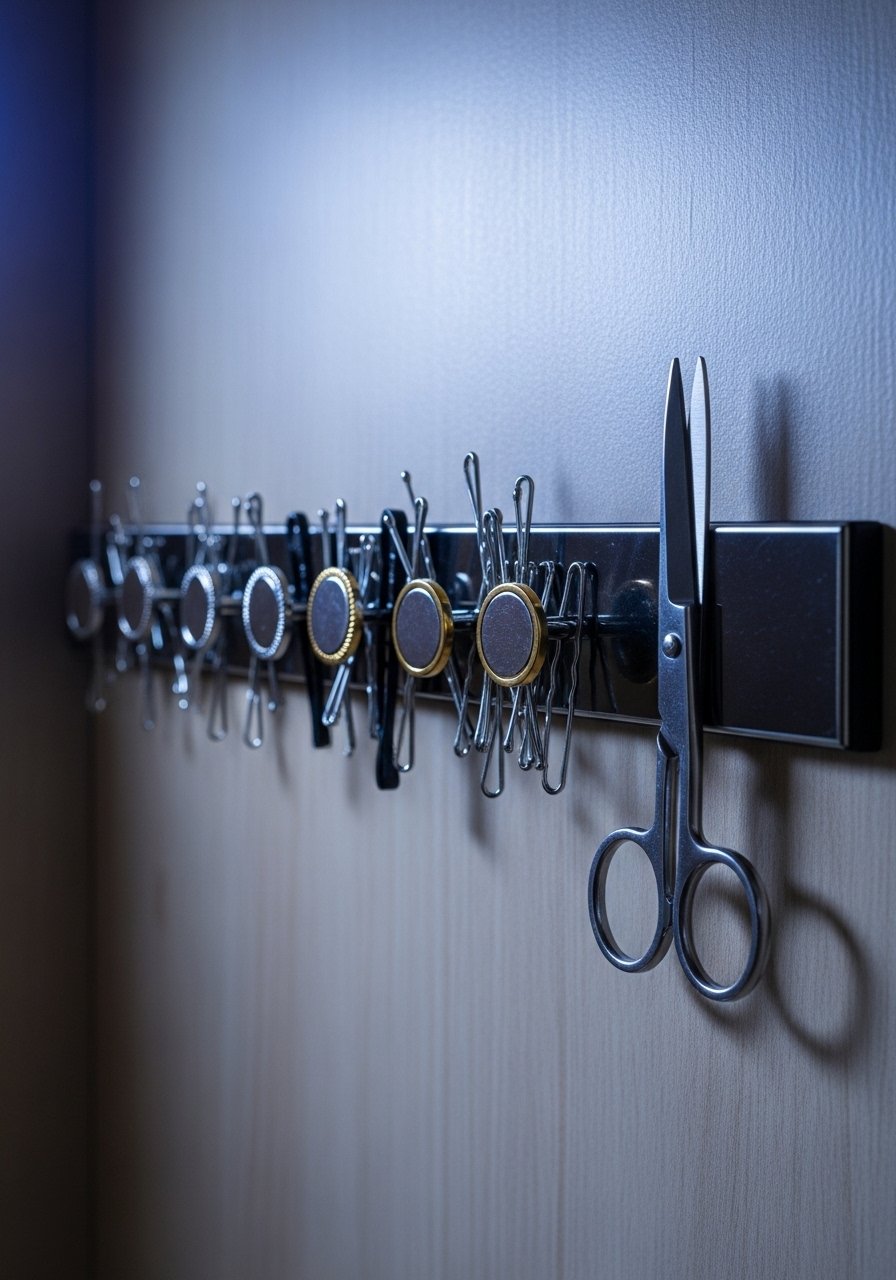
I mounted a magnetic strip to the inside of a door and my bobby pins stopped vanishing. It holds tiny metal items and even small tools neatly. The mistake is placing it where it will be brushed by coats. Put it behind a door panel or on the side wall 6 inches inside the opening. I use this strong magnetic strip and label zones above it for quick habits.
Labeled Overhead Totes for Off-Season Storage
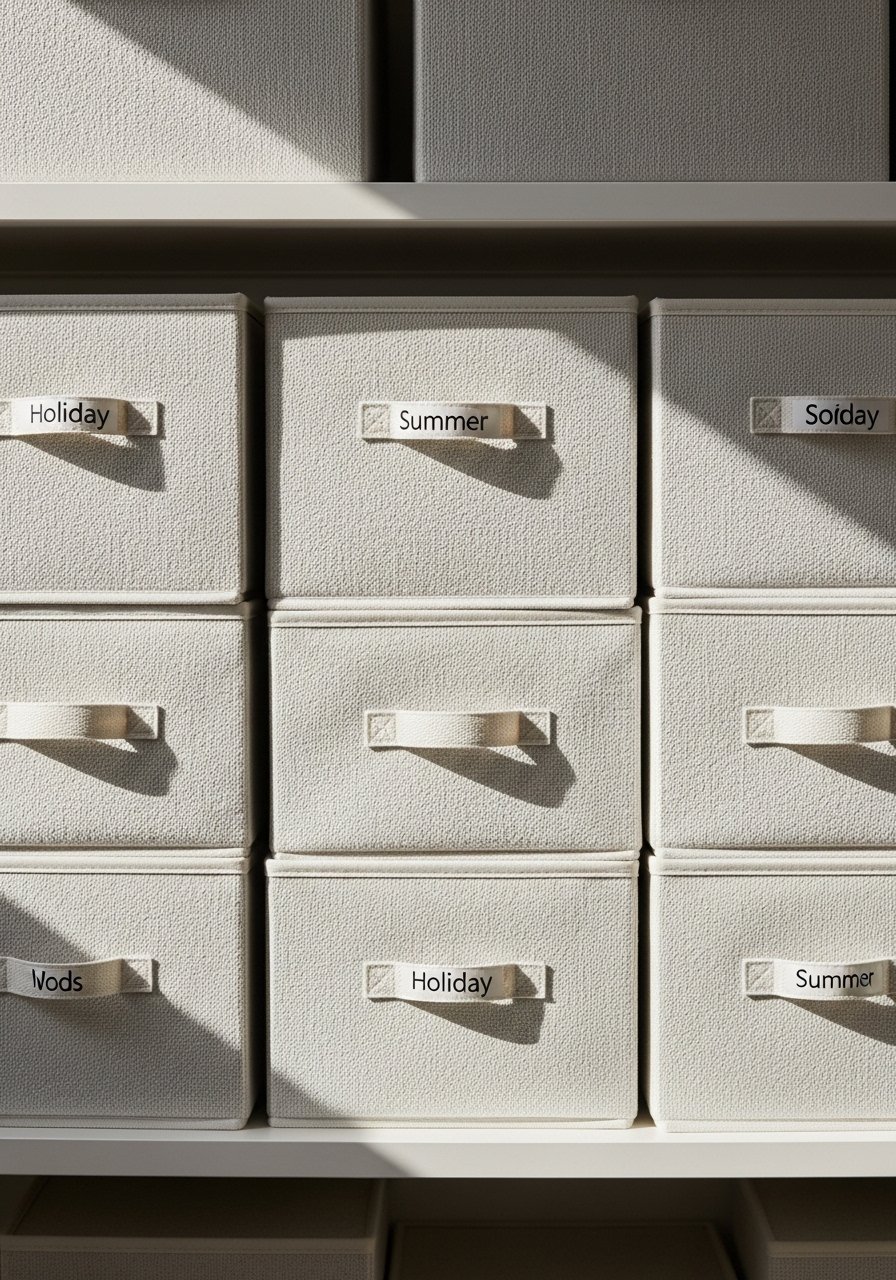
The top shelf is for things you use once every few months. I standardized my totes at 18x14x10 inches and labeled one side with a printed tag. People cram mismatched boxes that waste vertical space. Keeping totes uniform means one tote stacks on another without sliding. These fabric storage bins with lids are breathable and look tidy. Rotate them seasonally and keep a photo of contents on the inside lid.
Fold and Stack Method for Thick Sweaters
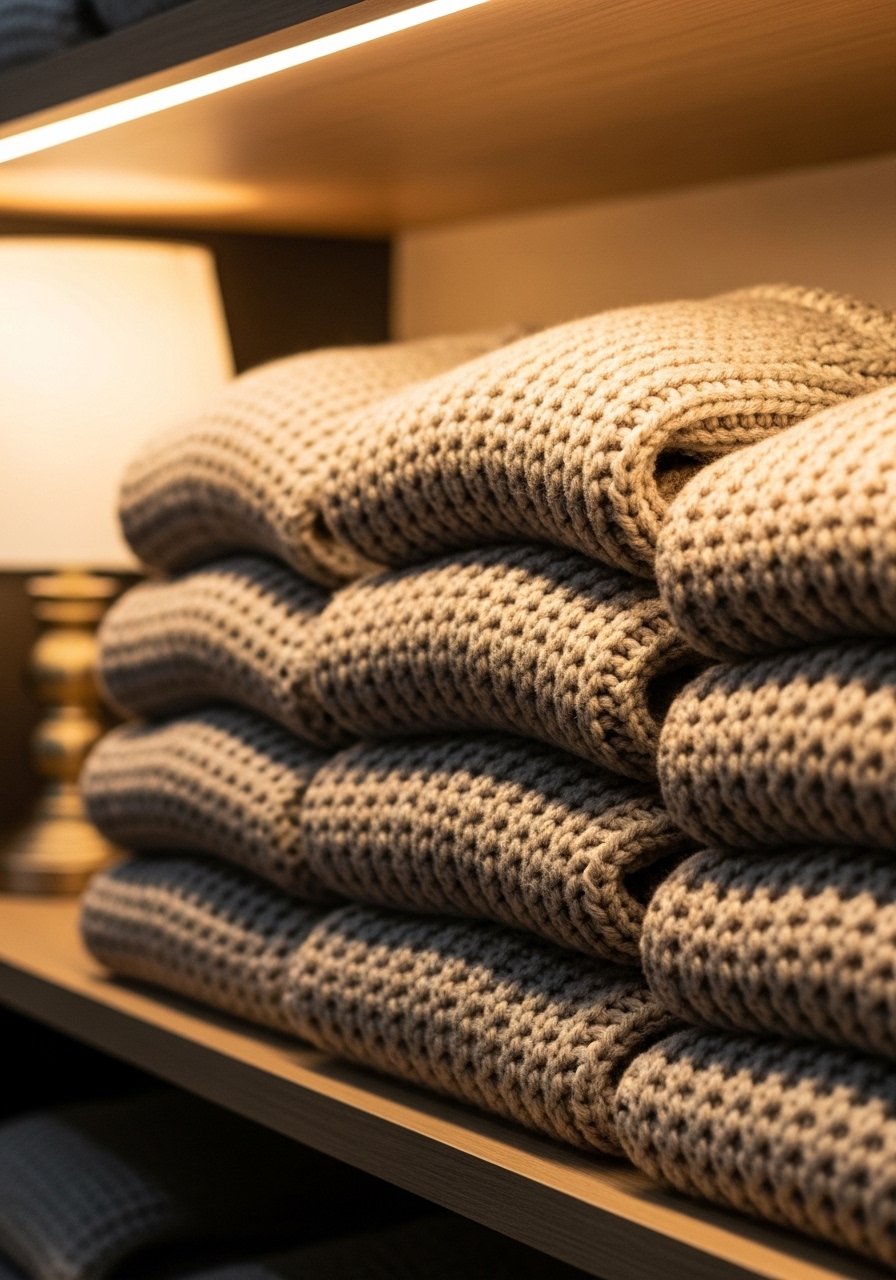
Sweaters sag when folded unevenly. I use a flat fold that keeps stacks around 3 to 3.5 inches tall so they do not lean. The common error is overstacking a shelf and creating a tumble. Limit stacks to three items high for stability. Try a set of shelf dividers to keep piles upright. A small detail others miss is leaving 1 inch of breathing room at the front so sweaters do not snag when you pull one out.
Bright LED Strip Lighting for Visibility and Flair
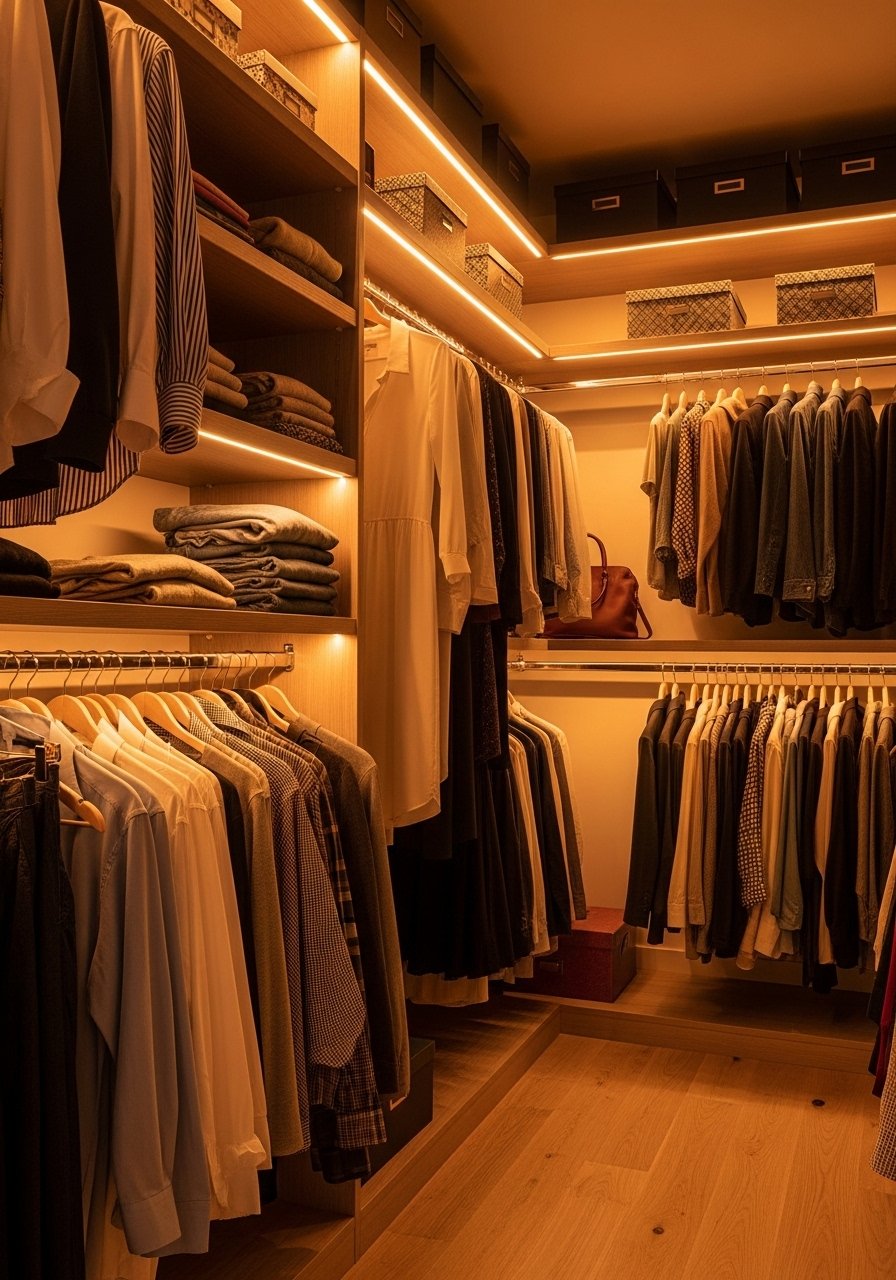
A dim closet hides what you own and turns mornings into a search mission. Adding an LED strip under each shelf makes colors and textures obvious and cuts outfit time. Measure the shelf edge and buy strips a foot longer than the run to allow for clean ends. A mistake is using harsh blue LEDs that wash out neutrals. I chose warm white LED strip lights and mounted them with adhesive clips for a clean look. This also makes the space feel larger and more usable.
Full-Length Slim Mirror to Make Small Closets Usable
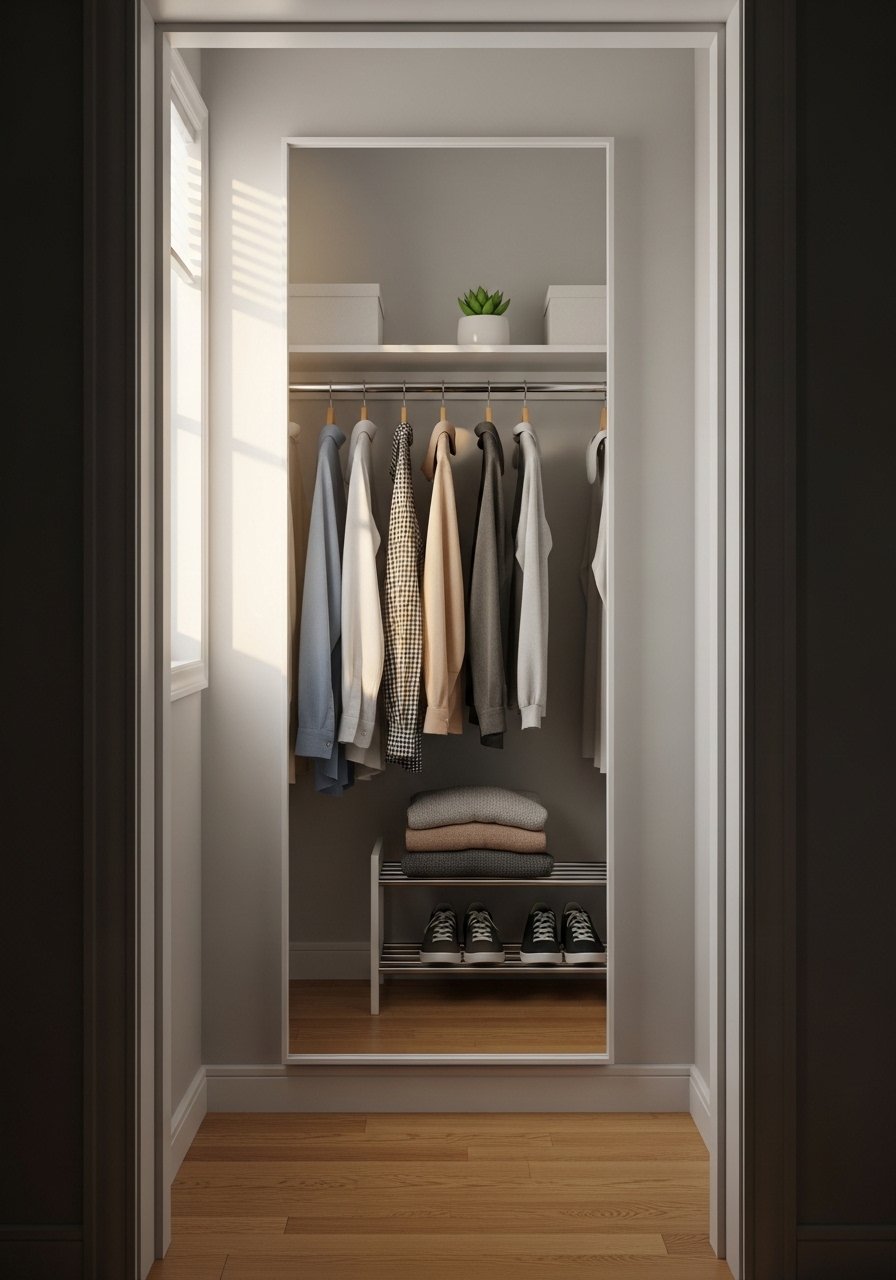
A mirror is functional and helps with dressing decisions. I mounted a slim 14-inch mirror on the inside of my closet door so I could check proportions without a separate wall mirror. People pick mirrors that are too small; aim for at least 48 inches tall when possible. A lightweight full-length mirror with anti-shatter backing makes it renter-friendly. The mirror also doubles as a light bouncer when paired with the LED strip idea from earlier.
Your Decor Shopping List
Textiles
- Honestly the best $40 I have spent. Slim velvet hangers, set of 20 in matte black for a cohesive closet line
- Chunky knit throw in cream (~$35-55). Use on a bedroom bench next to a closet for outfit staging
Storage
- Clear storage bins 16x12x10 inches (~$12 each) for seasonal rotation
- Fabric storage bins 18x14x10 inches with lids (~$20) for overhead shelves
Hardware
- Adjustable closet shelving kit for flexible spacing
- Drawer slide set 12-inch (~$18) for DIY pull-outs
Accessories
- Over-the-door shoe organizer clear pockets (~$25)
- Under-shelf wire baskets (~$15) for sweaters and hats
- Warm LED strip lights for closet (~$20)
Most of these have similar options at Target or HomeGoods if you prefer to see them in person.
Shopping Tips
White oak beats dark wood in 2026. Design feeds have shifted completely. These white oak floating shelves look current, not dated.
Grab slim velvet hangers for $20-30 per set. Swap them all at once and the closet immediately looks edited.
Curtains should puddle or kiss the floor, never hang halfway up. These 96-inch linen panels are right for standard 9-foot ceilings.
One tall plant beats five small ones. If you need greenery near your closet, try a faux fiddle leaf fig 6ft for visual impact.
Measure twice, buy once. Use a laser distance measure to verify shelf depths and rod heights before drilling.
Frequently Asked Questions
Q: How can I double my closet capacity without building new shelves?
A: Install a second hanging rod and use slim hangers. Aim for at least 38 inches between the two rods for shirts and 18 inches for pants. Tension double rods are a renter-friendly option if you do not want to drill.
Q: Will clear bins really help or just hide clutter?
A: Clear bins help if you label them and place frequently used items at the front. I also tape a small photo of the contents to the front edge so it is obvious at a glance. That extra step stops the "what’s in this box?" hesitation that creates clutter.
Q: Can I mix DIY pegboard with a cleaner modern closet look?
A: Yes, paint the pegboard the same color as the wall and use wooden pegs for a modern-cozy vibe. Keep the layout 3 inches between pegs and reserve 30 percent of the board for display to avoid visual overload.
Q: What size mirror works best inside a closet door?
A: Aim for at least 48 inches tall so you can see full outfits. A 14-inch width works in narrow doors. Choose a slim, lightweight frame and mount at eye level for the primary users.
Q: How do I stop sweaters from flopping off shelves?
A: Fold using a flat method and keep stacks at three items high. Add shelf dividers to maintain vertical edges and leave 1 inch of space at the shelf front so sweaters do not snag when pulled.
Q: I have a tiny reach-in. Which one change gives the biggest payoff?
A: Swap hangers for slim velvet ones and add under-shelf baskets. Those two moves reclaim vertical space and make the closet feel twice as big in day-to-day use.