
My friend walked into my apartment last month and said "this looks like a real adult lives here." Highest compliment I have ever received. A lot of what I changed were tiny desk details that saved space and stopped my office from looking like a paper pile with a lamp. These are the tricks I actually used, the ones that kept my tiny desk functional and not boring.
These ideas lean modern minimal and warm Scandinavian, mostly under $60 with a few $100 splurges. They work for true desks, console tables, bedroom corners, or any small workspace where every inch counts. Think vertical solutions, multipurpose pieces, and styling that hides clutter.
Minimalist Floating Shelf System For Small Desks

When my desk surface kept vanishing under notebooks, I installed two floating shelves 8 inches apart to stack the visual weight upward and free the desktop. The eye settles on the shelf trio ratio, so I keep one large item, two medium items, and three small things on each shelf. Works great in a modern or minimalist home office, about $20-60 depending on material. I like these white oak floating shelves for a current look. Most people hang shelves centered over the desk. Try offsetting them to the left or right so the monitor nestles under negative space. A common mistake is using identical objects on every shelf. Vary heights by at least 2 inches for instant depth.
Wall-Mounted Pegboard With Cozy Storage Pockets
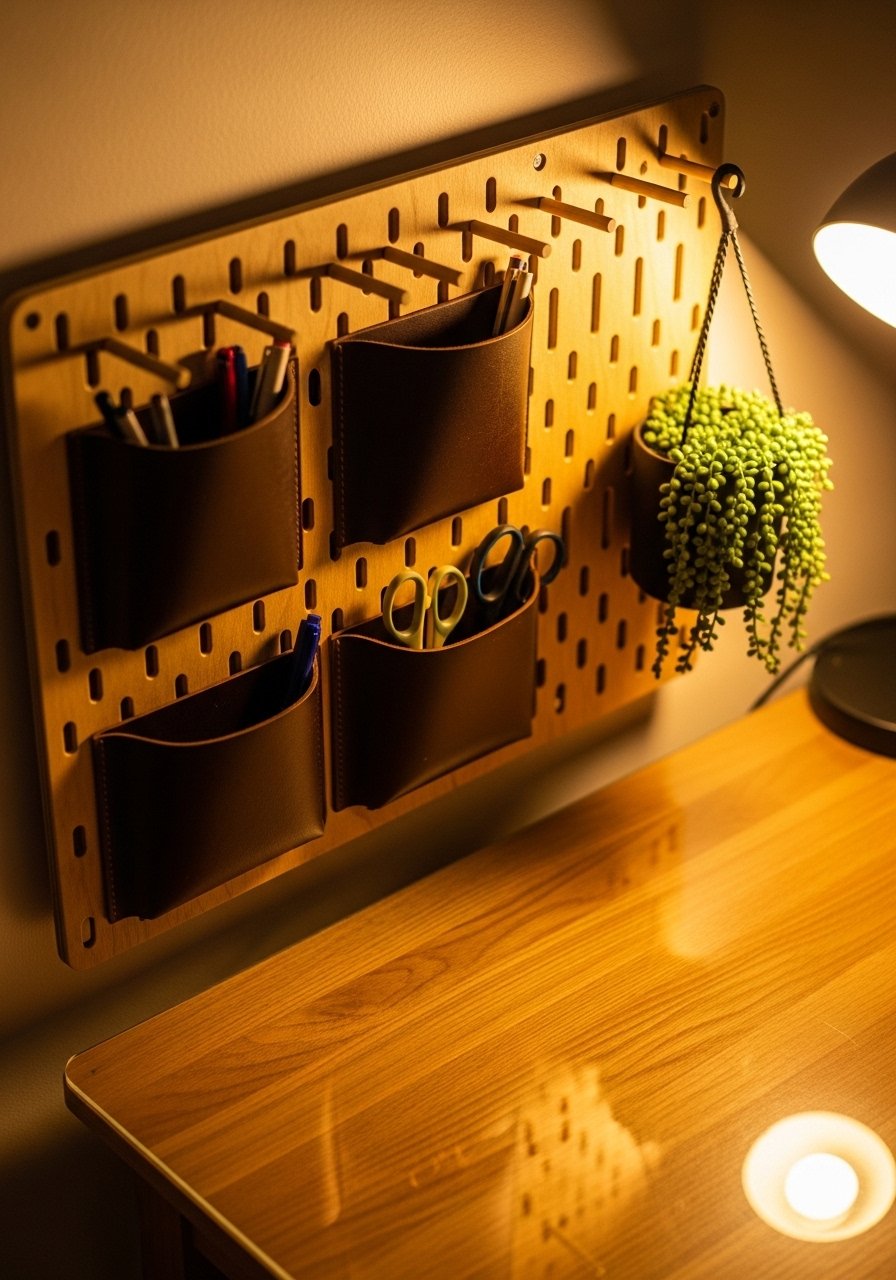
I switched from a junk drawer to a pegboard and it was the biggest sanity saver. Pegboards keep tools vertical and visible so you stop searching through drawers. Use leather or canvas pockets for pens, a small wire basket for notebooks, and a metal hook for headphones. Budget is typically $25-70 depending on the board size. I linked a natural wood pegboard kit that comes with pegs and pockets. People often overcrowd pegboards. Leave one row empty for breathing room. A useful detail: place the most-used items within 12 inches of the seated position for ergonomics.
Slim Monitor Riser With Hidden Drawer For Clutter

Raising the monitor by 3 to 4 inches gives you under-riser storage and a better neck angle. I use a riser with a shallow drawer to stash chargers, sticky notes, and pens. It makes everything look purposeful not piled. Expect $25-50 for a sturdy wood or metal option. Try this bamboo monitor riser with drawer. The mistake I made at first was getting a riser that was too tall. Aim for the top of your screen to sit at eye level when seated. Pair this with a cable clip from the drawer to the back of the monitor for a clean silhouette.
Magnetic Tool Strip For Desk Supplies And Notes

A magnetic strip is the lazy genius hack I use for scissors, metal clips, and even a small ruler. It frees drawer space and keeps metal tools from disappearing. Budget under $15 for a heavy-duty magnetic bar. I like this heavy duty magnetic tool strip. Avoid the urge to line it with every metal thing you own. The rule I follow is five items max in a single 12-inch strip. One detail most DIY articles skip, measure the strip placement so it sits 6 to 8 inches above the desk surface for easy reach without bumping your elbow.
Fold-Down Wall Desk For Super Tight Corners

When floor space is the enemy, a fold-down wall desk becomes a tiny office that disappears. I installed one in a narrow hallway and it holds a laptop, lamp, and a slim organizer. Cost is usually $60-200 depending on hardware and surface. This fold-down wall desk is sturdy and has a small shelf. People assume these are for guest nooks only. They work well in bedrooms and kitchens too. A practical tip, reinforce the bottom hinge with two studs and keep the workspace depth at 12 to 18 inches so it does not feel cramped.
Slim Vertical File Rack For Papers And Laptops

Paper clutter felt endless until I started storing folders vertically, like a small magazine rack for paperwork. A vertical file rack takes up less than 6 inches of desk depth and keeps active projects visible. Good for study desks or shared apartment workstations. Expect $12-30. I use this steel vertical file organizer. The mistake is stacking files flat in a drawer and forgetting them. A small rule I use, label each slot and limit to three active folders at a time. That keeps the surface from filling up again.
Under-Shelf LED Light Strip For Task Illumination

Good lighting makes things look intentional and saves space because you do not need a big table lamp. I mounted an LED strip under a shelf to wash the desk with warm light. It costs $10-30 and most kits come with adhesive and remote dimming. I use this warm white LED light strip kit. A common mistake is placing the strip at the front edge, which creates glare on screens. Mount it 2 to 3 inches back and point it slightly down. Small detail people miss, choose 2700K to 3000K for a warm tone that matches lamps in the rest of the room.
Floating Desk Organizer For Pens And Tech

I hate desktop clutter, so I attached a slim floating organizer to the desk side for pens, sticky notes, and my phone. It keeps essentials reachable without sacrificing surface space. These cost $12-35 depending on material. This desk-mounted organizer tray is an adhesive option that held for months. The error I see is using one large organizer that makes the corner look heavy. Use three small compartments instead and keep the tallest object under 6 inches so your line of sight stays open when you sit.
Tiered Corner Shelf For Plants And Personal Items

Corners are wasted real estate. A tiered corner shelf collects plants, a small lamp, and a few books without invading the desk. I use a three-tier shelf that is only 10 inches deep but holds a surprising amount. Budget $30-80 depending on material and finish. Try this three-tier corner shelf. Everyone buys five small succulents. One single 6-foot fiddle leaf fig has ten times the visual impact. A mistake is putting plants directly behind the monitor; instead place them to the side so light reaches the leaves and your screen stays glare-free.
Picture Ledges For Rotating Art And Photo Displays

Picture ledges solve the commitment problem with frames. I swap prints seasonally and lean them at varying depths for a layered look. Ledges keep the wall nails to a minimum and let you stack a frame and a small book or plant. Budget $15-40 for a pair. I like these narrow picture ledges. A typical mistake is hanging frames at the exact top of the monitor. Hang ledges 6 to 10 inches above the screen so your art floats, not competes. For balance, use the rule of three on each ledge.
Cable Management Raceway That Doubles As Trim

Visible cords make a tidy desk feel amateur. I installed a cable raceway along the underside of the desk and ran a charging hub into it. It looks like intentional trim rather than an afterthought. Raceways are $10-25 and save hours of untangling. This adhesive cable raceway kit matches baseboard color and hides the mess. Mistake people make is letting the raceway sag. Use two small screws at the ends for security. A precise detail, measure your longest cable and add 6 inches to avoid tension at connectors.
Small Desk Lamp With Clamp For Maximum Surface

Table lamps take real estate. A clamp lamp gives you targeted task light without a base. I clamp mine to the shelf above the monitor and angle it when I need extra brightness. You can find good clamp lamps for $20-45. Try this adjustable clamp desk lamp. The common error is buying a lamp that casts harsh blue light. Pick a lamp with a 2700K to 3000K bulb and adjustable arm. Also test clamp padding thickness; some clamps slip on thin veneer desks.
DIY Cork Pinboard With Fabric Cover For Mood Boards

I made a cork mood board covered in linen to tuck inspiration up and off the desk. It holds receipts, sketches, and a tiny calendar so the desktop stays blank. This is a $10-25 project if you use a cork sheet and staple fabric. I use a 2×3 foot size and hang it landscape for more horizontal pin spread. The mistake is packing pins too close together. Leave at least 3 inches between pinned clusters so each idea reads. A pro tip, use metal push clips for heavier items so they do not rip the cork.
Foldable Laptop Stand That Doubles As Book Display

I travel between kitchen table and desk, so a foldable laptop stand saved space and doubled as a book prop when closed. It tucks into a drawer and pops open instantly when I need elevation. Expect $15-40. I like this portable wooden laptop stand. A mistake is leaving the stand elevated all day which reduces usable desk depth. Fold it flat when you need the whole surface. One little detail, choose a stand with a 6 to 7 degree angle to keep the keyboard comfortable on laps and desks.
Pegboard Drawer Insert For Small Parts And Jewelry

I cut a small pegboard panel to fit a shallow drawer and suddenly everything had a place. Washi tape, cable ties, and spare batteries store neatly and do not roll around. This is a $5-15 modification that feels custom. I used a 12 by 6 inch panel and wood pegs. The mistake is leaving the drawer loose; add non-slip drawer liner to keep things from shifting when the drawer opens. A helpful detail, arrange items by frequency of use left to right for right-handed or right to left for left-handed users.
Your Decor Shopping List
Textiles
- Honest favorite for softness, I use a chunky knit throw in cream (~$35-55). Drape over the back of a chair for texture.
- For a desk chair swap, 22-inch linen seat cushion in muted gray, down-filled look.
Wall Decor
- Narrow picture ledges, set of 2 (~$18-35). Great for rotating prints.
- Fabric-covered cork sheet 2×3 ft (~$10-20). Staple with linen for polish.
Lighting
- Adjustable clamp desk lamp (~$20-45).
- Warm white LED light strip kit (~$12-30).
Organization & Storage
- Bamboo monitor riser with drawer (~$25-60).
- Steel vertical file organizer (~$12-25).
- Adhesive cable raceway kit (~$10-20).
Plants & Greenery
- Artificial fiddle leaf fig 6ft (~$60-120) for height with low maintenance. Similar at HomeGoods.
Budget Finds
- Magnetic tool strip heavy duty (~$10-15).
- Wood pegboard kit with pockets (~$25-50).
Shopping Tips
White oak beats dark wood in 2026. Design feeds have shifted completely. These white oak floating shelves look current, not dated.
Grab these velvet pillow covers for $12 each. Swap them every season and a tiny room update feels fresh.
Curtains should puddle or kiss the floor, never hang halfway up. Most people hang curtains right at the window frame. That is why their rooms look shorter than they are. These 96-inch linen panels are the right call for standard 9-foot ceilings.
Everyone buys five small succulents. One single 6-foot fiddle leaf fig has ten times the visual impact.
Buy a small set of brass picture ledges rather than multiple frames. A single ledge lets you rotate art without new holes. Brass picture ledges are surprisingly affordable and feel elevated.
Frequently Asked Questions
Q: What size floating shelf works above a small desk?
A: Aim for a shelf that is 8 to 12 inches deep and about two-thirds the width of your desk. That keeps proportions balanced and leaves space for a small lamp or plant on the desktop.
Q: Can I mix wood tones and still keep the desk cohesive?
A: Yes, mix two wood tones and one metal to anchor the look. For example, white oak shelves, a bamboo riser, and brass ledges read intentional. Avoid more than three finishes in one small area.
Q: How do I hide chargers and power bricks without a lot of furniture?
A: Use a compact charging hub tucked into a riser drawer and run the cables through an adhesive raceway. Measure your longest cable and add 6 inches so plugs are not under strain.
Q: Is faux greenery okay for a low-light desk?
A: Absolutely. A tall faux plant gives height without the care. If you want some real plants, go for pothos or snake plants since they tolerate neglect.
Q: How do I decide between a clamp lamp and a table lamp?
A: If surface area is tight, choose a clamp lamp. If you want atmosphere and have at least 12 inches of depth, a small table lamp provides softer light and texture.
Q: What common mistake sabotages small desk styling?
A: Lining everything up at the same height. Mix heights in a 3:2:1 ratio, leave negative space, and keep the most-used items within a 12-inch reach.