
My living room had nice furniture and decent lighting but it still felt like a waiting room. Took me embarrassingly long to figure out it was missing texture. Every surface was smooth, every color was flat, and nothing invited you to actually sit down. I used the same thinking in my bedroom and it took one faux fur throw, two lamps, and swapping a flat rug for a textured one to make it feel finished.
These ideas lean toward inky, tactile bedrooms with a mix of gothic and modern touches. Most builds land in the $50 to $350 range with a couple splurges around $400. They work for master bedrooms, guest rooms, and compact city bedrooms under 12 by 12.
Matte Black Bed with Textured Rug Anchor
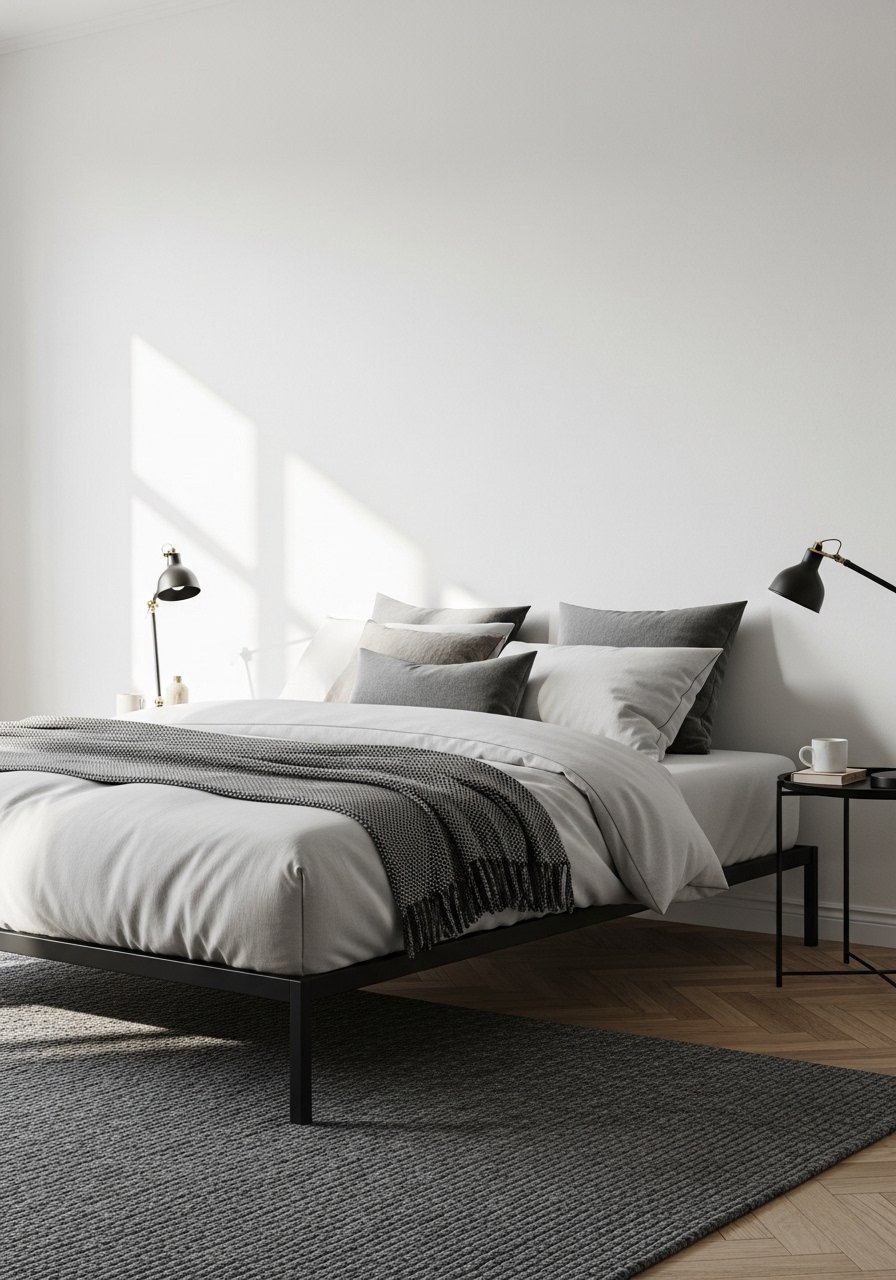
The matte black bed gives a clear backbone so darker walls do not swallow the room. What makes it work is the rug size. For a queen bed, make the rug at least 8×10 so you get 18 to 24 inches of rug on each side and the front legs sit on it. I like pairing a matte frame with a wool or low-pile textured rug to hit the rule of three to five textures, for example wool rug, linen sheets, velvet pillow, faux fur throw. A common mistake is choosing a tiny runner that leaves the bed floating. Try charcoal washable wool rug for a practical option you actually live on. In my place the rug stopped the "floating furniture" look in one afternoon.
Velvet Drapes Over Tufted Headboard Romantic
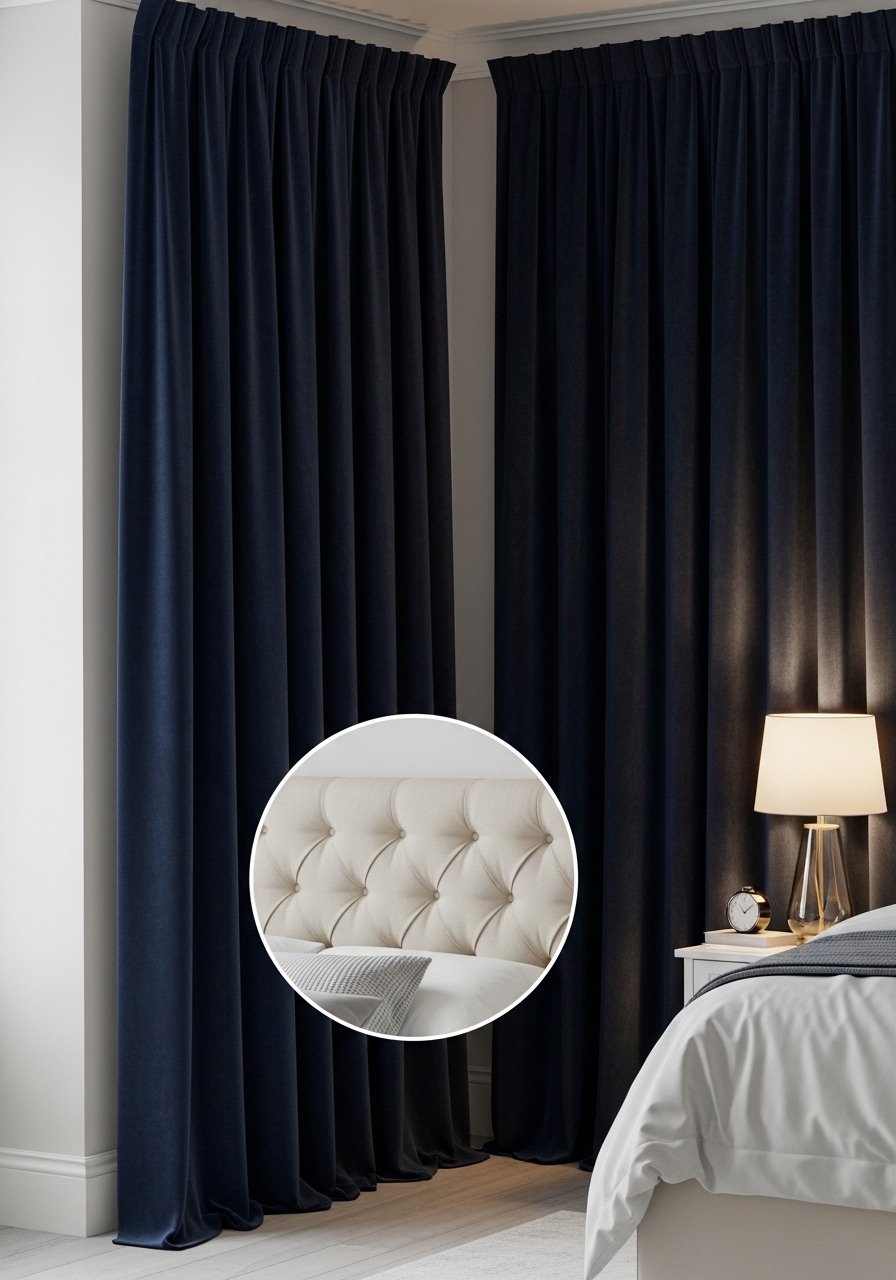
Most people hang curtains inside the window frame and shorten their ceilings. Hang velvet panels high and wide instead, mounting the rod 6 to 12 inches above the window and letting 96 to 108 inch panels kiss or puddle the floor. I used blackout velvet panels to make the room feel like a sleep cave without feeling cold. Pair with a cream tufted headboard so the dark drapes read intentional, not oppressive. A mistake I see is buying thin polyester that shows seams and reads cheap. These navy velvet blackout panels are lined and heavy enough to hang right. This combo works great in master bedrooms and renters can use tension rods for a no-drill option.
Travertine Bench Grounds the Bed with Organic Calm
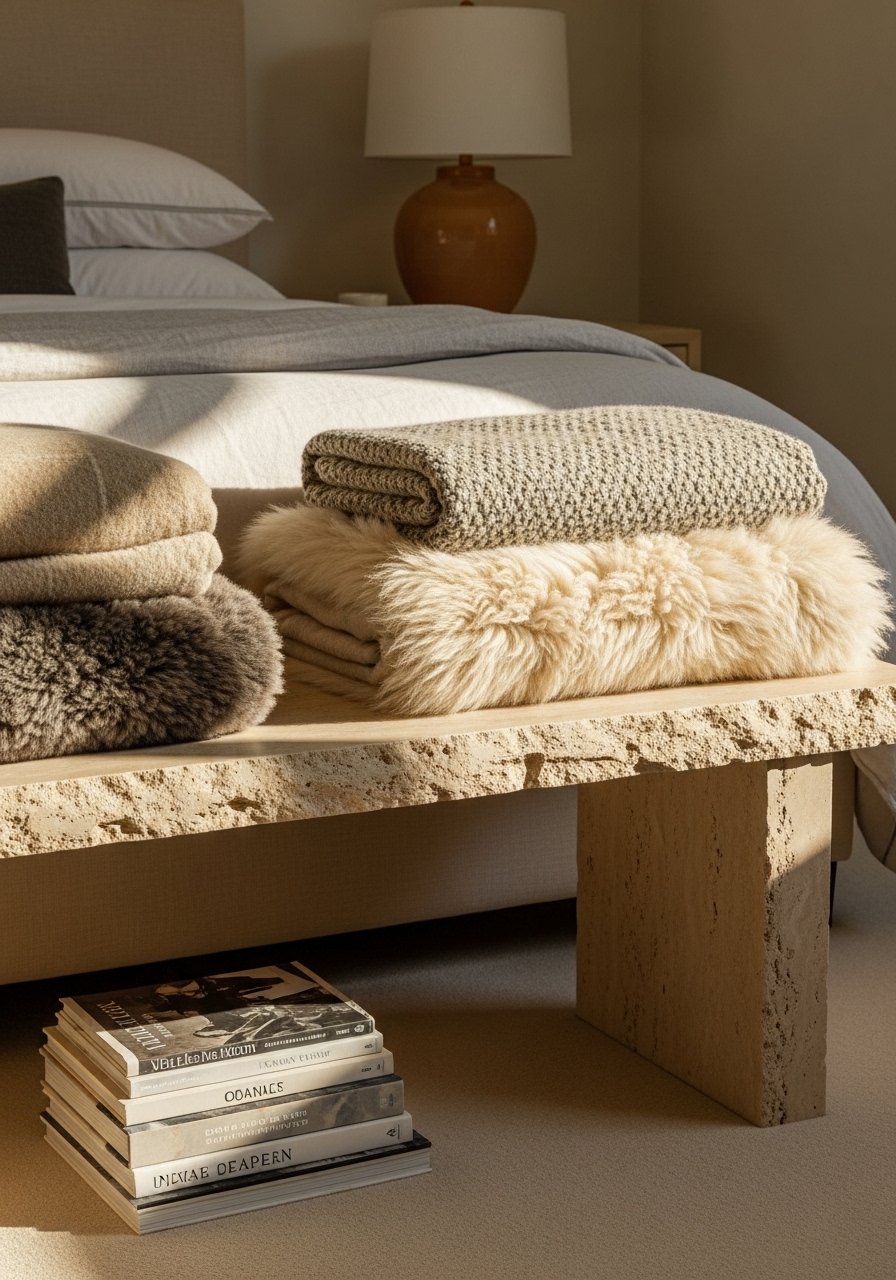
Adding stone at the foot of the bed tethers a dark palette with a calm, natural edge. Travertine or raw stone introduces a cool neutral that breaks up black or inky walls without adding pattern. In a small room I swapped a bulky nightstand for a slim travertine bench and instantly had a weight anchor that doubled as storage for blankets. Budget is $150 to $300 depending on size. Common mistake is choosing a bench that is too tall. Keep the bench height within two inches of the mattress base so it reads intentional. I grabbed a raw-edge travertine bench and it stopped the room from looking all-surface, all-dark.
Sculptural Pendant Over Bed as Room Jewelry
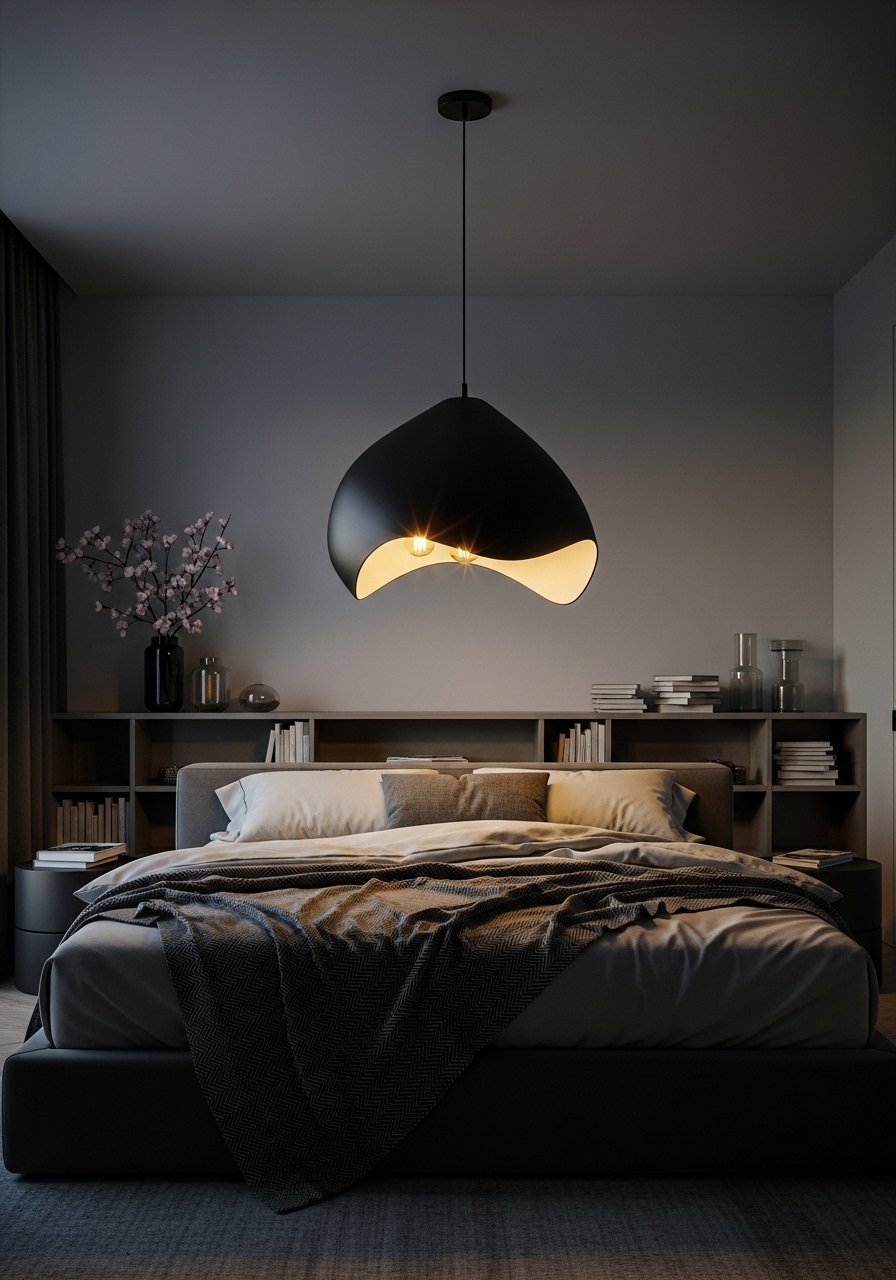
A pendant over the bed gives the space a focal point the way a necklace completes an outfit. Aim for a balance of 60 percent warm ambient light from lamps and sconces and 40 percent sculptural statement pieces like a pendant. I swapped an overhead flush mount for a plug-in pendant and the room suddenly had personality without becoming a cave. A common error is picking a pendant that is too large for a small room. Keep the fixture scaled to the bed width and use warm bulbs only. If you want a renter-friendly fix try matte black plug-in pendant light so you avoid hard wiring. Over half say swapping lights turns dark dumps into retreats, and I can vouch for that.
Wrought Iron Sconces on Dark Walls for Ambient Glow
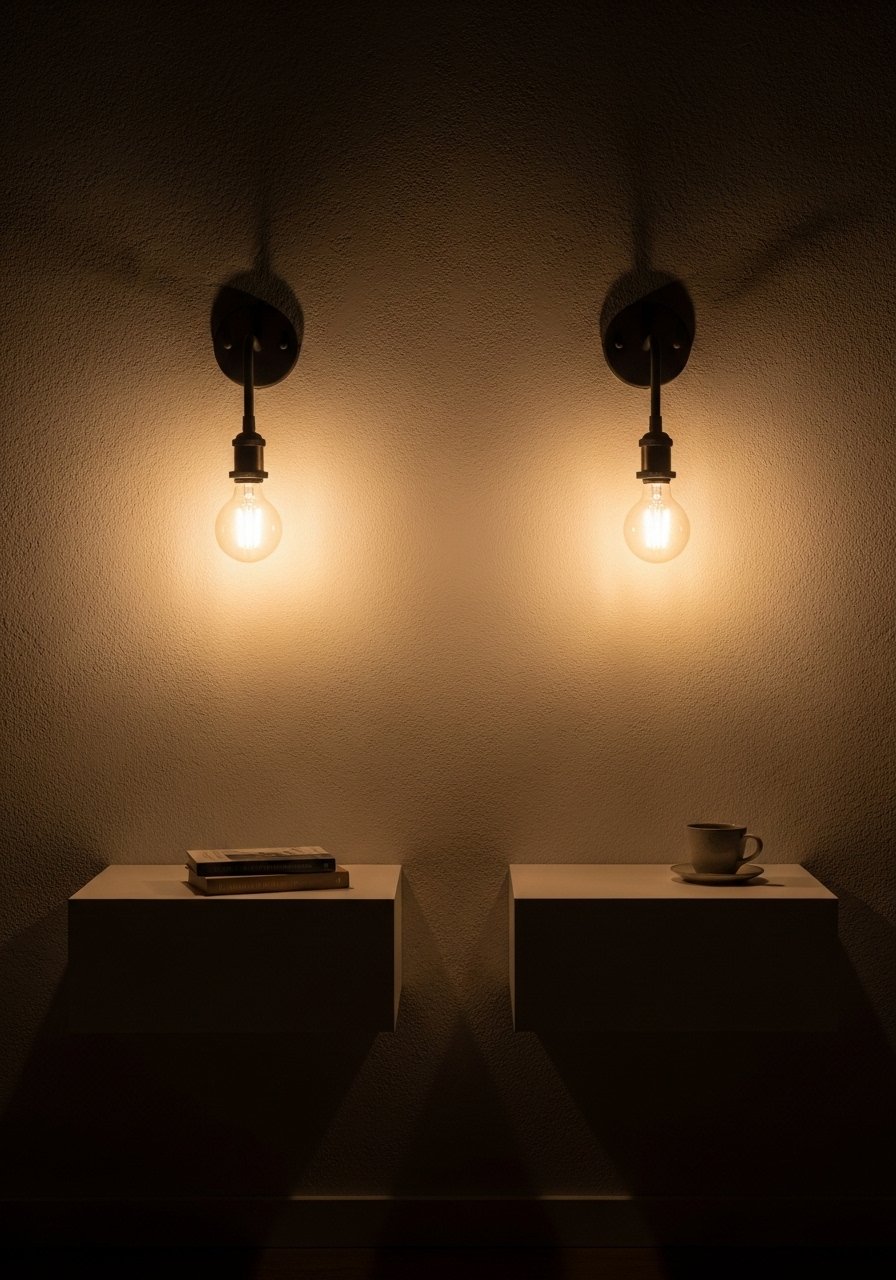
Wall sconces cut down clutter on bedside tables and add sculptural lines on dark walls. Wrought iron reads warm and aged next to velvet and leather. My rule is to place sconces so the light hits your pillow at reading height and use warm bulbs only. A common mistake is installing sconces too high. Try mounting so the center of the light sits 48 to 54 inches from the floor for most beds. For renters, opt for plug-in or command hook-friendly sconces instead of hardwired versions. I used wrought iron plug-in sconces and they instantly made the bed area feel intentional rather than an afterthought.
Light Bedding with Dark Faux Fur Throw for Contrast
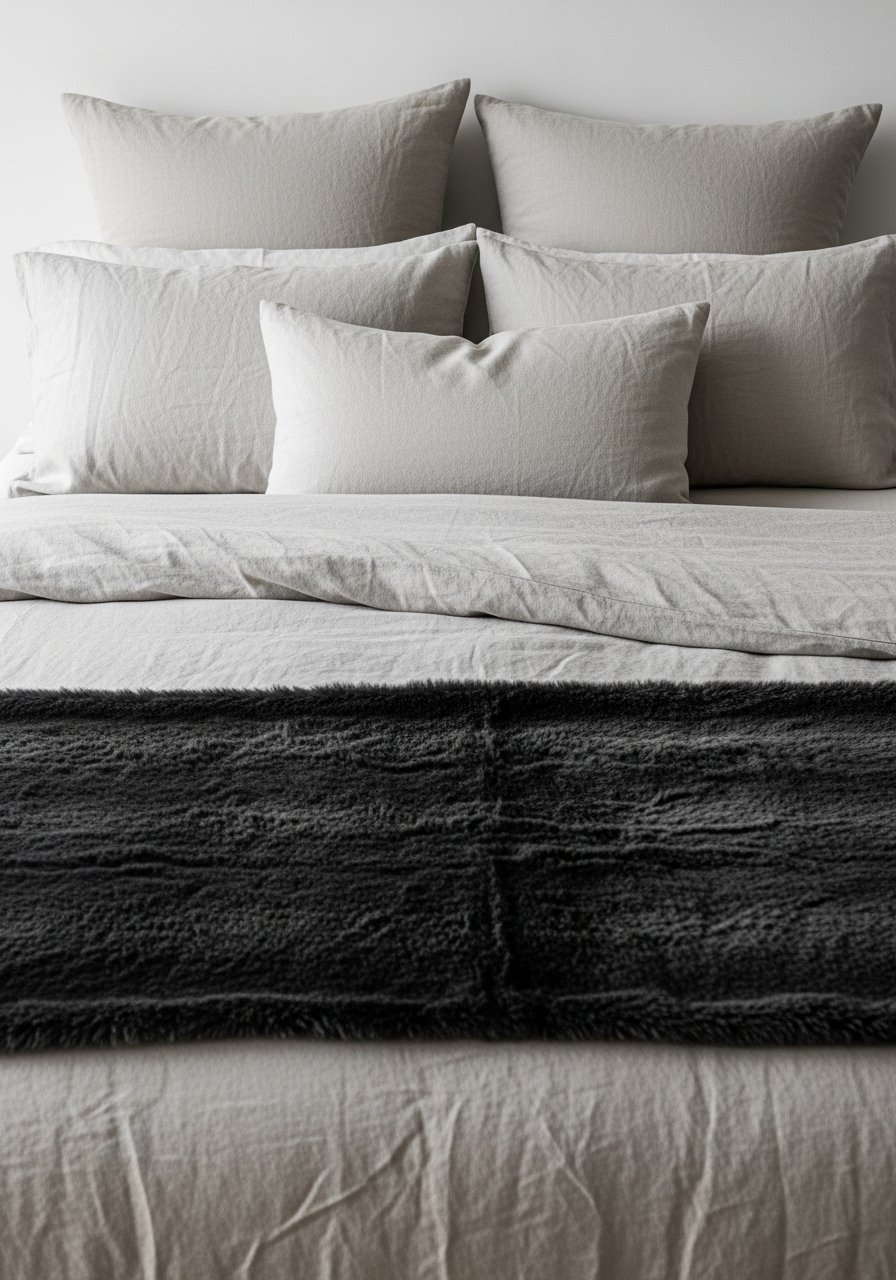
A mistake is making everything dark and then wondering why the room feels heavy. Swap in light linen sheets and a white duvet, then add one dark faux fur throw for contrast. The bedding stack matters here; use three pillows in the back, two decorative pillows in front, and one lumbar to create that layered look without looking staged. The light-on-dark ratio should be around 70 percent dark to 30 percent light across walls, textiles, and rugs so the room breathes. Try 22-inch down-filled linen pillow covers in off-white and a charcoal faux fur throw. People drop around $700 when they go all-in on a bedroom glow-up, and starting with the bedding is my most budget-efficient win.
Ornate Mirror Opposite Window to Bounce Light
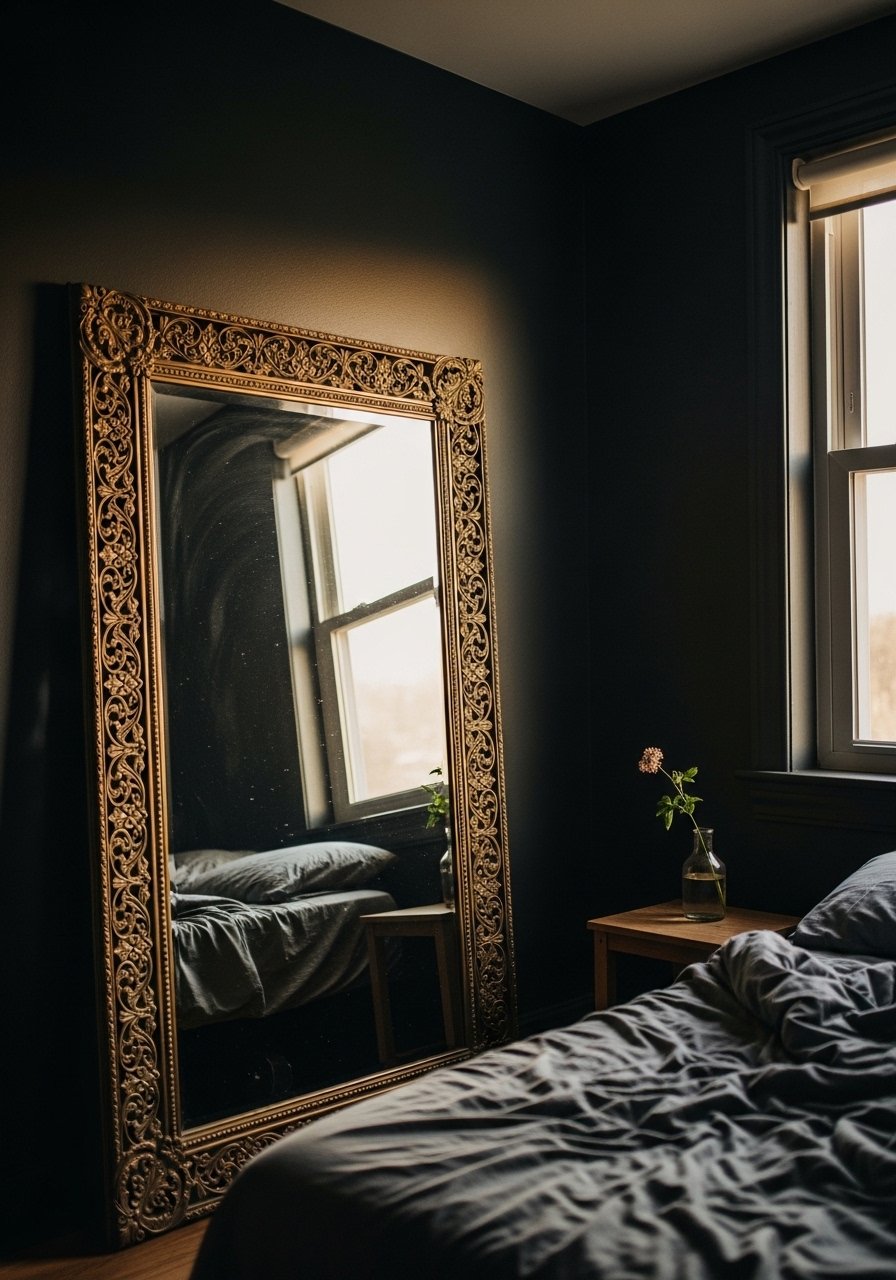
Mirrors are not just for making a room look bigger. Placing one opposite a window doubles the daylight you already have without introducing harsh glare. I recommend a frame 24 to 36 inches wide for a queen room so it reads like decor rather than a utility mirror. A common oversight is hanging a mirror too high. Leaning a large mirror against the wall adds casual texture and is renter-friendly. I love an aged brass frame because mixed metals are trendy again. This aged brass mirror is the sort that returns light and adds personality. Most folks say dark bedrooms actually help them crash harder, and a mirror is how you keep that sleep help from feeling like a cave.
Leather Chair with Velvet Pillow for a Reading Corner
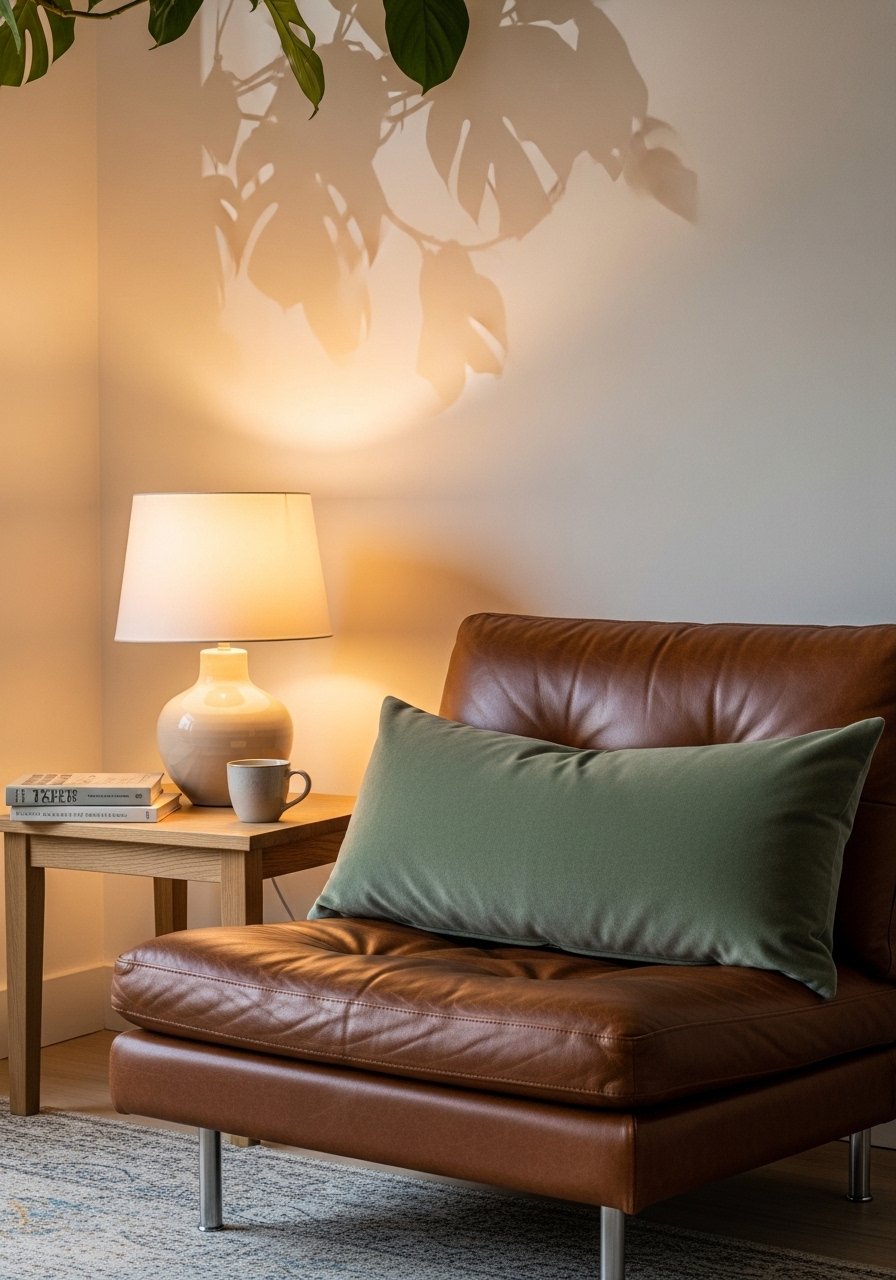
A leather chair brings a lived-in, tactile counterpoint to velvet, wool, and faux fur. I prefer a low slipper chair so it never competes with the bed visually. Add a 20 to 24 inch velvet pillow for a soft contrast and keep a small raw wood side table nearby to hold a lamp or tea. The real trick most guides miss is scale; choose a chair with a seat height lower than your mattress so it does not feel like competing seating. Compact leather slipper chairs fit small bedrooms and are surprisingly comfortable. A single plant nearby multiplies the style impact without clutter.
Distressed Metal Wall Panels for Dimension Without Wallpaper
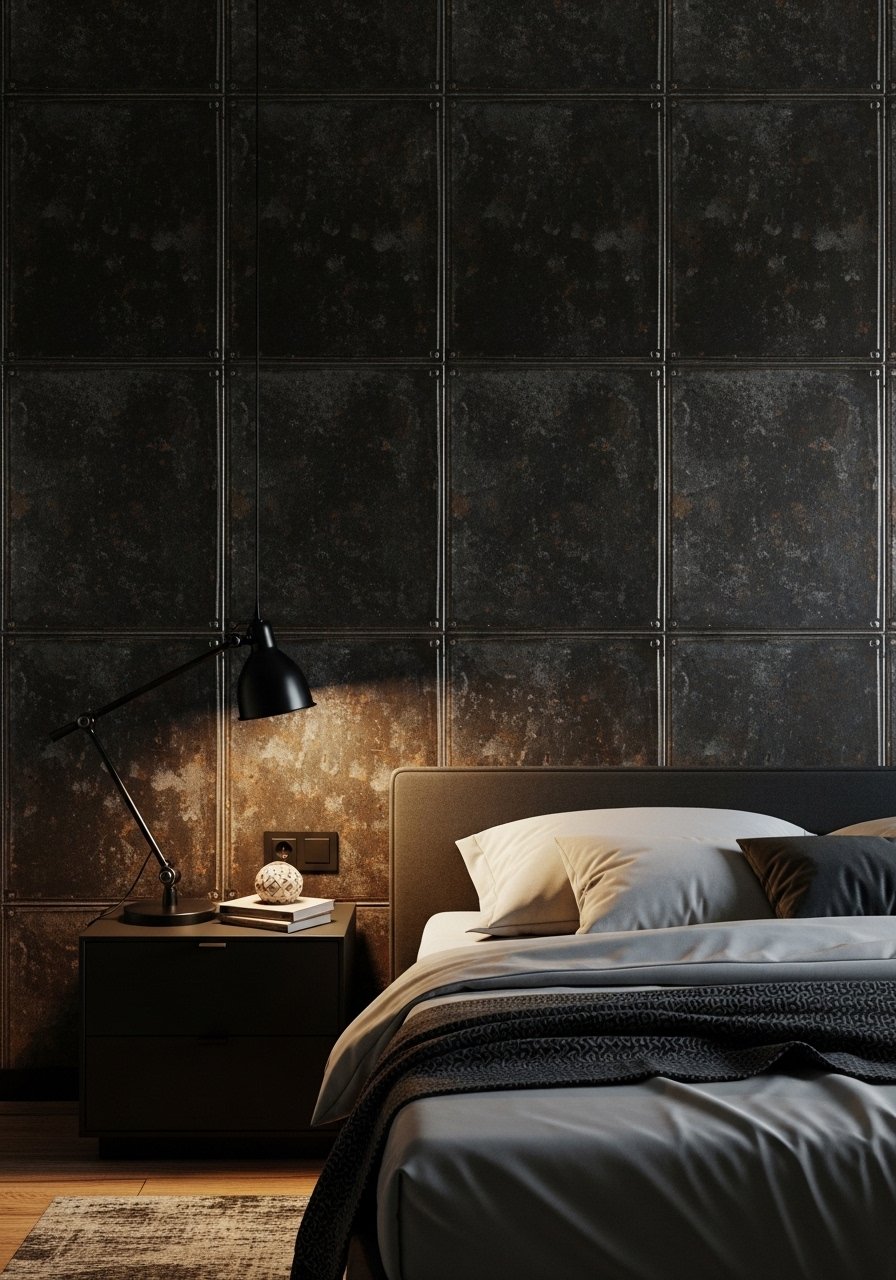
If you want wall texture but are renting, peel-and-stick metal panels give you architectural grit without commitment. Use them on 30 percent of a wall area to follow the 70/30 wall treatment ratio so the room keeps depth without turning into a factory set. Many people go straight to wallpaper and then regret it when it peels or clashes with curtains. These panels are easy to cut, they accept screw-mounted sconces when you need to, and they read custom. I used matte black peel-and-stick metal panels and avoided a full room reno. One detail others skip is testing a 12 by 12 inch sample in real light before doing the whole wall.
Your Decor Shopping List
- Honestly the best $40 I have spent. Charcoal faux fur throw (~$40). Drape it at the foot of the bed.
- For the curtain trick, you need length. Velvet blackout panels 96-inch (~$60 per panel). Hang high and wide.
- Anchor with an 8×10 rug. Charcoal wool rug 8×10 (~$150). Front legs on the rug is the rule.
- For light bounce, get this. Aged brass mirror 28×36 (~$180). Lean it opposite a window.
- Practical bedside glow. Wrought iron plug-in sconce pair (~$70). No wiring required.
- Small reading corner starter. Compact leather slipper chair (
$250) and sage velvet pillow cover 20-inch ($18). - Texture panel sample. Peel-and-stick metal wall panel (~$30 each). Test a sample first.
- Budget-friendly pendant. Matte black plug-in pendant (~$50). Try it over the bed.
Shopping Tips
- White oak beats dark wood in 2026. Design feeds have shifted completely. These white oak floating shelves look current, not dated.
- Grab velvet pillow covers for $12 each. Swap them every few months and the whole room feels different.
- Curtains should puddle or kiss the floor, never hang halfway up. 96-inch linen panels are the right choice for 9-foot ceilings.
- One tall plant beats five small succulents. 6-foot faux fiddle leaf fig gives height without maintenance.
- When you pick bulbs, go warm and layered. Warm LED filament bulbs 2700K will help you hit the 60 percent ambient to 40 percent statement light balance.
Frequently Asked Questions
Q: How do I stop dark walls from feeling like a cave?
A: Layer texture and light. Use at least three different textures and add a large mirror opposite a window to bounce light. Swap one dark duvet for light linen and add a dark throw for contrast.
Q: What rug size do I actually need for a queen bed?
A: Go 8×10 for a queen so you get 18 to 24 inches of rug on each side. Front legs of the bed should sit on the rug to anchor the layout.
Q: Can I do these ideas in a rental without painting?
A: Yes. Use peel-and-stick panels for texture, plug-in sconces and pendants for light, and lean mirrors or art instead of committing to paint. Command hooks and tension rods will be your friends.
Q: Should I match metals or mix them in a dark bedroom?
A: Mix them. Aged brass mirror frames, wrought iron lamps, and a matte black bed look intentional together. Mixing metals avoids the flat "one finish" look.
Q: What is the quickest way to make a dark bedroom feel finished?
A: Swap bedding for light linens, add a textured rug sized correctly, and introduce warm layered lighting. Over half say swapping lights turns dark dumps into retreats and that was true for me.