
I stared at a wall full of frames that somehow felt sad instead of finished. I had hung them too high, shoved big pieces together, and filled gaps because I was scared of empty space. After three attempts the wall read like a thrift store bulletin board. It took one evening of taking everything down to notice the real mistakes.
What helped was treating frames the way I treat people at a party. Give them room to breathe, group the friendly ones together, and let a few stand alone. My partner rolled his eyes at my measuring tape at first. A week later he asked why the living room finally felt calm.
Step 1: Find the anchor and set the height

Start by deciding the visual center for your group. For walls above furniture, aim for the center of the whole arrangement to sit about 57 inches from the floor. That number saved me when I kept hanging frames too high. If the wall is empty, pick a point at eye level and work around it.
Lay frames on the floor first, with the biggest piece acting as the anchor. For balance, let the anchor take up roughly 30 to 40 percent of the total visual weight. When I tried skipping this, everything slumped to one side. The result of getting the anchor right is immediate. The arrangement reads intentional, grounded, and calm.
Step 2: Map spacing and proportions before you hammer
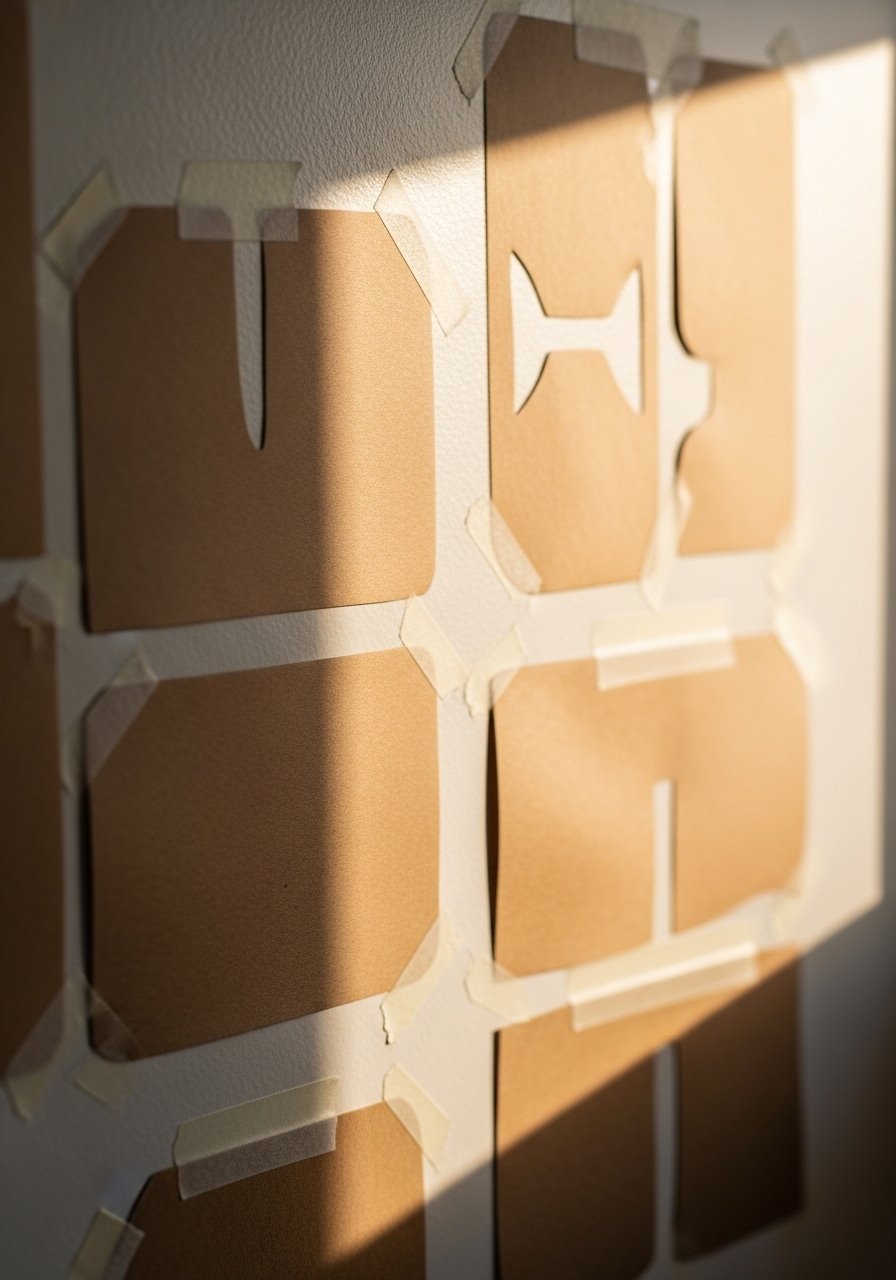
Cut kraft templates of each frame and tape them on the wall. Keep spacing tight but not crowded, about 2 to 5 inches between frames for a gallery wall. If you use a large single frame with smaller friends, let the group cover 60 to 75 percent of the wall width. That ratio keeps things purposeful and avoids a lonely poster surrounded by empty paint.
When I rushed and eyeballed spacing, the gaps read like mistakes. Mapping first felt annoying, then freeing. The templates made it safe to walk away and come back, which is when I always notice the tweaks I missed.
Step 3: Mix frame finishes and mat sizes with restraint
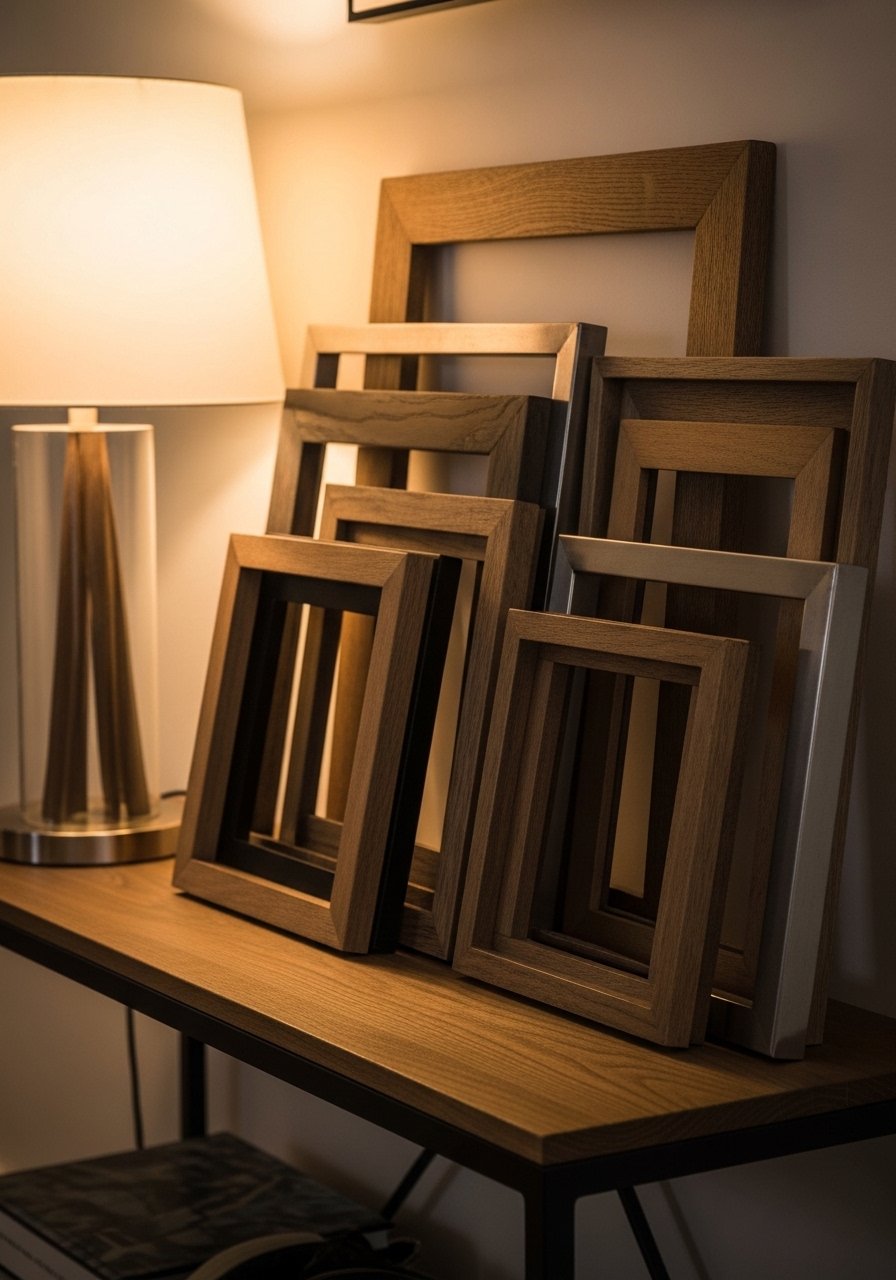
Variety gives texture but too many finishes feels messy. Stick to two finishes maximum, for example warm wood plus matte black. Also vary mat sizes, using one with a wide white mat as a breath point. I learned the hard way that three different metals made the arrangement jittery.
Think in weight, not match. A chunky wood frame feels heavy in your hands, and it needs lighter, airier pieces nearby to balance it. Swap a metal frame for a wood one if the group feels cold. Small changes here make the room feel warmer or cooler in an honest way, not a staged way.
Step 4: Anchor frames to furniture correctly
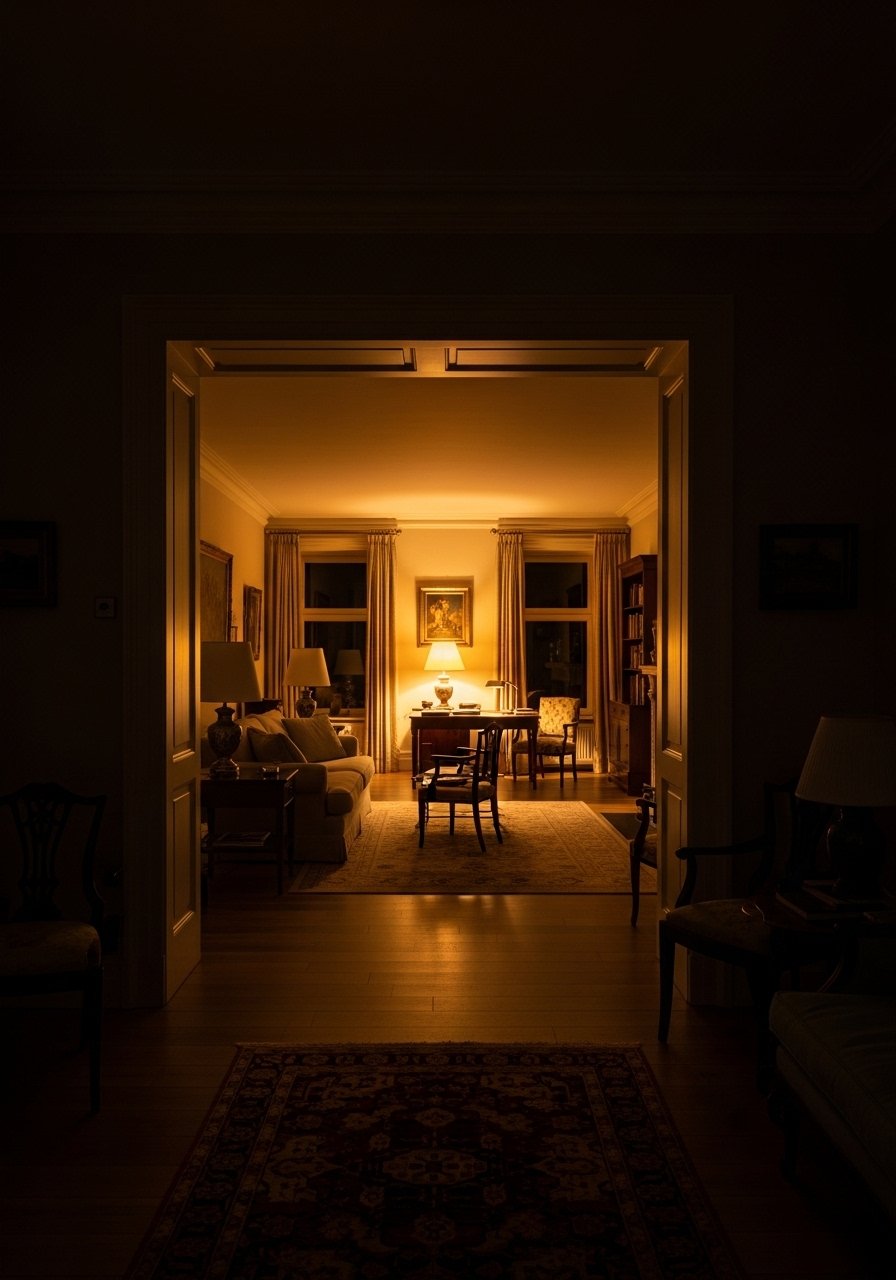
When frames hang above a sofa or console, keep the bottom of the frame 5 to 9 inches above the furniture. Too high and the wall floats apart from the room. Too low and you risk bumping heads or knocking things when placing a lamp. I learned 5 inches the hard way after almost hitting my elbow on a frame each time I reached for the couch arm.
If you have multiple rows of frames above furniture, treat the whole group as one piece. Measure the total height, then center that block at the 57-inch point. The room suddenly feels connected instead of two separate layers fighting for attention.
Step 5: Live with it for a week, then tweak the edges
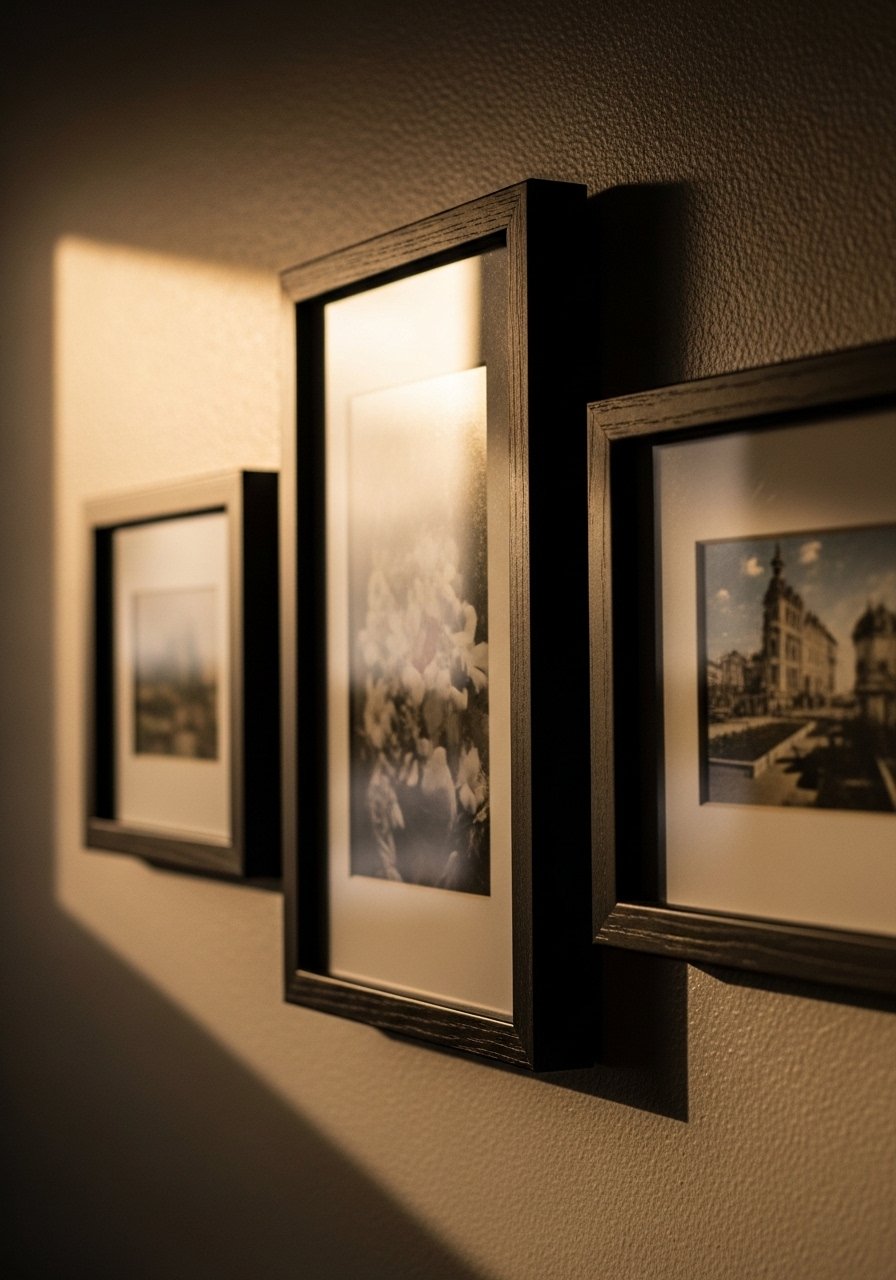
Once everything is hung, step back and live with the wall for seven days. Walk past with a cup of coffee, sit on different chairs, check it at dusk. Small annoyances appear only after real life moves through the room. I swapped one print after four days because it felt too literal. It made the whole grouping breathe.
Expect to make one or two tiny changes, not a full redo. You will notice gaps, reflections on glass, or frames that catch light oddly. Those are fixable. The key is resisting the urge to add more things when you first see an empty space, because usually what it needs is different spacing, not more frames.
Your Gallery Wall Shopping List

- Assorted frame set, mixed wood and black, 8 pieces ($70-120). Great for Step 2, the set gives consistent sizing.
- Heavy-duty picture hooks, pack of 12 ($10-18). Use these for Step 4, they hold heavier wood frames.
- Kraft paper roll, 36-inch ($8-15). Cut templates for Step 2.
- Small level and laser measure combo ($25-40). Makes the 57-inch center accurate for Step 1.
- 24-inch brass picture ledge ($18-30). Useful for leaning frames mentioned in Step 3. Similar at Target.
- Anti-reflective glass frames, 16×20 ($35-60). Use one as a breath point in Step 3.
- Picture hanging kit with wire and hooks ($12-20). For flexible rebalancing during Step 5.
- Small ceramic vase set, matte white, 3 pieces ($25-40). For tabletop balance when anchor is on a console in Step 1.
Why Your Walls Still Feel Off
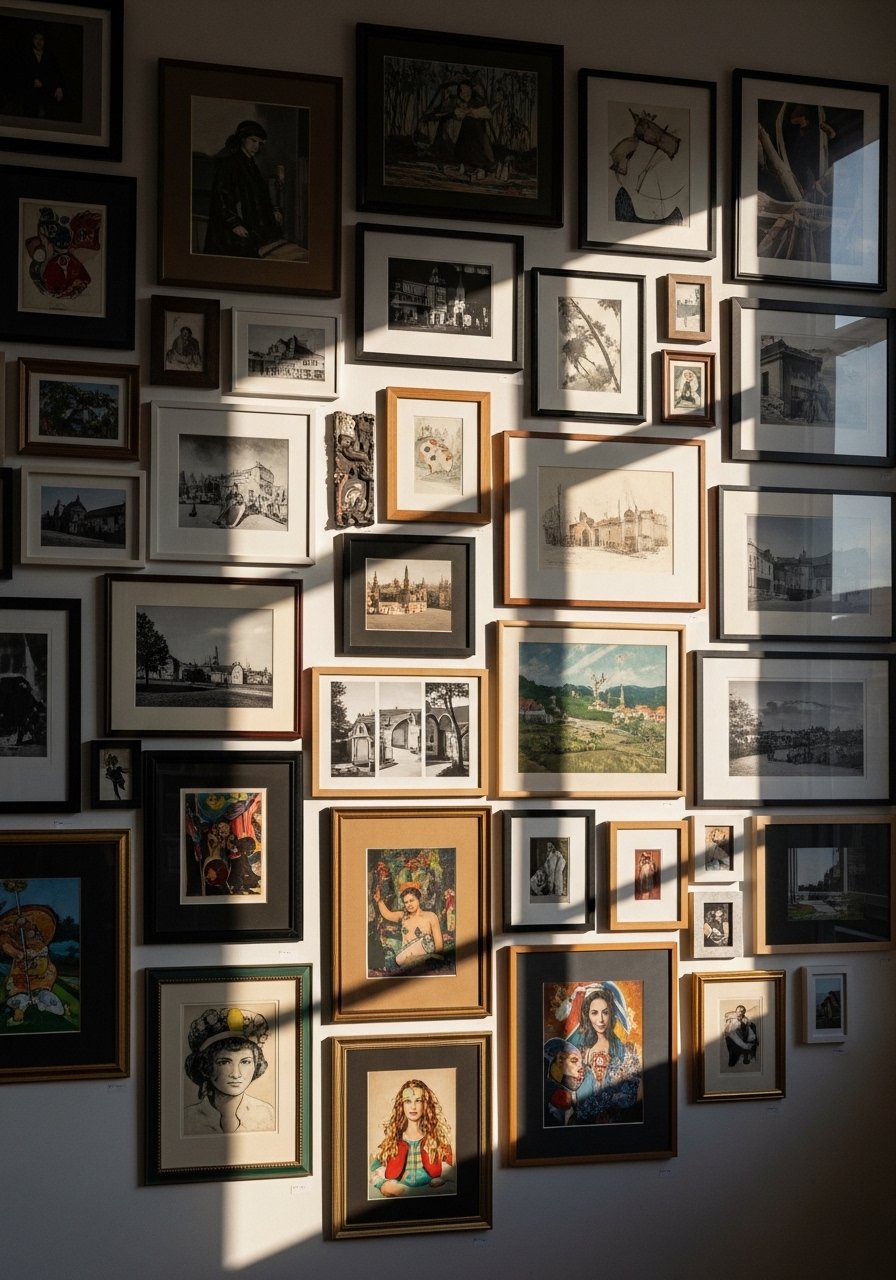
The most common mistake is treating every frame like it must be seen equally. When every frame screams for attention the wall reads loud and flat. Another issue is ignoring scale. Too many small frames on a big wall look timid. I used to overfill frames to feel busy, which made the view claustrophobic. Try stepping back until the wall reads like one composed piece. If something still feels wrong, check the spacing or change one finish. Often a single swap calms the entire grouping.
Making This Work in a Small Room
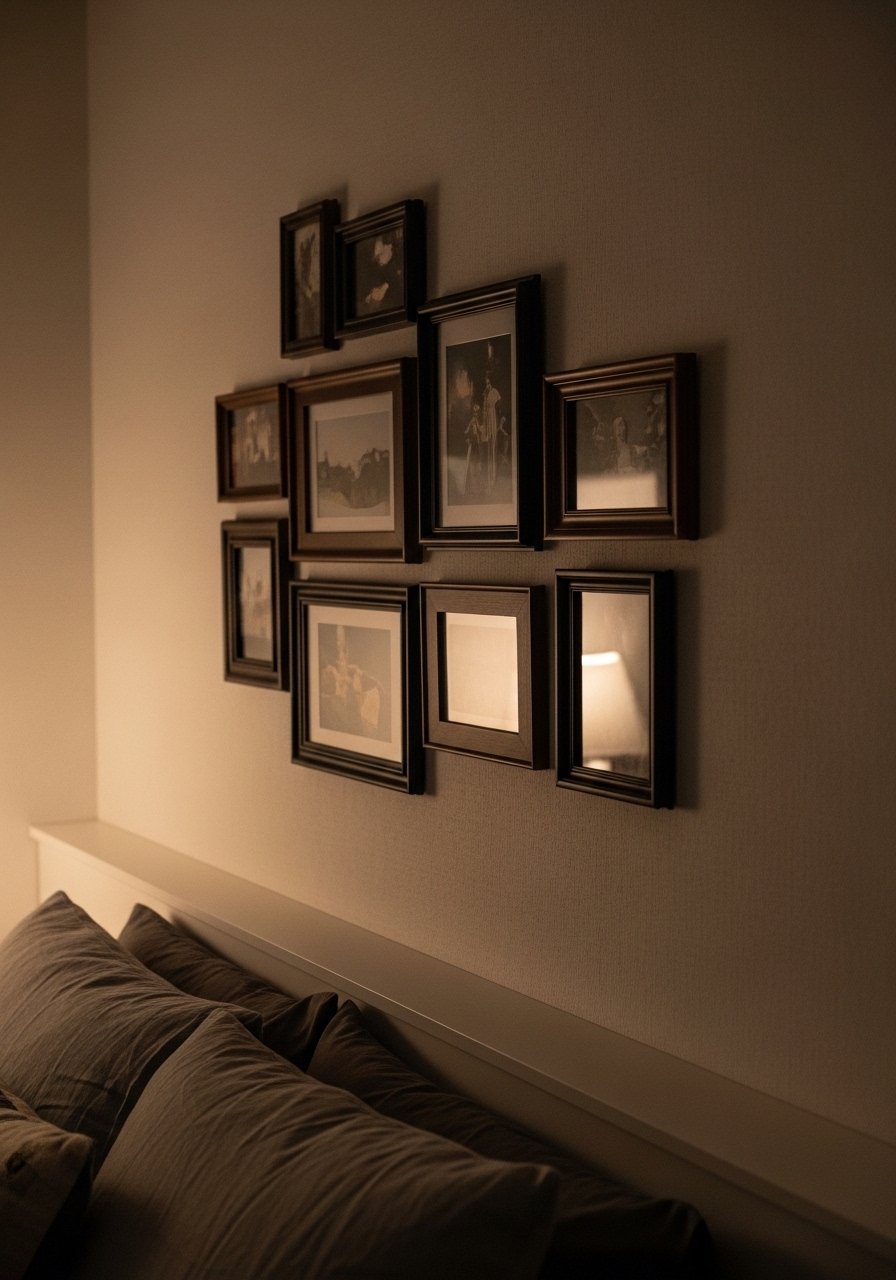
In tight spaces go vertical. Stack a pair of narrow frames rather than spreading horizontally. Keep the arrangement to about 60 percent of the wall width so the room feels open. Use lighter frames and fewer heavy woods, because dense textures can make a small room feel cramped. If you rent, use removable adhesive hooks for lighter frames and a single picture ledge instead of many nails. I moved to smaller groupings for my studio and it immediately felt airier without losing personality.
What Happens After a Week with Kids and a Dog
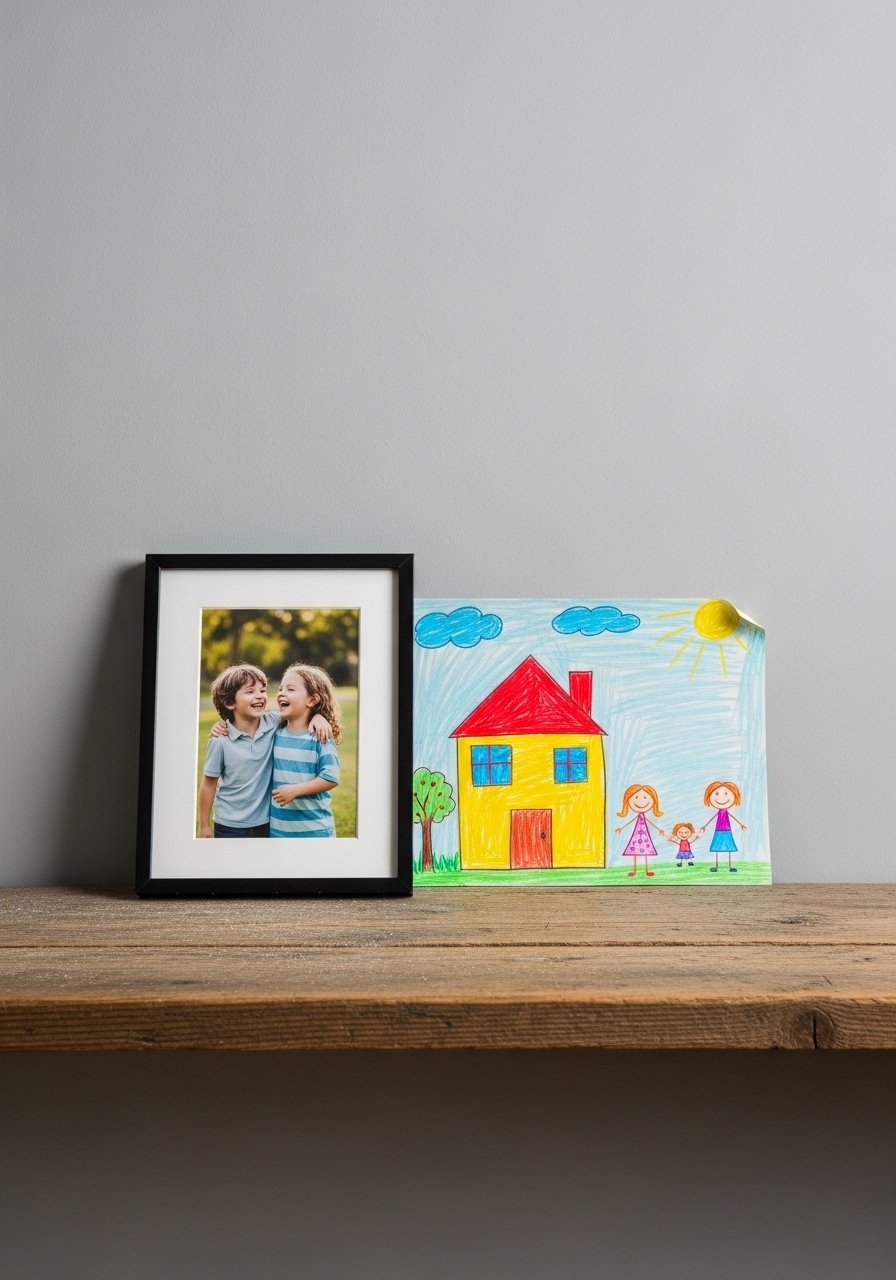
Expect minor chaos. Frames on lower walls will get fingerprints, and a curious dog will nudge a leaning frame. My roommate knocked over a leaning print twice before I secured it to the wall. If you have pets or kids, keep important pieces higher and choose frames with sturdy backs. Consider anti-glare glass if sunlight hits the wall often, because reflections show smudges more. Plan for one maintenance session per month where you dust frames and retighten hanging hardware.
Start With One Wall
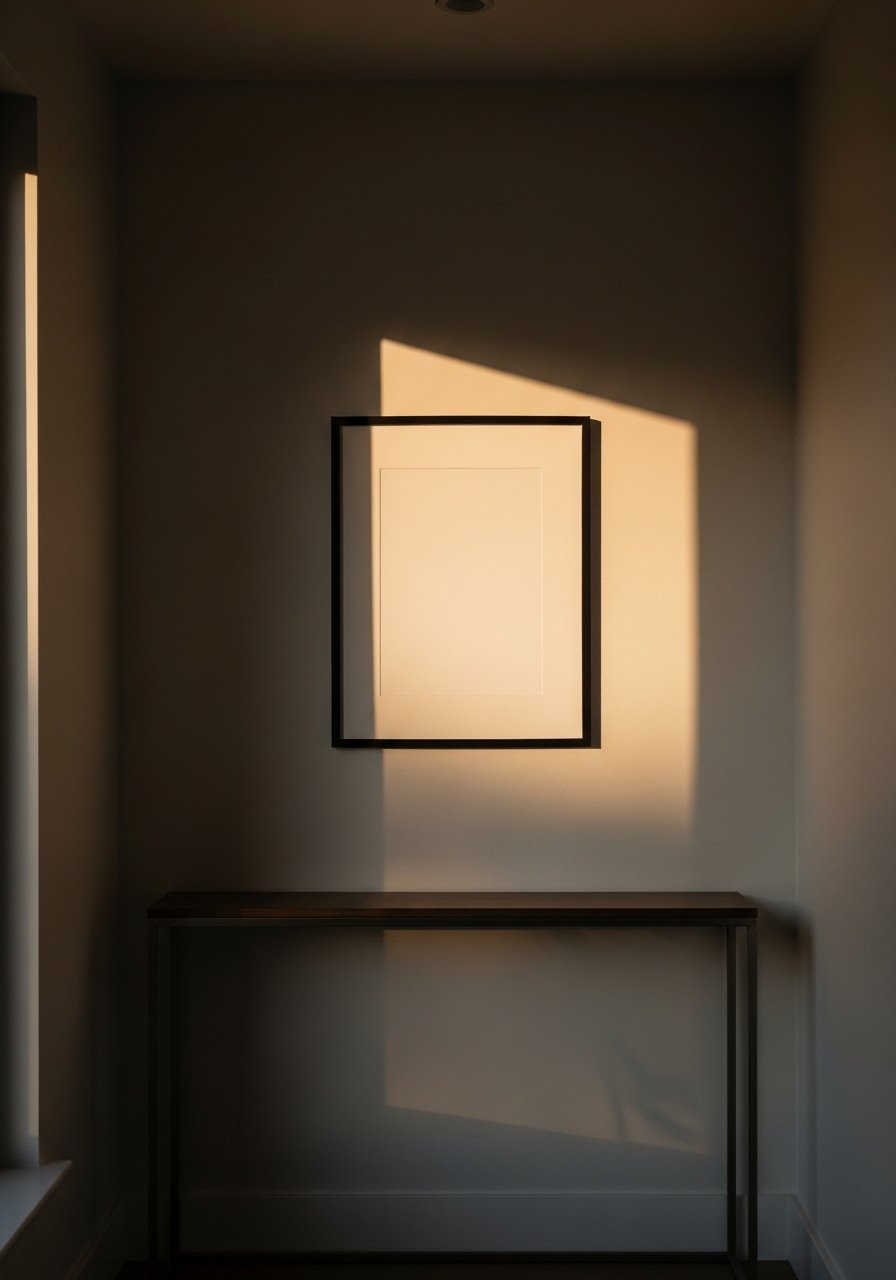
Pick the least intimidating wall and try one anchored grouping. Use the 57-inch center, map with kraft paper, and live with it for a week. Start small so you can learn what your eye likes without committing to a wallful of holes.
If you want a low-commitment start, hang one anti-reflective 16×20 above a console and build around it. Give yourself permission to move one piece after a few days. That small act is the one that made my whole room finally feel settled.