
I’ve stood in rooms that felt boxed in and cold, even with a window. The walls swallowed light and everything read flat. I always start small and look for three simple fixes that open the space without a full renovation.
If your room feels heavy or lifeless, these are practical moves that change the mood.
How to Decorate a Dark Room to Make It Feel Bright
This guide shows how I make a dark room feel bright and intentional without repainting every wall. You’ll end with a softer, more open room—think organic modern or quiet luxury touches—using mirrors, layered light, textiles, and one or two statement pieces.
What You'll Need
- Oversized floor mirror, 30×60, thin black frame (~$60–180)
- Daylight-mimicking smart LED bulbs, 2-pack (~$20–60)
- Light-toned patterned area rug, 5×8, ivory/beige (~$80–250)
- Linen curtains, natural, 50×84, set of 2 (~$30–80)
- Brass table lamp with fabric shade, medium (~$40–150)
- Velvet throw pillows, 18×18, warm neutral (set of 2) (~$25–60)
- Satin-finish interior paint, 1 quart, deep teal/navy sample (~$30–70)
- Large houseplant or realistic faux fiddle leaf, 5–6 ft (~$30–90)
Step 1: Place a Mirror to Bounce Light Across the Room
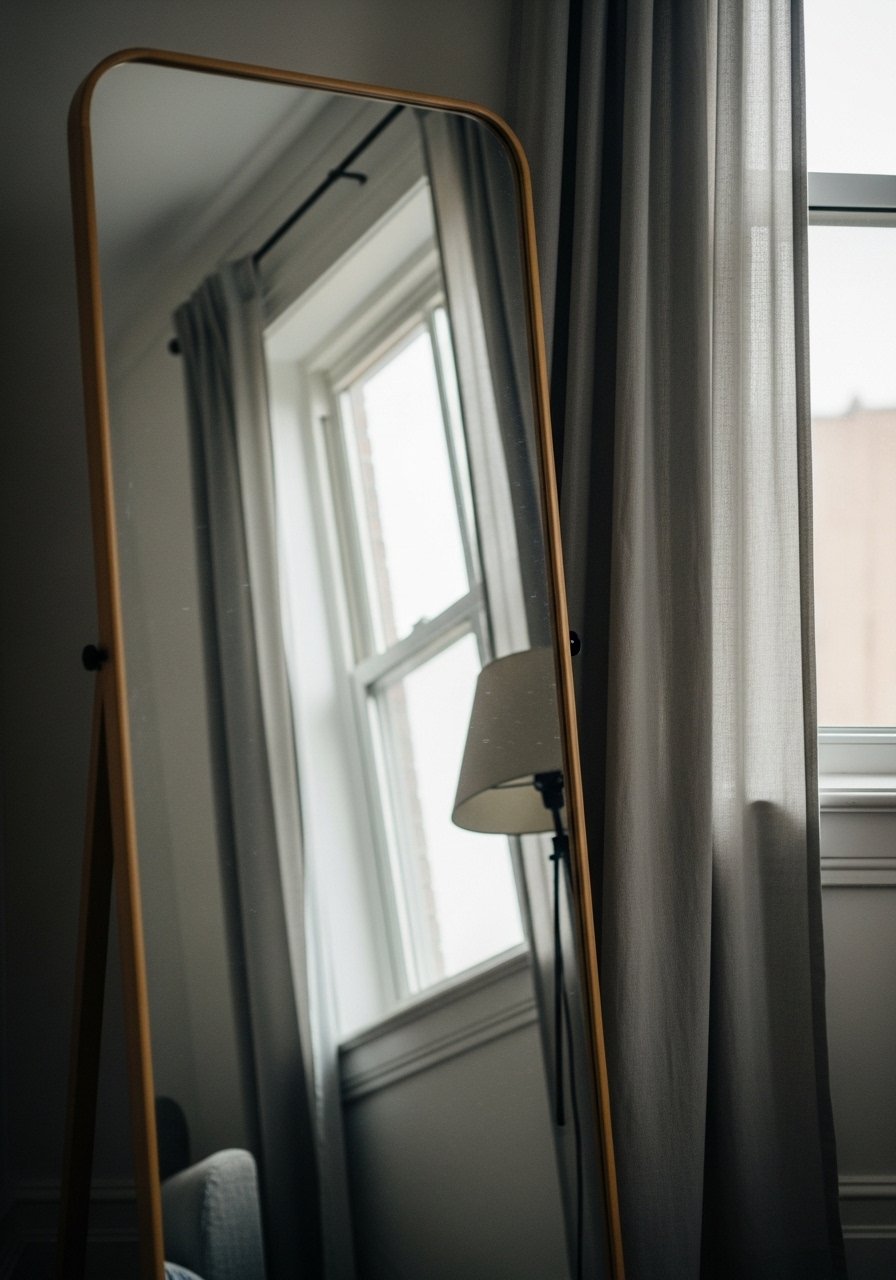
I always start with a mirror. Placing an oversized mirror opposite or adjacent to the main window literally bounces daylight deeper into the room. It opens the sightlines so the space reads larger and lighter.
People miss scale. A small mirror looks decorative but won’t change the feel. Also watch the frame color: a thin black or warm brass frame reads modern and keeps contrast without darkening the room. Avoid blocking pathways—angling it slightly toward light gives more payoff than tucking it behind furniture.
Step 2: Layer Lighting with Daylight Bulbs and Dimmers
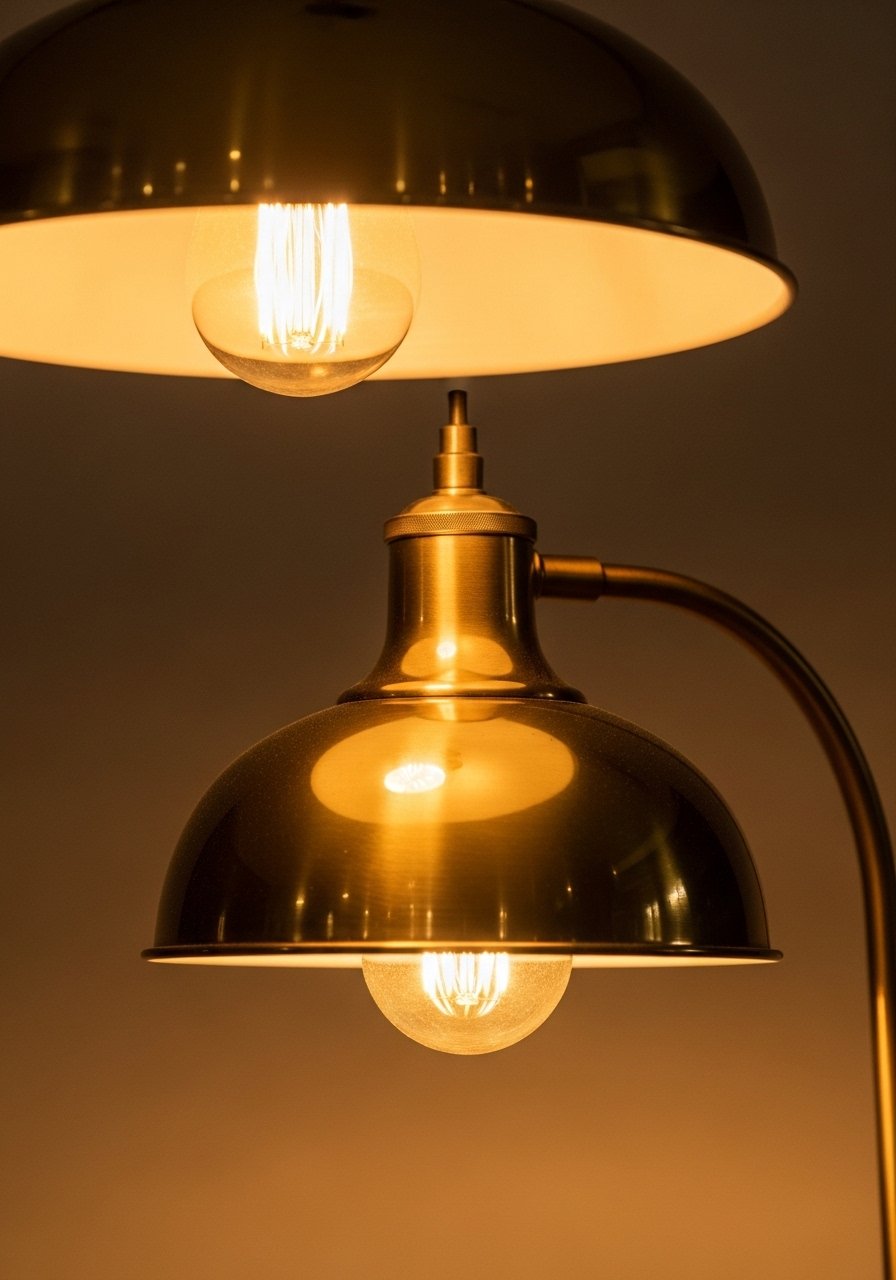
I treat lighting like clothing layers. Overhead light sets the base. Table lamps and a floor lamp fill mid-level and corner shadows. I swap in daylight-mimicking LEDs so colors look true and the room feels awake, even on overcast days.
One insight: light at different heights changes how the walls read. Put a lamp on a console under a mirror and a floor lamp in the opposite corner. The common mistake is relying on one bright ceiling fixture—this flattens deep paint. If you want drama, add a sculptural pendant or small neon statement on a dark wall, but keep it dimmable.
Step 3: Ground the Space with a Light Rug
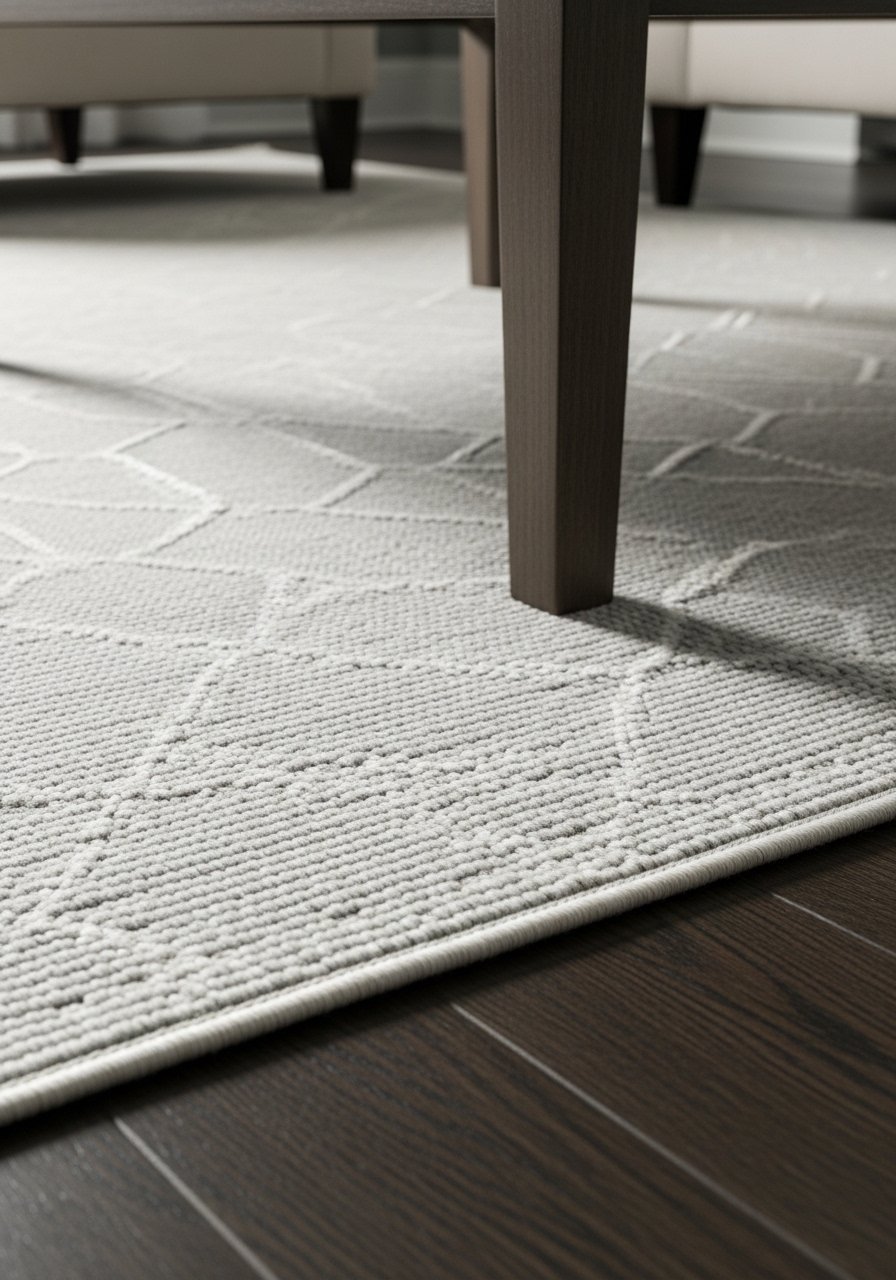
A light-toned patterned rug is my go-to when floors or walls are dark. It lifts the base visually and stops the room from feeling boxed. I choose a rug large enough that the front legs of seating sit on it—this makes the arrangement read intentional rather than “floating.”
People underestimate pattern. A subtle print hides wear and adds warmth while keeping the feeling open. The mistake is a too-small rug; it creates islands and makes the room feel smaller. If you rent, look for affordable woven or jute options that read lighter than the floor.
Step 4: Soften with Linen Curtains and Layered Textiles
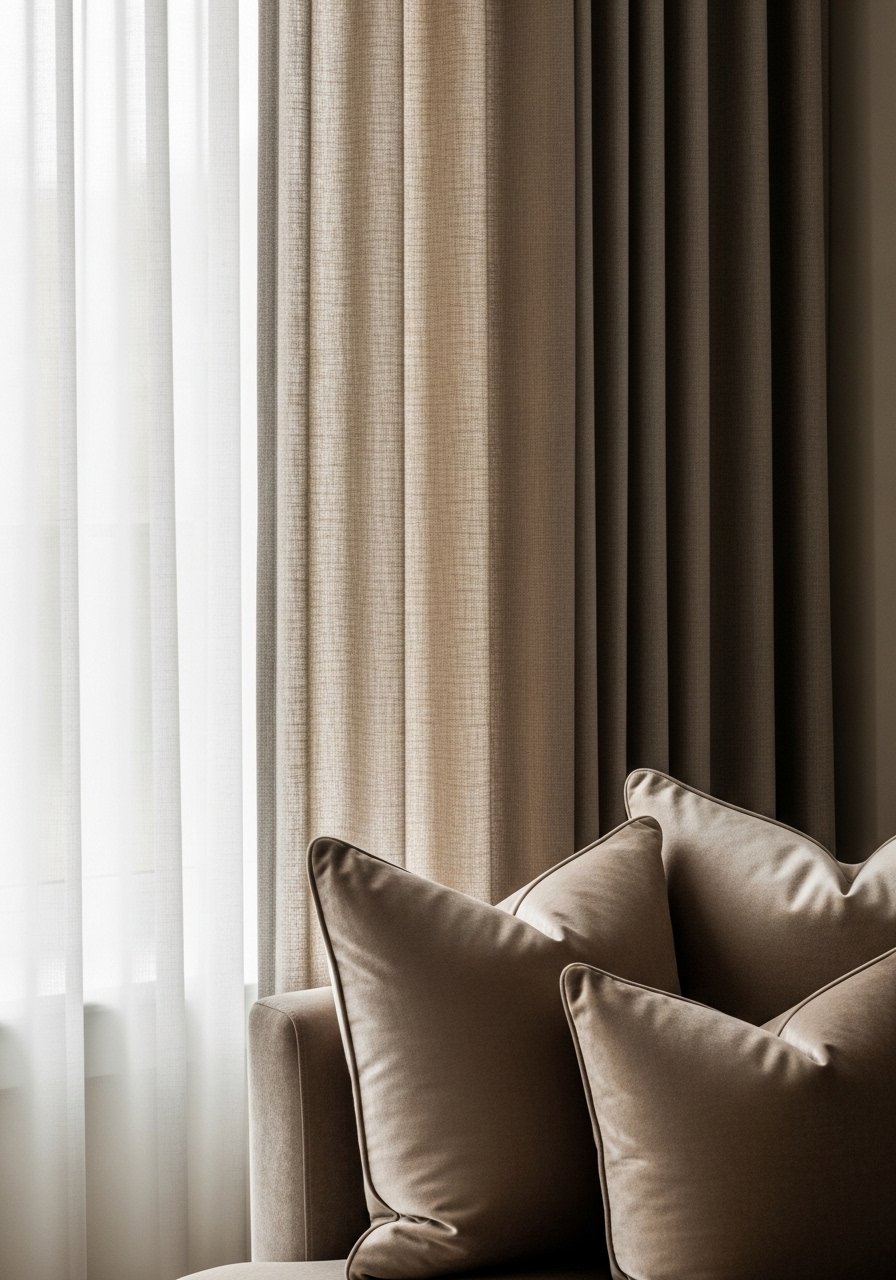
Curtains and cushions are where a dark room becomes cozy instead of cold. I hang linen curtains high—just shy of the ceiling—and let them puddle a bit if the style allows. Velvet cushions, suede throws, and a chunky knit add tactile warmth against deep walls.
One insight: satin or eggshell paints reflect a touch more light than matte, so if you’re repainting an accent wall, choose that sheen. A common mistake is matching every textile to the wall tone; contrast is what makes those dark walls feel purposeful. Use warm neutral accents to balance the depth.
Step 5: Add Art, Metallics, and Plants for Depth
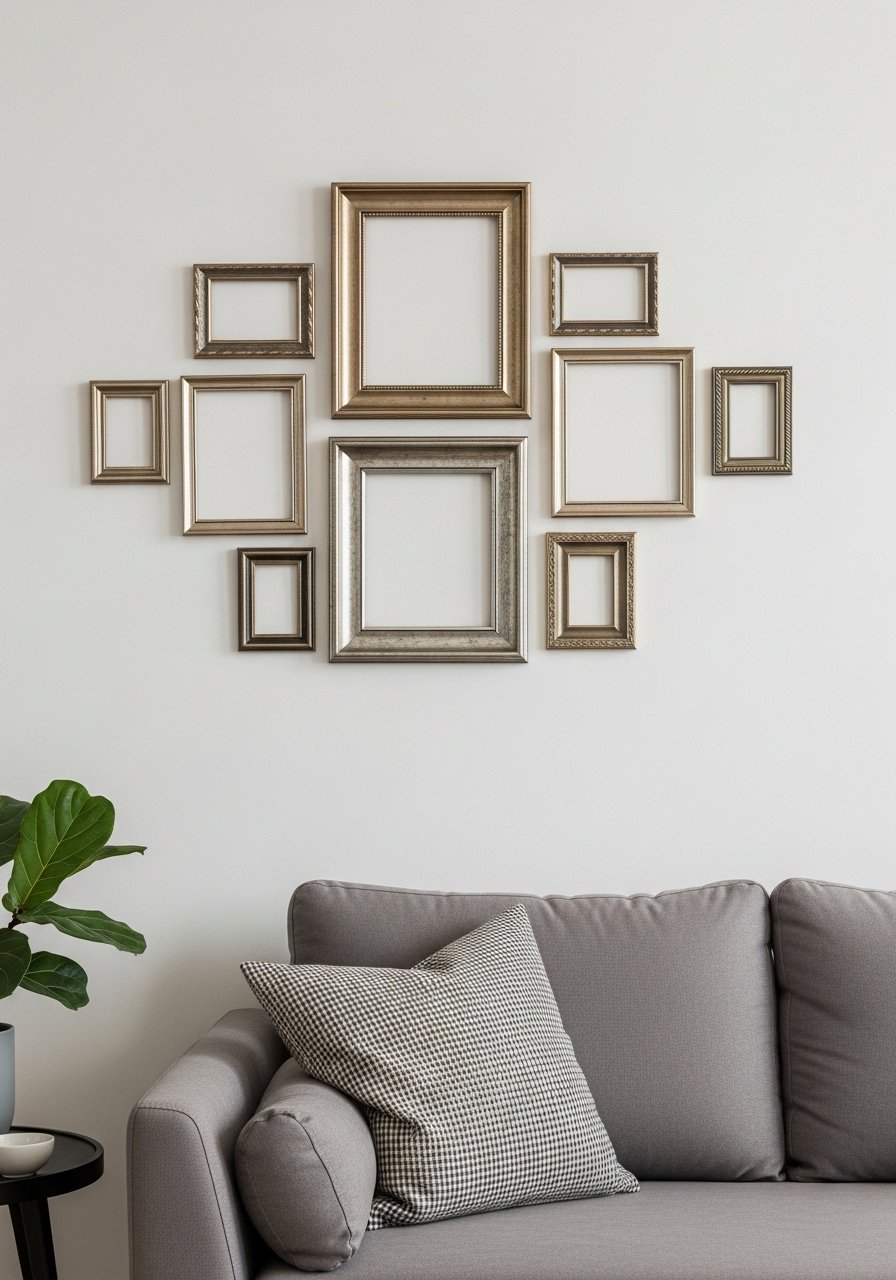
Art, metallic picture frames, and plants finish the room. I like a small gallery above seating arranged in odd numbers. White mats or light artwork give relief against a dark wall. Brass or silver frames and a metal lamp catch and scatter small pools of light.
People forget scale and repetition—repeat one metal finish or one accent color to tie pieces together. The mistake is overcrowding: too many dark frames or big, heavy art on a small wall closes the room. A few well-placed plants soften edges and add life.
Common Mistakes That Keep a Dark Room Feeling Heavy
I see the same missteps a lot. They’re fixable and usually low-cost.
- Short curtains that stop at the window frame, not the floor.
- Tiny rugs that don’t anchor seating.
- One-source lighting (ceiling only).
- Too many dark, matte surfaces with no reflective points.
Fixes are simple: hang curtains higher, choose a larger rug, add two lamps, and introduce a mirror or metallic accent. Small changes change perception more than big overhauls.
Adapting These Ideas for Small Rooms or Renters
I work in small apartments and I use the same principles but renter-friendly versions.
- Use a freestanding mirror or a mirror leaned against a wall (no holes).
- Try tension-rod curtains or clip-on sheers if you can’t drill.
- Go for a light jute rug runner if a full rug is too big.
- Opt for stick-on gallery hanging strips for frames.
These keep the visual tricks but avoid permanent changes. Even swapping bulbs to daylight LEDs makes a noticeable difference.
Mix What You Have and Spend Where It Counts
I don’t throw out furniture. I swap finishes and textiles.
- Spend on light (LED bulbs, a brass lamp) and a good mirror first.
- Replace small items: cushions, throws, and frames to shift the palette.
- If you can, invest in one sizable rug rather than multiple small ones.
Small investments in light and a grounding rug usually give the biggest return in feel.
Final Thoughts
Start with light and reflection—those are the fastest wins. Change your bulbs and lean a mirror opposite the window, then layer rugs and textiles. I often begin with a smart LED bulb (low commitment) and watch the room wake up. Start small; the room will follow.