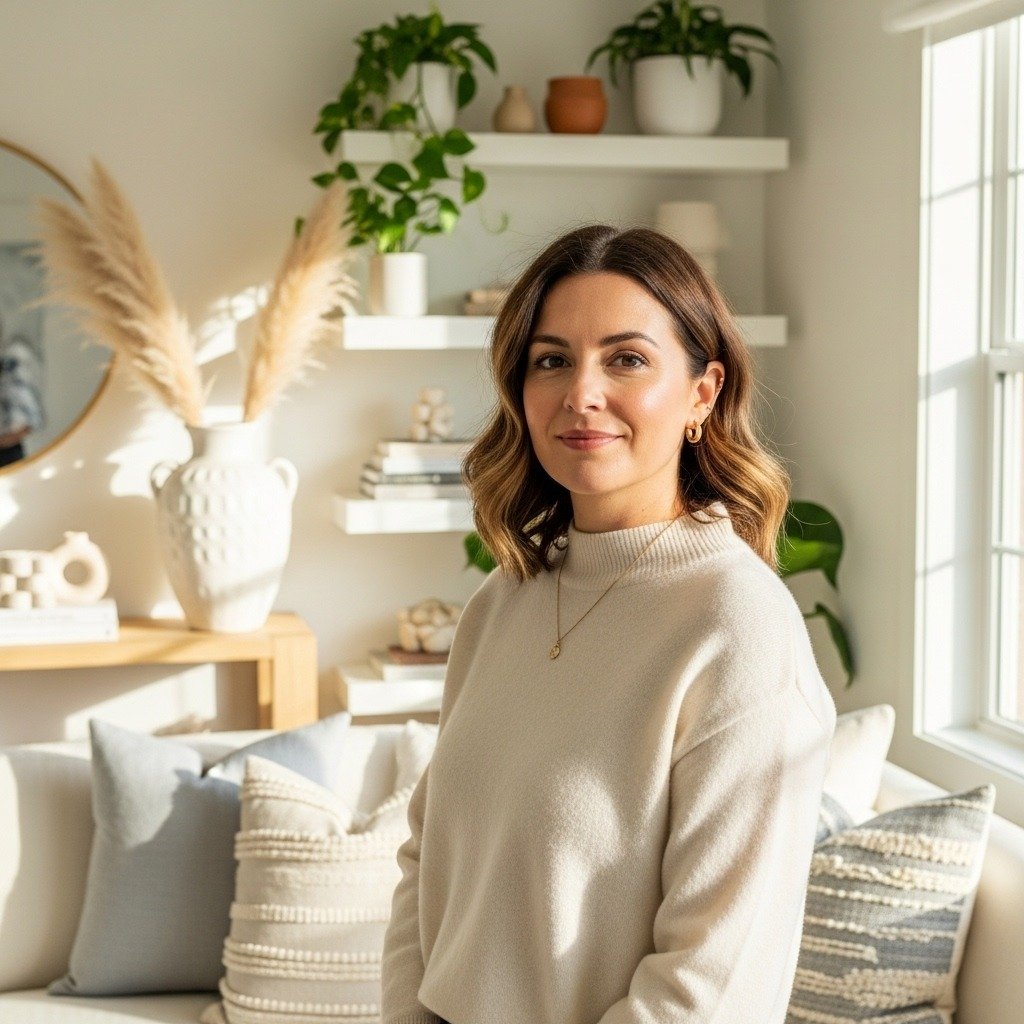
I had a nightstand, a chair, and a heap of decor that never felt finished. The room kept looking small and fussy. I would add things and nothing sat right together.
Pulling pieces down to the essentials changed how the room breathed. You will learn how to pick what stays. The result is calm, balanced, and usable.
I've noticed smaller rooms are asking for fewer, better pieces. This method keeps the focus on placement, proportions, and texture. It works for modern, organic modern, and quiet luxury looks and you can test it in one afternoon.
What You'll Need
- Linen duvet cover in sage green, queen ($70 to 110). Texture that reads rich without extra accessories
- Jute area rug, 8×10 ($90 to 160). Neutral grounding that adds scale under the bed
- Bedside lamp with a simple drum shade ($30 to 80). Keep the silhouette clean and the light warm
- Set of 3 ceramic vases, matte white ($25 to 40). For an occasional shelf or dresser vignette
- Chunky knit throw in oatmeal, 50×60, ($40 to 65). Fold it at the foot of the bed for softness and color
- Slim dresser, 30-inch width ($150 to 350). Good storage without bulk
- Brass picture ledges, 24-inch ($18 to 30). Great for rotating art without holes in the wall
- Full-length mirror, leaned or mounted, 60×20, ($80 to 200). Adds depth and practical use
Step 1: Anchor the room with the bed
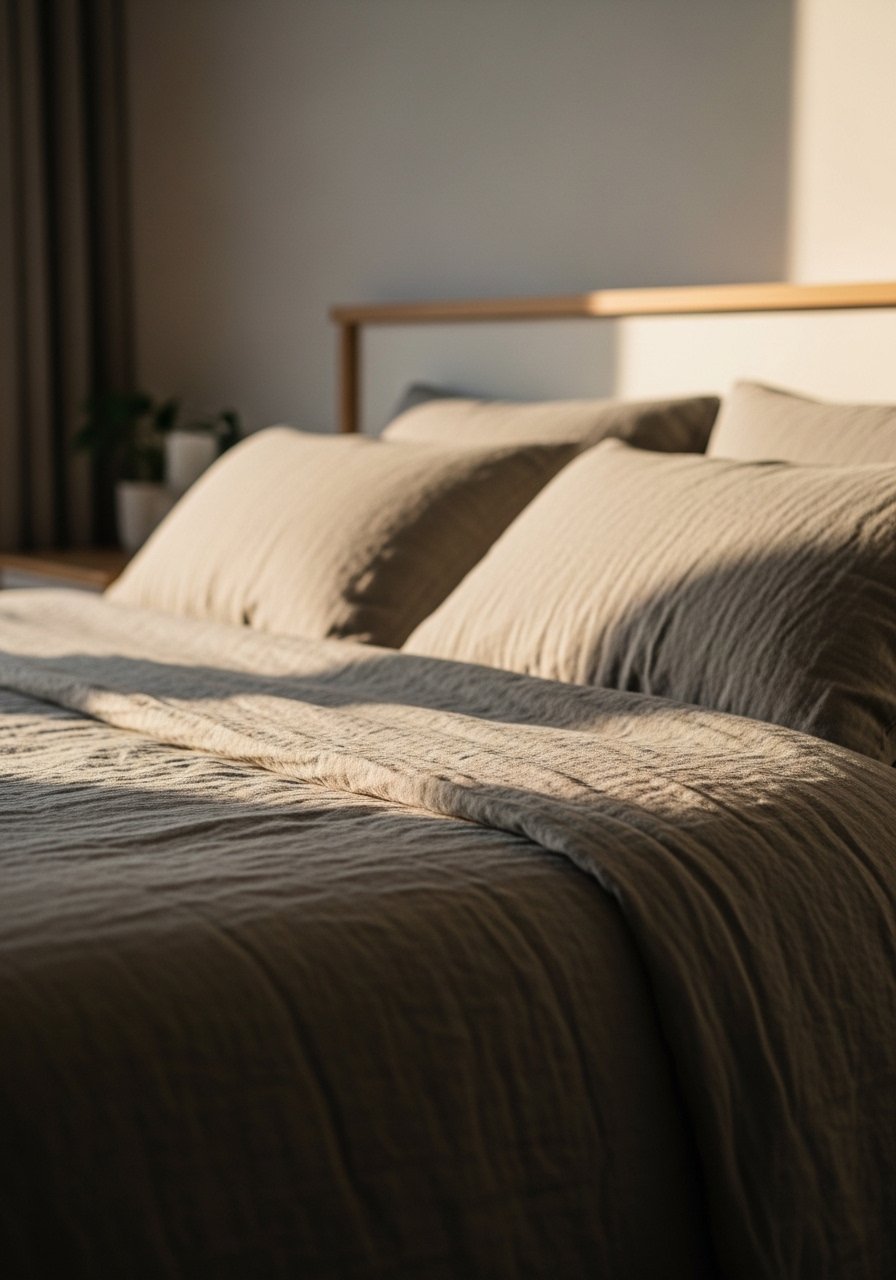
Place the bed where traffic flows naturally. I center mine on the longest wall when there is space. That gives everything else a place to relate to. Visually it becomes the anchor not because it is large, but because it is centered and uncluttered.
What changes is the sense of order. The eye stops jumping around. The common mistake is treating the bed like extra furniture instead of the room's anchor. Avoid oversized headboards that read heavy with minimal other pieces. If you want a simple upgrade, try a linen duvet. It raises the look with no extra objects.
Step 2: Edit down to essentials
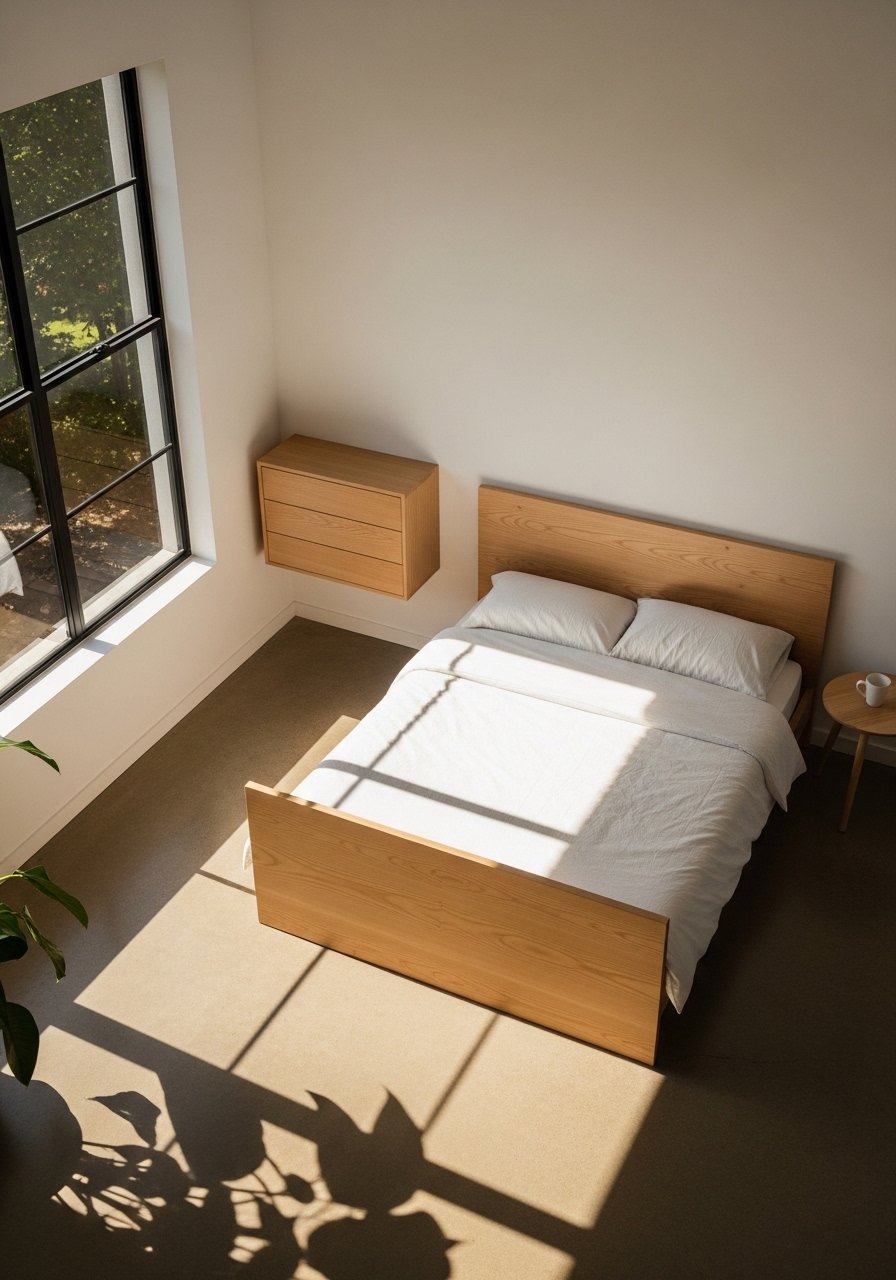
Pull everything out and only put back what you use. I used to keep three lamps and two chairs. I removed one lamp and the extra chair and the room felt twice as calm. Essentials are a comfortable bed, one light per side if needed, and one storage piece for clothing.
What visually changes is negative space. Empty areas become deliberate. People often keep decor "just in case" and end up with visual noise. The small mistake is replacing furniture with tiny objects. Scale matters. A slim dresser that fits the room keeps storage visible but light. Keep bedside surfaces at mattress height or 1 to 2 inches above it to look intentional.
Step 3: Ground the layout with a rug
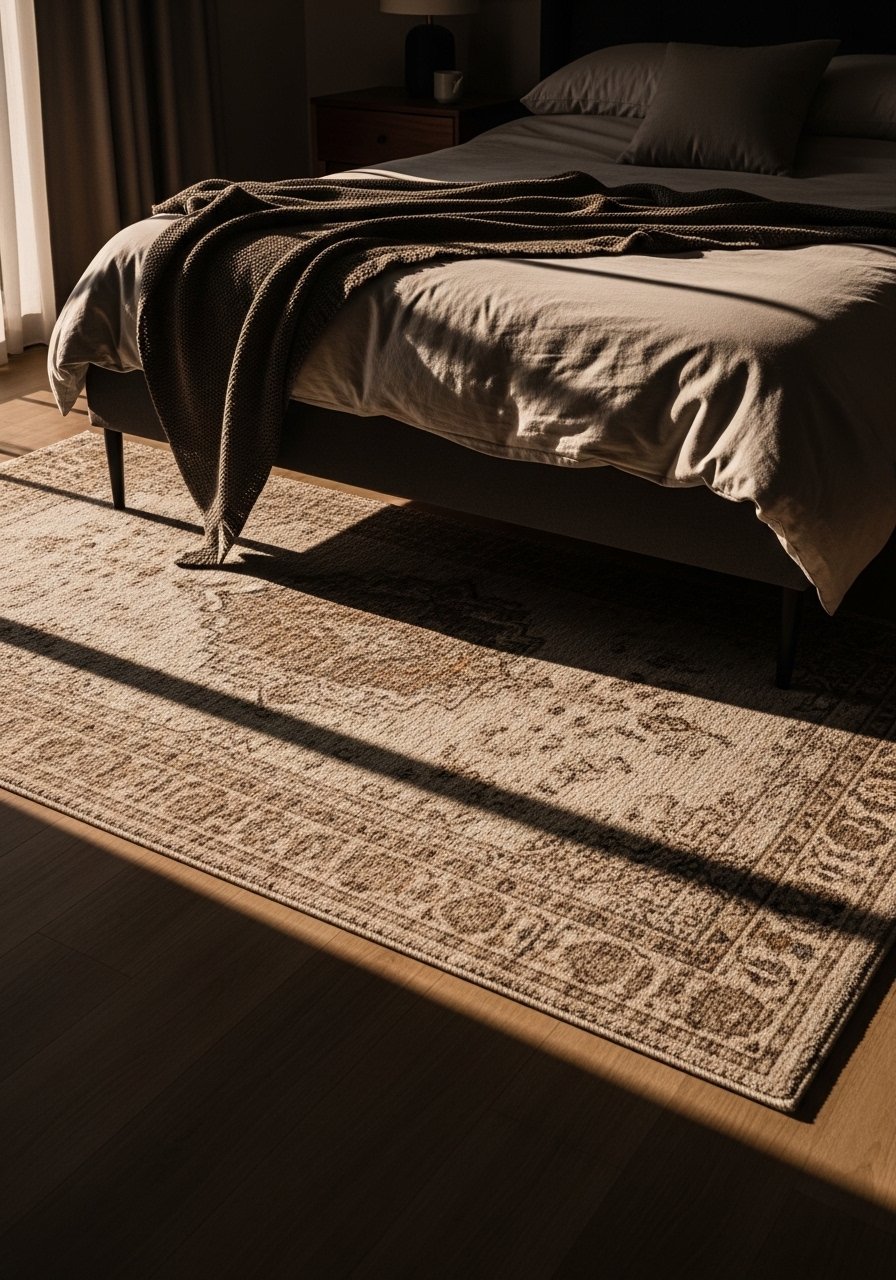
Lay a rug so it sits under the bed and extends at least 18 to 24 inches past the sides and foot. For a queen bed that usually means an 8×10 rug. I once used a too-small rug and the room looked like the bed was floating. A properly sized rug makes the bed part of a composition.
You see scale instantly. Too small a rug chops the room. Too large one can overwhelm but that is rare. A jute rug keeps the palette neutral. A mistake I made was pushing the rug only to the foot of the bed. That leaves the bedside bare. If you must go smaller in budget try runners on each side but keep them even.
Step 4: Layer textures, not objects
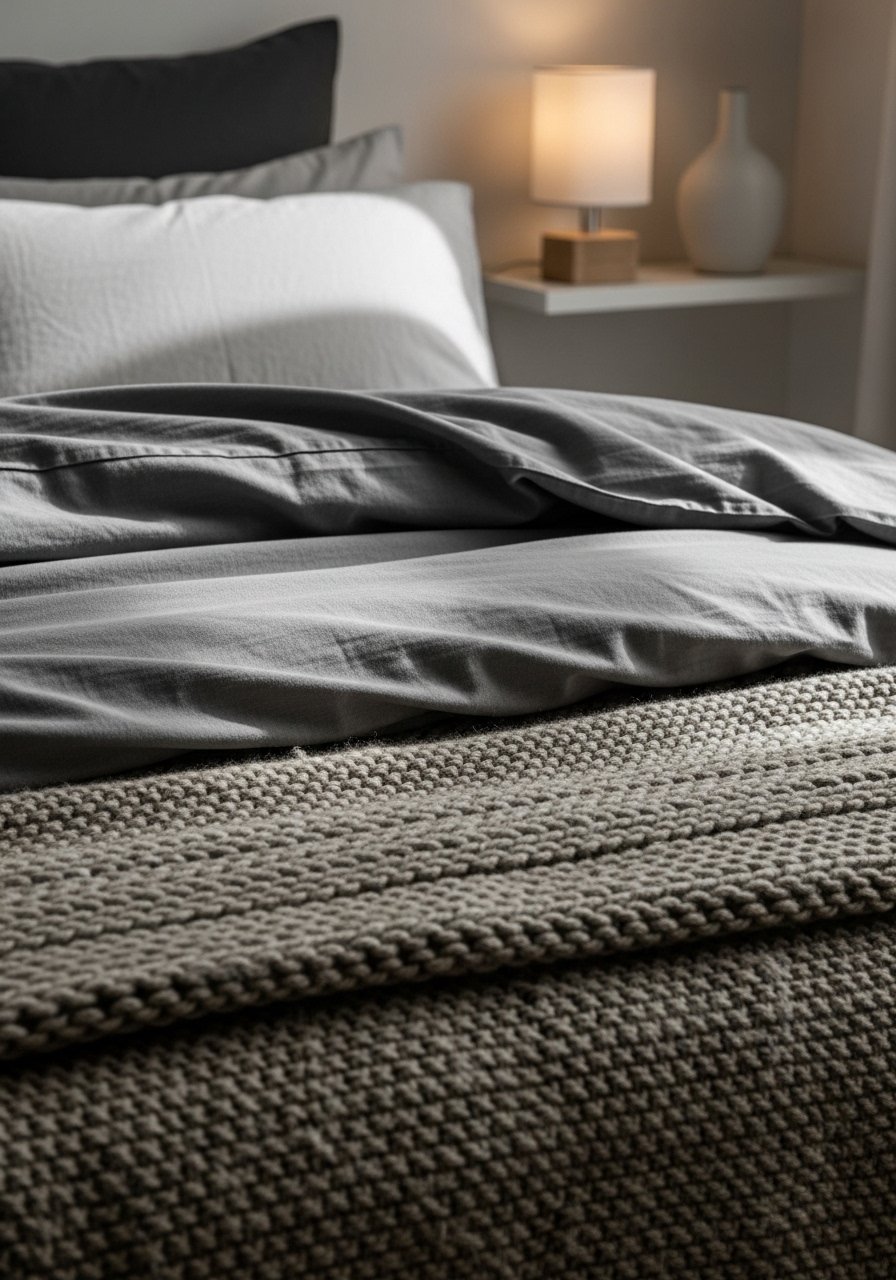
Focus on fabric and surface finish more than adding many items. I add two pillows, one textured lumbar, and a folded chunky throw. The bed looks composed and not crowded. Textures give depth without clutter.
What changes is the perceived richness of the room. People often try to fill empty space with many small objects. That reads busy. A small rule I use is group items in odds and leave 2 to 3 inches between grouped pieces so each breathes. Put ceramic vases together on a single shelf instead of spreading tiny trinkets around. Resist the urge to add a dozen pillows. One throw and one pillow will read purposeful.
Step 5: Balance with art and lighting
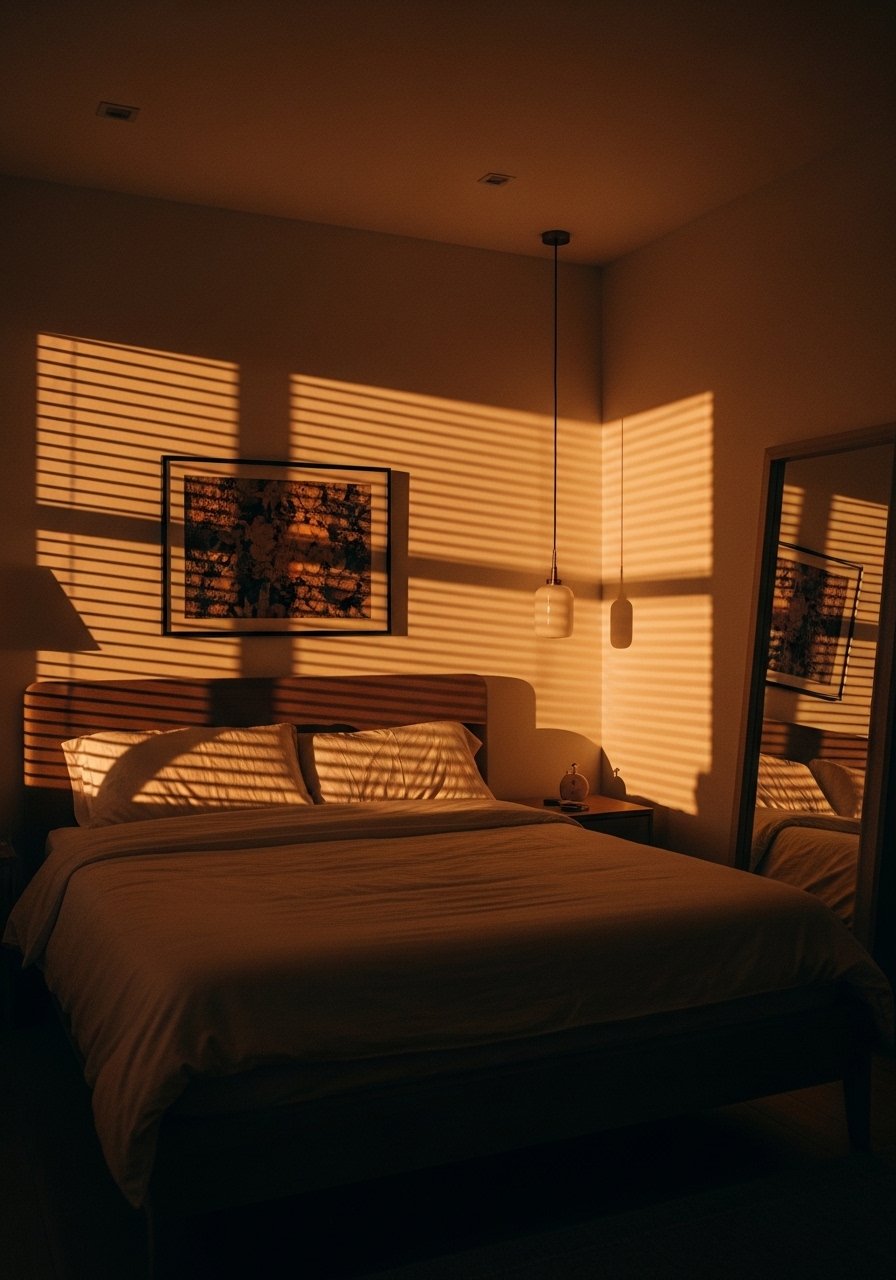
Finish with one or two focal accents. Hang art about 6 to 8 inches above the headboard. If you do not have a headboard place the art so its center is around eye level when standing. A single pendant or a lamp with a clean silhouette keeps night routines easy and surfaces clear.
The visual change is cohesion. Art and light give weight where it is needed. A common mistake is hanging small pieces high on the wall so they float. Too many picture frames create a collage that fights the minimal furniture. I keep picture ledges for rotating pieces. They let me change mood without drilling new holes.
Why empty corners help more than you think
I keep seeing rooms staged with extra chairs in every corner. An empty corner gives the eye a place to pause. It makes the key pieces feel intentional. You can choose one corner to emphasize with a tall plant or a leaned mirror. That single piece reads like design, not a cluttered attempt at completeness.
If you really need the corner for function, make the piece narrow. A slim plant stand or a slender lamp works. Otherwise leave it and let the room feel larger. Emptiness can be a design choice.
Making this work in a small room
Small rooms need strict scale control and deliberate surfaces. I do three things.
- Keep circulation clear. Leave at least 24 inches of walkway on the most used side when possible.
- Opt for low furniture. Lower profiles make ceilings feel taller.
- Use mirrors. A leaned full-length mirror reflects light and removes a cramped feel.
Small rooms reward restraint. One meaningful piece will read better than five small ones.
Mixing minimal furniture with what you already own
Everywhere I look this year people mix minimal pieces with heirlooms. That contrast can be pleasing. Keep the heirloom as a focal point and pare around it. If you have a heavy wood dresser, pair it with a light bedding set and a simple lamp. The eye rests on the dresser. The minimal pieces let it breathe.
When replacing pieces, swap only one at a time. That helps you test the balance without committing to a full redo. I replaced bedside tables first. That single change often fixed proportional problems and left the room feeling cohesive.
Start with One Corner
Pick one corner and make it work. Add the rug, center the bed, then choose one accent for a corner. That small sequence answers most "off" feelings fast.
Try a full-length mirror or a simple plant as your low-commitment starting point. You'll see the room relax right away and know the next, small change to make.