
I used to shove shirts in wherever there was space and then wonder why nothing matched. One Sunday I spent an hour swapping bulky plastic hangers for slim velvet ones, folded every sweater the same way, and added a shelf bin for scarves. The closet went from chaotic to calm and getting dressed stopped feeling like a scavenger hunt.
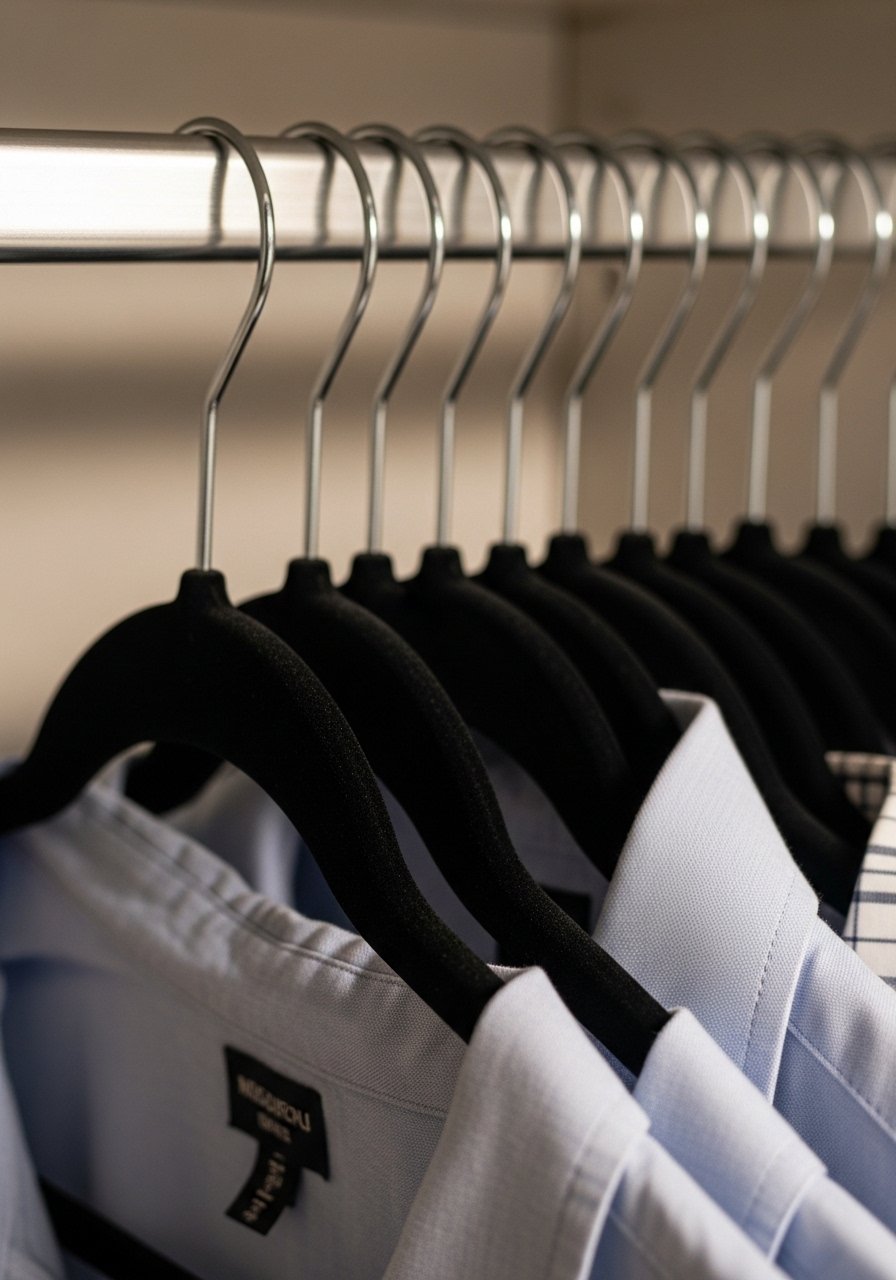
Slim Velvet Hangers for a Sleek Minimalist Closet
Switching hangers was the single easiest win in my closet. Slim velvet hangers save about half the width of bulky plastic ones and they stop clothes from sliding off. Visually the uniform hangers make everything read like a curated wardrobe, which helps when you are trying to put outfits together quickly. Budget is low. I bought a 50-pack of slim velvet hangers for under $30 and they lasted. Common mistake is leaving mismatched hangers. Aim for one hanger style and hang shirts with at least a two-finger gap between them to avoid wrinkles. Pair this with the double-rod trick below for a compact look.
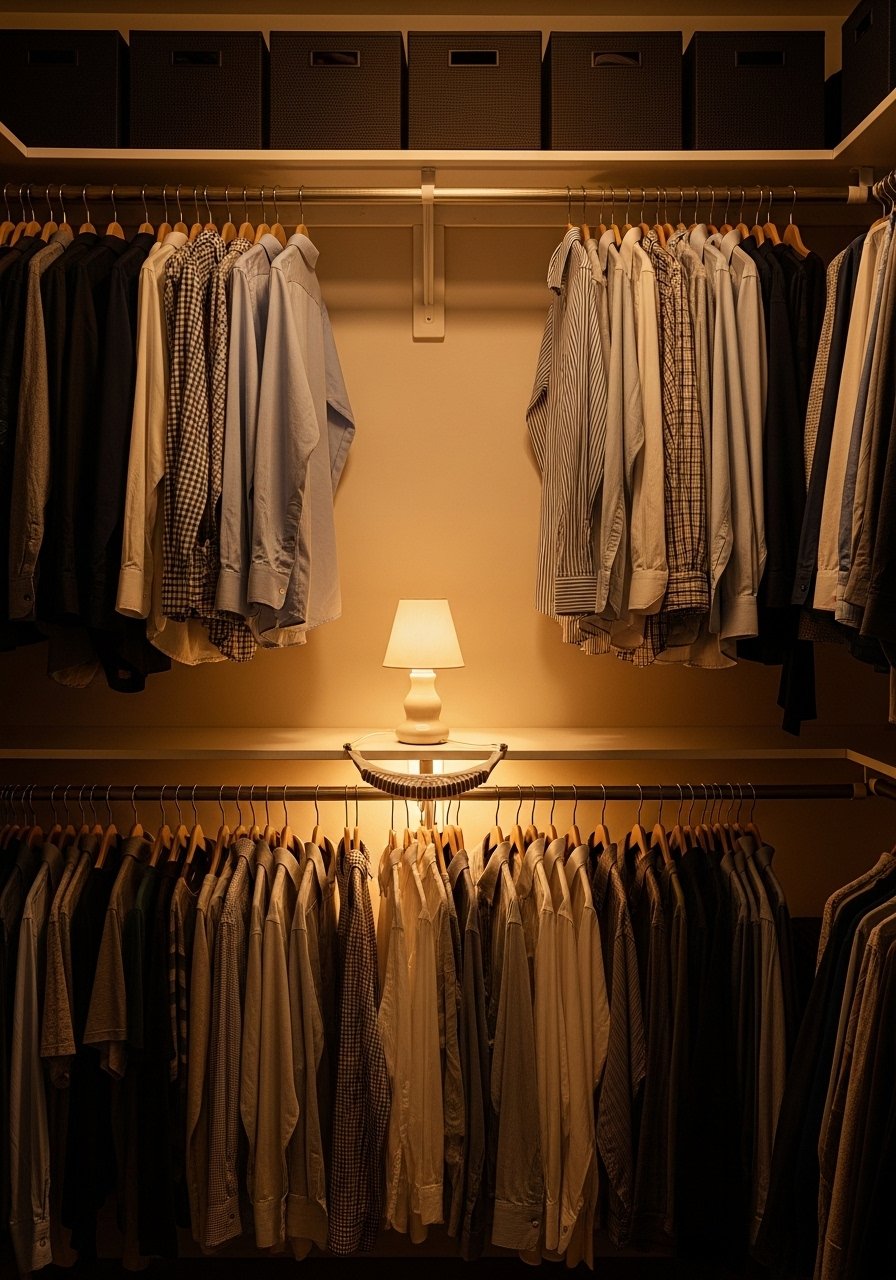
Add a Second Hanging Rod for Double Capacity
Most closets are built for one rod and wasted vertical space. Adding a second rod immediately doubles hanging capacity and keeps shirts from cramming together. I installed an adjustable tension rod and moved longer items to one side. It cost me under $20 and took ten minutes. Try a heavy-duty adjustable closet rod rated for at least 50 pounds. A frequent mistake is making both rows the same height. Instead, set the upper rod about 40 to 44 inches from the lower rod so blouses and shorter jackets hang freely without touching. This is great for a practical, minimalist bedroom closet.
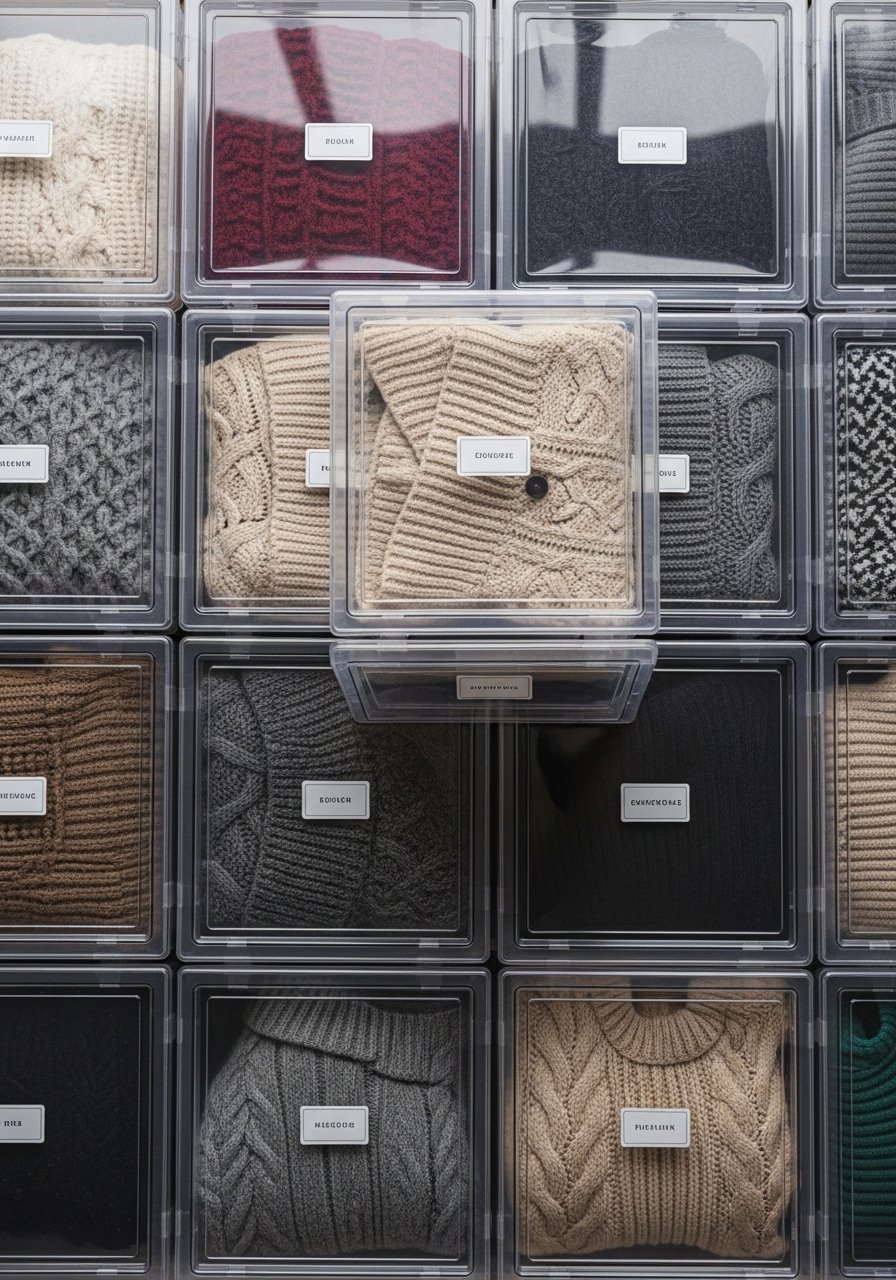
Clear Stackable Boxes for Seasonal Visibility
One year my sweaters lived in plastic grocery bags and I could never tell what color was inside. Clear stackable boxes solved that. They protect items and let you see what is inside at a glance. I stick to the rule of three for each shelf: three boxes across, two high looks balanced and avoids a toppling tower. I use clear stackable storage boxes for scarves and seasonal knits. A common mistake is overstuffing boxes. Leave a 1-inch gap at the top so items don’t wrinkle. If you want a cleaner look, use matching labels or washi tape to mark contents.
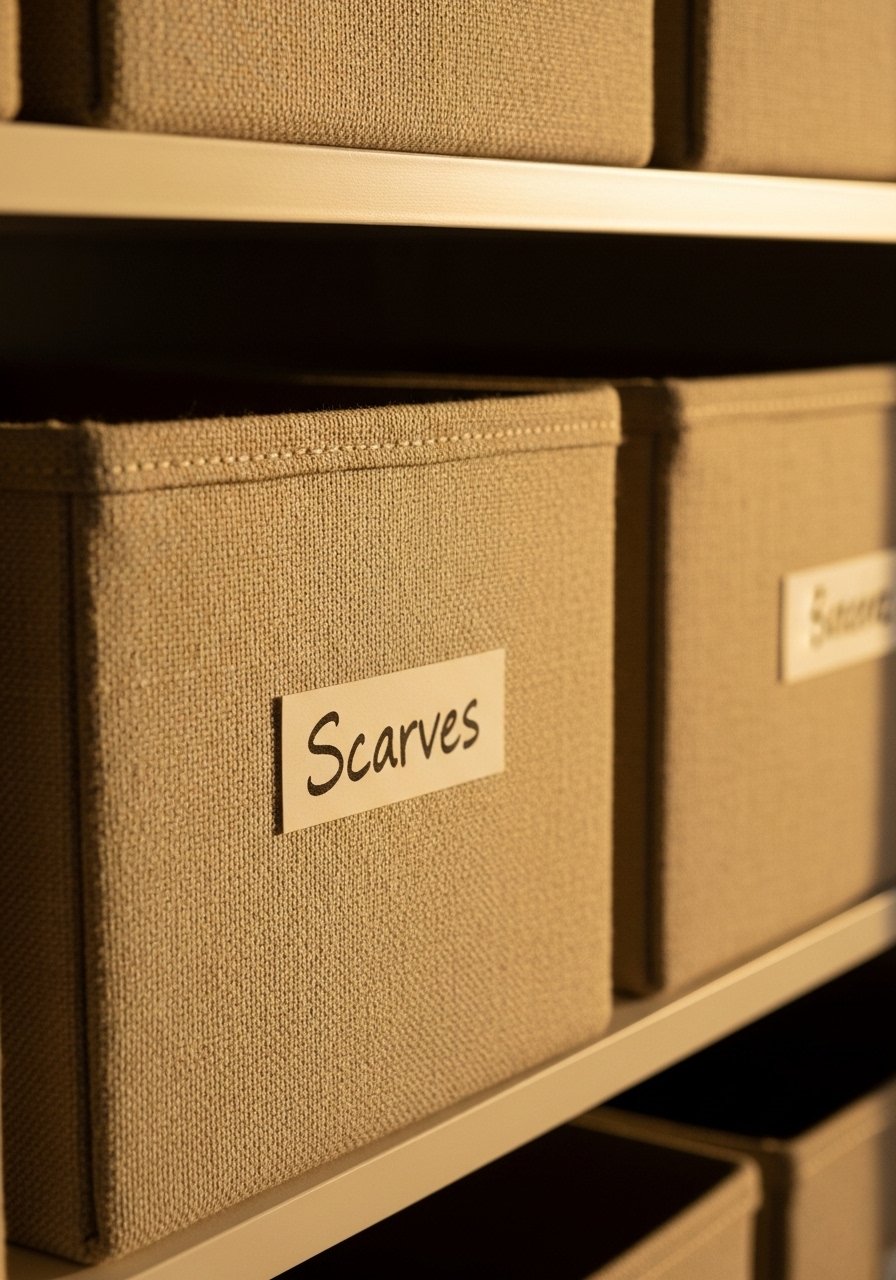
Linen Bins and Shelf Dividers for a Cozy Organized Look
Open shelves can look messy fast. Using linen bins and simple shelf dividers gives each category a home and softens hard shelving. My linen bins are 12 by 10 inches and they hide small clutter while keeping the aesthetic calm. I keep belts in one bin and hats in another. For dividers, metal ones that clamp to the shelf work best when you want to stack sweaters without them toppling. I linked linen storage bins I like. The mistake people make is mixing too many sizes. Pick two sizes and repeat them for a consistent look. White oak shelves are in every design account I follow this year, so consider a warm wood for a current-but-lived-in backdrop.
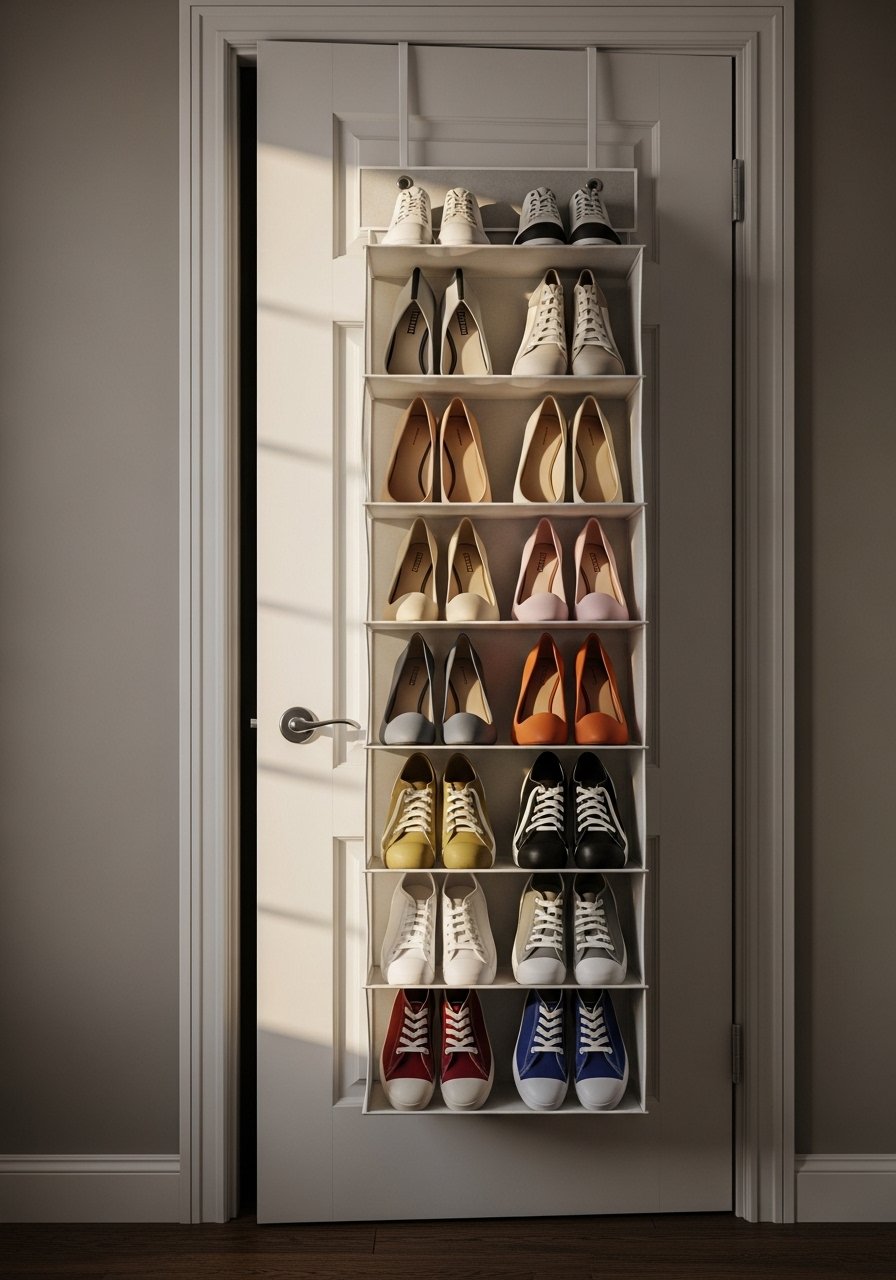
Over-the-Door Organizers for Small Space Shoe Rescue
Shoes are where chaos hides. Over-the-door organizers free floor space and make each pair visible. I used a fabric pocket organizer for flats and a clear-pocket one for sandals so I could grab exactly what I needed. This is a renter-friendly fix and keeps shoes off the floor where they collect dust. Try over-the-door shoe organizers with at least 20 pockets. A common error is stuffing each pocket. Put only one pair or one accessory per pocket so you actually see each item. Pair this with clear boxes on the top shelf for winter boots.
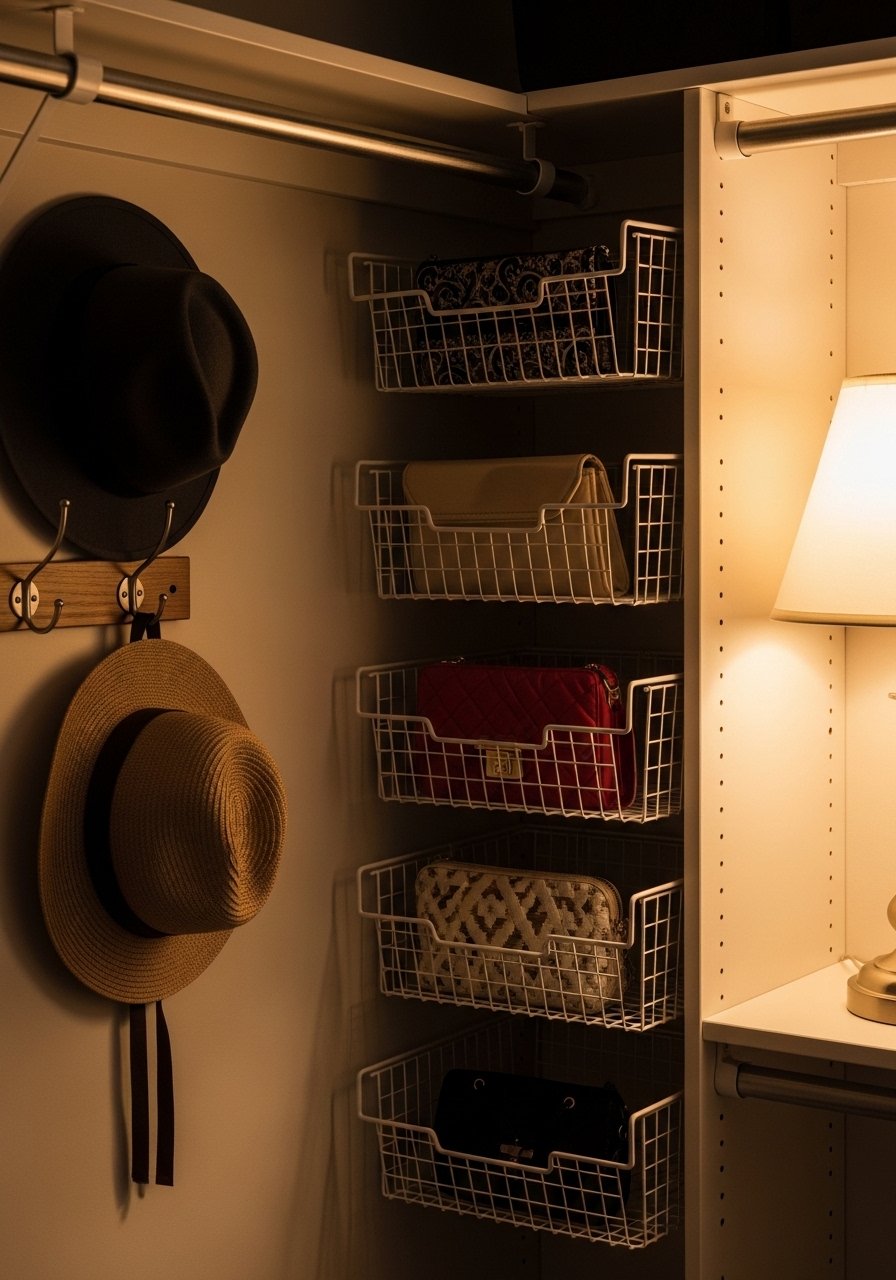
Under-Shelf Baskets and Hooks for Scarves and Bags
Scarves and crossbody bags love to become a tangled mess. An under-shelf basket gives them a dedicated spot and keeps them in view. I mounted small adhesive hooks inside the closet for bags and hats and used an under-shelf basket for belts. The basket I use is about 12 inches wide and slides on smooth shelves. Find a sturdy under-shelf basket and 3M hooks for hanging. People often cram too many hooks together. Space them 6 to 8 inches apart so each bag hangs cleanly and maintains its shape.
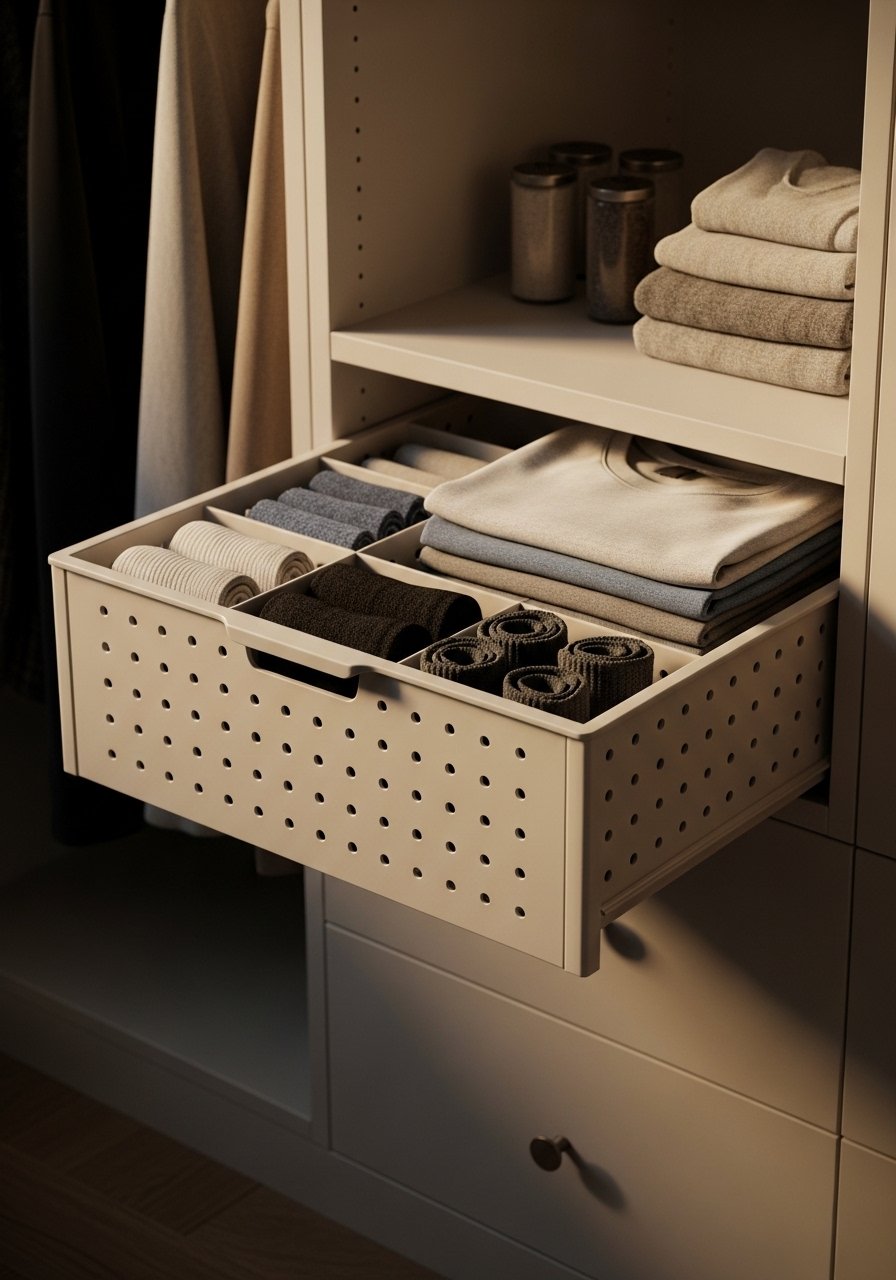
Half-Width Drawers and Cubbies for Everyday Items
If you keep losing socks in open shelving, add shallow drawers or cubbies. I retrofitted a lower shelf with three half-width drawers for underwear, socks, and workout gear. Drawers keep small items accessible but out of sight which makes the closet look tidier. Budget varies. Ikea-style cubbies work if you want an inexpensive option. I use shallow fabric drawers that slide in and out easily. The mistake is making drawers too deep for socks. Keep them 4 to 6 inches deep for small items. This pairs nicely with the linen bin setup above for seasonal swap storage.
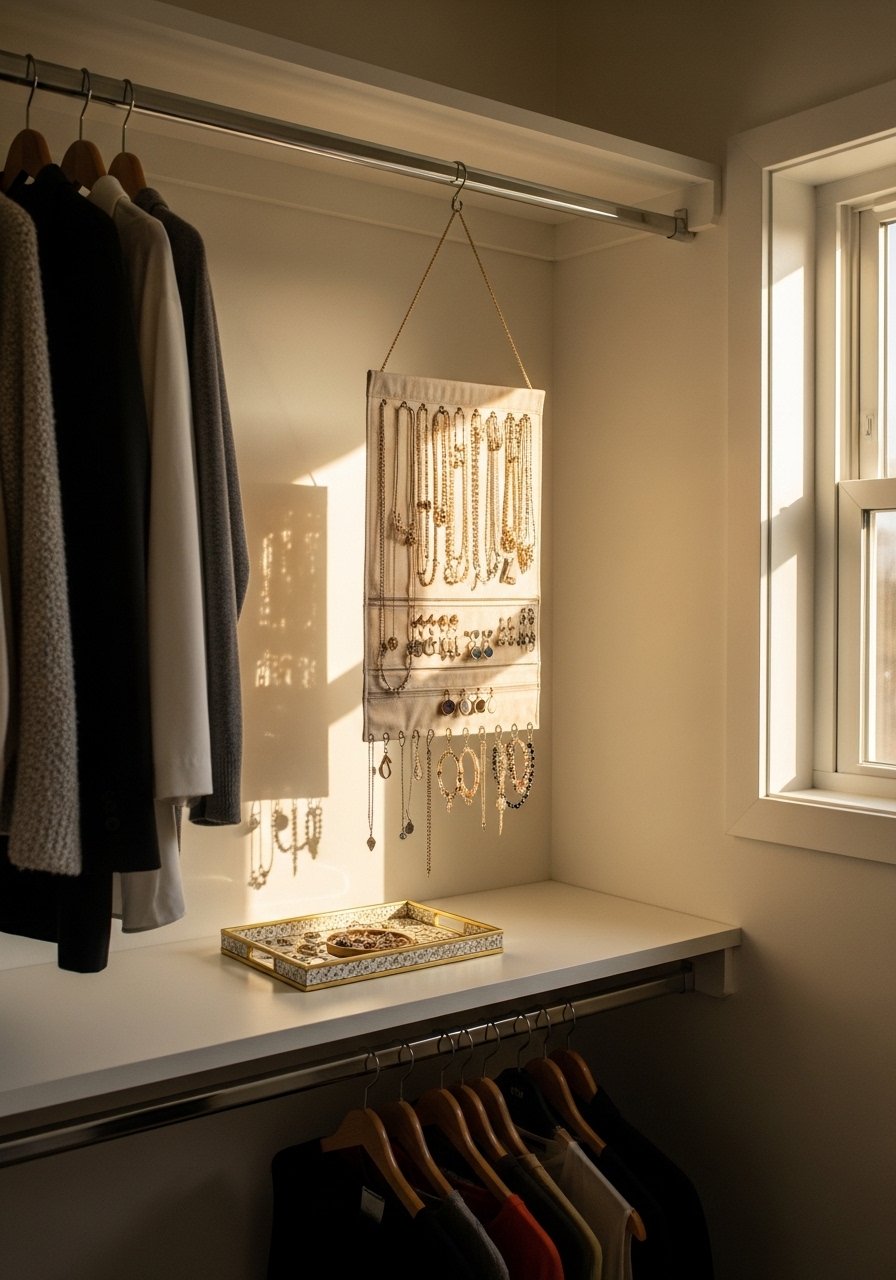
Hanging Organizers for Accessories and Jewelry
I once dumped a tangle of necklaces on the shelf and they never recovered. A hanging jewelry organizer with clear pockets keeps earrings, rings, and necklaces untangled and visible. I hung mine on the inside closet wall and it freed up a drawer for socks. I prefer a fabric organizer with zip pockets for dust protection. Try this hanging jewelry organizer that fits behind a door or on a hook. People often use one tiny tray for everything. Create zones instead, one for fine jewelry and one for costume pieces, so getting dressed is quick and less stressful.
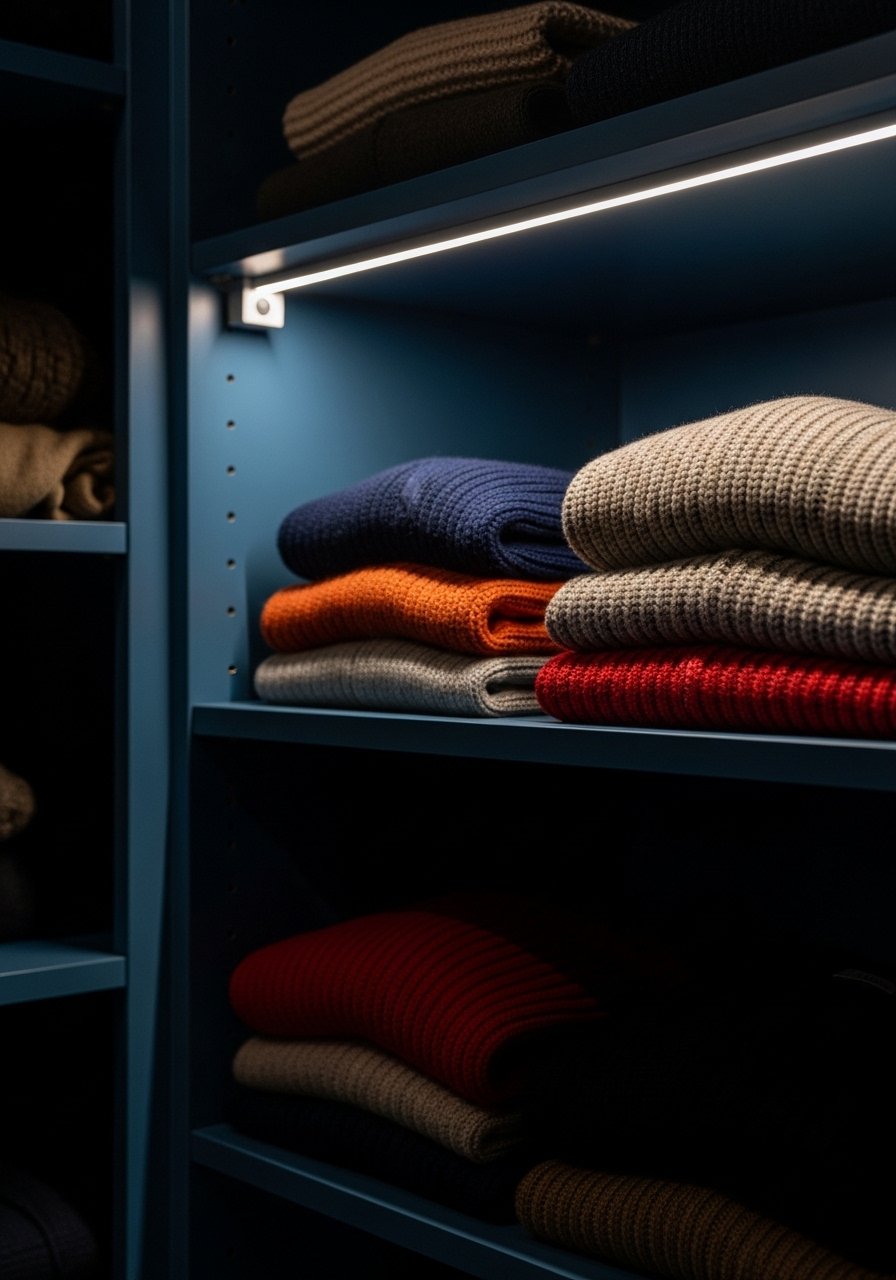
Paint, Wallpaper, and Lighting to Improve Visibility and Mood
You can make a tiny closet feel intentional with paint and a small light. I painted my closet deep navy and added an LED strip on the shelf lip. Suddenly every item looked like it belonged. The light helps find that lone sock in low light and the darker paint gives depth so shelves do not read cluttered. Use a battery-operated LED strip like this stick-on LED closet light if wiring is not an option. A common mistake is painting everything white and expecting clarity. A contrast color helps your items pop and makes the space feel planned.
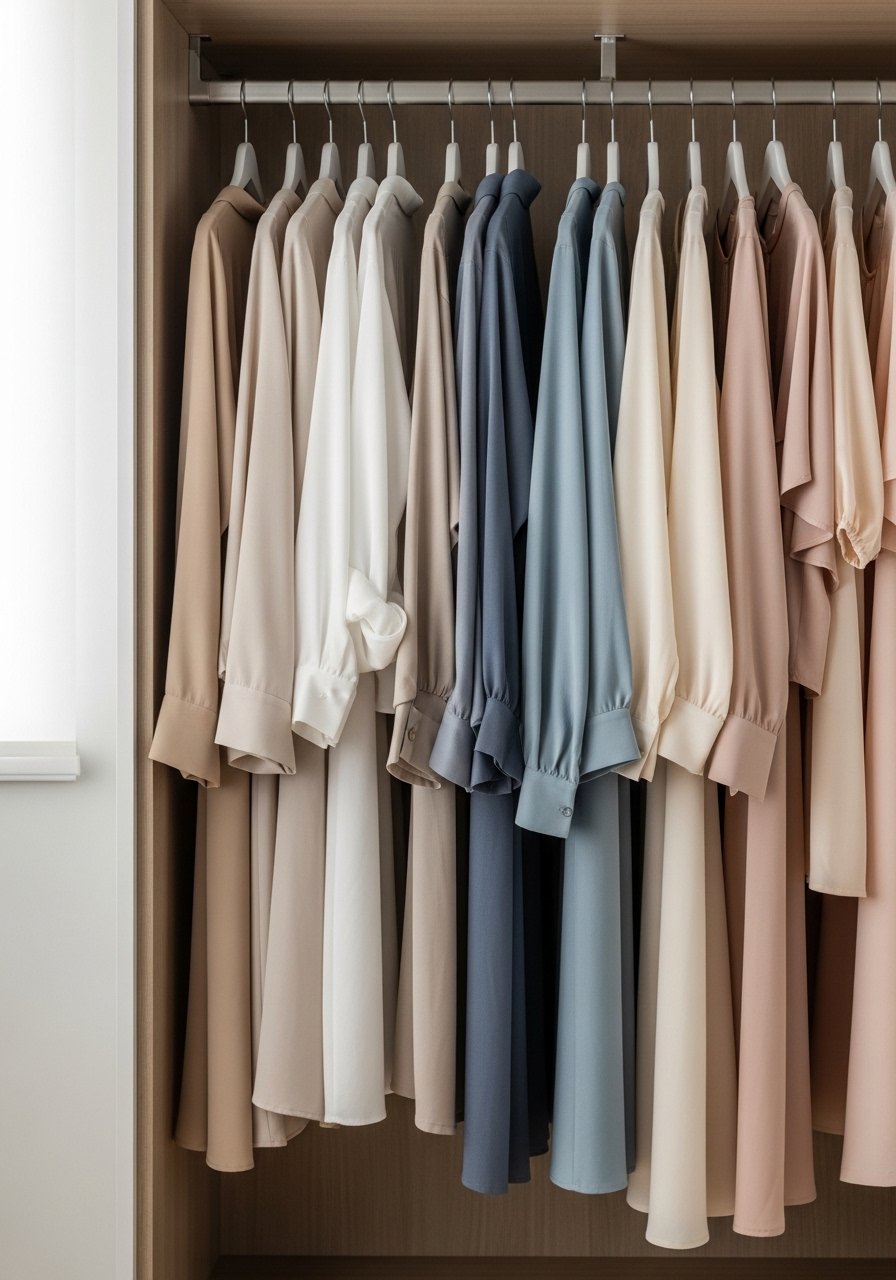
Capsule Wardrobe and Color Coding for Faster Outfits
At some point mornings were a battle. I built a small capsule wardrobe in the closet with a color palette and a rule of 80/20 for neutrals versus accents. That meant 80 percent neutral basics and 20 percent brighter pieces. I grouped tops by color and style and kept casual shirts on the left, dress shirts on the right. For this, I used simple drawer dividers and color-blocked hangers. The common error is treating every item equally. Limit the number of accent pieces and rotate seasonally. Pair this with the slim hangers idea for a polished, calm look.
Your Decor Shopping List
Textiles
- Honestly the best $30 I have spent. Slim velvet hangers, 50-pack for a uniform look
- Clear stackable storage boxes, medium (~$25). Use for sweaters and seasonal shoes
Wall and Shelving - Under-shelf storage basket, 12-inch (~$15) for bags and belts
- Shelf dividers, metal set of 4 (~$20) to keep stacks upright
Hooks and Hardware - 3M adhesive hooks, pack of 12 for hats and bags, similar at Target
Lighting and Accessories - Battery-operated LED closet light strip (~$20) for quick lighting
- Over-the-door shoe organizer with clear pockets (~$25). Great for small closets
Shopping Tips
White oak beats dark wood in 2026. Design feeds have shifted completely. White oak floating shelves look current and warm.
Grab slim velvet hangers for $30. Replace mismatched hangers in one session and the whole closet feels cohesive.
Curtains should puddle or kiss the floor, never hang halfway up. Most people hang curtains right at the window frame. That is why their rooms look shorter than they are. For closet curtains use 96-inch linen panels.
Buy clear boxes with lids so insects are not a surprise. Clear stackable storage boxes keep seasonal items visible.
One large plant has more presence than five tiny ones. If you want greenery by the closet, try a small artificial tree like this faux fiddle leaf fig, 4ft.
Frequently Asked Questions
Q: How do I stop clothes from wrinkling on a double rod?
A: Leave about two fingers of space between hangers and use slim hangers so fabric lays flat. Set the upper and lower rod 40 to 44 inches apart so shorter items do not touch.
Q: Will painting a closet dark make it look smaller?
A: Not if you add a light. A darker paint adds depth and makes shelves recede. Add a stick-on LED strip so you can actually see items and nothing becomes a mystery.
Q: Can I mix clear boxes and linen bins without it looking messy?
A: Yes. Use a repeating pattern, like two clear boxes then one linen bin. Repetition keeps variety from reading as clutter. Also keep labels consistent in size and handwriting style.
Q: What size should shoe pockets be in an over-the-door organizer?
A: One pocket per pair for flats and sandals. For boots use clear boxes on the top shelf. Overloading pockets hides shoes and creates a wrestling match every morning.
Q: How often should I reassess my capsule wardrobe?
A: Every three months works for most people. If something has not been worn in that time, consider donating it. Rotate seasonal items into clear boxes so you are not tempted to keep everything visible.