
Spent $400 on closet doors last year. Closet still felt chaotic until I swapped mismatched hangers, added a clear shoe system, and labeled baskets. Suddenly everything was findable and I stopped buying duplicates.
My living room had nice furniture and decent lighting but it still felt like a waiting room. A friend walked into my apartment last month and said "this looks like a real adult lives here." Highest compliment I have ever received. These closet organization ideas lean modern-meets-practical. Most projects are under $50, with a few splurges around $80. They work for bedroom closets, entry closets, and small walk-ins.
Uniform Hangers For A Clean Minimalist Closet
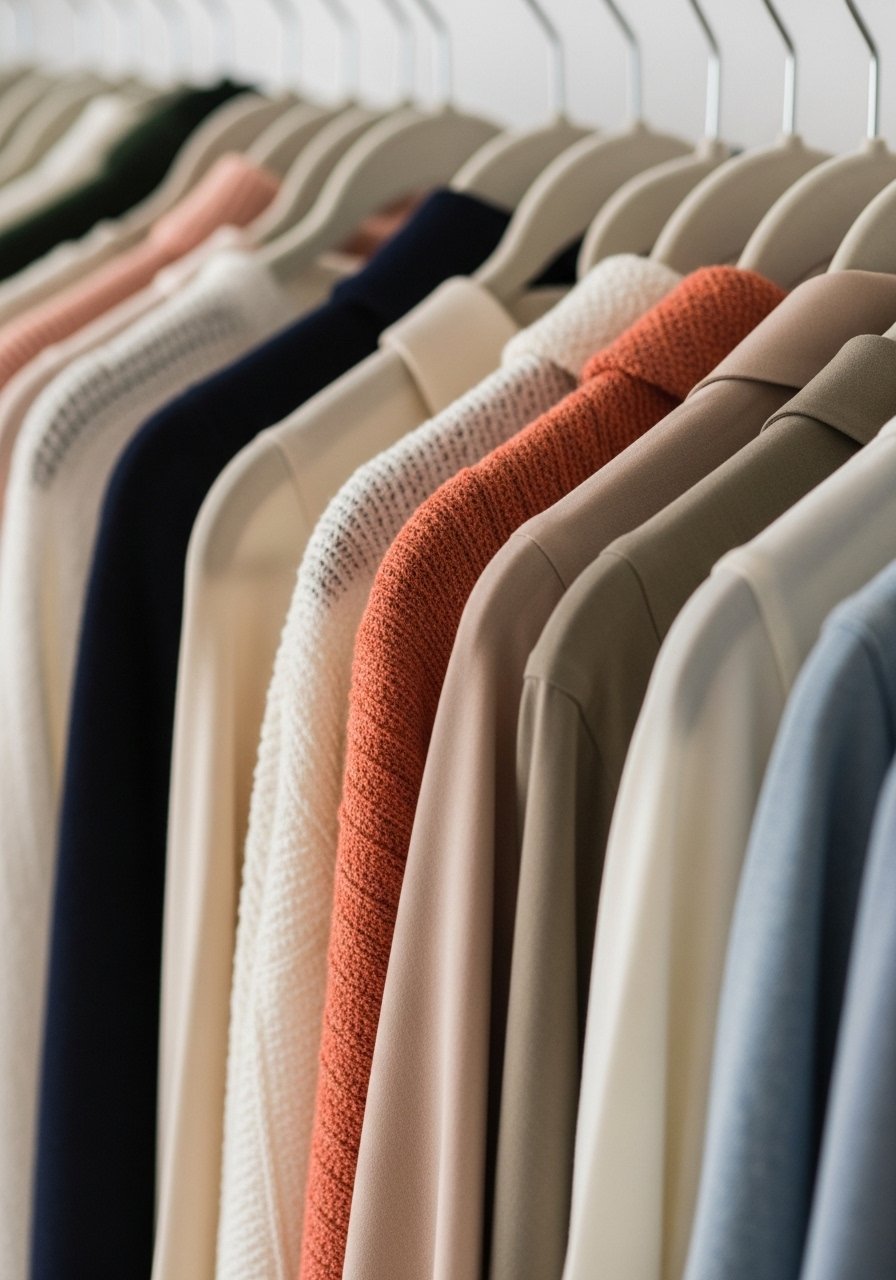
The moment I swapped my cheap plastic hangers for a uniform set, mornings got easier. Using slim velvet hangers creates a flat visual plane, which makes the whole closet read larger. Aim for hangers 0.4 inches thick and leave roughly one inch between garments for airflow and visibility. I use a slim velvet hanger set for about $25 per dozen. Common mistake, people cram every hanger together. That kills visibility and wrinkles clothes. Pair this with the double rod trick below for short items to follow the rule of three when arranging sleeves, collars, and pants.
Double Hanging Rod For Small Bedroom Closets
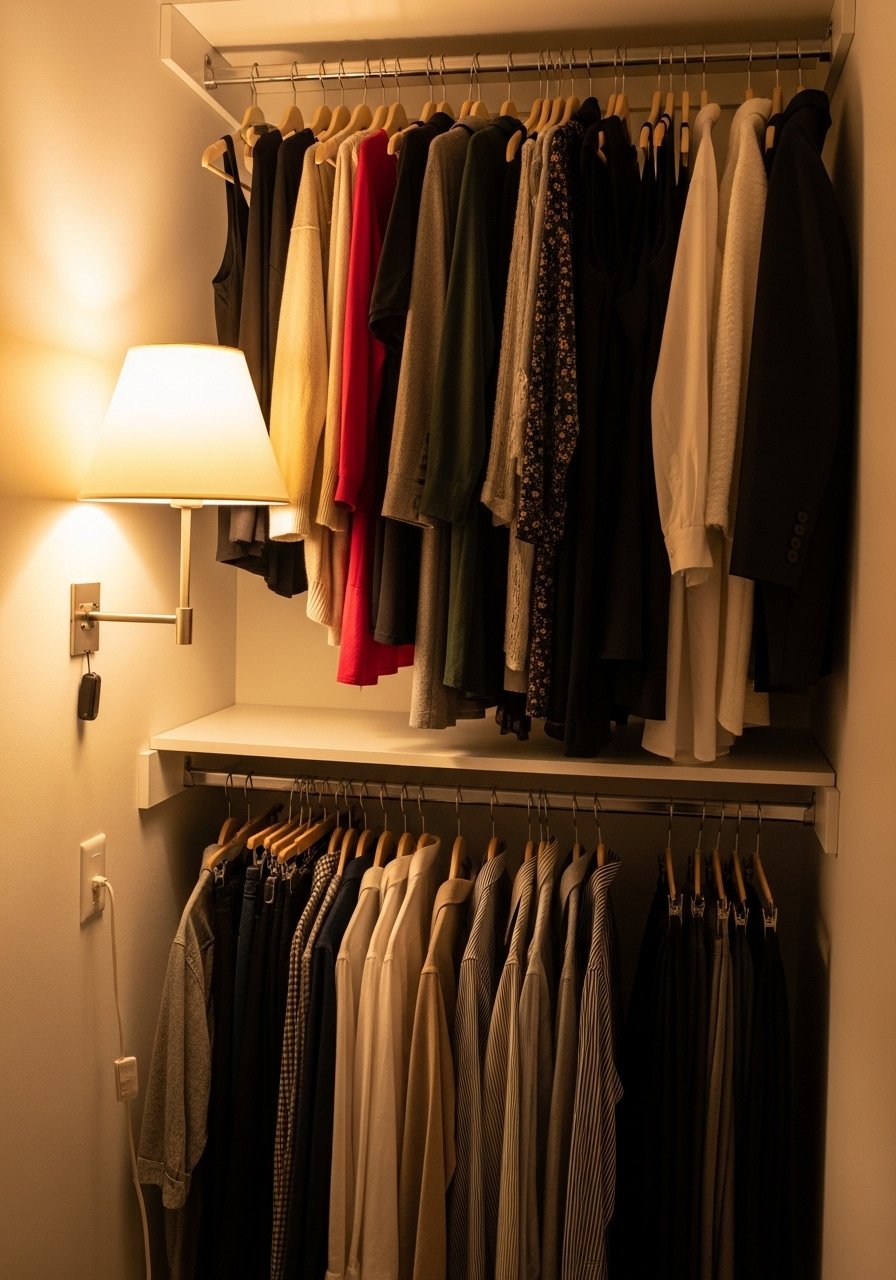
Most small closets waste vertical space. Adding a second rod gives you nearly double the hanging capacity. Standard spacing is 38 to 42 inches apart so shirts hang freely on the top and trousers on the bottom. I installed a tension double rod for an inexpensive renter-friendly option. Budget is under $30 if you DIY. People forget to measure from the floor to the bottom hem of the longest item before drilling. If you have coats, leave one side single height so long pieces have room.
Tiered Shelf Dividers For Folded Sweaters And Jeans
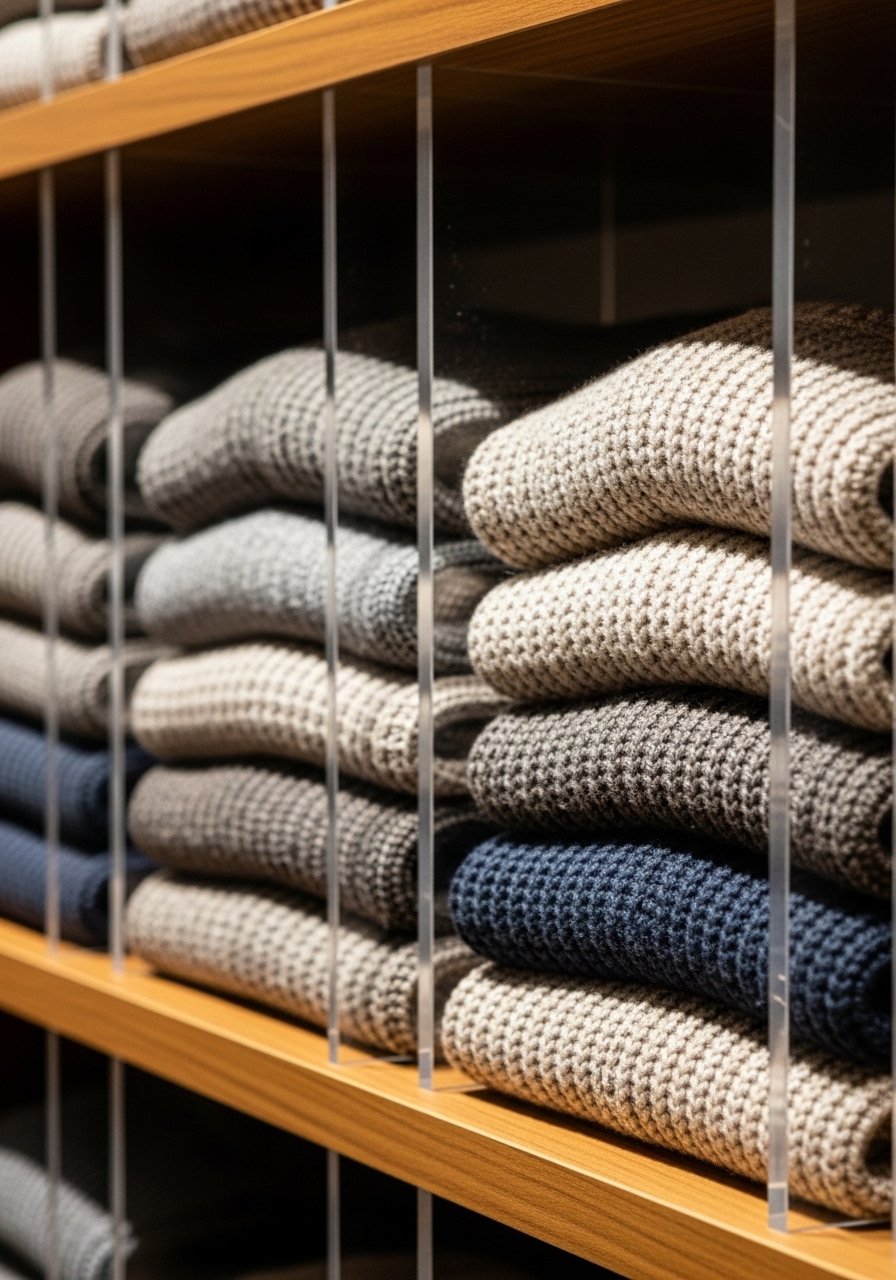
Sweaters collapse into a messy pile fast. Use tiered shelf dividers to keep stacks neat and visible. A 12-inch deep shelf works best for folded sweaters. I set a max of four sweaters per stack so the bottom ones do not get crushed. These wooden shelf dividers are under $20 each and pull the eye into tidy vertical lines. A mistake is folding everything the same way. Fold jeans differently from knits so the edges line up and you can see the waistband. This trick pairs well with labeled baskets for seasonal rotation.
Over-The-Door Shoe Organizer For Entry And Closet Doors
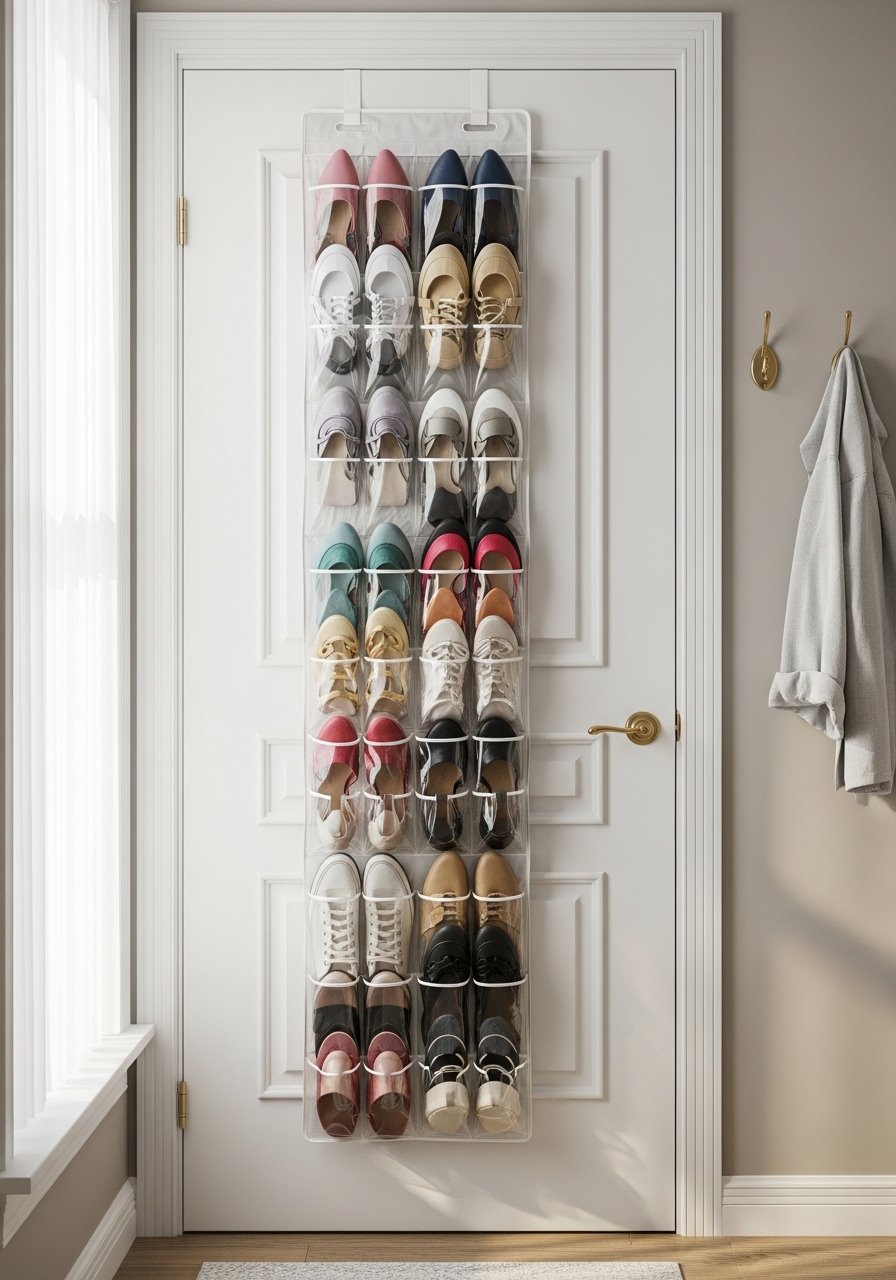
My entryway used to be a pile of shoes. An over-the-door shoe organizer saved the floor and made grabbing shoes a one-motion habit. Clear pockets make each pair visible and cut decision time in half. I prefer a sturdy fabric version not plastic to avoid creasing. Grab a clear pocket shoe organizer for around $20. Common mistake, people overload the pockets. Two shoes per slot is fine. This is perfect for apartment closets, mudrooms, and dorms where floor space is precious.
Clear Drawer Dividers For Socks, Underwear, And Accessories
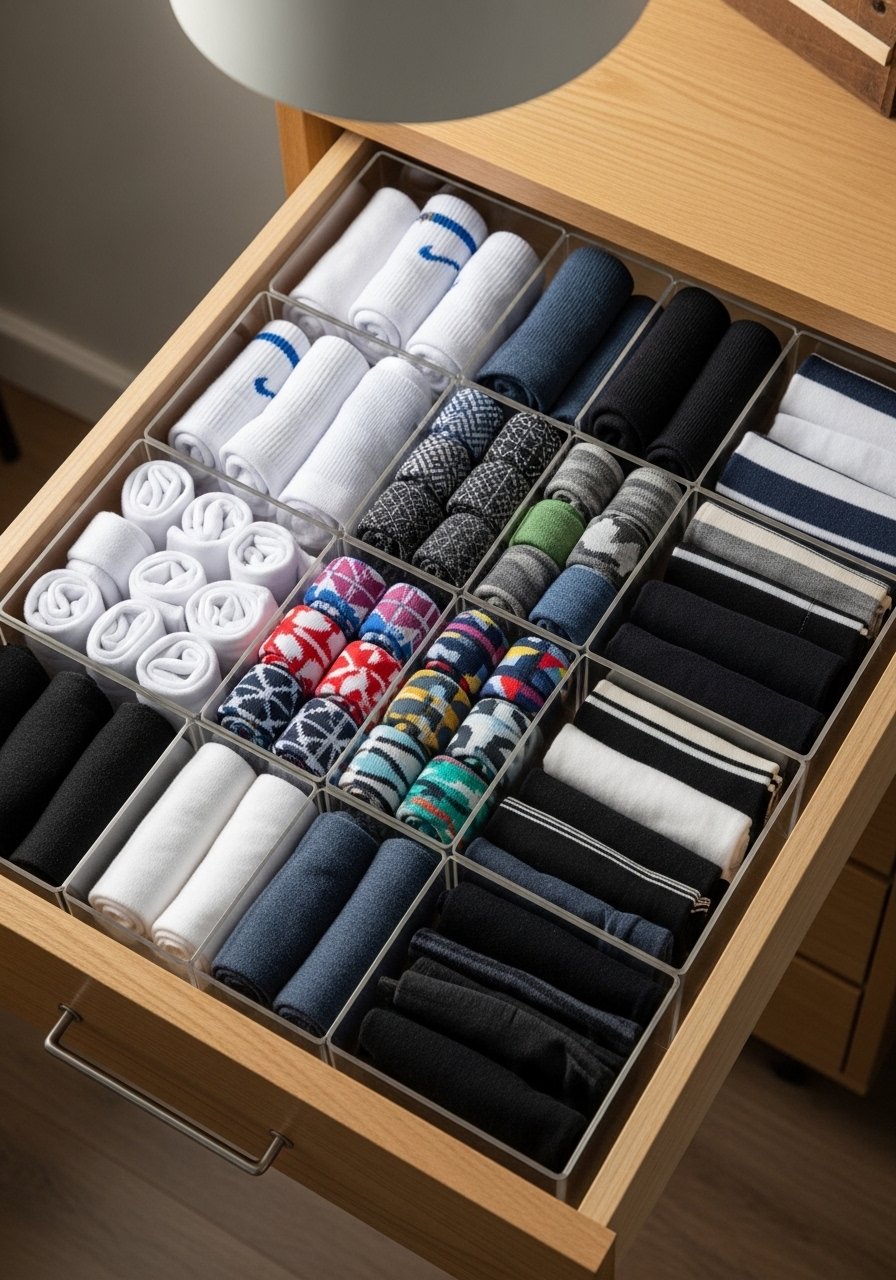
I never found matching socks until I added clear drawer dividers. They force you to assign a spot, which reduces the morning scramble. Use 3 to 5 compartments depending on drawer width and keep similar items grouped by color using an 80/20 color ratio, 80 percent neutrals and 20 percent accent. These clear drawer organizers are under $25. A common error is buying oversized dividers that leave dead space. Measure inside the drawer and plan compartments so you can flip a stack easily without creating a mess.
DIY Pegboard Jewelry Organizer For Necklaces And Rings
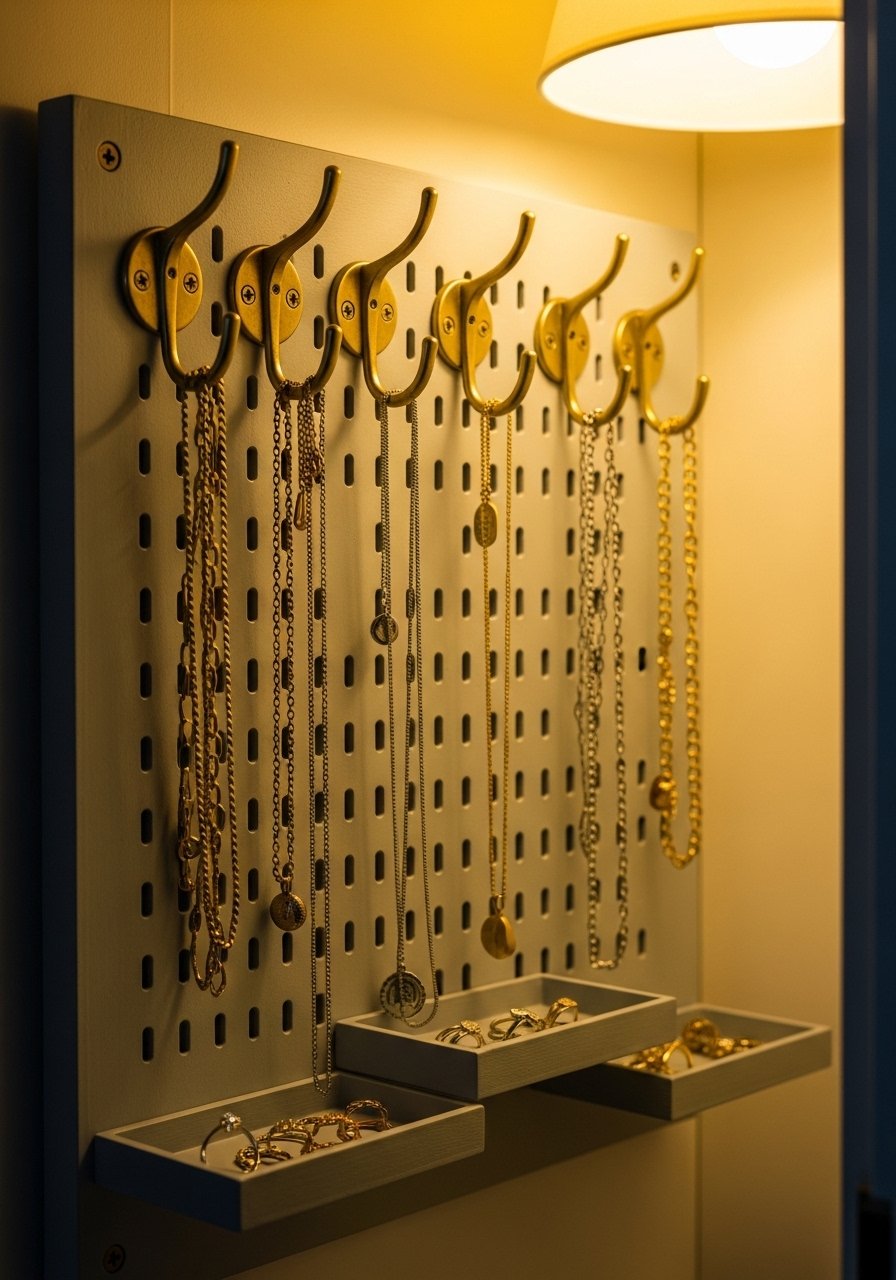
Necklaces once tangled into a knot every week. A pegboard mounted inside the closet door keeps chains untangled and visible. I paint mine to match the closet trim and use a mix of peg sizes. Use 1.5-inch spacing between pegs for most necklaces. Add a small magnetic tray to hold rings and studs. People hang everything on a tiny hook and then wonder why it looks messy. This is a great low-cost project under $30 that keeps accessories wearable and not hidden.
Repurposed Ladder For Cozy Scarf And Belt Storage
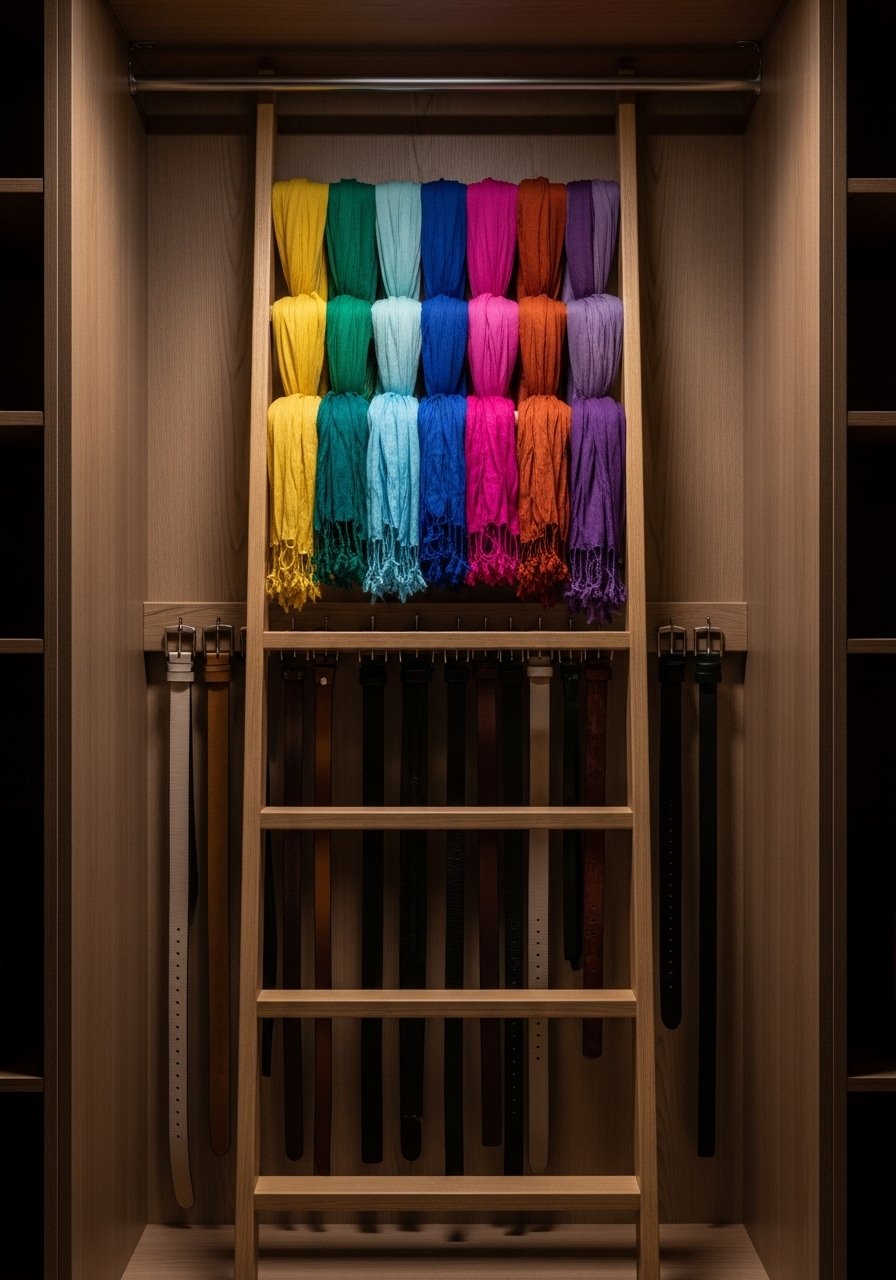
There is something about seeing scarves on a ladder that makes you reach for one. A slim leaning ladder gives you vertical storage without drilling. Use the top rungs for lightweight scarves and the lower rungs for belts. Keep scarves grouped in threes by color or pattern to follow the rule of three when styling. I keep mine next to a full-length mirror so outfits come together faster. Found a distressed wooden ladder for under $50. Renter mistake, leaning it against a slick base. Add a rubber pad so it stays put.
Labelled Baskets For Seasonal Rotation And Quick Access
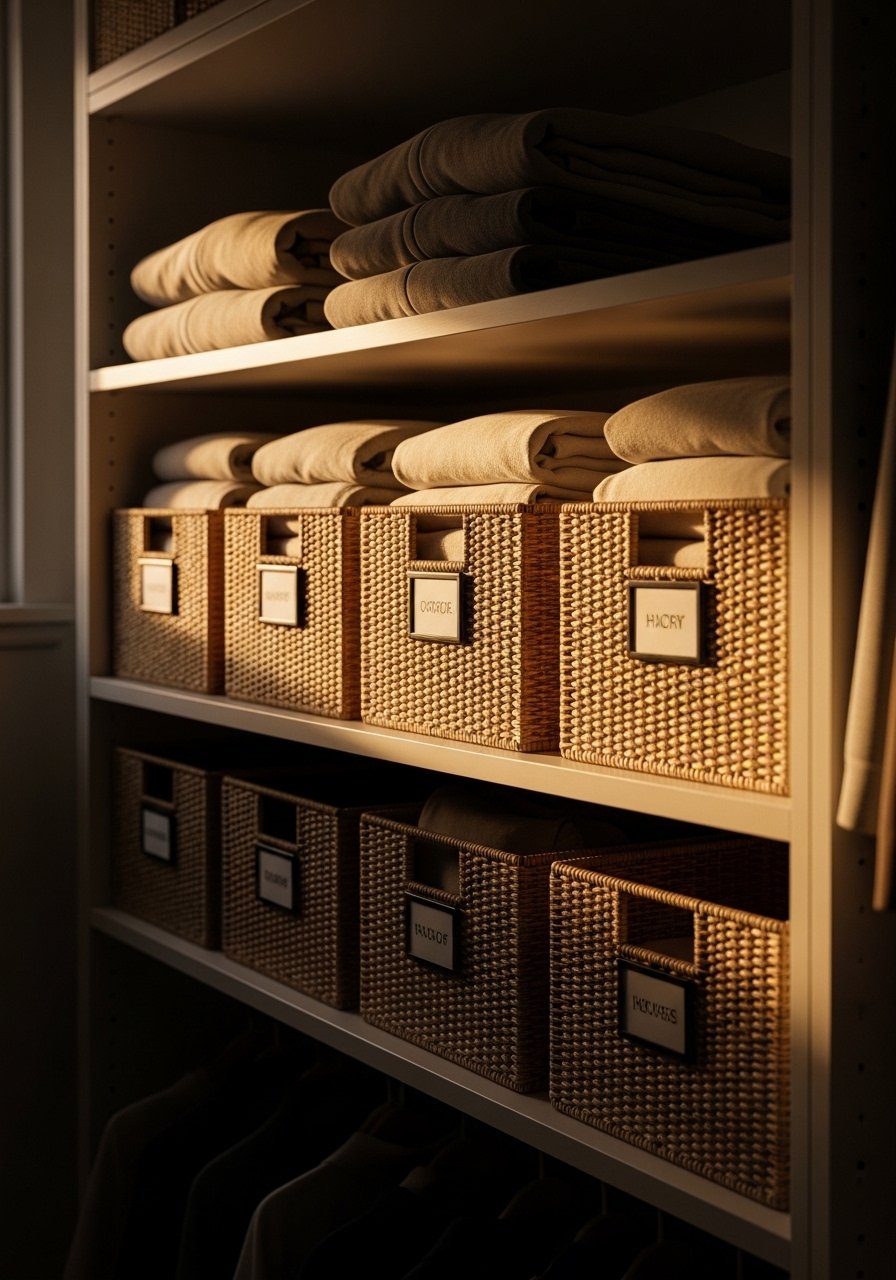
Seasonal clutter vanishes when every category has a basket. I label mine with a simple white label that faces outward. Use baskets on a top shelf with at least 10 to 12 inches of clearance so you can pull one out without knocking the others. I store swimsuits and beachwear in one, winter accessories in another. These wicker storage baskets with labels are about $20 each. A common mistake is not labeling with real words. Vague labels like "stuff" will get ignored. Rotate baskets every three months to avoid seasonal surprise.
Slim Velvet Hangers For A High-Capacity Minimal Closet
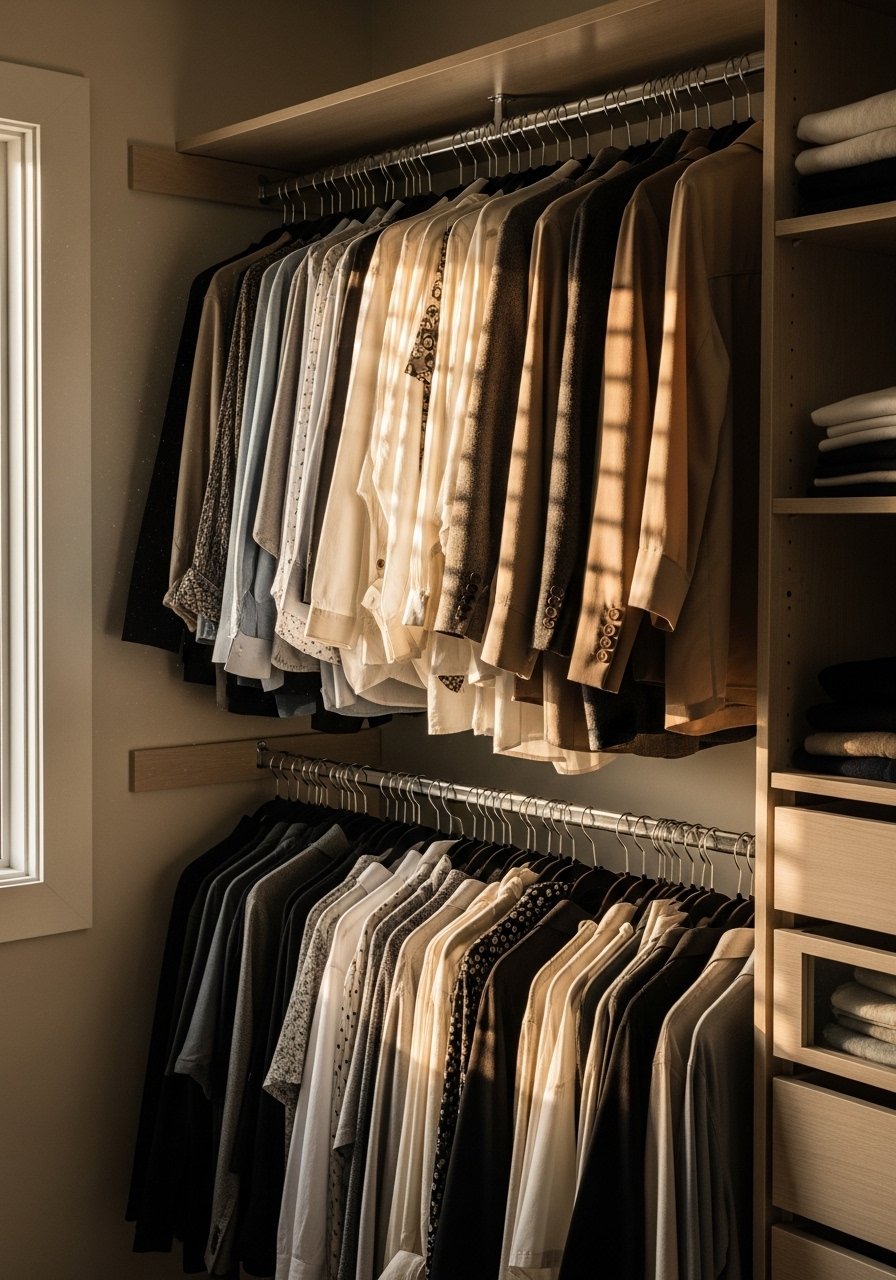
Slim velvet hangers save space and reduce clothes slipping off. They cut hanger thickness roughly by half versus plastic hangers so you gain real capacity. I swapped to a set and gained about 20 percent more hanging room. The non-slip velvet hanger pack runs around $30 a dozen. Mistake, people mix hanger types and it ruins the uniform look. For a clean minimalist closet, match black hangers with neutral clothes to keep the visual weight balanced.
Under-Shelf Baskets To Add Hidden Shelf Space
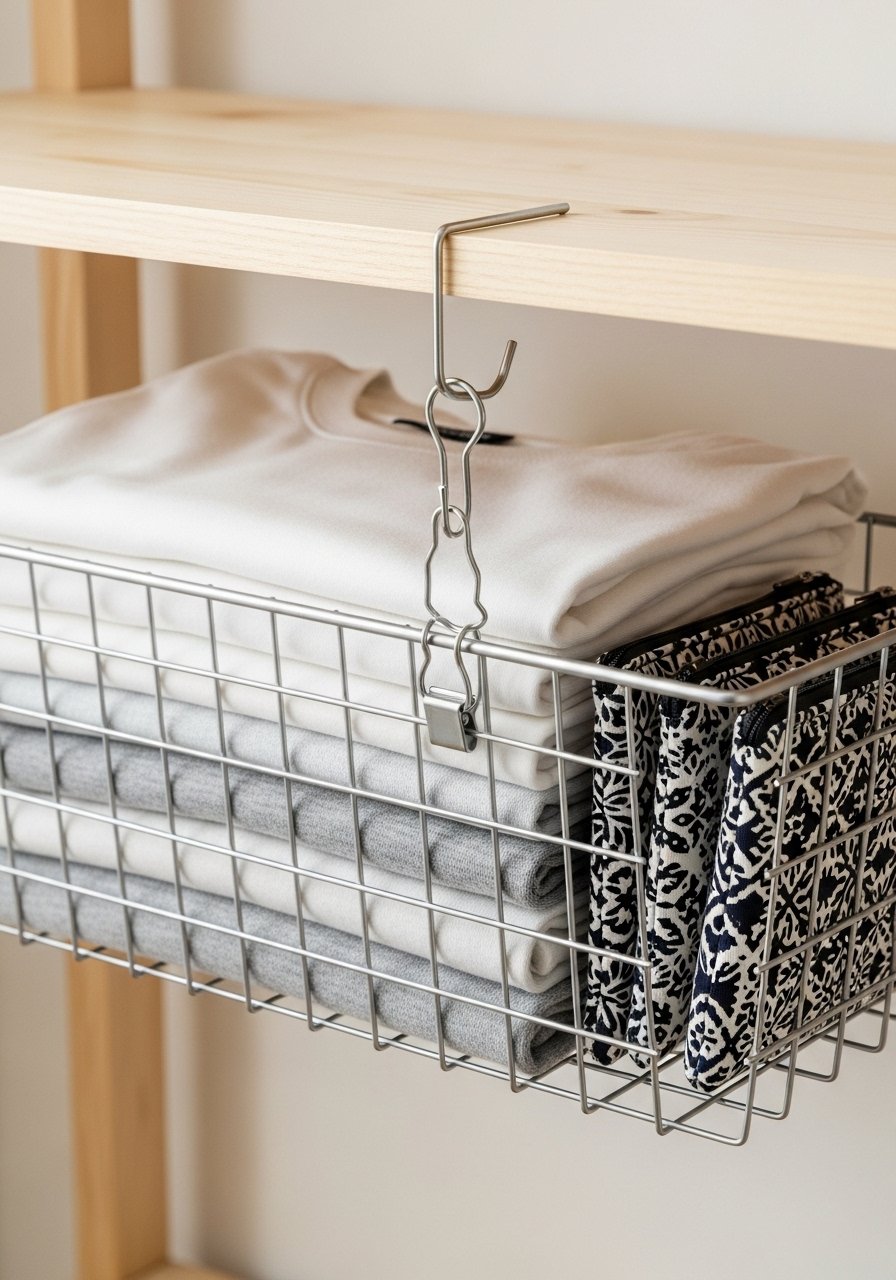
If you have deep shelves, under-shelf baskets create hidden, accessible storage for camisoles, belts, or extra socks. They hook onto a 12-inch deep shelf and slide out easily. I stash spare hangers and seasonal gloves here. These under-shelf wire baskets are about $18 each. Common mistake, people cram the basket which then sags. Keep each basket at 70 percent capacity so it remains easy to pull out and put back without collapsing.
Magnetic Strip For Metal Accessories And Small Tools
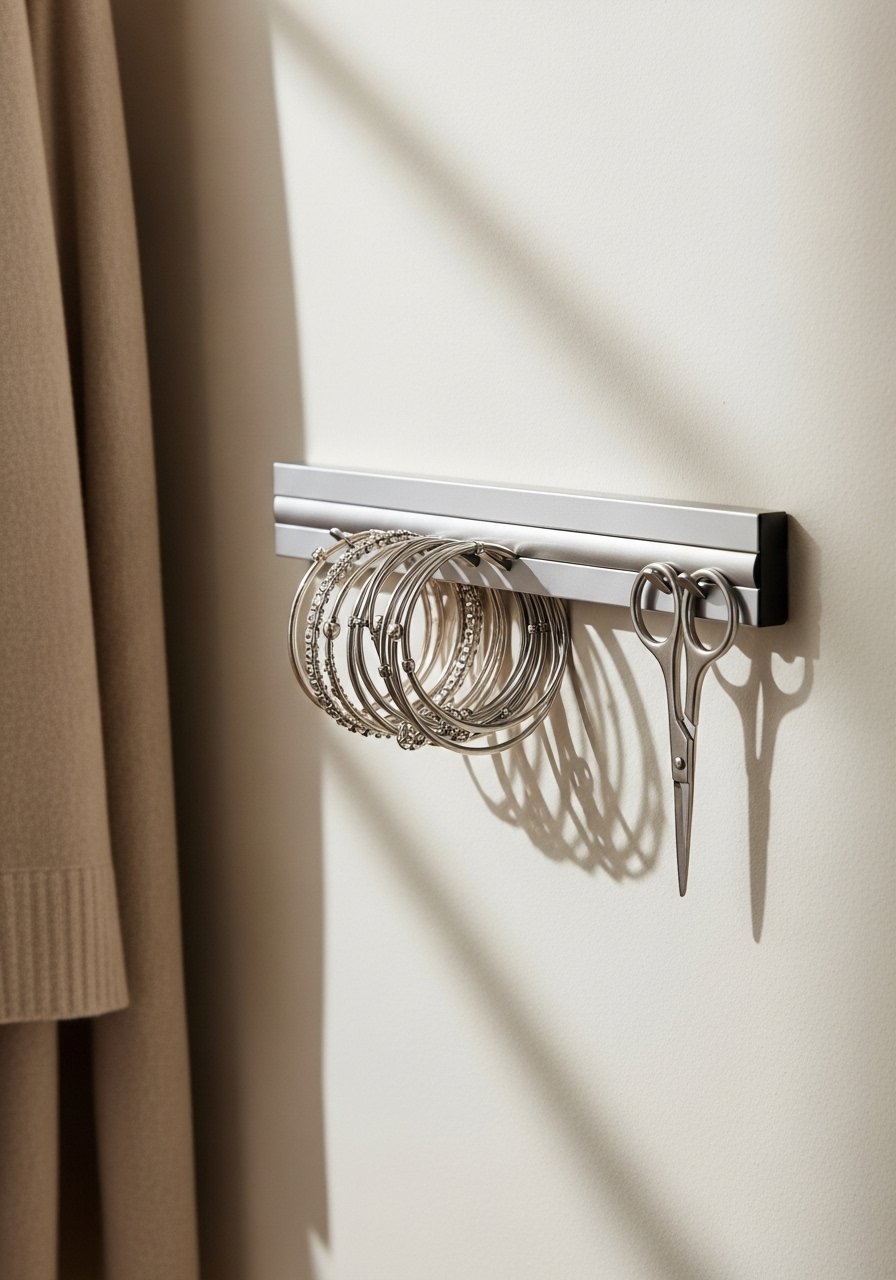
A magnetic strip is a tiny detail that saves time. I mounted one inside the closet to hold metal bracelets, hair clips, and a seam ripper. It keeps small metal items from getting lost in drawers. Use a 12-inch strip for a standard closet and place it eye level. This magnetic strip organizer costs under $15. The usual mistake is installing it too high where you need a step stool. Keep it reachable so it actually gets used.
Rolling Cart For Flexible Kids Closet And Toys
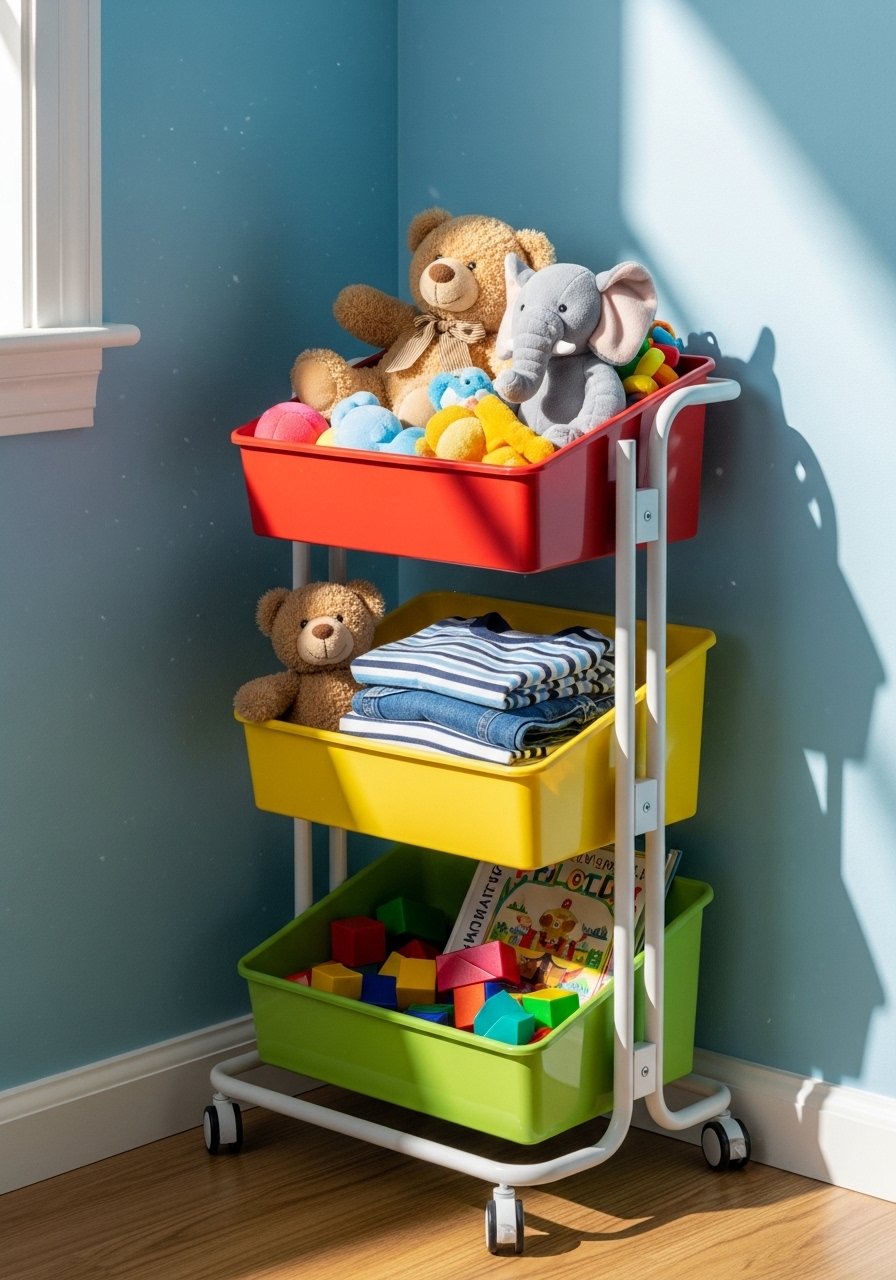
Kids closets need to adapt fast. A slim rolling cart gives you movable storage for socks, PJ sets, and small toys. I use color-coded bins so my kid helps tidy. Choose a cart under 14 inches wide to fit a standard closet aisle. A three-tier rolling cart is around $45. People anchor everything permanently and then cannot reconfigure when needs change. This mobile approach grows with the child and works well next to the over-the-door organizer idea earlier.
Hooks And Catch-All Tray By The Closet Door For Daily Gear
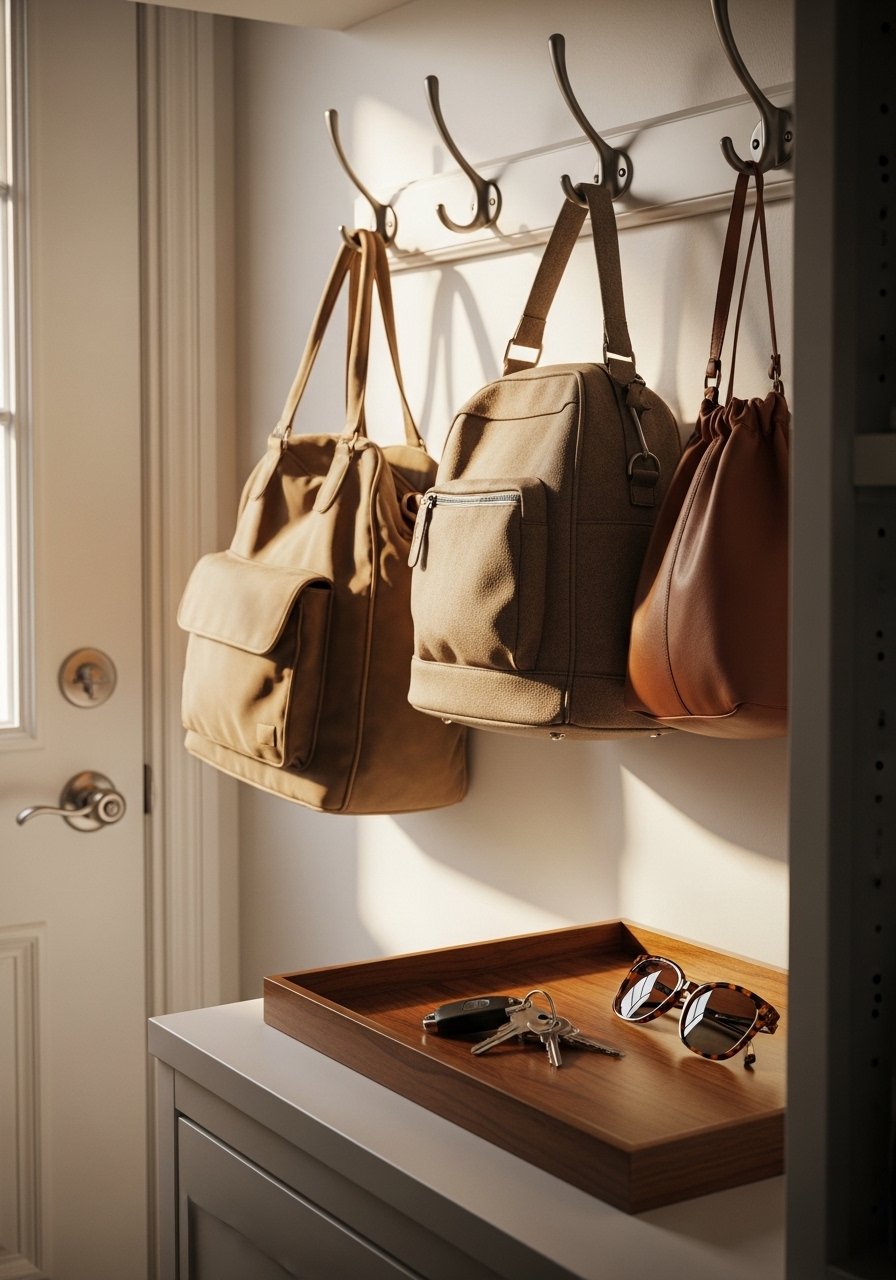
The first place I look for my bag is the back of the closet door. Hooks and a catch-all tray reduce the dump zone. Install three hooks at staggered heights for bags, hats, and a daily coat. Add a shallow tray 6 by 9 inches for keys and sunglasses. I use a wall hook set and a wooden catch-all tray. Common mistake, placing the hook too high. Keep the lowest hook at about 48 inches so everyone in the house can reach it.
Shoe Cubby With Tilted Shelves For Better Visibility
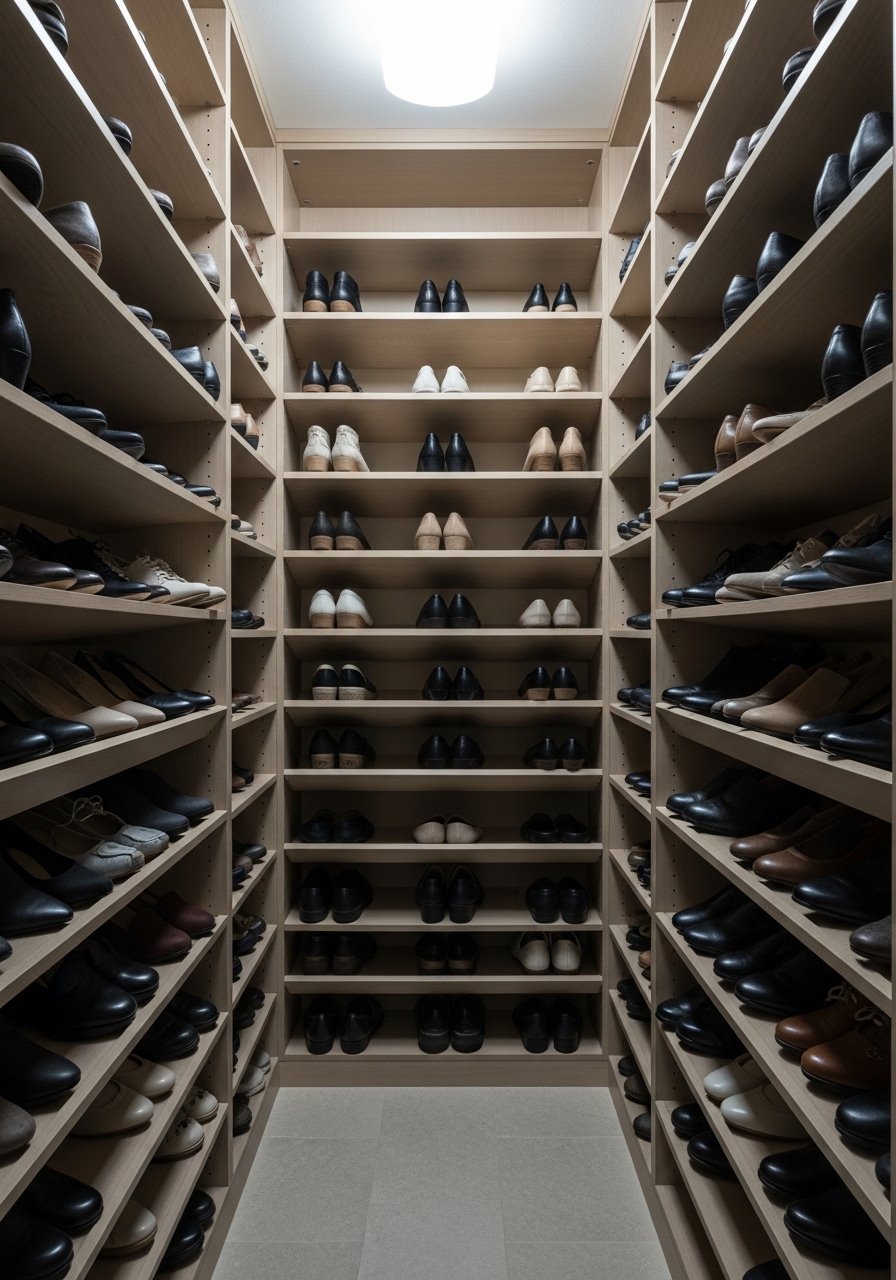
Most shoe racks hide the toe and make outfit pairing slow. Tilted shelves show the shoe fronts and double the number of visible pairs. Use 6-inch shelf depths and space shelves 6 to 7 inches apart for flats, 9 to 10 inches for sneakers. I made a simple cubby and used tilted shoe shelf inserts to retrofit an old shelf. Mistake, stacking shoes directly on top of each other. Visibility beats vertical hoarding every time.
Photo-Mood Outfit System On The Inside Door For Faster Mornings
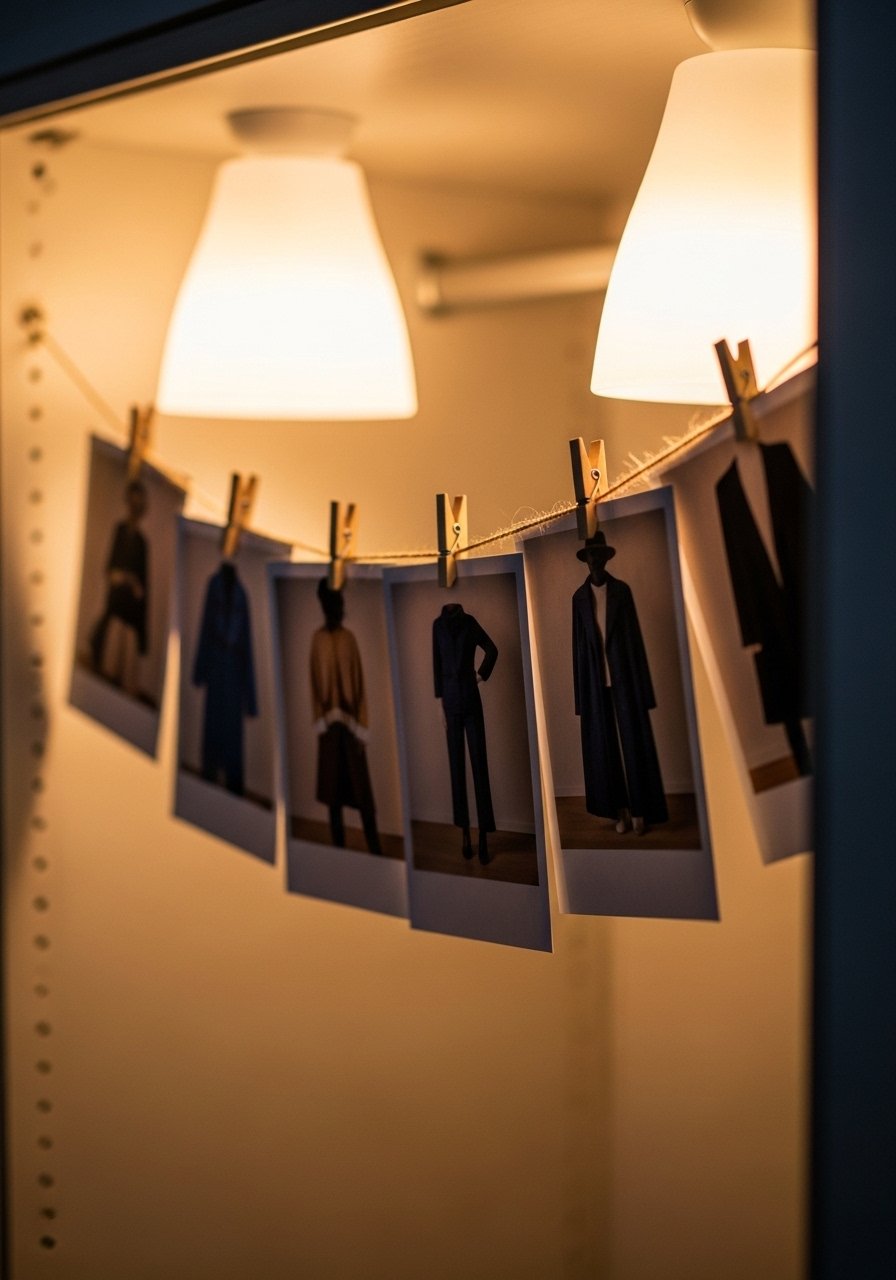
I started photographing complete outfits and clipping the photos inside the closet door for busy mornings. It removes guesswork and helps you stick to a color ratio or style mood. Use clothespins on a 3-foot cotton cord and change photos weekly. This costs almost nothing and creates a visual archive. A tip, take full-length photos and hang them at eye level. If you want a tidy look, store each week in a small photo album slip pocket when outfits change. A common mistake is only photographing tops. Include shoes and accessories so the set is complete.
Your Decor Shopping List
Textiles
- Honestly the best $40 I have spent. Velvet pillow covers, set of 4 in two colors for a layered look
- Chunky knit throw in cream (~$35-55). Drape over the closet stool or bench
Storage and Shelving
- For the double rod trick, grab a tension double hanging rod (~$25)
- Under-shelf wire baskets (~$18). Use for extras and small items
- Wooden shelf dividers to keep sweater stacks aligned
Hangers and Hooks
- Slim velvet hangers pack (~$30 per dozen). Match color across the closet
- Wall hook set for bags and hats
Accessories
- Over-the-door shoe organizer (~$20)
- Magnetic strip organizer for metal accessories
Most of these items have similar versions at Target or HomeGoods if you prefer to see them in person.
Shopping Tips
White oak beats dark wood in 2026. Design feeds have shifted completely. These white oak floating shelves look current, not dated.
Grab these velvet pillow covers for $12 each. Swap them every season and the closet bench reads different without new furniture.
Curtains should puddle or kiss the floor, never hang halfway up. These 96-inch linen panels are right for standard 9-foot ceilings and help frame a closet nook.
Lead with function. Buy a slim velvet hanger set before a decorative bin. You will notice space gain faster than any basket will deliver.
Everyone buys five small succulents. One single 6-foot fiddle leaf fig has ten times the visual impact and makes a closet nook feel like a designed space.
Measure twice. Use a tape and note the 12-inch shelf depth baseline for folded clothes and the 38 to 42-inch spacing for double rods. If you need an all-in-one kit, this closet makeover kit bundles common essentials.
Frequently Asked Questions
Q: How do I choose between clear and woven baskets?
A: Clear baskets are faster for visibility. Woven baskets hide clutter and look nicer on open shelves. For top shelves, woven holds better and hides off-season items.
Q: Will adding a second hanging rod damage my renter closet?
A: Not if you use a tension double rod. It installs without drilling and can be removed. I recommend trying tension first before committing to fixed hardware.
Q: Can I mix metals and finishes in closet hardware?
A: Yes, mix them. A consistent metal family on hooks and knobs helps. Start with one dominant finish and a secondary accent. Mixed metal hooks make it easy.
Q: What is the best way to store delicate jewelry without tangles?
A: Use a pegboard or a magnetic strip for small metal pieces. For delicate chains, hang them individually on small hooks and add a ring tray for studs. The pegboard built into the door keeps things visible and ready.
Q: How many sweaters should I stack on a shelf?
A: Keep stacks to four or fewer. Any higher and the bottom sweater gets crushed and loses shape. Leave about 2 inches of breathing room between stacks so air circulates.
Q: Is a rolling cart worth it for a kid’s closet?
A: Yes, because it moves. Use color-coded bins and keep the cart under 14 inches wide to fit most closet aisles. It adapts as your child changes sizes and interests.
Q: How do I remember outfit combinations without wasting time?
A: Photograph complete outfits and clip them inside the closet door. Having a small visual archive saved in a pocket lets you reuse looks and reduces decision fatigue.