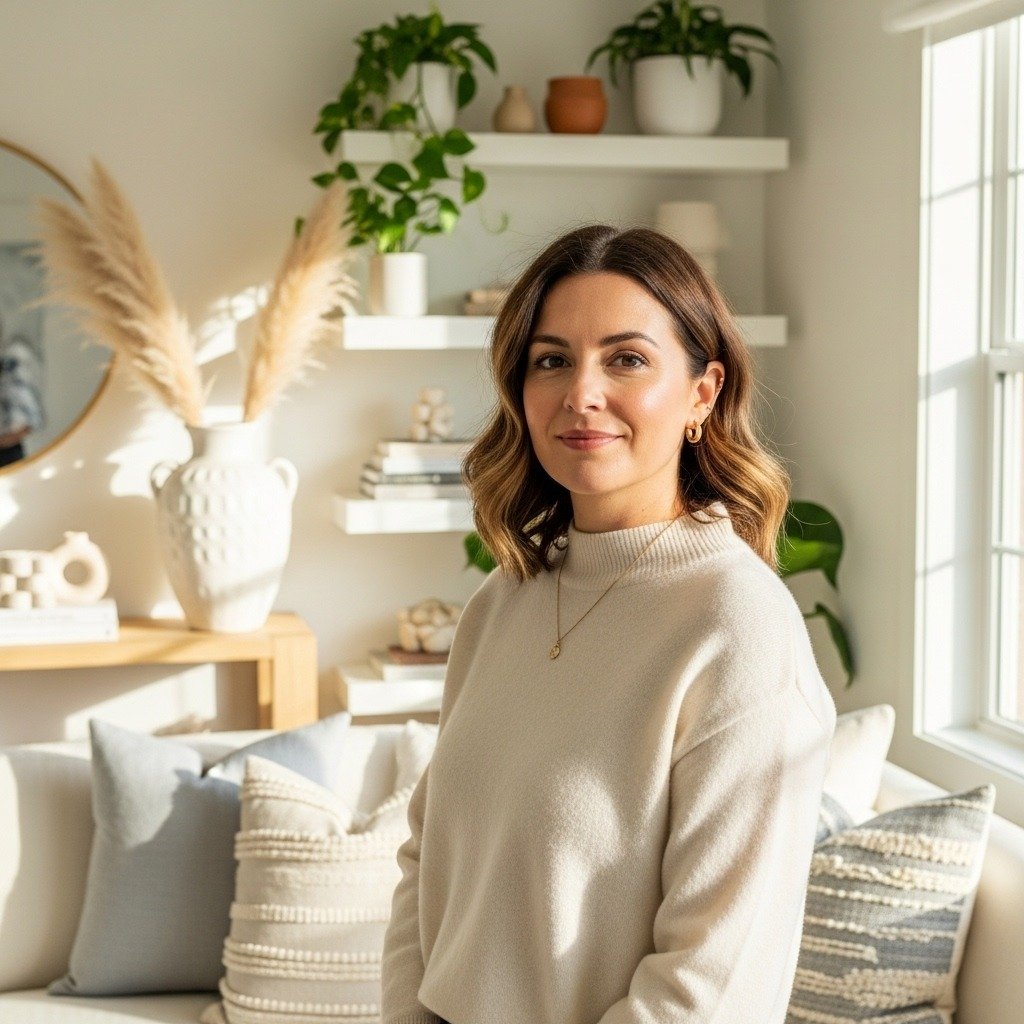
My living room had nice furniture but it still felt like a waiting room. Took me embarrassingly long to figure out it was missing texture. After a few low-cost swaps and a wall treatment that didn’t require a contractor, people actually linger now. These are the do-it-yourself wallpaper ideas that saved space, hid clutter, and made small rooms feel like they belonged to someone.
These ideas lean modern with a touch of cottage warmth. Most projects are under $75, with a couple around $150 if you add hardware. They work for small living rooms, narrow hallways, closets, bedroom nooks, and any spot where you want impact without building more shelves.
Removable Wallpaper on a Single Accent Wall for Cozy Living Rooms
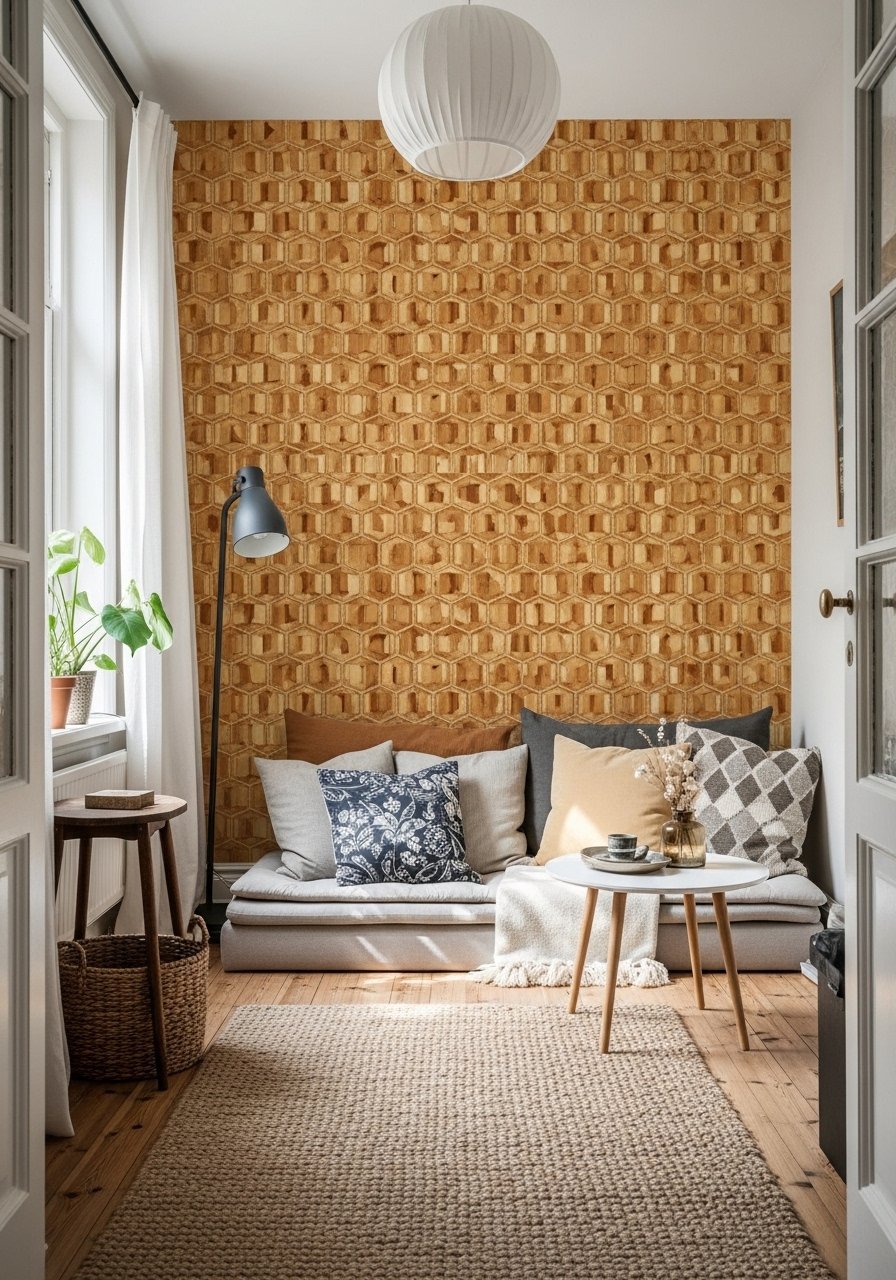
Use removable wallpaper on just one wall to create depth without making the room feel wallpapered all over. I did a 7 by 10 foot wall in a repeating scallop pattern and the room stopped feeling flat. Budget for a mid-range peel-and-stick roll at about $40 to $60. I paired mine with peel-and-stick-geometric-wallpaper to avoid heavy paste and long dry times. A common mistake is cutting panels too small. Match pattern repeats and order extra for alignment. If you rent, pick a paste-free option and save scraps in case you need fixes.
Vertical Stripes to Make Ceilings Feel Higher in Narrow Hallways
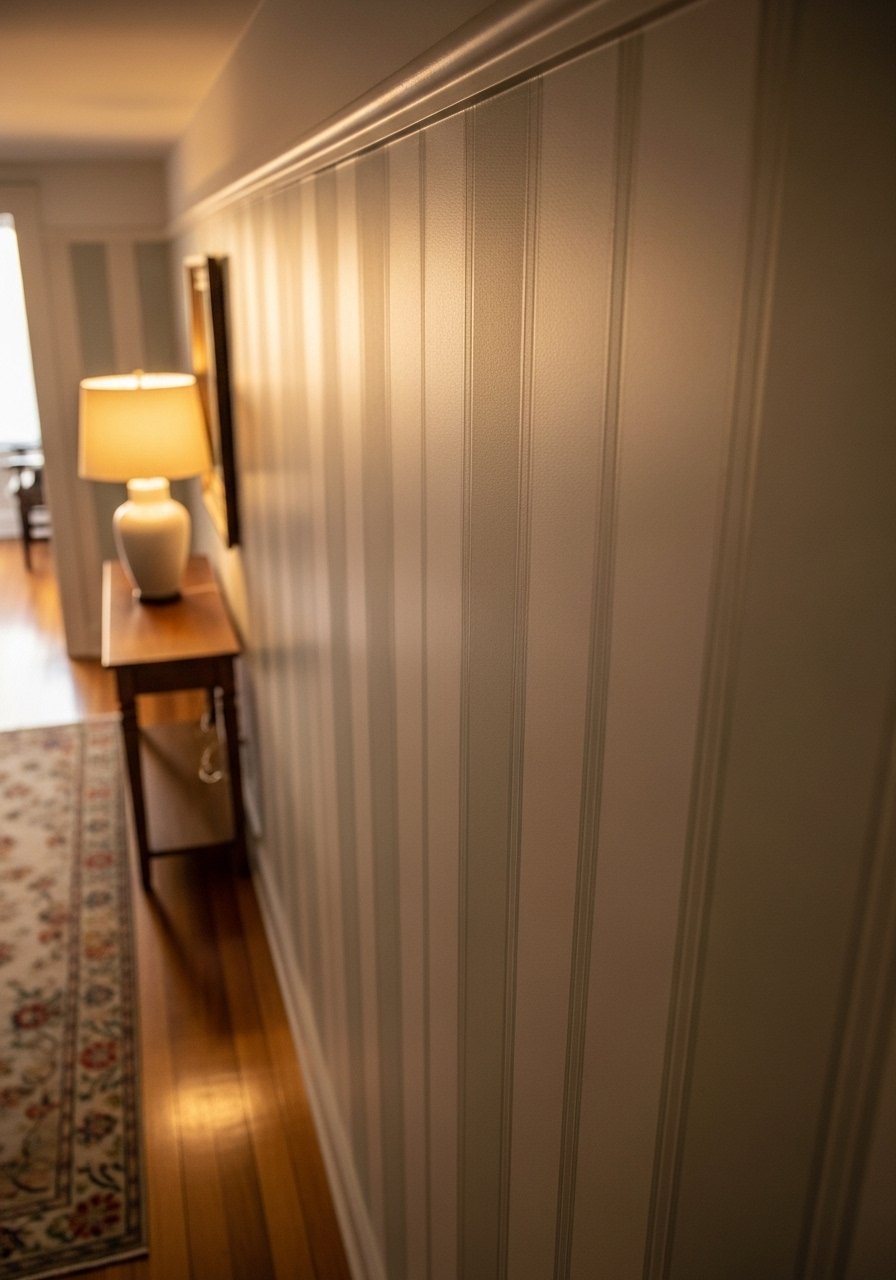
Vertical stripes are simple but dramatic. I used 6-inch-wide stripes on a 3-foot-wide hall and everything read taller. Aim for stripes that are 1 to 1.5 times the width of existing trim to keep proportions right. A renter-friendly peel-and-stick stripe roll like stripe-removable-wallpaper is under $50. People often center patterns over switch plates and end up off-balance. Instead measure from the midpoint of the hall and work outward. Pair this with the mirror idea later for double the height illusion.
Wallpaper Inside Closets to Create a Built-In Look
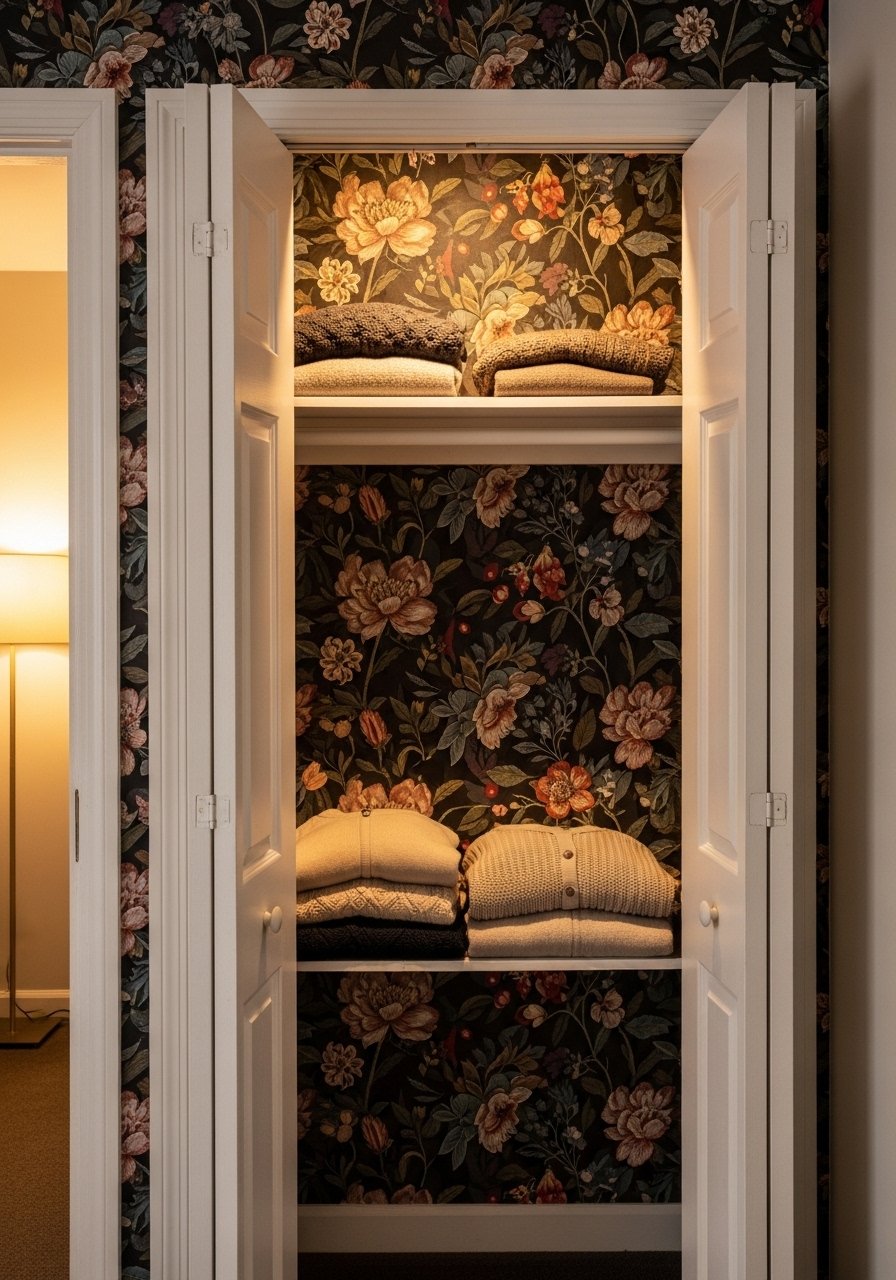
Wallpapering the inside of a closet makes it feel like a planned storage nook rather than an afterthought. I wallpapered a 24-inch deep closet in my guest room and suddenly it read like built-in cabinetry. It cost under $30 if you use a small roll such as removable-floral-wallpaper-sample. A typical error is trying to wallpaper around hardware without removing it. Take doors or rods off and get clean seams. For painted shelves, use a matte pattern so folded clothes do not show every print through thin fabric.
Wallpaper on Closet Doors to Save Visual Space in Bedrooms
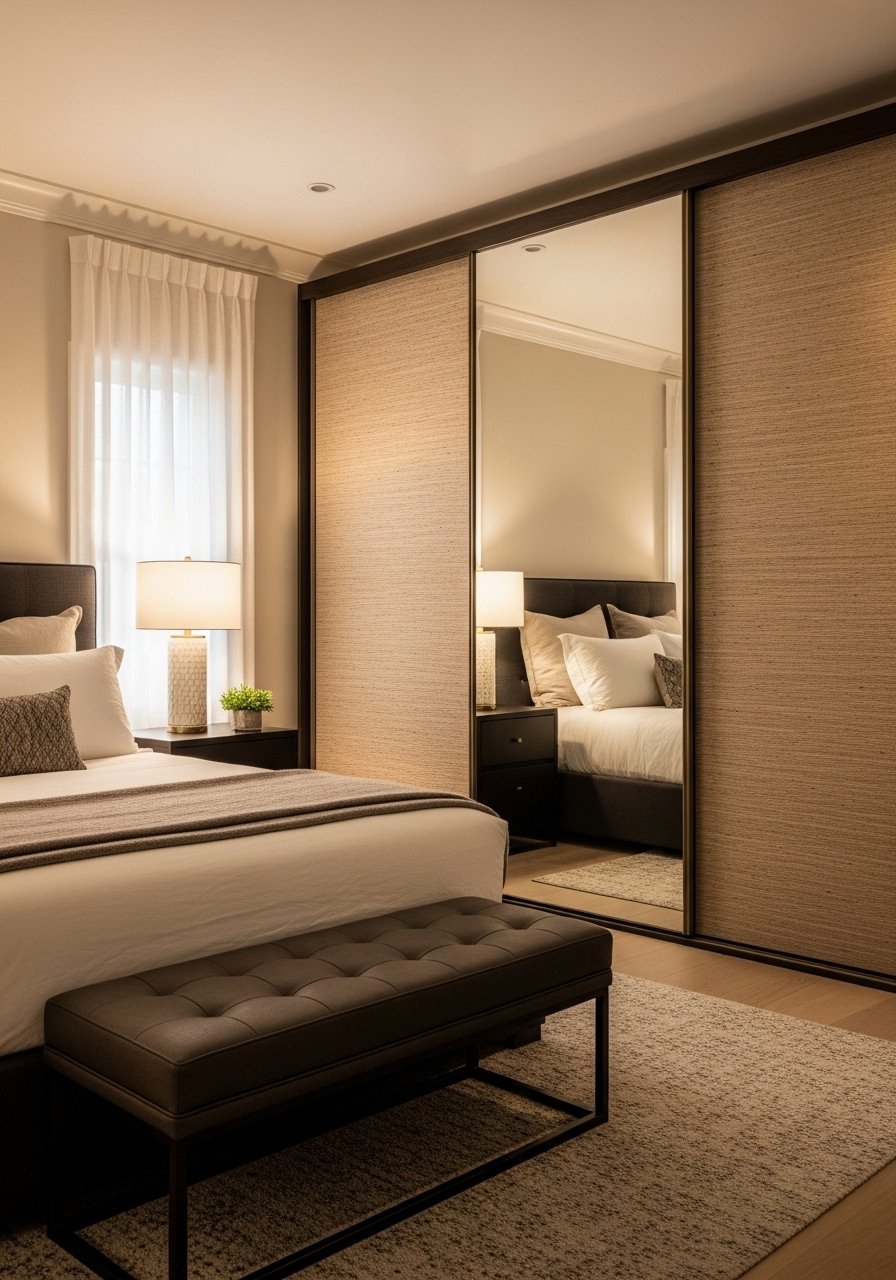
If you cannot alter structure, wallpaper the doors. Covering sliding or bifold doors creates depth without encroaching on floor space. I used a grasscloth-look peel-and-stick to add texture without busy pattern. Try grasscloth-look-removable-wallpaper which hides scuffs well. A usual mistake is matching patterns across moving seams. Overlap slightly and trim for movement. Use this next to the curtain trick in a bedroom to make the whole wall feel intentional.
Back Panels of Shelves with Patterned Wallpaper for Depth
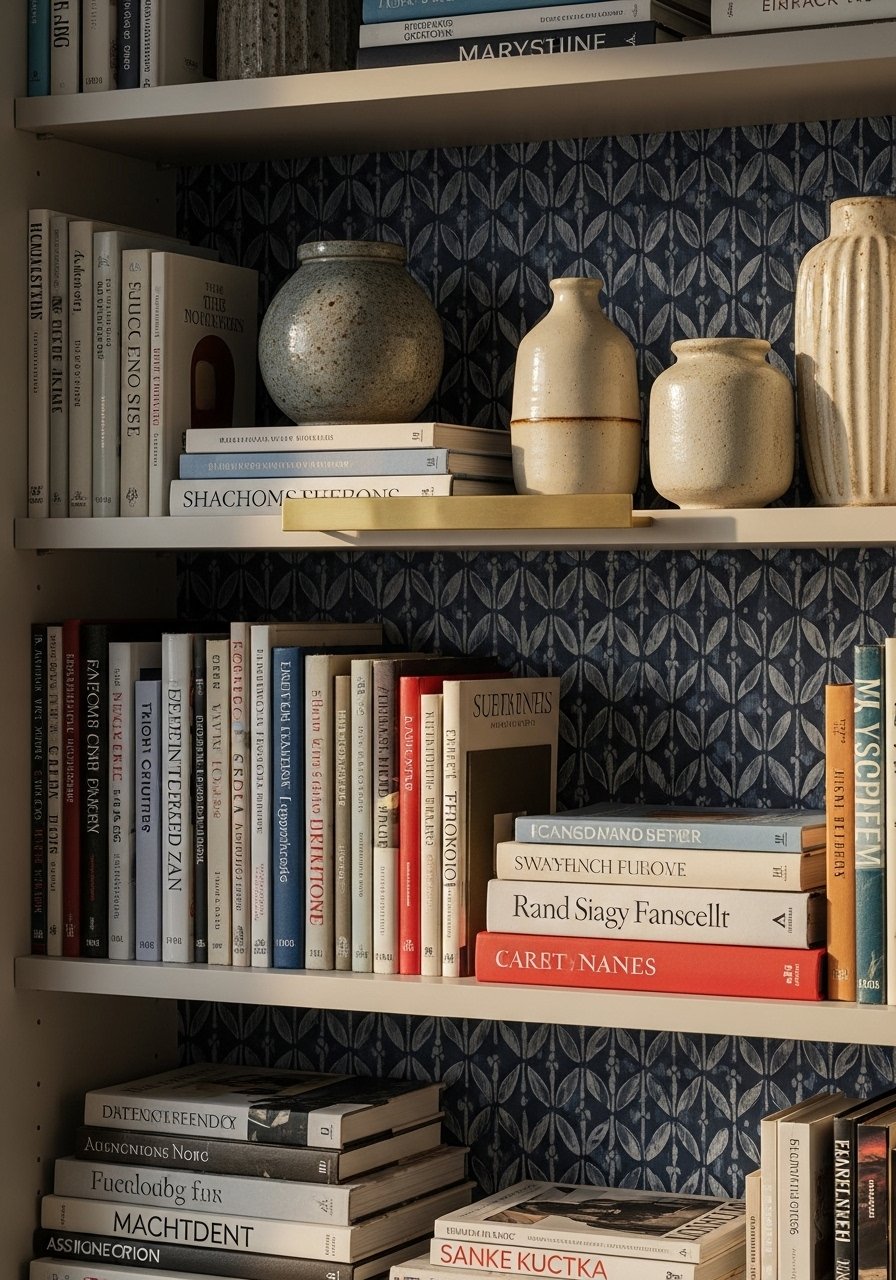
Papering the back of an open shelf makes items pop and tricks the eye into depth. I cut panels to the shelf depth of 10 inches and a height of 12 inches for each cubby. I used a bold navy print so white dishes read crisp. For materials, navy-patterned-removable-wallpaper worked without bubbles. People often wallpaper the whole bookcase and then overload it. Keep an 80/20 balance: 80 percent open shelf, 20 percent pattern. Rotate one larger object per shelf to avoid visual clutter.
Wallpaper as Drawer and Cabinet Front Inserts to Refresh Kitchens
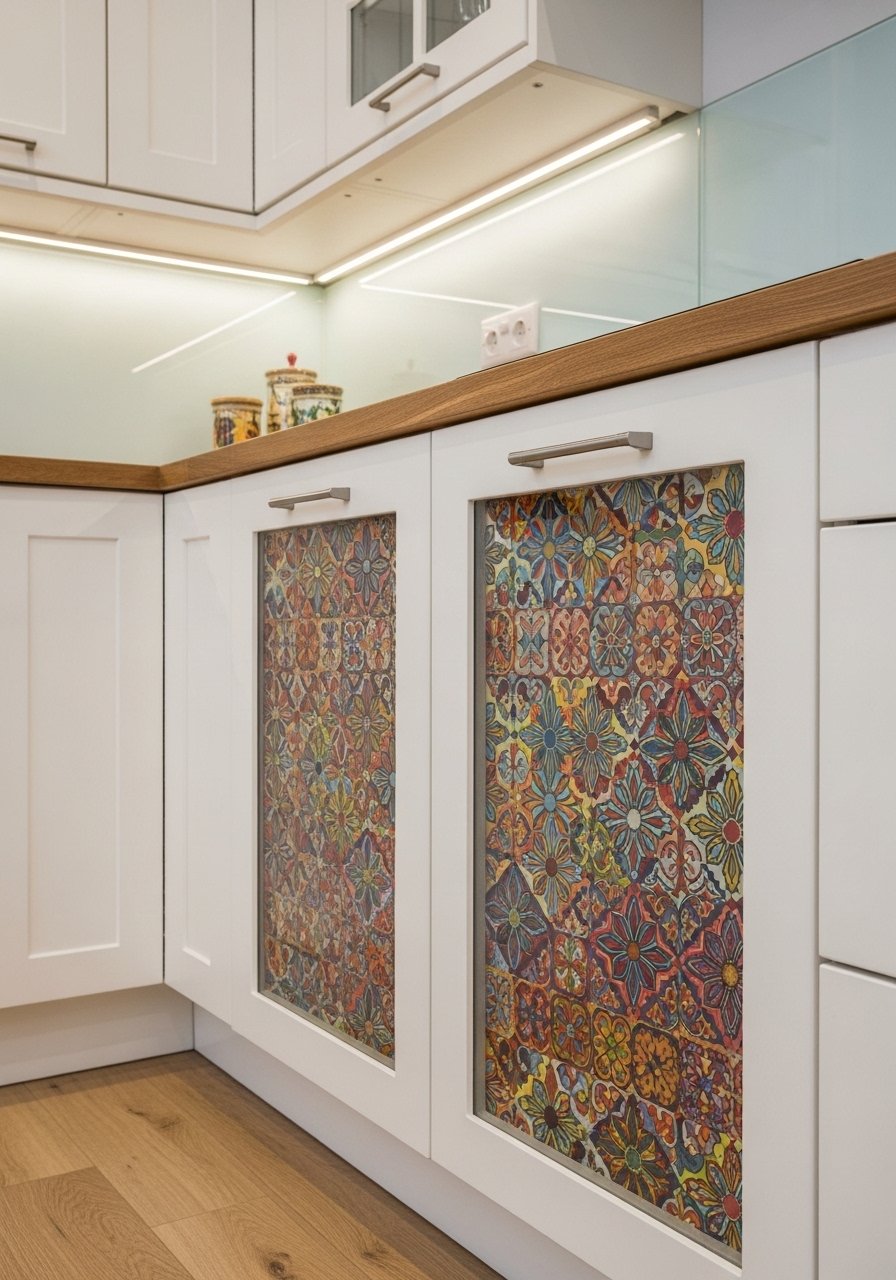
Instead of replacing cabinetry, adhere wallpaper to drawer fronts or inside glass-front doors. I applied a washable vinyl pattern to a shallow pantry door and it made the space feel bespoke. For durability look for washable-vinyl-removable-wallpaper around $35 a roll. Avoid regular paper in wet zones. Measure twice and cut panels to fit behind glass, using painter’s tape to hold edges while you smooth. This is a great renter win because it comes off cleanly when you move.
Wallpaper on the Back of Doors to Create Mini Murals in Small Rooms
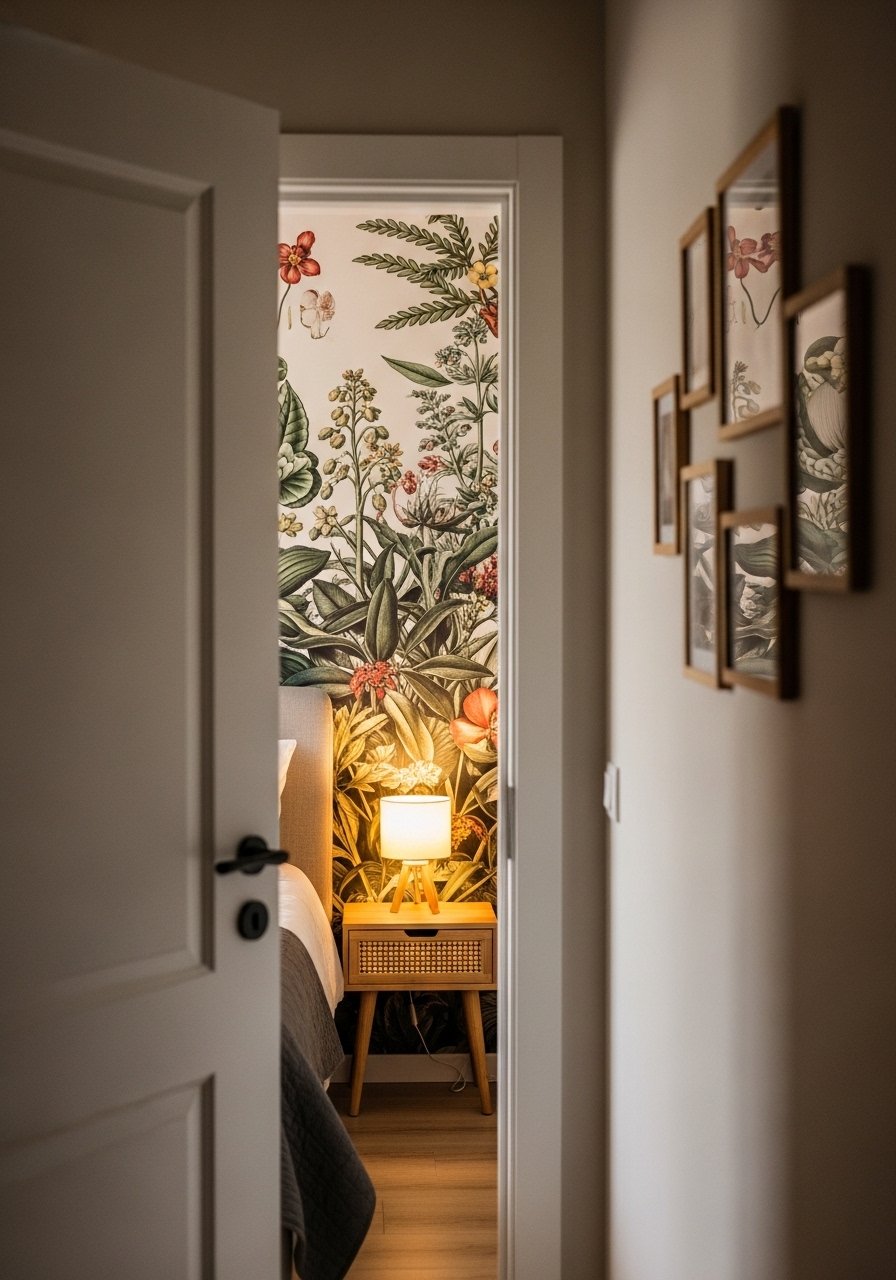
A full door-sized panel acts like an inside mural without taking floor space. I hung a large botanical panel on my bedroom door and it became a focal point when open. Typical door size is 30 by 80 inches, so buy enough for that area plus pattern repeat. I used botanical-removable-wallpaper-panel. The common error is ignoring the door swing. Make sure the pattern reads both when open and closed. This works especially well opposite a mirror to reflect the motif.
Create a Faux Headboard with a Tall Wallpaper Panel in Cozy Bedrooms
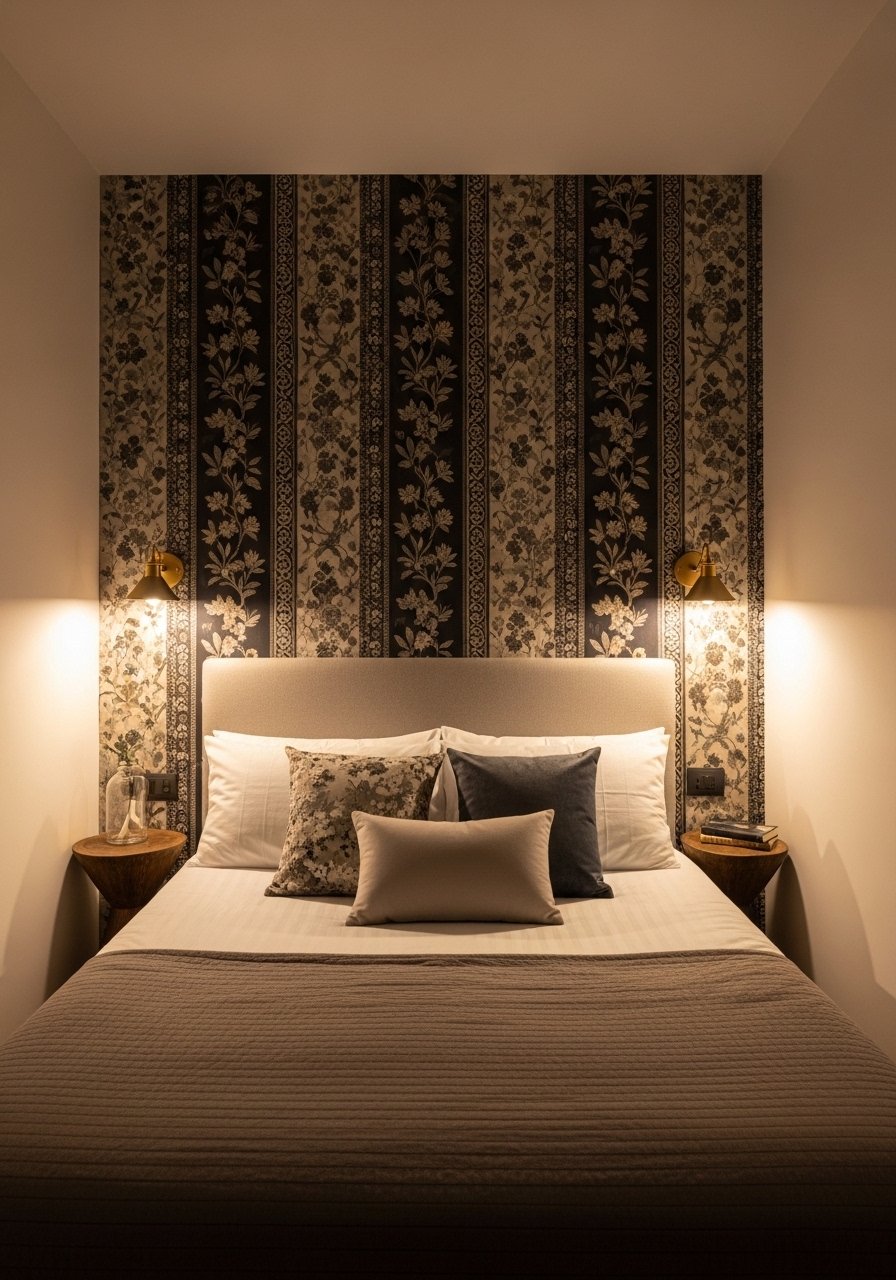
Skip a bulky headboard and wallpaper the wall behind your bed. I cut a 4 by 6 foot panel and it anchored the bed without taking square footage. A velvety or textured pattern makes the bed feel plumped. Try textured-velvet-look-removable-wallpaper. People often center the panel on the mattress. Instead align it with the bed frame for better sight lines. If you have 8-foot ceilings, make the headboard height about 60 percent of the wall for balanced scale.
Use Geometric Wallpaper to Frame a Fold-Down Desk in Small Offices
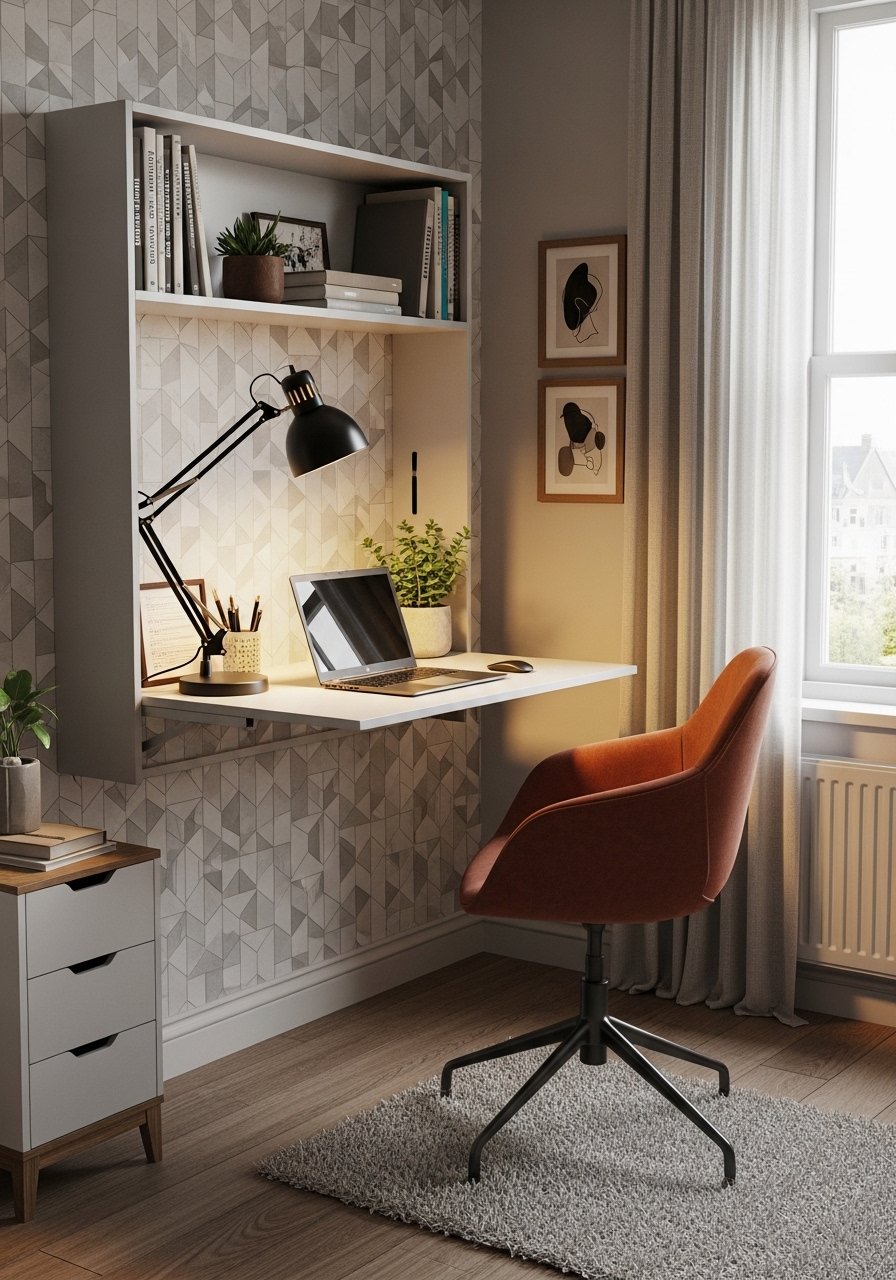
A wallpaper frame makes a drop-down desk read like a built-in when closed. I framed my 30-inch desk with a 2-inch border of a dark geometric print so the workspace feels intentional. This cost less than $25 for the accents using geometric-removable-wallpaper-border. A mistake is wallpapering the entire wall which overwhelms a tiny office. Keep the pattern only where it will be seen and wipeable. I use this with the shelf-back idea for a tidy visual ensemble.
Half-Wall Wallpaper Panels for Small Dining Nooks with Bench Seating
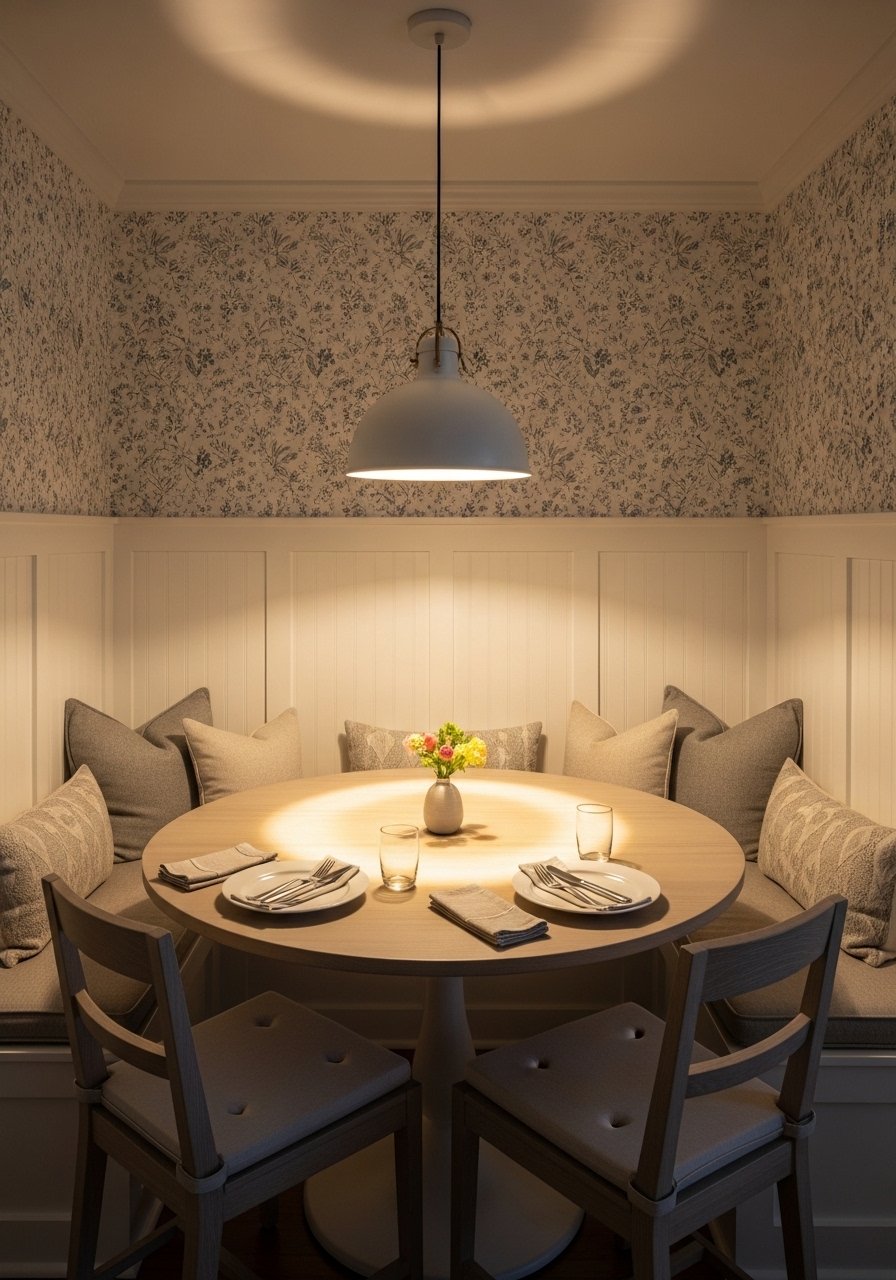
Papering the upper half of a dining nook above wainscoting creates coziness without making the room feel closed in. I measured 36 inches from the chair rail up and used a small-scale pattern for proportion. For narrow bench seating, scale matters. I used small-scale-pattern-removable-wallpaper which kept glare low under pendant light. People pick oversized prints that fight with dishes. Choose patterns that read from across the table, not up close.
Wallpaper on Stair Risers to Add Vertical Interest Without Losing Floor Space
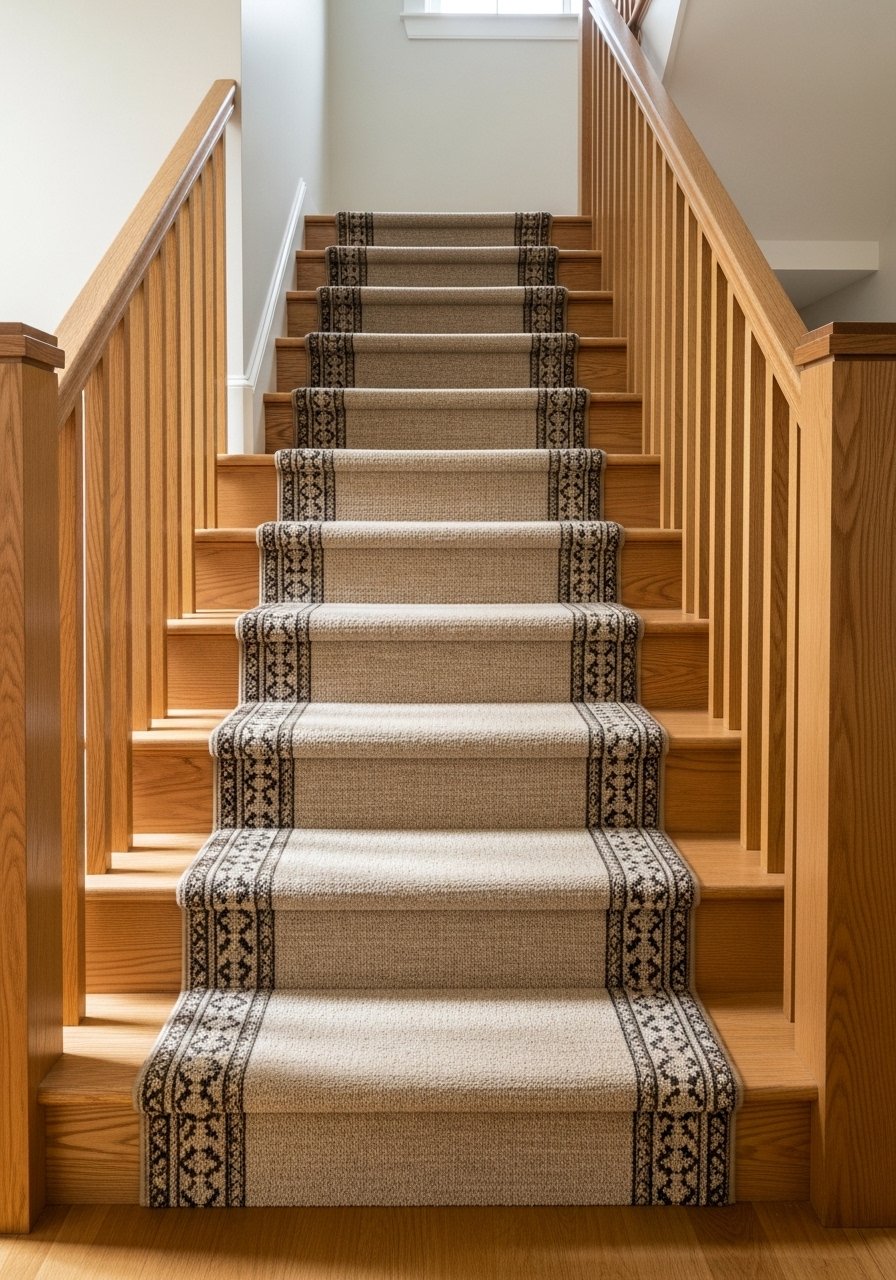
Risers are an underused canvas that adds personality without eating square footage. I applied a narrow stripe pattern on eight risers using 4-inch high panels for each step. Use a durable peel-and-stick designed for high-traffic areas like durable-stair-riser-wallpaper. A common mistake is ignoring the wear at toe height. Seal edges with clear tape if you need extra protection. This idea looks great with the mirror placement from another section to bounce light down corridors.
Use Metallic Accent Wallpaper Behind Mirrors to Multiply Light in Dark Corners
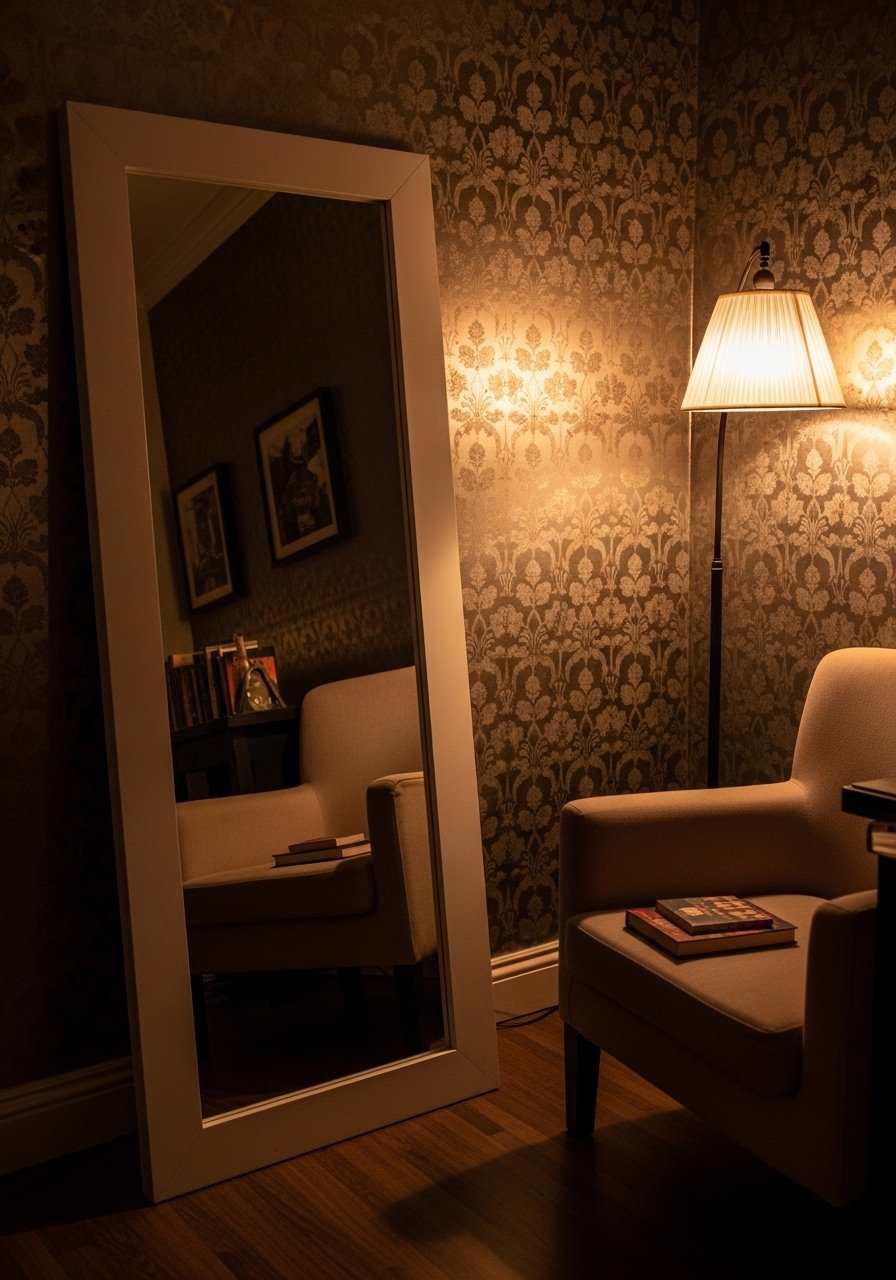
A metallic wallpaper panel behind a mirror multiplies light and makes a corner feel twice as big. I covered a 3 by 4 foot area behind a leaning mirror and darker hallways brightened. Choose a subtle metallic like pewter rather than chrome for less glare. subtle-metallic-removable-wallpaper is about $45. People think metallic means shiny and tacky. Instead pick muted sheen and matte edges. This is a low-effort way to combat rooms that feel closed in.
Wallpaper Drawer Liners for Hidden Pattern That Makes Storage Fun
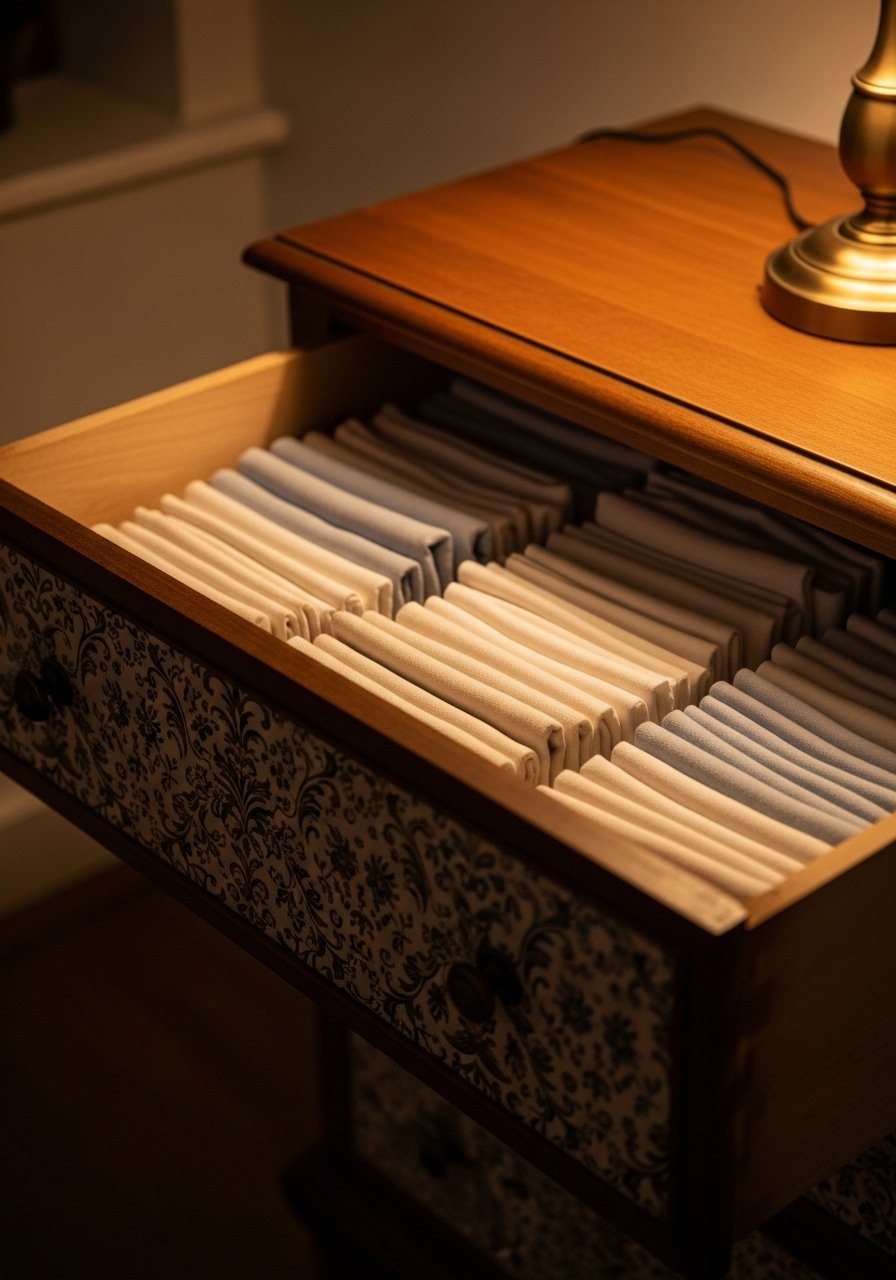
Lining drawers with wallpaper gives a private pop that rewards built-in storage. I line dresser bottoms with a washable paper so anything leaking is contained. Cut liners 1 inch smaller than the interior so they sit flat. Use washable-drawer-liner-wallpaper for easy cleaning. The most common error is using the same pattern as the room, which reads boring. Pick something contrasting that still fits your color story.
Match Your Phone Wallpaper to Your Room Pattern for Cohesive Details
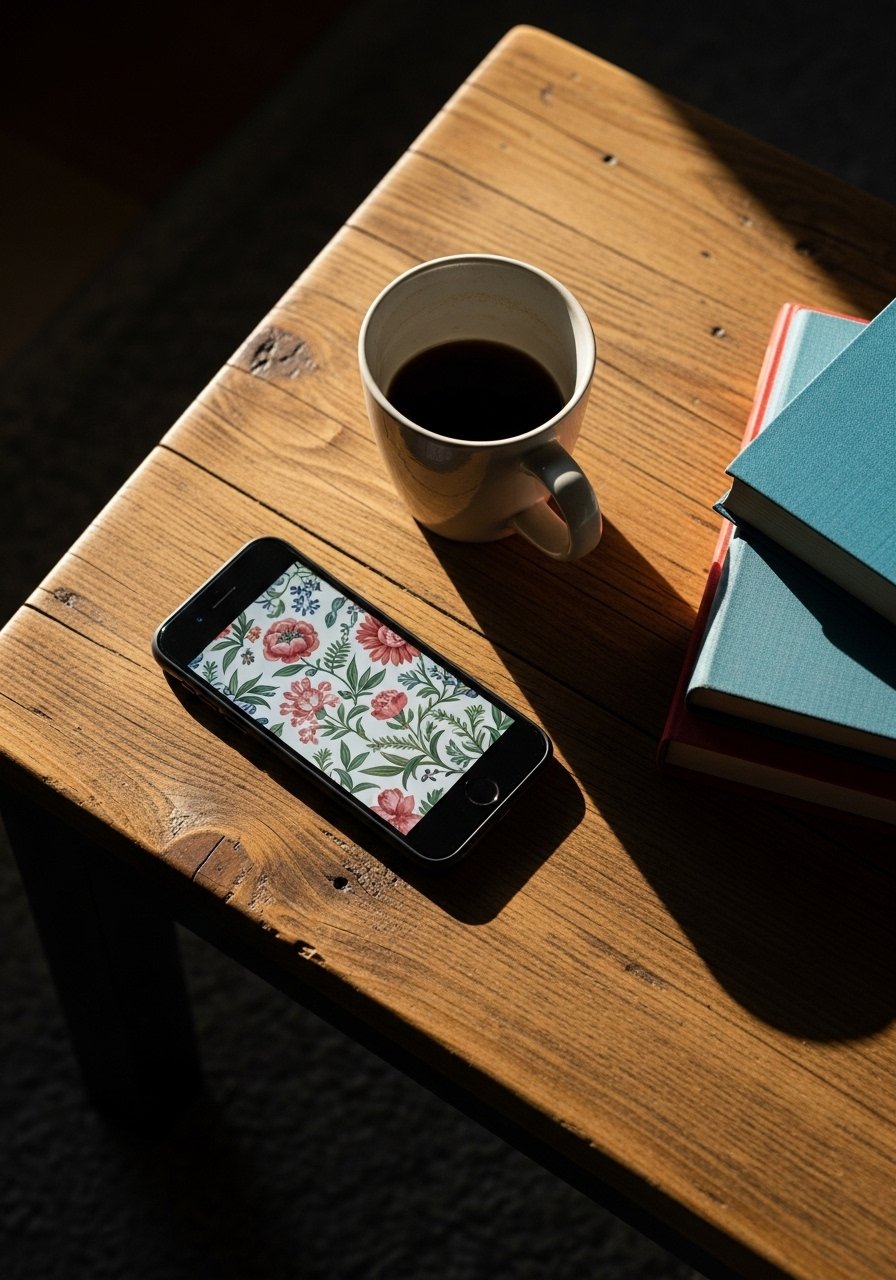
I once made a phone wallpaper from a cropped photo of my wallpaper and it made my living space feel considered in a tiny way. If you ever searched diy wallpaper ideas iphone this is the same idea but scaled down. Snap a clean, well-lit crop and set it as your lock screen so small moments feel curated. For editing, use a simple crop tool and save at the phone’s screen resolution. A casual tip is that warm light photos read cozier on screen. This tiny detail is one of those free-to-do things that feels intentional.
Wallpaper Panels on Window Seat Lids to Make Storage Read Decorative
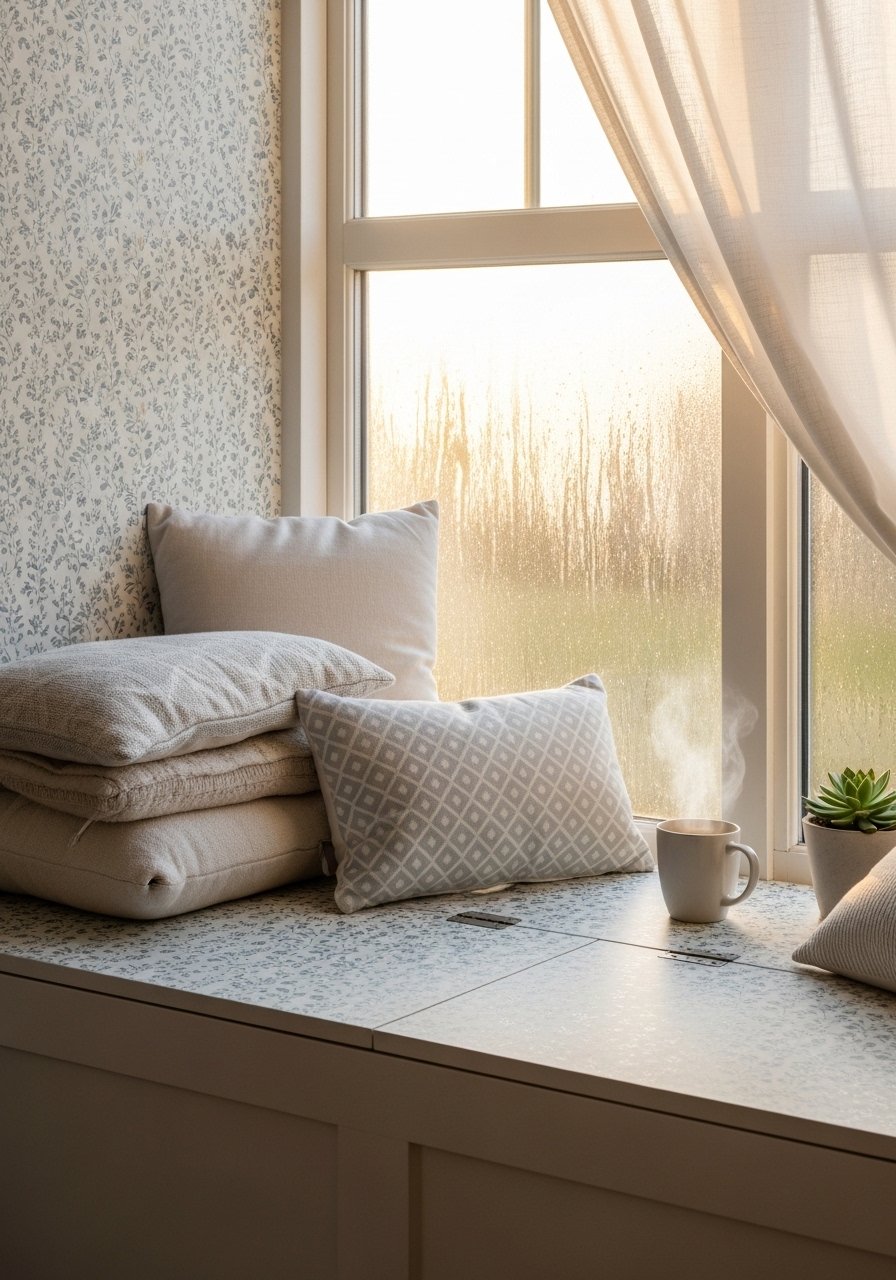
If you have a storage bench, wallpaper the lid to make it read like furniture instead of a chore. I used a 1-inch border of linen-look wallpaper on a 48 by 18 inch lid and the bench felt built-in. A good pick is linen-look-removable-wallpaper because it hides scuffs. Avoid slick papers that tear at hinges. Measure for pattern repeat near hinge lines so seams don’t split when opening.
Your Decor Shopping List
- Textiles: 22-inch down-filled linen pillow covers in warm gray and cream. Honestly the best $60 I have spent for a layered sofa look
- Wallpaper: peel-and-stick-geometric-wallpaper-18-inch-roll (~$45 per roll)
- Durable options: washable-vinyl-removable-wallpaper-24-inch-roll for kitchens and high-traffic areas
- Mirrors and reflection: leaning-full-length-mirror-60×20-inch to amplify patterns
- Shelf styling: brass-picture-ledges-set-of-2 (~$25) for swapping art without extra holes
- Lighting: small-pendant-light-brass-finish to warm metallic accents
- Tools: squeegee-for-vinyl-application and a metal-ruler-24-inch
- Budget finds: peel-and-stick-pattern-sample-pack for testing before you commit
- Plants: faux-fiddle-leaf-fig-6ft when height is needed without maintenance
Shopping Tips
White oak beats dark wood in 2026. Design feeds have shifted completely. White oak floating shelves look current, not dated.
Grab peel-and-stick-geometric-wallpaper-18-inch-roll for $40 to $60. Order one extra roll than your measurements suggest.
Curtains should puddle or kiss the floor, never hang halfway up. These 96-inch linen panels are right for standard 9-foot ceilings.
One tall plant beats five tiny ones. Get a faux-fiddle-leaf-fig-6ft if you need immediate height.
Test wallpaper samples under your actual light. Peel-and-stick-pattern-sample-pack avoids surprises.
Frequently Asked Questions
Q: Can removable wallpaper ruin painted walls?
A: If you pick a high-quality, paste-free peel-and-stick and follow removal instructions you can usually avoid damage. Clean surfaces first and peel slowly at a 45-degree angle.
Q: How much extra wallpaper should I buy for pattern matching?
A: Order at least 10 to 15 percent extra when the pattern repeats. For full murals buy 20 percent more to account for seam alignment and mistakes.
Q: Will wallpaper make a small room feel smaller?
A: Not if you scale the pattern to the space. Small-scale prints and vertical stripes make rooms feel taller. Big bold prints can overwhelm a tiny space unless used sparingly.
Q: Can I mix patterned wallpaper with gallery walls?
A: Yes. Use one strong pattern and simple frames. Try the back-of-shelf idea and place 60 percent simple objects to 40 percent pattern to keep balance.
Q: What size rug do I need with a wallpapered accent wall?
A: Bigger than you think. For most living rooms go 8×10 minimum where front furniture legs sit on the rug. A neutral jute rug pairs well with bold wallpaper.
Q: Should I use real plants or faux with wallpaper?
A: Both. Real plants add life but need light and care. A faux-fiddle-leaf-fig-6ft is handy where height matters but sun is limited.
Q: How do I make a wallpapered door work with a door swing?
A: Measure the door when closed and open. Avoid high-repeat motifs that break at the hinge. Overlap the edge slightly and trim so the paper does not catch.
Q: Is it worth making my phone wallpaper match the room?
A: Yes, if you enjoy tiny curated details. I did it and it made the space feel more intentional every time I looked at my screen.