
My living room had nice furniture and decent lighting but it still felt like a waiting room. Took me embarrassingly long to figure out it was missing texture. Every surface was smooth, every color was flat, and nothing invited you to actually sit down. After I added one layered rug, a lamp with a 45 degree angle, and a plant that actually fit the corner, the whole place stopped feeling staged and started feeling used.
These ideas lean warm-neutral with a mix of modern and lived-in touches. Most pieces are under $150, with a couple of splurges around $300. Works for compact corners, converted bedrooms, and dedicated spare rooms that need personality.
Airy Minimalist Desk with Lucite Chair for Small Corners
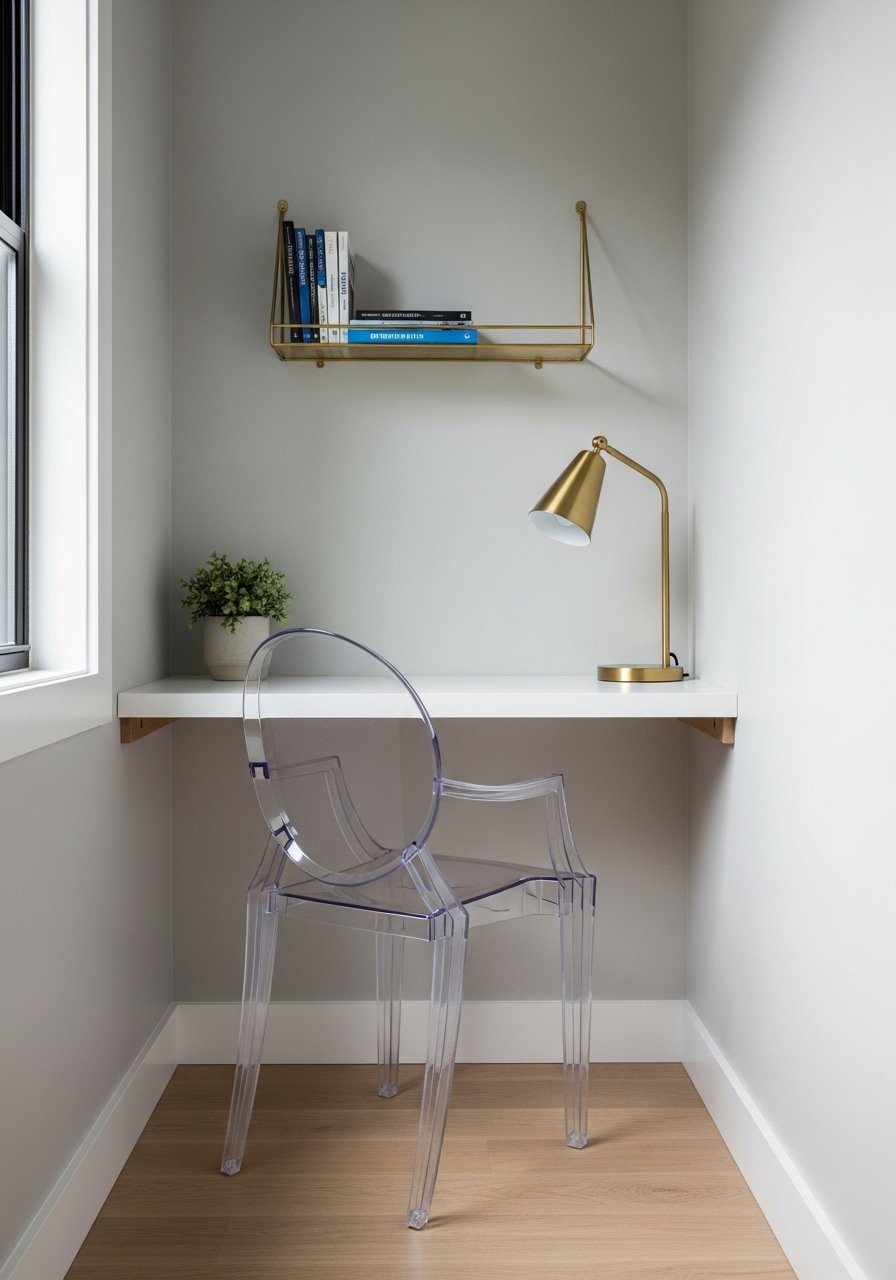
A clear chair keeps sightlines open so an 8×10 study does not feel boxed in. I swapped my heavy armchair for a lucite ghost chair and suddenly the room felt twice as big. For comfort aim for a desk height of 29 to 30 inches and a chair seat around 18 inches so elbows sit at desk level. The mistake most people make is picking whatever chair looks nice and then hunching for hours. Pair this with a thin 5×7 rug or a front-two-legs-on-rug placement to anchor the spot without losing floor space. If you rent, the clear chair is renter-friendly and hides scuffs from rolling casters.
Warm Scandinavian Floating Shelves Above Desk
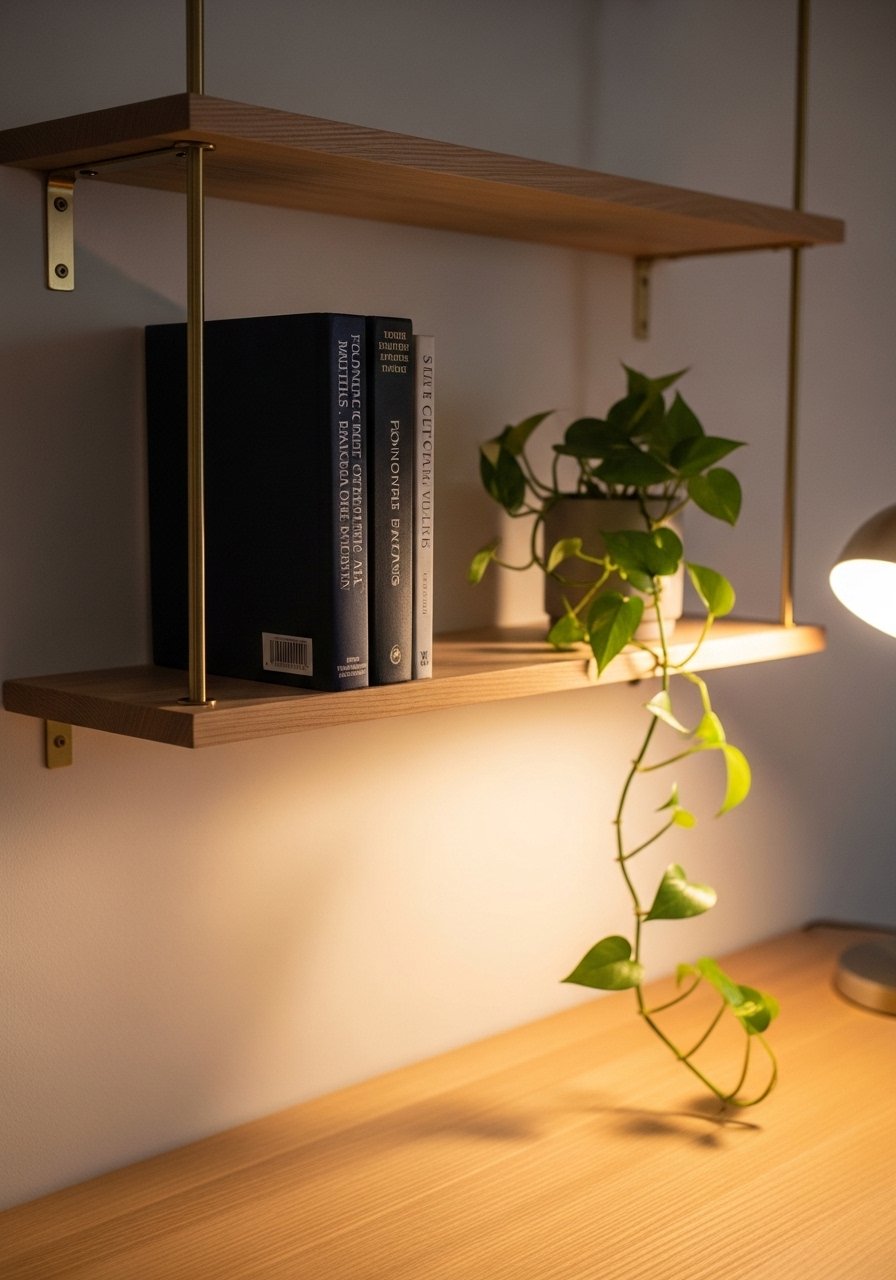
Floating shelves free the floor and keep files off the desktop. I painted inexpensive IKEA Lack shelves white and swapped the cheap brackets for brass ones to warm up the whole wall. Keep only 3 to 5 books per shelf and rest them vertically so the shelf reads calm, not chaotic. One trick I learned is to leave the shelf 4 to 6 inches above the window trim when paired with curtains to trick the eye into height. For renters use brass picture ledges or command-strip-friendly shelf solutions. The common mistake is overloading the shelves, which turns them into dust magnets after week two. Do a quick wipe every week to keep the setup feeling intentional.
Linen Floor-to-Ceiling Curtains to Fake Height
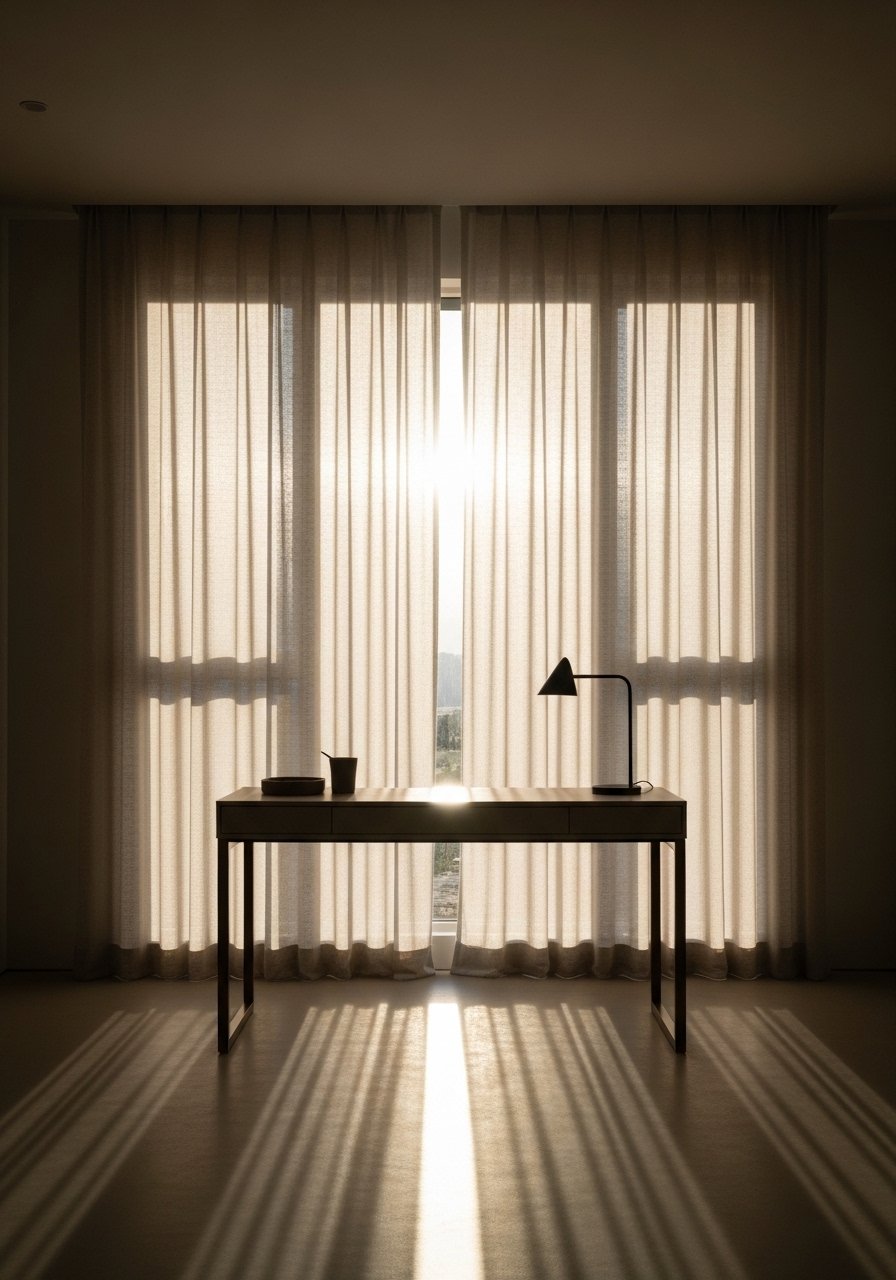
Most people hang curtains right at the window frame. That is why their rooms look shorter than they are. I moved my rod up 4 inches and switched to 96-inch linen panels and suddenly the ceiling felt higher. Curtains should either kiss the floor or puddle just a touch, never hover. For 8 to 9 foot ceilings these panels keep glare down while letting in natural light. Over half swear by windows over lamps for not burning out, so this trick is good for long study days. For renters, tension rods work fine and these panels are easy to swap seasonally.
Brass Swing Arm Lamp for Task Lighting
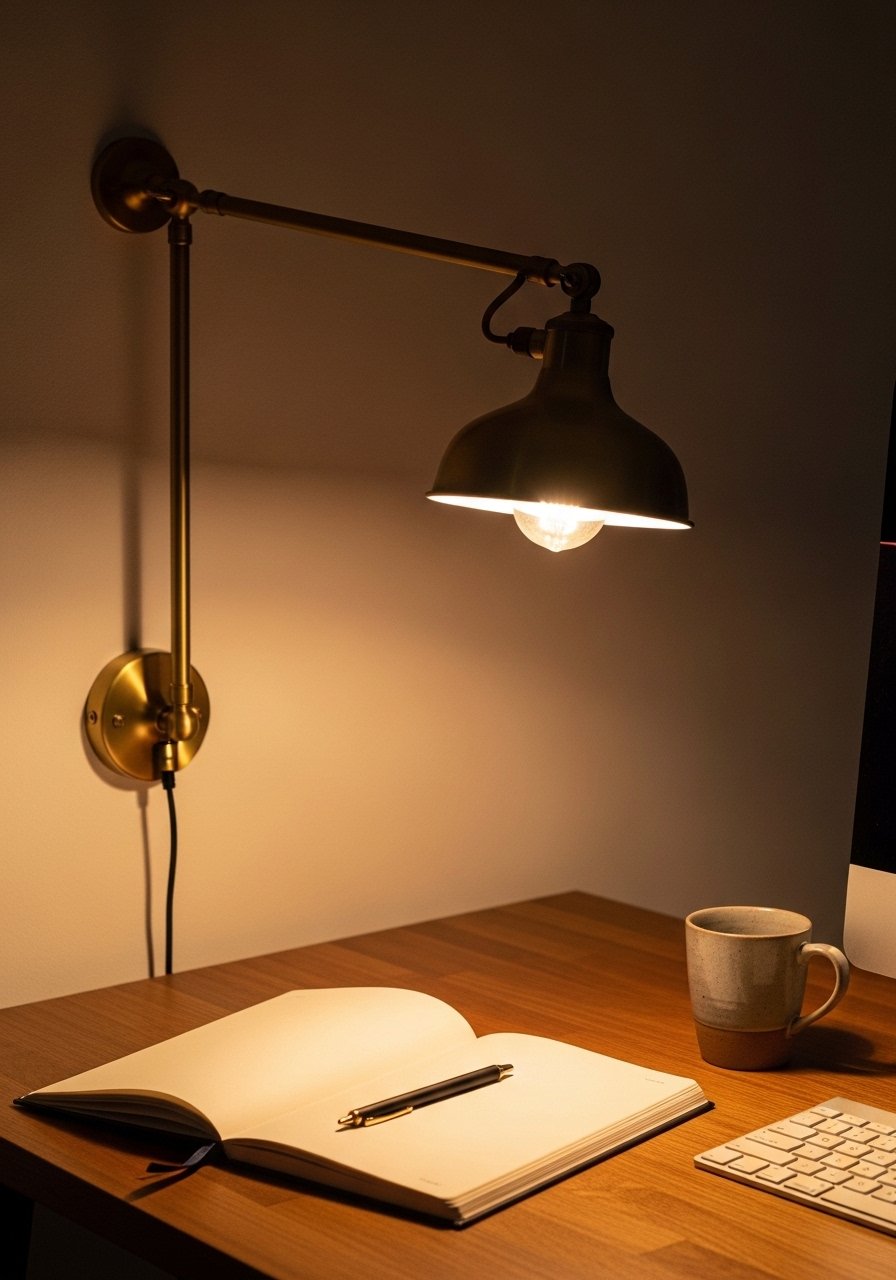
A lamp that swings gives you focused light at a 45 degree angle. My old desk lamp left a glare and weird shadows on my sketchbook until I switched to a brass swing arm. The 60/40 lighting split works here, where 60% is the window and 40% comes from layered lamps. Don’t buy a lamp based only on looks. Check reach and how it mounts, then test for screen glare. I linked to a compact brass swing arm lamp that fits small desks and avoids cord chaos. The common error is too-bright overheads that wash out your screen during long sessions.
Mixed Wood Desk with White Chair for Balanced Tone
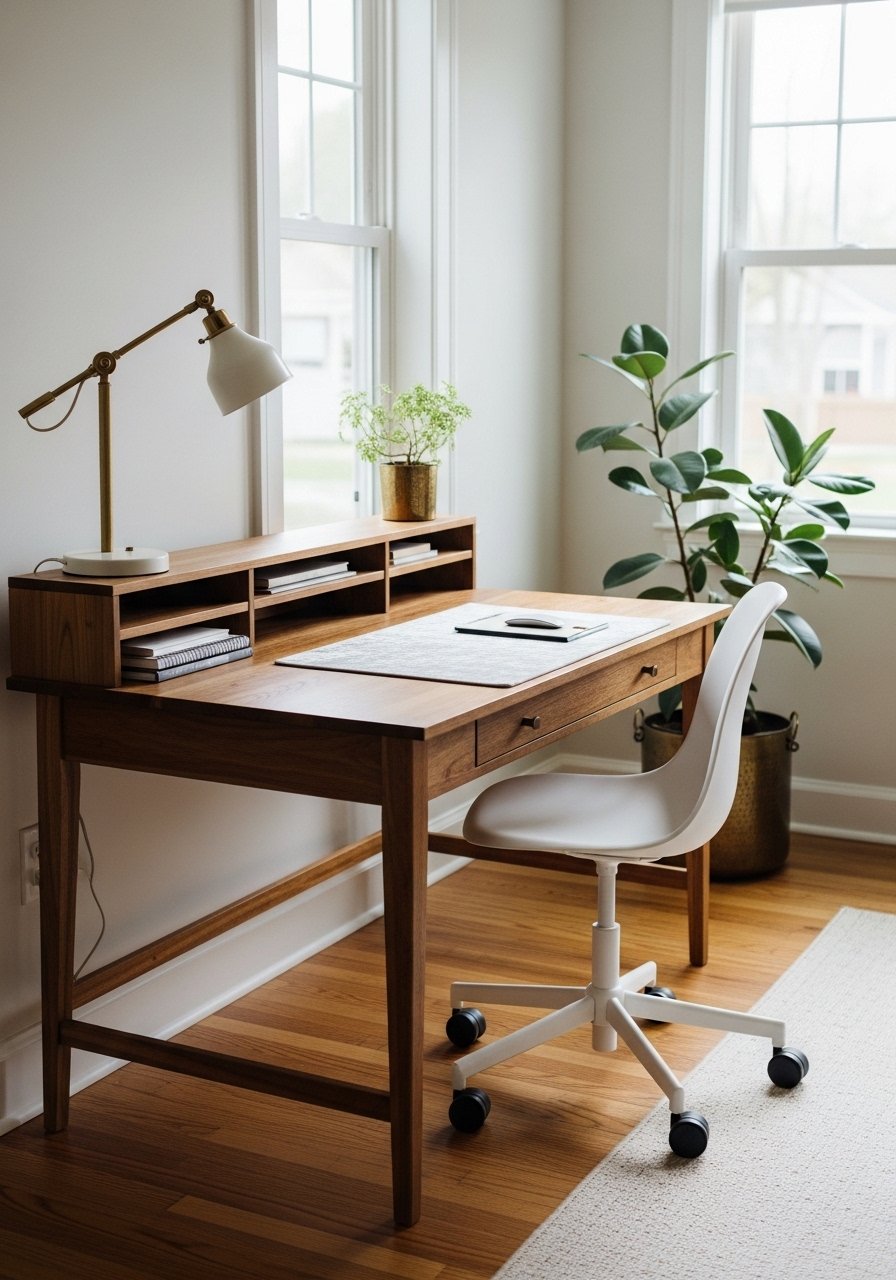
If every surface is the same wood tone the room looks like furniture cataloging. I paired a warm walnut desk with a white breathable chair and it read intentional, not matchy. Use a velvet desk mat to protect the surface and add luxe without being fussy. For ergonomics aim for a 29 to 30 inch desk height, and add lumbar support if you sit more than three hours at a stretch. People drop 400 to 700 bucks when they finally fix their study dump, so this is where a small splurge on a sturdy desk pays off. A mixed material approach hides wear and looks current without being trendy.
Cozy Reading Nook with Sleeper Loveseat
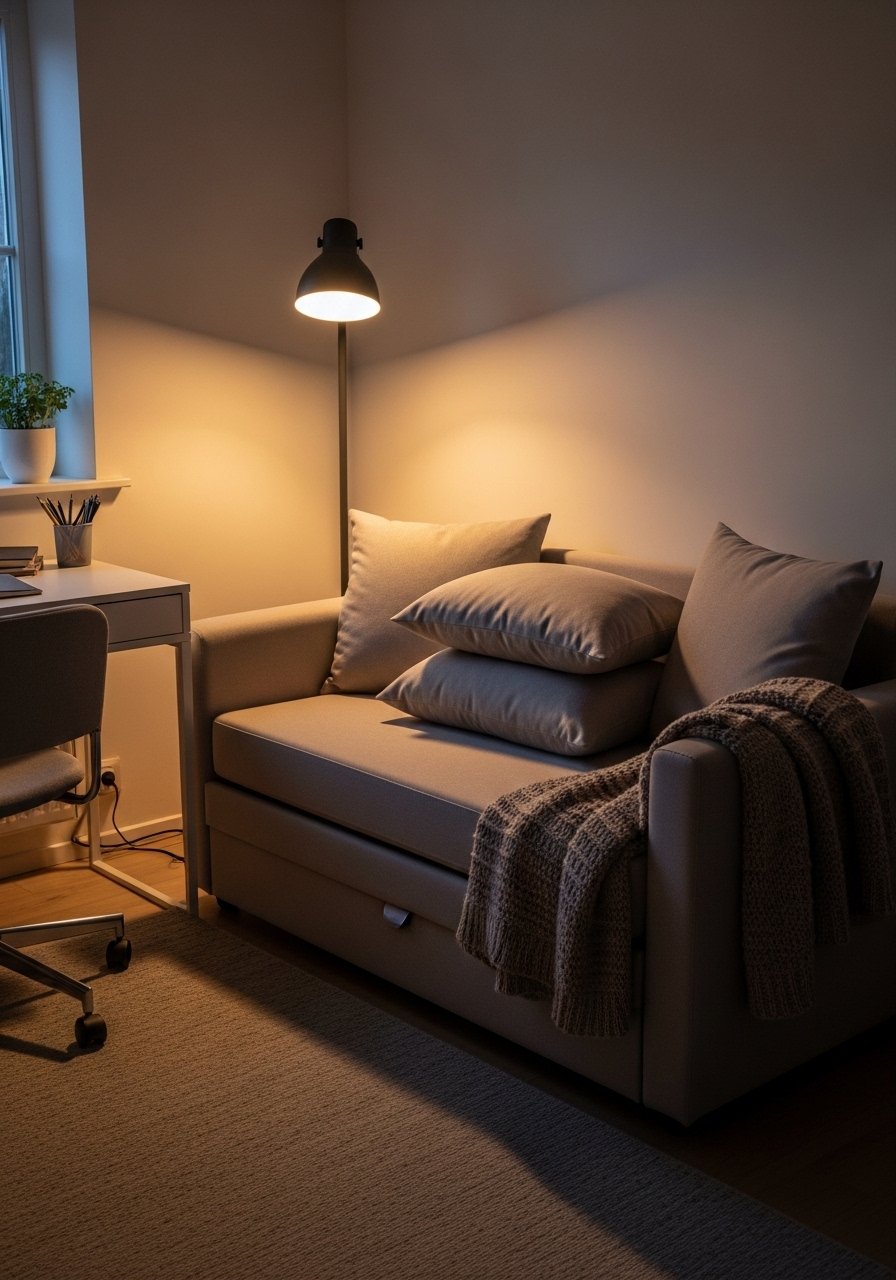
There was a winter where I started taking all my calls from a loveseat I could actually nap on. If your study doubles as guest space, a slim sleeper loveseat solves both problems. Stack two 22-inch back pillows and a 16-inch front cushion with a lumbar in the middle so the seat looks full but usable. The mistake is buying a bulky sleeper that takes up the whole room. Measure first and pick one that tucks into a corner. For apartment dwellers look for loveseat designs that ship in two pieces for easier stair carrying. Pair with a low jute rug so the legs of the loveseat sit partly on the rug to anchor the zone.
Multi-Tier Bookshelf for Vertical Storage
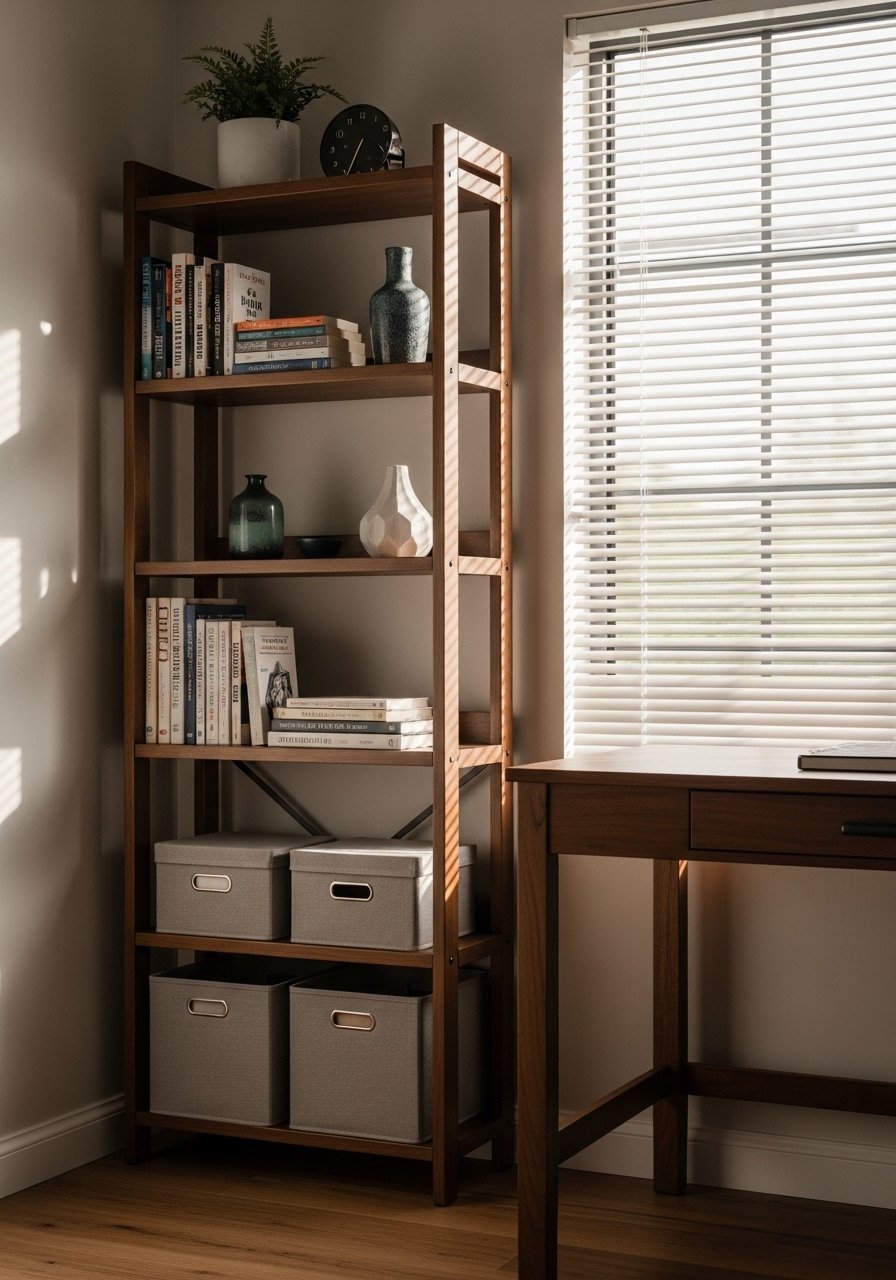
If your desk setup eats all your space a vertical bookshelf is your best friend. I swapped a wide cabinet for a slim five-tier shelf and gained visible storage plus room for a printer. Follow the rule of odd groupings and keep no more than 3 to 5 books per open shelf to avoid visual chaos. Put heavier storage bins on the bottom shelves so the unit does not look top heavy. For pets choose wipeable bins and reposition open lower shelves if your cat treats them as a climbing frame. For a budget-friendly option try a narrow five-tier bookshelf.
Layered Rugs to Ground the Desk Area
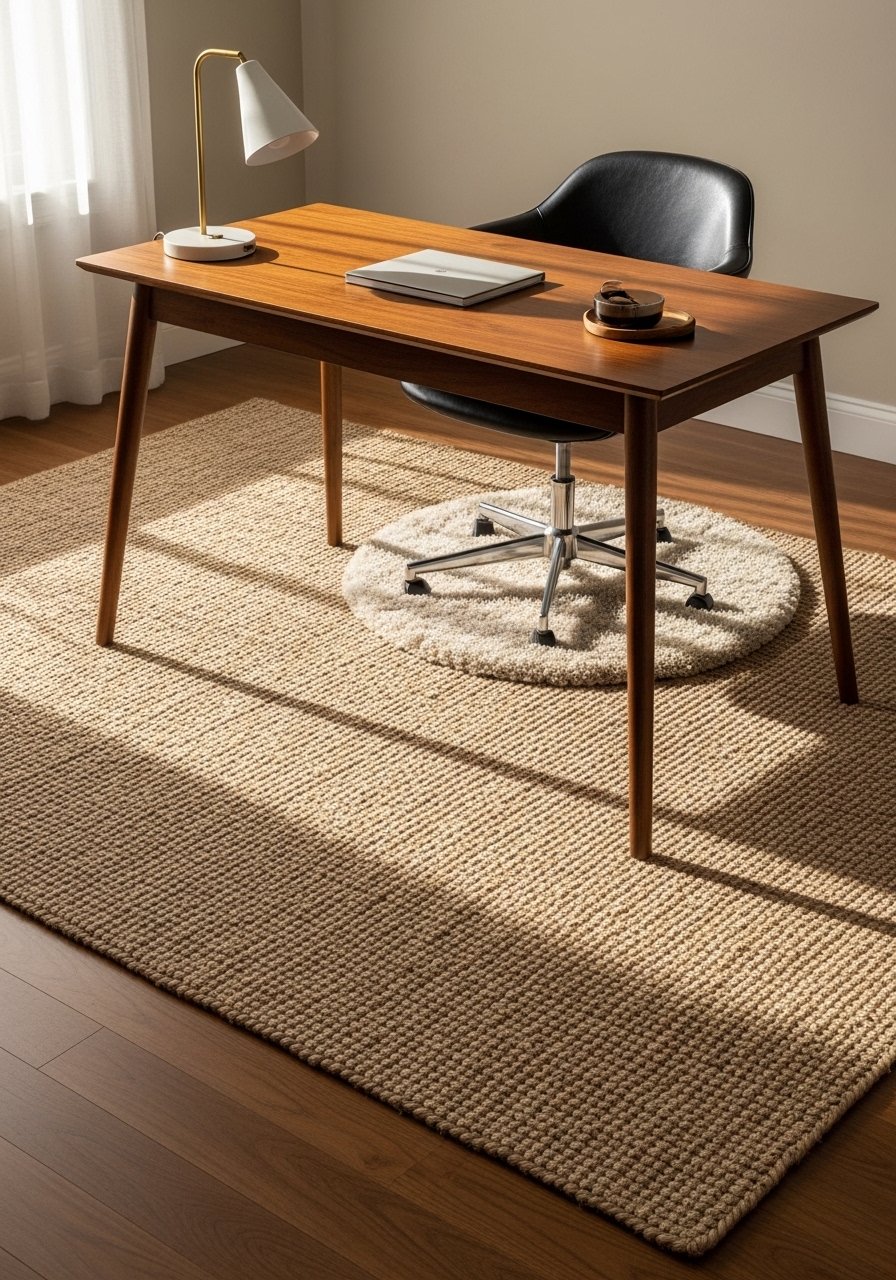
Rug size matters. I almost bought a pretty 5×7 then realized my small study felt chopped up. The front two legs of the desk or chair should sit on the rug to make the area feel intentional. For a standard study go 8×10 under the whole zone or layer a 5×7 over an 8×10 jute to add softness where your feet land. Grass-like shag or soft jute hides chair scuffs and pet hair better than flat synthetics. The wrong rug is too small, and everything looks floating. Try a neutral base rug and a smaller texture piece under the chair for visual warmth and function.
Ergonomic Mesh Chair for Long Sessions
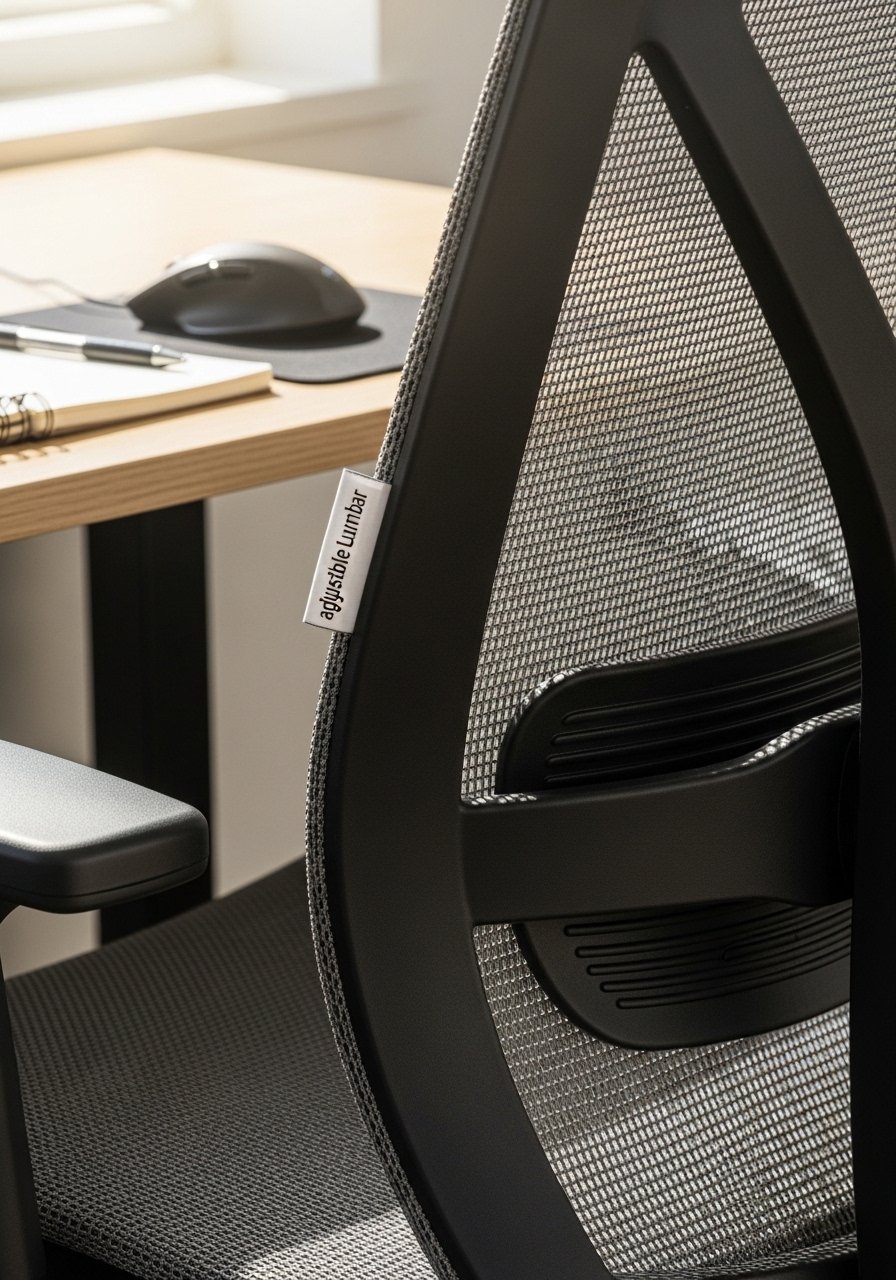
Leather chairs look good for five minutes then you regret them during a two-hour slog. I switched to an ergonomic mesh chair with adjustable lumbar support and stopped getting lower back aches. Breathable mesh helps if you work in a warm room and it pairs surprisingly well with lucite or white desks. The specific detail people miss is to check seat depth and adjust it so your knees clear the seat edge. For less than $200 you can get a model that supports proper posture. Try it alongside a soft desk mat under your wrists to avoid wrist strain.
Gallery Wall with Mixed Frames Above Desk
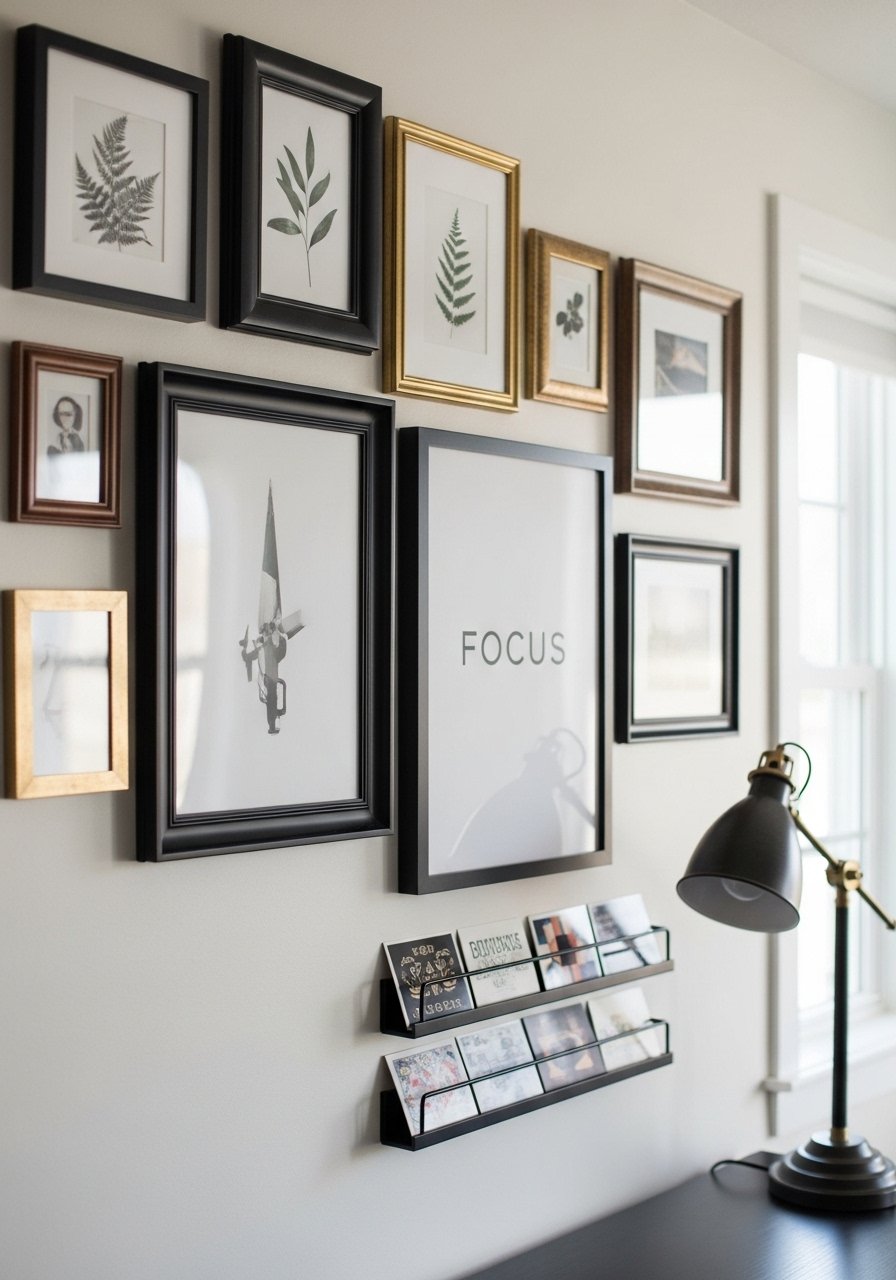
A gallery wall makes a study feel personal without adding clutter to the desktop. I started with three prints and learned that mixing two metals feels deliberate. Use a simple layout, keep art at eye level for seated work, and swap pieces seasonally so the wall never feels final. One trick most guides skip is to put a narrow picture ledge on the bottom row so you can swap art without rehanging. If you are renting use command-strip-friendly frames and aim for an 80/20 color balance, with about 20 percent being a bolder hue or wood tone.
Plant Corners for Low-Maintenance Greenery
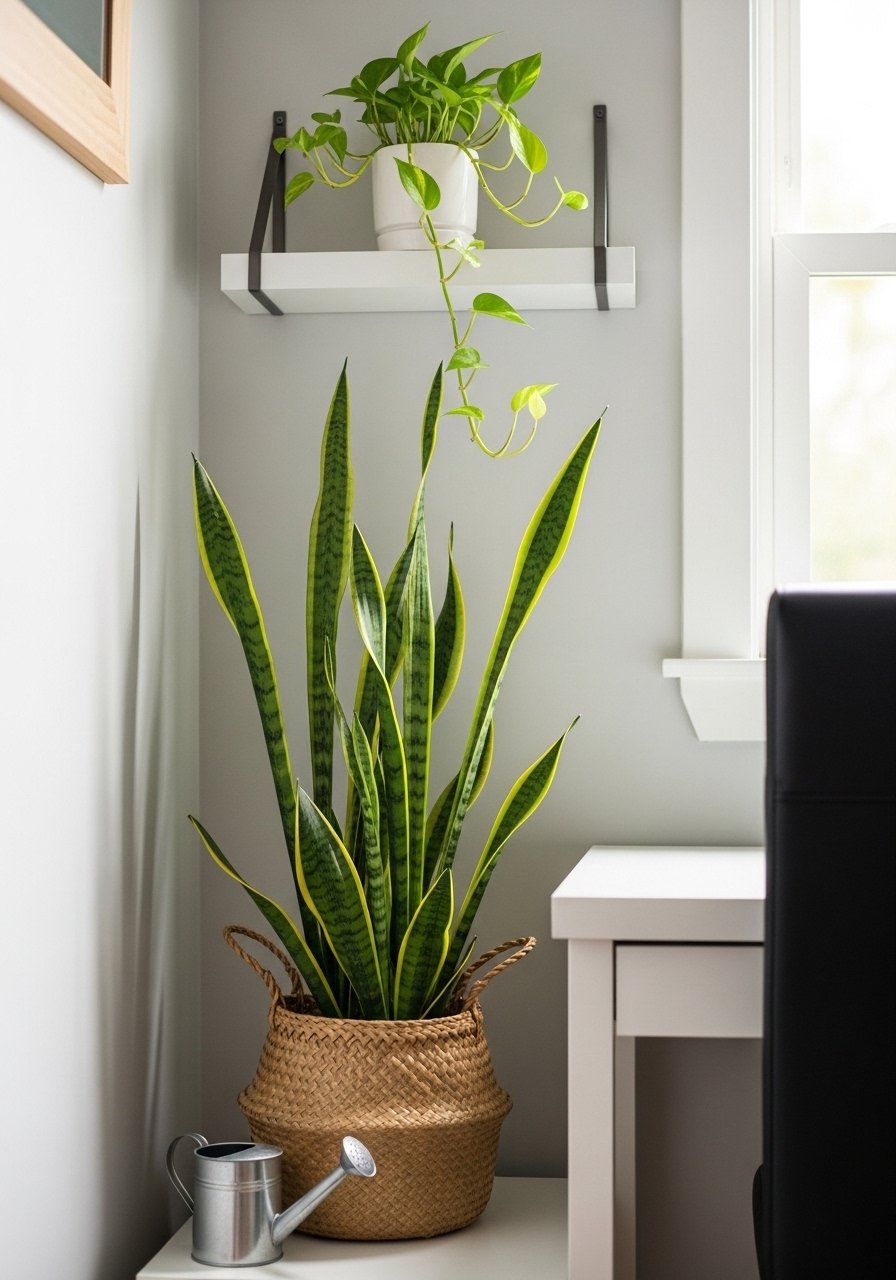
One plant in the wrong pot looks sad. I grouped two low-light friends, a snake plant and a pothos, and the corner suddenly felt intentional. Plants at two to three per corner give life without demanding daily care. Pick low-maintenance varieties for studies, and put taller ones below eye level so they anchor without blocking the view. A common mistake is tiny succulents spread everywhere. One good 4 to 6 foot plant has more impact than five small pots. If you worry about neglect, grab a realistic faux fiddle leaf fig 6ft for height without fuss.
Your Decor Shopping List
Textiles
- Honestly the best $40 I have spent. Chunky knit throw in cream (~$35-55). Drape over a loveseat for instant softness.
- 22-inch linen pillow covers, set of 2 in warm beige for back support and layered pillows.
Wall Decor
- Brass picture ledges (~$18-25) to swap art without new holes.
- Mixed metal frame set for a gallery look that feels curated.
Lighting
- Brass swing arm lamp for task lighting that reduces screen glare.
Rugs & Mats
- 8×10 jute area rug neutral base that hides wear.
- Velvet desk mat with mouse cutout (~$20-40) for a luxe feel and surface protection.
Plants
- Artificial fiddle leaf fig 6ft for a low-maintenance tall option. Similar at Target if you prefer in-person shopping.
Shopping Tips
White oak beats dark wood in 2026. Design feeds have shifted completely. These white oak floating shelves look current, not dated.
Grab velvet pillow covers for $12 each. Swap them every few months and the whole room feels different.
Curtains should puddle or kiss the floor, never hang halfway up. These 96-inch linen panels are right for standard 9-foot ceilings.
If you have pets, avoid long shag rugs. Pick a durable jute rug for the base and layer a smaller washable rug on top.
Buy a compact ergonomic chair first if you sit more than two hours a day. Ergonomic mesh desk chairs are more breathable and kinder to your back than leather.
Frequently Asked Questions
Q: What size rug do I actually need for a small study?
A: Bigger than you think. For a standard study, go 8×10 minimum, or at least make sure the front legs of your chair and desk sit on the rug. This 8×10 jute rug is a neutral pick that handles daily traffic.
Q: Can I mix brass and black metals without it looking messy?
A: Yes. Mix them intentionally. Use one metal as the dominant tone and the other as accents across three to five pieces. A brass lamp plus black frames is a reliable combo.
Q: How do I keep open shelves from getting dusty after week two?
A: Rotate items, limit books per shelf to 3 to 5, and use baskets on the lower shelves. Wipe the shelf surfaces weekly, and keep a glass-door option for seasonal storage if dust is a real problem.
Q: Are real plants better than faux for a study corner?
A: Both work. Real low-light plants like snake plant and pothos handle neglect. Use a faux fiddle leaf fig where you need height without maintenance.
Q: My study feels cold even after I buy new furniture. What did I miss?
A: You probably skipped textiles and layered lighting. Add a rug under the front legs, a soft throw, and a task lamp at a 45 degree angle. Most folks say a real study spot doubles their get-shit-done time, and fixing these few details makes that happen.