My living room had nice furniture and decent lighting but it still felt like a waiting room. Took me embarrassingly long to figure out it was missing texture. I started stuffing fabric scraps into round shapes and suddenly shelves and tabletops stopped looking like leftovers. These no-sew pumpkins are the fast fix that got my place feeling used, personal, and like someone actually lives here.
These ideas lean modern farmhouse with a few rustic and boho touches. Most projects are under $50 and plenty of them cost under $10. Works great for mantels, entry consoles, dining tables, and kid craft stations. Most folks skip sewing for fall projects these days.
Dollar Bandana Pumpkins For Instant Color
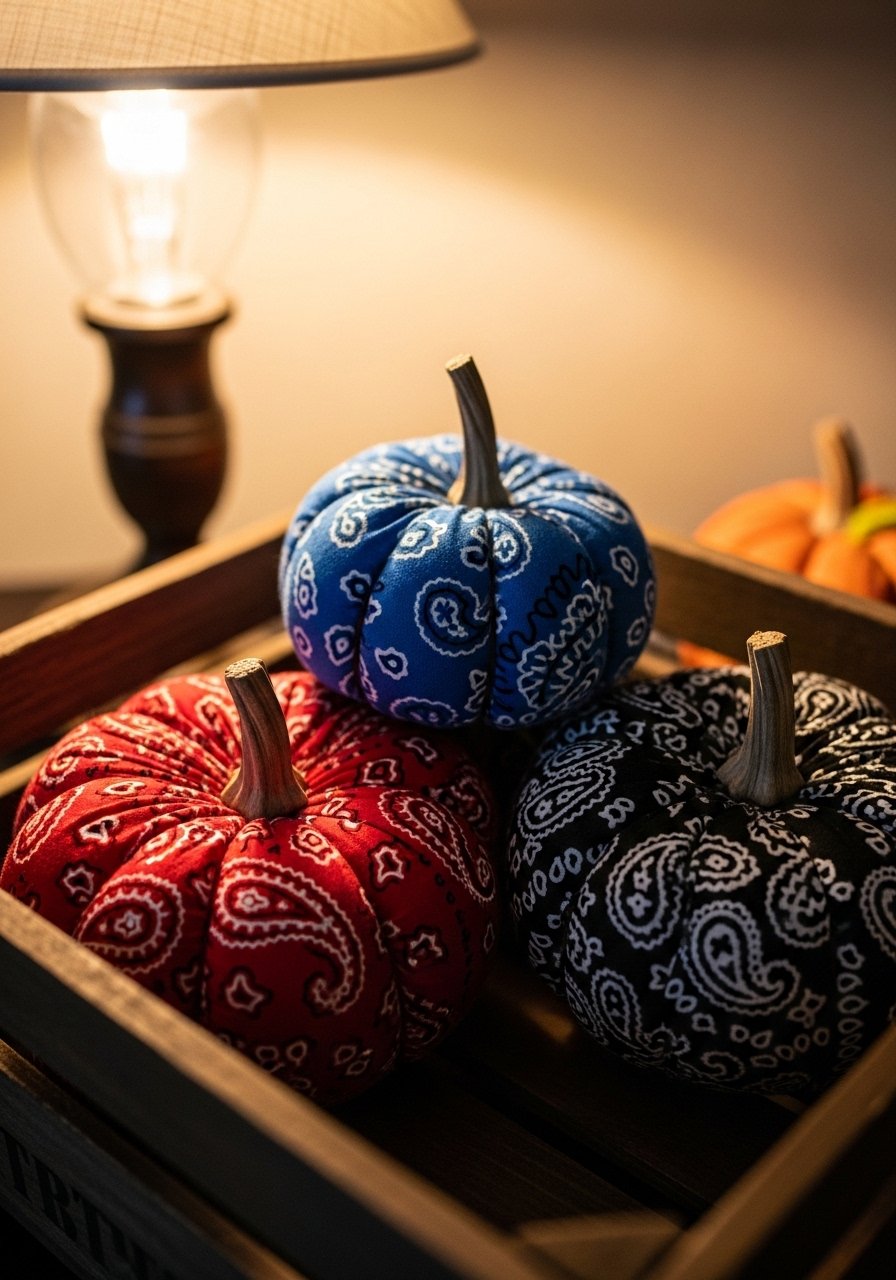
I keep a stack of Dollar Tree bandanas for this one. They are cheap, bright, and already hemmed so you skip edging. Cut a 14-inch circle for a 5-inch pumpkin and use a 1/2 cup navy beans in a quart-size bag as the weighted base before you stuff with polyfill. I used embroidery floss to make six ribs, about 11 inches each, knotted at one end. The mistake most people make is underfilling, which leaves a floppy bottom. These sit flat on trays and cost next to nothing. Grab a pack of bandanas to keep in your craft drawer Dollar bandana pack.
Scrap Cotton Twill Weighted Pumpkin For Modern Shelves
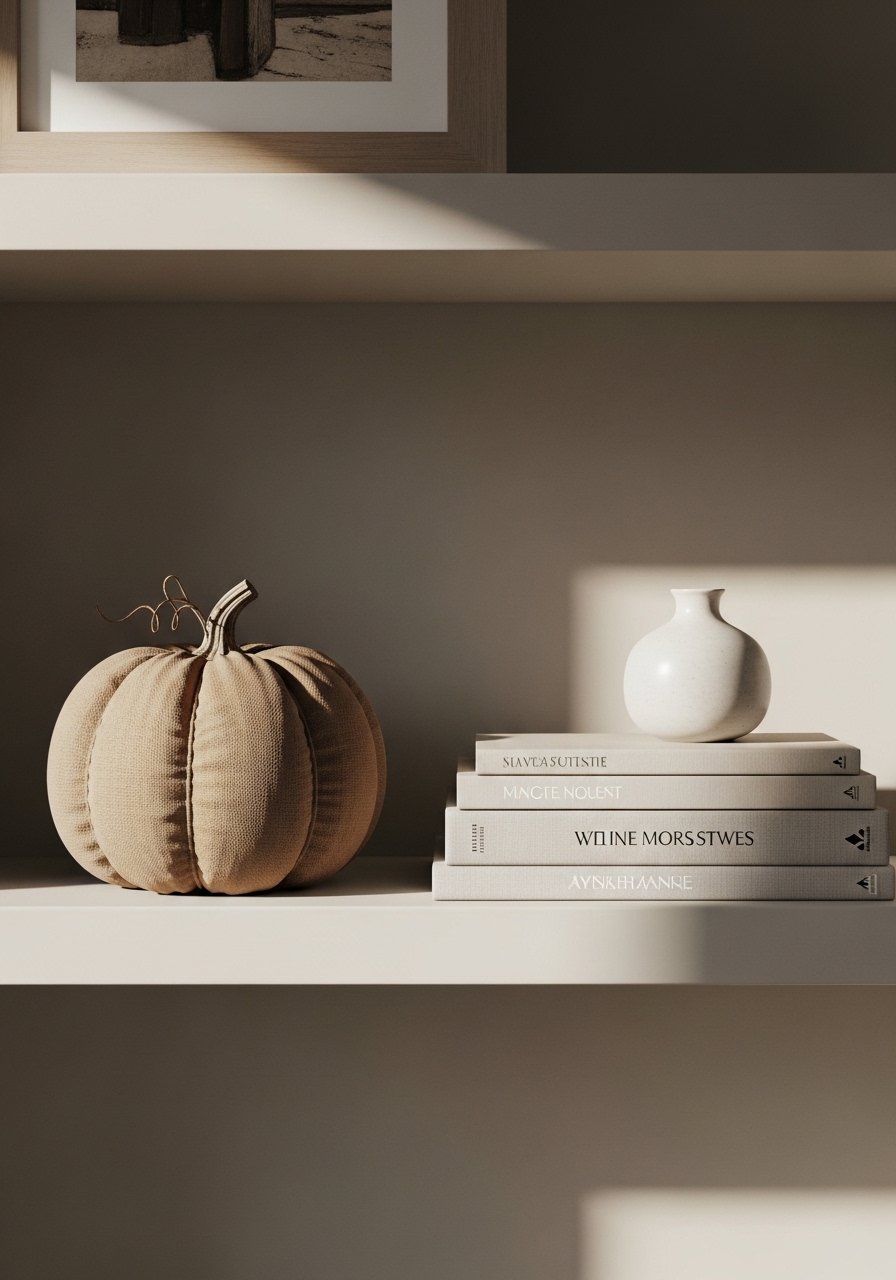
I love cotton twill for a subtle, matte pumpkin that reads neutral and modern. Cut a 14-inch circle, put a 1/2 cup navy beans in a sealed bag for the base, then add polyester stuffing until the top is about 1-2 inches shy of the rim before you close with a rubber band ponytail method. Most people forget the bean base, and then the pumpkin tips when anyone brushes past it. These run under $10 if you raid your scrap pile. For a tight, segmented look use six strands of embroidery floss about 12 inches long each. Try these linen-like fabric swatches when you need extra yardage neutral fabric bundle.
Thrift Flannel Sleeve Pumpkins For Rustic Corners
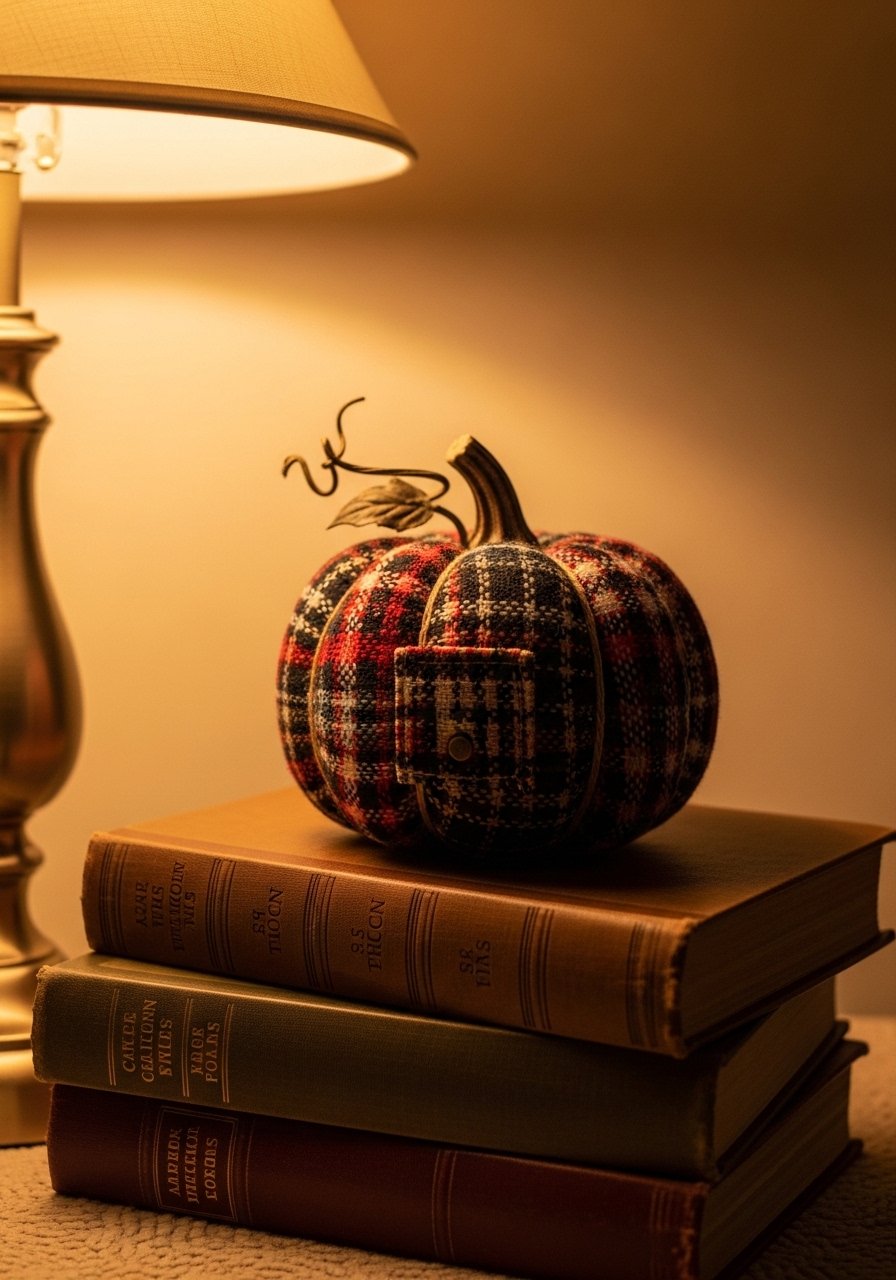
I cut old thrifted flannel shirt sleeves just below the armpit and stuffed them to make quick 4-6 inch pumpkins. Sleeve pumpkins are perfect for small spaces because they stack in bowls without taking shelf real estate. Thrift finds cost $2 to $5 and the pattern gives you instant farmhouse texture. A common mistake is leaving the sleeve open at the top. Tie it into a tight rubber band ponytail and add a cinnamon stick or glued branch for the stem. Socks and sleeves make great kid projects because there is no raw edge to finish, and Almost two thirds raid their scrap bin for these.
Burlap Square Pumpkins For Boho Hanging Displays
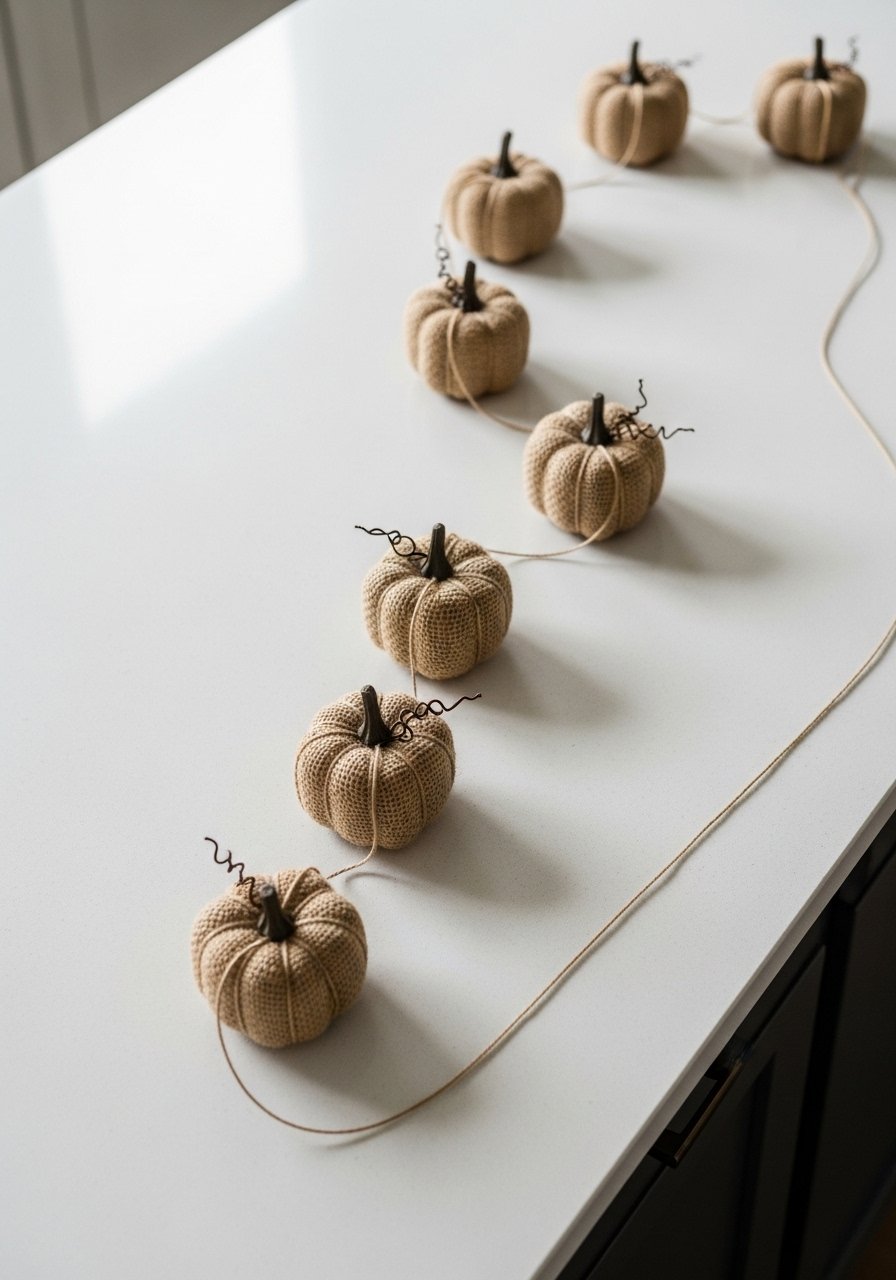
I wanted a hanging pumpkin garland that looked relaxed, so I used 8-inch burlap squares filled with plastic grocery bags and a tiny bit of polyfill. No beans here because I wanted them lightweight for hanging. The common mistake is overstuffing which makes them look lumpy. A quick wrap of twine around the middle creates the ridges. These cost under $2 each to make and hang beautifully above a doorway. If you need a stem, hot glue a short piece of driftwood or a cinnamon stick. For burlap by the roll try this option burlap fabric roll.
Sock Pumpkins With Cinnamon Stick Stems For Kid Crafts
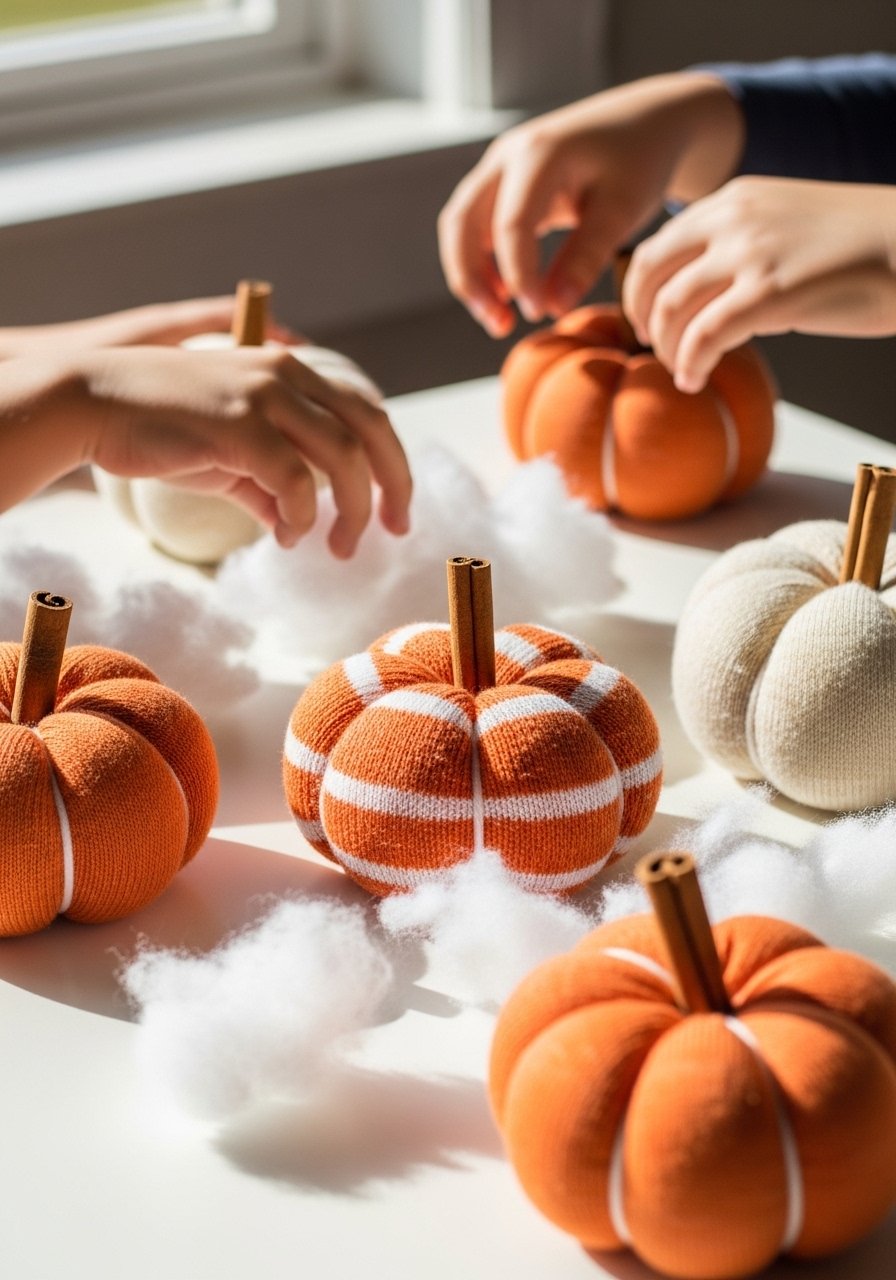
Socks are the most forgiving fabric to shape. Stuff a crew sock with polyfill, tie off with an elastic, and use six wrapped strands of twine to make the pumpkin ribs. Finish with a cinnamon stick tucked into the top for scent and a rustic look. Parents ask if kids can help, and yes they can. Avoid hot glue for little ones and use the ponytail rubber band method. People keep these under ten bucks easy when you use spare socks and a small bag of stuffing. If you want a stocked set of filler, grab this polyfill bag polyester fiberfill bag.
Wine Cork Stem Pumpkin For Coastal Accents
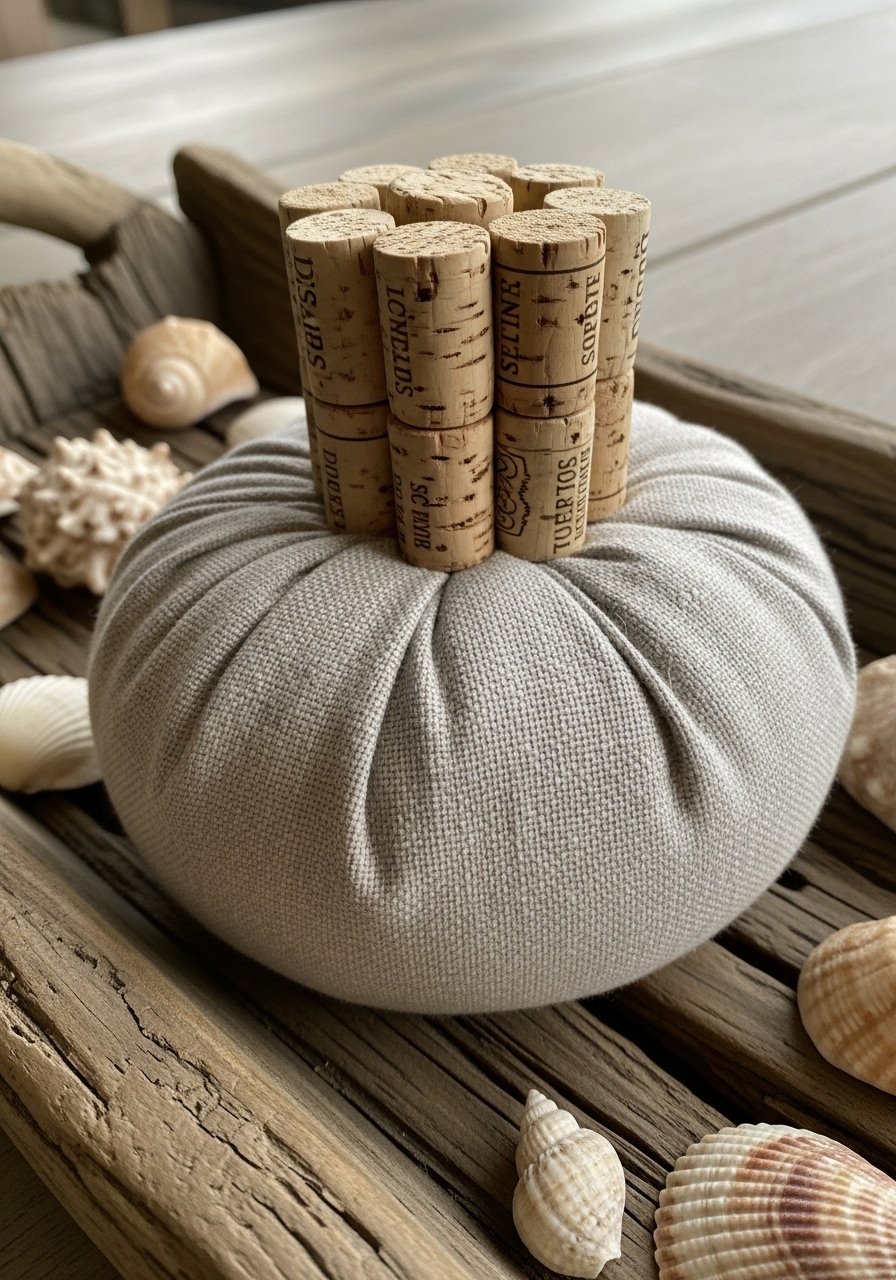
I ran out of branches and glued a small cluster of wine corks together to make a stem. It gives height without looking fussy and pairs surprisingly well with light linen fabrics for a coastal vibe. Use the 14-inch circle cut and stuff over a 1/2 cup bean base then thorough polyfill. Cork stems can be hot glued or wrapped with twine for extra hold. Don’t skip the bean base if you want them to sit flat on mantle trays. This is a low cost idea if you save corks or use corks from a craft pack wine cork pack.
Embroidery Floss Ridges For Traditional Pumpkins
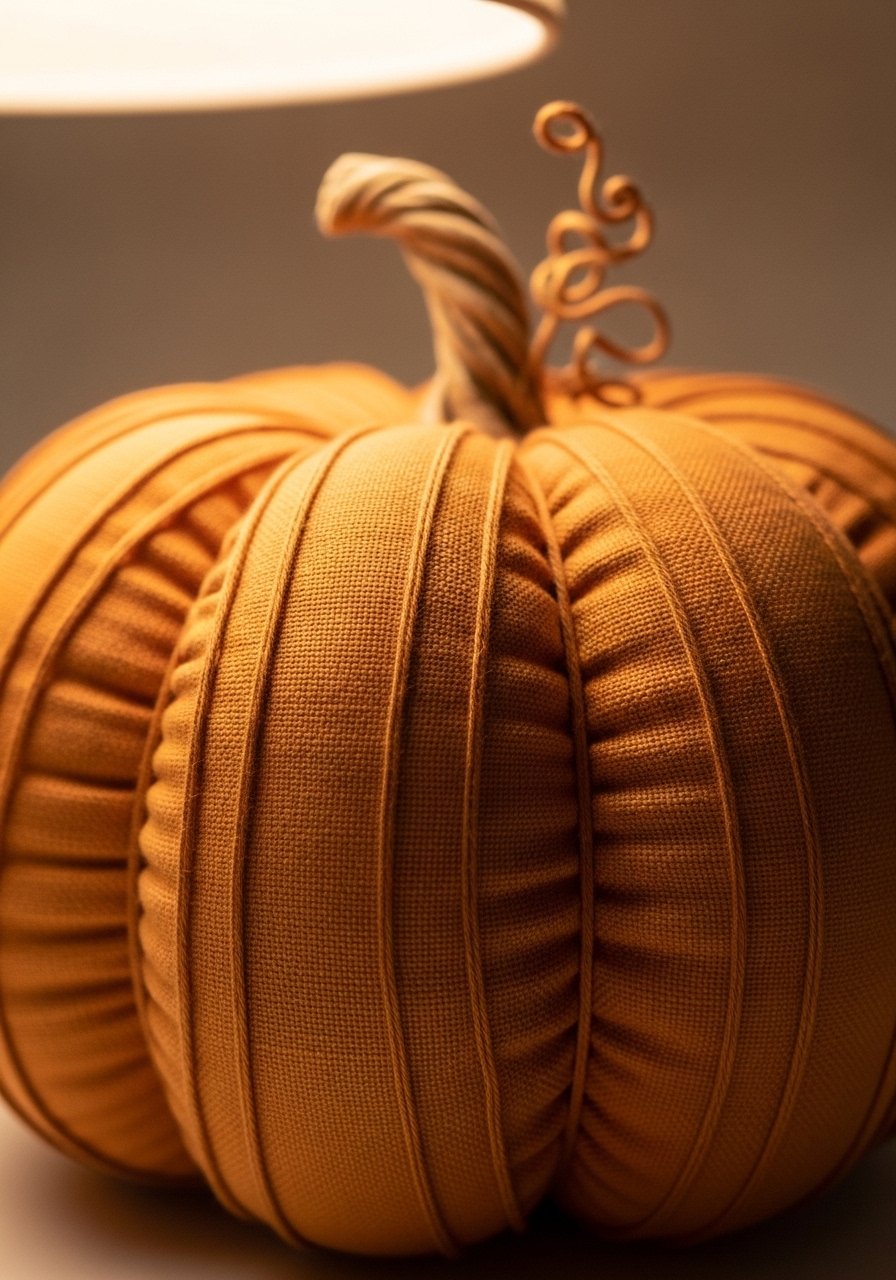
To get those crisp pumpkin segments I use six strands of embroidery floss, each about 6 inches longer than the pumpkin height. For a 5-inch-high pumpkin that means roughly 11 inches per strand, knotted at one end and pulled tight across the pumpkin. Most tutorials skip the exact length, so I say measure. Stuff tightly and leave 1-2 inches at the top to close with a ponytail band. Polyester stuffing holds the ribs longer than loose beans, which is important if pets nudge things around. I use DMC floss in fall colors for a classic look embroidery floss pack.
Mini Sleeve Pumpkins For Small Space Styling
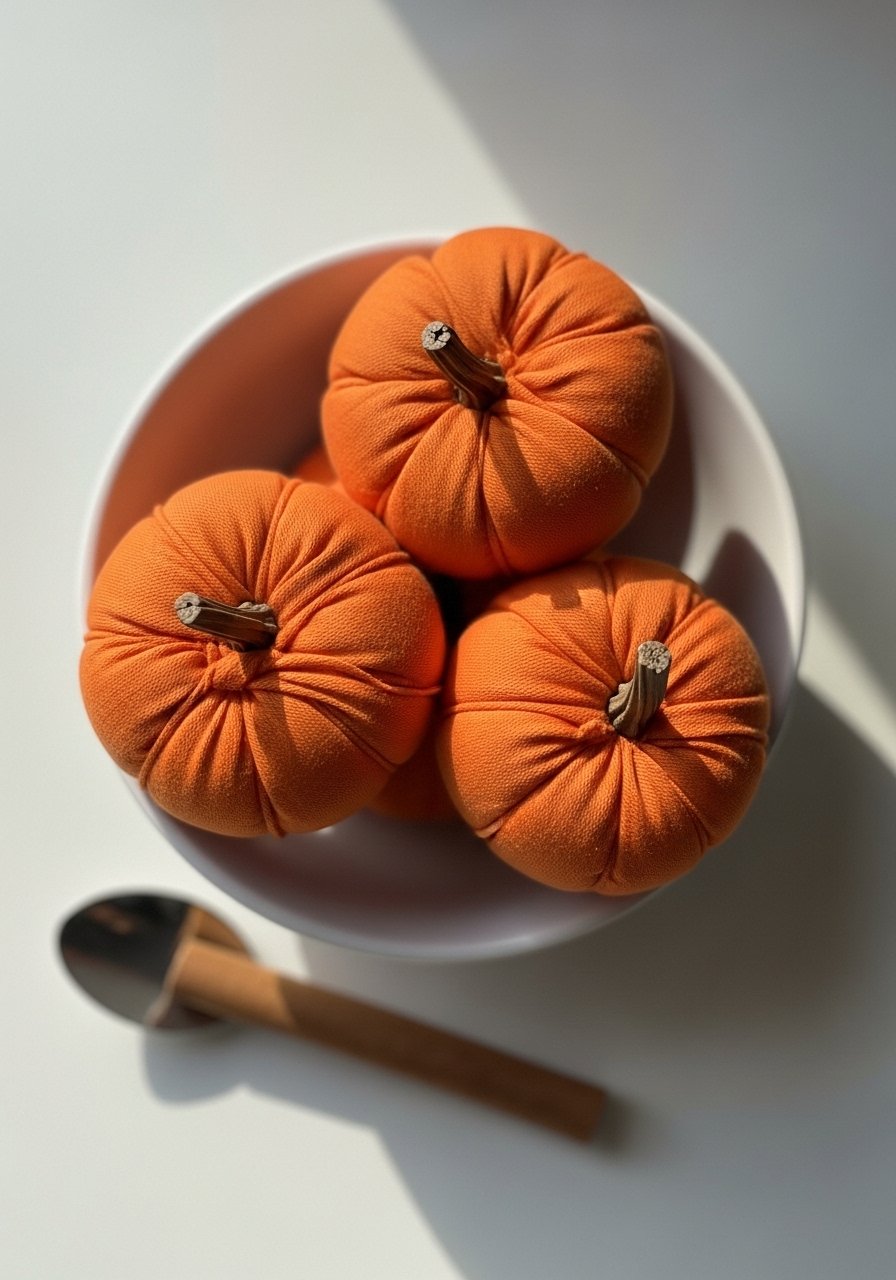
When space is tight I go tiny. Cut shirt sleeves into 4-5 inch tubes, stuff them, and tie the ends. They make cute bowl fillers or napkin ring substitutes. The trick most people miss is that mini pumpkins look better grouped in odd numbers, so I do three or five. For stability on a shelf use a dab of hot glue on the bottom or tuck a bit of beans into a tiny bag. This is super budget friendly when you use thrift shirts and scraps.
Denim Patchwork For Textured Mantel Pieces
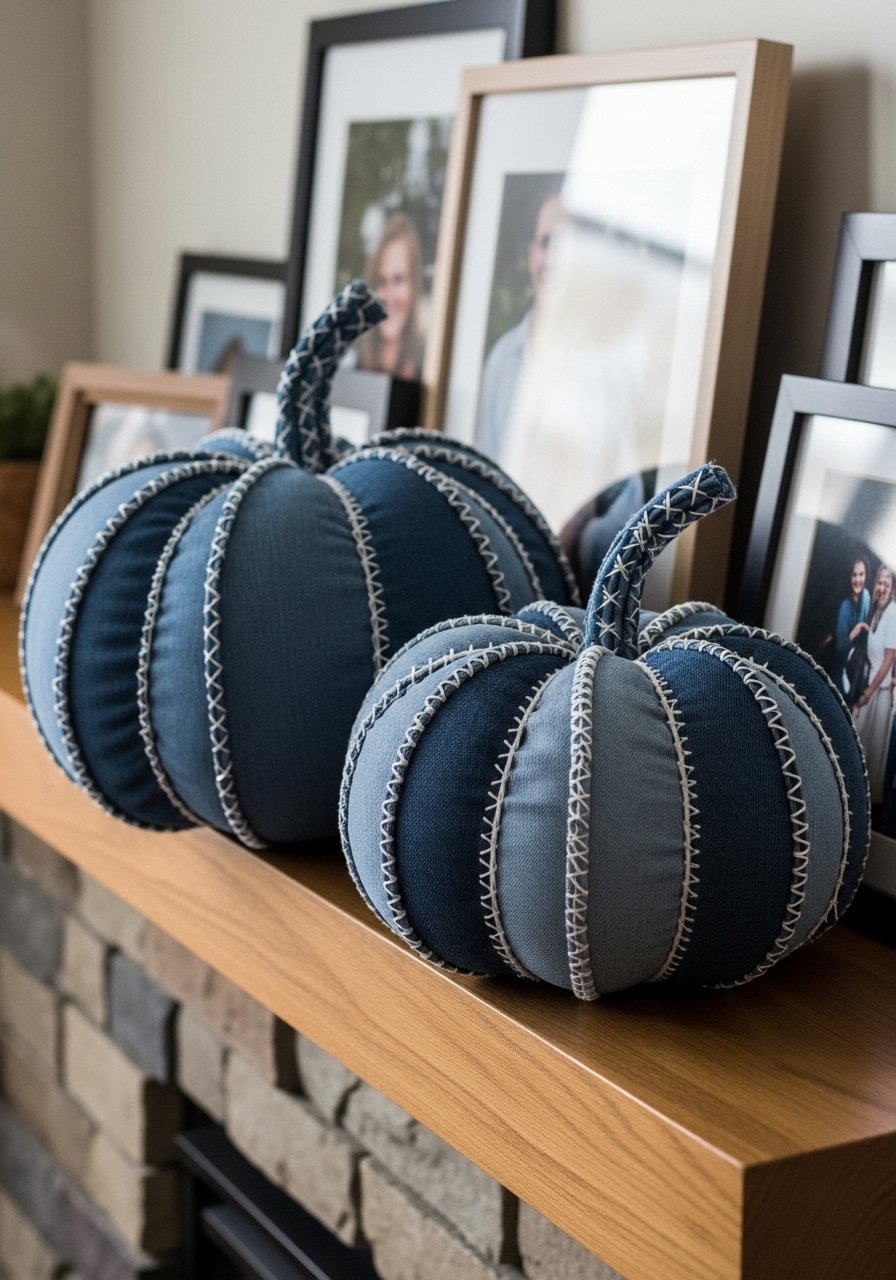
I kept a pile of old jeans for months before finally making these. Denim gives structure and visual weight. For a 7-inch pumpkin cut a 16-inch circle to account for thicker fabric. I put a 1/2 cup navy bean bag inside and layer polyfill on top to avoid lumps. People often forget to add extra allowance when using thick fabric and end up with a flat-looking piece. The seam residue can be a feature, so leave a visible patch or pocket for character. If you want to buy denim by the yard, try this canvas denim option denim fabric yardage.
Velvet Mantel Pumpkins For Soft Glam
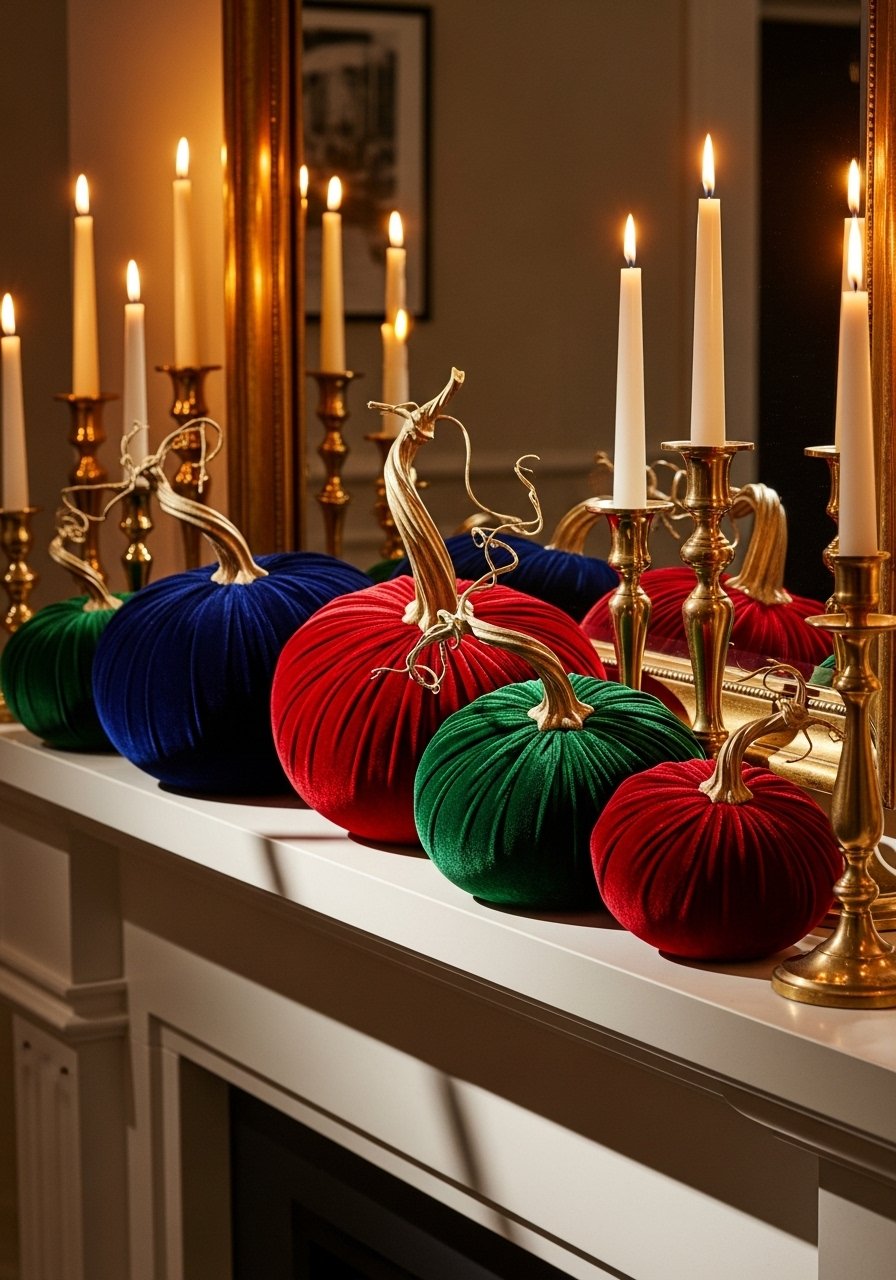
Velvet reads richer and feels soft under hand. I made a trio of 5-inch pumpkins in deep green and rust and placed them between candlesticks. Velvet can show stuffing lumps easily, so stuff tightly and smooth as you go. For the segmenting use embroidery floss and tie tightly. A common mistake is using a sticky glue stem that shows through the fabric. I prefer a short branch sealed into the rubber band top. Velvet fabric is a splurge but makes small displays look intentional. For plush fabric, try this velvet bundle velvet fabric bundle.
Wool Sweater Pumpkins For Mantel Warmth
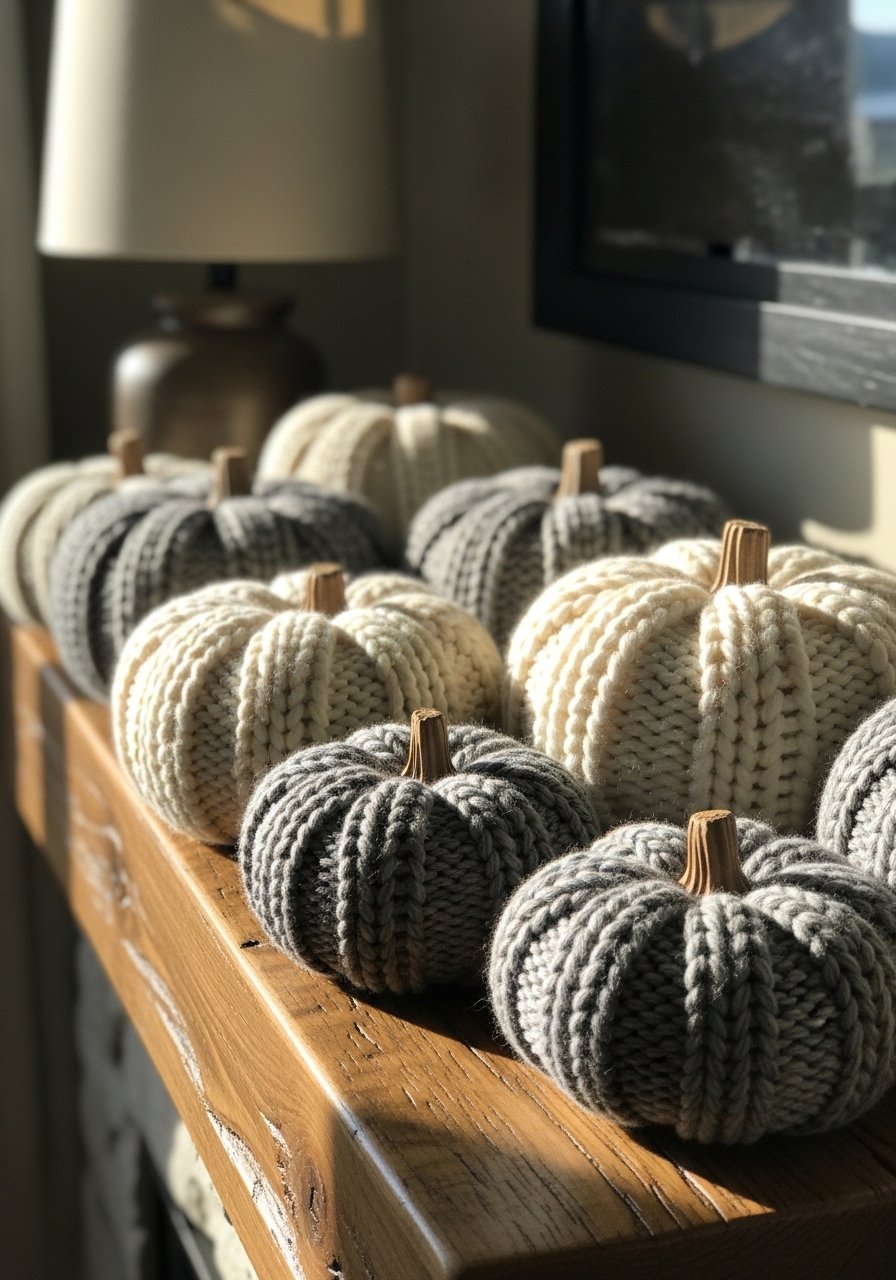
Old sweaters make unexpectedly good pumpkins because the knit compresses and looks like real pumpkin texture. Cut circles from the body, stuff firmly, and bind with six twine strands. I used a 14-inch circle for a 5-inch result and added a 4-inch branch stem. The sweater material holds shape well but can shed, so lint roll the finished pumpkin. These feel more substantial than cotton and suit a mantel or entry console. One tip is to wash and dry the sweater first to stop future shrinkage.
Painted Muslin Pumpkins For Layered Color
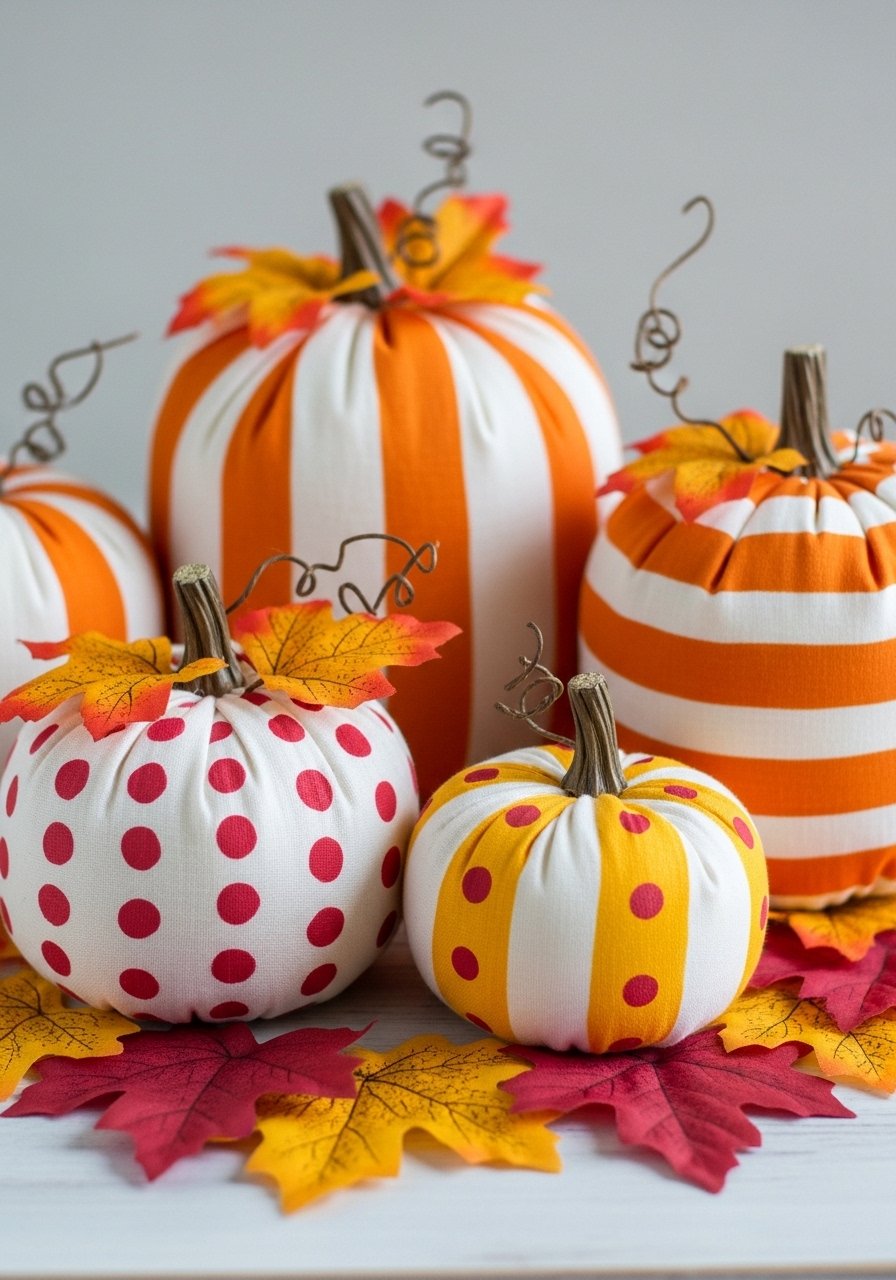
Plain muslin is a great canvas if you want to paint patterns. Use a 14-inch circle, stuff as usual with a bean base and polyfill, then use fabric paint for bold stripes or dots. I like to make two painted and one plain in a small trio for depth. The paint stiffens the fabric, so do your ribs before painting or the floss can break the paint finish. These are cheap to make and perfect for a kid-friendly craft night. For muslin by the yard try this option muslin fabric yardage.
Layered Neutral Pumpkin Stack For Entry Tables
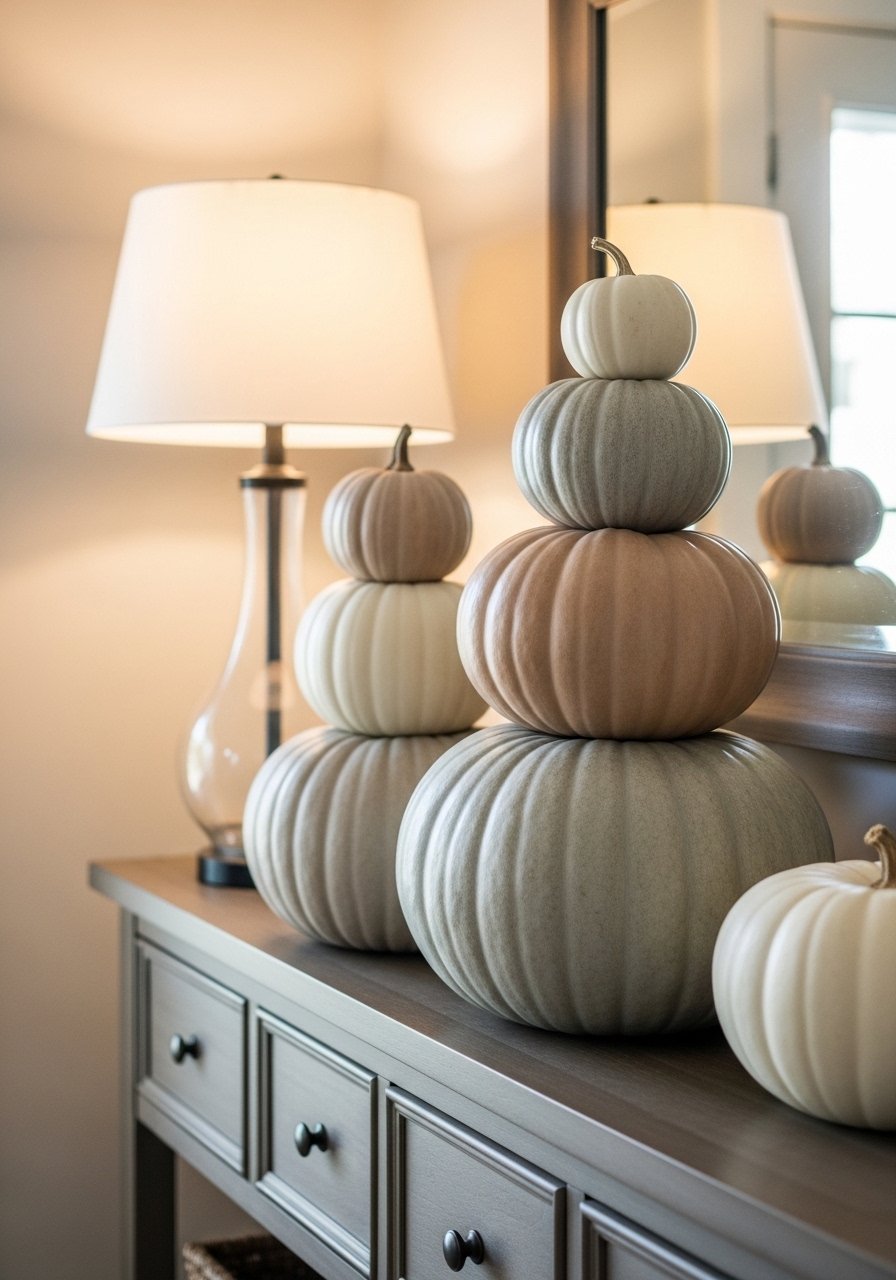
Stacking three sizes on top of each other creates immediate height and interest on an entry table. I used 7-, 5-, and 3-inch pumpkins and threaded a dowel through the centers to keep them stable. If you are worried about wobble, use a 1/2 cup bean bag at the bottom of the largest piece. The rule that always helps me is odd groupings and a mix of textures. This is a slightly higher budget idea if you use quality fabric, but it reads expensive. For dowels, consider this pack wooden dowel rods.
Raffia-Tied Boho Pumpkins For Natural Tablescapes
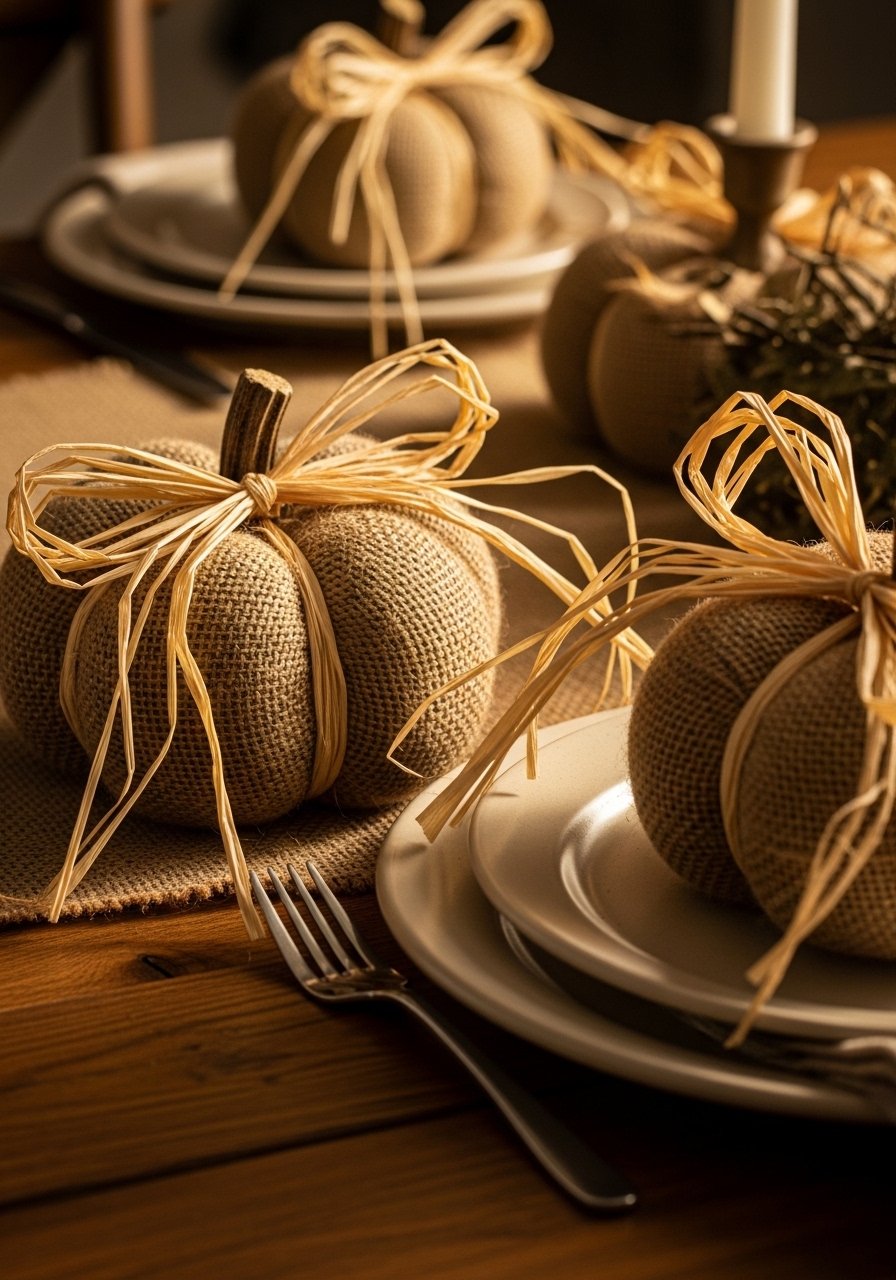
I love tying raffia around the neck of a pumpkin and adding a little bow for boho texture. Use natural burlap or linen, stuff and wrap six twine ribs, then tie raffia around the top. The common mistake is using too stiff a raffia which looks fake. Pick a soft natural raffia and fray the ends slightly. This pairs well with wooden chargers and ceramic plates and costs just a few dollars per pumpkin. For craft raffia try this bundle natural raffia pack.
Hanging No-Stuff Felt Pumpkins For Banners
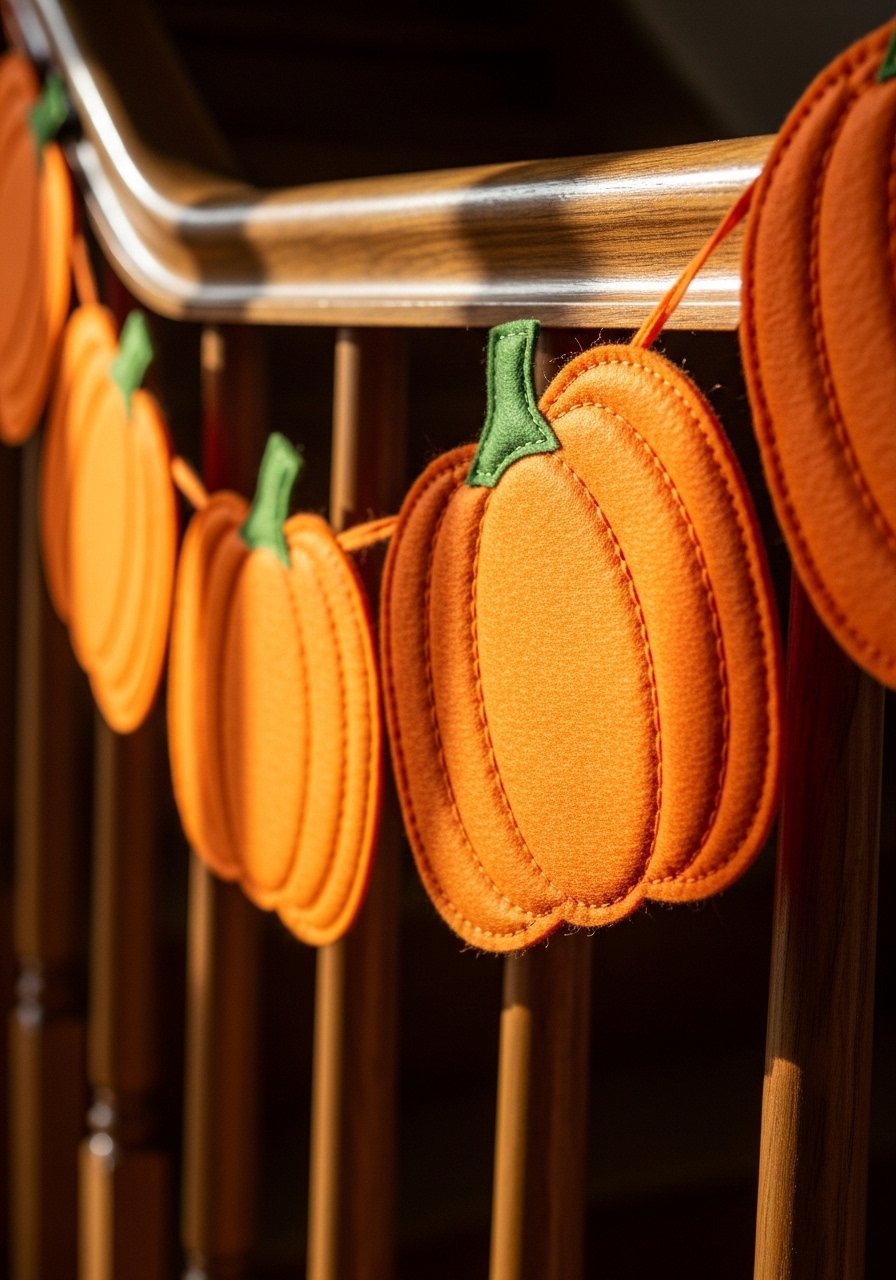
If you want a lighter option for a banner, use two felt circles, glue the edges together leaving a small gap, and slip in a tiny crumpled plastic bag for shape. No heavy beans so the garland hangs without sagging. Sew-free design uses hot glue or fabric glue. The mistake is choosing real beans for hanging pieces which makes them heavy over time. Felt makes a cheerful, lightweight cascade for staircases or over doors. For mellow holiday color packs, try this felt sheet set felt sheets set.
Denim Sleeve Napkin Pumpkin For Table Settings
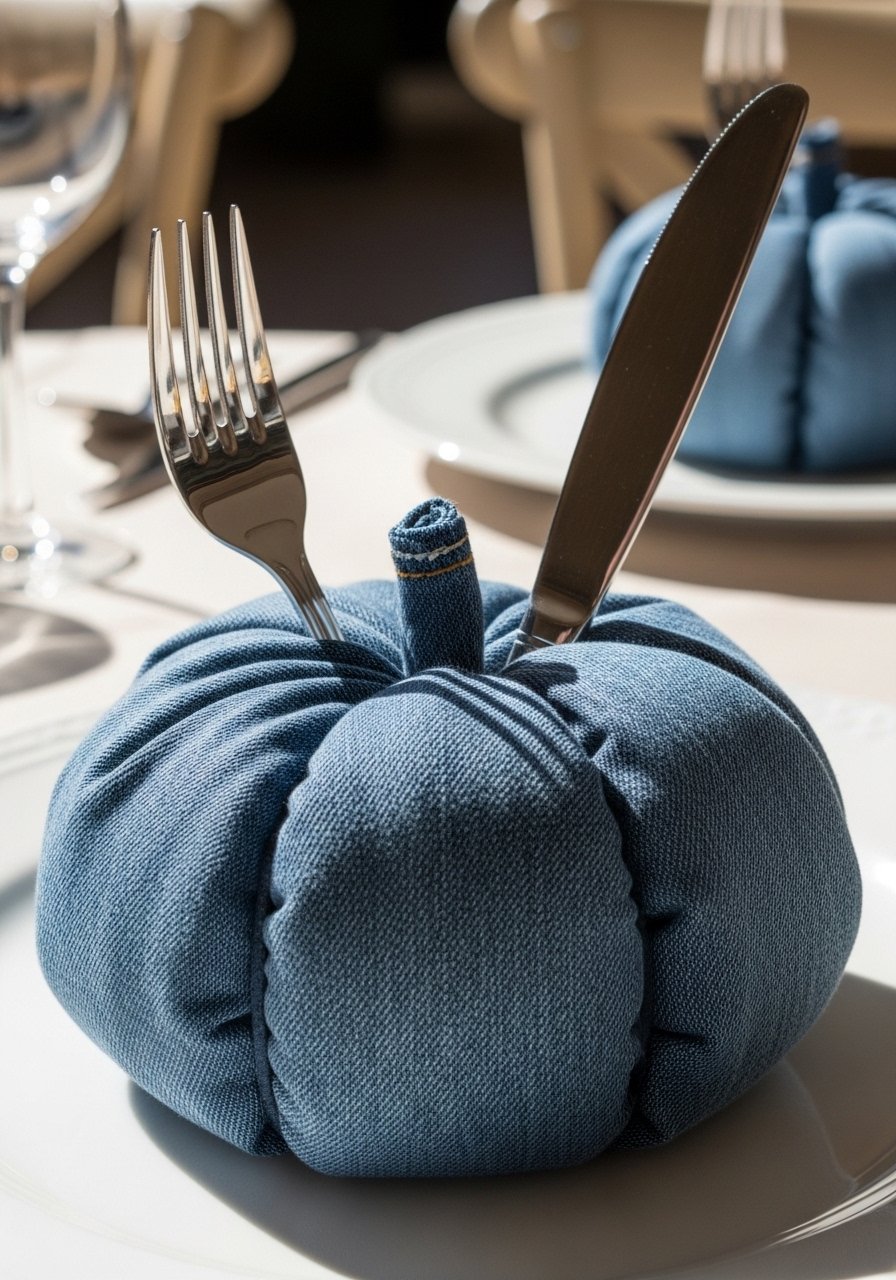
I made tiny napkin pumpkins from denim scraps to tuck into place settings. Cut small circles from sleeves, stuff a little polyfill, tie, and add a tiny cork or cinnamon stick for the stem. They are heavier than paper napkins so they sit nicely on plates and look curated without fuss. This is the perfect use for leftover jean bits and adds texture to a dining table. If you host, this is an easy way to make each place feel thought out.
Reversible Two-Tone Pumpkins For Double Duty Decor
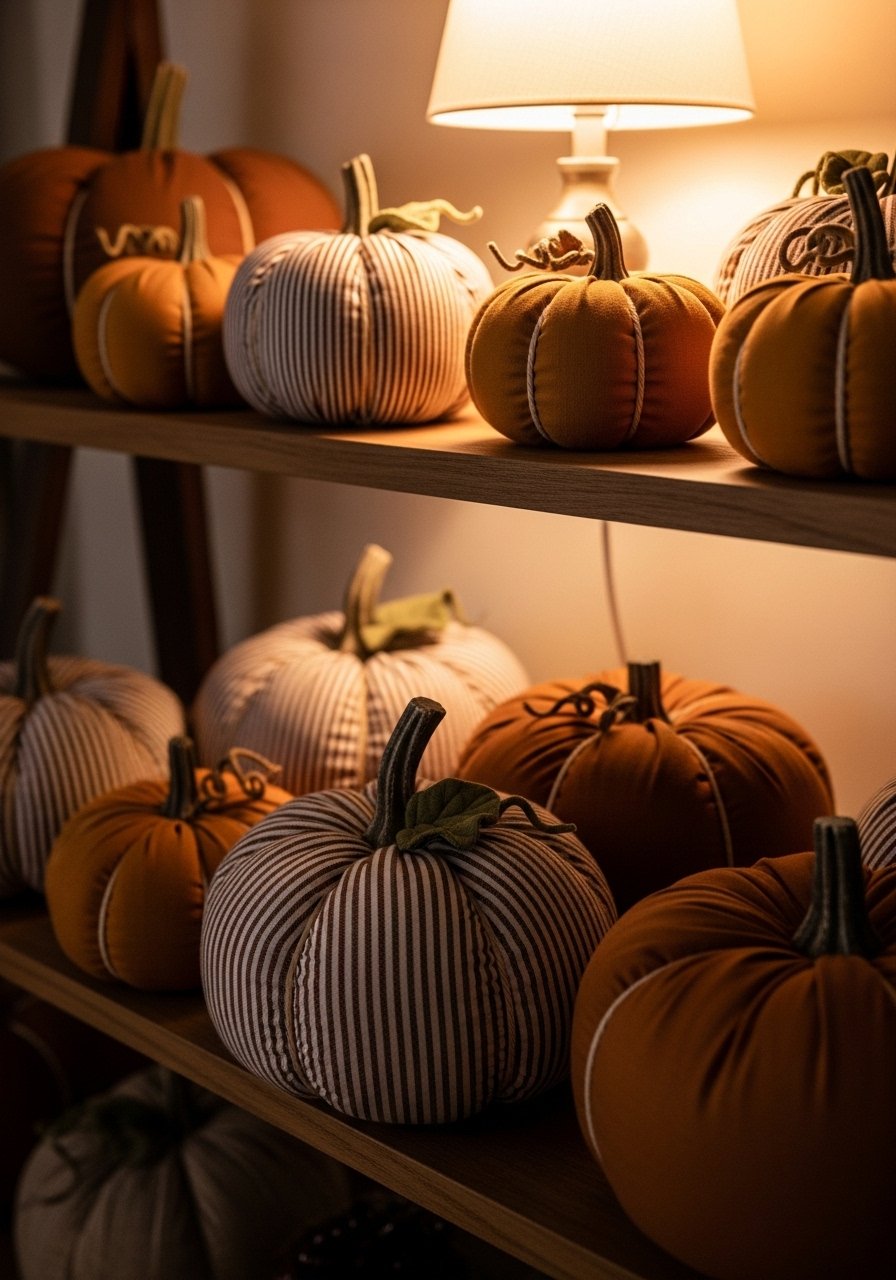
I sewed a reversible look without sewing by layering two different fabric circles and gluing the inner seam before stuffing. The result is a pumpkin you can flip for a different vibe. I used cotton twill on one side and a printed quilting cotton on the other. The secret most people miss is to glue neatly and press the seam well before stuffing; otherwise you get lumps. This makes sense for renters because you can change the look in seconds and keep the budget low.
Pet-Proof Polyfill Pumpkins For Living Rooms With Dogs
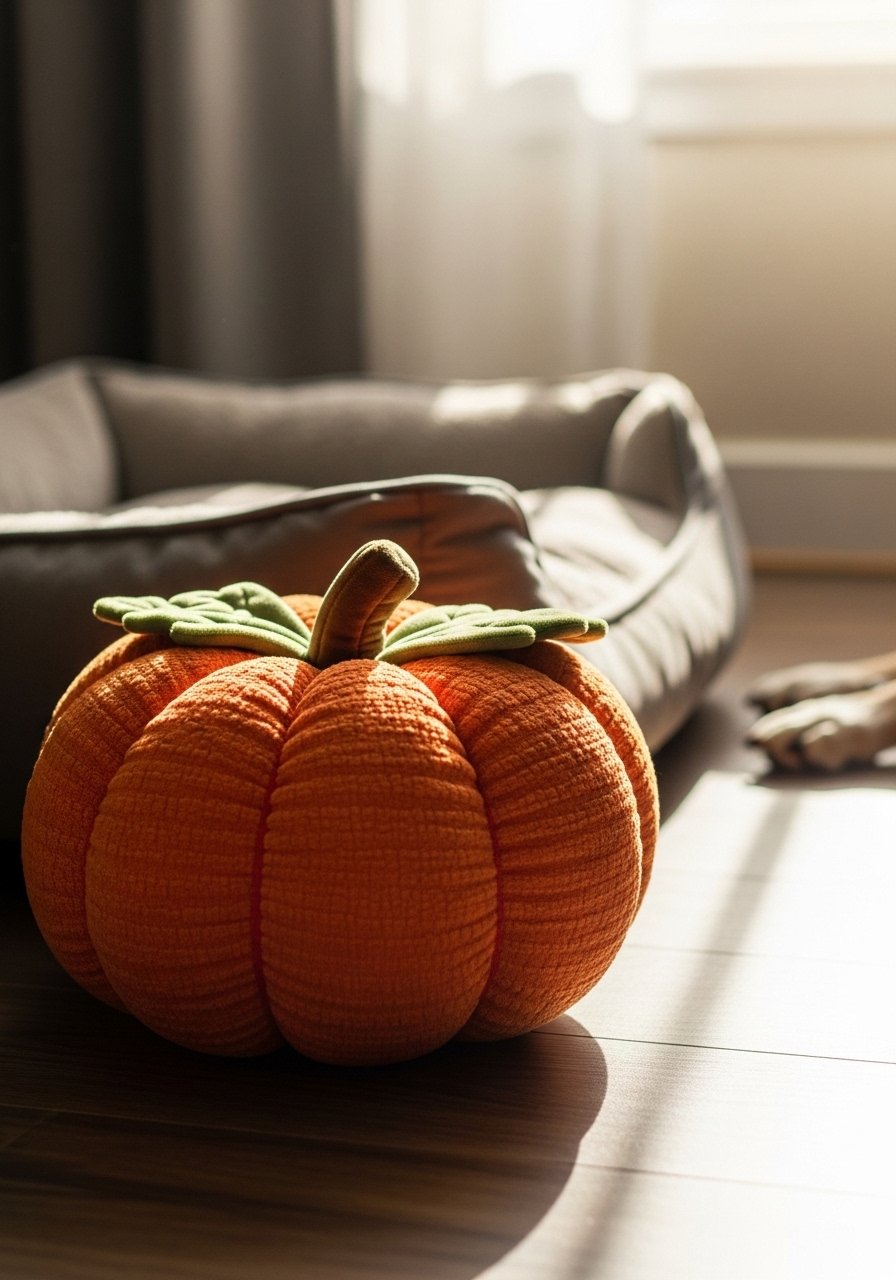
If you have curious pets I recommend polyfill over loose beans because beans can spill and invite snacking. I put a small 1/2 cup navy bean bag inside for weight and wrap the rest densely with polyester stuffing so nothing escapes if paws nudge it. My dog liked to nose my first versions and taught me to glue stems more securely. Pet owners often notice sagging after a week, so fluff them up weekly. This idea solves the flop problem and keeps your decor intact.
Mantel Runner With Mixed Fabric Pumpkins For Layered Texture
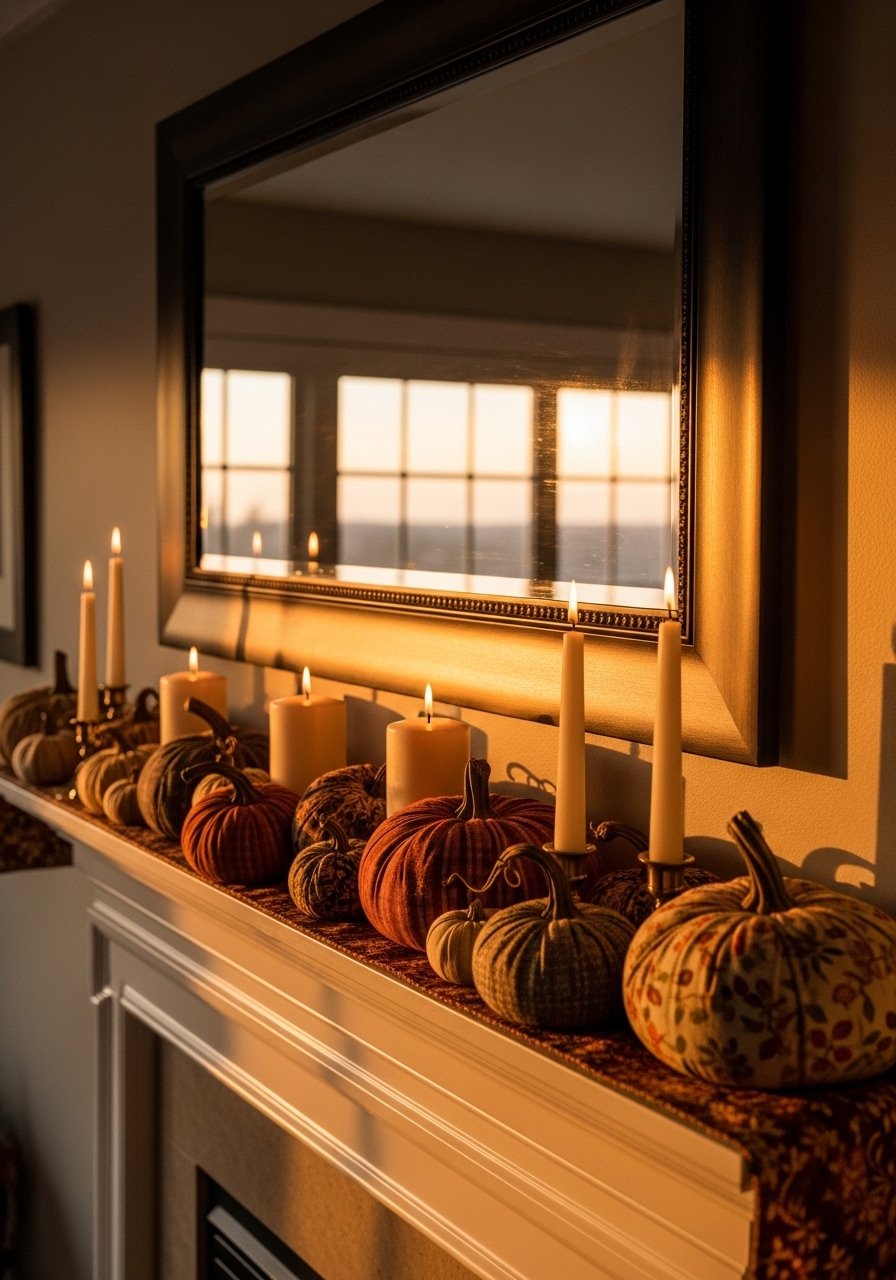
I made a mantel runner of mixed fabrics, alternating denim, burlap, velvet, and plaid. The mix stops the mantel from reading flat. For scale, use one 7-inch piece, two 5-inch pieces, and three 3-inch minis. The biggest mistake is using one size for everything which looks repetitive. I place heavier, bean-weighted pumpkins near the edges to anchor the display. As a rule of three, group smaller pieces in odd numbers next to the larger one. If you want a curated kit, this fabric sampler helped me get started fabric scrap bundle.
Painted Stem and Leaf Details For Realistic Finish
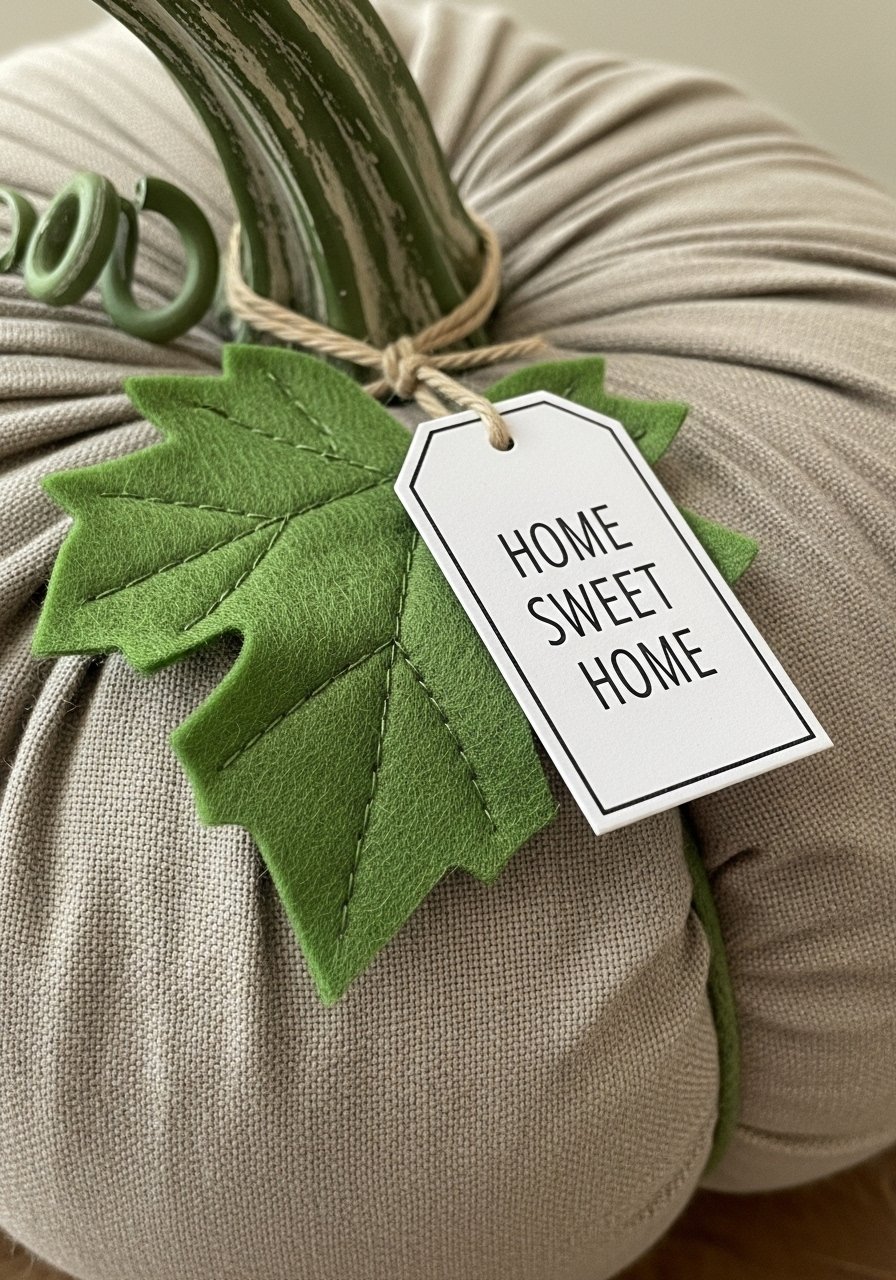
A painted stem and a glued felt leaf make a big difference. I used craft paint on a small branch or on a cork stem to match my palette. Add a felt leaf glued under the stem and it begins to read very realistic. People often attach stems loosely and they fall off. Secure them into the rubber band ponytail and add a dab of glue for longevity. A little painted detail hides seams and elevates the whole arrangement. For craft paint try this small pack acrylic craft paint set.
Stacked Books and Pumpkins For Bookcase Styling
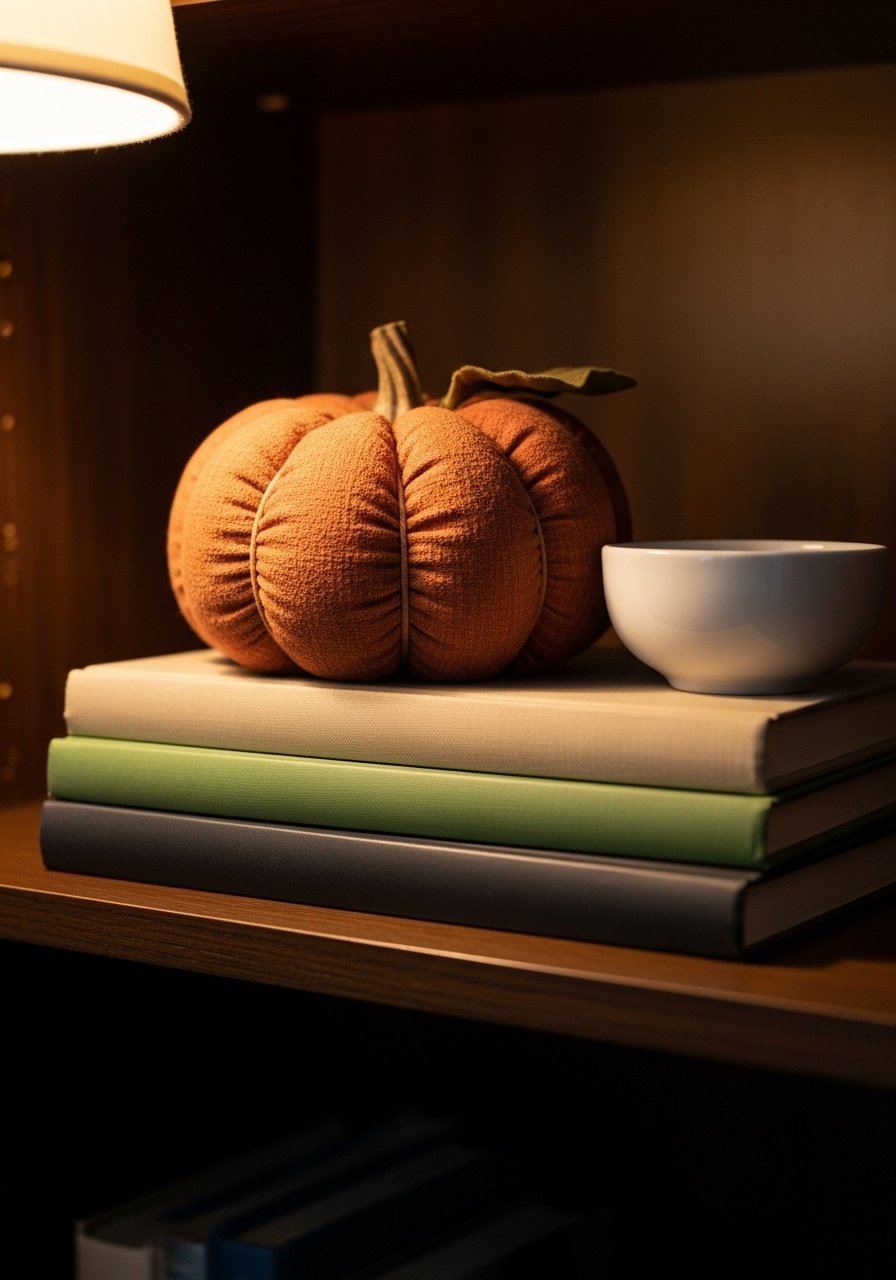
I use a single 5-inch pumpkin on top of a stack of two books to add height and interest on a shelf. The tactile contrast of paper, fabric, and ceramics makes displays feel intentional. The common mistake is balancing identical items which reads boring. Try a tall book stack under one and a low stack under another, then fill with small pumpkins. This is a great renter-friendly trick because no nails are required. For nondestructive bookends and props, I use this set decorative book stack weights.
Your Decor Shopping List
Textiles
- Honestly the best $40 I have spent. 22-inch down-filled linen pillow covers, set of 4 in neutral and rust tones.
- Velvet fabric bundle for small projects (~$15), great for mantel pumpkins.
- Polyester fiberfill bag, 16oz (~$8), for stuffing that holds up around pets.
Craft Tools
- Embroidery floss 24-pack for ribs and color.
- Hot glue gun and sticks for stems and quick fixes.
- Natural raffia pack for finishing bows.
Budget Finds
- Dollar bandana pack for colorful quick pumpkins.
- Burlap fabric roll, 5-yard for garlands and rustic pieces.
Hardware and Extras
- Wooden dowel rods 6-pack for stacking stability.
- Wine cork craft pack for stems and accents.
Most of these items are similar at Target and HomeGoods if you prefer to touch before you buy. People keep these under ten bucks easy when they reuse scraps and thrift finds.
Shopping Tips
"Grab these velvet pillow covers for $12 each. Swap them every season and the whole room feels different."
White wood tones read current. Oak floating shelves are a better bet than dark wood for a fresh look.
Curtains should kiss or puddle the floor, not hang halfway up. 96-inch linen panels are the right call for standard ceilings.
If you want an instant handmade stash, grab a fabric scrap bundle. Use those scraps for bandana pumpkins, sleeve pumpkins, and small table clusters.
One tall plant beats five tiny succulents. For that height without the care, consider a 6-foot artificial fiddle leaf fig.
Frequently Asked Questions
Q: What size circle do I cut for a standard tabletop pumpkin?
A: Cut a 14-inch circle for a pumpkin that ends up about 5 inches high and 5 inches wide. That size fits on mantels and tables without overpowering them.
Q: Can I make these with just household scraps and no sewing?
A: Yes. Almost two thirds raid their scrap bin for these. Use sleeves, socks, bandanas, and old sweaters. The rubber band ponytail top secures everything without a stitch.
Q: My pumpkins keep falling over, what am I doing wrong?
A: Skip the lightweight fill at the bottom. Put a 1/2 cup of uncooked navy beans in a sealed plastic bag at the base, then pack polyester stuffing on top. The weighted base helps them sit flat.
Q: Will the stems fall off after a few days?
A: They can if only hot glue is used. Anchor the stem into the rubber band ponytail and then add a dab of hot glue. For kids, tuck a cinnamon stick into the top without glue for a quick fix.
Q: Are these pet safe?
A: Use polyfill over loose beans if pets investigate. Polyfill holds up to dog nudges better than loose beans and reduces the chance of a spill.
Q: How long will the pumpkins keep their shape?
A: Stuff tightly and fluff them weekly, especially if guests or pets brush past them. I found polyester stuffing holds shape longer than loose fills, so plan a quick touch-up each week.
Q: Can I hang these on a garland or banister?
A: Yes, but keep them lightweight. Use felt or small burlap pumpkins with crumpled plastic inside and avoid beans for hanging pieces so the garland does not sag.