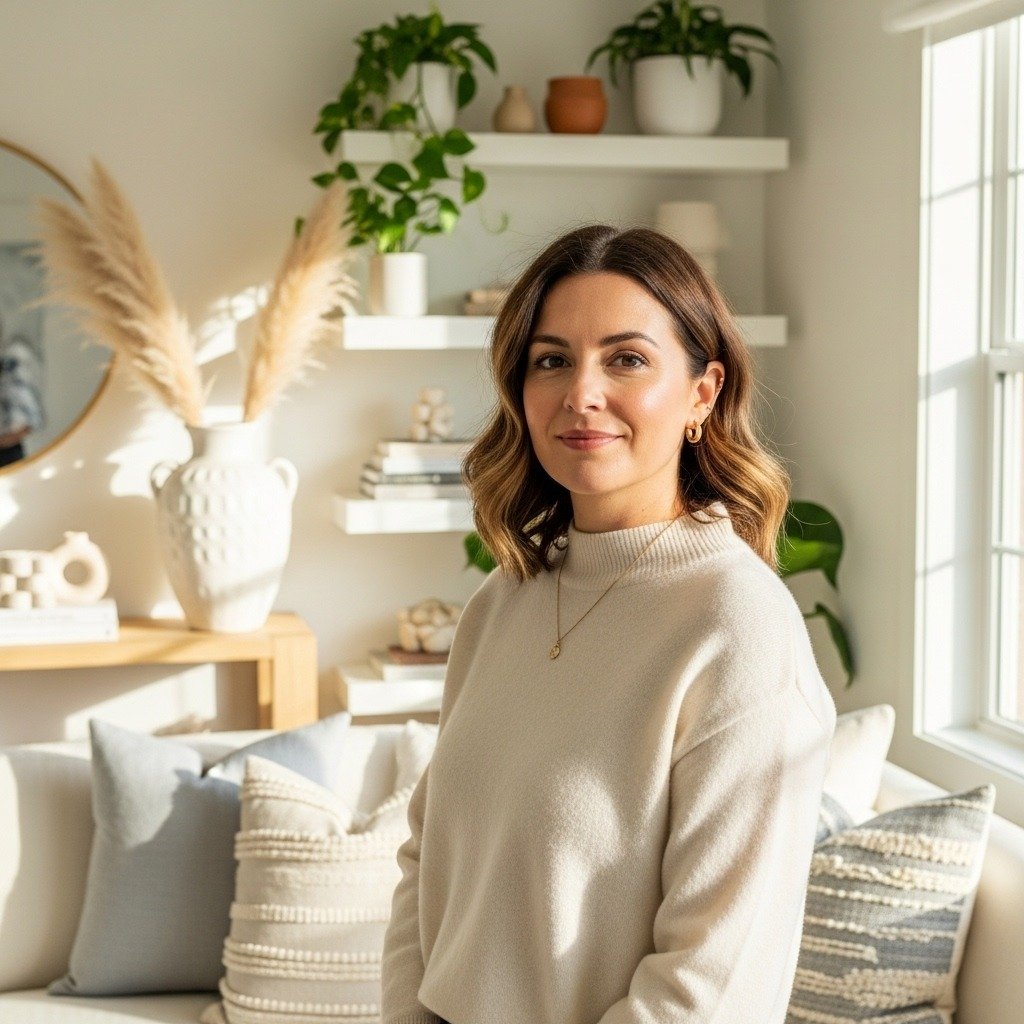
My living room had nice furniture and decent lighting but it still felt like a waiting room. Took me embarrassingly long to figure out it was missing scale and purpose around the coffee station. Once I pulled a mid century credenza into an empty corner, added a low-profile machine and a few vintage cups, guests actually stopped in that spot, not just pass through.
These ideas lean into mid century modern coffee bar home vibes with warm woods, clean lines, and playful accents. Budgets range from under $30 for clever accessories to $150 for a real wood bar cart. Works in kitchens, living rooms, small corners, or a dedicated pantry brewing station.
Compact Teak Credenza Coffee Nook for Living Rooms
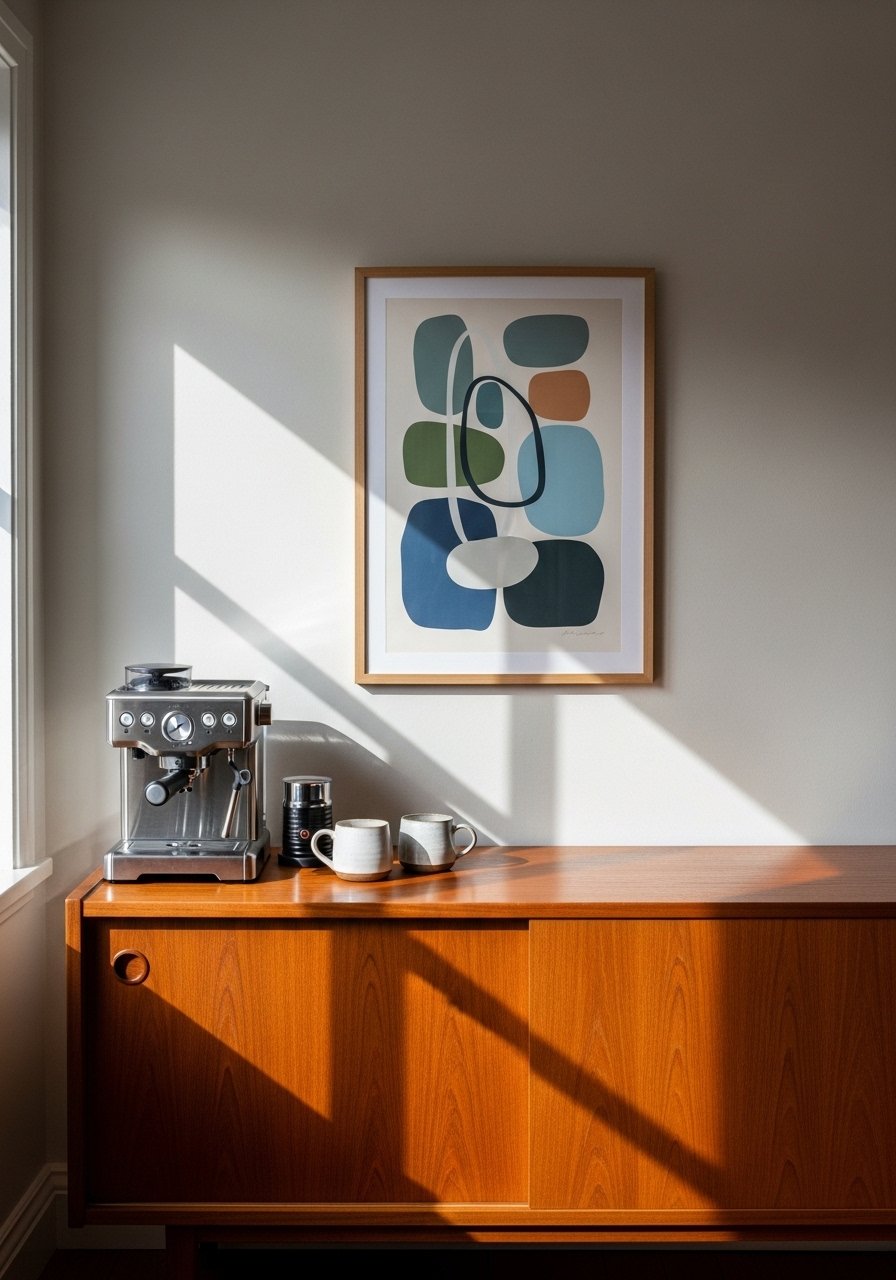
My first coffee bar started on a thrifted teak credenza and it changed how I use that corner. The low height keeps sight lines classic mid century modern, and the warm wood makes the chrome machine feel less industrial. Expect to spend $50 to $150 if you buy secondhand or $250 for new teak. I used a compact espresso machine and a small milk frother. Common mistake is choosing a too-tall back bar, which breaks the mid century silhouette. For scale, keep the setup under 36 inches tall so it reads like furniture not cabinetry.
Floating Oak Shelf Coffee Station for Small Kitchens
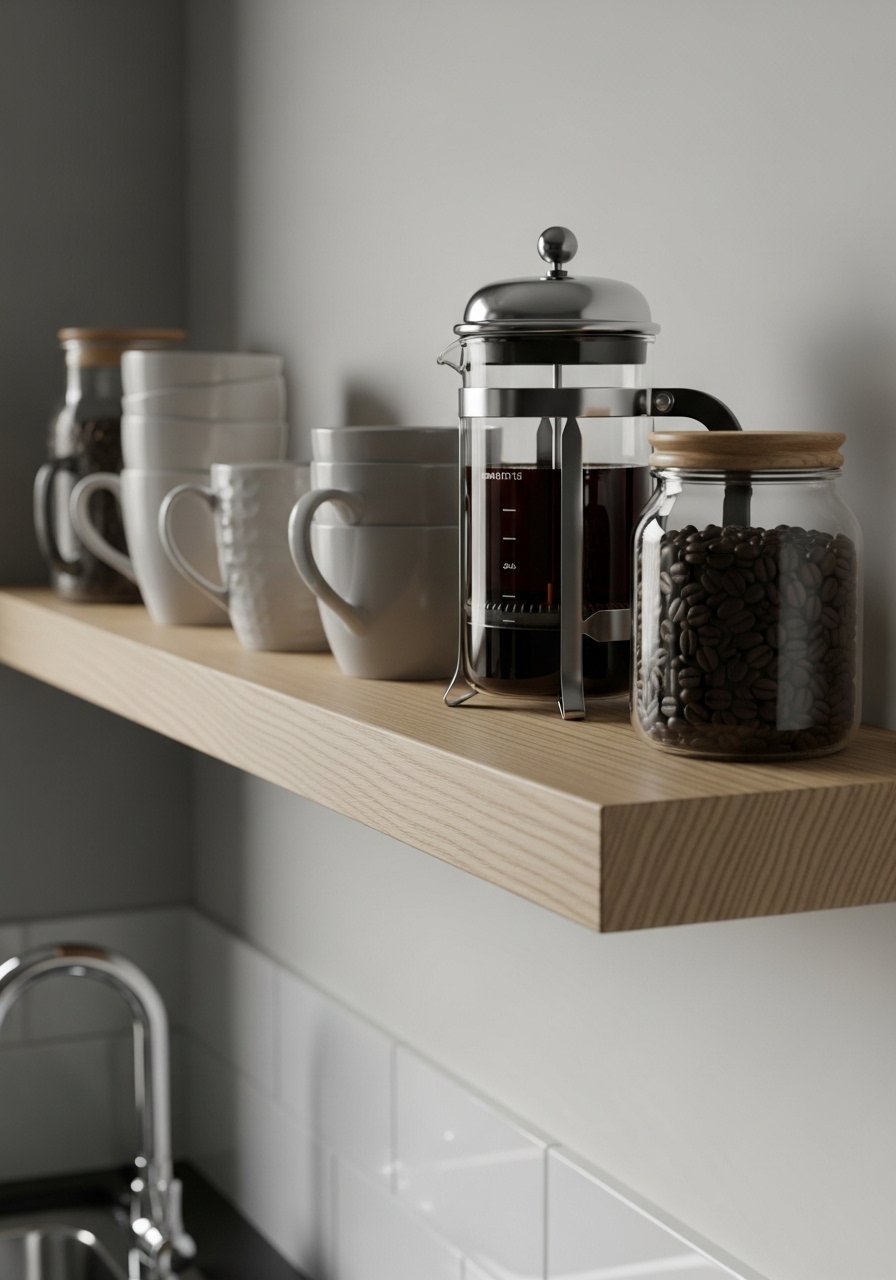
When counter space is zero, a floating shelf gives you a coffee station without stealing workspace. White oak reads current and pairs with brass hooks for mugs. My rule is one linear foot of shelf per drinker, so two people need at least two feet of shelf. I hang brass mug hooks underneath and keep a French press in plain sight. A mistake I see is overloading the shelf. Stick to three essentials and rotate seasonal items so it never looks cluttered.
Bar Cart with Retro Lines for Multipurpose Corners
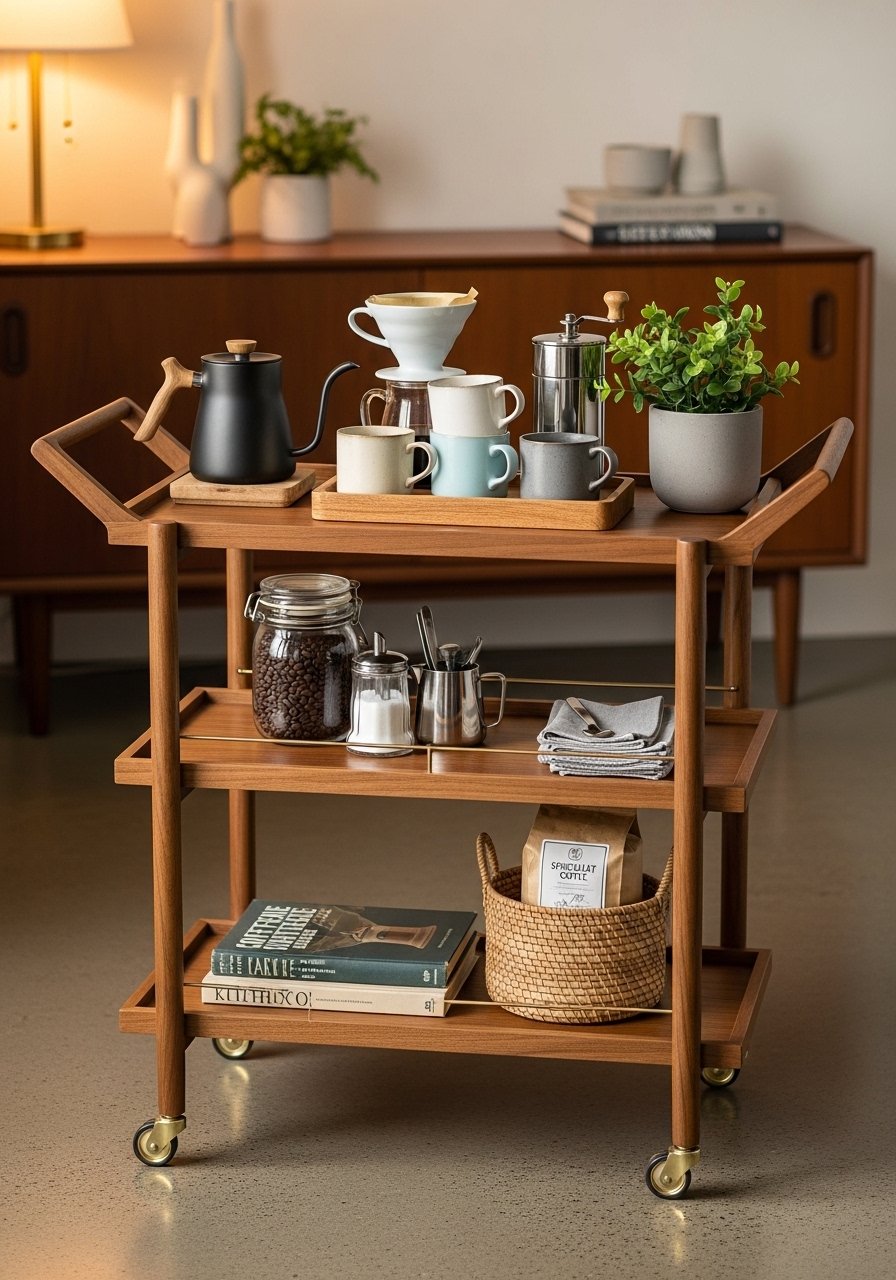
I bought a bar cart as a splurge and now it lives in my hall as a coffee cart on weekdays and cocktail station on weekends. Look for narrow carts with hairpin legs or walnut veneer to keep the mid century feel. Expect $80 to $200 depending on finish. I keep a pour-over kettle on the top shelf and an enamel coffee canister below. People often cram too many appliances on the cart. My rule is one machine, one grinder, and one tray. It reads tidy and functional that way.
Built-In Nook with Vintage Tiles for Kitchen Alcoves
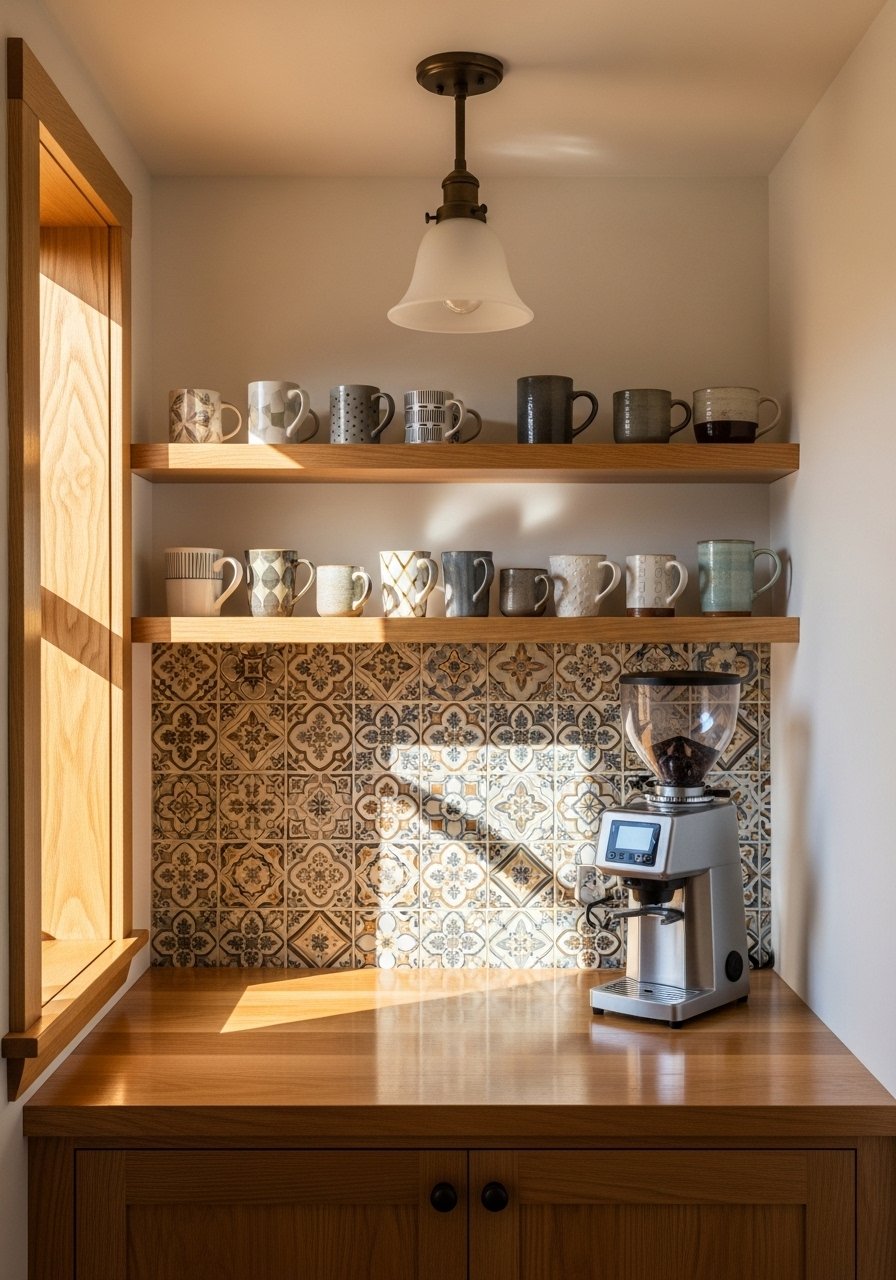
If you can spare an alcove, adding tile behind your coffee set makes it feel intentional. I tiled a 24-inch alcove with geometric tiles and suddenly the machines looked like they belonged. Budget runs $100 to $400 for tile and installation, less if you DIY. I used a compact coffee grinder and a slim under-shelf light to keep the workspace bright. A common error is choosing overpowering tile patterns. Pick tiles with one dominant color and keep surrounding walls neutral. For scale, use tiles no larger than 6 by 6 inches in small nooks.
Minimalist Scandinavian Counter Tray for Open Shelving
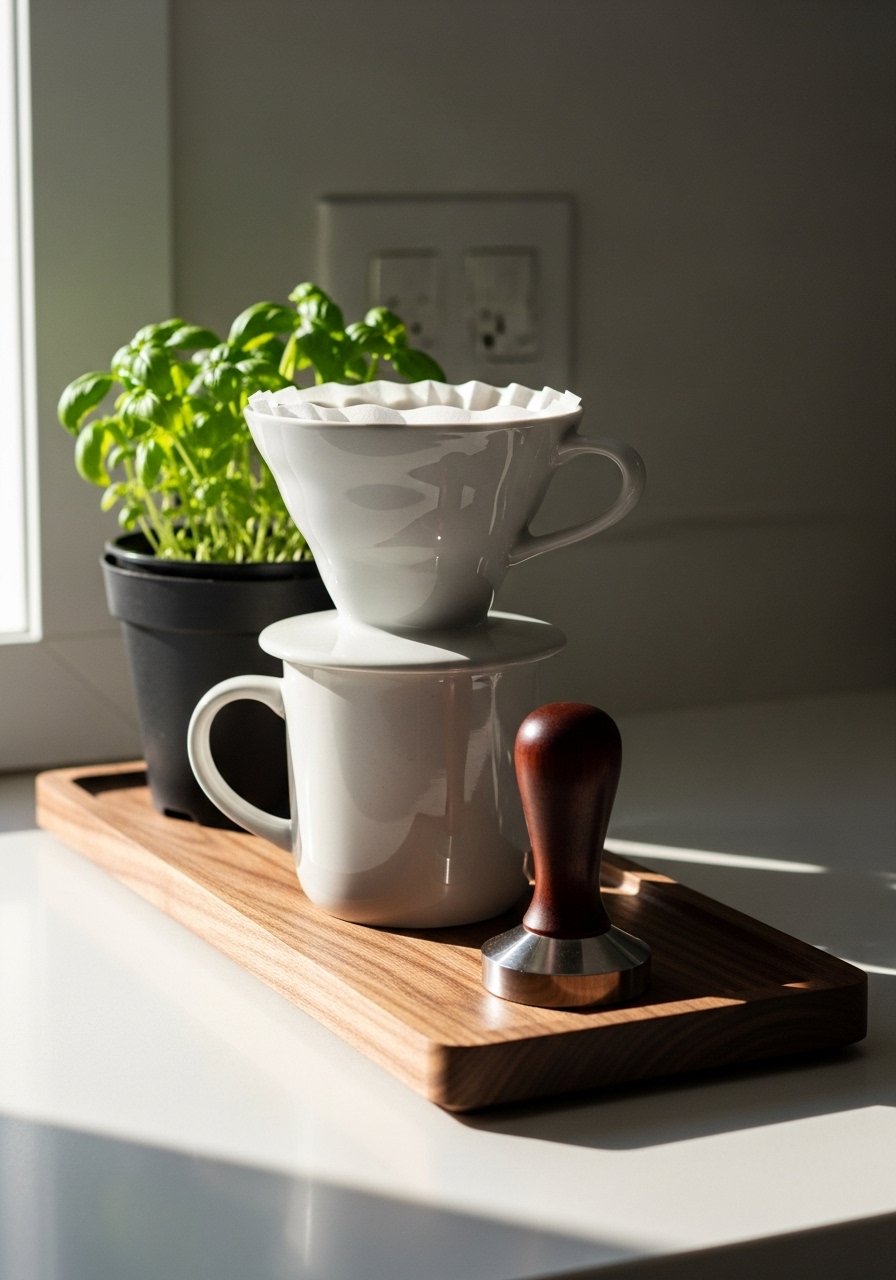
There was a week when everything I owned had handles and labels and it read messy. A tray corrals the chaos. I use a shallow walnut tray that matches my open shelving and it ties together the kettle, beans, and small tools. This is a budget-friendly move around $25 to $60. I keep ceramic pour-over cones and a reusable coffee filter set on the tray. The mistake is picking a tray too small. Make sure the tray is at least 18 inches wide if your machine needs breathing room.
Gallery Wall of Mid Century Prints Behind the Bar
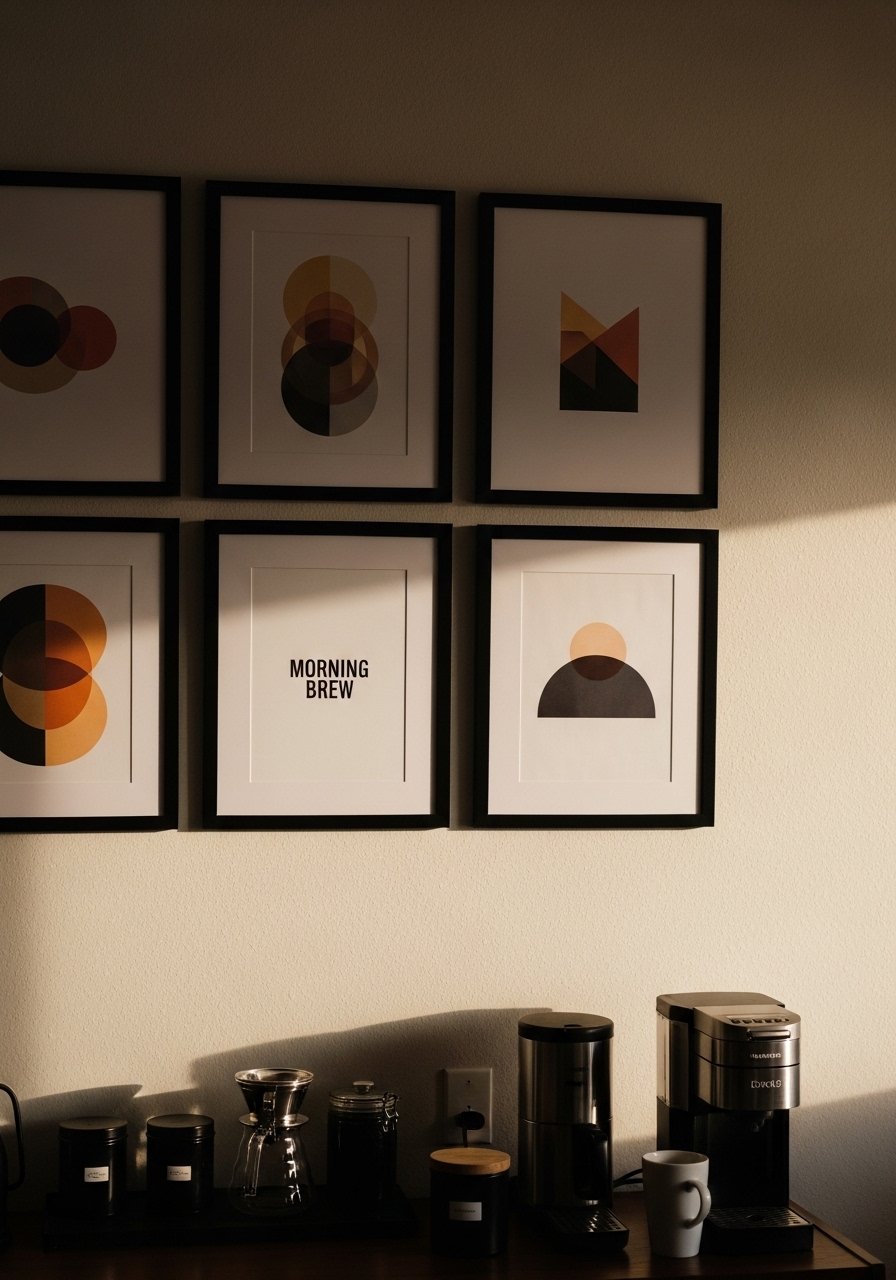
A small gallery of graphic prints above the bar makes the area feel curated, not an afterthought. I framed six 8 by 10 prints with thin black frames and used one statement print that reads 'Morning Brew' to keep it personal. Pick art that repeats a single color from your mugs to unify the scheme. I found affordable black frames for quick swaps. People often hang art too low. Keep the center of the grouping at eye level when standing, about 58 to 60 inches from the floor for most homes.
Textured Ceramic Mugs for Tactile Appeal
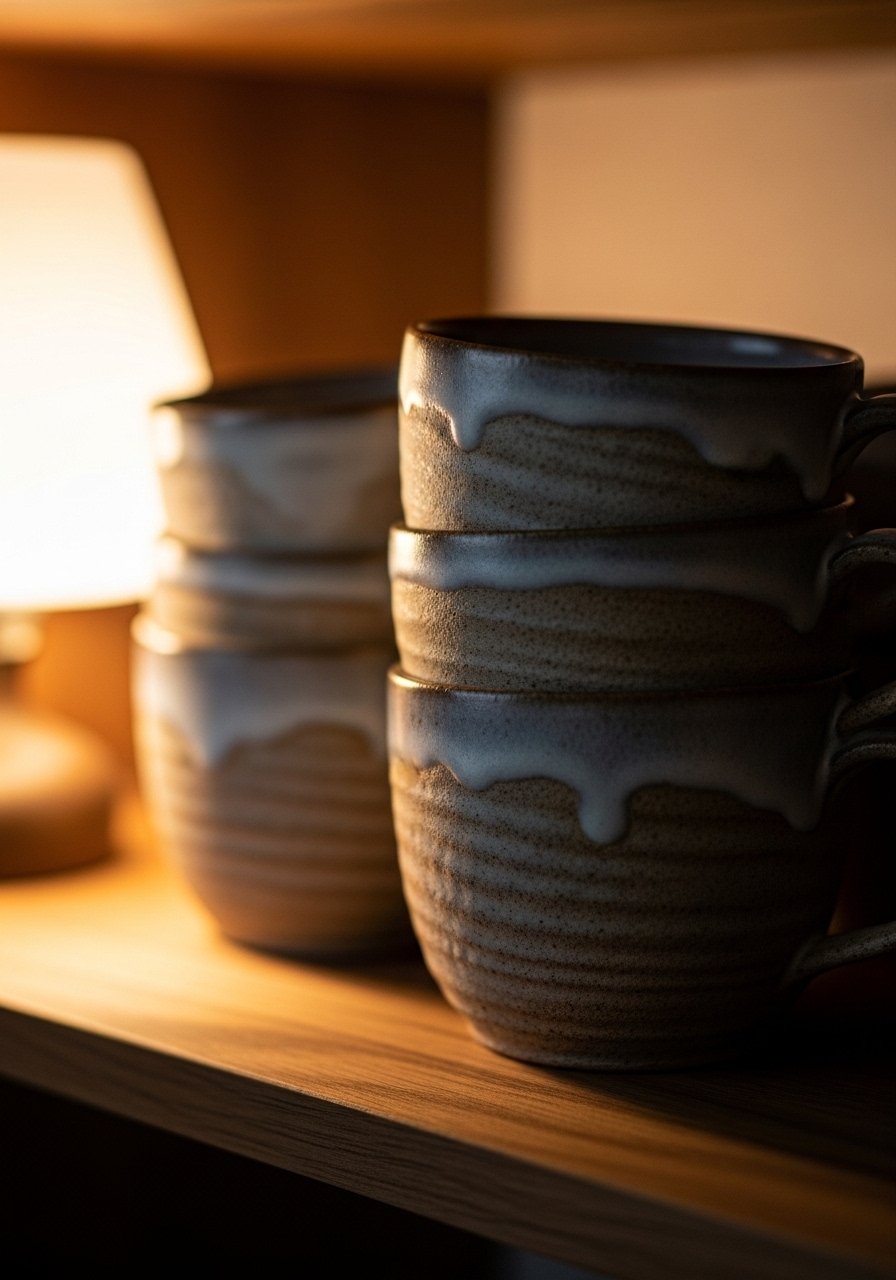
Swapping flat white mugs for textured ceramics made my coffee pause feel nicer. The tactile change invites you to stay. I prefer mugs with a matte glaze and a slightly oversized handle for comfort. Expect $12 to $30 per mug for handmade styles. I linked to a set of matte ceramic mugs that mimic the vintage look. A mistake is matching mugs exactly to your dishes. Contrast is better. Try a soft color or speckled glaze against plain plates to get that layered look.
Match Your Metals for Cohesion and Contrast
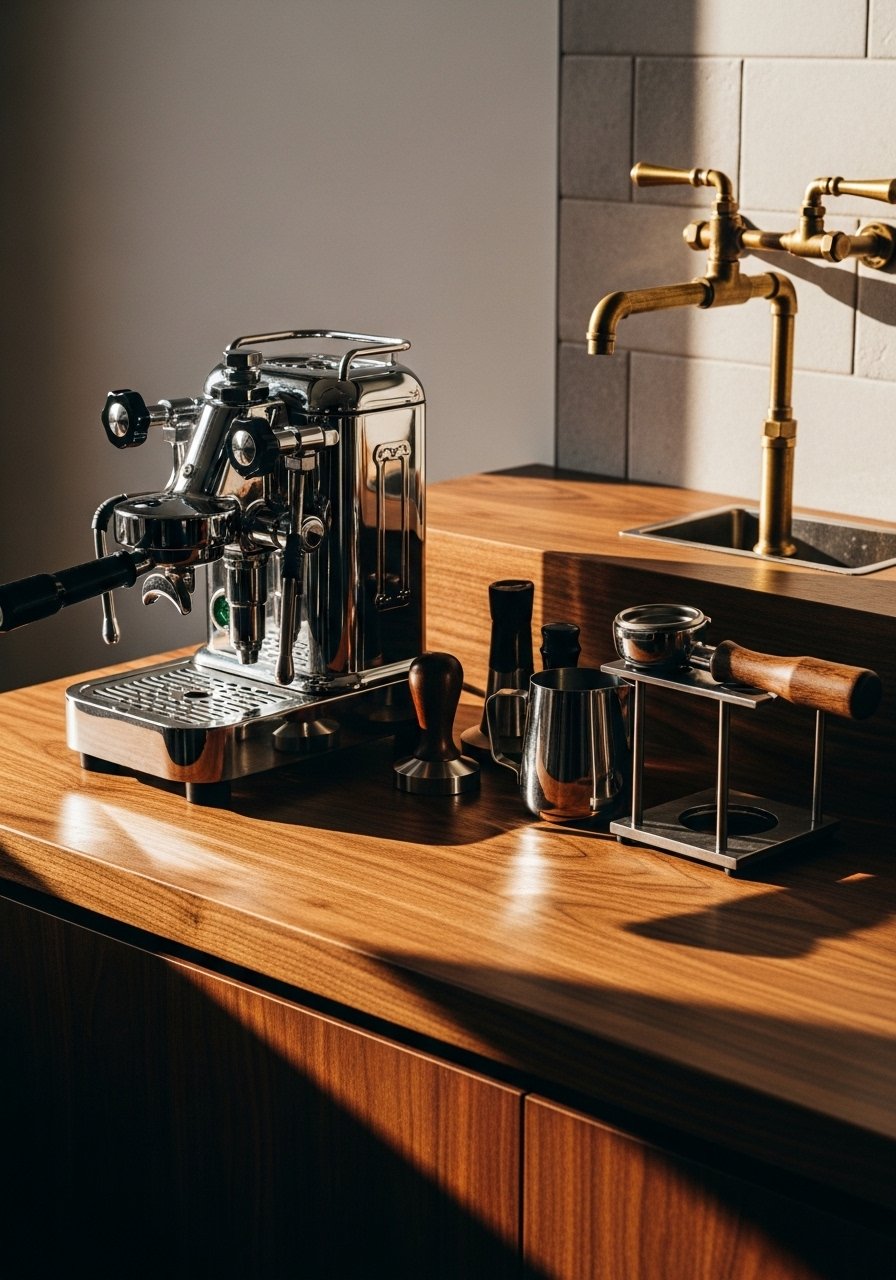
Mixing metals can feel intentional when you do it on purpose. I kept brass hooks and a chrome machine and balanced them with a bronze tray. Most people try to match every metal and the room feels flat. My rule of thumb is to have one dominant metal and one accent metal. For the brass accent I use small brass canisters. If the machine is chrome, pick warmer accessories so there is contrast and the space reads layered, not random.
Built-In Cup Rail for a Clean Countertop
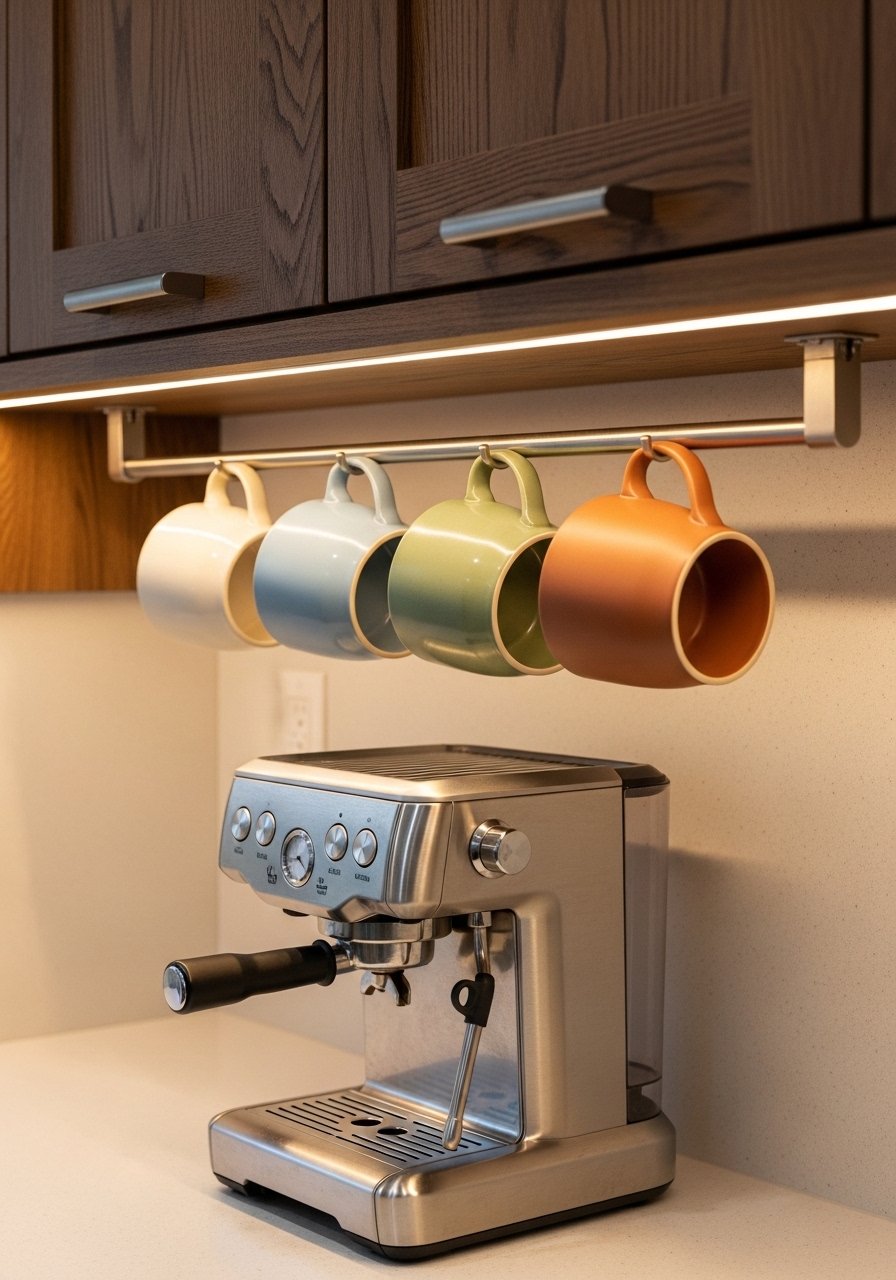
I installed an under-shelf cup rail and it freed up counter real estate immediately. A three to four mug rail works for most households, and it keeps popular mugs at hand. I spent under $30 on a stainless cup rail kit. The usual mistake is putting the rail too low so mugs hit the machine. Measure 6 to 8 inches above your tallest mug before drilling. Renter note, many small rails attach with screws that can be removed and patched easily.
Vintage Scale and Canister Pairing for Personality
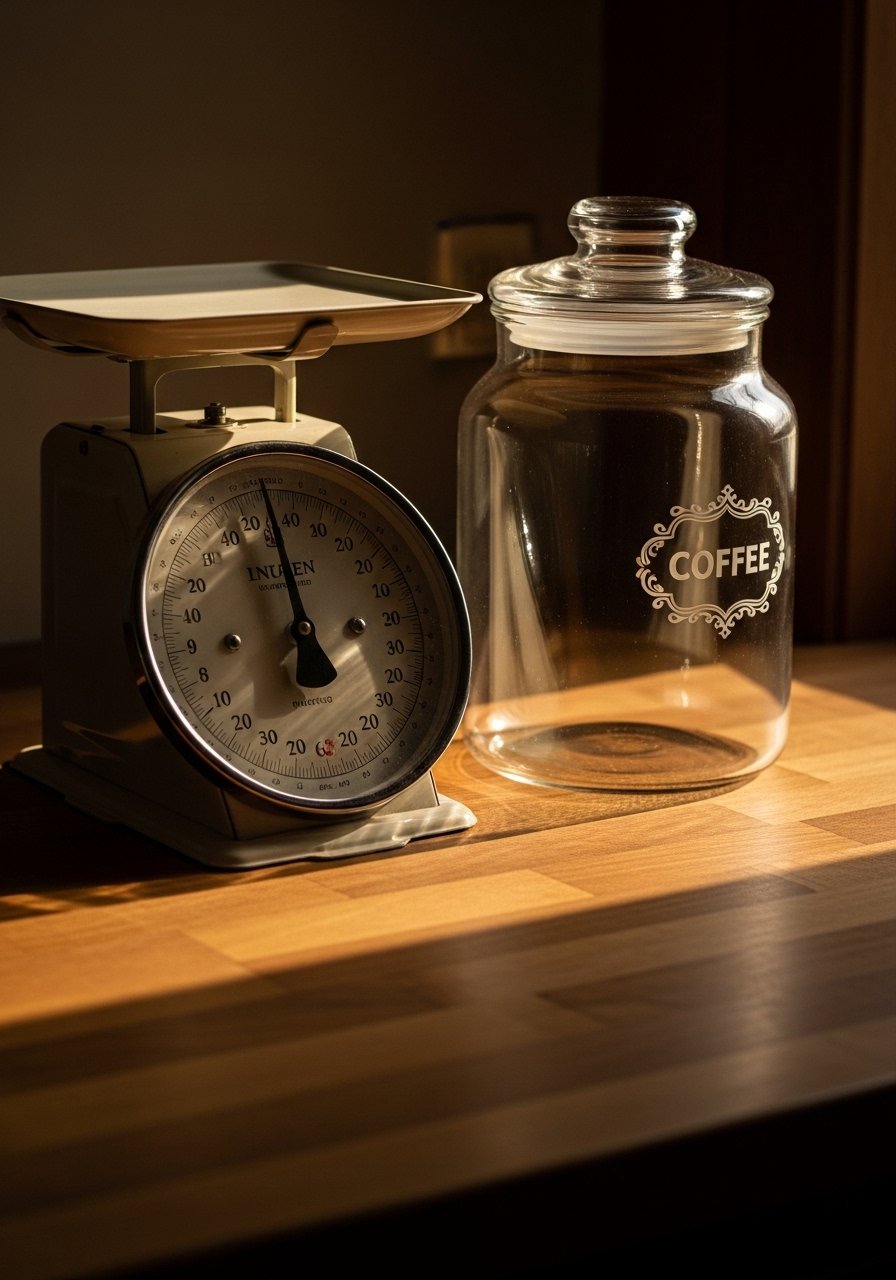
A vintage scale gives you a focal point and a practical way to weigh beans. I scored one for $20 and paired it with a clear glass coffee canister. The pairing makes the setup look like a little coffee shop corner. People often buy decorative canisters that do not seal, which ruins coffee freshness. Aim for an airtight lid and keep the canister under 16 ounces if you drink daily so beans stay fresher. Six in ten stick to the original brand paint in other projects, but for coffee gear I find mix-and-match is more fun.
Layered Lighting with Vintage Bulb Pendants
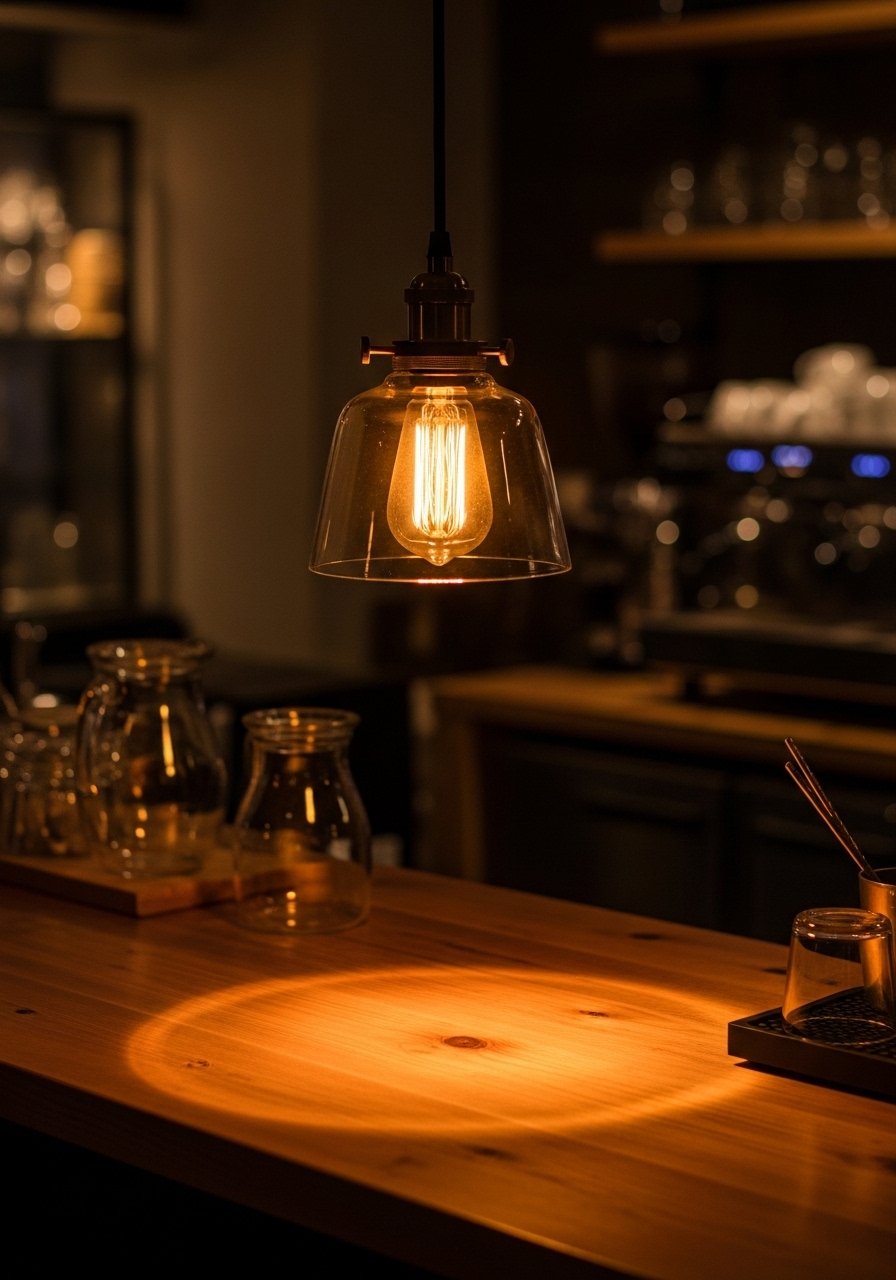
Lighting changes everything. I swapped a harsh overhead for a single vintage bulb pendant over the coffee bar and it became a destination. Use a pendant with a 12 to 18 inch drop above the counter so it lights the work area without blinding you. My fixture came with a vintage-style LED bulb. Most mismatches happen because of lighting tricks. Test bulbs in the room before you buy. Switch between warm and daylight LEDs to see which suits the wood tones best.
Hidden Power Strips for Clean Surfaces
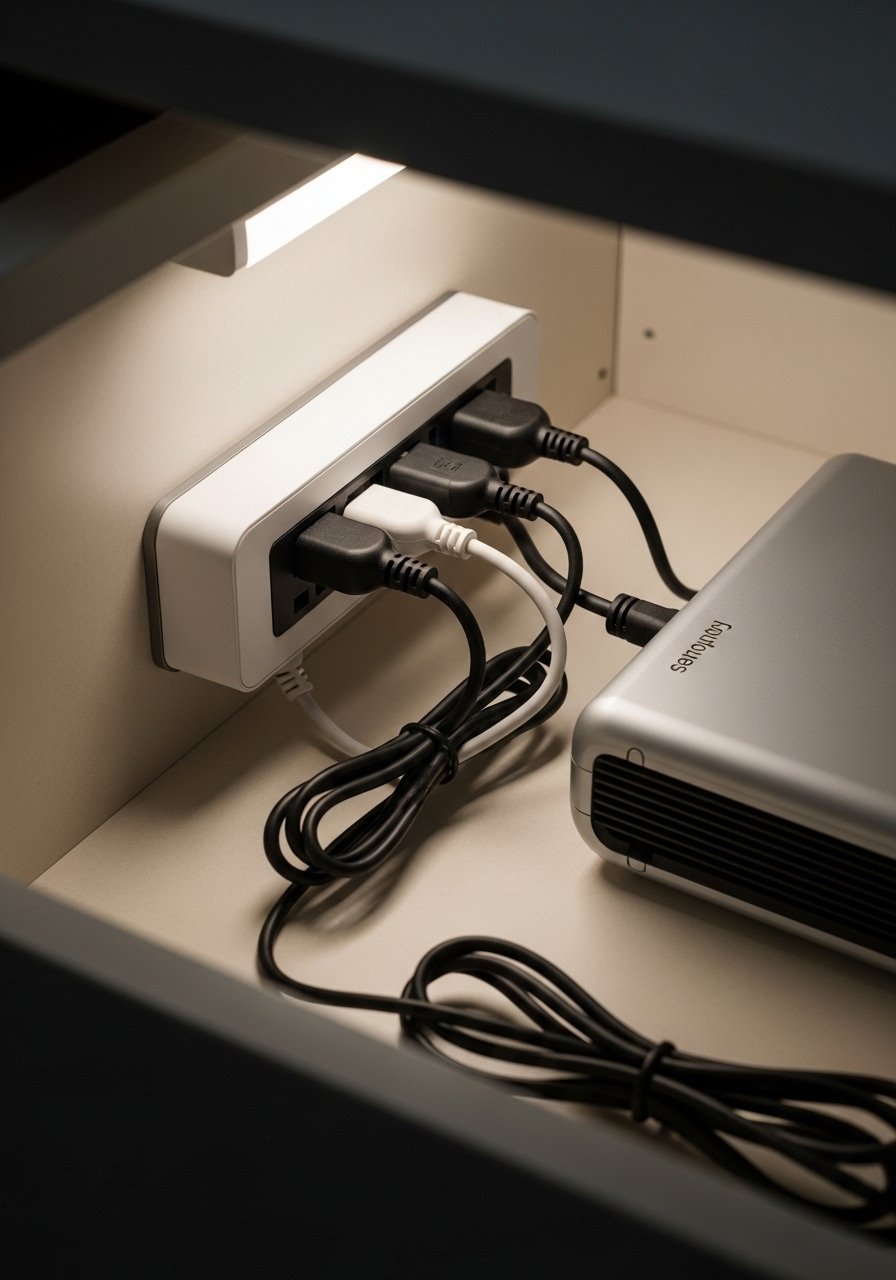
Cord clutter kills the mid century clean lines. I mounted a slim power strip inside a credenza drawer and now the counter is a clean plane. A retractable power strip costs about $25 and saves endless hassle. People forget to measure drawer depth and buy a strip that does not fit. Measure the internal height and leave 1 inch of clearance for the cord when closed. If you are renting, you can use adhesive-backed cable channels instead of drilling.
Coffee Tool Tray for Brewing Rituals in Bedrooms
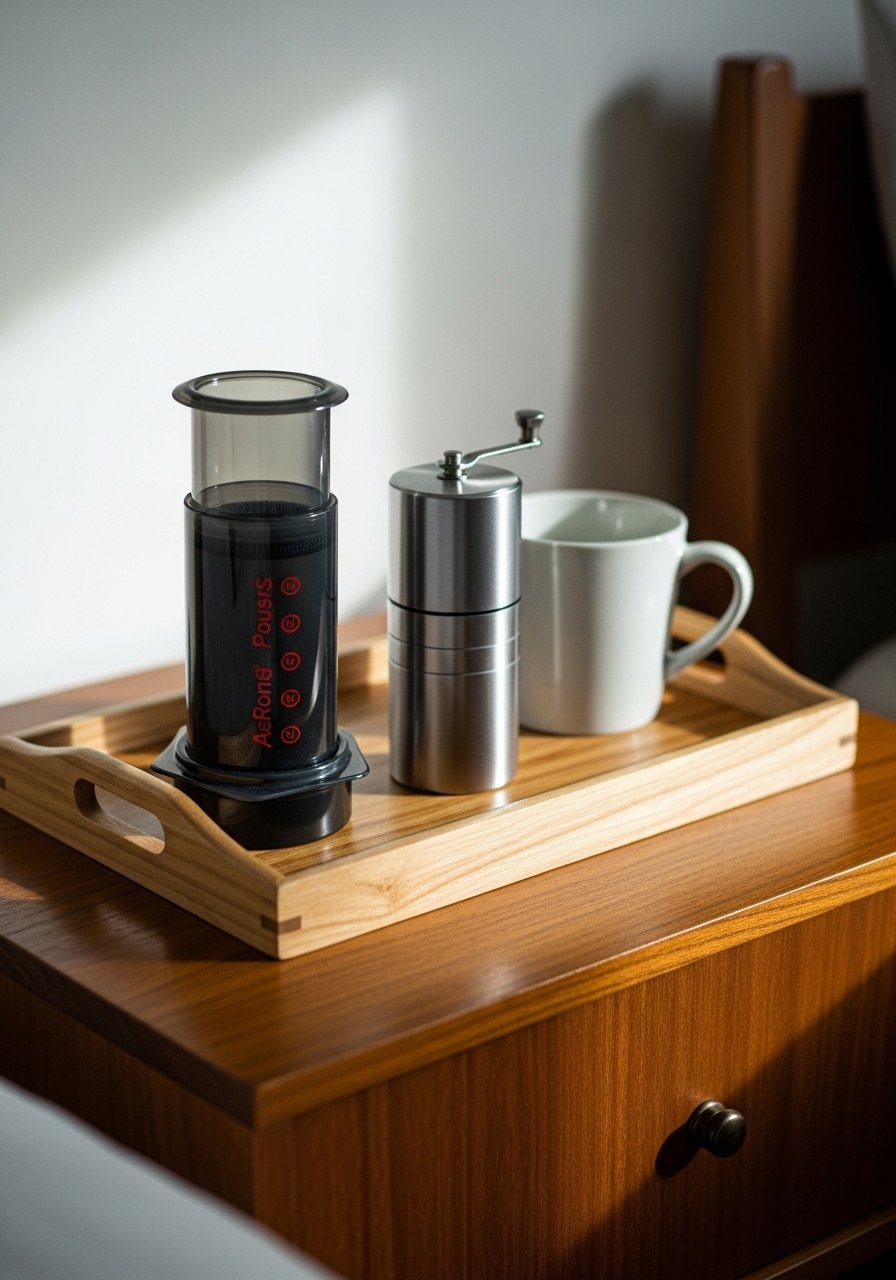
I set up a tiny coffee tray on a nightstand during a busy season and it made early mornings less frantic. A wooden tray big enough for a mini grinder and an AeroPress is a compact solution for bedroom or office brewing. Budget under $60 for a useful set. Common mistake is overcrowding the tray with mugs and sugar jars. Keep just the tools you use daily. Also, test steam clearance so you do not fog mirrors or wake a partner.
Fabric Backsplash and Pinboard for Recipe Cards
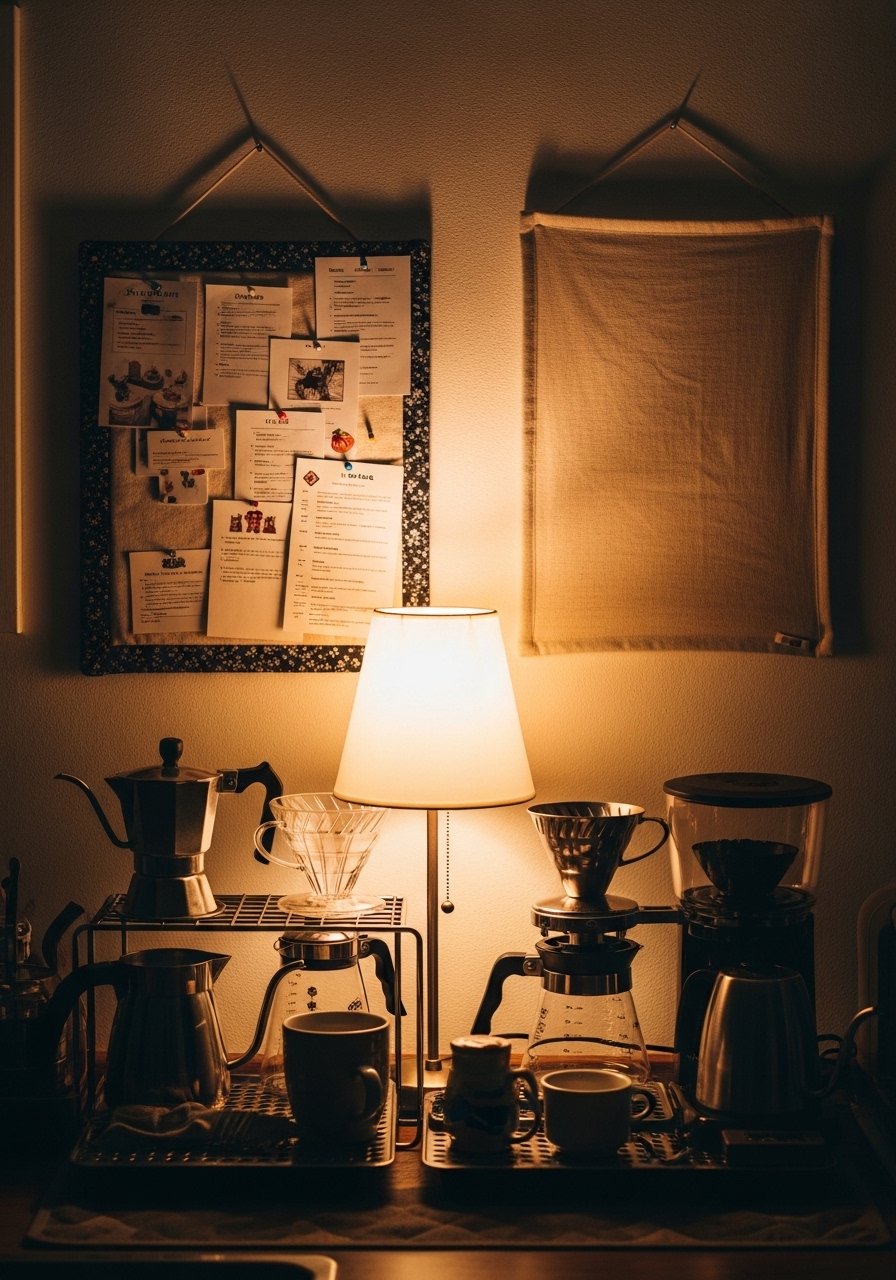
A fabric backsplash softens the area and lets you pin notes, cards, or a roast schedule. I covered a 24 by 12 inch board in an upholstery fabric that matches my sofa and it doubled as a mood board. Fabric is renter-friendly and removable. Use a push-pin friendly cork board under the fabric for durability. The mistake is using fabric without a backing, which stains easily. Add a washable layer and avoid dark coffee splatters by keeping splatter zones at least six inches from the wall.
Compact Grinder Station with Sound Dampening
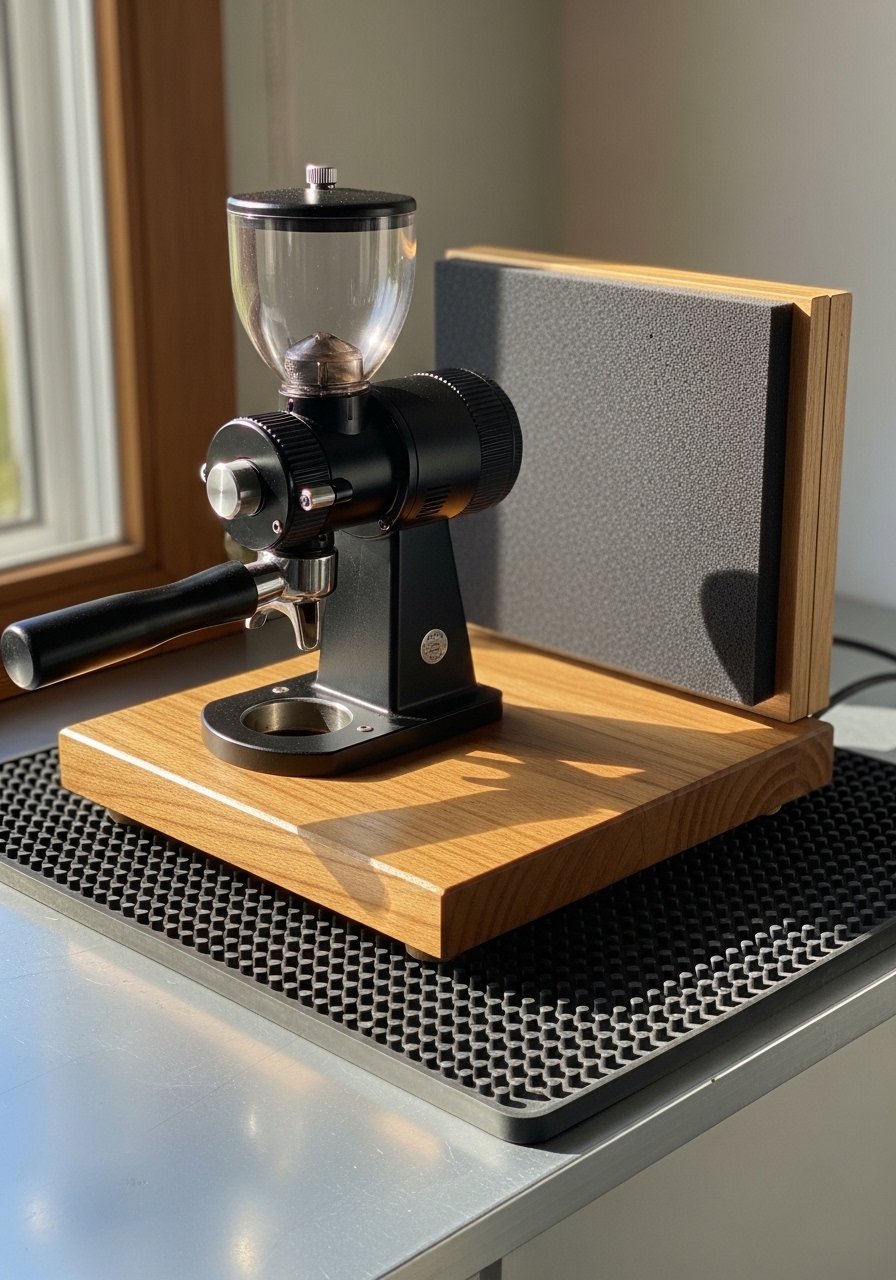
I used to grind beans and wake the whole apartment. Building a small platform with a rubber mat and a fabric panel behind the grinder dropped the perceived noise a lot. A compact burr coffee grinder plus a 12 by 12 inch rubber mat is under $80 total. People place the grinder on glass or metal which amplifies sound. Use wood or rubber and keep the grinder away from thin walls if you want peaceful mornings. Wrong base ruins four out of ten matches in paint projects, and similarly a poor surface can ruin the perceived quality of your coffee station.
Your Decor Shopping List
Matte ceramic mugs set 12-ounce, textured glaze. I prefer one color with a speckled variation
Compact espresso machine for small counters, 15 by 10 inches footprint
White oak floating shelf 24 inches long, natural finish, wall-mounted brackets included
Brass mug hooks set sticky or screw mount, 4 pack
Walnut serving tray 18 by 12 inches, shallow edges
Pour-over kettle gooseneck 1 liter, temperature control not required for beginners
Under-shelf LED light strip warm white, 12 to 24 inch lengths
Glass coffee canister airtight lid, 16 ounce size
Retractable power strip drawer kit slim profile, 3 outlets
Most items available at Target or HomeGoods if you prefer to see before you buy. For the bigger pieces, check secondhand apps for true mid century finds.
Shopping Tips
Grab white oak floating shelves for the shelf trick. White oak beats dark wood in 2026. Design feeds have shifted completely.
Matte ceramic mugs are worth buying in a set. Swap them seasonally to refresh the bar without big purchases.
Measure before you buy a cart. For narrow hallways pick a cart under 18 inches wide. Narrow bar cart options fit most small spaces.
Want a tenant-friendly coffee area? Use removable adhesive for rails and a command-style cable channel so you do not drill holes.
One big plant beats many small ones. A 6-foot faux fiddle leaf fig gives the vertical interest mid century spaces love.
Frequently Asked Questions
Q: Can I mix boho textiles with mid century furniture without it looking messy
A: Yes. Use a rule of three. Pick one pattern, one solid color, and one textured piece. Keep colors tied to the wood tone of your coffee bar and avoid introducing more than two new colors at once.
Q: What size shelf do I actually need for a coffee station
A: Aim for at least one linear foot of shelf per regular drinker. A shared station for two people needs a minimum of two feet. That gives room for a grinder and a gooseneck kettle without feeling crowded.
Q: Should I match my metals in a mid century coffee bar
A: Mix them with intention. Choose a dominant metal such as brass, then add one accent metal. Match larger hardware to the dominant metal and keep smaller accessories as accents.
Q: How do I prevent paint or backsplash choices from clashing with wood tones
A: Test swatches in your actual lighting. Most mismatches happen because of lighting tricks. Put swatches on the wall and check morning and evening light before buying. If you are keeping lots of wood, pick a neutral with warm undertones.
Q: Is a real plant better than a faux plant for this setup
A: Both work. Real plants like pothos are forgiving and add scent. If you need height without the maintenance, a faux fiddle leaf fig looks convincing and keeps the space consistent year round.
Q: My countertop is small, can I still have a coffee bar
A: Absolutely. Use a tray, floating shelf, or a narrow bar cart. Compact gear such as a French press or AeroPress keeps the footprint tiny. Wrong base ruins four out of ten matches in paint projects and similarly a poor layout will fail if you do not plan the footprint.